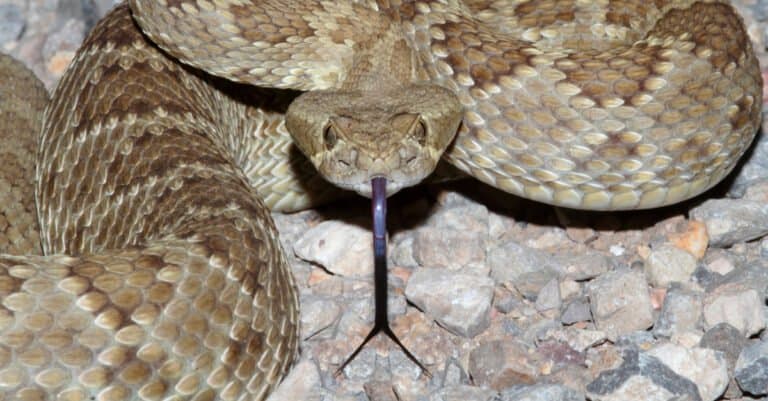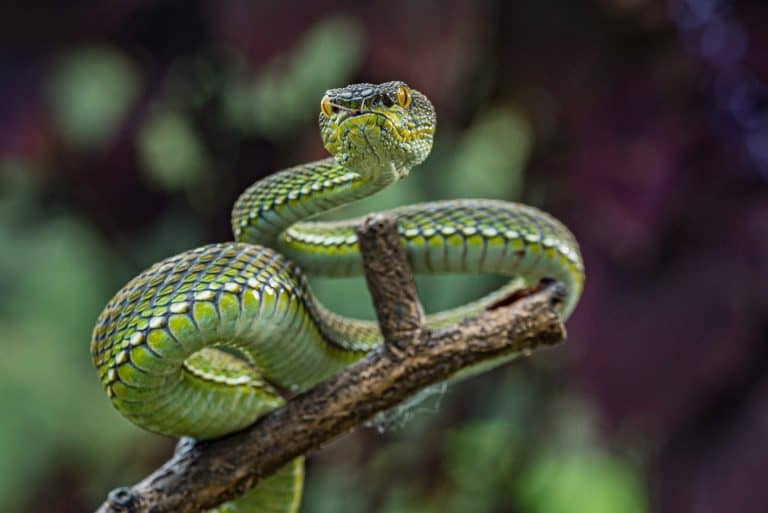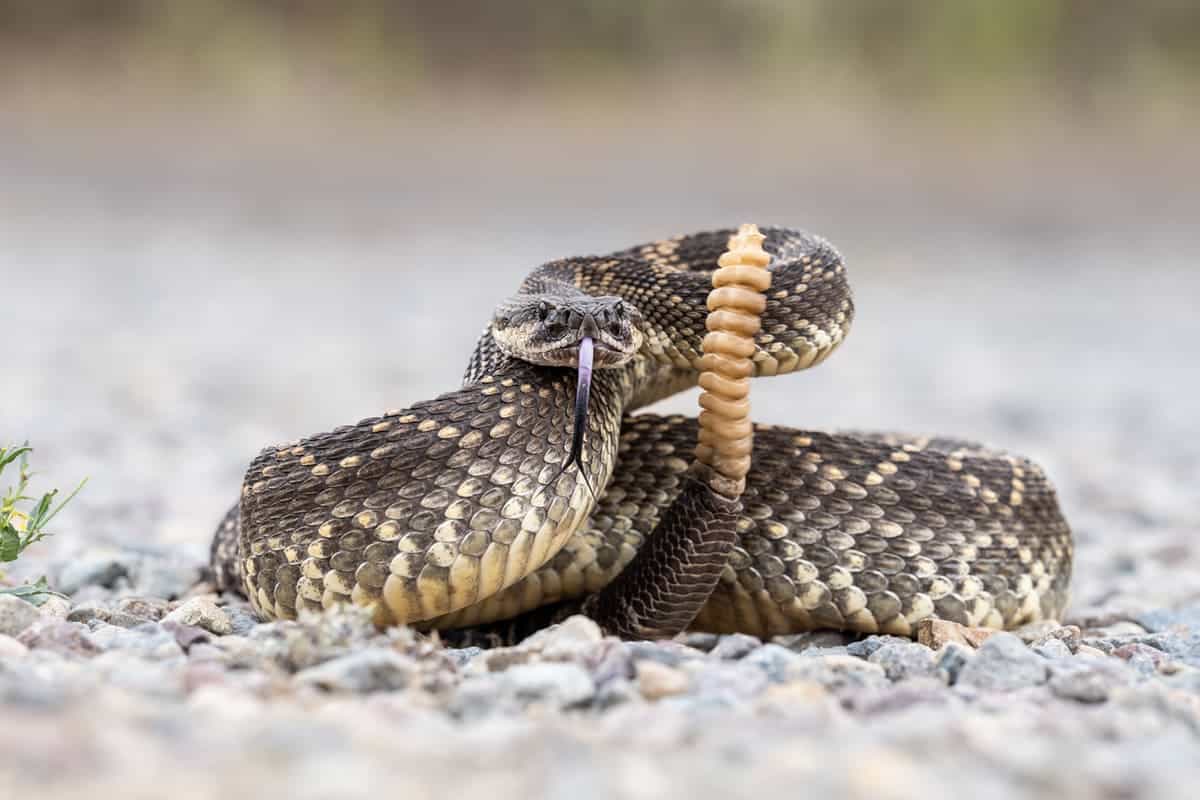

Quick Take
- One rattlesnake found in the US has venom so unique it inspired a life-saving heart attack drug, and it is probably not the one you would expect. Discover the heart drug source →
- The most venomous rattlesnake in North America is not the largest, and that difference between the two could matter if you ever encounter one. Meet North America's most venomous →
- Some of these 17 species can kill you without ever acting aggressively, and knowing which ones matters more than you might think. See the non-aggressive killer →
- One species shakes its rattle as a warning but physically cannot hear the sound itself, and the reason why is stranger than it sounds. Explore the deaf rattler →
Rattlesnakes are a group of venomous pit vipers native to the Americas. There are between 32 and 36 recognized species of rattlesnakes, found exclusively in North America, Central America, and the Caribbean. Continue reading to learn about 17 rattlesnake species that are found in the United States.
Eastern Diamondback Rattlesnake
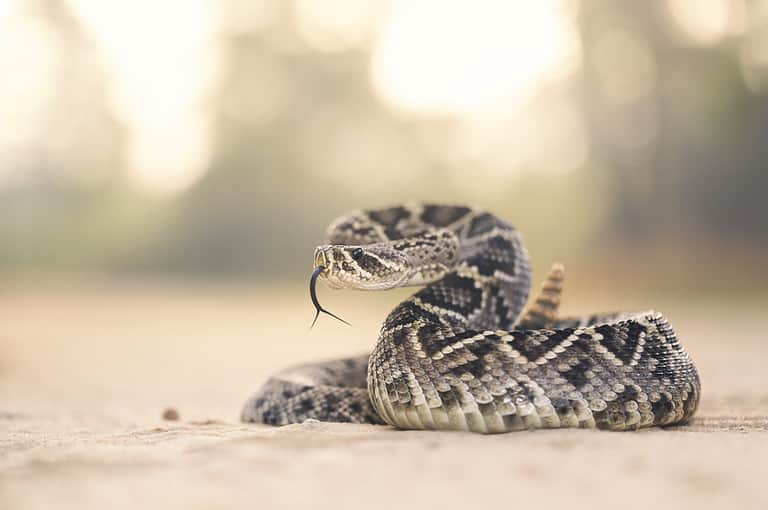
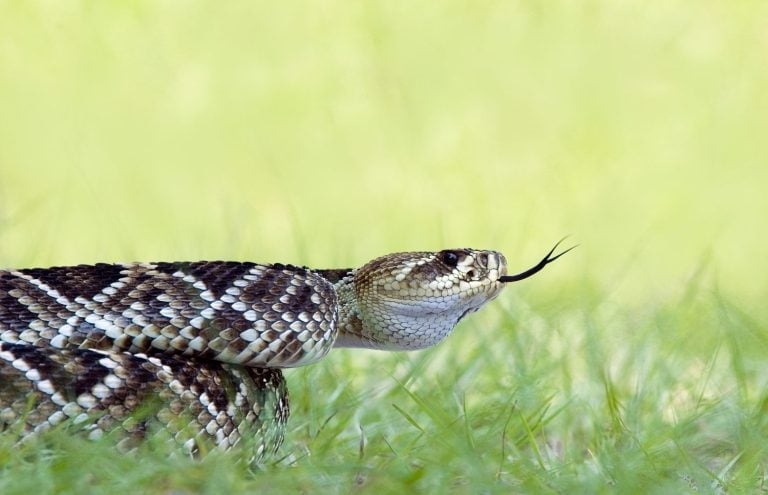
The Eastern diamondback rattlesnake (Crotalus adamanteus) is the largest rattlesnake species in the world by both length and weight. This species is found in the Southeastern United States, ranging from North Carolina to Florida.
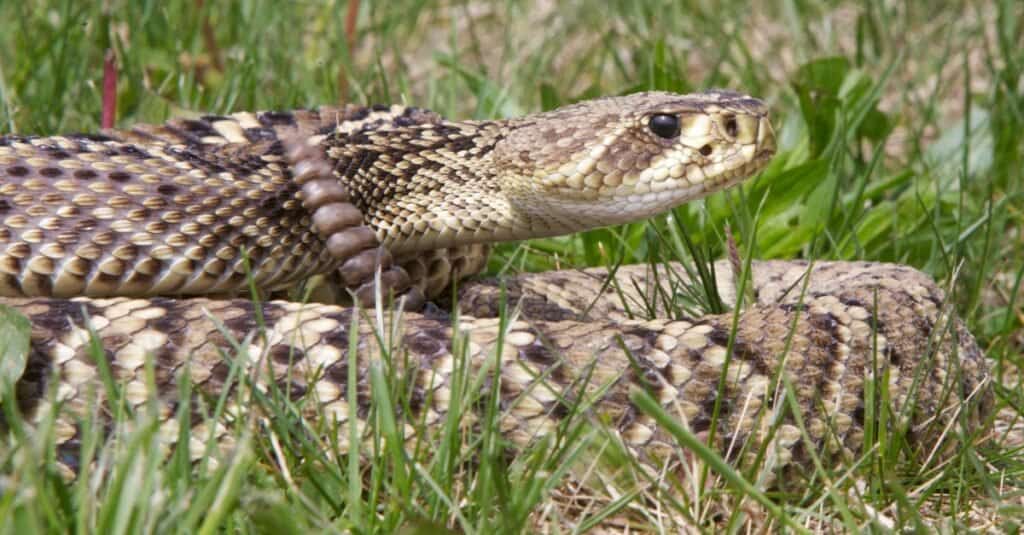
Each time a rattlesnake sheds its skin, a new segment is added to the base of the rattle. Because rattlesnakes can shed multiple times a year and older segments frequently break off, you cannot determine a snake’s age simply by counting its rattle segments.
©iStock.com/NajaShots
While they are not aggressive, they are quite dangerous. Relative to their body size, they have some of the longest fangs of any venomous snake. The mortality rate from an Eastern diamondback bite is estimated at 10-30%.
The Eastern diamondback rattlesnake:
- Scientific name: Crotalus adamanteus
- Other names: diamond rattlesnake, common rattlesnake, Florida rattlesnake, lozenge-spotted rattlesnake, and water rattlesnake
- Eastern diamondbacks grow between 3.5 and 5.5 feet on average
- The longest Eastern diamondback rattlesnakes ever reported were over 8 feet
- The longest Eastern diamondback rattlesnake ever observed was 7.8 feet
- They weigh about 5 pounds on average
- The heaviest Eastern diamondback rattlesnake ever observed was 34 pounds
- They eat rabbits, mice, birds, and other small animals
Western Diamondback Rattlesnake
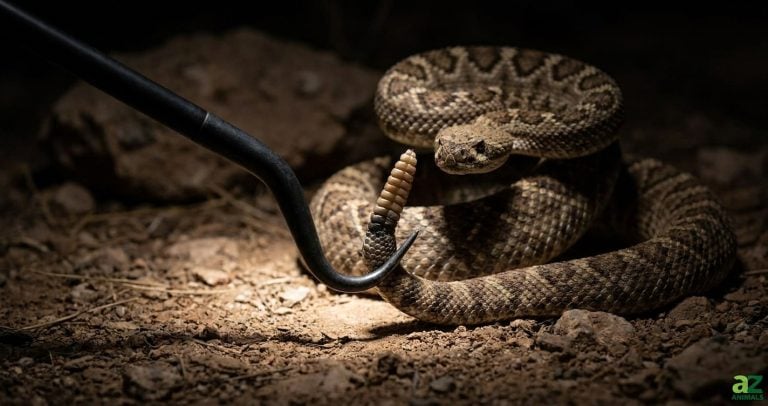
Western diamondback rattlesnakes (Crotalus atrox) are found in the Southwestern United States and Mexico. The Western diamondback rattlesnake is the second-largest rattlesnake in the United States.
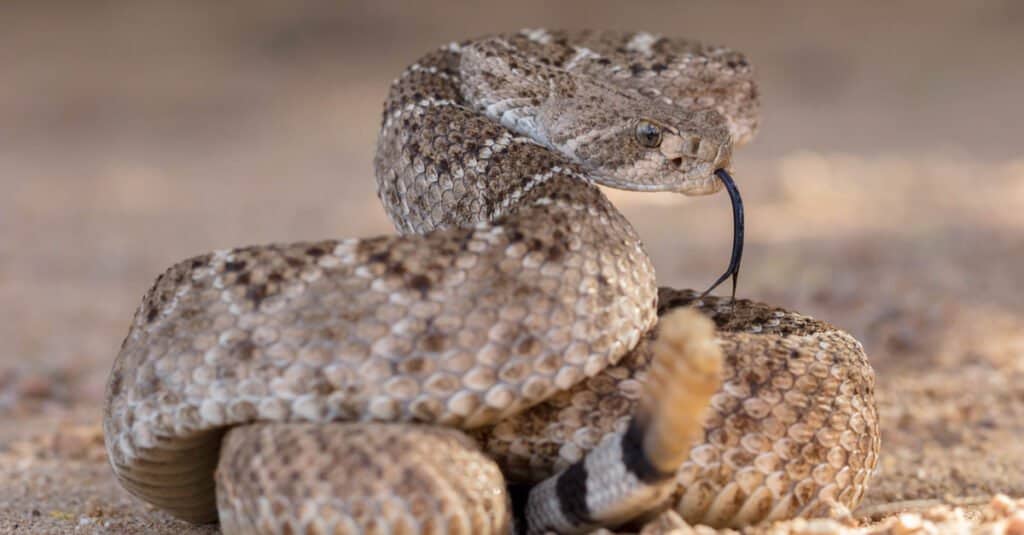
The rattlesnake’s rattle is made of hollow, interlocking segments of keratin at the end of its tail.
©Alexander Wong/Shutterstock.com
Western diamondback rattlesnakes have larger venom glands than many other venomous snakes, making their bite quite potent and potentially lethal. The fatality rate of an untreated Western diamondback rattlesnake bite is between 10 and 20 percent.
The Western diamondback rattlesnake:
- Scientific name: Crotalus atrox
- Other names: Texas diamond-back, adobe snake, Arizona diamond rattlesnake, desert diamondback
- They grow 4 feet long on average
- The longest Western diamondback ever seen was 7 feet long
- They mainly eat small mammals like prairie dogs, gophers, rats, and mice
Timber Rattlesnake
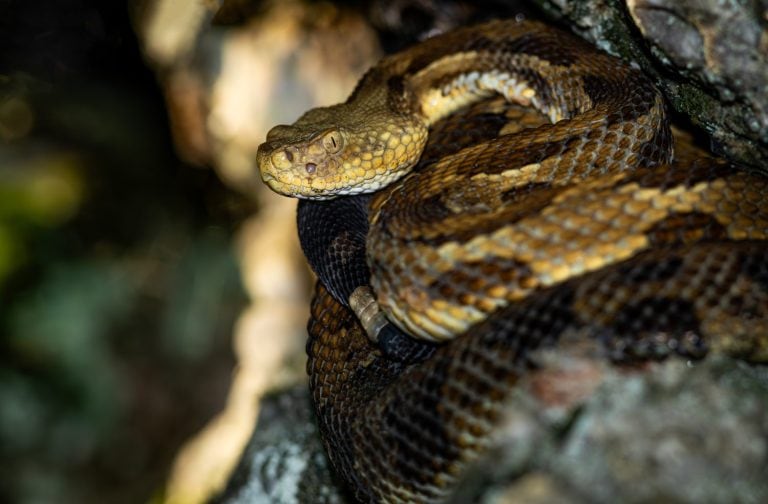
The timber rattlesnake is one of the most common rattlesnake species in North America. It is the only rattlesnake found in the Northeastern United States. Its habitat stretches from Minnesota to Florida. These snakes have an extremely venomous bite but are less aggressive than some other rattlesnake species. Timber rattlesnakes tend to give ample warning through warning strikes and extensive rattling before they actually bite.
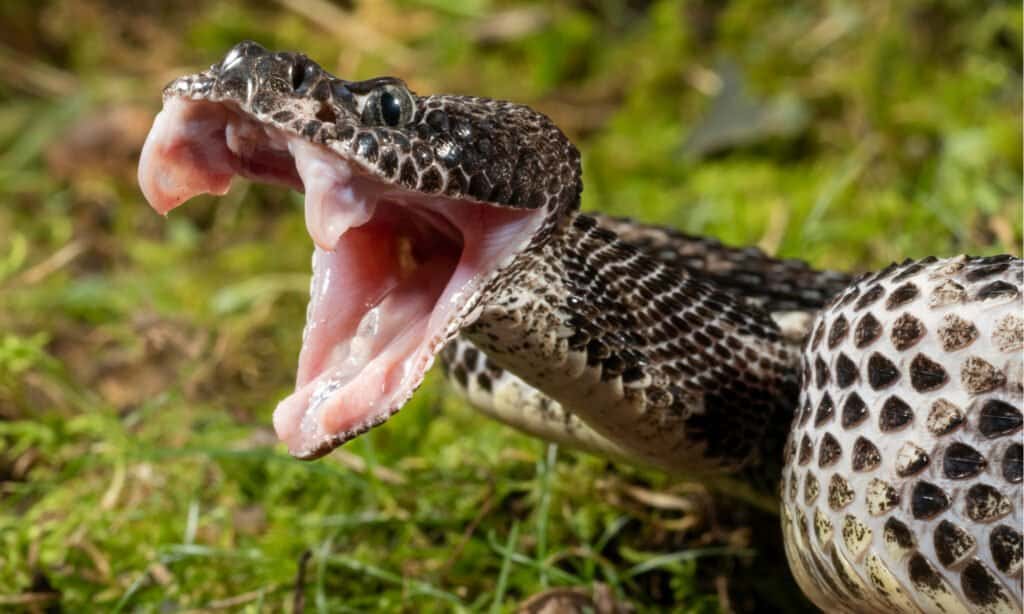
All rattlesnakes are venomous. Their venom, delivered through hollow fangs at the front of their mouth, is designed to immobilize prey like rodents and small birds. However, their venom is medically significant to humans as well.
©Joe McDonald/Shutterstock.com
Timber rattlesnakes were responsible for a large percentage of fatal snake bites between 1989 and 2018. In that time, 22 people died from timber rattlesnake bites. However, this may simply reflect the fact that they are more common than other species.
The timber rattlesnake:
- Scientific name: Crotalus horridus
- Other names: canebreak rattlesnake and banded rattlesnake
- They grow to between 30 and 60 inches long
- The longest timber rattlesnake ever observed was 74.5 inches long
- They weigh up to 3.3 pounds
- The timber snake is the state reptile of West Virginia
- They eat small animals like frogs, other snakes, birds, and rodents
Western Twin-spotted Rattlesnake
The Western twin-spotted rattlesnake (Crotalus pricei pricei) is found in Southeastern Arizona, and Sonora, Chihuahua, and Durango in Mexico. This rattlesnake is not aggressive and rarely bites humans.
The Western twin-spotted rattlesnake:
- Scientific name: Crotalus pricei pricei
- Other names: Price’s rattlesnake, spotted rattlesnake, Arizona twin spotted rattlesnake
- They grow between 20 and 24 inches long
- The longest Western twin spotted rattlesnake ever recorded was 26 inches long
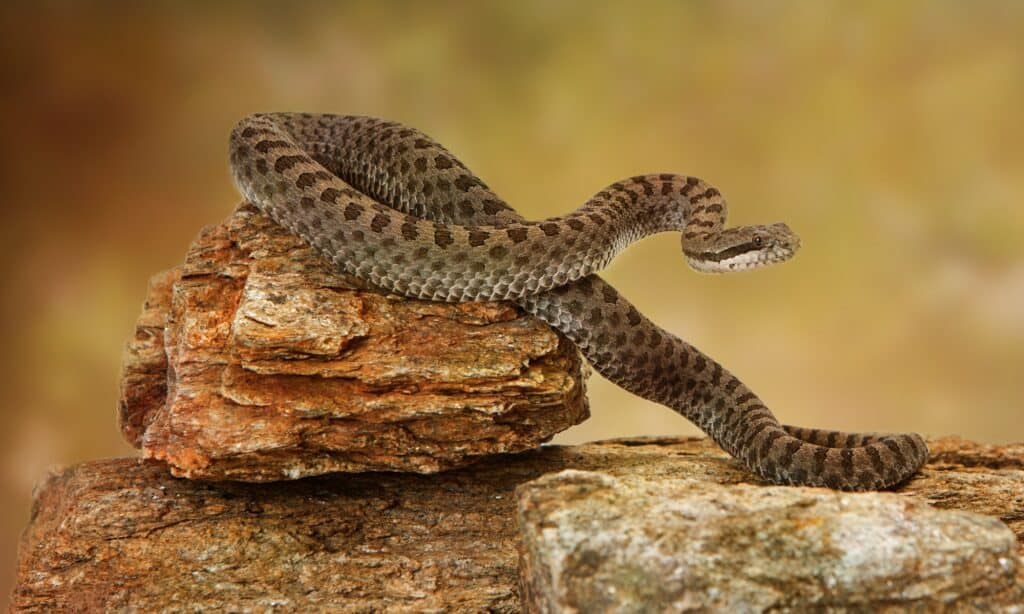
The Western twin-spotted rattlesnake can grow up to two feet long.
©iStock.com/adogslifephoto
Western Rattlesnake
The Western rattlesnake (Crotalus oreganus) is a heavy-bodied, venomous pit viper. Its range stretches across Western North America, from the Baja California Peninsula to the southern interior of British Columbia, Canada.
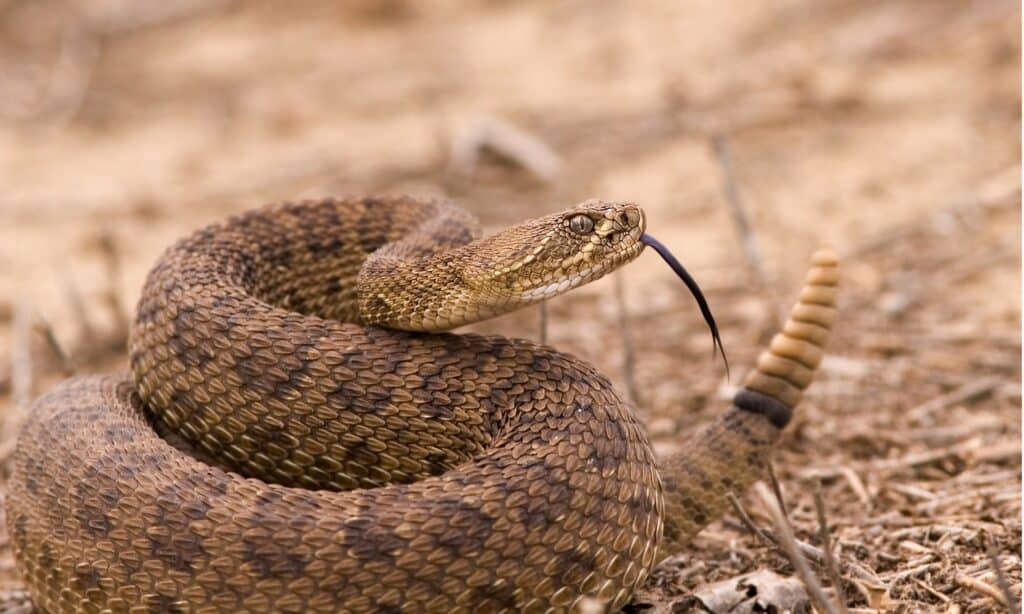
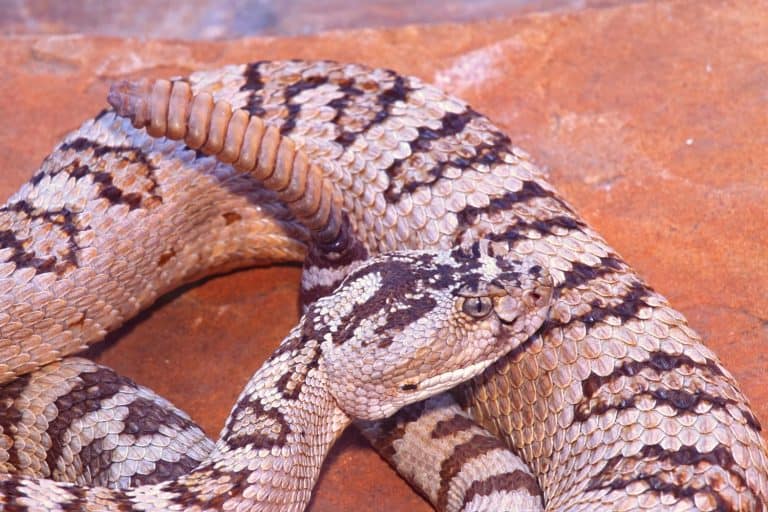
When a rattlesnake feels threatened, it shakes its tail up to 90 times per second, causing these segments to click rapidly against one another and create its signature warning sound.
©iStock.com/SteveMcsweeny
There are five subspecies of the Western rattlesnake:
- Southern Pacific rattlesnake (Crotalus helleri)
- Northern Pacific rattlesnake (C. oreganus)
- Grand Canyon rattlesnake (C. oreganus abyssus)
- Midget faded rattlesnake (C. concolor)
- Great Basin rattlesnake (C. lutosus)
The Western rattlesnake:
- Scientific name: Various, but they are all subspecies of Crotalus oreganus
- The average length is between 15 and 36 inches
- The longest western rattlesnake ever observed was 60 inches long
- Has special heat-sensing organs that it uses to hunt prey
- Diet consists of birds, bird eggs, and small animals like rabbits
Pygmy Rattlesnake
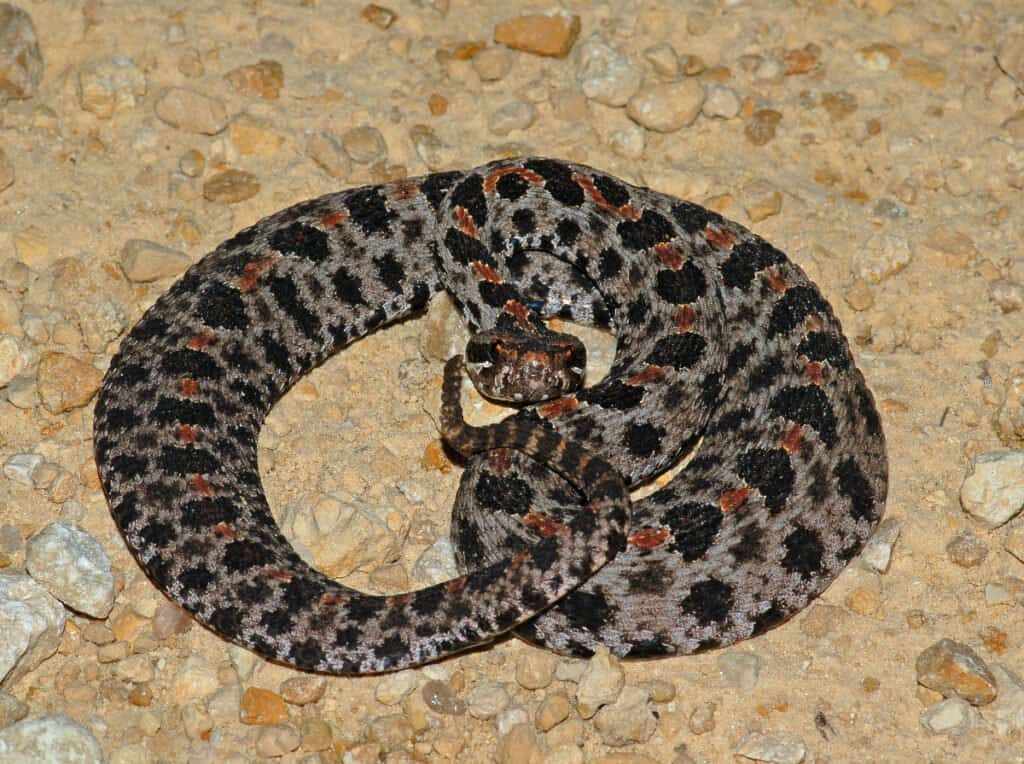
Although pygmy rattlesnakes are not as lethal as other rattlesnake species, their bites still require medical treatment.
©Gerald A. DeBoer/Shutterstock.com
Pygmy rattlesnakes (Sistrurus miliarius) are a small variety of rattlesnake. These snakes range from North Carolina to Florida, and west to Oklahoma and Texas. Pygmy rattlesnakes are not considered medically significant to humans, although you should still seek medical care if you get bitten.
There are three subspecies of pygmy rattlesnake:
- Dusky pygmy rattlesnake (Sistrurus miliarius barbouri)
- Carolina pygmy rattlesnake (S. m. millarius)
- Western pygmy rattlesnake (S. m. streckeri)
The pygmy rattlesnake:
- Scientific name: Sistrurus miliarius
- Other names: eastern pygmy rattlesnake, ground rattlesnake, leaf rattler, death rattler, hog-nosed rattlesnake, little rattlesnake, miliar rattlesnake, North American smaller rattlesnake, oak-leaf rattler, bastard rattlesnake, nipple snake, Catesby’s small snake
- They usually grow between 16 and 24 inches long
- The longest pygmy rattlesnake ever found was 31 inches long
- They eat giant desert centipedes, birds, lizards, bugs, and small mammals
- The drug eptifibatide, which can prevent blood clots during a heart attack, is based on the snake’s unique venom which contains serotonin
Ridge-nosed Rattlesnake
The ridge-nosed rattlesnake (Crotalus willardi) is the most recently identified rattlesnake species in the United States. The snake lives in high-elevation areas in Southeastern Arizona and Mexico.
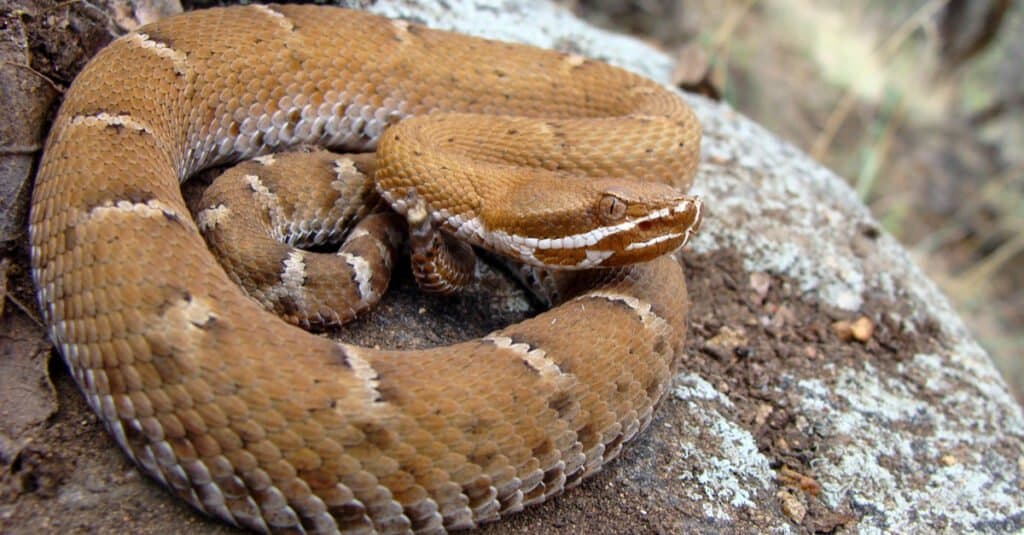
No other rattlesnake species has been identified since the ridge-nosed rattlesnake was discovered in 1905.
©Matt Jeppson/Shutterstock.com
There are five subspecies of ridge-nosed rattlesnakes:
- Del Nido ridge-nosed rattlesnake (Crotalus willardi amabilis)
- Southern ridge-nosed rattlesnake (C. w. meridionalis)
- New Mexico ridge-nosed rattlesnake (C. w. obscurus)
- Chihuahuan ridge-nosed rattlesnake (C. w. silus)
- Arizona ridge-nosed rattlesnake (C. w. willardi)
Ridge-nosed rattlesnake venom is considered medically significant to humans. However, due to their small size, their overall venom yield is quite low, typically causing nothing more than localized swelling, bruising, and pain.
The ridge-nosed rattlesnake:
- Scientific name: Crotalus willardi
- Other names: Willard’s rattlesnake and Willard’s rattler
- They are between one and two feet long
- The ridge-nosed rattlesnake is the state reptile of Arizona
- They eat large desert centipedes, birds, and small mammals
Sidewinder
The sidewinder (Crotalus cerastes) is named for its movement across the desert. It appears to glide sideways across the open terrain.
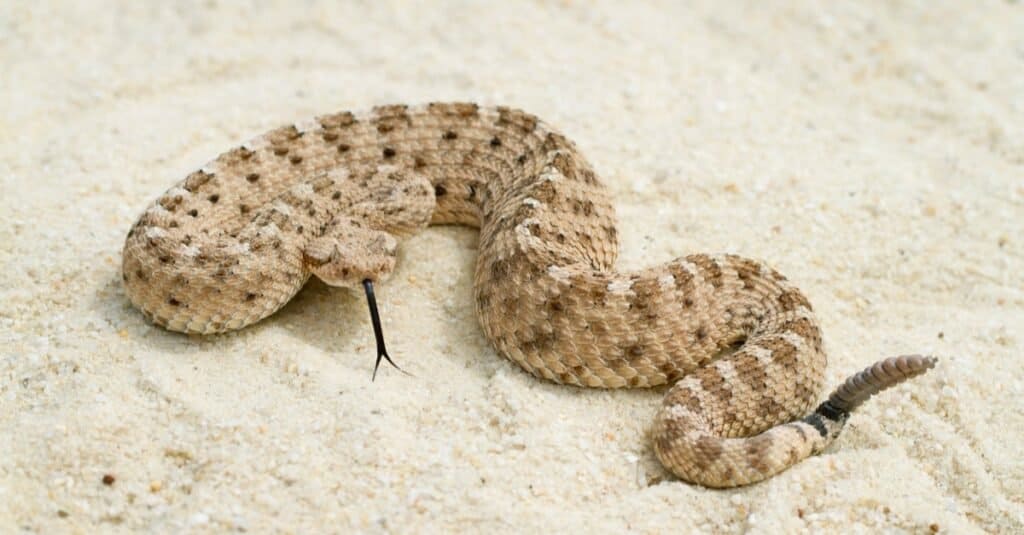
The sidewinder gets its name from how it moves across hot desert sands.
©Mark_Kostich/Shutterstock.com
There are three subspecies of sidewinders:
- Mojave Desert sidewinder (Crotalus cerastes cerastes)
- Sonoran Desert sidewinder (C. c. cercobombus)
- Colorado Desert sidewinder (C. c. laterorepens)
They are found in the Southwestern United States and Northern Mexico. As a smaller rattlesnake with a small venom gland, a bite is unlikely to be fatal but will definitely be painful. A 1997 account of a small sidewinder bite on a finger noted that, even with antivenom, after 2.5 hours the patient’s entire arm was swollen.
The sidewinder rattlesnake:
- Scientific name: Crotalus cerastes
- Other names: horned rattlesnake and sidewinder rattlesnake
- Sidewinders can travel at up to 18 miles per hour
- Adults are between 20 and 30 inches long
- Males in most rattlesnake species are larger than females, but sidewinder females are larger than males
Massasauga Rattlesnake
The Eastern massasauga (Sistrurus catenatus) and the Western massasauga (Sistrurus tergeminus) are relatively small rattlesnakes. Mature massasaugas measure between 18 and 30 inches long. The Eastern massasauga is found across the Great Lakes region from Ontario, Canada, through the Midwestern United States, and parts of Illinois and Pennsylvania. The Western massasauga is found in the Southwestern plains, including Nebraska, Kansas, Oklahoma, and Texas, extending into Mexico.
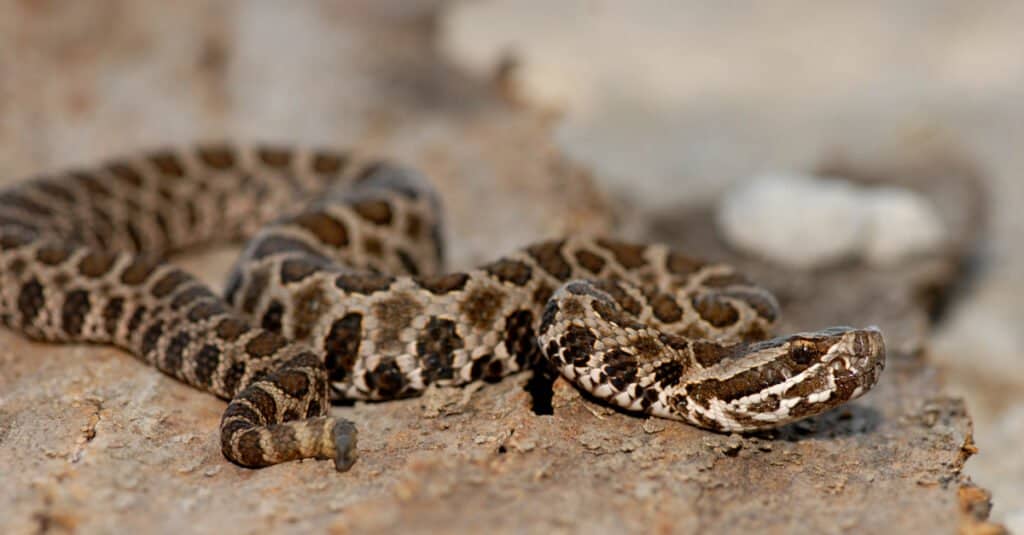
Massasauga rattlesnakes tend to avoid people, so most snake bites occur when the snake is deliberately handled or accidentally stepped on.
©Rusty Dodson/Shutterstock.com
While the species is listed as an animal of Least Concern on the IUCN Red List, the Eastern massasauga is considered endangered in several US states. It is also considered to be extirpated (regionally extinct) in Missouri.
The Western Massasauga has two subspecies:
- Plains massasauga (Sistrurus tergeminus tergeminus)
- Desert massasauga (S. t. edwardsii)
The massasauga rattlesnake:
- Scientific name: Sistrurus catenatus and Sistrurus tergeminus
- Other names: massasauga rattlesnake, black massasauga, black snapper, gray rattlesnake, muck rattler, swamp rattler, víbora de cascabel, Kirtland’s rattlesnake, Michigan point rattler, swamp massasauga, triple-spotted rattlesnake
- They average 24-36 inches long
- They eat insects, reptiles, and small mammals
Rock Rattlesnake
The rock rattlesnake (Crotalus lepidus) is distributed across Arizona, New Mexico, Texas, and Central Mexico. Rock rattlesnakes are good at camouflaging themselves in their rocky habitat. Even intrepid hikers may accidentally step on one or touch one while navigating a rock scramble or climb, provoking a bite.
The bite of the rock rattlesnake is considered dangerous and a medical emergency, though fatalities are exceptionally rare.
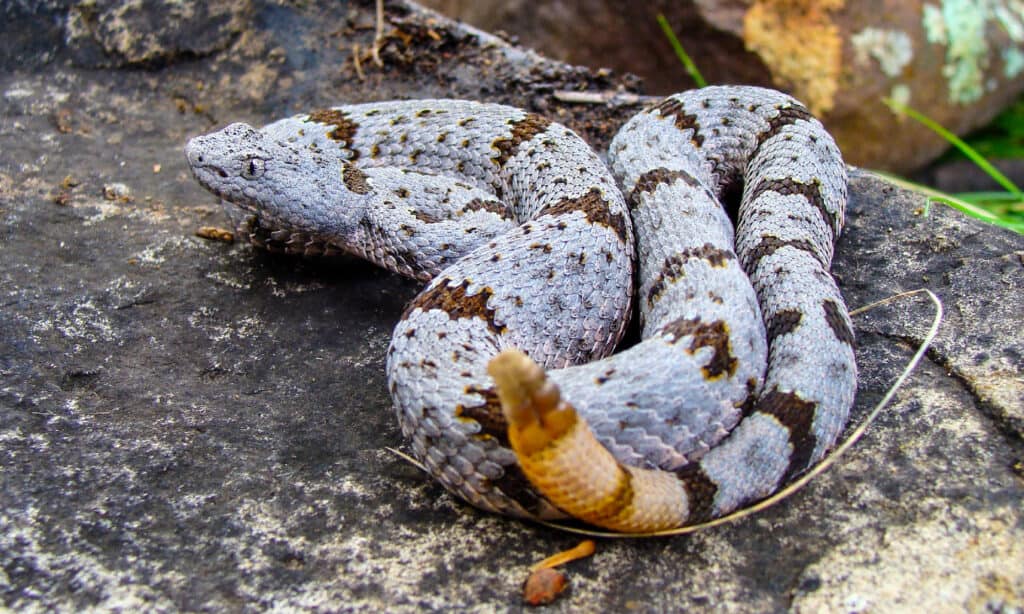
Rattlesnakes are among the most biologically advanced and recently evolved snakes on Earth.
©Matt Jeppson/Shutterstock.com
There are three subspecies of rock rattlesnake:
- Banded rock rattlesnake (Crotalus lepidus klauberi)
- Mottled rock rattlesnake (C. l. lepidus)
- Durango rock rattlesnake (C. l. maculosus)
The rock rattlesnake:
- Scientific name: Crotalus lepidus
- Other names: blue rattlesnake, eastern rock rattlesnake, green rattlesnake, Texas rock rattlesnake, white rattlesnake
- They are no more than 32 inches long
- They are named for their habitat: rocky areas
- They can survive in colder temperature areas than other rattlesnake species
- They eat lizards, small mammals, and frogs
Mojave Rattlesnake
The Mojave rattlesnake (Crotalus scutulatus) is found in the Southwest United States and Mexico.
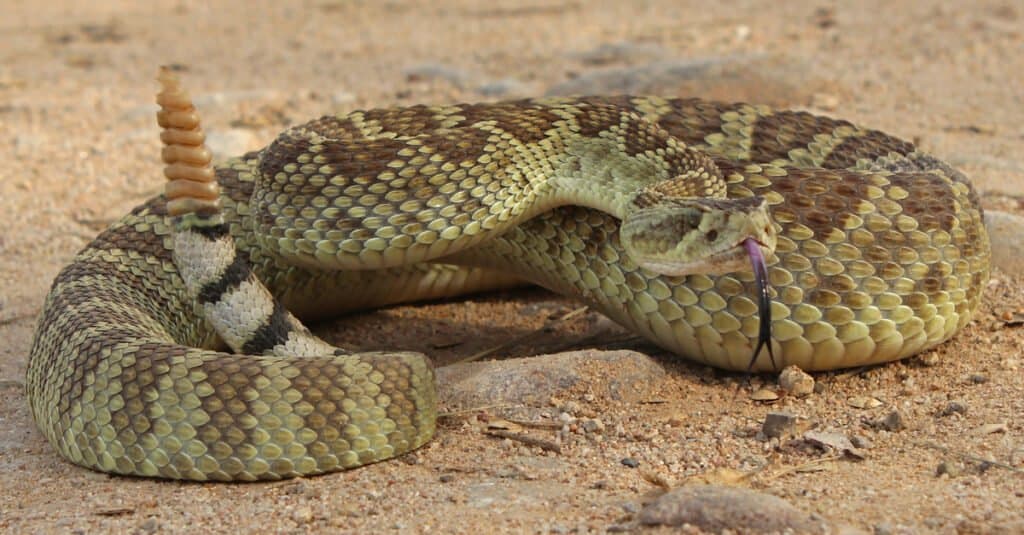
The Mojave rattlesnake has what is widely considered the most potent and lethal venom of any snake in North America.
©Creeping Things/Shutterstock.com
There are two subspecies of Mojave rattlesnakes:
- Mojave rattlesnake (Crotalus scutulatus scutulatus)
- Humantla rattlesnake (C. s. salvini)
Mojave rattlesnake venom is dangerous because it has both neurotoxic and hemotoxic properties. Most snake venoms have either one or the other. Neurotoxins affect the nervous system, while hemotoxins affect the blood — either by killing red blood cells, causing blood clots, preventing blood from clotting, or destroying organs.
If you do get bitten, antivenin is extremely effective in treating Mojave rattlesnake bites, making fatalities from this snake’s bite rare. Before the invention of antivenin, the mortality rate was estimated to be between 5% and 25%.
The Mojave rattlesnake:
- Scientific name: Crotalus scutulatus
- Other names: Mojave green
- They grow about 3 feet long on average
- Mojave rattlesnakes eat birds, small mammals, and lizards
Tiger Rattlesnake
The tiger rattlesnake (Crotalus tigris) gets its name from the appearance of stripes. It is found in Arizona and Mexico. These snakes are not the most active. One study showed that, on average, the snakes move only 108 feet per day during their most active season.
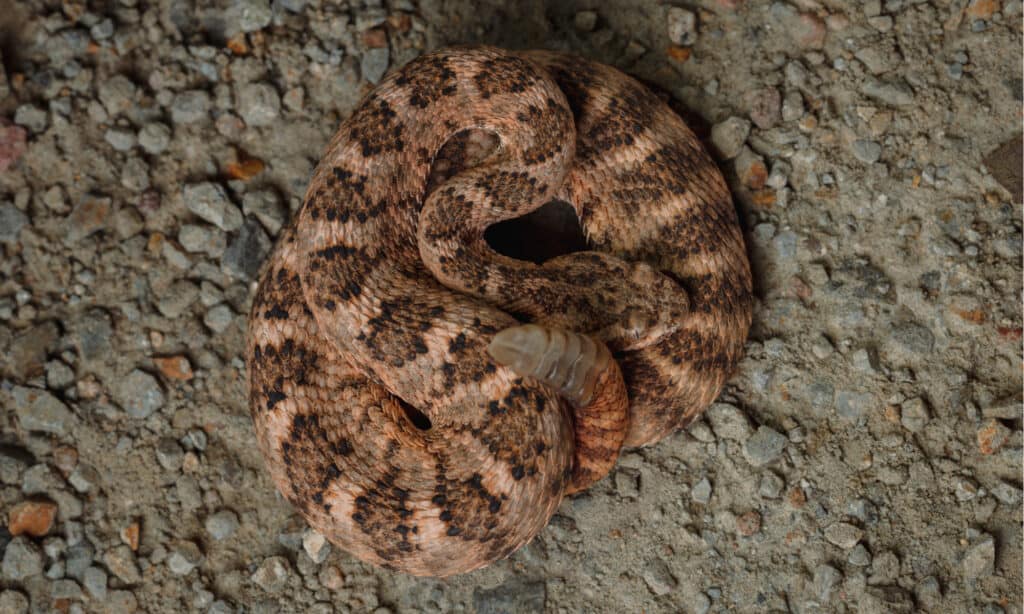
Tiger rattlesnake venom is extremely potent.
©Alexander Wong/Shutterstock.com
The tiger rattlesnake has the second most toxic venom of any rattlesnake, and the second most toxic of any snake in the Western Hemisphere. However, its bites do not deliver much venom, so they are rarely fatal.
The tiger rattlesnake:
- Scientific name: Crotalus tigris
- It has the smallest head of all rattlesnake species
- They are 2 feet long on average
- They primarily eat small rodents but can also eat lizards
Speckled Rattlesnake
The speckled rattlesnake (Crotalus mitchellii) is found in the Southwestern United States, including California, Nevada, Utah, and Arizona. It is also present in Mexico, primarily in Baja California.
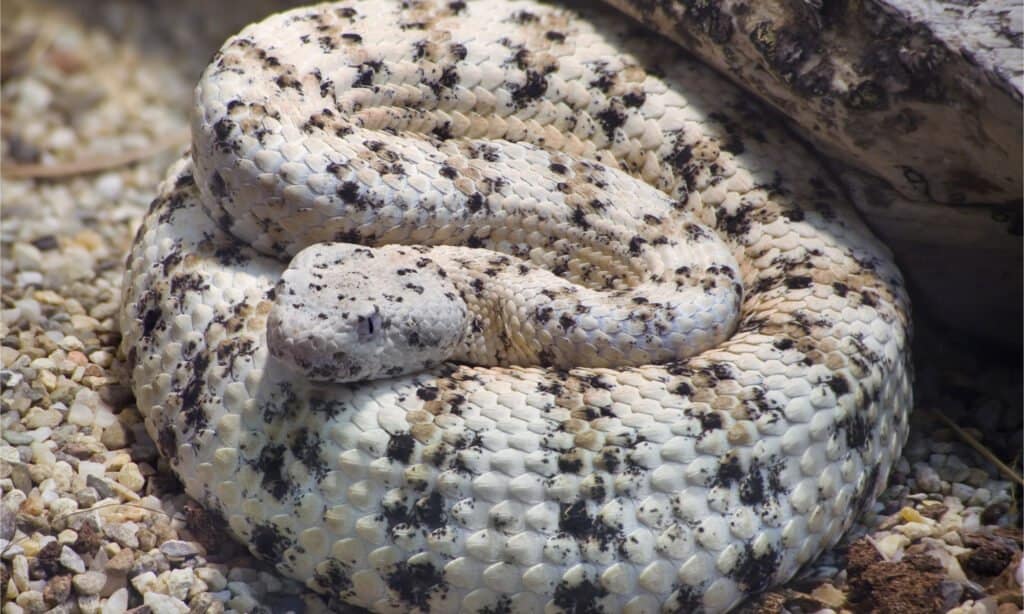
Rattlesnakes do not have eardrums. When they shake their rattle, they are warning you, but they cannot actually hear the sound themselves.
©Dario Sabljak/Shutterstock.com
There are three subspecies of the speckled rattlesnake:
- San Lucan speckled rattlesnake (Crotalus mitchellii mitchellii)
- El Muerto Island speckled rattlesnake (C. m. muertensis)
- Southwestern Speckled Rattlesnake (C. m. pyrrhus)
The speckled rattlesnake:
- Scientific name: Crotalus mitchellii
- Other names: Mitchell’s rattlesnake, white rattlesnake
- The scientific name honors Dr. S.W. Mitchell, a physician who conducted research on snake venom
- They eat lizards and rodents more often than birds
Panamint Rattlesnake
Panamint rattlesnakes (Crotalus stephensi) are found in California and Nevada at elevations of 3,000 to nearly 8,000 feet. The scientific name is in honor of Frank Stephens, a former curator emeritus of the San Diego Society of Natural History, who was on the expedition during which this snake was first identified.
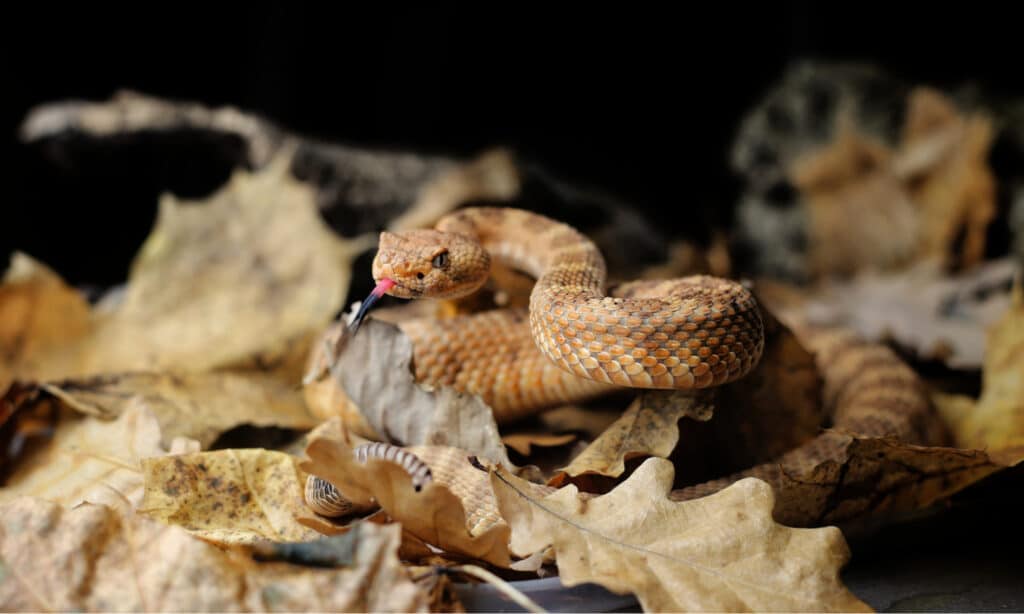
From 1930 until 2007, the Panamint Rattlesnake was officially classified as a subspecies of the speckled rattlesnake.
©Marina Kehl/Shutterstock.com
The Panamint rattlesnake:
- Scientific name: Crotalus stephensi
- Other names: Owen’s Valley rattler, tiger rattlesnake
- They grow 2-3 feet long on average
- Babies are about 10 inches long when born
- They eat small mammals, birds, and lizards
- They get their common name from the Panamint Mountains in Death Valley National Park
Black-tailed Rattlesnake
There are two distinct species of black-tailed rattlesnakes: the Northern/Western black-tailed rattlesnake (Crotalus molossus) and the Eastern/ornate black-tailed rattlesnake (Crotalus ornatus).
The Northern black-tailed rattlesnake is found in the United States in Arizona, Texas, and New Mexico. It is also found in Mexico. The Eastern or ornate black-tailed rattlesnake occupies a specific geographic area within the Eastern portion of the broader black-tailed rattlesnake territory.
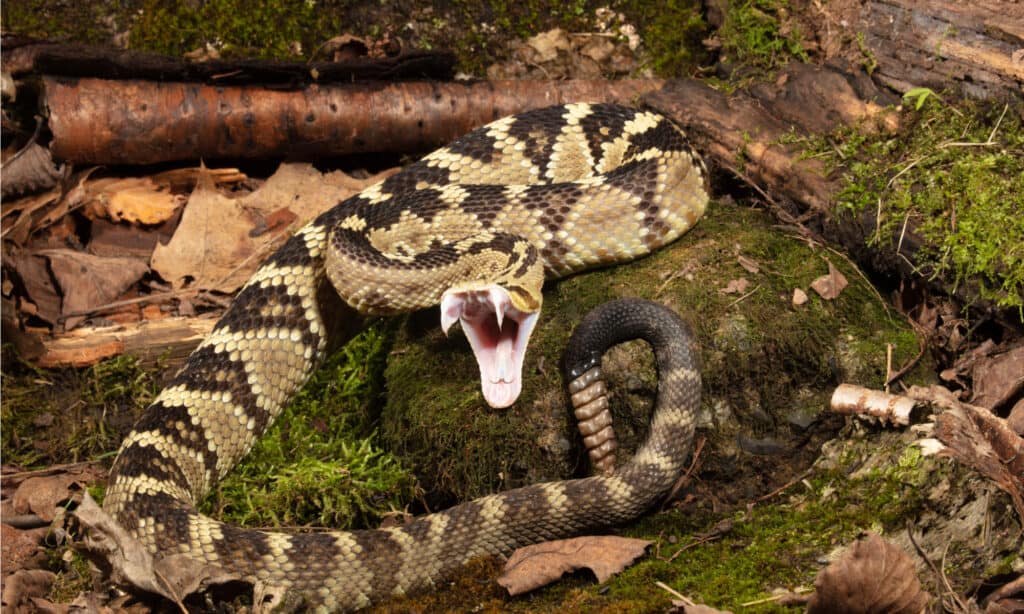
Juvenile black-tailed rattlesnakes have a different type of venom than mature black-tailed rattlesnakes.
©Joe McDonald/Shutterstock.com
There are two subspecies of black-tailed rattlesnakes that are currently found in Mexico:
- Mexican black-tailed rattlesnake (C. m. nigrescens)
- Oaxacan black-tailed rattlesnake (C. m. oaxacus)
Although black-tailed rattlesnake bites are unlikely to be fatal, it is imperative to seek treatment if bitten, as bites are rare but serious.
The black-tailed rattlesnake:
- Scientific name: Crotalus molossus
- they can easily be identified by their all-black tails
- They are nocturnal in the summer, but in spring and fall they are most active during the day
- They are usually between 30 and 40 inches
- The largest black-tailed rattlesnake ever seen was 49.2 inches long
- They have a typical rattlesnake diet of small mammals and lizards
Prairie Rattlesnake
The prairie rattlesnake (Crotalus viridis) is found in the U. S. Midwest, Southwest, and the Rocky Mountains. They are also found in two Canadian provinces, Saskatchewan and Alberta, and in Northern Mexico.
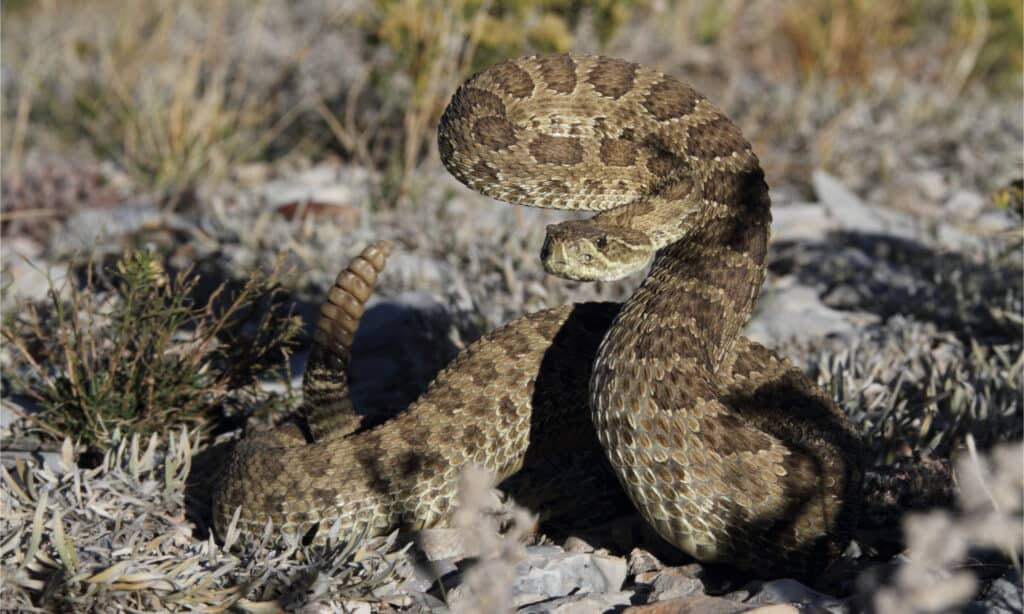
All rattlesnake species have the physiological capability to deliver a bite without injecting any venom, which is universally termed a dry bite.
©Harris Motion Photo/Shutterstock.com
There are two subspecies of the prairie rattlesnake:
- Prairie rattlesnake (Crotalus viridis viridis)
- Hopi rattlesnake (C. v. nuntius)
Prairie rattlesnakes only come out to feed in the morning and will only strike if threatened.
The prairie rattlesnake:
- Scientific name: Crotalus viridis
- Other names: Great Plains rattlesnake, Arizona prairie rattlesnake
- The largest prairie rattlesnake on record is nearly 5 feet long
- They grow on average to be a bit more than 3 feet long
- Due to their wide range, they feed on a large variety of small mammals
- They have the largest habitat of any rattlesnake in the US
Red Diamond Rattlesnake
The red diamond rattlesnake (Crotalus ruber) is found in Southwestern California as well as Baja California in Mexico. This medium-sized snake has less toxic venom than some rattlesnakes, but it can still deliver a larger amount of venom.
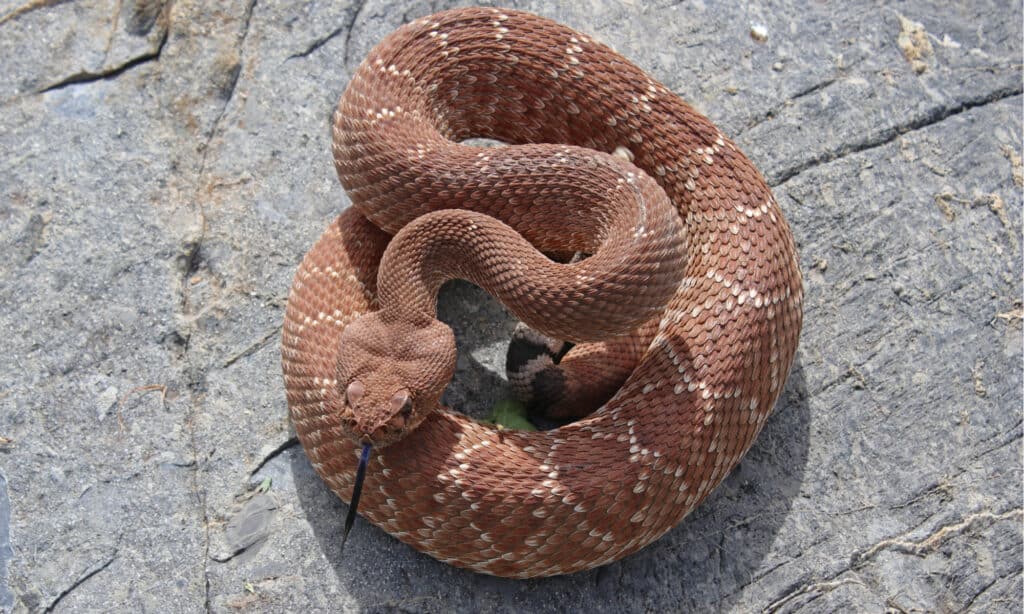
The red diamond rattlesnake’s venom is drop-for-drop less toxic than other rattlesnakes, but it compensates by delivering a much larger dose.
©Creeping Things/Shutterstock.com
There are three subspecies of red diamond rattlesnake. Most subspecies are distinguished by their geographic range. For example, the Cedros Island red diamond rattlesnake is only found on Cedros Island.
- Cedros Island red diamond rattlesnake (Crotalus ruber exsul)
- San Lucan red diamond rattlesnake (C. r. lucasensis)
- Red diamond rattlesnake (C. r. ruber)
The red diamond rattlesnake:
- Scientific name: Crotalus ruber
- Other names: red rattlesnake, red diamond snake, red diamond-backed rattlesnake, red rattler, western diamond rattlesnake, Cedros Island diamond rattlesnake, Cedros Island rattlesnake
- They can eat prey as large as rabbits and ground squirrels
- The largest red diamond rattlesnake ever found was 64 inches long
- They are about 3 feet long on average
- They are easily identified by their red color with diamond pattern on their body, plus a tail with black and white striped rings