
Quick Take
- One state proudly displays an official animal that no longer exists anywhere on Earth.
- A single species dominates so many state lists that its dominance reveals something telling about America's wildlife history.
- Two states went to war over the right to claim the same animal, and one of them lost badly.
- Several state animals aren't wild at all, and the reasoning behind those picks is stranger than you'd expect.
Every state has an official animal, but most people don’t know what they are. That’s why A-Z Animals has put together this list of every state and its state animal, including a fun fact about each animal and its current conservation status. Some interesting patterns became apparent while compiling this list. For example, several states use birds instead of mammals. Furthermore, the white‑tailed deer has been designated as a state animal or official mammal in 11 U.S. states. Other popular choices include black bears and buffalo. Without further ado, let’s dive into a list of every state’s animal and their background. Some of them might surprise you.
Alabama
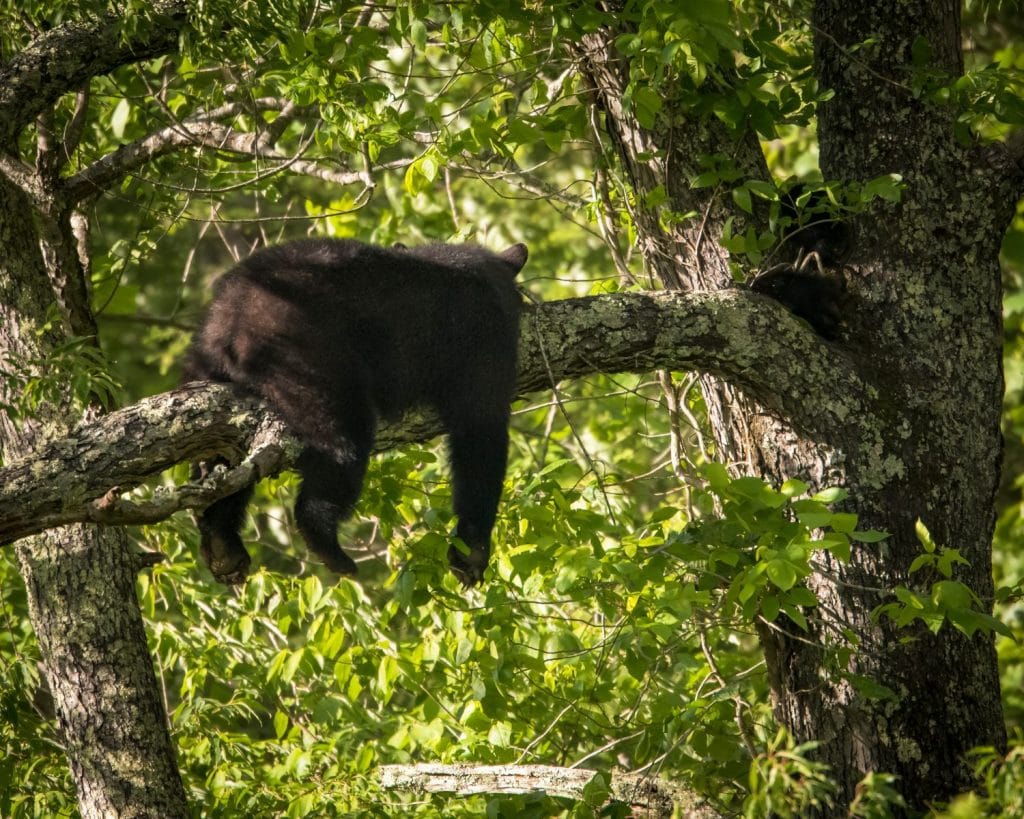
Black bears only became the state animal of Alabama in 2006.
©Ben McMurtray/Shutterstock.com
- Animal: Black bear
- Inclusion: Alabama students chose the black bear as the state animal because it was both the biggest mammal and one of the rarest. A relatively recent addition, Governor Bob Riley signed a bill in 2006 that made the black bear Alabama’s state animal.
- Conservation Status: Least Concern
- Fun Fact: Bears like black bears have the largest brain size relative to their bodies of any carnivore.
Alaska
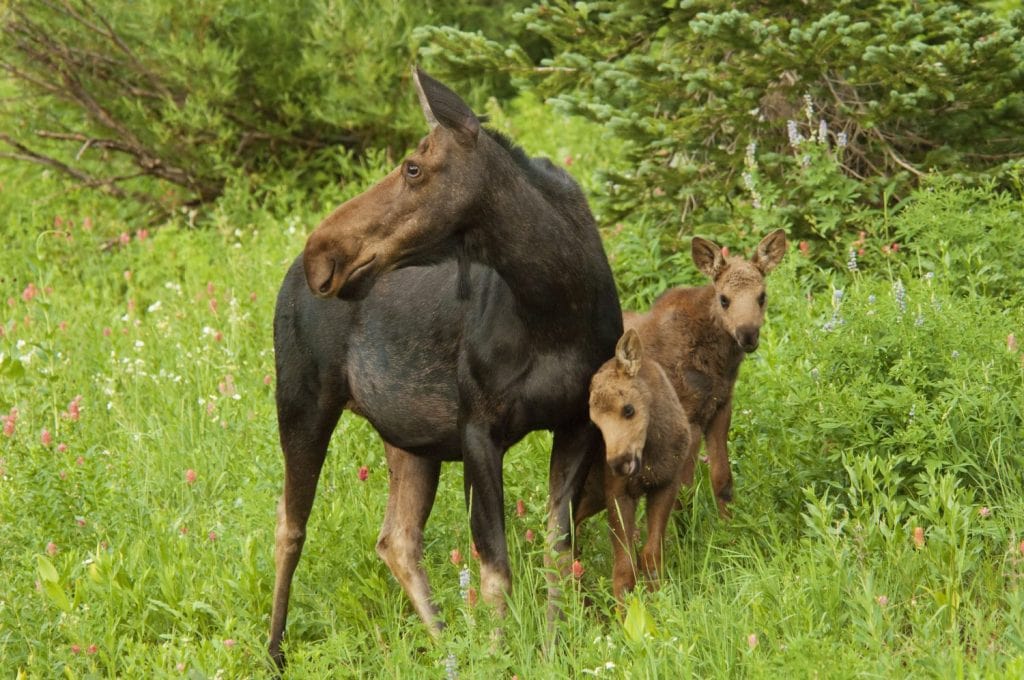
Moose calves can outrun fully grown humans by the time they are five days old.
©MintImages/Shutterstock.com
- Animal: Moose
- Inclusion: A long-held symbol of the Alaskan game, and relatively common in the state.
- Conservation Status: Least Concern
- Fun Fact: Moose grow fast. A moose calf grows so fast that they can outrun a person by the time they are five days old.
Arizona

Ringtails were chosen as the Arizona state animal in 1986.
©Ken Griffiths/Shutterstock.com
- Animal: Ringtail
- Inclusion: Chosen as the state animal in 1986, likely because it’s one of the more unique mammals in the state.
- Conservation Status: Least Concern
- Fun Fact: Due to their “mousing” skills, ringtails were used in frontier mines to control rodent populations. This earned them the nickname, “miner’s cat.”
Arkansas
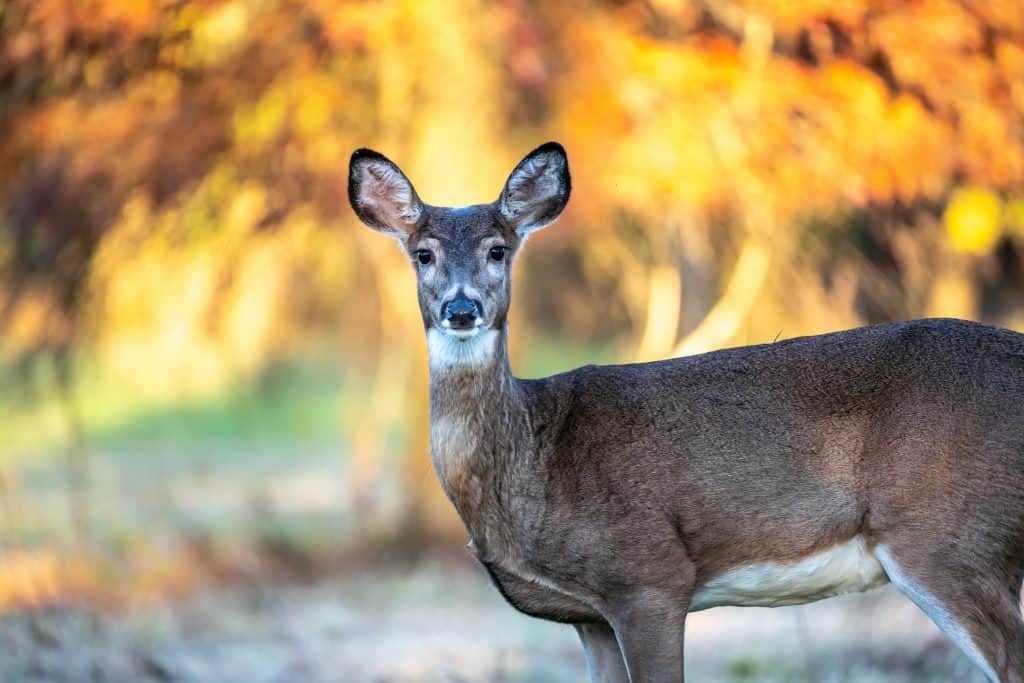
White-tailed deer are a regular sight in the many forests of Arkansas.
©Amy Lutz/Shutterstock.com
- Animal: White-tailed deer
- Inclusion: A long-held staple food for both indigenous tribes and later settlers, white-tailed deer are a common sight in Arkansas forests.
- Conservation Status: Least Concern
- Fun Fact: Some white-tailed deer can jump up to eight feet high.
California
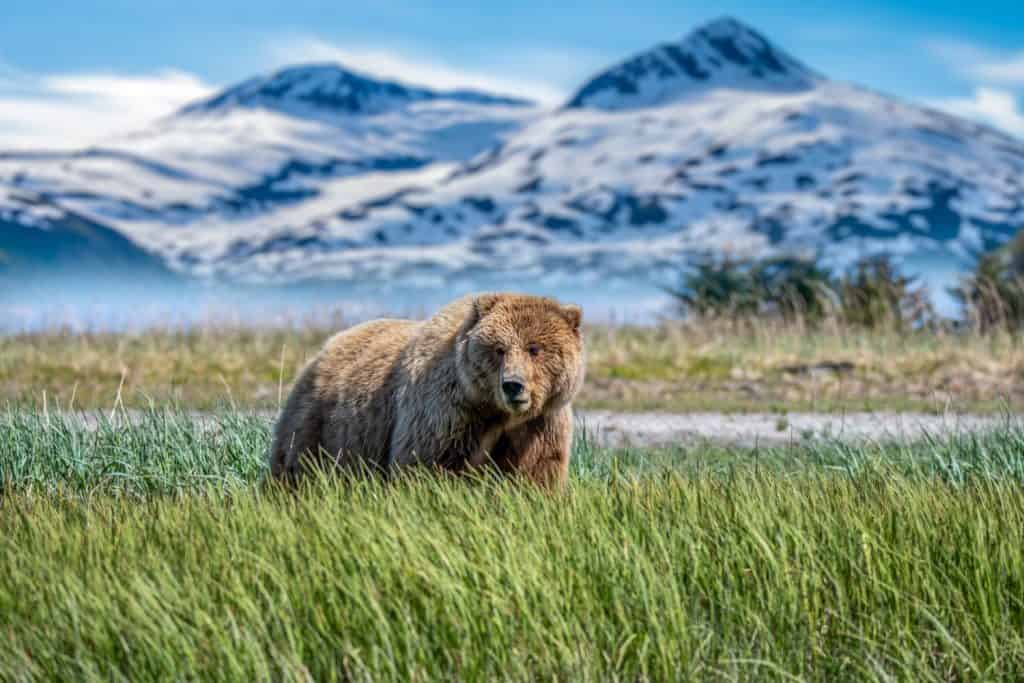
Once a common sight in California, the California grizzly bear has since gone extinct.
©Fotopro_929/Shutterstock.com
- Animal: California grizzly bear
- Inclusion: Deemed the state animal in 1953, grizzly bears were once common in the valleys and low mountain ranges of California. However, it has since gone extinct.
- Conservation Status: Extinct
- Fun Fact: Grizzly bears can live up to 30 years in the wild, but usually die around age 25.
Colorado
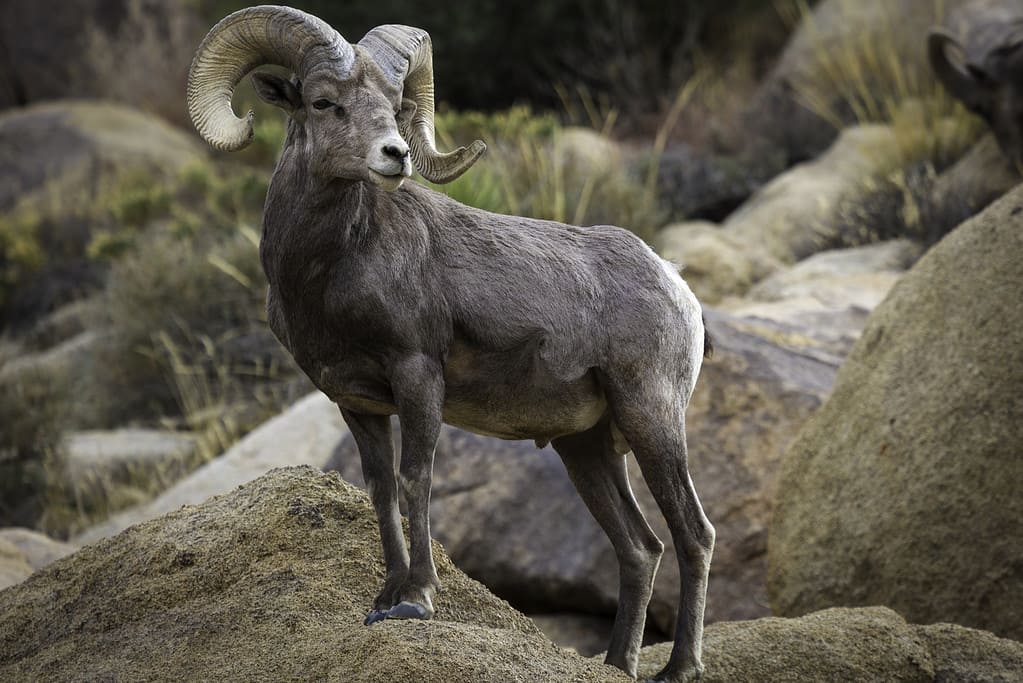
Big Horn sheep are ferocious, but resilient creatures.
©desertsolitaire/iStock via Getty Images
- Animal: Rocky Mountain bighorn sheep
- Inclusion: Made the state animal in 1961 after the general assembly passed a bill; these sheep can only be found in the Rocky Mountains.
- Conservation Status: Least Concern
- Fun Fact: Male bighorn sheep have horns that can weigh up to 30 pounds.
Connecticut
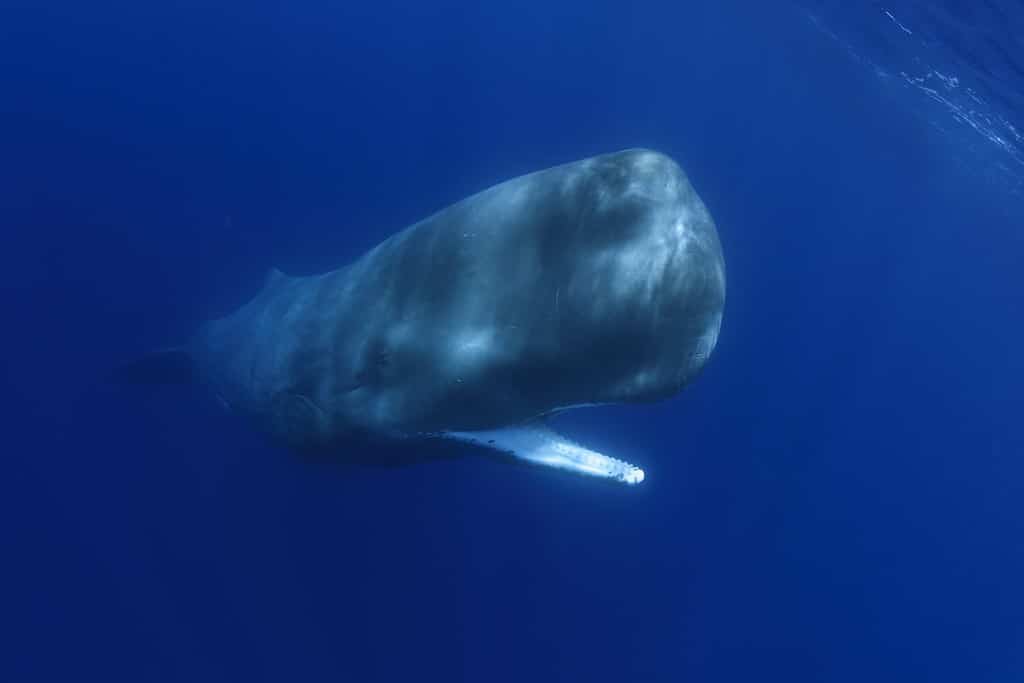
Despite living in the water, Connecticut chose sperm whales because of the state’s historic involvement in the whaling industry.
©Thierry Eidenweil/Shutterstock.com
- Animal: Sperm whale
- Inclusion: Chosen as the Connecticut state animal due to the area’s historic involvement in the whaling industry.
- Conservation Status: Vulnerable
- Fun Fact: These whales have the largest brains of any living mammal.
Delaware
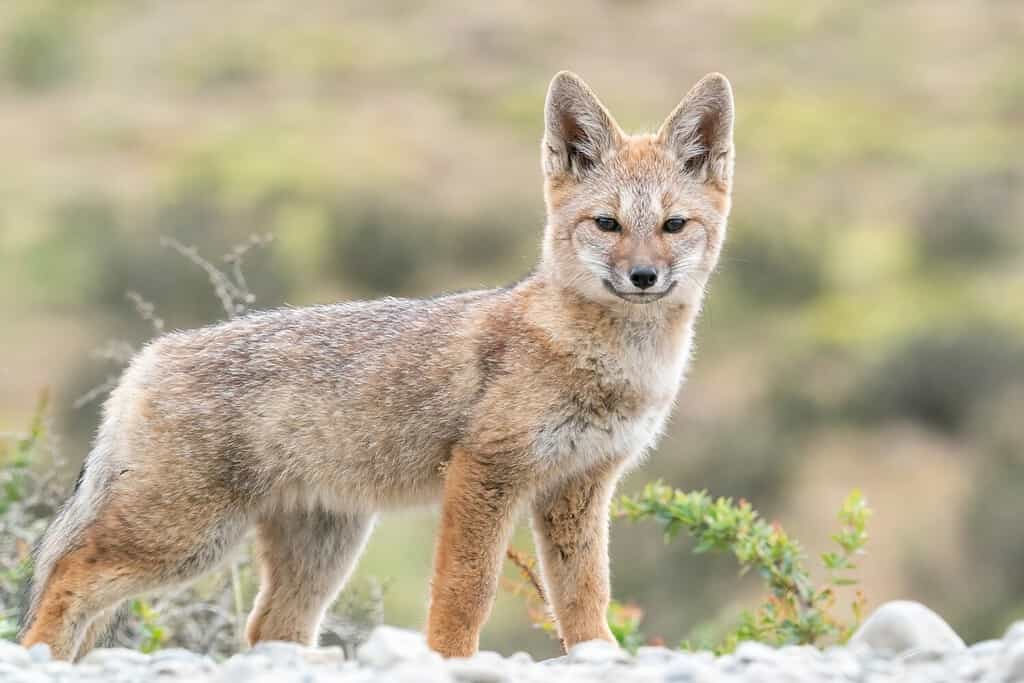
Relatively abundant in Delaware, grey foxes adapt well to both rural and urban environments.
©Rob Jansen/Shutterstock.com
- Animal: Grey fox
- Inclusion: Designated as the state animal after the passing of a bill by Governor Jack A. Markell in 2010 to both recognize the state’s wildlife and help preserve creatures like grey foxes.
- Conservation Status: Least Concern
- Fun Fact: One of only two canine species that can climb trees.
Florida
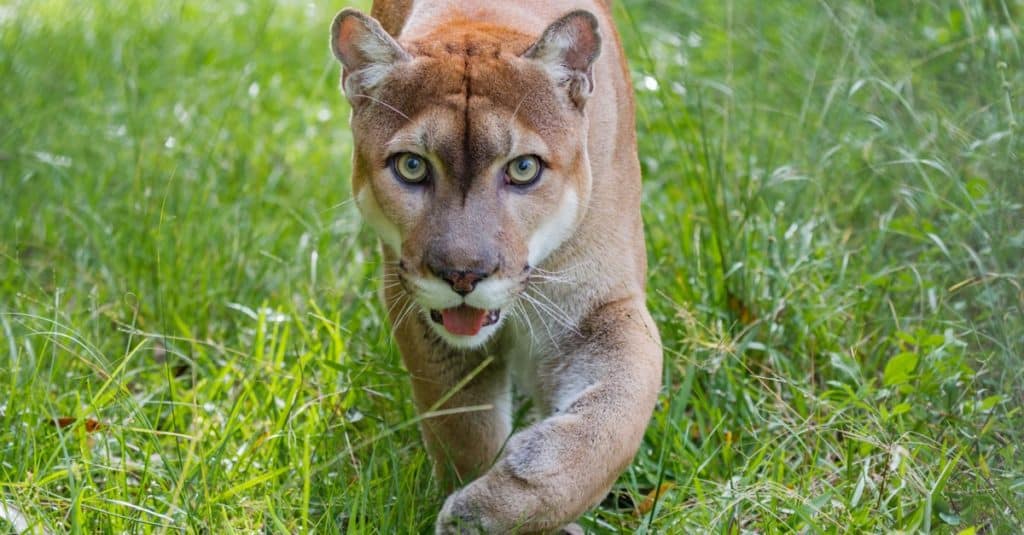
An increasingly rare sight in the state’s swamps, the Florida Panther is an enigmatic, yet enduring symbol of the state’s vibrant fauna.
©jo Crebbin/Shutterstock.com
- Animal: Florida Panther
- Inclusion: Chosen by students in a 1982 statewide vote because it was one of the most endangered and biggest animals in Florida.
- Conservation Status: Endangered
- Fun Fact: Florida Panther kittens are born with blue eyes, which helps them hide in the state’s undergrowth.
Georgia
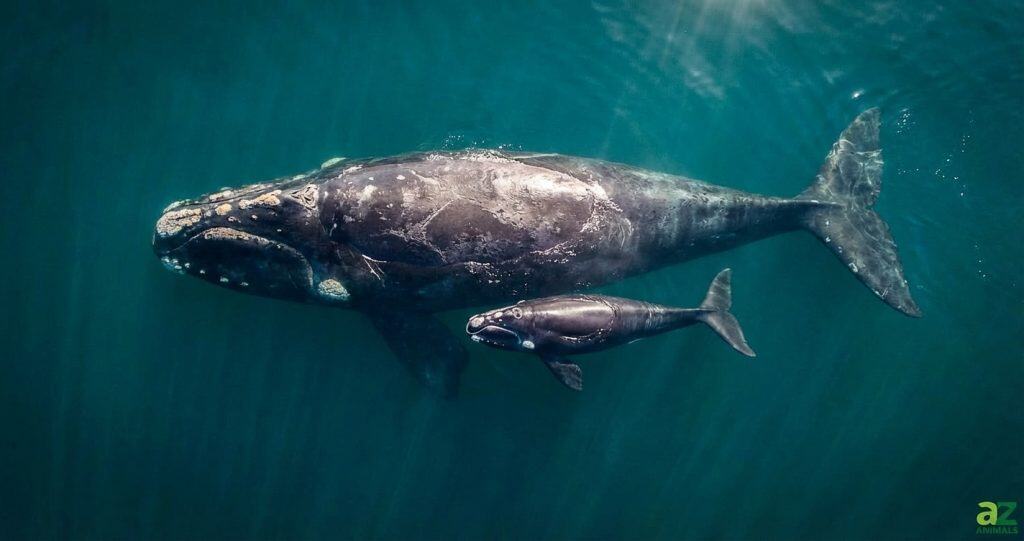
Georgia also has a state marine mammal, the North Atlantic right whale.
©A-Z Animals
- Animal: White-tailed deer
- Inclusion: They were officially made the state animal in 2015, but Georgia also features a state marine mammal in the form of the North Atlantic right whale.
- Conservation Status: Least Concern
- Fun Fact: White-tailed deer eat nuts, acorns, fruits, and even twigs.
Hawaii
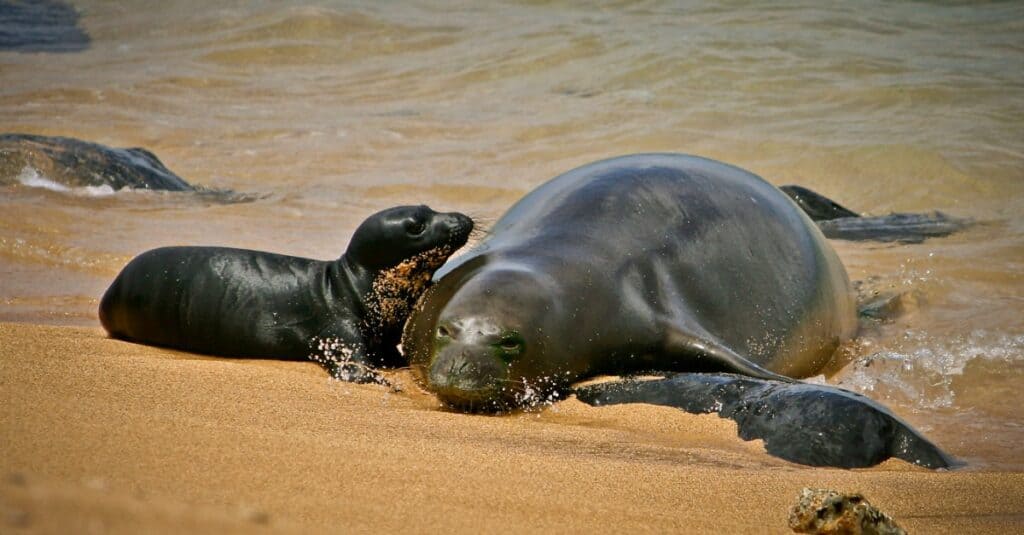
Fewer than two thousand individual monk seals remain in the wild.
©iStock.com/JudyLaNier
- Animal: Hawaiian monk seal
- Inclusion: Chosen as the state mammal because it’s endangered; fewer than two thousand individuals remain in the wild.
- Conservation Status: Endangered
- Fun Fact: Hawaiian monk seals are the only species of seal indigenous to Hawaii and one of only two mammals unique to the state’s constellation of islands.
Idaho
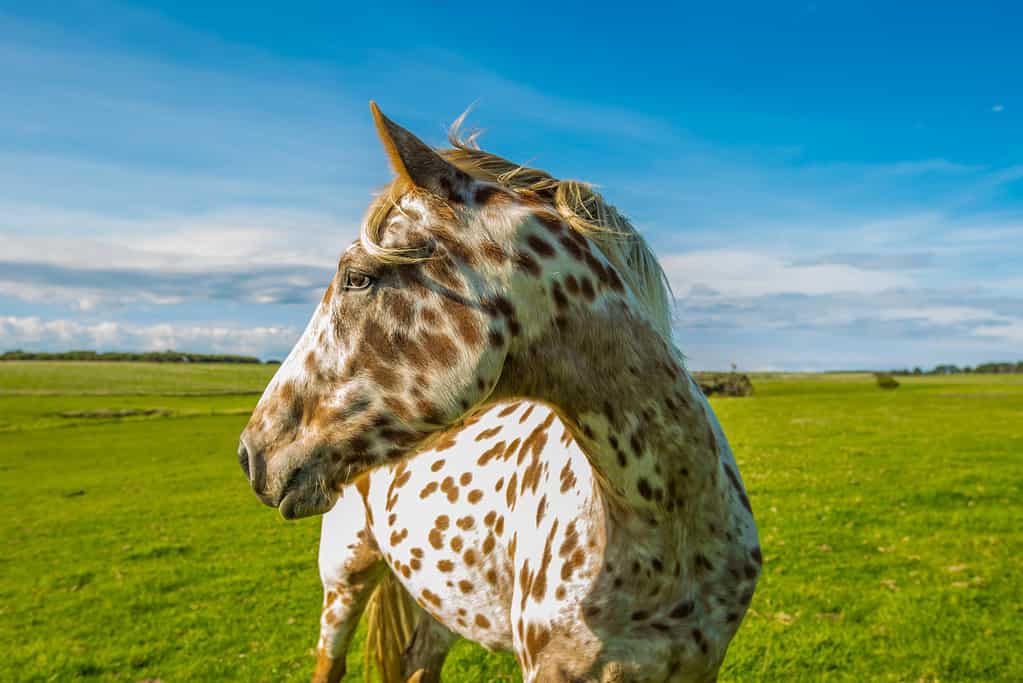
The Appaloosa horse has been bred by the indigenous Nez Perce Tribe since the mid-18th century.
©Anara55/iStock via Getty Images
- Animal: Appaloosa horse
- Inclusion: Chosen as the state animal in 1975, the Appaloosa horse is an enduring symbol of the state. The indigenous Nez Perce tribe bred these horses through a rigorous system, which eventually gave the horses a spotted color.
- Conservation Status: Domesticated, N/A
- Fun Fact: Appaloosa horses can weigh up to 1,250 pounds, which is almost as much as a giraffe.
Illinois
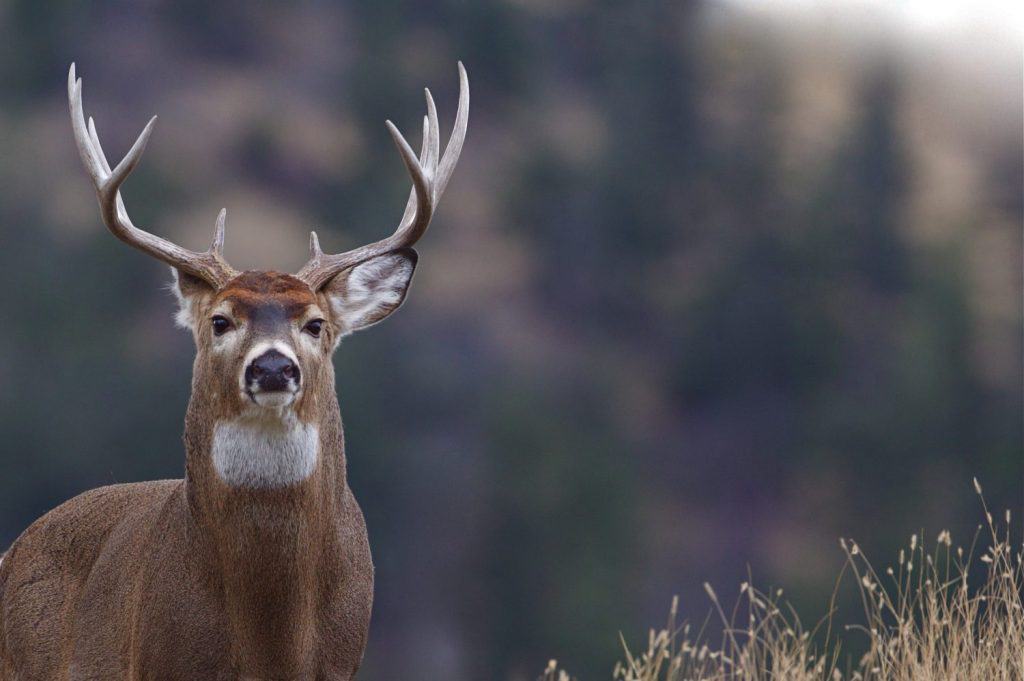
The white-tailed deer was chosen as the state animal by students in a 1980 poll.
©Tom Reichner/Shutterstock.com
- Animal: White-tailed deer
- Inclusion: Chosen as the state animal in 1980 after Illinois students voted for it in a poll. This was later signed into law by the General Assembly and the Illinois State Museum.
- Conservation Status: Least Concern
- Fun Fact: White-tailed deer are common in Illinois. However, they are also the state animal for several other states due to their widespread distribution across North America.
Indiana
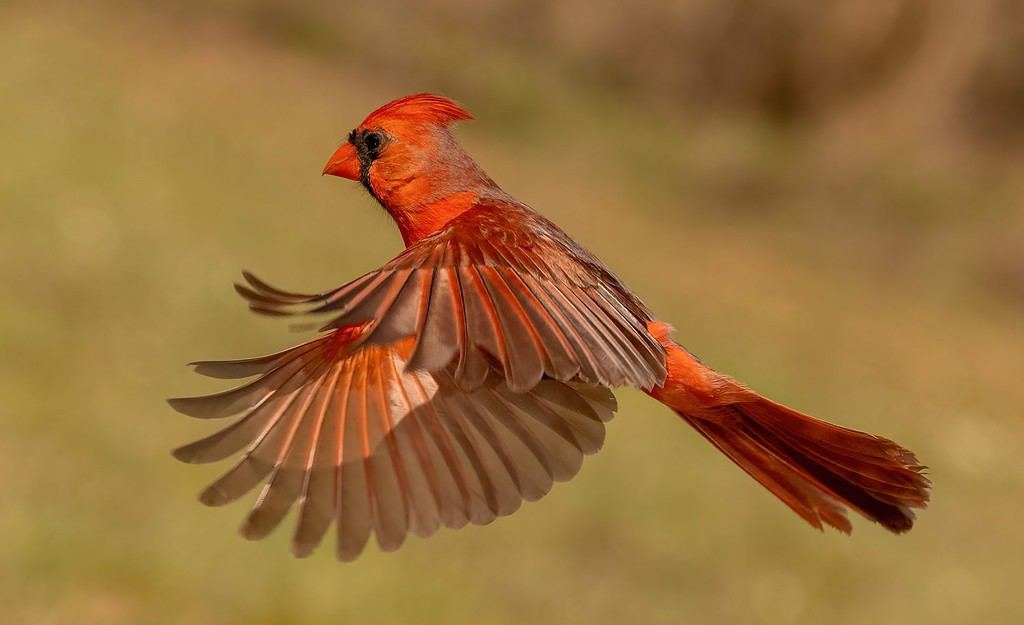
Northern Cardinals are the state bird of seven other states.
©Thomas Torget/Shutterstock.com
- Animal: Northern Cardinal
- Inclusion: Due to Indiana being a perfect habitat for them, the Northern Cardinal was chosen as the state animal in 1933.
- Conservation Status: Least Concern
- Fun Fact: While they usually eat grain, Northern Cardinals are sometimes known to snack on insects and fruits.
Iowa
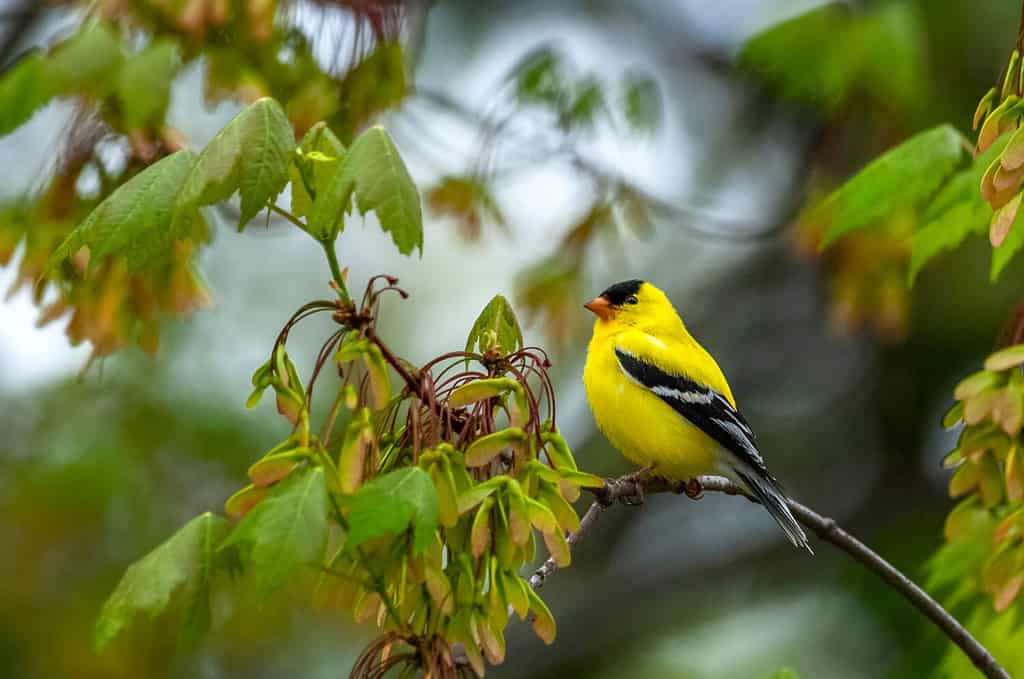
Male goldfinches have bright yellow feathers in the summer. However, in the winter, that color fades considerably.
©Alan B. Schroeder/Shutterstock.com
- Animal: Eastern goldfinch
- Inclusion: Chosen to be Iowa’s state animal in 1933. Though not a mammal, eastern goldfinches are common in Iowa and even stay in the state during its cold winters.
- Conservation Status: Least Concern
- Fun Fact: Many birds eat insects. Goldfinches, however, are some of the strictest vegetarians in the bird world.
Kansas
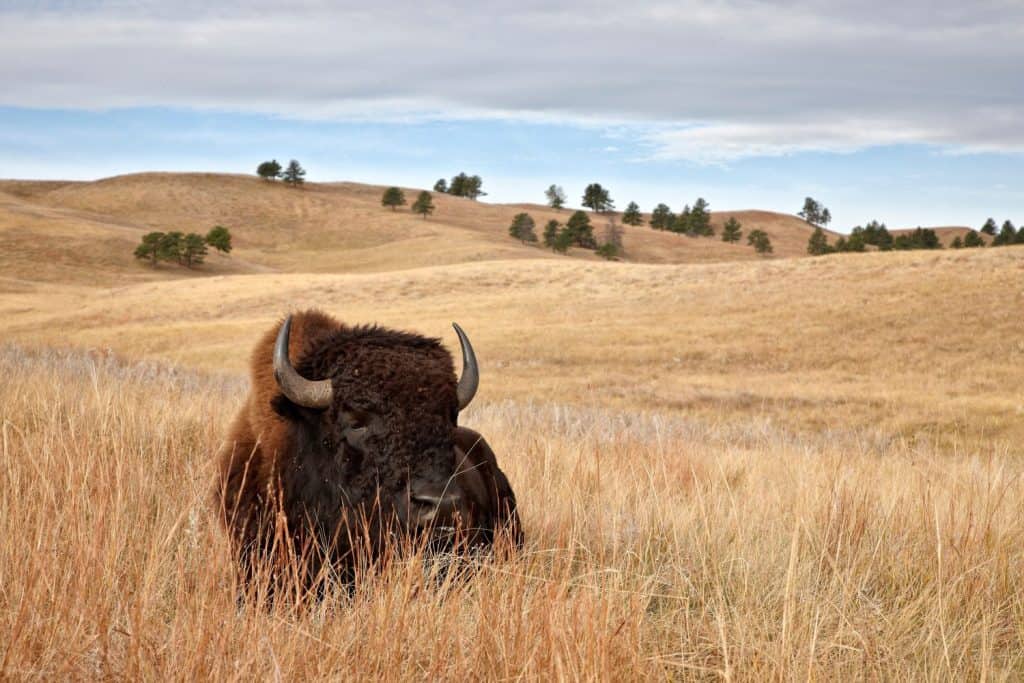
Once boasting numbers in the millions, most American bison now live in human-managed herds.
©Robert Harding Video/Shutterstock.com
- Animal: American bison (buffalo)
- Inclusion: Chosen as the Kansas state animal in 1955. It is also featured on the state’s flag. Kansas bison used to have a population in the millions, but has since dwindled.
- Conservation Status: Near threatened.
- Fun Fact: Bison are the largest mammals in North America, weighing up to 2,000 pounds and standing up to six feet tall.
Kentucky
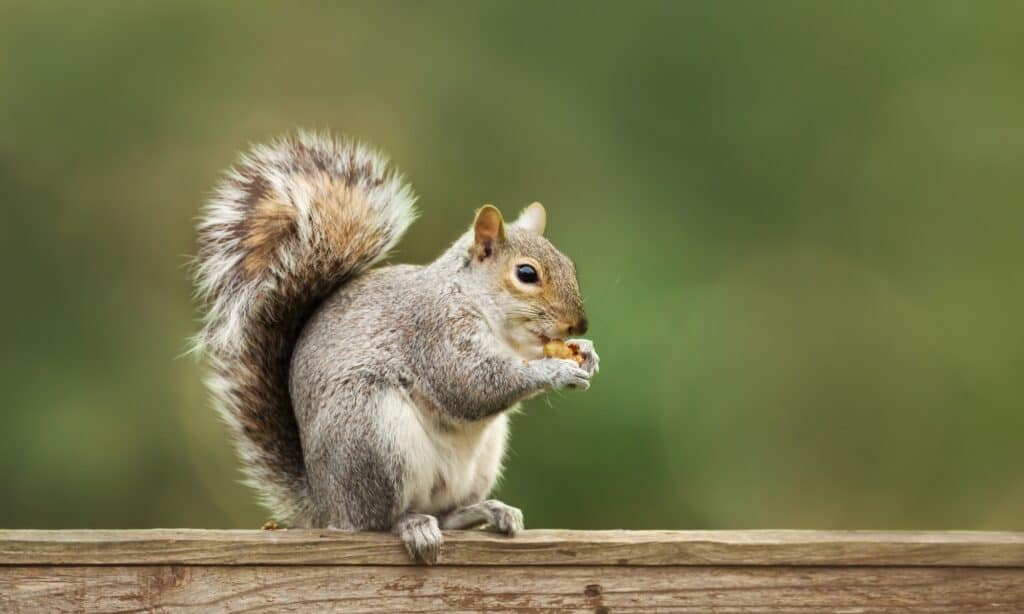
Eastern gray squirrels are a species of squirrel found in the Commonwealth of Kentucky.
©iStock.com/Dgwildlife
- Animal: Gray squirrel
- Inclusion: Chosen as the official state animal by the Kentucky General Assembly in 1968. It was once featured in a traditional stew called Burgoo.
- Conservation Status: Least Concern
- Fun Fact: Female gray squirrels usually have two litters each year, consisting of two to four babies each.
Louisiana
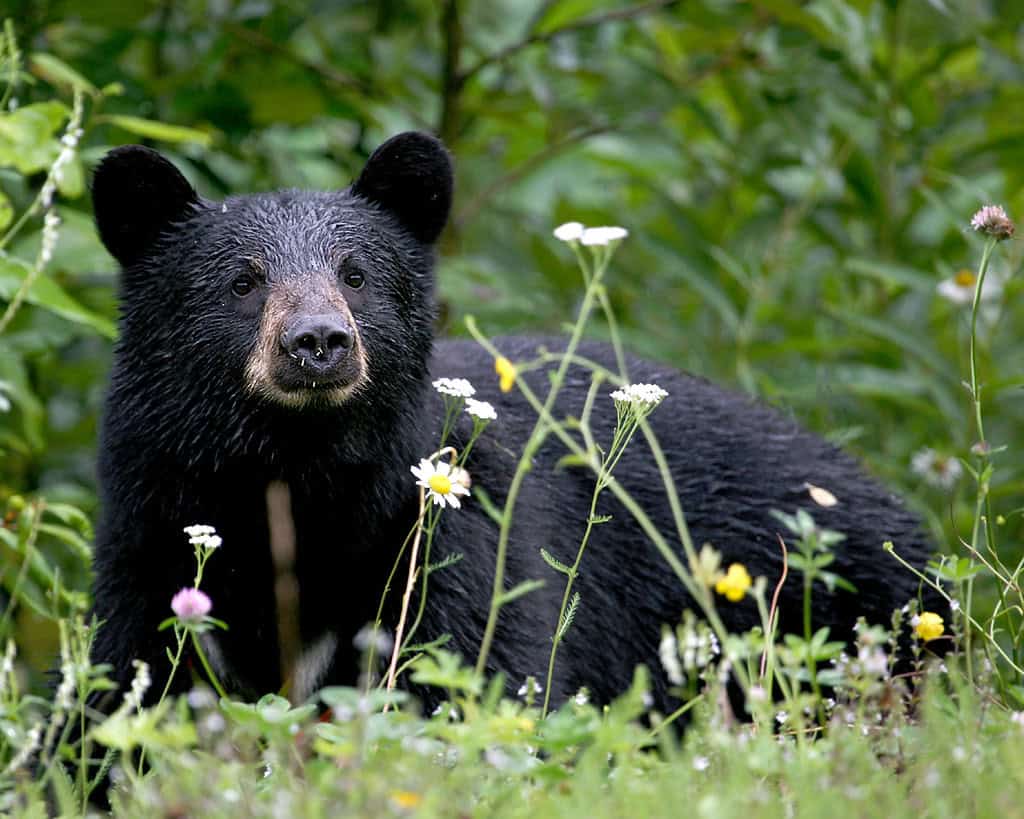
The Louisiana black bear remains a threatened species.
©"Black Bear" by jitze is licensed under BY 2.0. – Original / License
- Animal: Black bear
- Inclusion: Designated the official state animal of Louisiana in 1992 after the United States Fish and Wildlife Service declared the Louisiana black bear a threatened species.
- Conservation Status: Threatened; however, other state populations are stable.
- Fun Fact: Thanks to their relatively short, non-retractable claws, black bears can climb trees pretty easily.
Maine
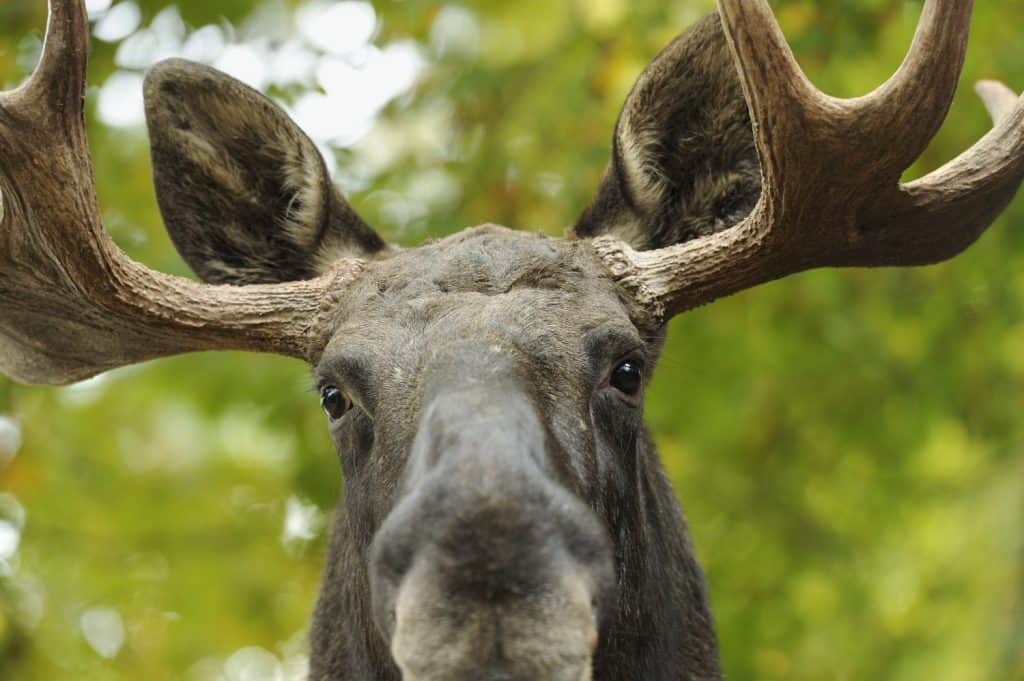
Maine made the moose its state animal in 1979. It is also featured on the state’s official seal.
©Ana Gram/Shutterstock.com
- Animal: Moose
- Inclusion: Long associated with the state’s northern woodlands, Maine designated the moose as its official state animal in 1979.
- Conservation Status: Least Concern
- Fun Fact: Bull moose (males) shed their antlers once per year.
Maryland
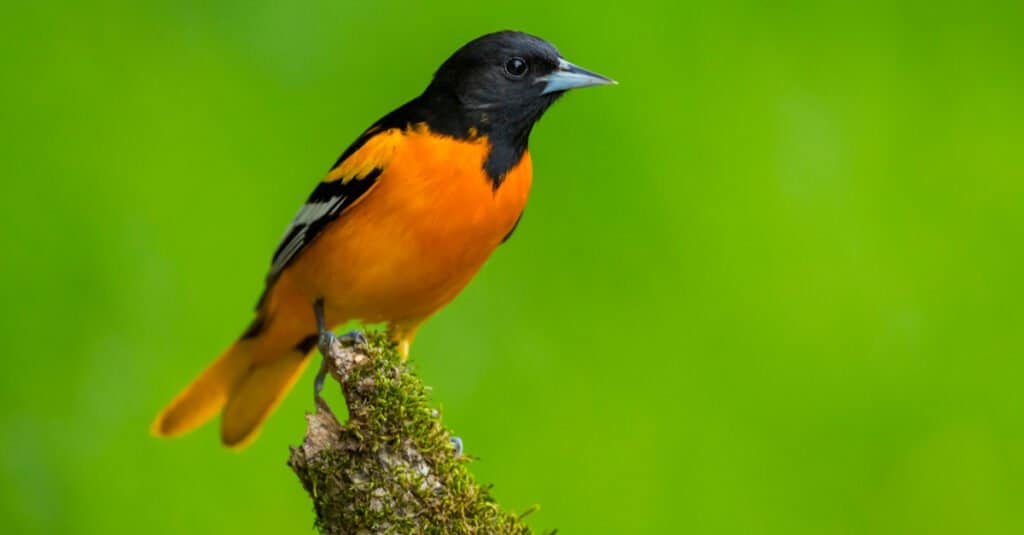
Orioles are widespread in the state of Maryland.
©Agami Photo Agency/Shutterstock.com
- Animal: Baltimore Oriole
- Inclusion: Unlike other states, Maryland does not have a state animal, only a state bird.
- Conservation Status: Least Concern
- Fun Fact: Not only a “beast of curiosity” that saw inclusion in the English royal gardens back in 1698, but also the inspiration for the name of Baltimore’s major league baseball team.
Massachusetts
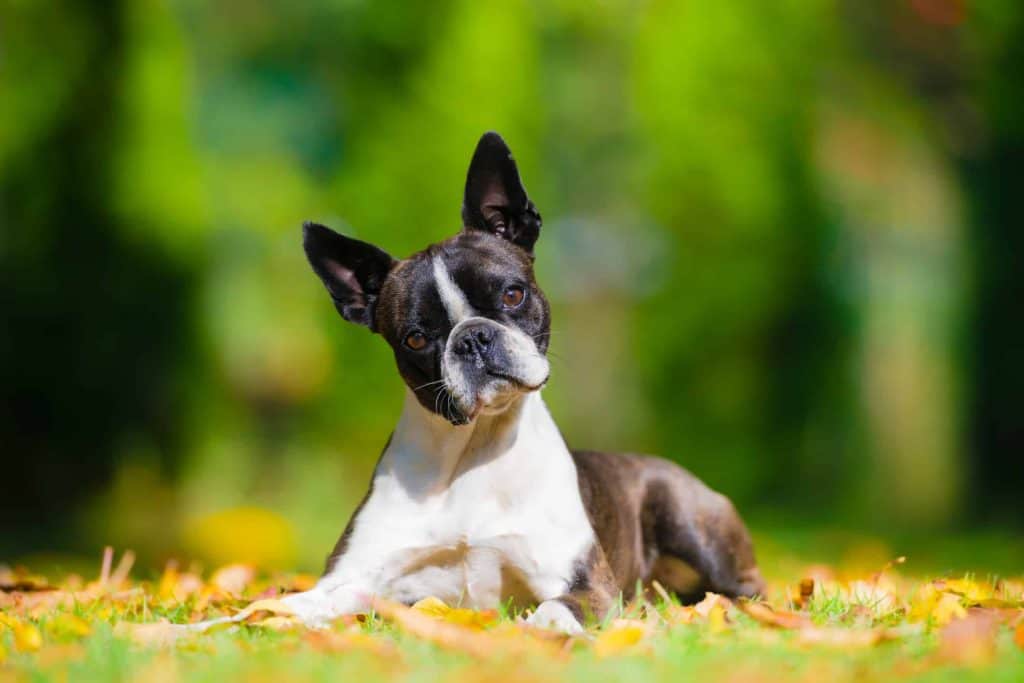
It was the first purebred dog to be produced in the United States.
©iStock.com/Wojciech Kozielczyk
- Animal: Boston Terrier
- Inclusion: Since the Boston Terrier is technically ‘indigenous’ to New England, Massachusetts made it the state animal.
- Conservation Status: Domesticated
- Fun Fact: The first purebred dog to be produced in the United States, starting in 1869.
Michigan
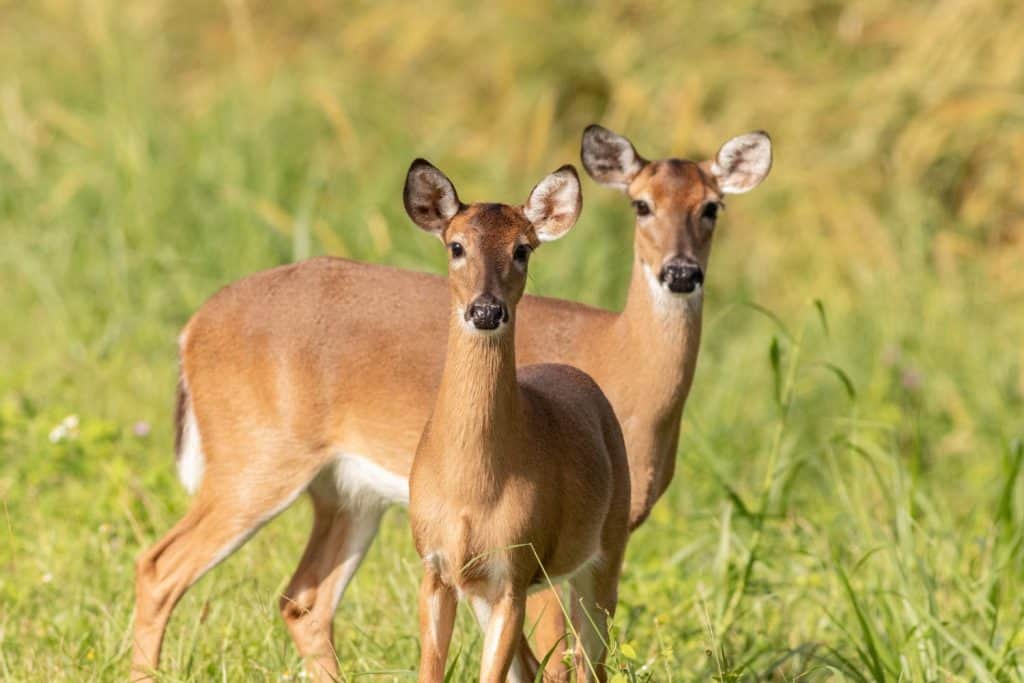
Both the state animal and are featured on the state emblem.
©Omar F Martinez/Shutterstock.com
- Animal: White-tailed deer
- Inclusion: Picked by a group of fourth-grade students in 1997.
- Conservation Status: Least Concern
- Fun Fact: One of the most abundant large mammals in North America.
Minnesota

Genetically, timber wolves are a mixture of grey wolves and coyotes.
©davidhoffmann photography/Shutterstock.com
- Animal: Eastern timber wolf
- Inclusion: More of an honorary title as Minnesota lacks an official state animal.
- Conservation Status: Least Concern
- Fun Fact: Genome sequencing found these wolves to be a mixture of grey wolves and coyotes, with hybridization occurring several hundred years ago.
Mississippi

A common sight in parts of Mississippi.
©Michael Siluk/Shutterstock.com
- Animal: White-tailed deer
- Inclusion: Once a primary settler of both Native Americans and settlers, white-tailed deer were designated the state animal in 1974.
- Conservation Status: Least Concern
- Fun Fact: There are approximately 30 million white-tailed deer in the United States.
Missouri
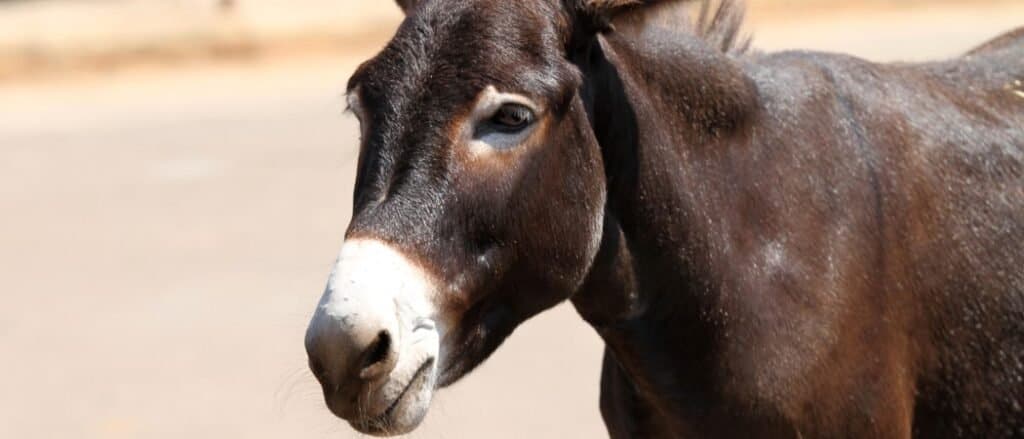
Missouri Mules are a hybrid of donkeys and horses
©BlackDorianstock/Shutterstock.com
- Animal: Missouri Mule
- Inclusion: Signed into law by Governor Mel Carnahan in 1995.
- Conservation Status: Domesticated hybrid.
- Fun Fact: These strong creatures are known to outperform horses in certain types of terrain.
Montana
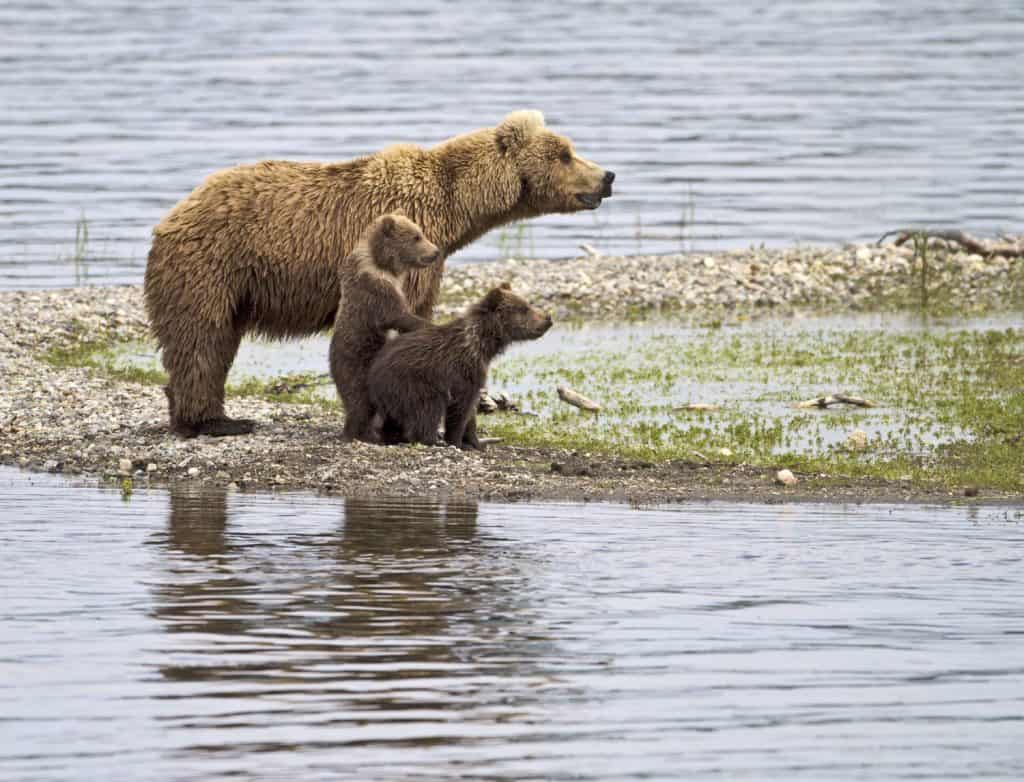
A powerful symbol of Montana’s wilderness.
©Richard Seeley/Shutterstock.com
- Animal: Grizzly Bear
- Inclusion: Governor Ted Schwinden signed a measure in 1983. However, he did so wearing a hat shaped like a grizzly bear.
- Conservation Status: Least Concern
- Fun Fact: Grizzlies are known to travel up to 20 miles a day while in pre-winter foraging mode.
Nebraska
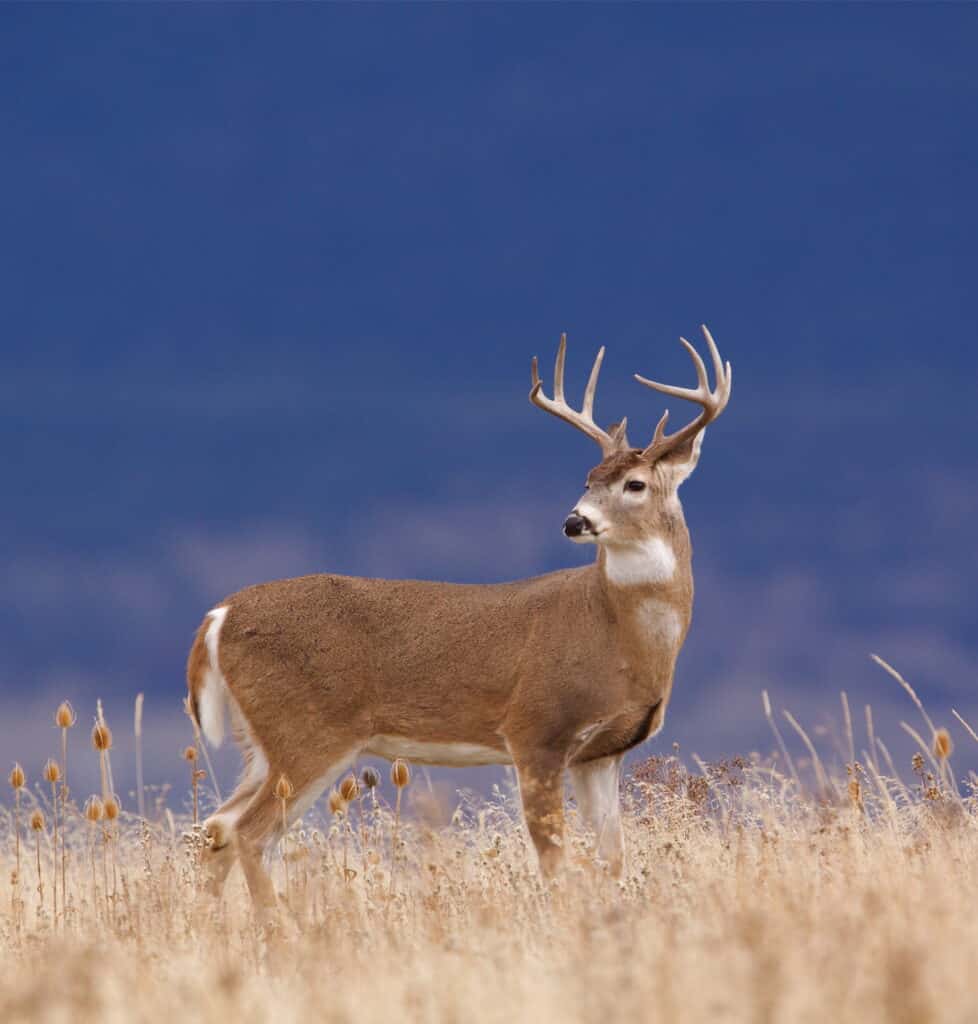
White-tailed deer are one of the most common animals in the United States.
©Tom Reichner/Shutterstock.com
- Animal: White-tailed deer
- Inclusion: Chosen by the state legislature in 1981.
- Conservation Status: Least Concern
- Fun Fact: The average weight of a male white-tailed deer is between 150 and 300 pounds.
Nevada
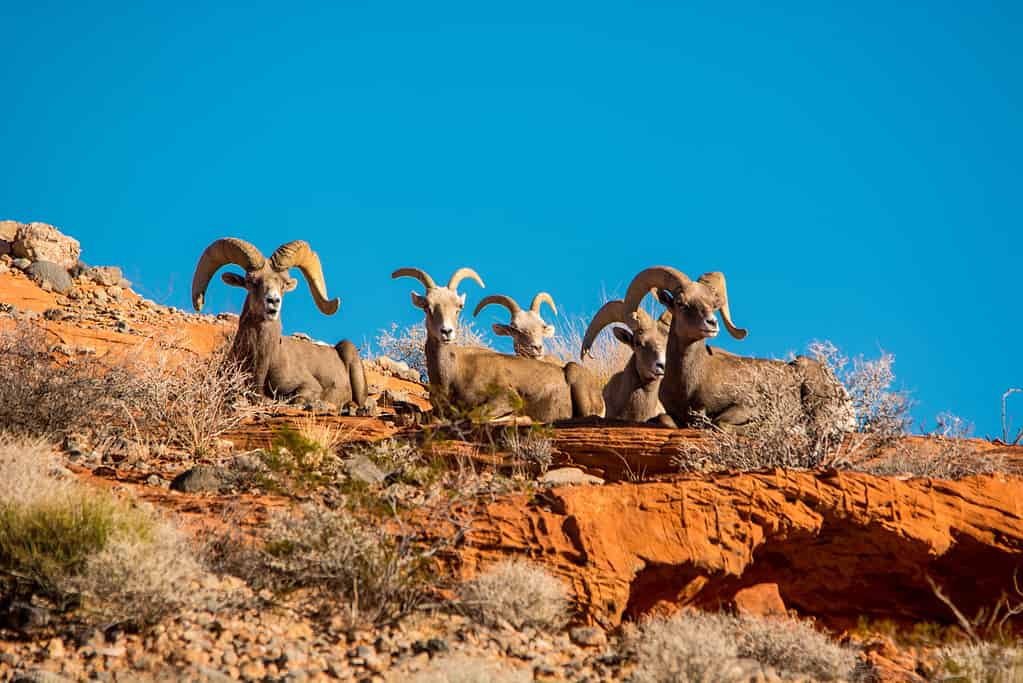
A hardy symbol of resilience in Nevada’s rugged, unwelcoming environments.
©Natures-Gallery/iStock via Getty Images
- Animal: Desert Bighorn Sheep
- Inclusion: A symbol of Nevada’s often inhospitable terrain, the bighorn sheep became the state’s official animal in 1973.
- Conservation Status: Least Concern
- Fun Fact: These sheep can survive without drinking water for three days when temperatures are upwards of 100 degrees.
New Hampshire

Several states have chosen the white-tailed deer as their official animal, including New Hampshire.
©Jim Cumming/Shutterstock.com
- Animal: White-tailed deer
- Inclusion: Chosen because it was one of the state’s largest mammals. However, it is rare in the region, compared to other states.
- Conservation Status: Least Concern
- Fun Fact: Their antlers grow faster than almost every other mammal.
New Jersey
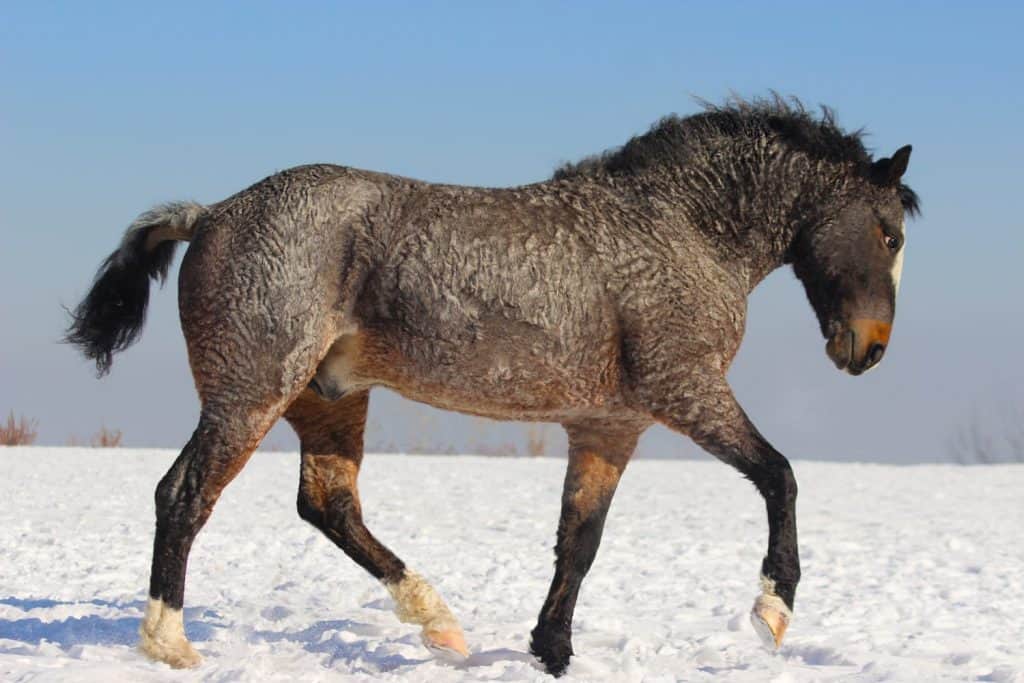
New Jersey later declared June 2013 as the Month of the Horse.
©SunnyMoon/Shutterstock.com
- Animal: Horse
- Inclusion: Horses have a long history in the state of New Jersey. Firstly, the United States Equestrian Team is located in the state of New Jersey. According to Governor Byrne in 1977, “The founding fathers of our state thought so highly of the horse that they incorporated it in our state seal.”
- Conservation Status: Domesticated
- Fun Fact: Horses can see almost 360 degrees. Surprisingly, they also sleep standing up.
New Mexico
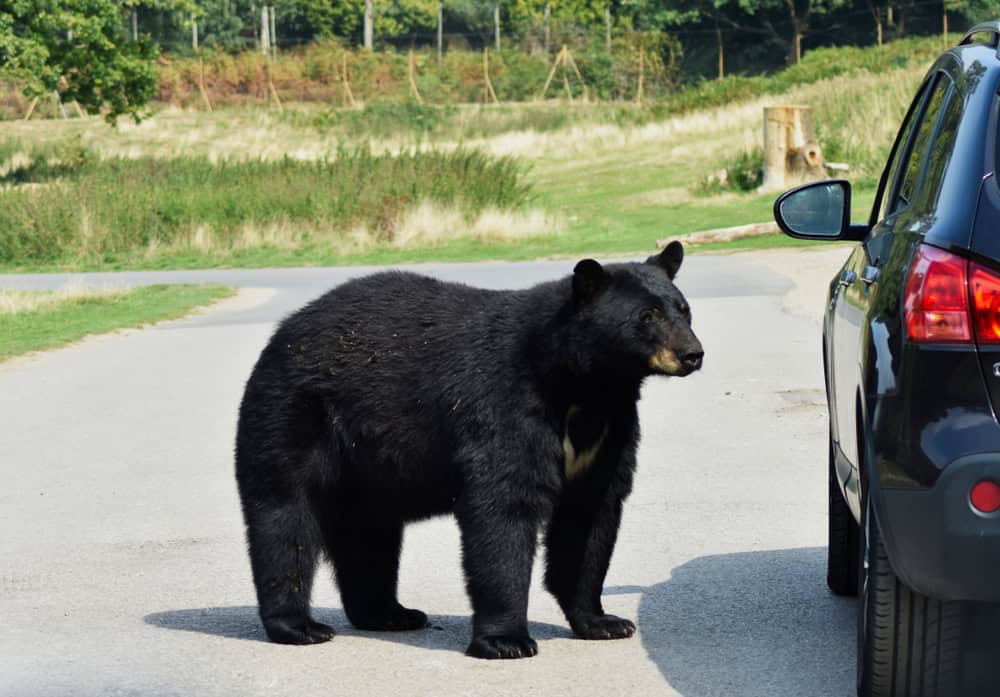
Became the state’s official animal in 1963.
©David Cardinez/Shutterstock.com
- Animal: Black bear
- Inclusion: The state legislature designated the New Mexico black bear as the state’s official animal in 1963.
- Conservation Status: Least Concern
- Fun Fact: The New Mexico variation of black bear, Ursus americanus amblyceps, is the darkest colored black bear.
New York
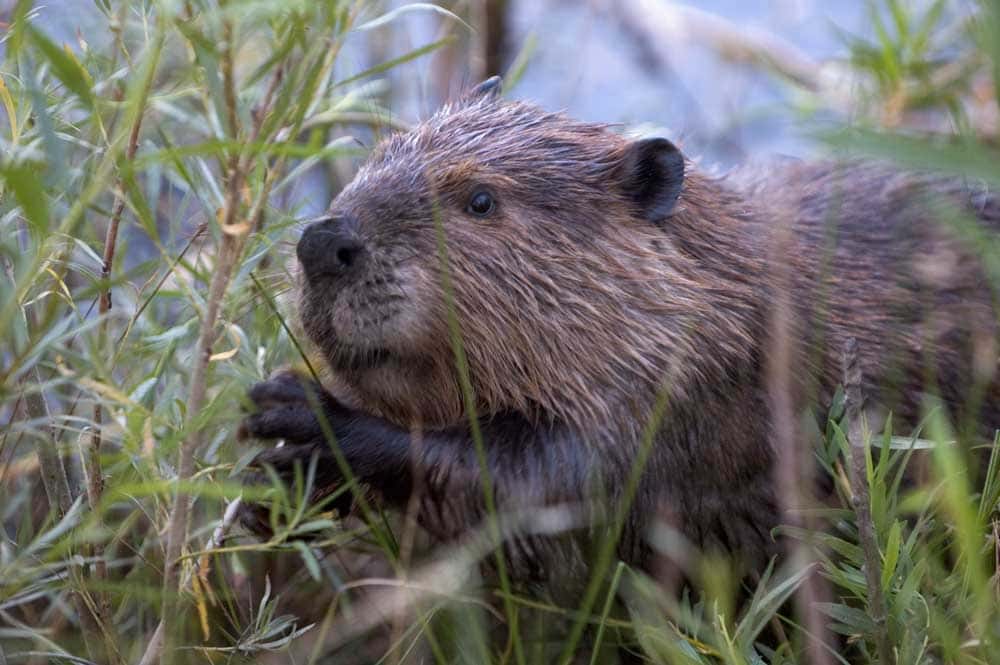
Despite their unassuming behavior, beavers are some of the largest rodents in North America.
©No machine-readable author provided. Cszmurlo assumed (based on copyright claims), CC BY-SA 3.0, via Wikimedia Commons – Original / License
- Animal: Beaver
- Inclusion: New York made the beaver the state’s official animal on August 11, 1975, when Governor Hugh Carey signed a piece of legislation. The state of Oregon, however, strongly opposed this motion.
- Conservation Status: Least Concern
- Fun Fact: Beavers eat wood. They do this, however, with distinctly orange-colored teeth.
North Carolina
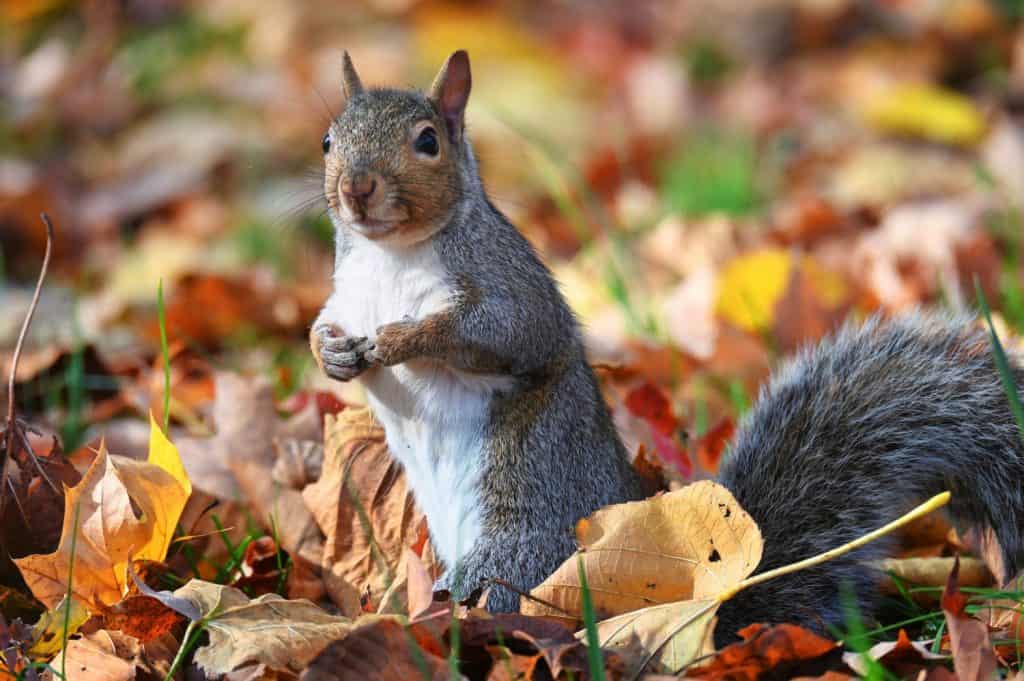
Despite sharing the squirrel designation with some 200 or more species, gray squirrels have spread throughout North America with ease.
©MargJohnsonVA/Shutterstock.com
- Animal: Eastern gray squirrel
- Inclusion: Designated as the state animal by the North Carolina General Assembly in 1969. More specifically, described as “courageous and thrifty” in the proposal.
- Conservation Status: Least Concern
- Fun Fact: A single gray squirrel can bury up to 10,000 nuts in a single season.
North Dakota
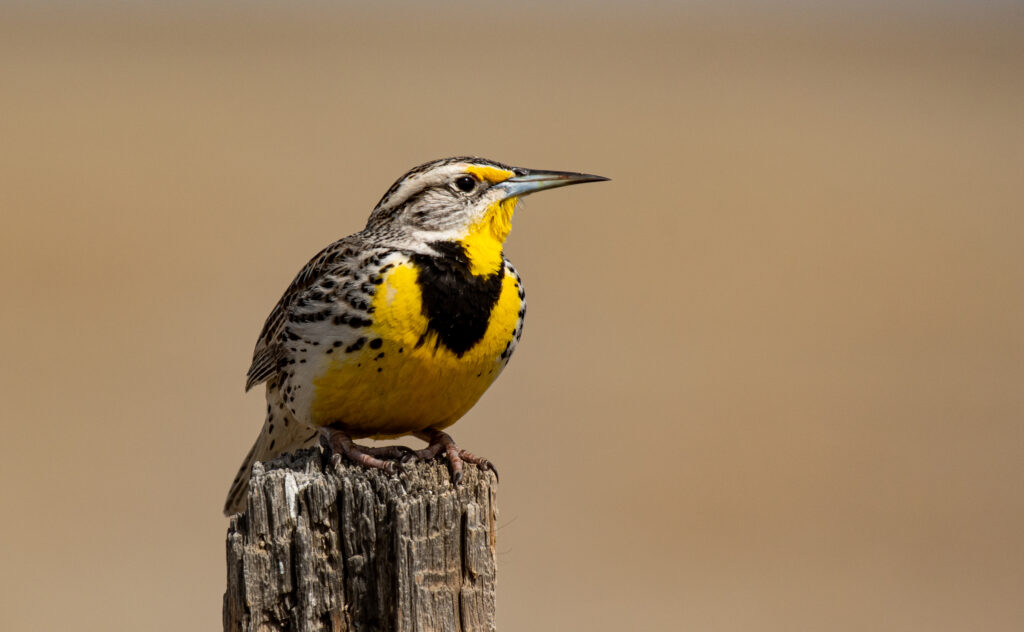
Known far and wide for its beautiful songs.
©Kerry Hargrove/Shutterstock.com
- Animal: Western Meadowlark
- Inclusion: Known for its widespread distribution in the state and its often beautiful songs, western meadowlarks were chosen as the North Dakota state bird in 1947.
- Conservation Status: Least Concern
- Fun Fact: The western meadowlark is the state bird of several states.
Ohio
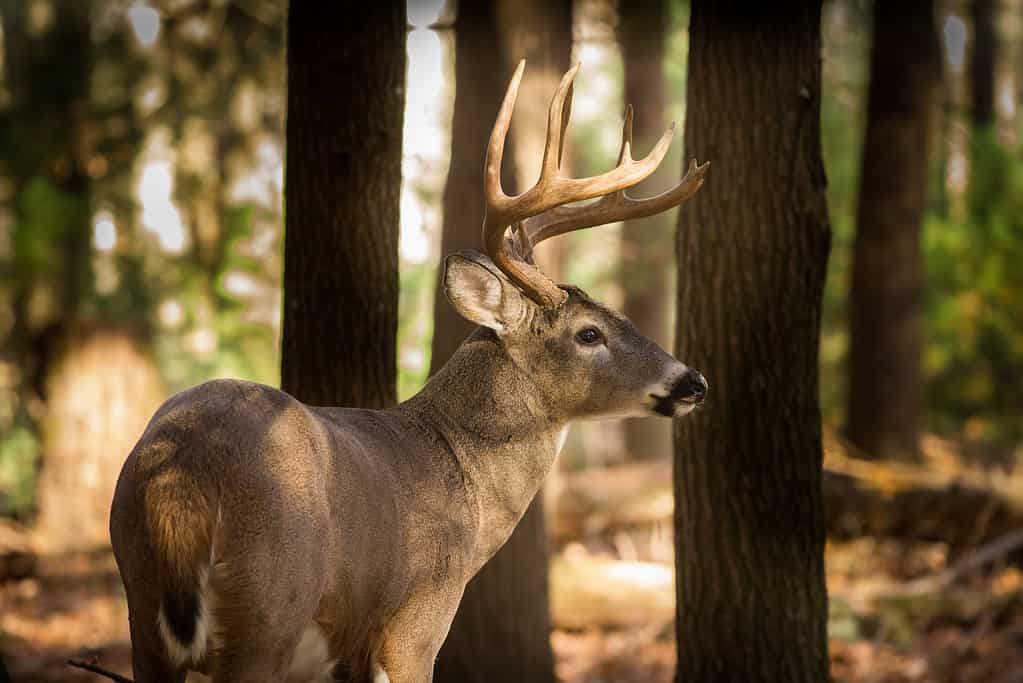
They may be big, but white-tailed deer make for excellent swimmers.
©EEI_Tony/iStock via Getty Images
- Animal: White-tailed deer
- Inclusion: Selected as the state animal by the Ohio General Assembly in 1988.
- Conservation Status: Least Concern
- Fun Fact: These common ungulates are excellent swimmers. Moreover, they aren’t afraid to dive into freezing bodies of water.
Oklahoma
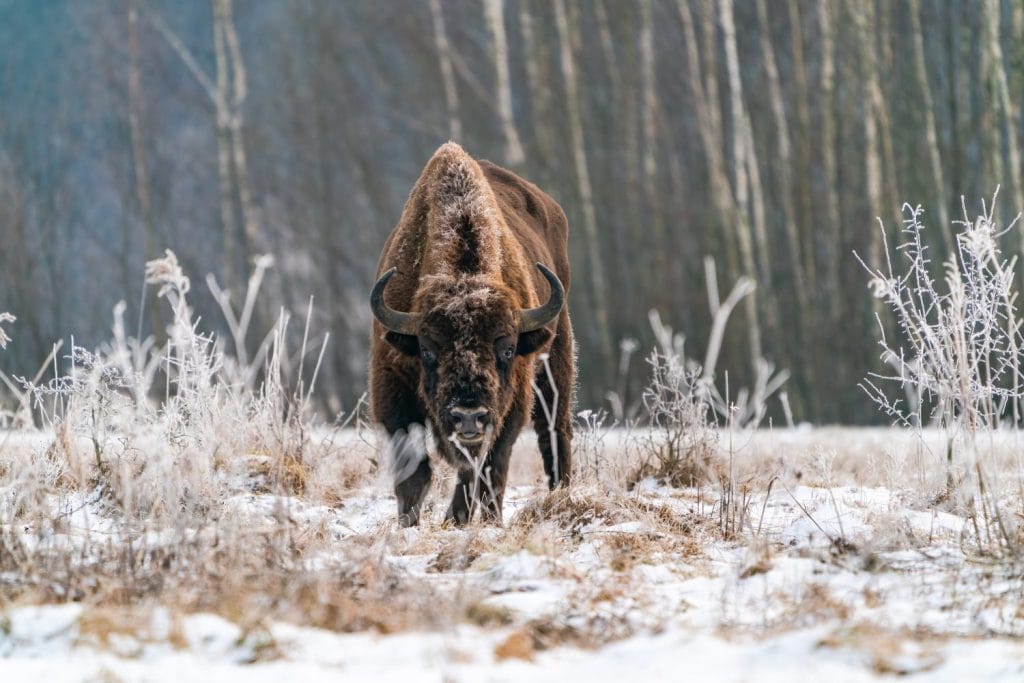
Bison ancestors trace back to southern Asia thousands of years ago.
©BBA Photography/Shutterstock.com
- Animal: American bison
- Inclusion: Oklahoma chose the American bison or buffalo as its official state animal in 1972.
- Conservation Status: Near Threatened
- Fun Fact: They may seem pretty slow given their size. Bison, however, can run up to 35 miles per hour.
Oregon
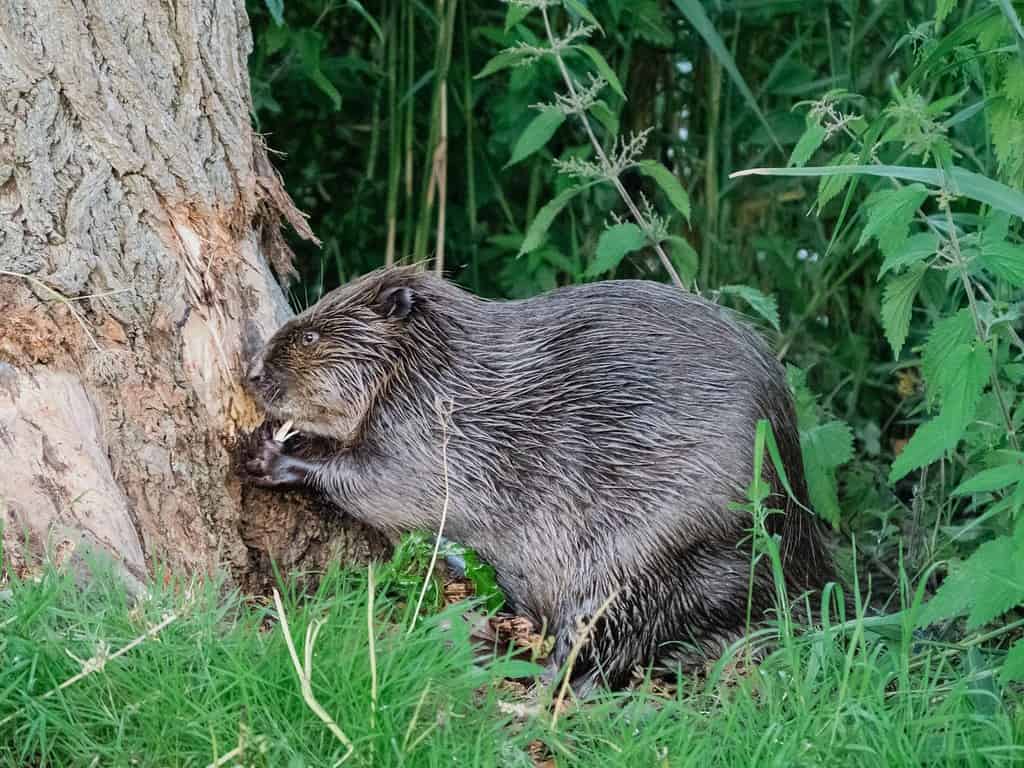
New York also made its state animal the beaver, but Oregon strongly opposed this designation.
©Dolfilms/Shutterstock.com
- Animal: Beaver
- Inclusion: Also called The Beaver State, the state of Oregon has long been associated with this large rodent.
- Conservation Status: Least Concern
- Fun Fact: Beavers are mammals, yet they can stay underwater for six to eight minutes at a time.
Pennsylvania
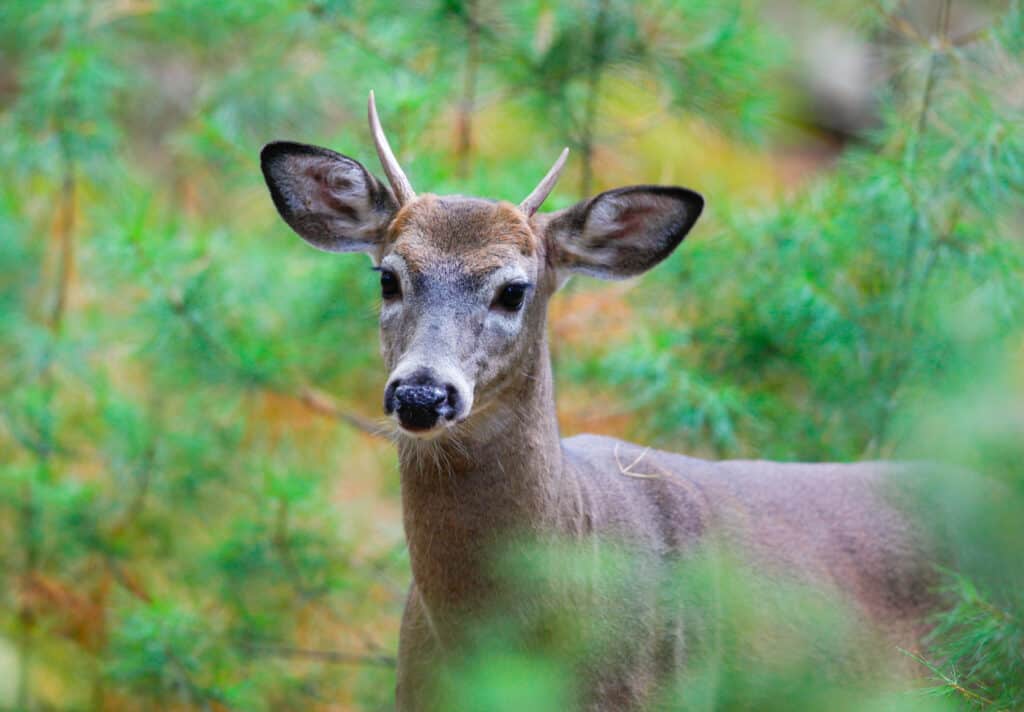
Male white-tailed deer usually live on average about six years, but some individuals live even longer.
©iStock.com/Louise Wightman
- Animal: White-tailed deer
- Inclusion: Officially designated as the state animal in October 1959.
- Conservation Status: Least Concern
- Fun Fact: The oldest living white-tailed deer on record reached 22 years of age. However, most live between six and ten years.
Rhode Island
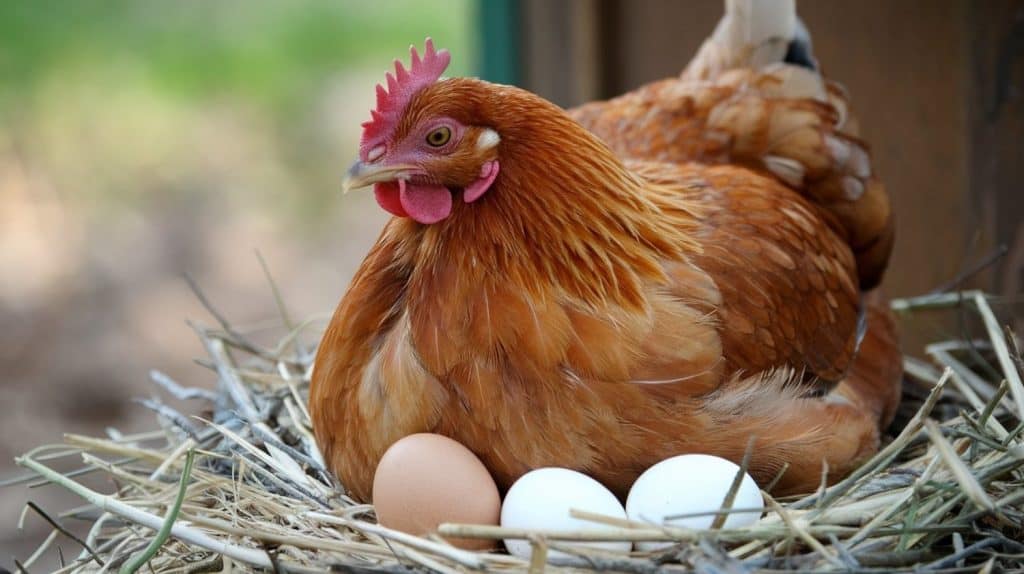
Interestingly, Rhode Island reds are used for both their meat and eggs.
©First True Love/Shutterstock.com
- Animal: Rhode Island Red
- Inclusion: A long-celebrated symbol of the state.
- Conservation Status: Domesticated
- Fun Fact: Bred as a workhouse chicken, it produces both meat and eggs.
South Carolina
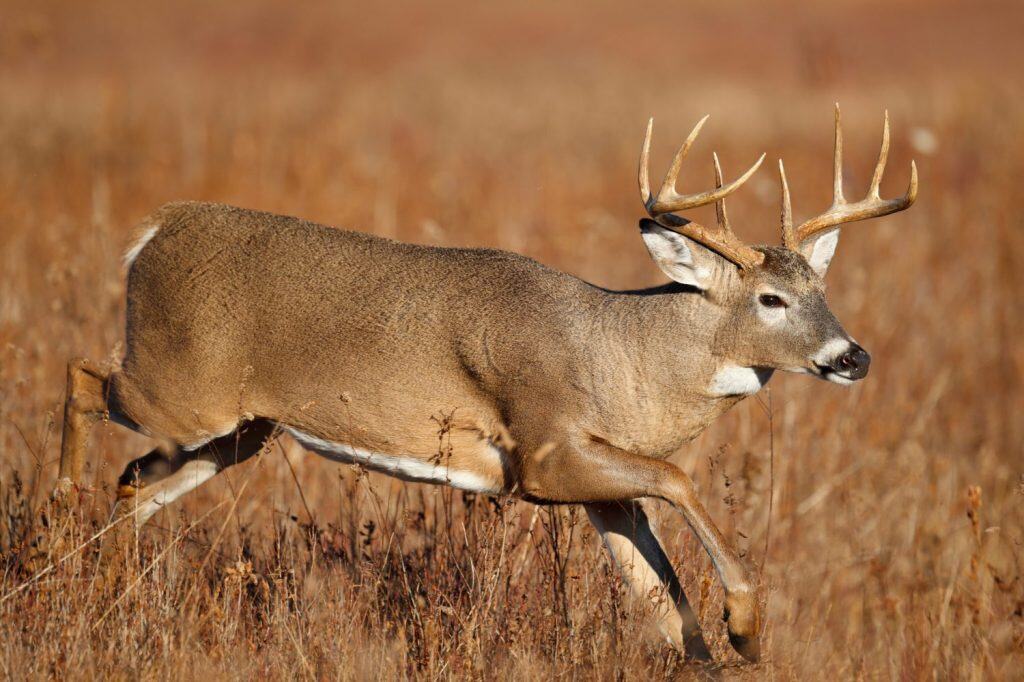
There are so many white-tailed deer in North America that they often wreak havoc on certain ecosystems.
©Paul Tessier/Shutterstock.com
- Animal: White-tailed deer
- Inclusion: Became the official state animal in 1972, per Act Number 1335.
- Conservation Status: Least Concern
- Fun Fact: These deer can reach speeds of 30 miles per hour, but usually stick to slower rates.
South Dakota
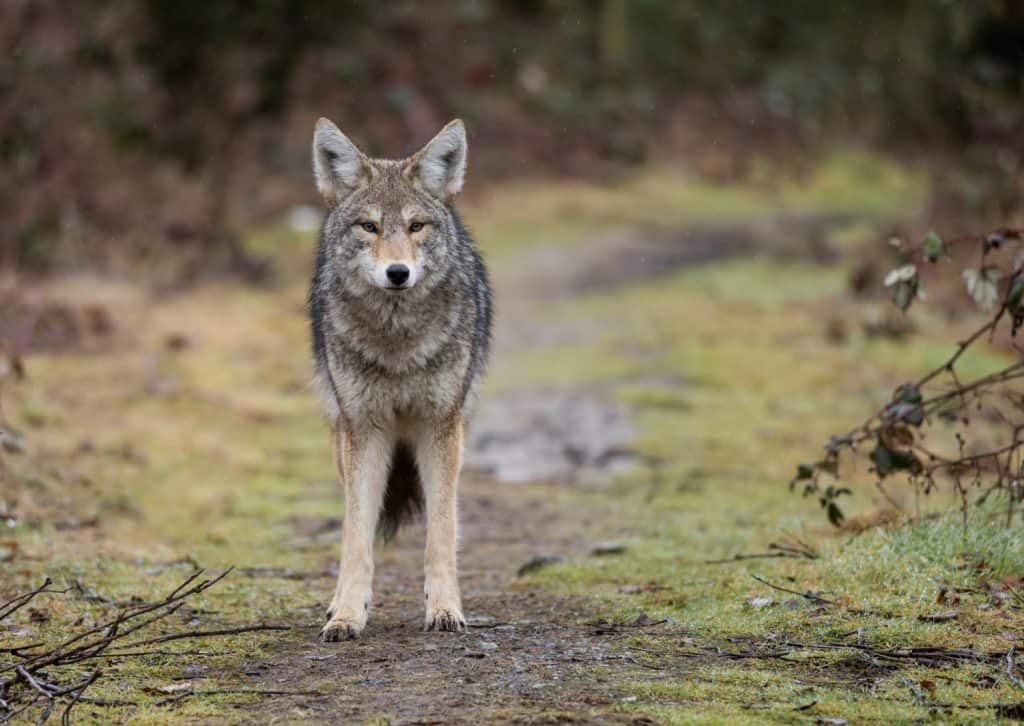
Adult coyotes weigh between 20 and 45 pounds.
©Harry Collins Photography/Shutterstock.com
- Animal: Coyote
- Inclusion: South Dakota officially designated the coyote as its state animal in 1949.
- Conservation Status: Least Concern
- Fun Fact: Some animals haven’t survived human development. However, coyotes have expanded their range in the last century.
Tennessee
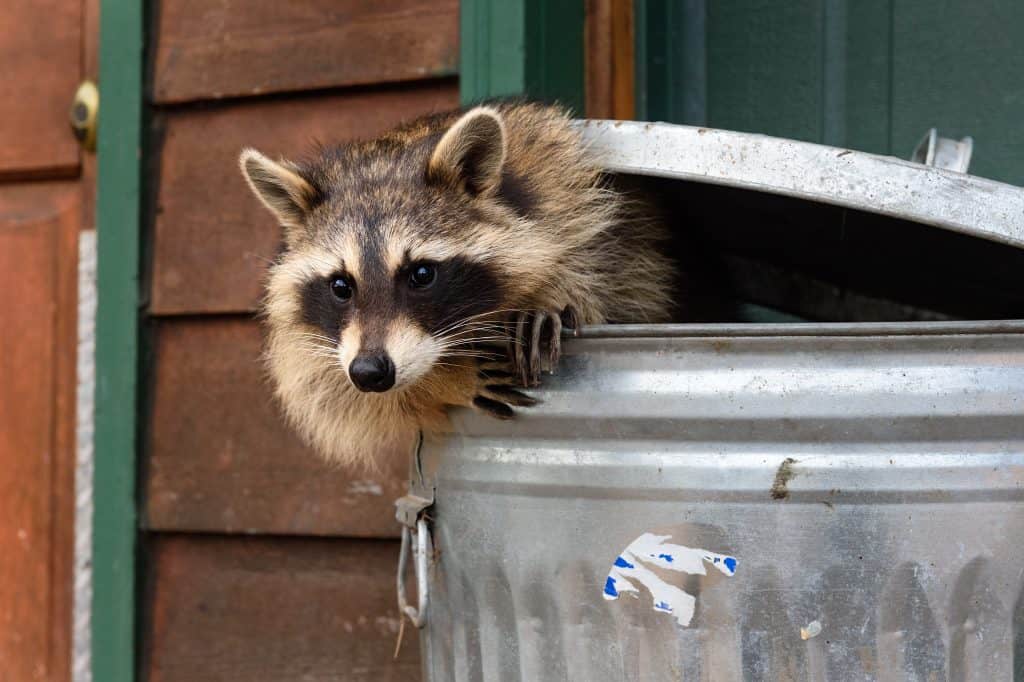
They may look cute and cuddly, but raccoons can be very dangerous when cornered or threatened.
©Holly Kuchera/Shutterstock.com
- Animal: Raccoon
- Inclusion: Chosen as the state animal in 1971.
- Conservation Status: Least Concern
- Fun Fact: Raccoons are nocturnal, so they have excellent night vision.
Texas
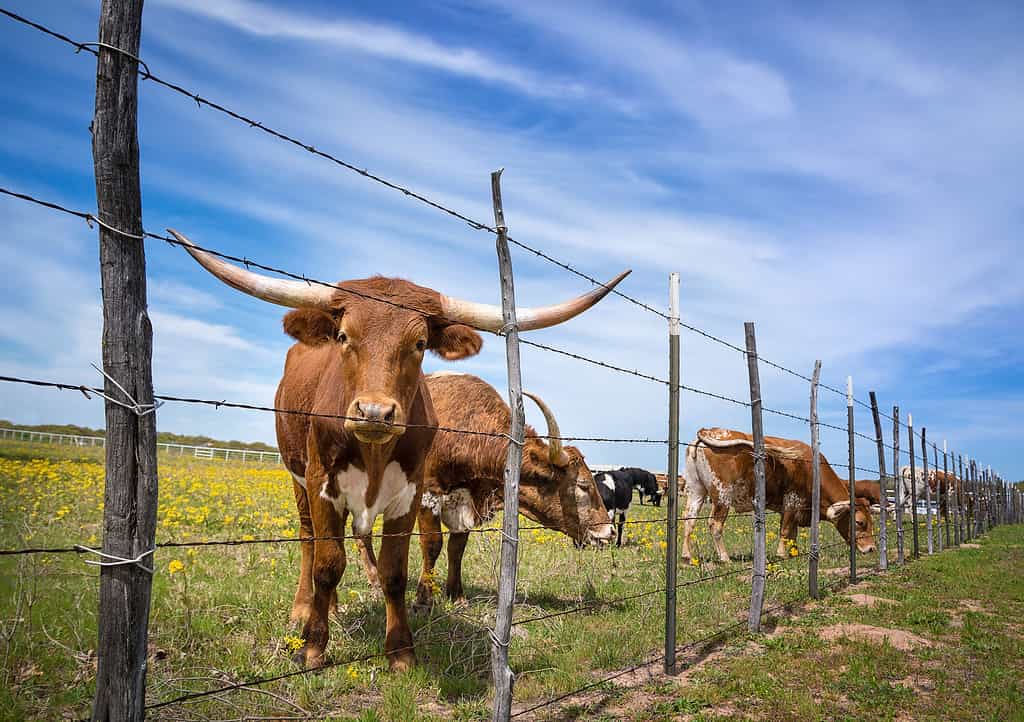
The nine-banded armadillo is also considered the Texas state animal. However, this depends on who you talk to.
©Leena Robinson/Shutterstock.com
- Animal: Texas Longhorn
- Inclusion: Came to heavily represent Texas during the large cattle drives of the late 19th century. Designated the state animal, along with the nine-banded armadillo, in 1995.
- Conservation Status: Domesticated
- Fun Fact: Both male and female longhorns have horns.
Utah
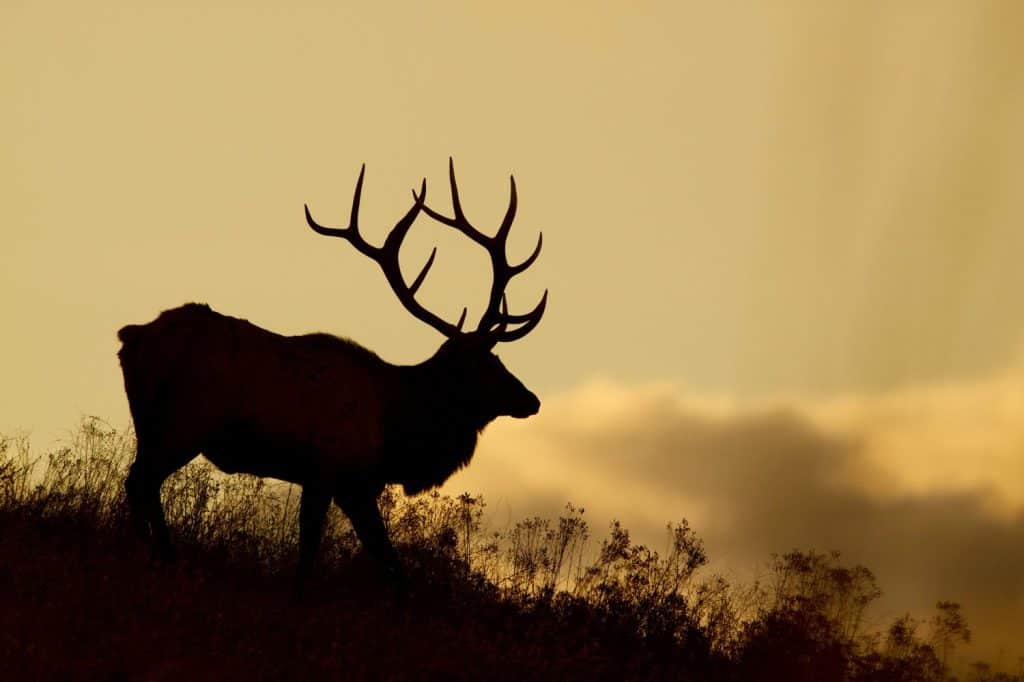
Elks have long heads with even longer ears.
©Tom Reichner/Shutterstock.com
- Animal: Rocky Mountain Elk
- Inclusion: Designated the official animal by the state legislature in 1971.
- Conservation Status: Least Concern
- Fun Fact: Bulls coat themselves in their own urine to create a perfume to attract mates.
Vermont
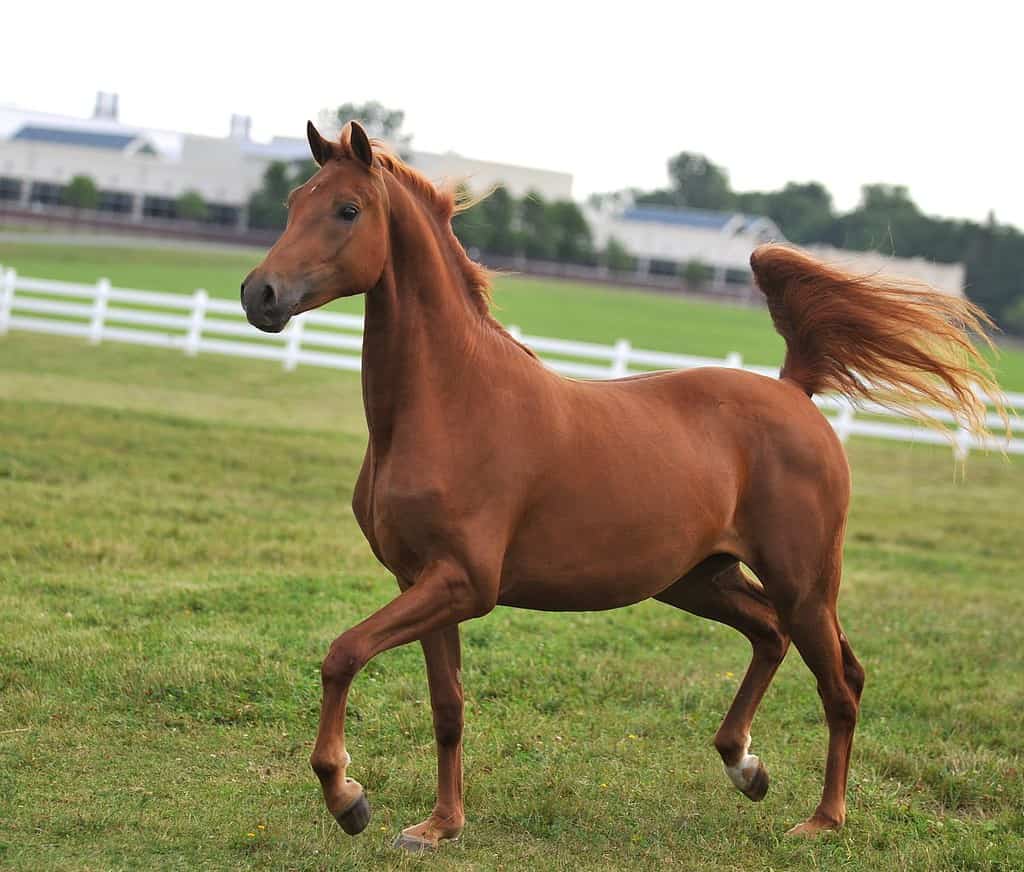
A versatile breed of horse.
©Christopher Crosby Morris/Shutterstock.com
- Animal: Morgan horse
- Inclusion: Named after President Monroe’s horse, Justin Morgan.
- Conservation Status: Domesticated
- Fun Fact: The first Morgan horse was named Figure. Despite being the Vermont state animal, however, Figure was born in Massachusetts in 1789.
Virginia
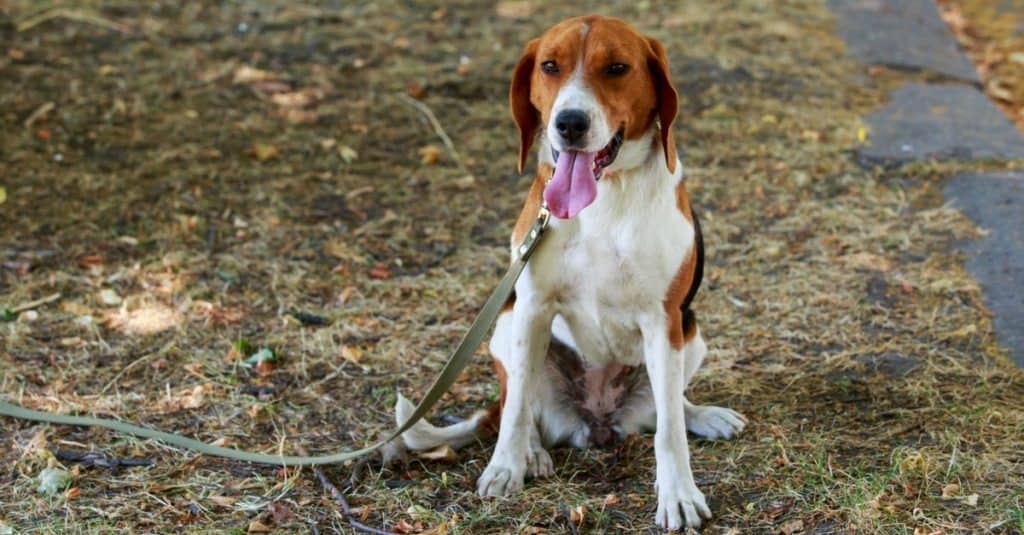
They may look like beagles, but American foxhounds are a separate breed.
©Olga Aniven/Shutterstock.com
- Animal: American foxhound
- Inclusion: A symbol of colonial America.
- Conservation Status: Domesticated
- Fun Fact: George Washington first brought these dogs to Virginia so they could work as hunting dogs.
Washington
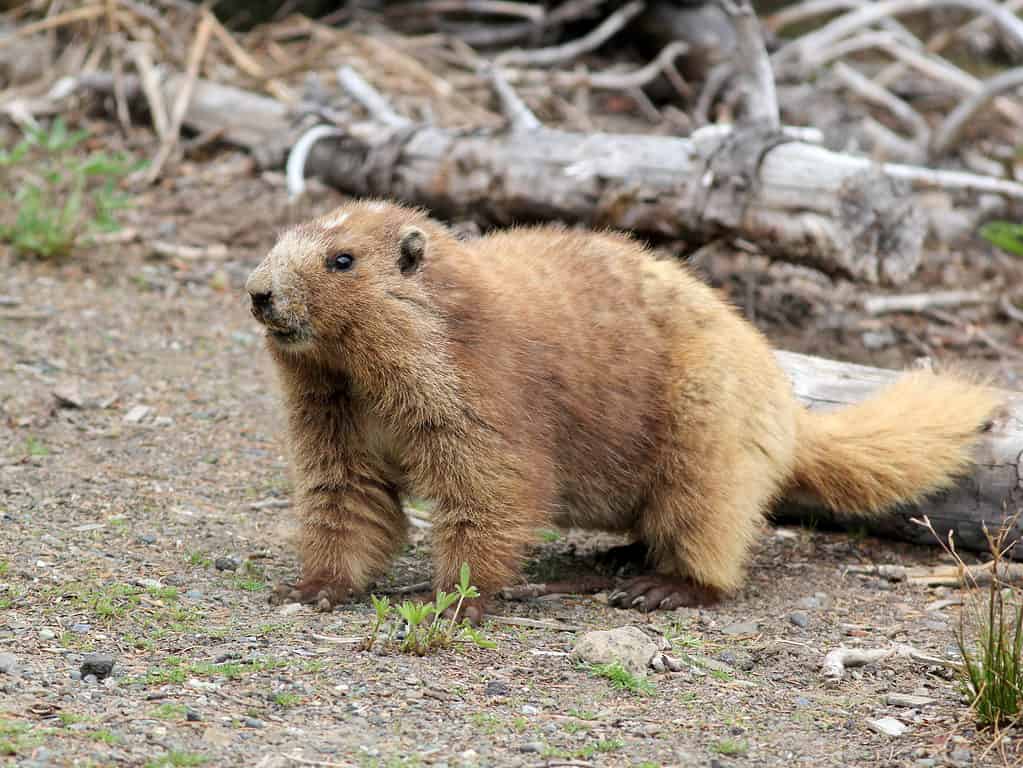
The Olympic Marmot is endemic to Washington State. In recent years, however, its population has been threatened by several factors.
©Randy Bjorklund/Shutterstock.com
- Animal: Olympic marmot
- Inclusion: The only type of marmot found in Washington state.
- Conservation Status: Least Concern
- Fun Fact: These marmots usually live at elevations above 4,000 feet.
West Virginia

West Virginia’s black bear population has seen steady growth after a period of sharp decline.
©USFWS / Hollingsworth, John and Karen, Public domain, via Wikimedia Commons – Original / License
- Animal: Black bear
- Inclusion: It only became the state’s official animal in recent years.
- Conservation Status: Least Concern
- Fun Fact: They may be big creatures, but black bears can run between 25 and 30 miles per hour.
Wisconsin
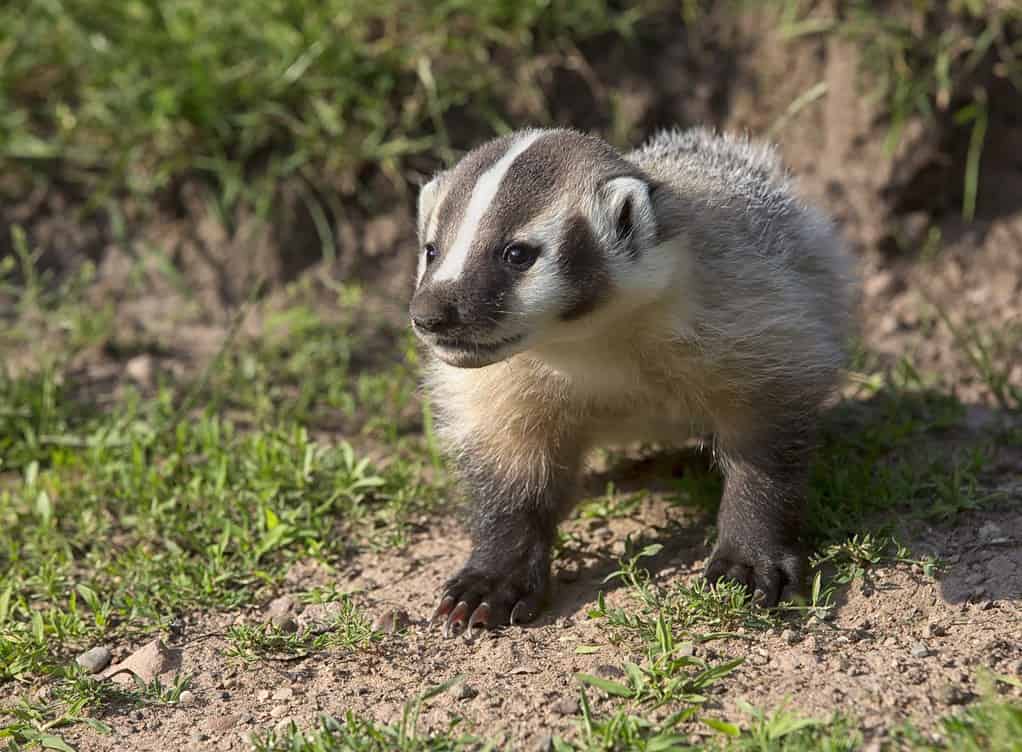
Cute, but ferocious, badgers are a welcome symbol of Wisconsin’s enduring spirit.
©critterbiz/Shutterstock.com
- Animal: American badger
- Inclusion: Chosen as Wisconsin’s state animal in 1957 as residents liked its fierce and tenacious reputation.
- Conservation Status: Least Concern
- Fun Fact: Several badgers have lived past the age of 20 in captivity.
Wyoming
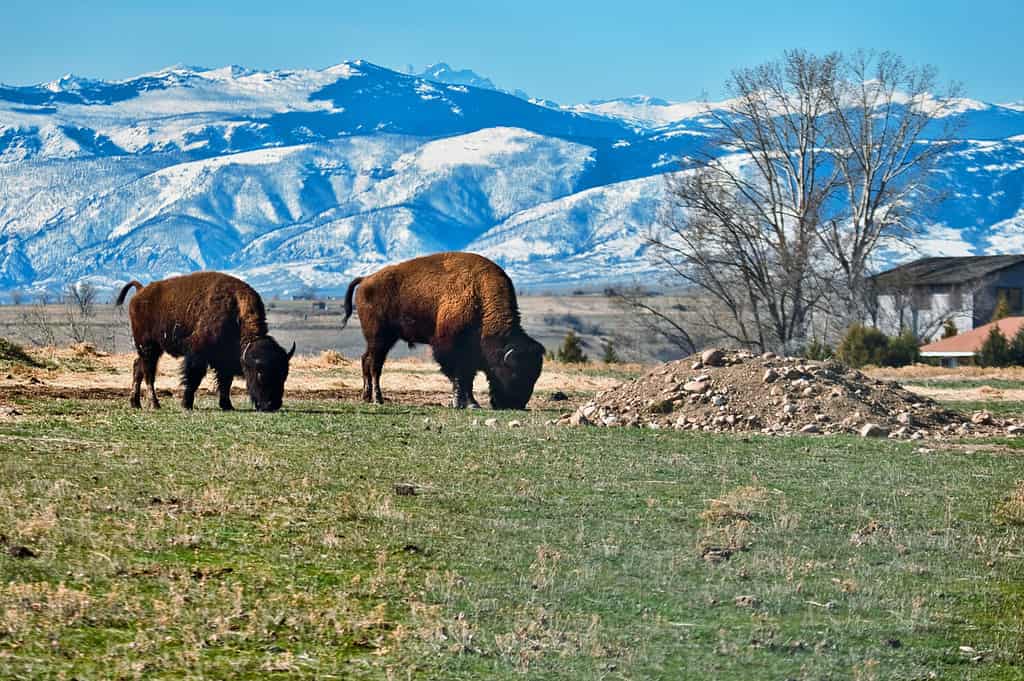
A powerful symbol of Wyoming’s wild expanses.
©Steve Creek/Shutterstock.com
- Animal: American buffalo
- Inclusion: Chosen as the state animal in 1985.
- Conservation Status: Near Threatened
- Fun Fact: Bisons have bad eyesight, but a great sense of smell.