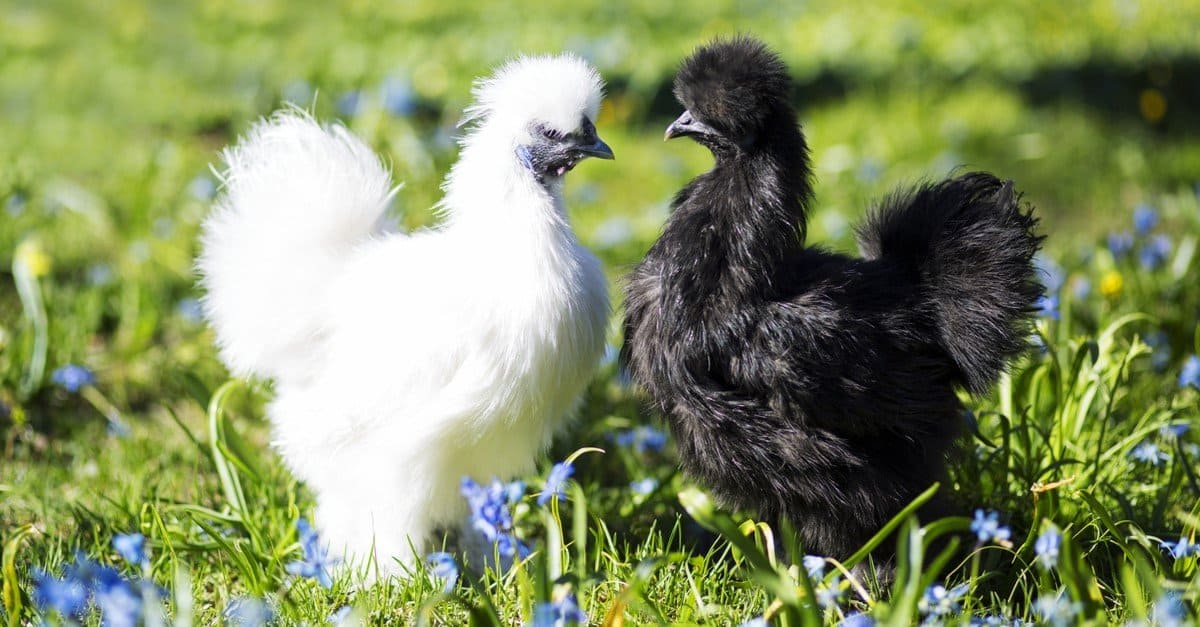

The silkie chicken is one of the most unique bantam chicken breeds in the world today. Originating from Asia, these small birds are kept both as companions and as livestock. They are known for their fluffy plumage and calm, friendly temperaments. Like many other birds, silkie chickens are sexually dimorphic, so differences between the sexes become obvious as they mature. Keep reading to discover the differences between a silkie hen vs. a silkie rooster.
Comparing a Silkie Hen and a Silkie Rooster
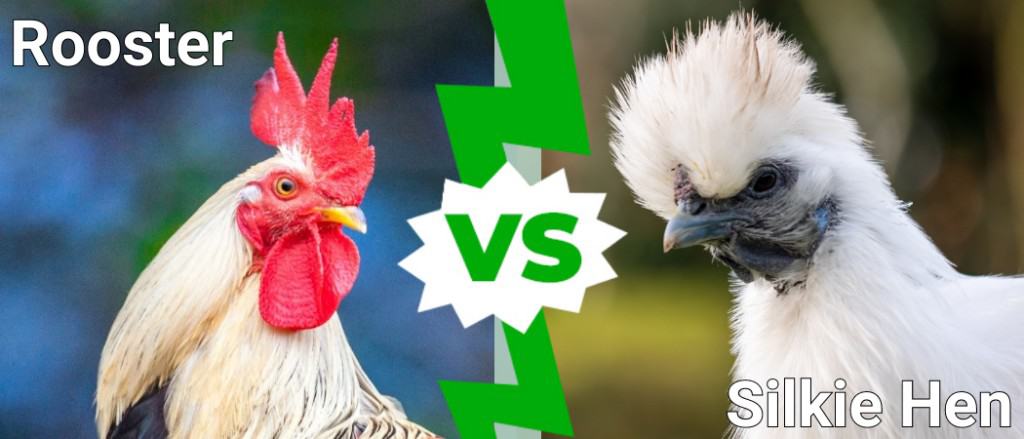
| Silkie Hen | Silkie Rooster | |
|---|---|---|
| Size | Weight: Up to 32 ounces Height: 8-14 inches but average closer to 8-10 inches | Weight: Up to 36 ounces Height: 8-14 inches but tend to stand between 10-14 inches |
| Wattles | Wattle develops later in life than a rooster and remains smaller | Wattle develops faster than a hen’s and grows larger |
| Comb | Smaller, more V-shaped comb | Larger “walnut-shaped” comb |
| Crown Feathers | Rounded, uniform length | Longer, less-uniform crown feathers called “streamer feathers” |
| Spurs | Do not grow spurs | Spurs that can reach about an inch in length |
The Key Differences Between Silkie Hens vs. Silkie Roosters
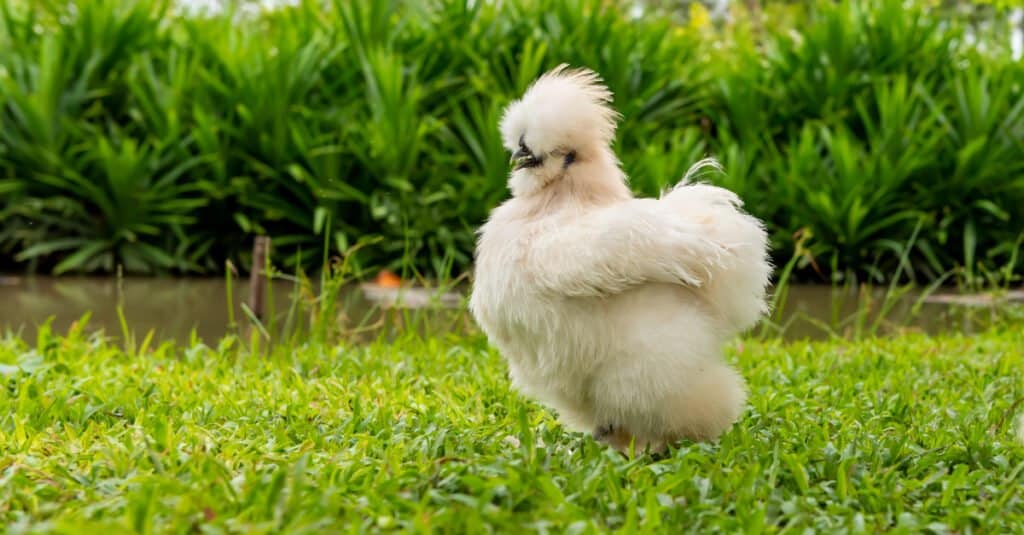
Silkie chickens are small, bantam-sized chickens, with the roosters being larger than the hens.
©MR. AEKALAK CHIAMCHAROEN/Shutterstock.com
The greatest differences between silkie hens and roosters are their size, wattles, comb, crown feathers, and spurs. These differences make it easy to tell whether these chickens are male or female. However, many of these changes do not occur until the chickens are fully mature, making it difficult to determine the sex of younger birds. Take an in-depth look at the differences in the following paragraphs.
Size
The American Poultry Association (APA) sets the breed standards in the U.S., and they only recognize the bantam size silkie. Fully grown silkie hens are smaller than silkie roosters. The hens should weigh no more than 32 ounces, or 2 pounds. They can measure between 8 and 14 inches tall, but hens average closer to between 8 and 10 inches tall.
A silkie rooster should weigh no more than 36 ounces, or 2.25 pounds, according to breed standards. Silkie roosters are also typically taller than hens. While they can also measure 8 to 14 inches tall, males tend to stand between 10 and 14 inches tall.
Wattle
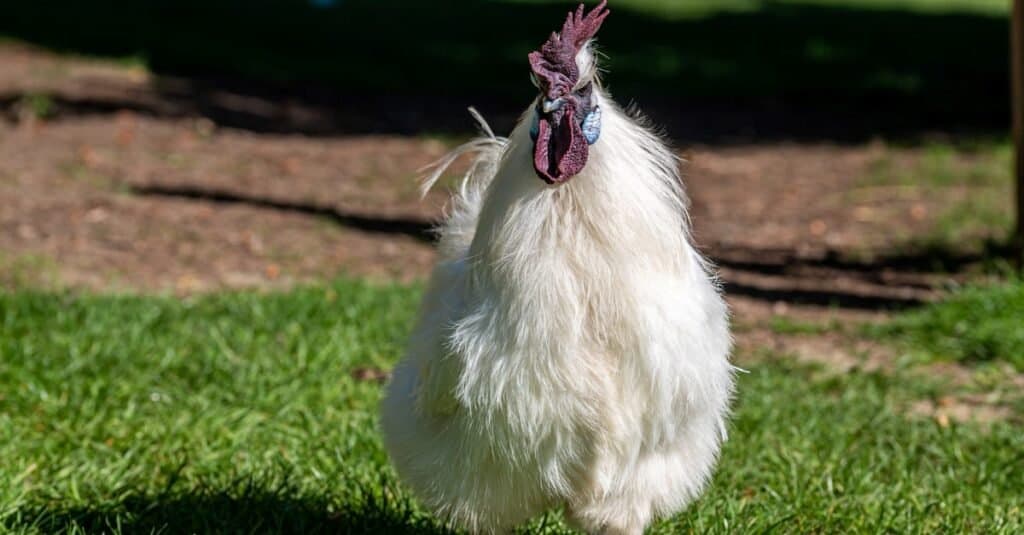
Silkie roosters grow more prominent combs and wattles.
©Andi111/Shutterstock.com
A silkie hen’s wattle develops later in life than a rooster’s. It is also smaller than those of her male counterparts. A hen’s wattle does not begin to noticeably grow until she gets close to laying her first eggs at around 6 months old. Silkie hens’ wattles are also shorter and paler in color than roosters’ wattles.
A silkie rooster’s wattle begins to develop between 3-4 weeks of age. It continues to get larger and redder in color by 5-7 weeks. However, some silkies are slower to mature, so they may not have a prominent wattle until closer to 6 months of age, making it more difficult to distinguish the sexes.
Comb
A silkie hen’s comb is smaller and a different shape than a rooster’s. The comb is often referred to as “walnut-shaped,” as it appears bulbous and bumpy, but it is more pronounced on a male. Hens begin to develop a comb at around 12 weeks, and it may continue to grow slowly until they reach maturity at around 18 weeks. However, they have darker, narrower, more V-shaped combs that lay nearly flat against their heads.
A silkie rooster’s comb typically begins to develop around 3-4 weeks of age. It grows larger, wider, and more wrinkled, typically turning redder as the bird gets older. A silkie rooster’s comb is one of its defining features, and it certainly stands out compared to a hen’s.
Crown Feathers
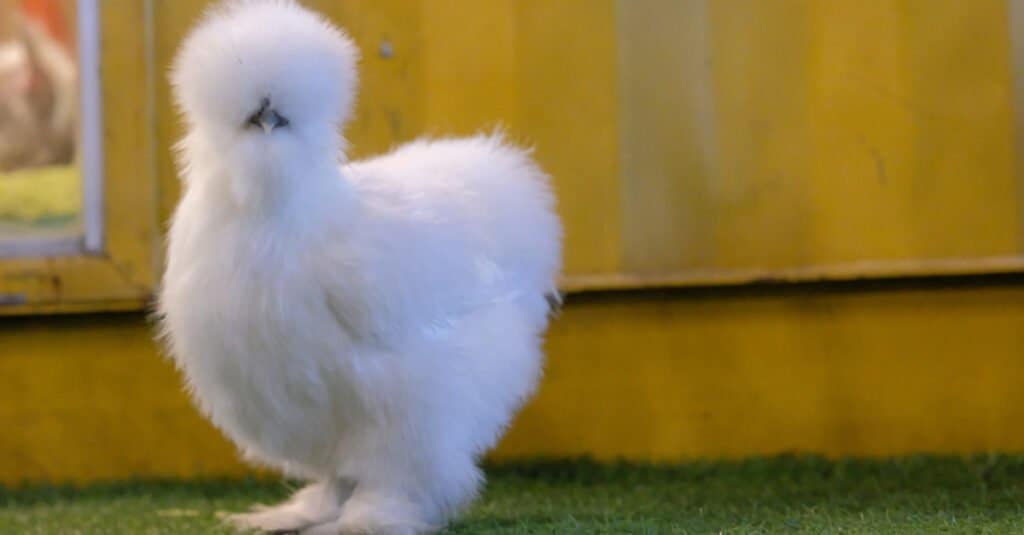
Silkie hens have more uniform crown feathers, while roosters have streamer feathers that grow taller and thinner than others.
©Hand Robot/Shutterstock.com
Silkie hens have neater, more uniform crown feathers compared to a rooster. If you were to look directly down on a silkie hen’s head, you would notice that it has a large, tidy tuft of crown feathers. The overall shape of the crown feathers is round like a pom pom.
The same cannot be said about a silkie rooster. Not all of their crown feathers are the same size. They have what are called “streamer feathers” that grow taller and thinner than the other feathers on their head. This makes the silkie rooster’s crown feathers look a lot messier than a hen’s.
Spurs
Silkie roosters generally have spurs, while silkie hens typically do not. Spurs are spiky protrusions that grow on the back of the bird’s legs above its toes. Note that silkies have five toes on their feet instead of four like most breeds. A rooster’s spurs are typically used for defense and in fights with other males.
Although most roosters grow spurs, some birds may not. A silkie hen may rarely grow spurs, especially if there is some type of hormonal imbalance. A rooster’s spurs need to be monitored regularly. If they grow too long, they can make it difficult for the bird to walk and may even cut into its skin.