
Quick Take
- Cranes are typically larger than storks, with wingspans often reaching up to eight feet across.
- The arboreal nesting habits of storks provide a survival advantage over ground-dwelling species like cranes.
- Cranes are more social birds, often performing elaborate courtship dances.
- Storks are silent fliers, soaring and relying on thermals.
At a glance, cranes and storks can look remarkably similar. In fact, you may mistakenly use these two names interchangeably, thinking they are the same animal. Both are tall, long-legged birds with extended necks, broad wings, and a graceful presence that often draws the eye. It’s no surprise that they’re frequently confused for one another, especially when seen from a distance.
However, despite their similarities, storks and cranes differ in a number of ways, from their anatomy to their social structure and even the way they move through the air. Understanding these differences not only helps with identification but also offers a deeper appreciation for how each bird has adapted to its environment.
Differences in Appearance
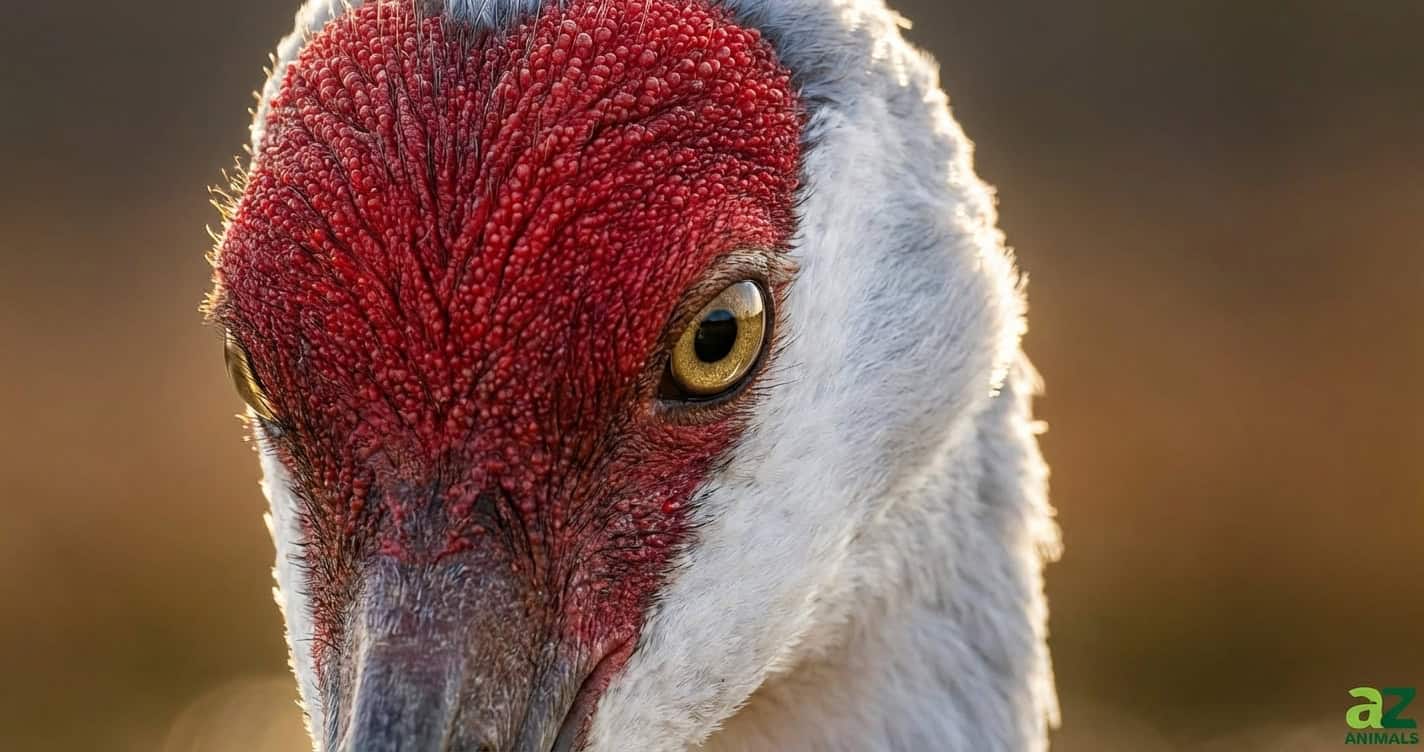
The first metric is appearance. Yes, at first glance, they look alike, but the closer you get, the more differences you’re likely to notice. Though both birds have long legs and necks, cranes have more elegant, slenderer bodies. Their necks are typically held straight out both when standing and in flight. You may also notice unique markings, such as red crowns or patches of bare skin on their heads.
Storks often appear slightly bulkier. Their bills are usually longer and heavier than those of cranes, and their heads are typically fully feathered. One of the most noticeable differences relates to posture; storks often hold their necks slightly curved or retracted when at rest, though they extend them during flight.
Difference in Wingspan and Size
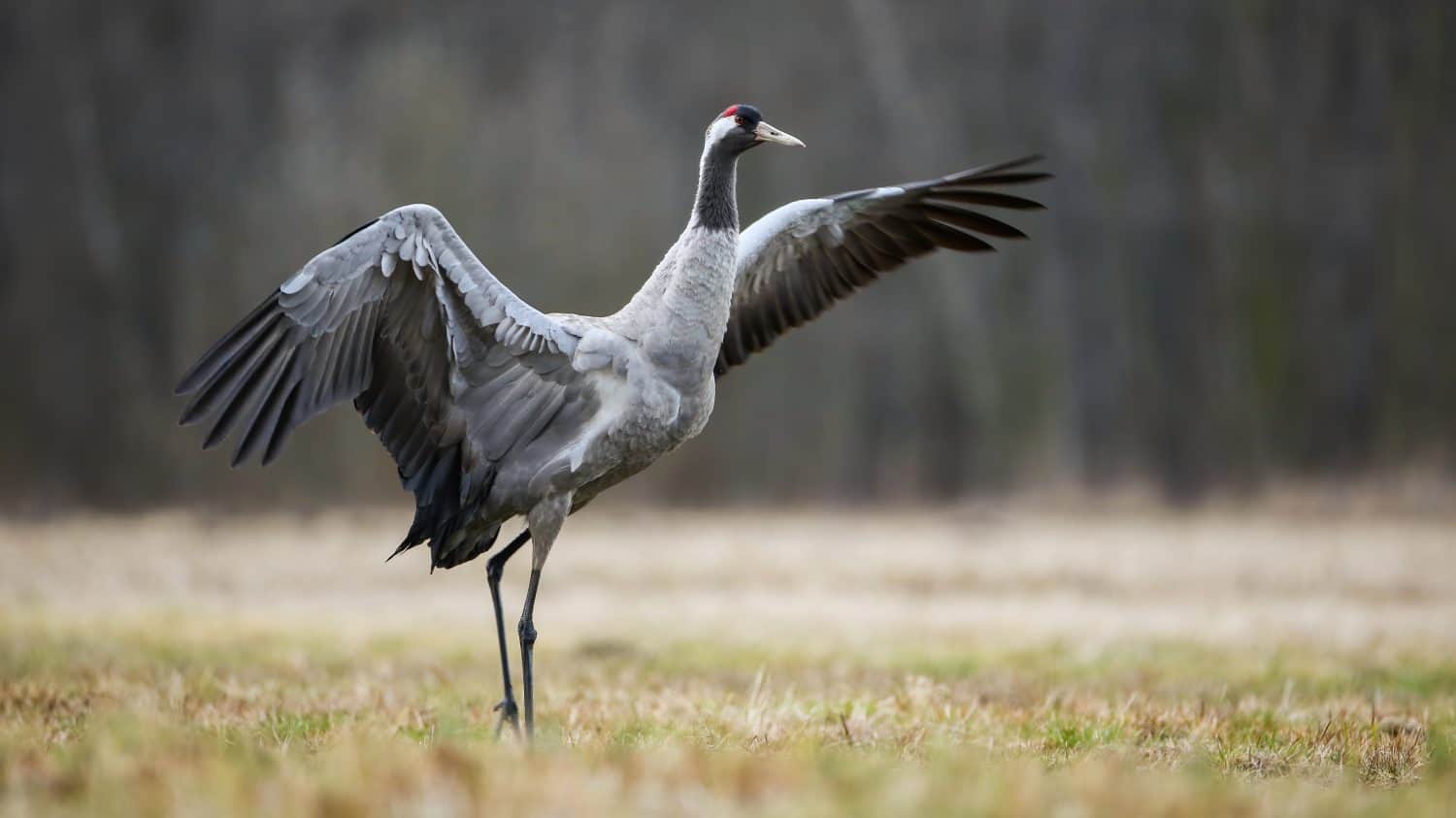
Cranes have massive wingspans that can reach up to 8 feet across.
©WildMedia/Shutterstock.com
Cranes and storks are often mistaken for each other because they’re both large birds. However, cranes typically have a slight size advantage depending on the species.
- Cranes can have wingspans ranging from about 5.5 to over 8 feet. Some species, like the Sarus crane, are among the tallest flying birds in the world.
- Storks typically have wingspans between 5 and 7.5 feet, though large species like the marabou stork can rival cranes in size.
In general, cranes are known for their height and upright posture, while storks may appear more robust or heavy-bodied.
Differences in Behavior
You may be able to spot key differences between a crane and a stork when you focus on behavior. Of the two birds, storks are far more subdued. They don’t sing or produce complex vocalizations. Instead, many storks communicate through bill-clattering, rapidly snapping their beaks together to create a rattling sound. This bird is more practical and less expressive in their movements, focusing on feeding and nesting rather than elaborate displays. Storks are more likely to be seen foraging alone or in small groups, as they focus on feeding over social bonding.
On the other hand, cranes are much more social. They’re known for their elaborate courtship dances that can include bowing, jumping, wing-flapping, and even tossing sticks or grass into the air. In the end, they form strong pair bonds that can last a lifetime. They’re also highly vocal. You may hear them engaging in synchronized duets with their mates. These calls can carry over long distances and are an important part of their communication.
Differences in Diet and Hunting Style
A wild stork will often prefer to go after meals packed with protein such as fish or reptiles.
©TAMER YILMAZ/Shutterstock.com
Though both storks and cranes are mostly omnivorous, they often prioritize different types of food. For example, storks are more carnivorous and opportunistic. Their diet typically includes:
- Fish
- Amphibians
- Reptiles
- Small mammals
- Insects
Storks are often seen wading in shallow water, using their long bills to snap up prey quickly. Some species, such as the marabou stork, are also scavengers and feed on carrion. Meanwhile, cranes tend to have a more varied diet that includes:
- Seeds and grains
- Roots and tubers
- Insects
- Small vertebrates like frogs or rodents
They often forage in fields, wetlands, or grasslands while probing the ground with their bills or picking food from the surface.
Prey and Predators
These two birds share multiple common predators. Both birds are quite large as adults, so it is their eggs and fledglings that can become common targets. Predators of both birds include:
- Foxes
- Raccoons
- Large birds of prey
- Snakes
The difference between the birds lies in their reaction to these predators. Cranes tend to be more defensive and may aggressively protect their nests, using loud calls and physical displays to deter threats. Storks, while still protective, are generally less confrontational and may rely more on nesting in inaccessible locations, such as tall trees or rooftops, to keep their young safe.
Flight Pattern – A Key Identifier
Often, the easiest way to determine if you’re looking at a crane or a stork is to observe them while in flight.
Cranes fly with their necks fully extended, and they often travel in V-shaped formations, using steady, powerful wingbeats. You may hear a crane before you see it because they frequently call while flying. Storks also fly in a V-shaped formation, though they are more likely to glide and rely heavily on thermals (rising warm air), so they appear more effortless and buoyant. Storks are also typically silent in flight.
Difference in Migration Patterns
Migration is another area where these birds show both similarities and differences.
Cranes are well-known for their long-distance migrations. Many species travel thousands of miles between breeding and wintering grounds. These migrations are often highly organized, with flocks following traditional routes year after year. During migration and wintering periods, they gather in large flocks, sometimes numbering in the thousands.
Storks also migrate, but their patterns can vary more widely by species. Some storks travel long distances between continents, while others are more sedentary.
Nesting and Reproduction
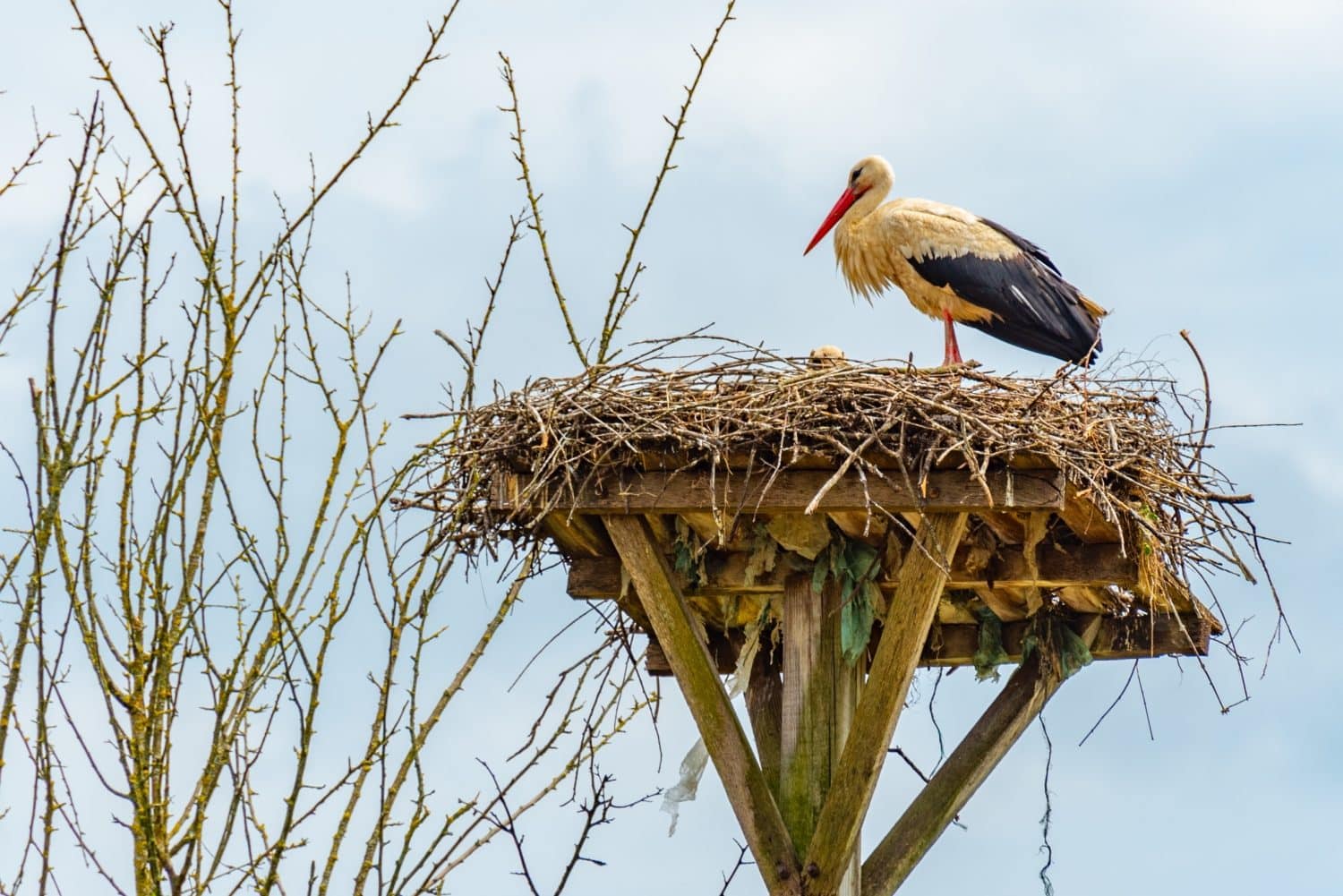
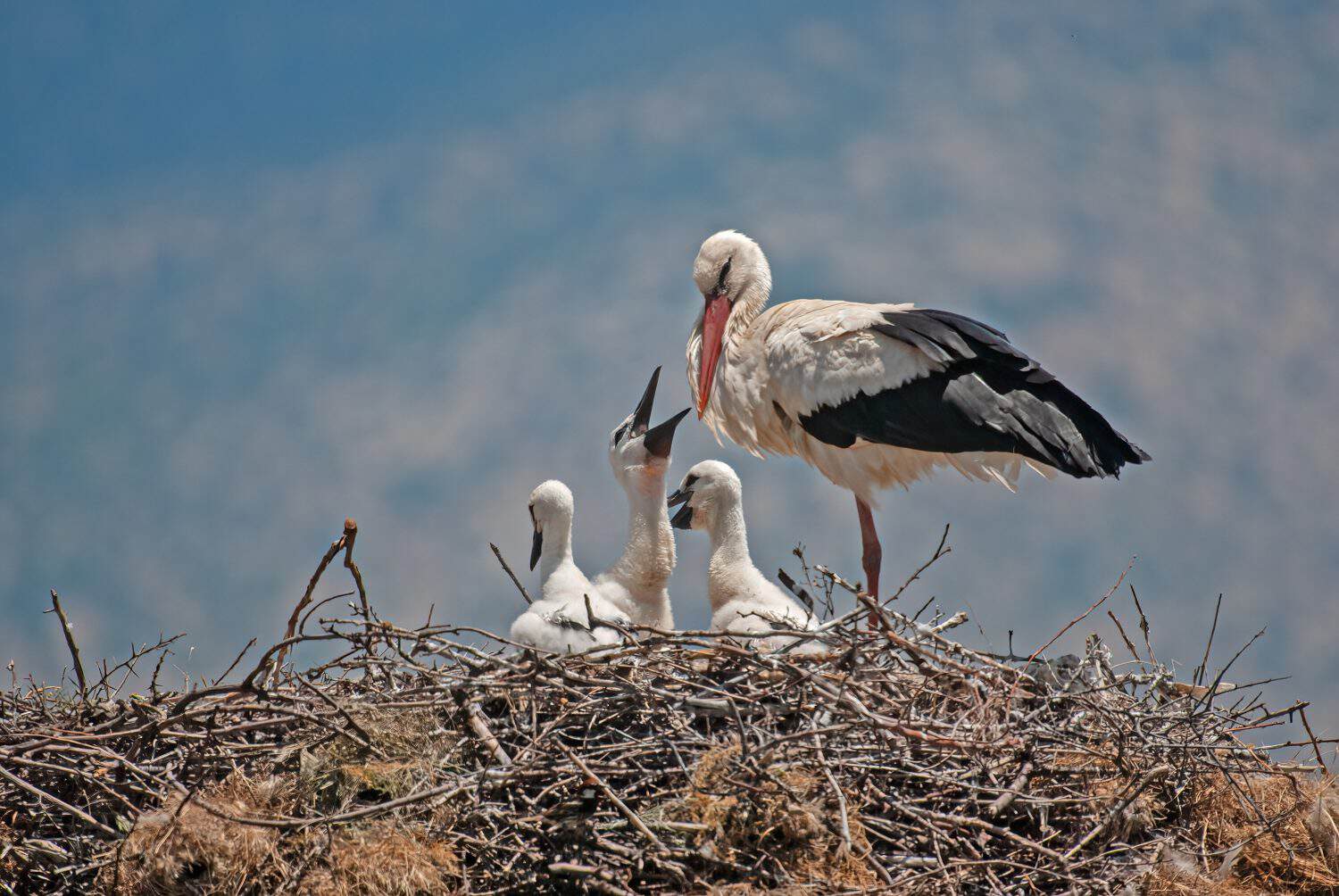
Storks typically build nests that are elevated off of the ground and lay between 2-5 eggs.
©trabantos/Shutterstock.com
Finally, you can often tell a stork from a crane based on how they nest and care for their young.
Cranes:
- Build nests on the ground, often in wetlands or grassy areas
- Lay 1–2 eggs per breeding season
- Both parents are heavily involved in raising their young.
Storks:
- Build large, sturdy nests in elevated locations such as trees, cliffs, or man-made structures
- May reuse and expand the same nest year after year
- Often lay 2–5 eggs
Stork nests can become massive over time, sometimes weighing hundreds of pounds due to repeated use.
Final Thoughts: Similar Shape, Different Lives
While both birds may look alike, storks and cranes live very different lives. Cranes are expressive, social, and vocal birds known for their dances, strong pair bonds, and structured migrations. Storks, by contrast, are quieter, more solitary, and highly efficient hunters that rely on soaring flight, opportunistic feeding, and high nesting sites.
If you’re trying to tell these birds apart, remember these quick tips:
- Listen: Cranes are loud and vocal; storks are mostly silent.
- Watch: Cranes dance and interact; storks are more reserved.
- Feeding: Cranes forage broadly; storks hunt and scavenge.
- Nesting: Ground nests suggest cranes; elevated nests point to storks.
The more you observe, the easier it becomes to spot these differences and the more fascinating each bird becomes in its own right. Eventually, you’ll become an expert on the differences between these fantastic, winged creatures.