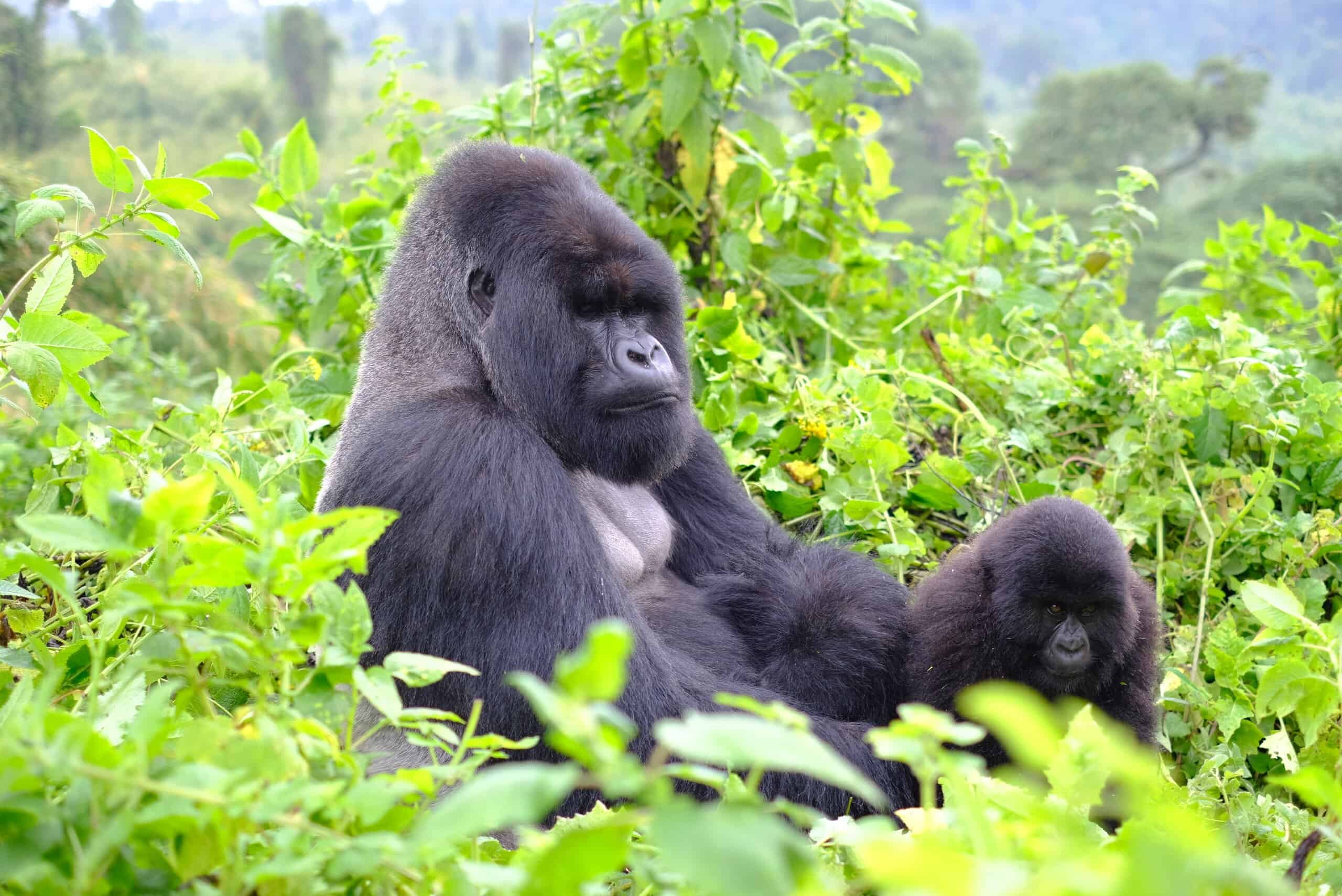

Quick Take
- Gorillas have a built-in reason to almost never throw a punch, so what these two silverbacks did in front of tourists is even more alarming. Why gorillas rarely fight →
- One specific trigger can push a silverback past his instinct to bluff, and that trigger has nothing to do with humans nearby. What triggers real combat →
- The most shocking thing in this footage isn't the brawling gorillas. It's what the tourists are doing while it happens. See the tourists' reaction →
- Africa's oldest national park holds a darker reputation than its age might suggest.
Volcanoes National Park in Rwanda’s far northwest was established in 1925, making it one of the oldest national parks in Africa. This 60-square-mile rainforest preserve in the Virunga volcanic mountains is home to endangered mountain gorillas. The park offers guided hikes through the bamboo forests to observe mountain gorilla (Gorilla beringei beringei) families. However, some tourists saw more than they bargained for.
Mountain Gorillas
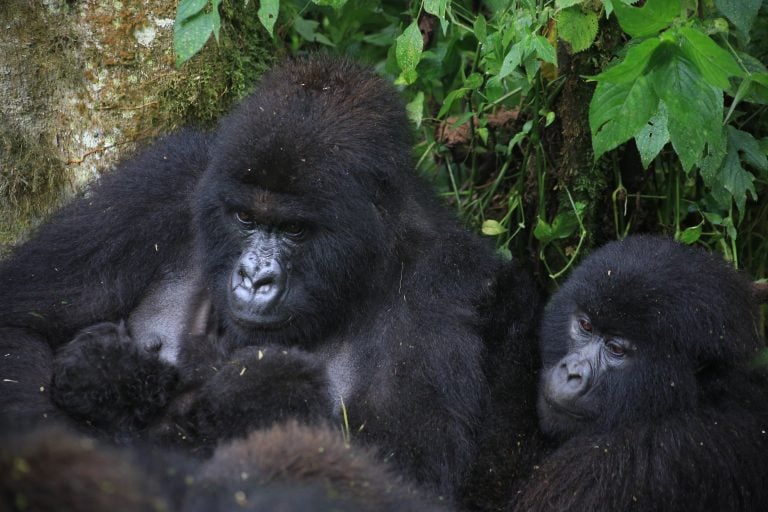
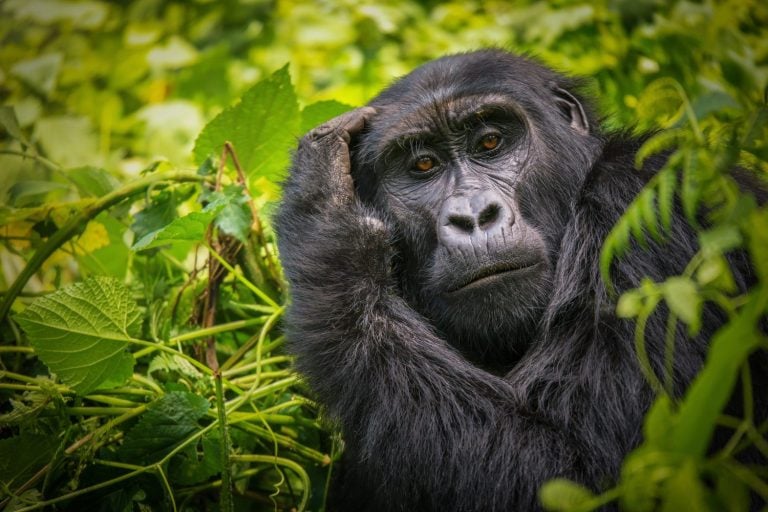
Mountain gorillas are a subspecies of eastern gorilla (Gorilla beringei). They live at high elevations, typically from around 8,000-13,000 feet. These gorillas tend to be larger than lowland gorillas, with longer, shaggier hair, proportionally longer torsos, and shorter arms.
Females stand around 4.5 to 5 feet tall and weigh up to 250 pounds. Males stand 4.5 to 6 feet tall and weigh 300 to 485 pounds. Adult male gorillas get silvery-grey hairs on their backs, so they are known as silverbacks. The term “silverback” can apply to adult males of any gorilla species.
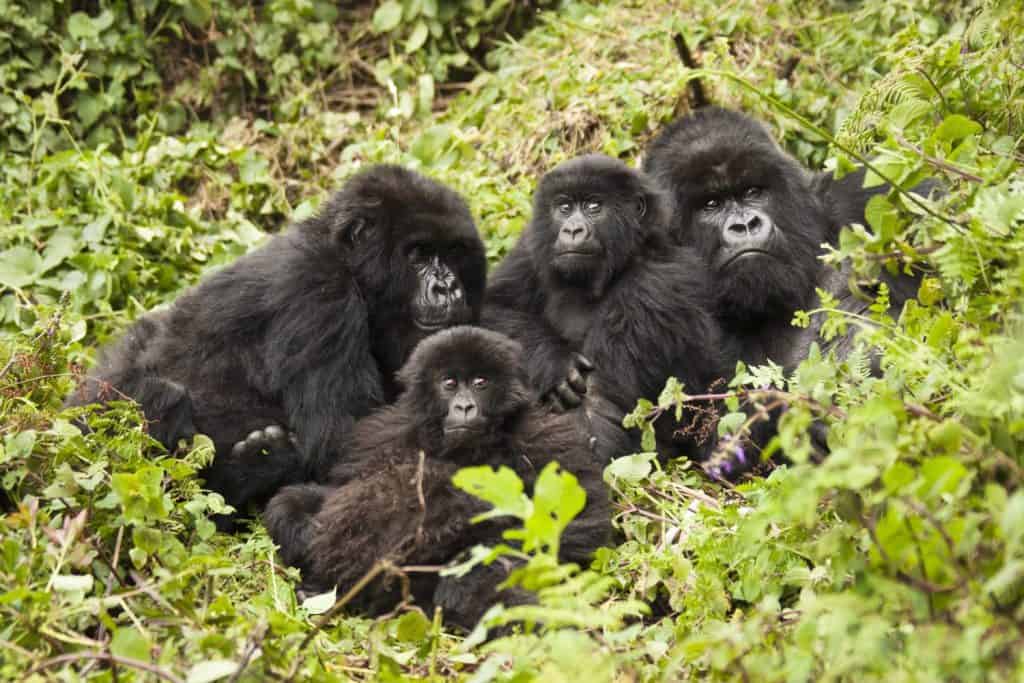
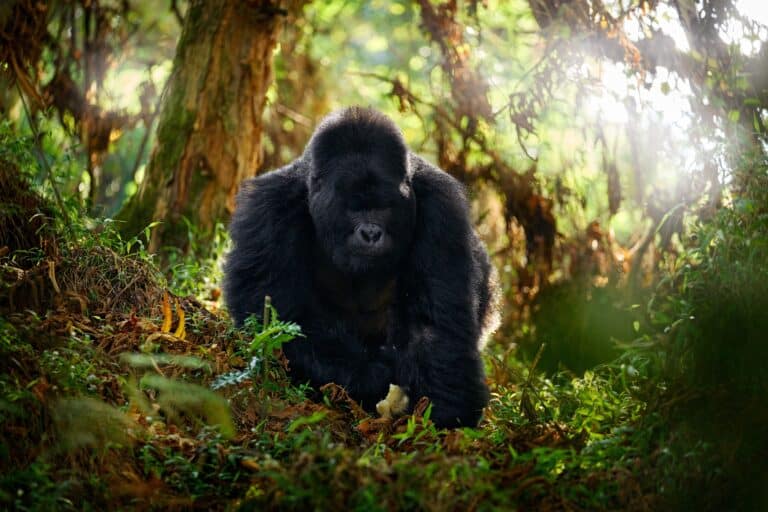
Mountain gorillas are larger and have longer, shaggier hair than their lowland cousins.
©Mary Ann McDonald/Shutterstock.com
Gorilla Hostilities
While hostilities between different groups are relatively common, in secure gorilla groups, severe hostility and physical fighting are rare. Mountain gorillas establish dominance and hierarchy through non-verbal signals, warning displays, and appeasement gestures. Males beat their chests to communicate information about their body size and competitive ability. Gorillas may also stomp, hoot, slap the ground, or charge their rivals in an attempt to get them to back down without physical contact. As a result, most disagreements are settled without violence, through threatening behavior rather than physical conflict.
Mountain gorillas are generally non-territorial herbivores with little competition for food resources due to abundant year-round food supplies. However, if a younger silverback decides to challenge an older alpha for control of the group, intense fights may occur. Male gorillas are extremely formidable opponents when provoked, owing to their large, sharp canine teeth and enormous strength.
A Battle Between Two Great Apes
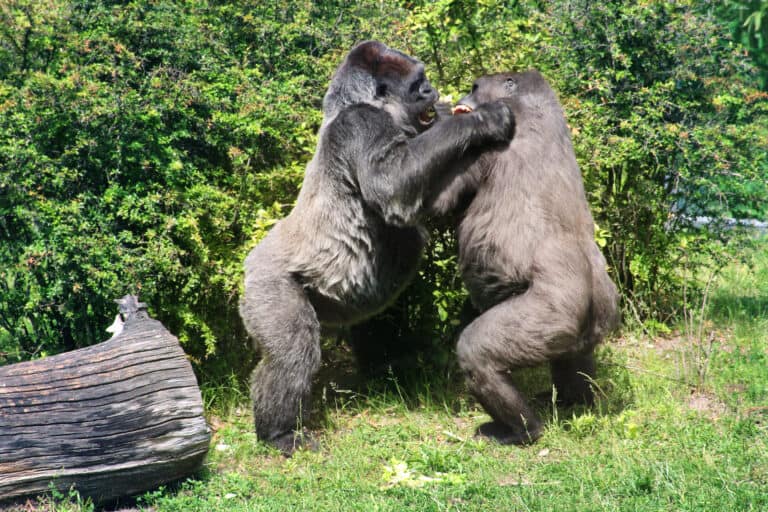
A tourist on a trek through the Volcanoes National Park spotted a band of gorillas in a forested area. Two of the silverbacks from the Amahoro group got into a fight. As they started to trade blows, some of the other gorillas walked away, while others moved closer. The screams coming from these mammals are enough to make most tourists walk away. The entire band is soon hidden behind the greenery, but you can still hear the fight continue.
When watching the footage of these animals fighting, the most shocking thing may be the tourists. They’re not in a safari vehicle or behind a fence. They are out in the open, just a few feet away from this troop. While there are guides seen with the visitors, we advise you to steer clear of gorillas in the wild, especially when they’re angry.