
When you find yourself in a crowd of strangers, it’s always nice to spot a familiar face. Scientists have found that’s not only true of people, but also of mountain gorillas. Mountain gorillas may change social groups several times during their lives. When a female is looking for a new group to join, scientists have found that spotting a familiar face may encourage her to join the group. A recent study published in Proceedings of the Royal Society B revealed some fascinating findings about gorilla behavior.
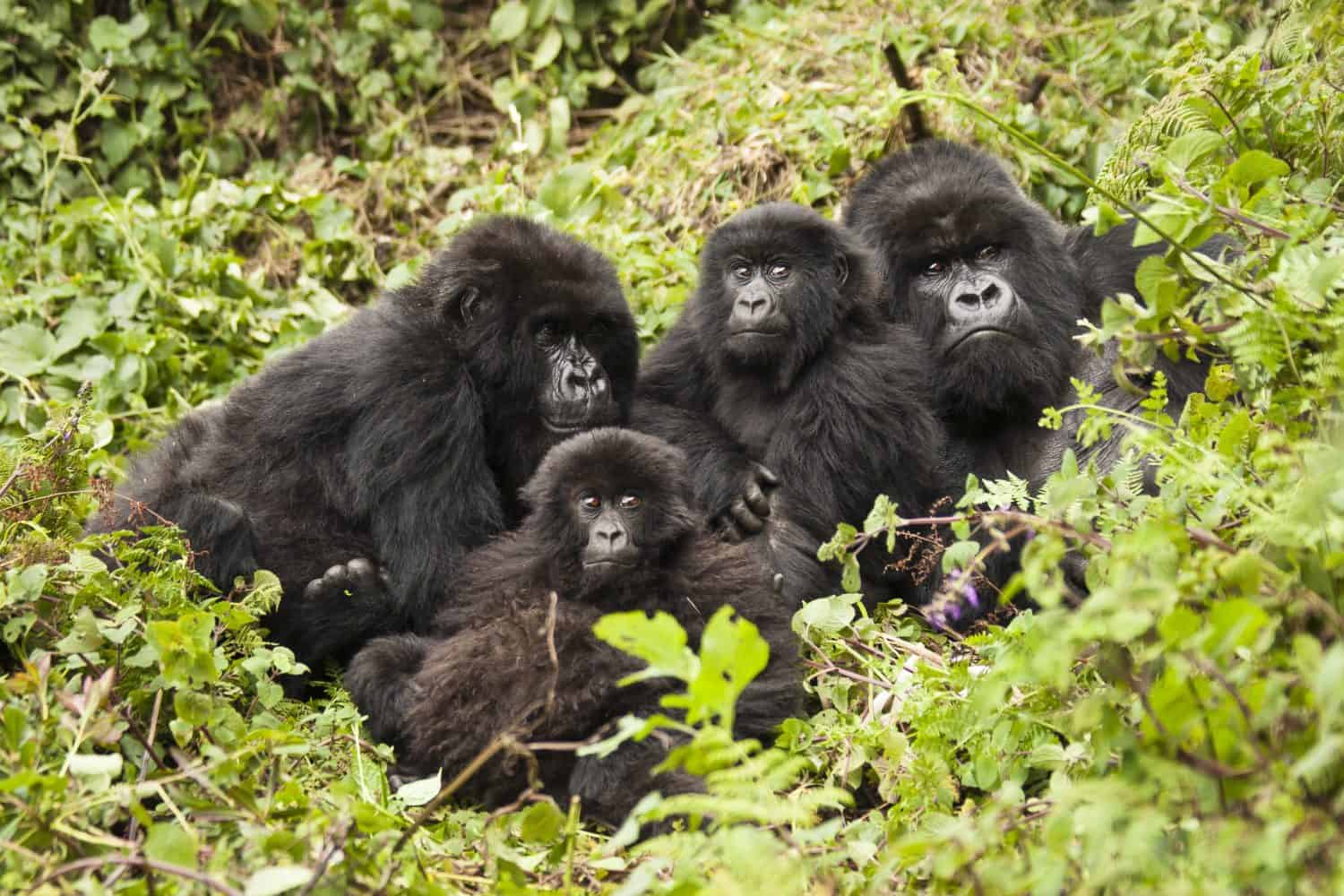
There are 1,063 individual mountain gorillas living in the wild.
©Mary Ann McDonald/Shutterstock.com
About Mountain Gorillas
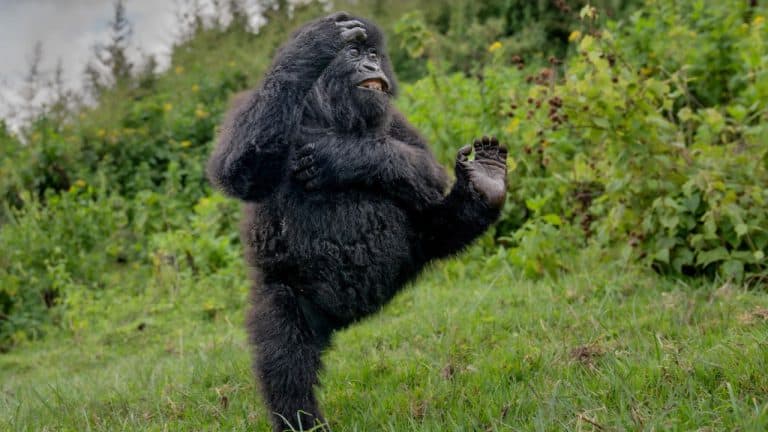
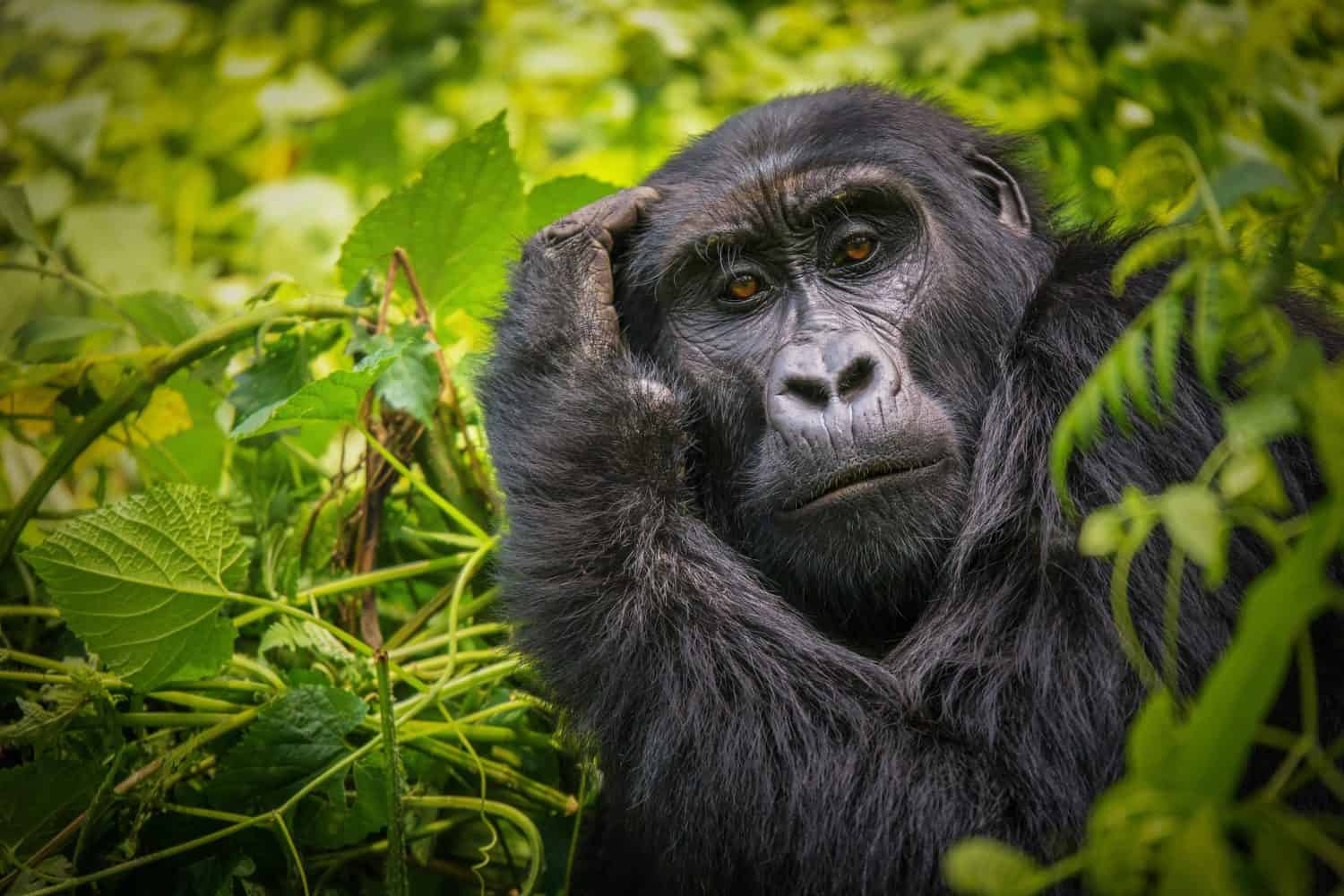
Mountain gorillas (Gorilla beringei beringei) are one of two subspecies of the eastern gorilla. The other subspecies is the eastern lowland gorilla (Gorilla beringei graueri). The mountain gorilla is one of the largest primates on the planet. They can weigh anywhere from 300 to 485 pounds, and stand 4 to 6 feet tall. They are primarily herbivores, eating mostly plants such as leaves, stems, and shoots. Like other primates, mountain gorillas are highly social and live in groups that range from 2 to 40 individuals. These groups are led by a mature dominant male gorilla, known as a silverback.
Mountain gorillas are classified as endangered on the IUCN Red List of Threatened Species. The latest census (conducted in 2019) estimated there were only 1,063 individuals living in the wild. The good news is that conservation efforts have helped their numbers increase. The mountain gorilla population is counted every 5 to 10 years. The next census is underway in 2025, and will let scientists know if the upward trend is continuing.
Where Do Mountain Gorillas Live?
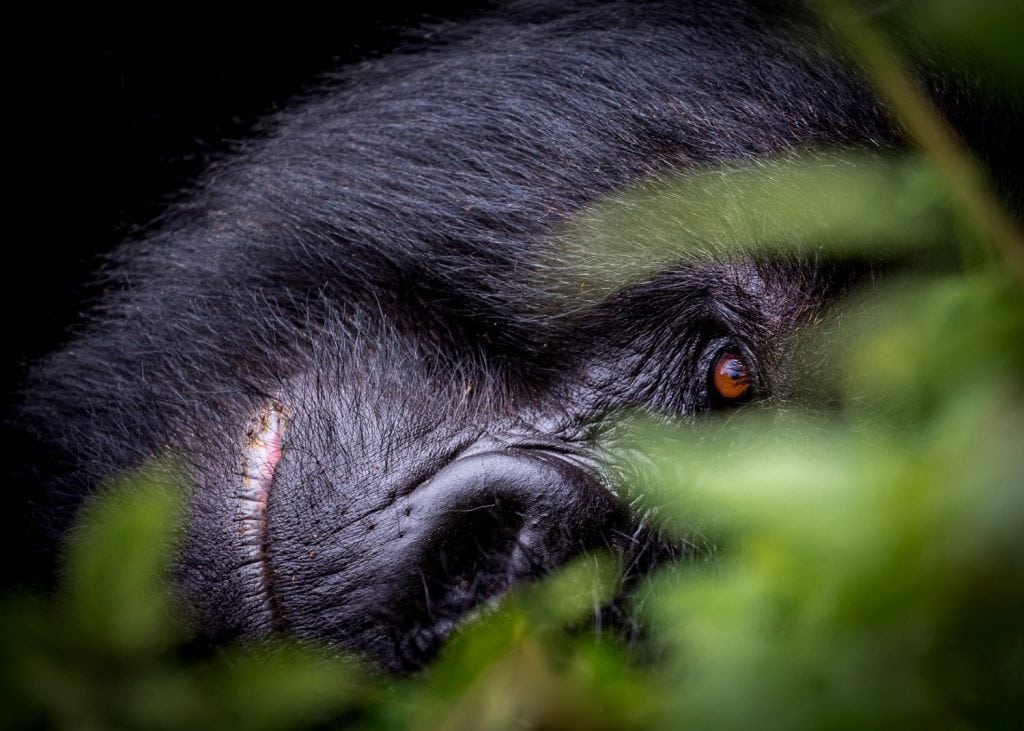
Mountain gorillas live at high elevations of around 8,000 to 12,000 feet.
©Holger Metzger/Shutterstock.com
As their name suggests, mountain gorillas are found in the mountains at elevations around 8,000 to 12,000 feet. Mountain gorillas live in only two places in the wild: Bwindi Impenetrable National Park in Uganda and the Virunga Mountains of East Africa. The Virunga Mountains are an extinct volcano range on the borders of Rwanda, Uganda, and the Democratic Republic of the Congo.
What Did the New Study Reveal?
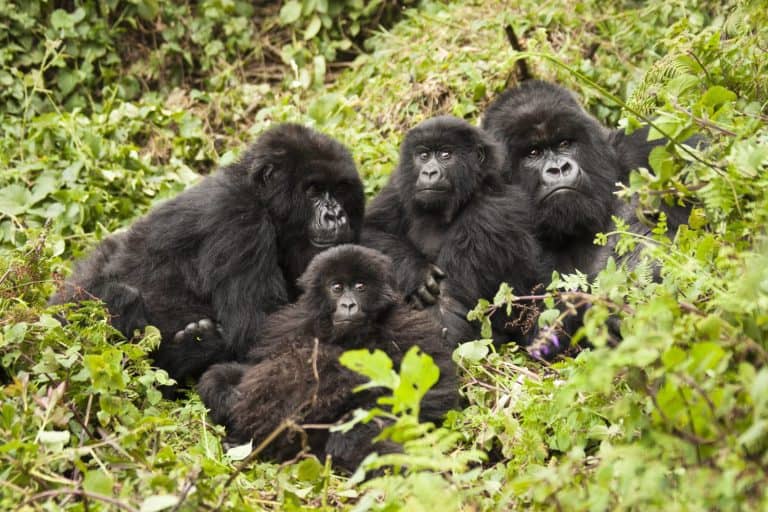
Gorillas stay close to their mothers’ sides until they are around three to four years old. They live in social groups where all of the adults, including the males, help out with caring for their young. Once the gorillas grow older, many of the males and females strike out on their own to find a new social group. This is called dispersal, and many species do this to help keep the gene pool diverse.
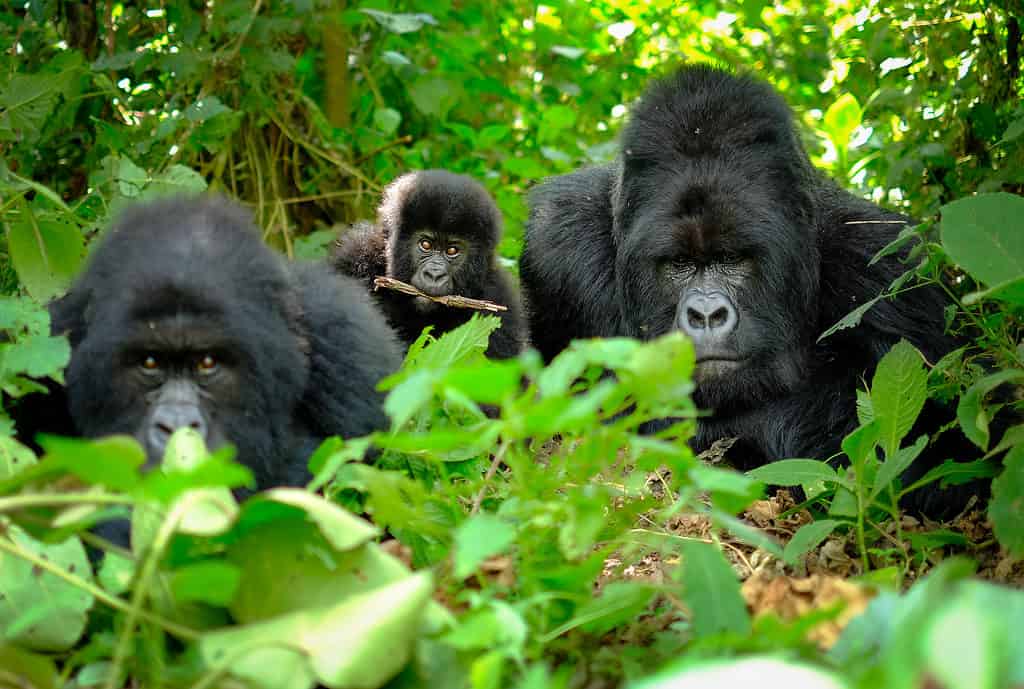
Gorillas live in social groups led by a dominant male.
©Marian Galovic/Shutterstock.com
Researchers found that when females leave their natal group or another social group they have belonged to, they look for familiar female faces. They’re more likely to join a group if one of its members is a female from a group they’ve lived with in the past five years, or a female they had seen in the past two years. Scientists found this surprising because they had previously thought that the females likely didn’t form close bonds due to their moving around to different social groups. But this research showed the gorillas are not only forming new relationships, but remembering old ones.
Dr. Robin Morrison, senior author on the study, said in a press release, “Going into a new group could feel pretty scary, with individuals usually entering at the bottom of the social hierarchy. A familiar female might help reduce this, providing a social ally.” Furthermore, the gorillas may feel more positively about a social group that an old friend is part of. “It could also act like a recommendation from a friend – if a female they know has chosen to stay in this group, it could indicate positive things about the group as a whole or the dominant male leading that group.”
How Did the Researchers Collect the Data?
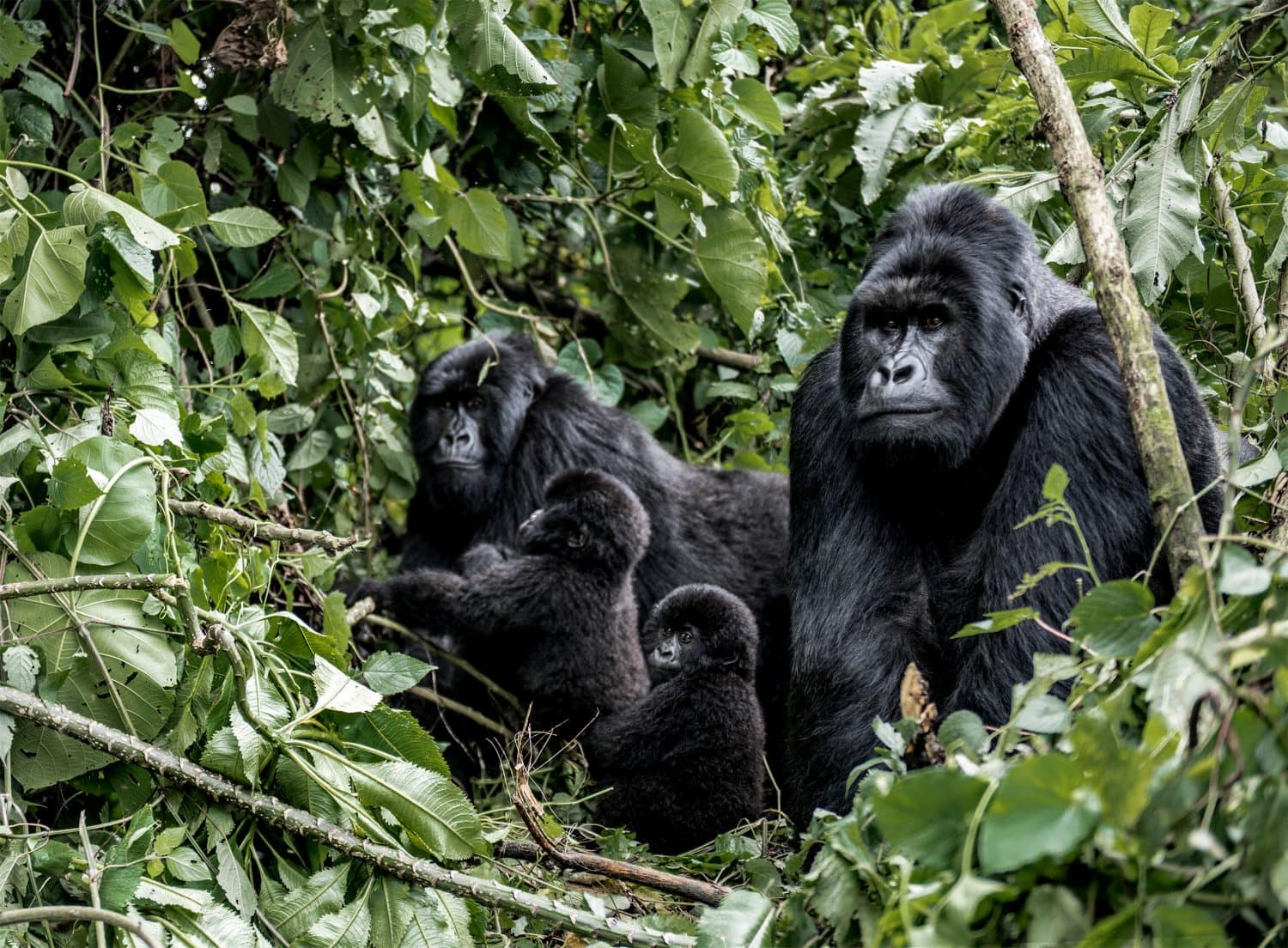
About one-third of the entire mountain gorilla population lives in Virunga National Park.
©Eric Isselee/Shutterstock.com
Researchers looked at decades of observations from the Dian Fossey Gorilla Fund, a gorilla conservation organization. The Gorilla Fund used trackers to learn which gorillas belong to which social groups. Using the trackers, they were able to monitor the ever-changing group dynamics.
Females Did Not Choose Groups With Males They Grew Up With
Another interesting finding in the study is that female gorillas avoided joining social groups with males that had been in their natal group. Lead author Victoire Martignac, a Ph.D. student from the University of Zurich, explains in the press release, “When choosing their next group, they only avoid males they grew up with. This really tells us that it’s not just who they know that matters but how they know them.”