Quick Take
- That deep rumbling sound a gorilla makes isn't what most people think it means, and misreading it changes everything about how you interpret the encounter. Decode gorilla rumbles →
- Gorillas sometimes close the distance themselves, which puts tourists in an awkward spot: Rwanda has a firm distance rule, so what are you supposed to do when the gorilla ignores it? See the seven-meter rule →
- Gorillas and humans share more than most people realize, and one surprising detail researchers use to tell individual gorillas apart is written all over their faces. Explore nose prints and DNA →
- Dian Fossey documented a specific gorilla call that sounds alarming but actually signals the opposite, something that shows up in this Rwanda footage. Hear Fossey's belch call →
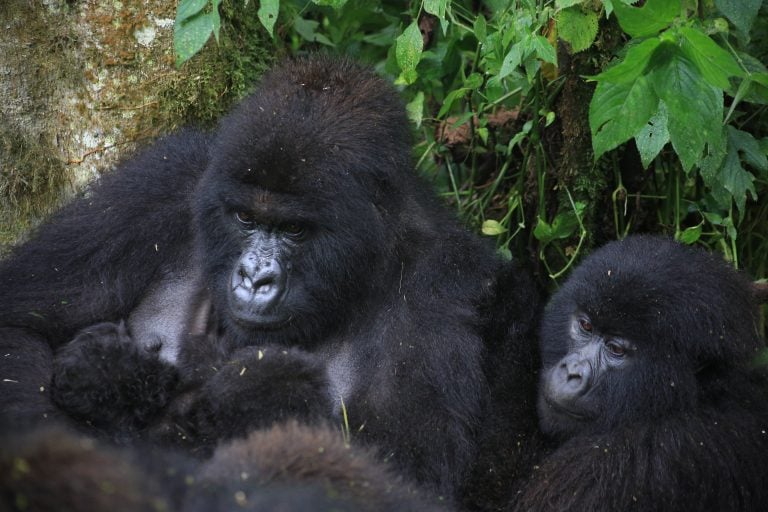
Imagine standing in a rainforest when an enormous mountain gorilla suddenly appears just a few feet away. That’s the remarkable encounter captured in this wildlife footage from Rwanda, where a gorilla comes incredibly close to a camera and nearby visitors. The animal’s size is impressive enough, but it’s the deep, rumbling sounds that make the moment especially fascinating. And despite how unusual those noises might sound to us, they’re part of the way gorillas communicate with one another.
Watch This Mountain Gorilla Up Close in Rwanda
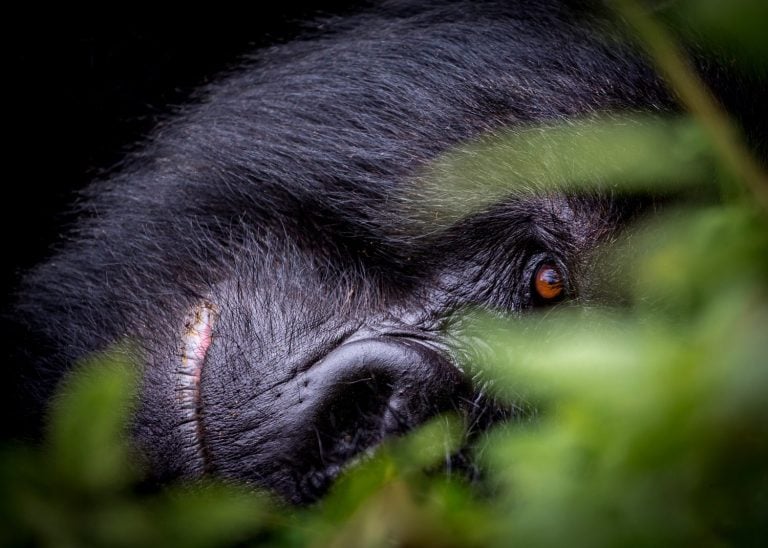
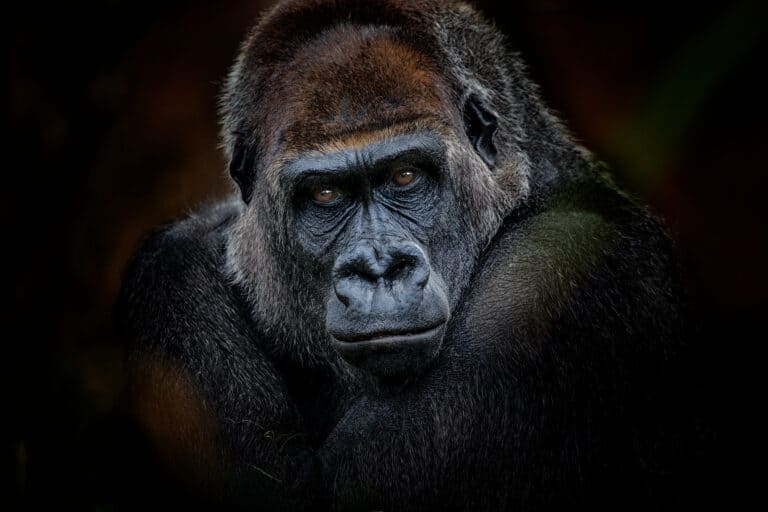
There’s something extraordinary about seeing a mountain gorilla from this perspective. Rather than watching one move through the forest from a distance, we get an unusually detailed look at its face, powerful build, and surprisingly expressive features.
Listen carefully to the sounds the gorilla makes. Among the many vocalizations these animals use is a deep, throaty call commonly described as a belch vocalization. The sound is typically associated with relaxed social interactions and can help gorillas maintain contact with other members of their group. The low rumbling heard in this footage appears consistent with that type of communication, although an animal’s precise emotional state can’t be determined from the sound alone.
Of course, getting this close to a wild gorilla isn’t something visitors should deliberately attempt. Rwanda’s gorilla-viewing rules require tourists to maintain a minimum distance of seven meters, or about 23 feet, to protect these endangered animals from human diseases and unnecessary stress. Gorillas sometimes approach visitors on their own, which is why following the instructions of experienced guides is so important.
What Do Those Deep Gorilla Rumbling Sounds Mean?
Gorillas are considerably more vocal than many people realize. Although they’re often associated with dramatic chest-beating displays and intimidating roars, much of their communication is surprisingly subtle. They use a variety of grunts, hums, cough-like calls, and other sounds during ordinary social interactions.
One of the most recognizable is the belch vocalization, a deep, rolling sound that can resemble someone quietly clearing their throat. Primatologist Dian Fossey described these calls during her pioneering research on mountain gorillas, noting that they were frequently exchanged when animals appeared comfortable and relaxed. One gorilla might make the sound, prompting others nearby to respond with similar calls.
Researchers also recognize different vocalizations associated with play, contact, warnings, and potential threats. Young gorillas can produce chuckling sounds while wrestling or chasing one another, sometimes displaying a relaxed, open-mouthed play face. More forceful calls, including barks and hoots, may occur in tense situations or encounters with unfamiliar gorillas.
The important thing to remember is that a deep rumble doesn’t automatically mean a gorilla is angry or preparing to attack. Context matters, including the animal’s posture, facial expression, and the behavior of the surrounding group.
Where Do Mountain Gorillas Live in the Wild?

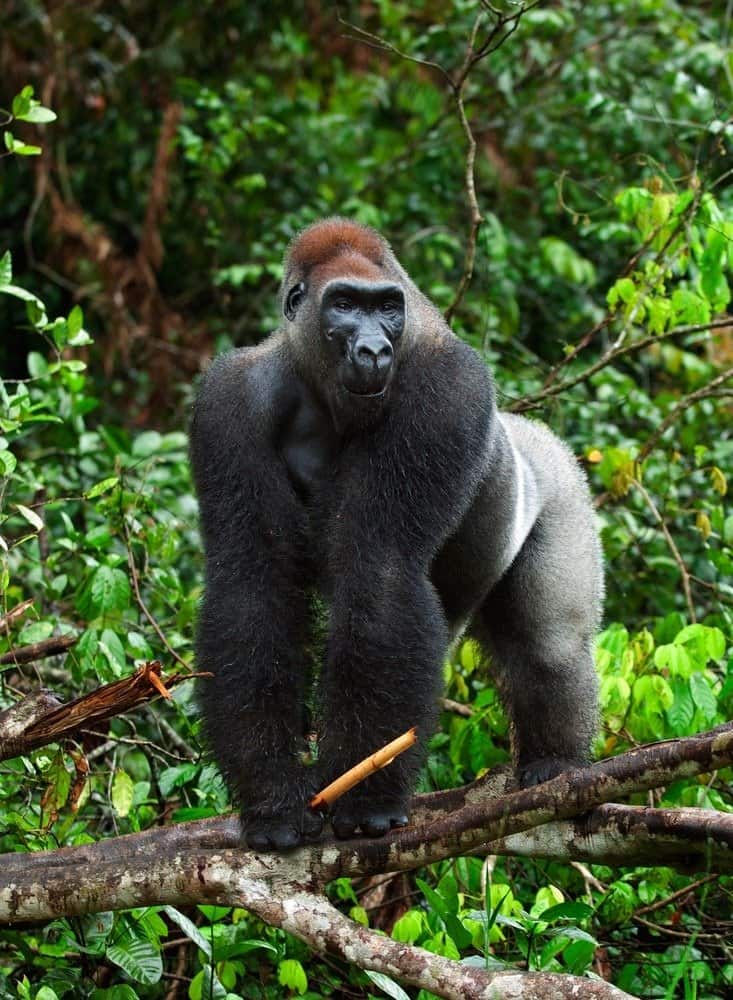
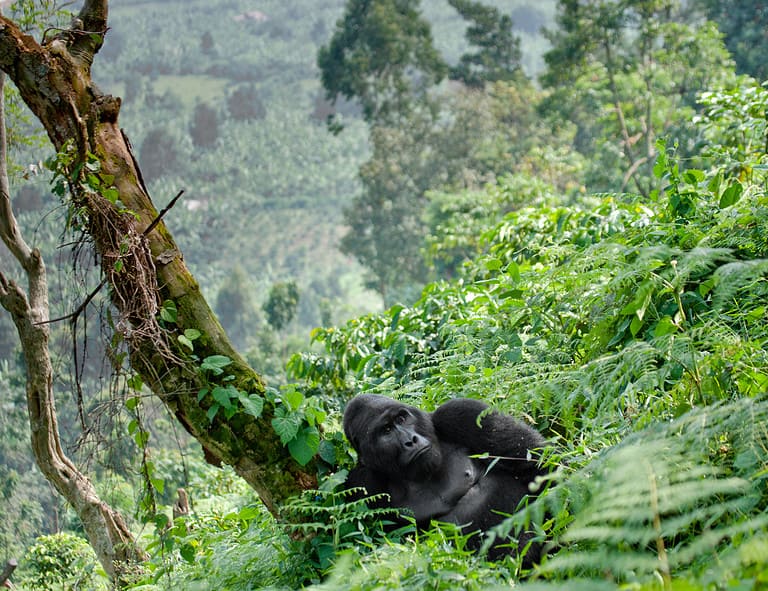
Mountain gorillas inhabit protected forests in Uganda, Rwanda, and the Democratic Republic of the Congo.
©GUDKOV ANDREY/Shutterstock.com
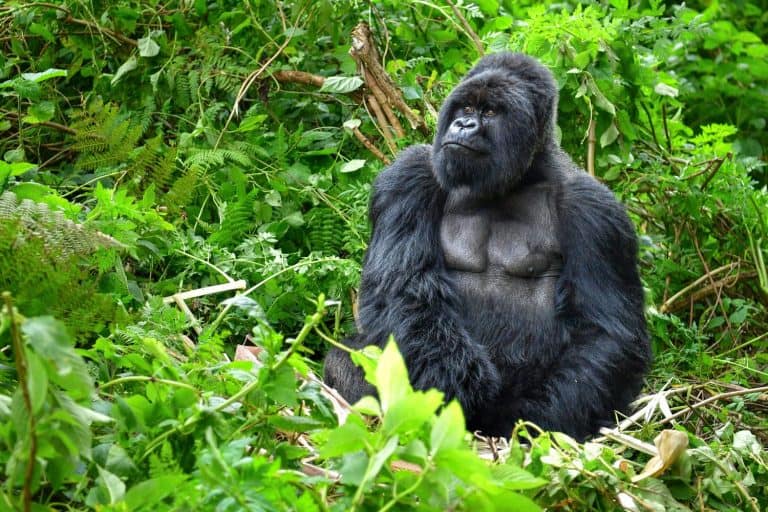
Mountain gorillas, scientifically known as Gorilla beringei beringei, are a subspecies of the eastern gorilla. They live in two geographically separated populations in Central Africa.
One population inhabits the Virunga Mountains, a volcanic region spanning parts of Rwanda, Uganda, and the Democratic Republic of the Congo. The other is found primarily in Uganda’s Bwindi Impenetrable National Park, extending into the neighboring Sarambwe area of the Democratic Republic of the Congo.
These gorillas are adapted to living in high-elevation forests, including montane rainforest, bamboo stands, and other mountain vegetation. Their thick fur helps them cope with cooler temperatures, while their powerful bodies are well suited to navigating the rugged terrain.
Mountain gorillas remain classified as endangered, although conservation efforts have helped their population recover from earlier declines. Habitat protection, anti-poaching patrols, veterinary care, and carefully managed tourism all play roles in their survival.
How Closely Related Are Gorillas to Humans?
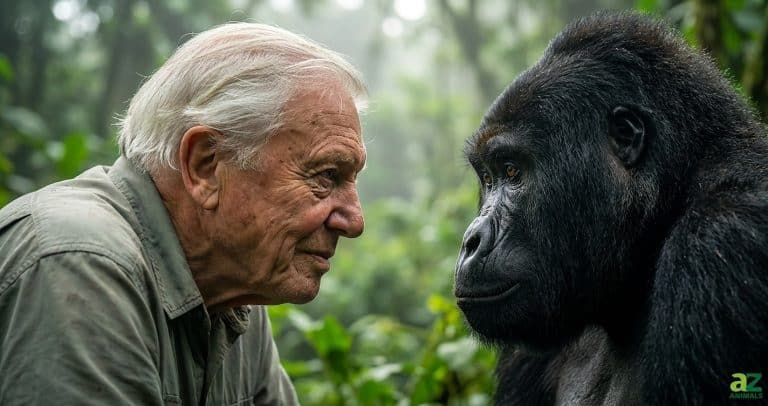
As different as we might appear, humans and gorillas have quite a bit in common. Both belong to the great ape family, Hominidae, alongside chimpanzees, bonobos, and orangutans. Genetic comparisons indicate that gorillas and humans share roughly 98% of their DNA, although the exact percentage depends on which portions of the genomes are being compared.
Gorillas also have remarkably expressive faces and complicated social relationships. They recognize individuals, maintain family bonds, care for their young, and communicate through a combination of sounds, gestures, and body language.
Here’s another interesting detail: individual gorillas have distinctive patterns of wrinkles and ridges on their noses, often called nose prints. Researchers can use photographs of these patterns to help identify and monitor specific animals in the wild.
And that’s part of what makes footage like this so compelling. Seeing a mountain gorilla at close range reveals details that can be difficult to appreciate from a distance, while those unusual rumbling calls offer a fascinating reminder that these animals have an entire language of social sounds we’re still working to understand.