Quick Take
- Gorillas share nearly all our DNA yet remain on the edge of extinction, though the biggest threat isn't what most people assume. Explore the threats →
- Gorillas can think about the past and test water depth with tools, and their intelligence goes even further than that. See their cognitive abilities →
- Tourism inside a gorilla sanctuary sounds risky, but it may be one of the most powerful conservation tools available. Discover how tourism helps →
- Four orphaned gorillas spent years in a rescue center before something remarkable happened in 2024. The event offers real hope for the species. Read about the 2024 release →
September 24th, 2026, is World Gorilla Day, and on this day we celebrate gorillas! We share around 99 percent of our DNA with these magnificent, glorious, and intelligent creatures, who do not deserve the devastation that has been inflicted on them in the past. But rather than focusing on the negative, we want to highlight the positives. Let’s take a closer look at just how clever our gorilla cousins are and what is being done to save them.
Continue reading
Meet the Clever Great Apes
Gorilla nomenclature is a bit tricky! There are actually only two gorilla species: the eastern gorilla and the western gorilla. However, each species is further divided into two subspecies. So, eastern gorillas (Gorilla beringei) can be either mountain gorillas (Gorilla beringei beringei) or eastern lowland gorillas, also called Grauer’s gorillas (Gorilla beringei graueri). Western gorillas (Gorilla gorilla) can be either western lowland gorillas (Gorilla gorilla gorilla) or the cross river gorilla (Gorilla gorilla diehli).
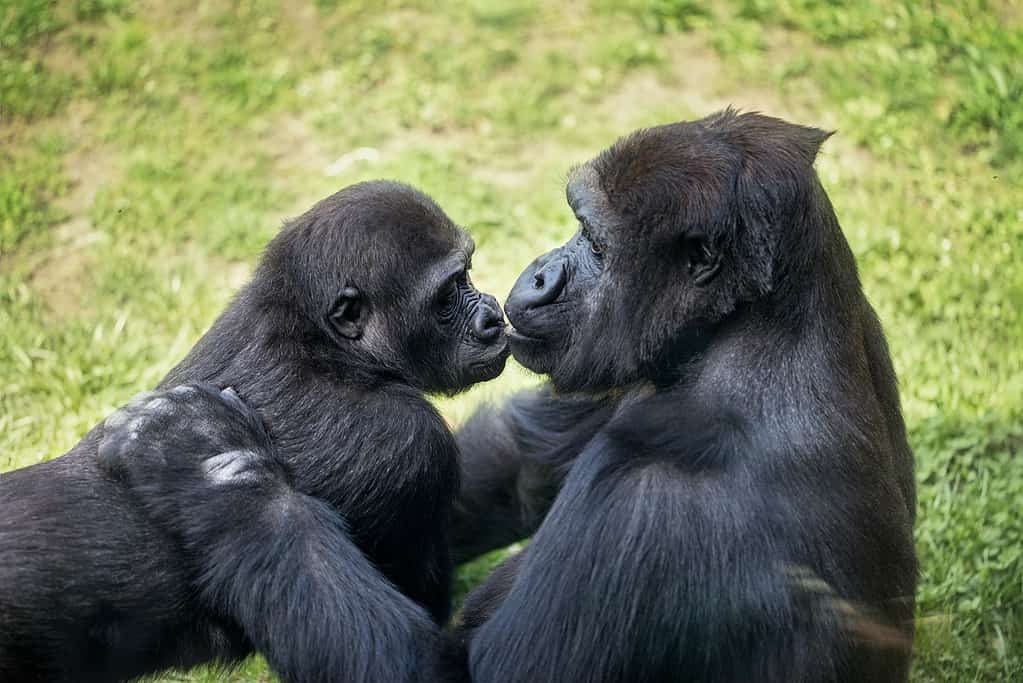
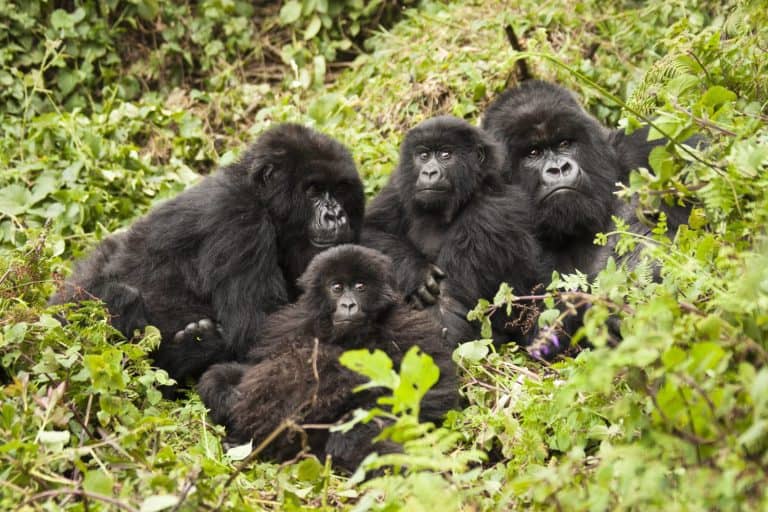
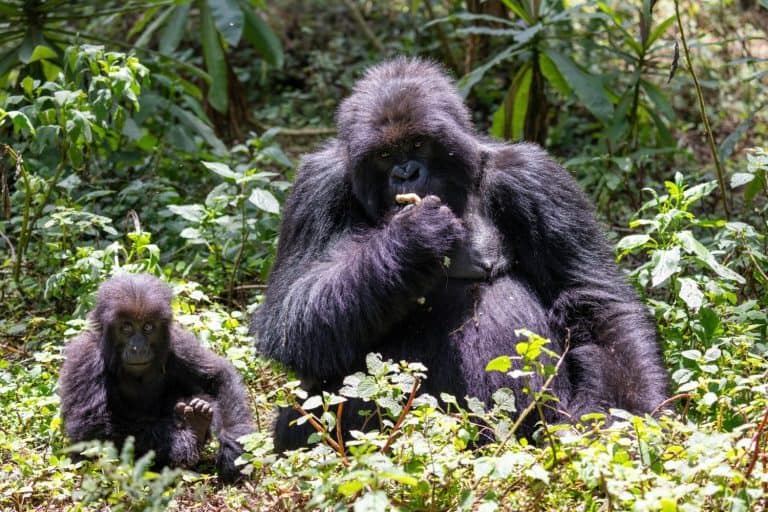
Gorillas are highly intelligent.
©LuckyBusiness/iStock via Getty Images
Sadly, all gorilla subspecies are classified as either Endangered or Critically Endangered. While the specific threats vary from region to region, the overall problem is human activity. Habitat loss and fragmentation are major issues and are caused by factors such as agriculture and commercial logging. Gorillas are hunted illegally through poaching and the bushmeat trade. Additionally, they can become caught in traps and snares intended for other wild animals. Some gorillas succumb to infectious diseases, and climate change presents further challenges, such as threatening their food and water availability.
How Clever Are Gorillas?
Of all primates, only humans have a heavier brain than gorillas. Compared to many other primates, such as chimpanzees, they are calm, patient, and reserved. Even though they are huge and physically very strong, gorillas are very sensitive and emotional. They have exhibited advanced cognitive abilities and live in complex social structures with family bonds.
These creatures have shown both spatial and temporal reasoning and can use tools, which are both signs of intelligence. Some have been seen using a stick to test water depth and using branches as a bridge. Gorillas use gestures, facial expressions, and vocalizations to communicate. They can figure out the best travel routes, locate hidden items, and even think about the past!
Protecting Wild Gorillas
If gorillas are to survive, they need our help, and thankfully this is being provided in some areas. The Bwindi Impenetrable National Park is home to half of the world’s mountain gorillas. Here, there have been some gorilla conservation successes, and their numbers have increased from around 300 to around 600 since 1991. Despite this modest success, poaching is still a threat.
Several gorilla families within the park, such as the Rushegura and Habinyanja families, can be visited by tourists under strictly controlled conditions.
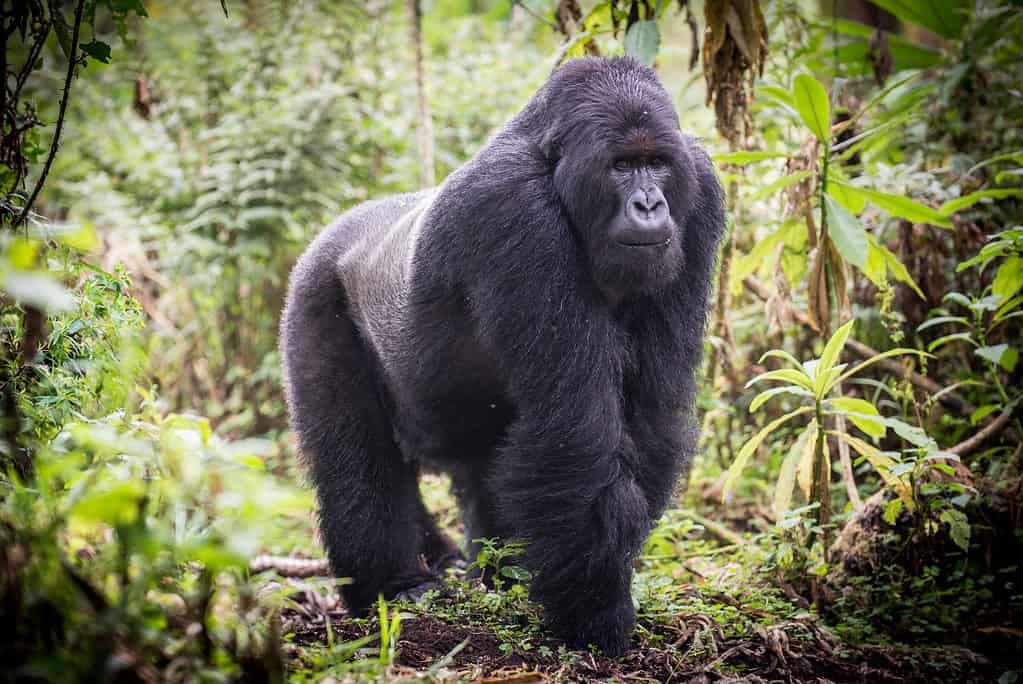
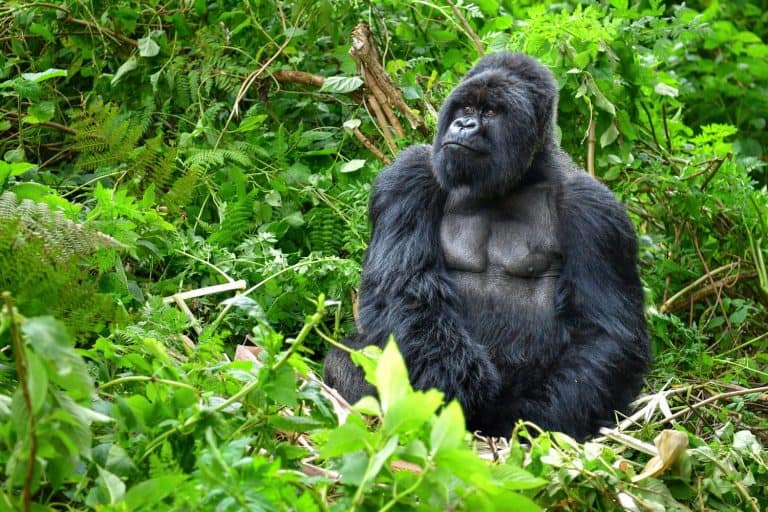
Adult male gorillas have silver hair on their lower back
©Jurgen Vogt/Shutterstock.com
The World Wildlife Fund supports carefully controlled gorilla tourism. It is essential that the presence of tourists does not negatively impact the well-being of the gorillas. Because gorillas can contract human diseases such as COVID-19, visitors must wear surgical masks, thoroughly wash their hands and boots, and maintain a distance of 32 feet.
When done well, gorilla tourism can benefit both the gorillas and local communities. It provides economic benefits and prevents human-wildlife conflict.
Sanctuary Rescues of Orphaned Gorillas
Sanctuary rescues fulfill a vital role in caring for infant and juvenile gorillas that have been orphaned. This may be as a result of poaching, the illegal pet trade, or bushmeat hunting. The rescues provide veterinary care and rehabilitation, and wherever possible the gorillas are released back into the wild.
A leading example is the Gorilla Rehabilitation and Conservation Education (GRACE) center in Africa’s Congo Basin in eastern Democratic Republic of the Congo. This is within the endemic range of critically endangered Grauer’s gorillas.
In late 2024, the sanctuary successfully reintroduced four rescued female Grauer’s gorillas into the wild. Each gorilla arrived as an orphan between 2010 and 2016 and received expert veterinary care, forest-based rewilding, and social integration.
In the wild, the released individuals voluntarily joined a group of wild gorillas led by a silverback called Mwasa. They continue to thrive in their new home!
International Gorilla Conservation Program
The International Gorilla Conservation Program was formed in 1991 with the aim of addressing the long-term conservation of the mountain gorilla. To do this, they work to manage sustainably and tackle threats. The organization achieves this by “promoting tourism best practices, empowering park edge communities, and encouraging the range states to adopt a consistent, collaborative approach to conservation policy and legislation, grounded in science.”
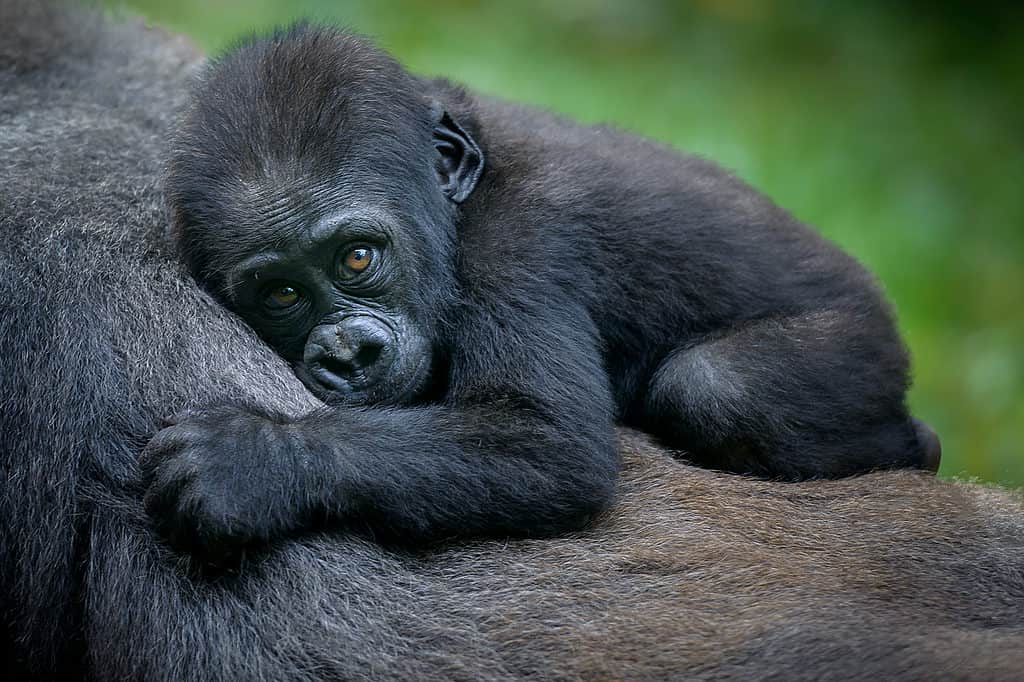
Gorilla conservation can also benefit local communities.
©Asaf Weizman/Shutterstock.com
Equally important, the program acts as the voice of gorillas. They recognize that the best way to protect these creatures is through community development and livelihood improvement in the region. This reduces human-wildlife conflict and allows humans and gorillas to thrive side by side.