
Leeches are parasitic or predatory worms that make up the entire subclass Hirudinea of the class Clitellata. Interestingly, only around 10% of leech species are parasites that feed on the blood of their hosts; most prey on small invertebrates and larvae. Leeches are found on every continent except Antarctica and primarily live in freshwater environments. While most leech species are quite small and can initially go unnoticed by their hosts, one species is so large that it cannot be overlooked. Continue reading to learn about the largest species of leech.
The Largest Leech Ever Discovered
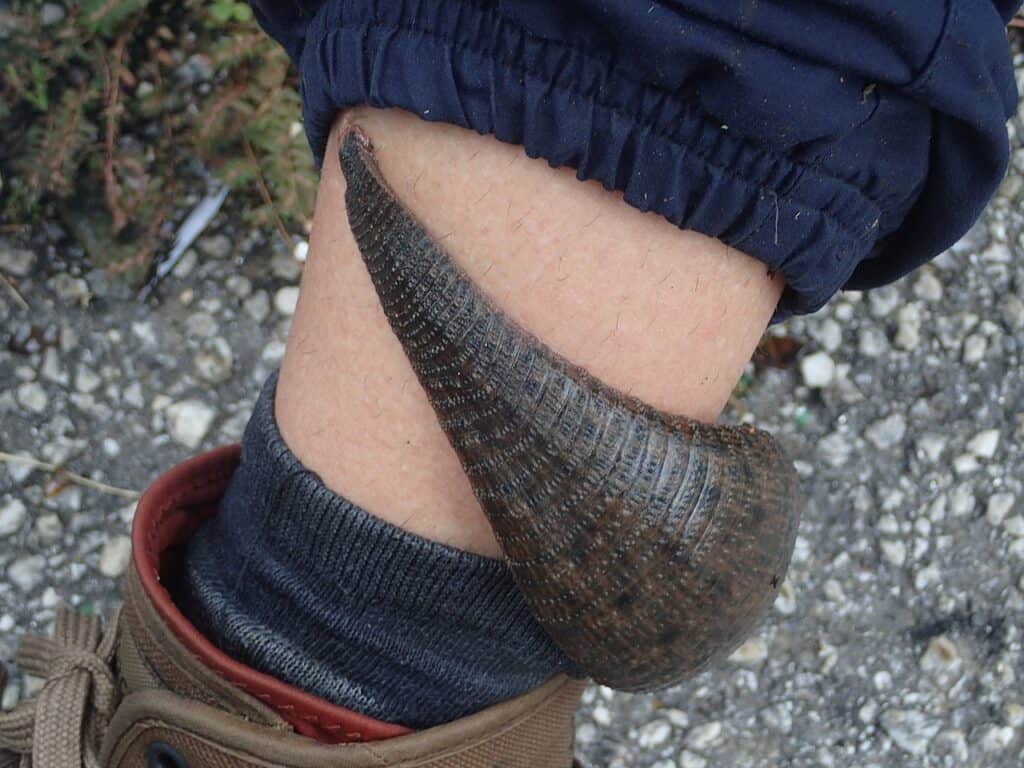
The world’s largest leech is the Amazon giant leech.
The Amazon giant leech (Haementeria ghilianii) is the world’s largest freshwater leech, measuring up to 17.7 inches long and having a width of up to 3.9 inches. This leech has 34 segments, each with its own ganglion, a neuron cell cluster similar to a brain. Adults are grayish-brown, while juveniles lack a uniform color, instead displaying a patchy, irregular pattern.
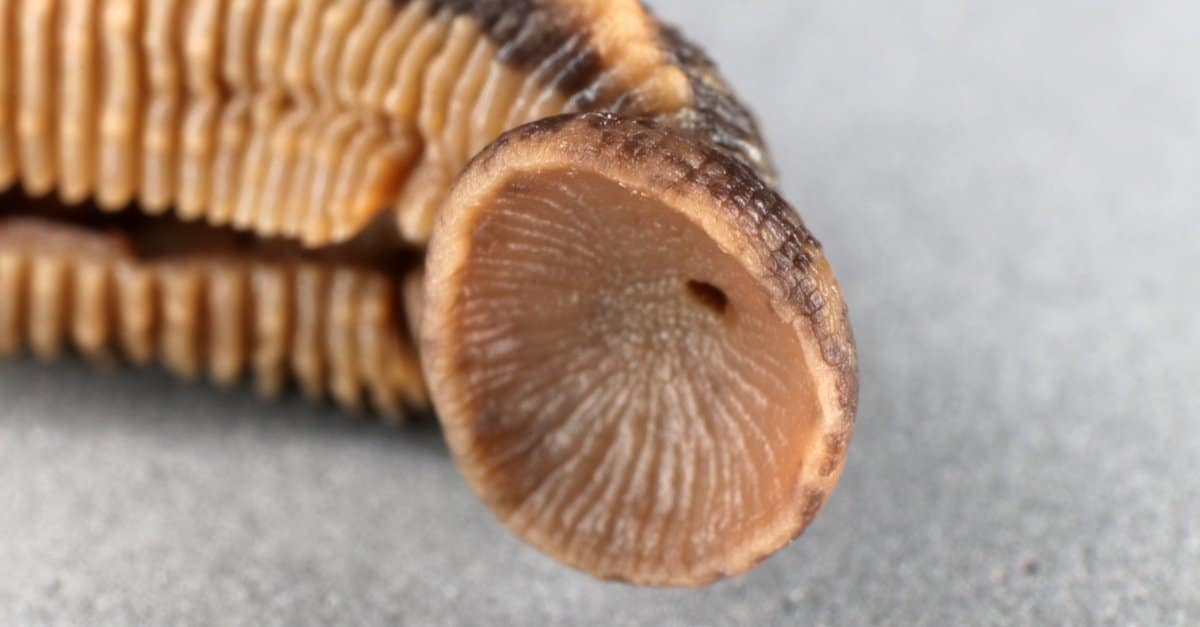
Amazon giant leeches are jawless and instead have a 3.9-inch hypodermic needle-like proboscis at their wider end. These leeches are shaped like a cobra’s hood: wide in the center and tapering at both ends. They are endemic to the Northern Amazon River, from Venezuela to the Guianas. This species can live up to 20 years.
Grandma Moses
From the 1890s until the 1970s, the species was believed to be extinct, but two adults were collected in French Guiana by Dr. Roy Sawyer. Grandma Moses, one of these two leeches, established a successful reproductive colony at UC Berkeley.
In just three years, Grandma Moses gave birth to more than 750 offspring; this species’ egg clutches range from 60 to 500 eggs. Grandma Moses’s breeding colony was visited by researchers in medicine, neurology, and natural history, who conducted a total of 46 studies. UC Berkeley selected the National Invertebrate Collection as Grandma Moses’s final resting place after she passed away.
Average Leeches
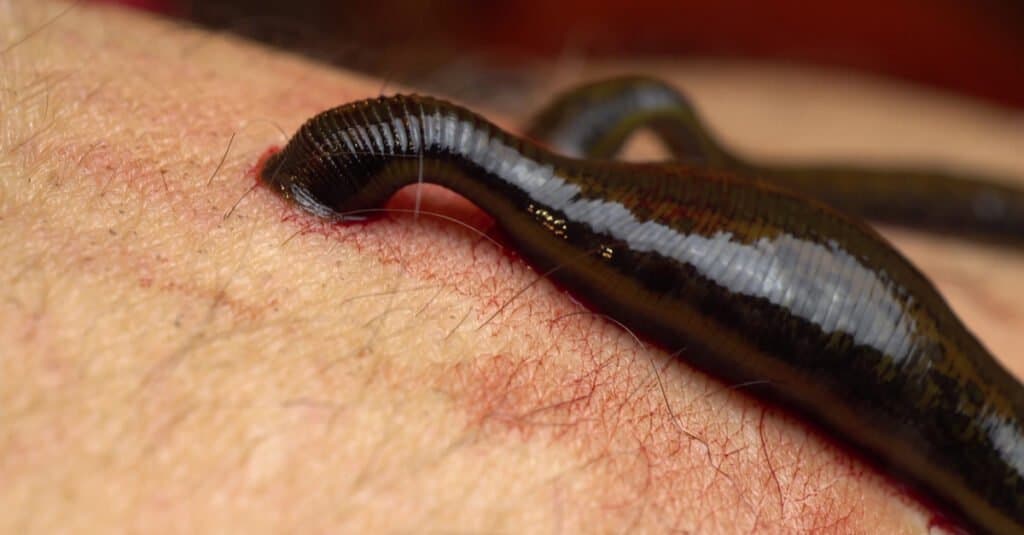
Average leeches measure up to 2 inches long.
©Vital9s/Shutterstock.com
Leeches vary in size, but the average leech measures up to 2 inches long. Aside from the giant Amazon leech, some species in the United States can grow up to 10 inches long. Leeches usually live 2 to 8 years, which is relatively long for an invertebrate. In the wild, they can sometimes live up to 10 years.
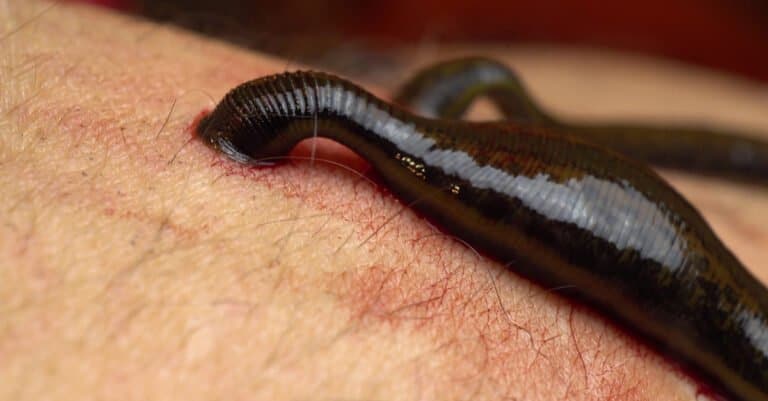
Leeches are segmented, flat-bodied worms. Although some species are vividly colored, most are typically black or brown in hue. Because of their flexibility, leeches can stretch and compress so much that it is difficult to measure them accurately. Typically, a leech has two or three rows of small teeth, and its bite is painless.
Leeches are Still Used in Medicine Today
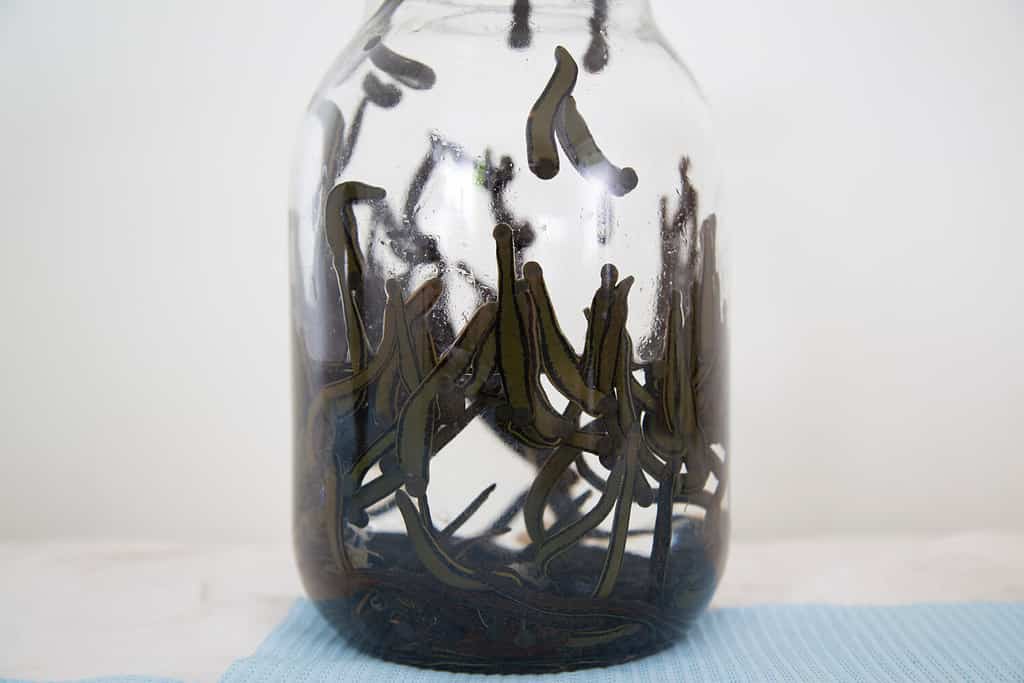
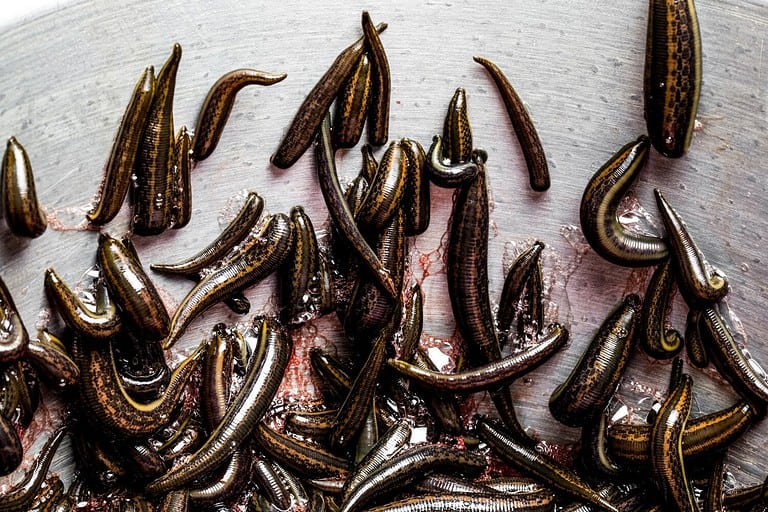
A jar of medicinal leeches, ready to be used to restore blood flow.
©Doro Guzenda/Shutterstock.com
Medicinal leeches (Hirudo medicinalis) have been used by humans for thousands of years for bloodletting. Bloodletting was practiced because, before modern medicine, people believed illness was caused by imbalances between the four humors: blood, phlegm, yellow bile, and black bile. Bloodletting was thought to restore balance to the four humors, and different parts of the body were bled to treat different illnesses.
Today, scientists know this belief is untrue. However, medicinal leech therapy began making a comeback in the 1960s, with widespread renewed interest and use in the 1980s. This is because there are certain medical conditions for which this therapy is actually effective. Medicinal leeches are commonly used in microsurgery to restore blood flow after finger reattachments and reconstructions of the lips, ears, nose, and eyelids. They are also used to treat varicose veins, muscle cramps, osteoarthritis, and other conditions.