
Quick Take
- Before a leech ever touches you, it's already tasting you. The clues it reads are ones you can't hide. The chemical signals you emit →
- Leeches don't have eyes in any conventional sense, yet they can spot you moving through the jungle. The bizarre biological trick that makes it possible is worth exploring. How leeches sense movement →
- Leeches run a step-by-step sensory checklist before latching on, and skipping any step means they move on. Understanding this process explains why they seem to materialize out of nowhere. Their detection sequence explained →
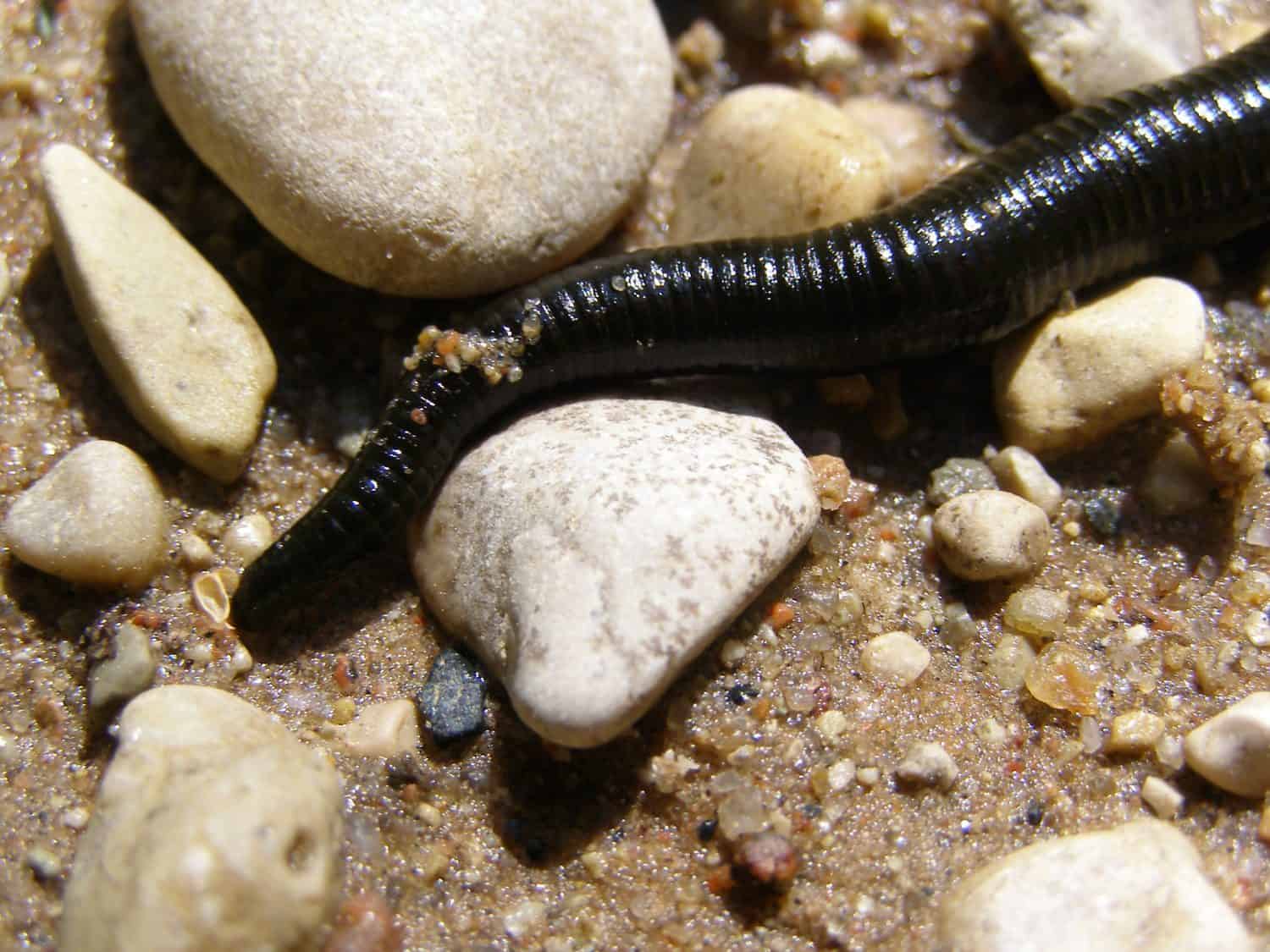
Imagine if earthworms were looking for you, waiting for the perfect moment to latch on and suck your blood. You don’t have to, as leeches are very real creatures and closely related to earthworms. Both types of creatures have soft, muscular, segmented bodies. Only one of them, however, eats like a vampire.
The way leeches find blood, however, is another story. Anyone who has been bitten by a leech in the wild can tell you that they seem to come out of nowhere. This ability to find a victim may seem almost supernatural, but leeches actually rely on some impressive biological sensors to clue them in to their next meal.
Vibration and Light
Many species of leech, like the European medicinal leech, are aquatic. They use waves and currents to detect subtle changes, almost like biological sonar. Using disc-shaped sensors on their mid-body segments called sensilla, leeches use mechanoreception to detect even the slightest shift in the water. A fish splashing or a mammal stepping into a stream emits low-frequency vibrations that leeches pick up on. If those vibrations hit one side of a leech’s body more strongly, it heads in that direction, swimming toward the potential host like an eel.
Vibration can only get them so far; leeches also use their photoreceptors to further pinpoint potential hosts. The sensilla that help them detect vibration also contain primitive eyes, allowing leeches to sense subtle changes in light. If you’re passing through water or even just walking in the jungle, a leech waiting for a meal perceives a significant change in light and shadow. This triggers their instincts, causing leeches to stretch out their bodies in an attempt to catch a ride—and a meal.
Heat and Taste
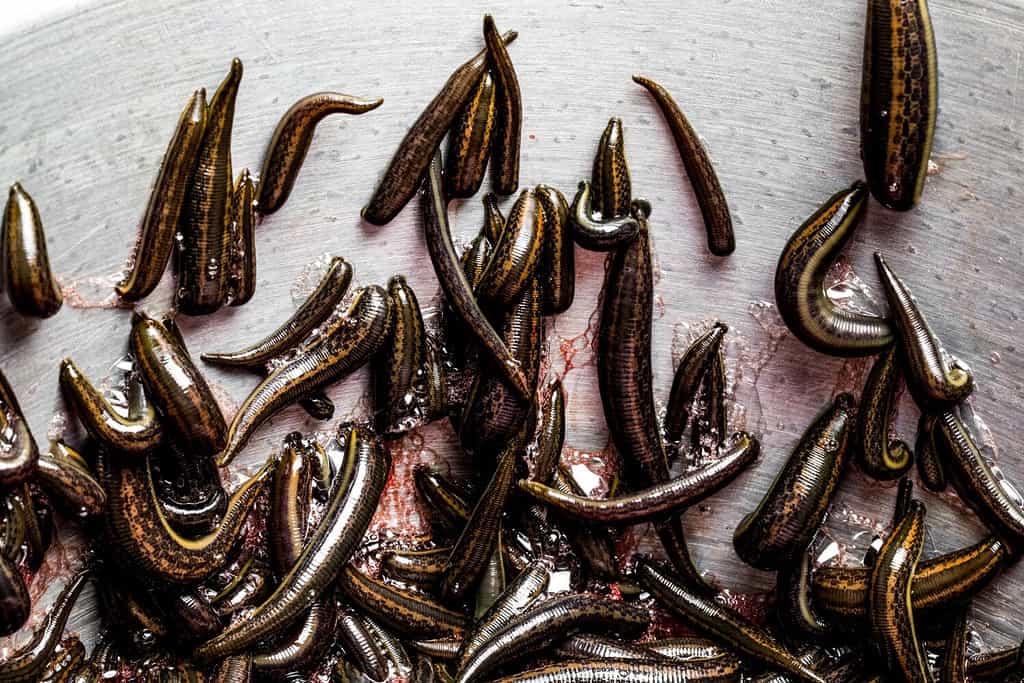
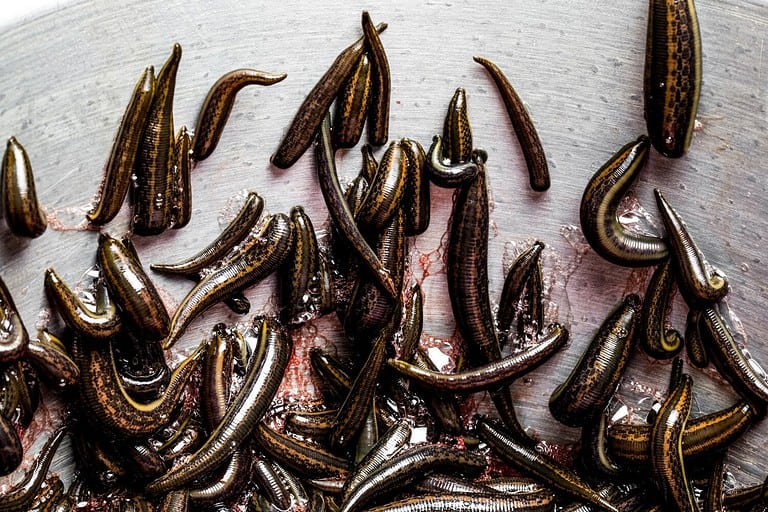
Leeches rely on a multidimensional process of sensory perception to find hosts, including vibrational sense, thermoreception, and chemical signature identification.
©279photo Studio/Shutterstock.com
Once leeches get close enough to a suitable target, they use more delicate sensors to latch on fully. A series of thermal receptors around their front suckers helps them distinguish warm-blooded creatures from the cooler temperatures of forests and streams.
Even more subtly, leeches can taste their surroundings using pores on their lips and bodies. Certain biomarkers, like carbon dioxide, are almost always a telltale sign of living, breathing animals. Other indicators of a potential meal include the chemical secretions found in skin oils and sweat.
If this step-by-step process of discovery hits all the right marks, leeches begin to crawl until they can latch onto a host using their suckers. It may seem like leeches materialize out of thin air to suck your blood, but in reality, finding hosts requires a complex chain of sensory processes.
Scientists are still uncovering how this sensory system works. Recent research suggests that leeches depend on different sensors depending on their life stage. A study, published in the Journal of Experimental Biology, found that juvenile leeches went after different hosts than their adult counterparts. When both waves and shadows were present, adult leeches relied more heavily on wave detection, particularly responding to higher-frequency waves of 8–12 Hz, compared to juveniles.