
The first time I was bitten by a leech, I was swimming in a West Virginia river. I remember the scene perfectly: I crawled out to dry off and tried to wipe the mud off my knees, but the leech wouldn’t budge. By the time I removed it and subsequently started screaming at the drop of blood left behind, my grandmother had already scolded me that there was nothing to be afraid of. However, a fear of these worm-like invertebrates is not uncommon. People often avoid leeches either because they are nervous around creepy, crawly creatures or because they fear that a leech bite could make them sick.
The idea of getting bitten by a leech may not be nice, but if you do, are you prepared? You might already have questions. Do leeches have anaesthetic in their saliva so the bites don’t hurt? Will you automatically get sick if you have a leech bite? Why do leech bites seem to bleed so much? And, of course, what should you do if you get bitten? There are a lot of misconceptions people have about leeches and their bites. Let’s break down the myths and learn more about what to do if a leech attaches to you.
What Are Leeches?
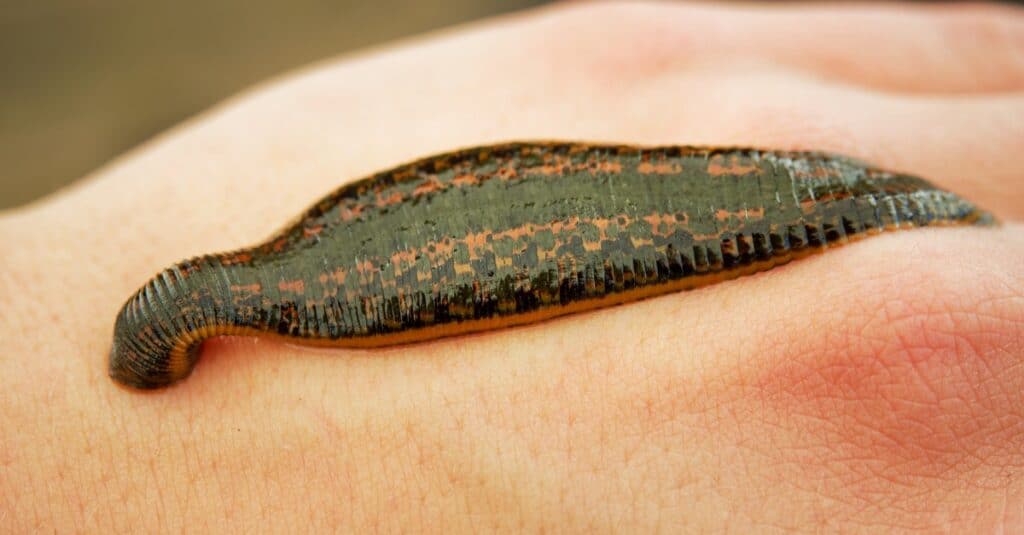
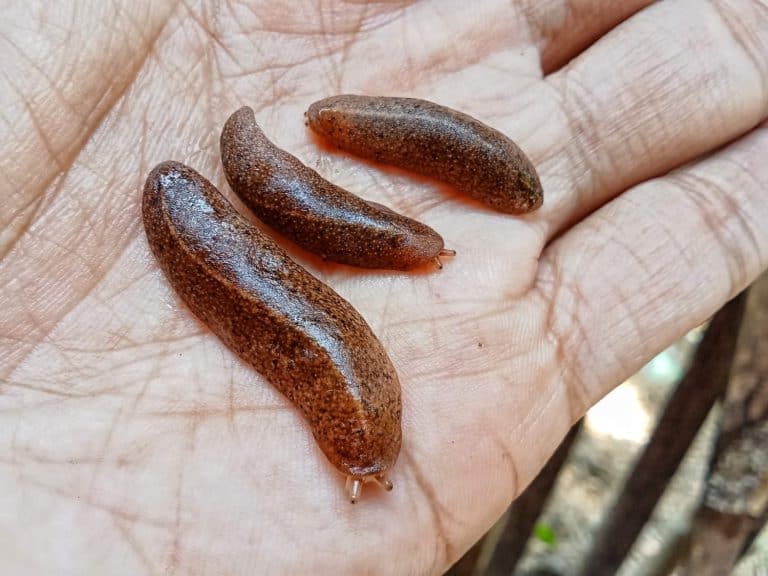
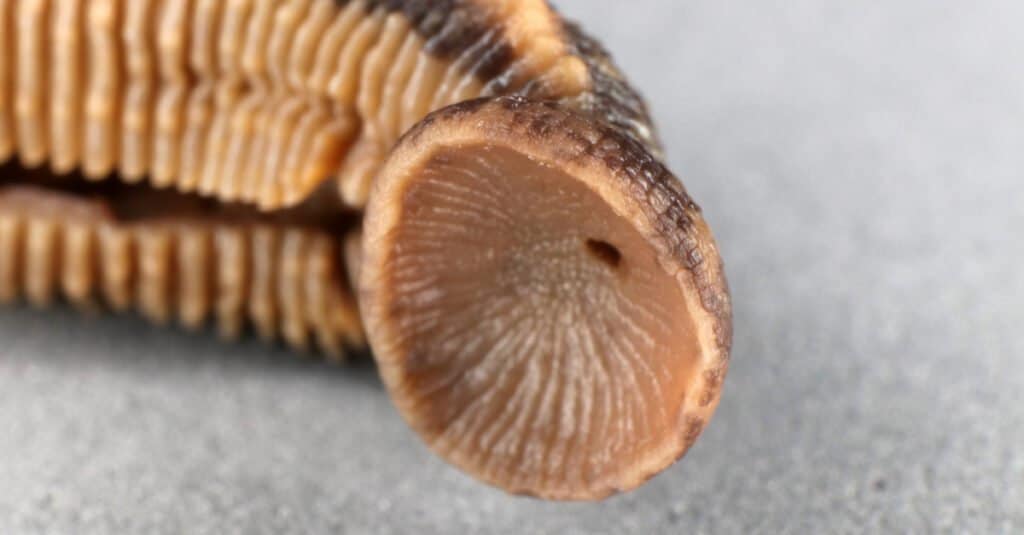
Leeches are segmented worms which are closely related to a less frightening creature: earthworms!
©Martin Pelanek/Shutterstock.com
It’s easy to be scared of something if you don’t know much about it, so let’s break down what leeches are. Leeches are predatory or parasitic worms within the phylum Annelida, where they sit among fellow annelids (like earthworms and sandworms). Over 650 species of leeches exist. Leeches have a large rear sucker and a smaller mouth sucker, which they use for feeding.
The difference between predatory leeches and parasitic leeches is how they hunt and eat. Predatory leeches feed on things like insect larvae and snails. Parasitic leeches, on the other hand, feed on the blood of fish, birds, amphibians, and even humans. An estimated 75% of leeches are parasitic, while the remaining 25% are predatory.
Where are Leeches Found?
There are many places you might run into a leech. Most commonly, you’ll find leeches in freshwater ponds, lakes, streams, and rivers. However, leeches may also appear in swamps, and some leeches are terrestrial (meaning they live predominantly on land). According to Chris T. McAllister in the Encyclopedia of Arkansas, terrestrial leeches can usually be found in rainforests or areas with wet leaves, but may bury in the dirt in certain climates.
Breaking Down the Biggest Myths About Leech Bites
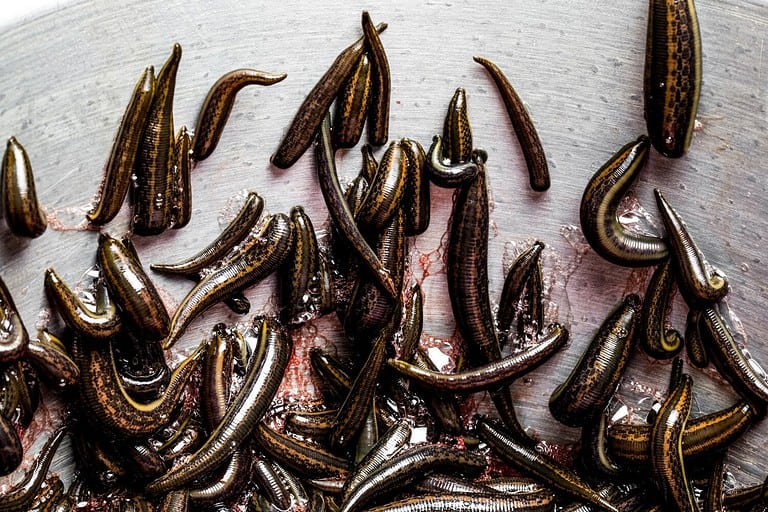
Despite their bad reputation, not all leeches are blood-suckers. Many are predatory and uninterested in biting you!
©photowind/Shutterstock.com
Because leeches creep so many people out, there’s a lot of misinformation about leech bites floating around. But the reality is that it’s probably more fear-inducing to think about getting bitten by a leech than it is to actually have a leech attach to you. Here are some of the most common myths about leeches and leech bites to help assuage some of your concerns.
Myth #1: Leech Bites Don’t Hurt
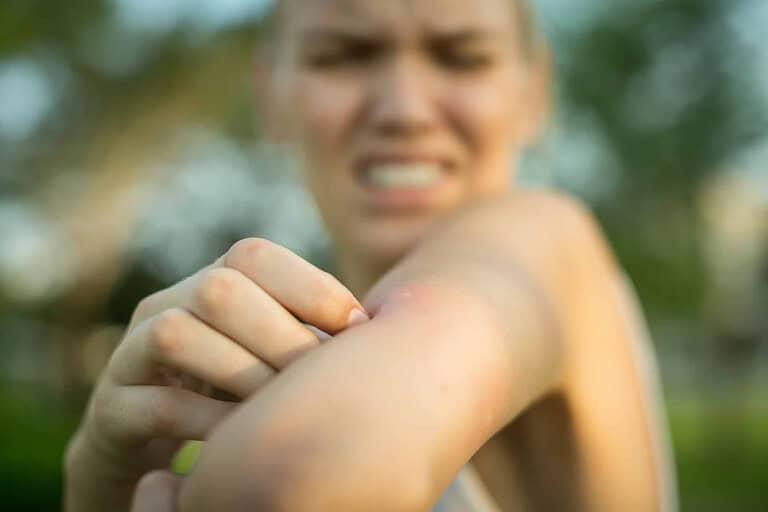
There’s some truth to this myth, but also some inaccuracies. Scientists believe that, upon attaching to your skin, leeches release a local anesthetic so you won’t feel them feeding from you. However, some individuals, especially those who are hypersensitive to leeches, do experience pain and itchiness after being bitten. Others may experience allergic or anaphylactic reactions, which can cause inflammation and discomfort. If you’re feeling itchy or develop a rash after a bite, you can take an antihistamine to help.
Myth #2: Leech Bites Won’t Stop Bleeding
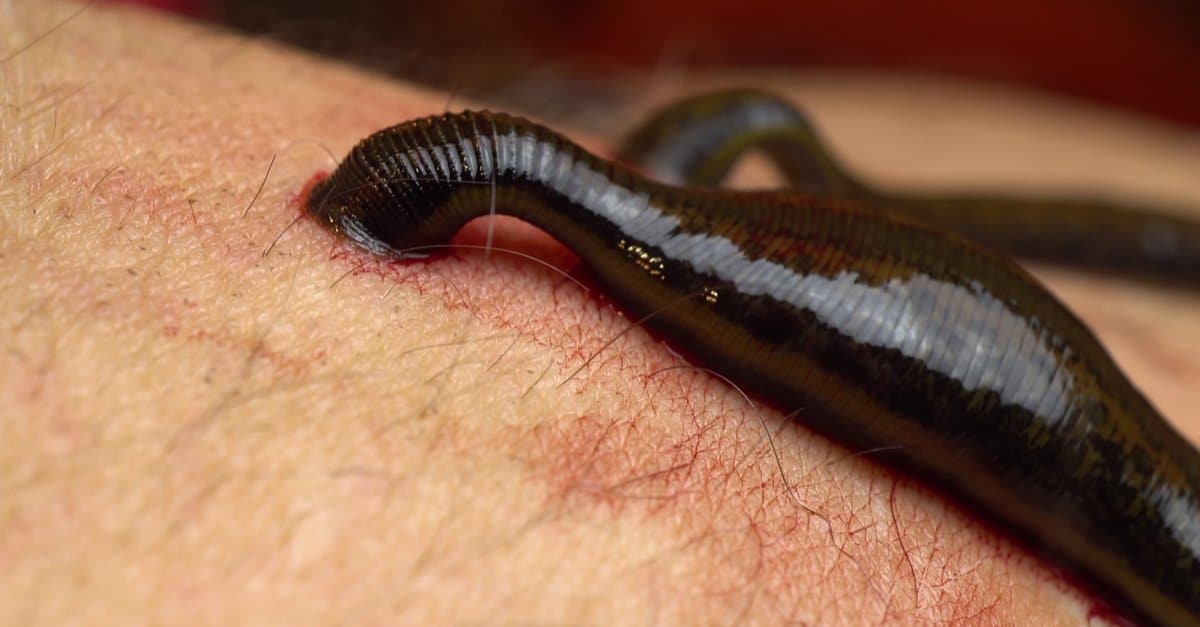
When leeches attach to you, they release an anticoagulant called hirudin. This protein, found naturally in their saliva, prevents the blood from clotting like normal and allows the leech to feed for as long as it needs. Typically, leeches feed for about 20-30 minutes before falling from your body. You may experience some bleeding for the next few hours, but it’s usually not dangerous.
Myth #3: Leech Bites Will Kill You
Nope! Usually, leech bites are not a medical emergency. If you find a leech attached to you, do not panic! In many cases, you will experience no secondary side effects beyond some bleeding. Some individuals may experience mild issues, including:
- Anemia
- Itching, burning, or irritation
- Skin redness
- Bruising
However, there are cases where leech bites can turn dangerous or life-threatening. These usually occur when a leech attaches internally versus externally. For example, a leech that attaches in the throat or airways might prevent breathing. Leeches in the ear canals or reproductive system can cause organ damage or perforation. But leech removal often solves any symptoms and promotes a full recovery.
If someone is bitten by a large number of leeches at once, the risk of serious complications or even death increases.
Myth #4: Leeches Have No Purpose
Not true at all! In fact, leeches are both helpful for the ecosystem and, sometimes, for our own health and wellness. Let’s start with the ecosystem: first, leeches are both predators and prey. This means that they maintain population levels for other small creatures or insects, but also feed birds, fish, and turtles. Sometimes, leeches prey on insects or larvae that can harm crops, contributing to better crop health for farmers. Leeches are also a great indicator of water health. Since leeches need clean, healthy water to survive, they often highlight how well a certain stream, lake, or pond is doing. However, according to the Maine Department of Environmental Protection, leeches can indicate low dissolved oxygen in water if they make up most of the invertebrates in the area.
On the health side, leeches and their bites have been used for medicinal purposes (known as hirudinization or hirudotherapy) for thousands of years, as early as 1500 BC. Historically, leeches were used for bloodletting (the removal of blood from the body), which supposedly treated illnesses like fever or infections. Bloodletting has largely fallen out of practice. Leech bites have also been used to treat black eyes. Today’s medicinal leeches, however, are mostly used to treat venous congestion or to improve blood flow and prevent blood clots after trauma or surgical procedures.
Myth #5: Salt a Leech to Remove It
You might have heard the old folk remedy that the best way to remove an attached leech is by putting salt on it. But Sebastian Kvist, curator of invertebrates at the Royal Ontario Museum, shares that this could actually cause you negative health effects. If leeches get stressed out, from getting salted or burnt (another commonly cited removal tactic), the leeches can vomit up blood back into the wound. This is a good way to get a secondary infection from the bacteria in the leech’s gut.
Myth #6: There’s No Way to Prevent a Leech Bite
Actually, there are several ways to reduce the risk of leech bites while you’re out in nature:
- Use an insect repellent containing DEET
- Wear thick socks and long pants (and tuck the pants into the socks!)
- Swim in deeper water, since leeches prefer shallower water
- Apply cinnamon, spearmint, pine, citronella, or eucalyptus oils to your clothing
What to Do if a Leech Bites You
Avoid grabbing and pulling a leech from your skin, which could cause additional damage.
©279photo Studio/Shutterstock.com
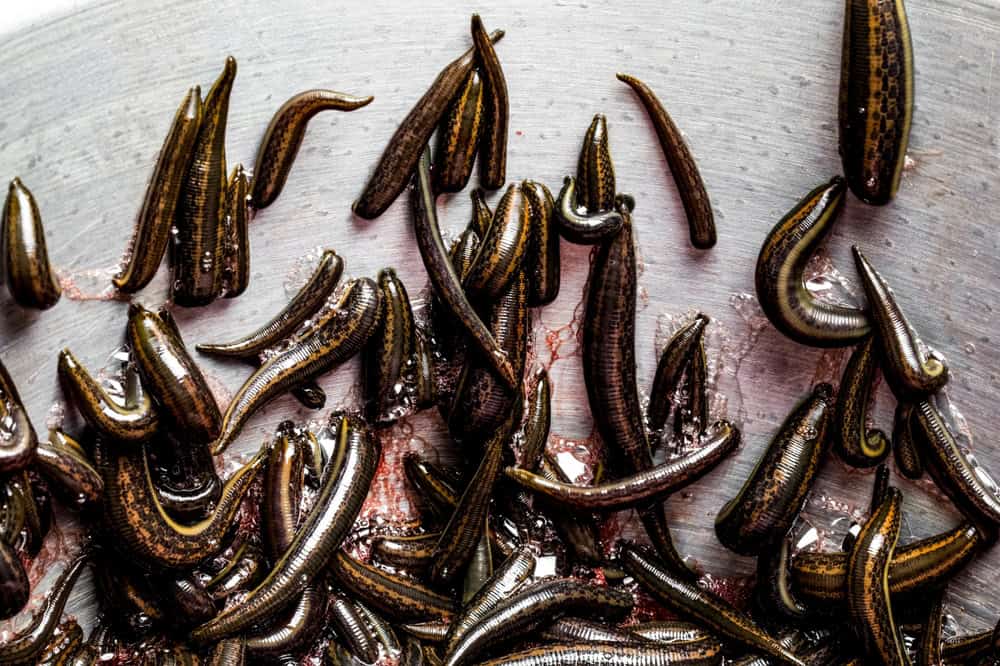
There are no comprehensive global statistics about how many people each year will be bitten by leeches. But if you’re an avid outdoorsman or someone who loves spending time in nature, there’s a chance you’ll come face-to-face with a leech at some point. If you find a leech attached to your skin, do not grab and pull the leech. Similar to salting, any violent movement can cause the leech to vomit its stomach contents back into your bite. This can also cause additional skin tearing.
Instead, you have a few options. Most recommendations now call for sliding a fingernail or credit card (or a similarly stiff object) between the leech’s mouth and your skin. Others say that saltwater may help the leech relax enough to let go. If you’re not too squeamish, you can also just wait it out. The leech will eventually detach once it’s done feeding.
After removing the leech, take the following steps to avoid any potential infections or issues:
- Wash the wound with soap and water (or just fresh, clean water if you’re outside and don’t have access to soap).
- Apply topical antibiotic creams.
- Bandage the area with a sterile dressing.
If you do see any signs of infection, such as intense redness and swelling, blisters, pus, or warmth at the bite site, see your doctor immediately.