
Quick Take
- One single catch from a Tennessee reservoir holds two massive records simultaneously, and neither of those records has been broken in over 70 years. See the dual record →
- The average smallmouth bass weighs just 2-3 pounds, so the size of the Tennessee record fish is genuinely hard to believe. Average smallmouth size →
- A quirky everyday comparison puts the record fish's size into perspective in a way that will surprise most readers. See the weight details →
Smallmouth bass are a popular sport fish across the U.S., prized for their spectacular leaps, strength, and stamina during the fight, especially for fish of their size. Many of the top records for weight come from waters of the Southeast. Read on to discover how much the largest smallmouth bass ever caught in Tennessee weighed, and find out how it compares to the world record.
Facts About Smallmouth Bass
Native to eastern North America, historically, smallmouth bass (Micropterus dolomieu) were found in the Great Lakes and St. Lawrence River, the Mississippi River Basin, and the Hudson Bay. However, smallmouth bass have been introduced to many other areas, and they are now found in all but two states in the continental United States. These fish prefer cooler water with good visibility and rocky or sandy bottoms.
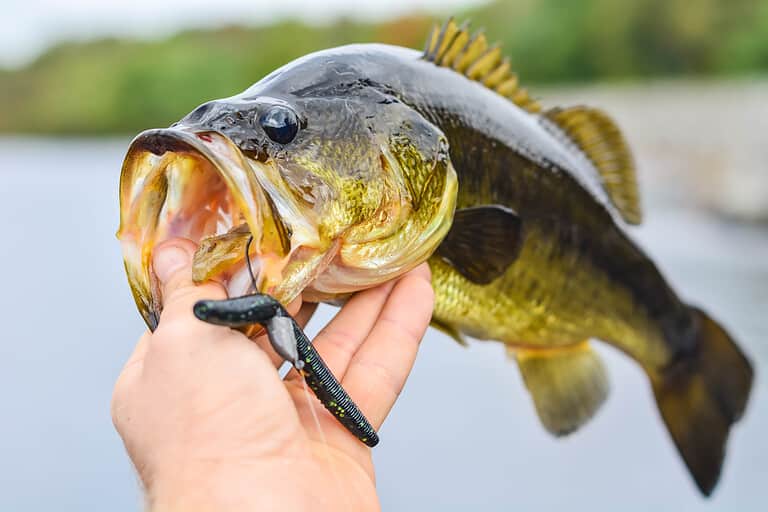
Smallmouth bass average between 12 and 16 inches in length, with the longest reaching around 20 inches. Most bass only reach 2-3 pounds, with some larger individuals occasionally exceeding 4 pounds, but this can vary somewhat by region. Females are generally larger. These fish are greenish or brownish-bronze with darker vertical stripes down their sides. Their jaws do not extend past their eyes, which are reddish-colored.
Smallmouth bass typically spawn in spring when water temperatures rise. The male uses his tail to clear out a circular space near large rocks or other obstructions. Depending on size, females can lay from 2,000 to 21,000 eggs. After the eggs are fertilized, the female leaves and the male guards the nest from predators. The eggs hatch after 4 to 6 days, then the male remains with the fry until they leave the nest after around 14 days.
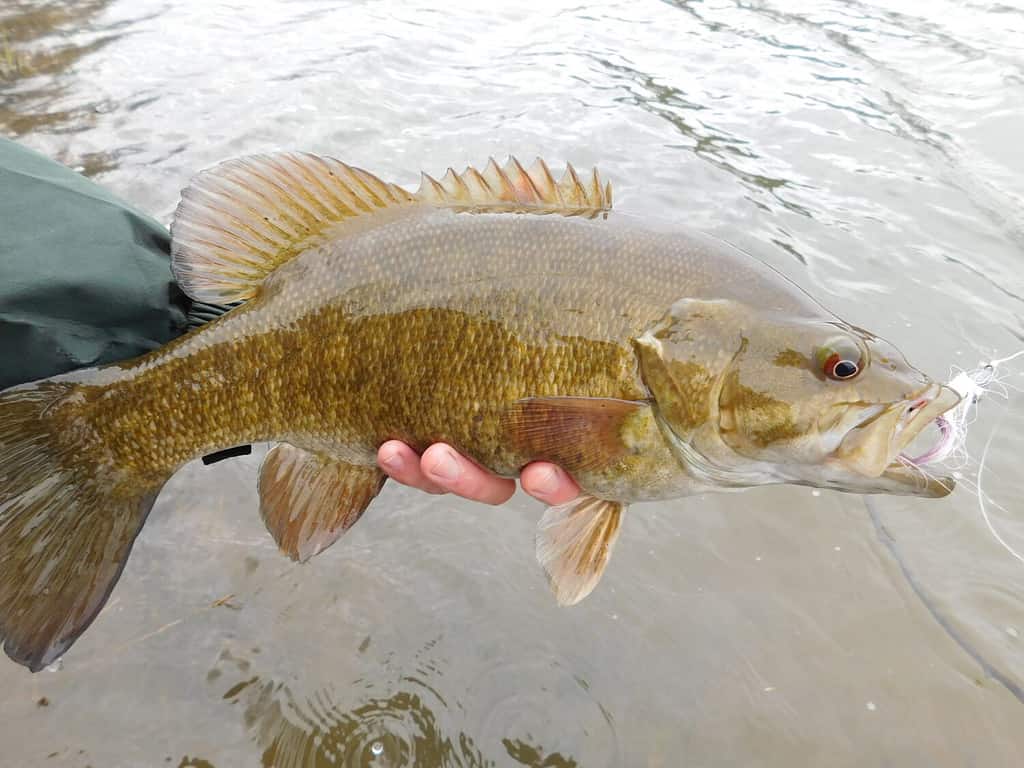
Female smallmouth bass are larger than males.
©K Steve Cope/Shutterstock.com
How Big Was the Largest Smallmouth Bass Caught in Tennessee?
The largest smallmouth bass caught in Tennessee is a long-standing record dating back over 70 years. On July 9, 1955, angler D. L. Hayes was out fishing on Dale Hollow Reservoir. Dale Hollow is a 27,700-acre reservoir on the Kentucky-Tennessee border known for the clear water smallmouth bass prefer. Hayes landed a record-setting fish that day, weighing 11 pounds and 15 ounces. It may not sound very large, but to put it into perspective, the average house cat only weighs about 10 pounds.
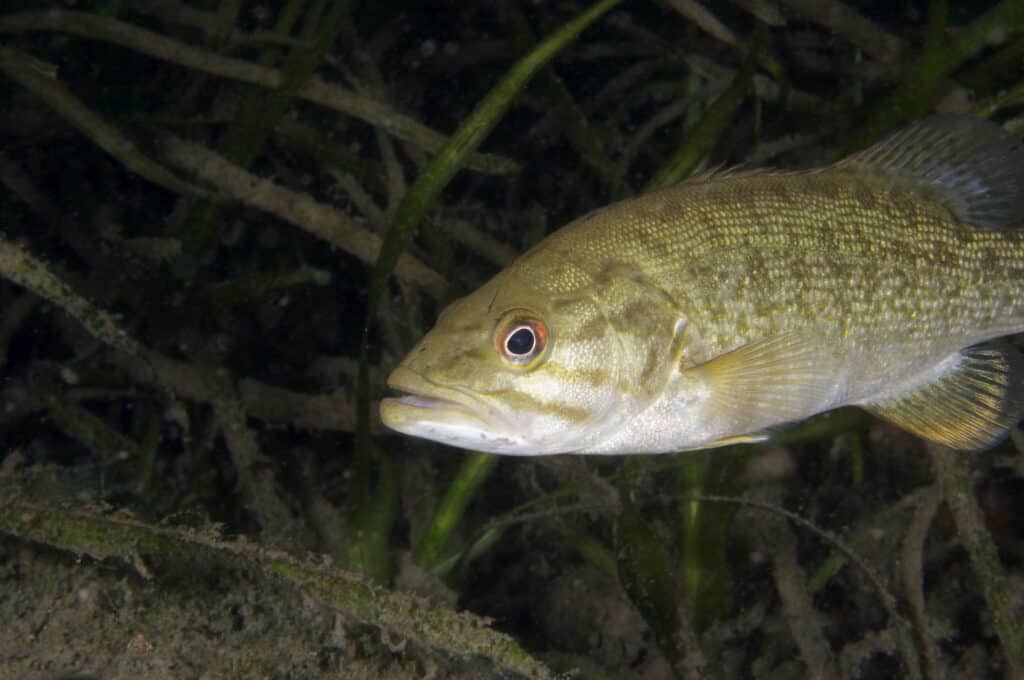
The largest smallmouth bass ever caught in Tennessee weighed more than the average house cat.
©iStock.com/LaSalle-Photo
The World Record Smallmouth Bass
According to the International Game Fish Association (IGFA), the official world record for the largest smallmouth bass ever caught is also held by D. L. Hayes — for the same 11-pound 15-ounce fish from Dale Hollow Reservoir. The second largest smallmouth bass as listed by the IGFA came from Hendricks Creek, Kentucky. The fish weighed 10 pounds and 8 ounces, and it was caught by Paul E. Beal on April 14, 1986.
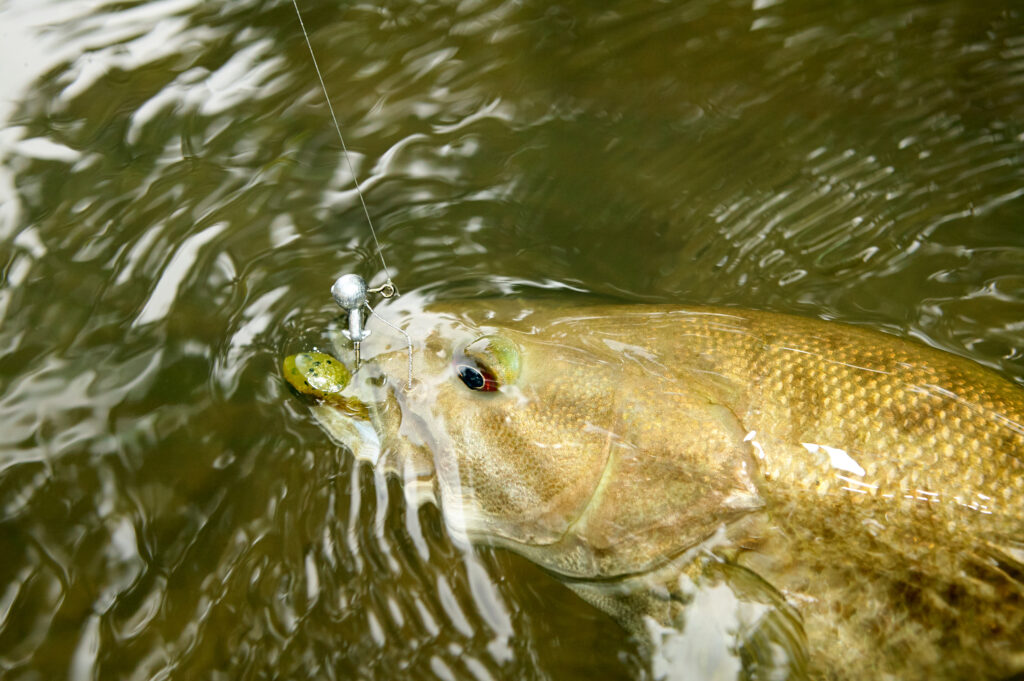
The largest smallmouth bass ever recorded came from Dale Hollow Reservoir in Tennessee.
©CLP Media/Shutterstock.com
According to the IGFA, runners-up include:
- 9 pounds, 6 ounces — Terry Dodson, Lake Jocassee, South Carolina, May 3, 2001
- 8 pounds, 9 ounces — E. Yarbro, M.D., Pickwick Lake, Counce, Tennessee, March 11, 1998
- 8 pounds, 6 ounces — Terrell Nail, Pickwick Lake, Florence, Alabama, January 4, 1988