Quick Take
- The previous record was held by a hybrid with a built-in biological growth advantage over pure-strain fish. See why pure strain beat hybrid →
- Genetic testing wasn't just a formality. What the lab results revealed about Tennessee's waters raises bigger questions than the record itself. Explore what the genetics revealed →
- Tennessee anglers release nearly every bass they catch, but there is one factor that determines whether those fish actually survive. Find the overlooked survival factor →
- A single reservoir already sees enough fishing pressure to concern most managers, but TWRA isn't worried about the record drawing more crowds. Understand the pressure context →
The day Darren Nunley pulled a 15-pound, 7.5-ounce largemouth bass from Nickajack Reservoir, he wasn’t expecting to make history. A guide friend had tipped him off about strong fish activity the day before. Conditions were ideal. So Nunley tied on a chatterbait, worked the lower end of the reservoir, and waited.
What came back changed Tennessee’s record books.
A Record Morning on the Water
When Nunley first hung the fish on a scale in his boat, the number told him this was no ordinary bass. The fish weighed in at 15 pounds, 7.5 ounces, enough to topple a record that had stood for more than 11 years.
The Tennessee Wildlife Resources Agency (TWRA) moved fast. Verification began almost immediately after the catch, with official weighing followed by a far more thorough test: genetic testing to confirm the fish’s lineage.
That last step matters more than most anglers realize. Tennessee’s waters now face pressure from invasive Alabama bass, which can interbreed with native and stocked species, muddying the genetic waters. To rule out any doubt, biologists clipped fins from Nunley’s fish and shipped samples to labs in California and Tennessee Tech University. The verdict came back clear. This was a pure Florida bass, not a hybrid, not a cross … this was the real thing.
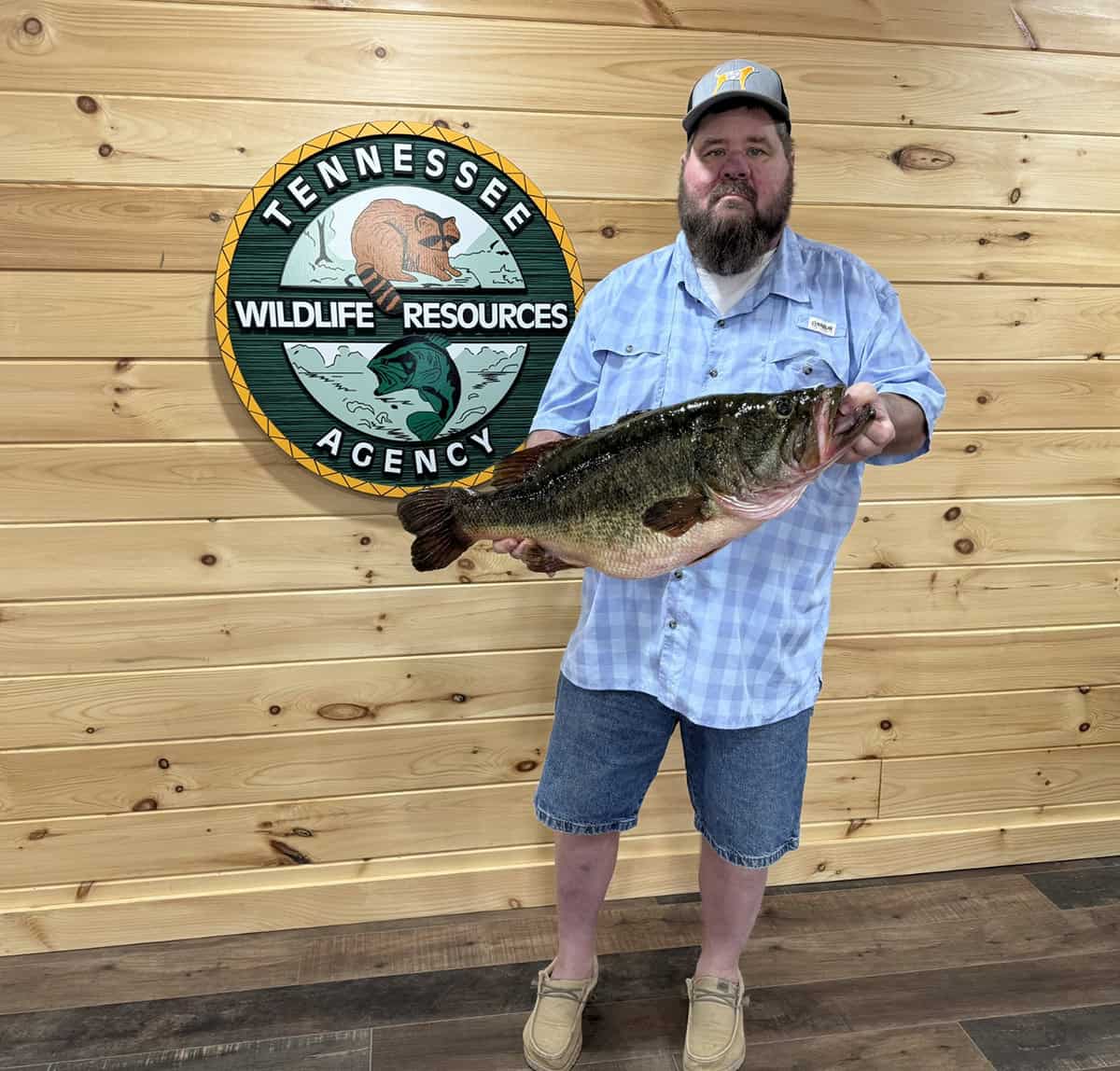
Angler holding Tennessee state-record largemouth bass at Nickajack Reservoir
A Catch Verified Down to the Genes
That distinction made Nunley’s catch even more remarkable. The previous state record, a 15-pound, 3-ounce bass landed on Chickamauga Lake in 2015, was an F1 hybrid of largemouth and Florida bass. Hybrids carry what biologists call “hybrid vigor,” a built-in growth advantage that often produces bigger fish faster. For a pure Florida bass to outgrow a hybrid and claim the top spot is rare. It sits at the very upper edge of what these fish can become.
What makes this catch especially significant is that it was confirmed as a pure Florida bass, which tells us a great deal about the success of our stocking and management efforts.
Vic DiCenzo, Ph.D., Reservoir Program Manager and Certified Fisheries Professional with the Tennessee Wildlife Resources Agency
A Closer Look at Nickajack Reservoir
A bass like this doesn’t appear by accident. It’s the product of habitat, water chemistry, and years of careful management, as DiCenzo explains: “A fish like this reflects years of habitat management, genetics work, and a productive reservoir working exactly as it should. The lower end of Nickajack Reservoir, where Nunley likely hooked his fish, is prime Florida bass territory. The Tennessee River system runs nutrient-rich and eutrophic, meaning the water supports a thick, productive food chain. Add healthy aquatic vegetation and the right management strategy, and you get the conditions trophy bass need to reach their full size.”

Vic DiCenzo, Ph.D., Reservoir Program Manager and Certified Fisheries Professional with the Tennessee Wildlife Resources Agency
©TWRA
“Florida bass stocking programs have played a major role here. By introducing and managing Florida bass genetics, TWRA has steadily improved the size and quality of fish across the region. These conditions, warm, fertile water paired with the right genetics, are largely unique to the Southeastern United States and a handful of similar climates where Florida bass thrive,” DiCenzo adds.
Nunley’s record fish is living proof that those stocking and genetic management efforts are working.
Conservation Comes First
For all the excitement around a single fish, the bigger story at Nickajack is how anglers and managers work together to keep the fishery healthy.
Tennessee’s bass anglers release between 95 and 97 percent of the fish they catch, a number that reflects a deeply rooted conservation ethic. But catching and releasing a bass isn’t as simple as tossing it back. Survival depends heavily on water temperature. Once summer heat pushes water above 80 degrees, fish become far more vulnerable after the stress of being caught.
Tournament anglers take extra steps to protect their catch. Boats run live wells treated with additives, such as salt and ice, to keep fish calm and healthy during events. Quick fights, proper netting, and minimal handling all add up to better odds for the fish once it swims away. TWRA supports these practices through partnerships with conservation groups such as the Bass Anglers Sportsman Society.
“Nickajack already supports intense fishing pressure, but strong conservation practices and responsible handling help keep this fishery healthy and resilient,” DiCenzo says. Education ties it all together. Awareness campaigns and steady communication with anglers reinforce the message that protecting trophy bass today ensures more record-class fish tomorrow, even on a reservoir that sees heavy, constant fishing pressure.
A Half-Billion-Dollar Sport
Bass fishing is an economic engine.
“In Tennessee, bass fishing is not only a recreational passion, it’s also a major economic driver for reservoirs, tournaments, and the communities that support them,” DiCenzo says.
The sport contributes hundreds of millions of dollars to local economies each year through recreational and competitive fishing. That spending supports jobs, fuels small-town businesses, and builds tourism infrastructure in communities that might otherwise go overlooked.
The scale is enormous. Tennessee offers more than 500,000 acres of reservoirs, drawing anglers from across the state and beyond. Tournaments run almost constantly. Nickajack alone can host two or three in a single week, ranging from small local derbies to major events.
Access stays remarkably open, too. All it takes to fish is a license, which keeps participation broad and steady. As DiCenzo points out, bass fishing offers something hunting can’t: a frequent, reliable opportunity. There’s no lottery, no narrow season. That accessibility multiplies both the sport’s appeal and its economic reach.
Despite the buzz around the new record, TWRA doesn’t expect a surge in fishing pressure. Nickajack already averages around 20 hours of fishing per acre annually, among the busiest in the state. The fishery’s health and popularity keep anglers coming regardless of headlines, and managers are confident the reservoir can handle the attention.
Planning for the Next Record
TWRA isn’t resting on this milestone. The agency is finishing work on a statewide black bass management plan designed to measure the fishery’s true value with far more precision. The plan will dig into direct spending, job creation, and tax revenue tied to bass fishing, while folding in scientific data and community input.
The goal is to align management resources with the extent to which this fishery matters — economically and ecologically — to Tennessee.
Next year, TWRA also plans to roll out voluntary tournament registration. The program will be free and optional, designed to encourage wide participation without burdening organizers. In return, it will give managers valuable data on how often tournaments happen, how large they are, and where they take place, sharpening the agency’s ability to respond to what’s actually happening on the water.
Genetic monitoring will stay front and center. Ongoing collaboration with research labs helps confirm species identity, guard against invasive species, and keep improving the genetics that produce fish like Nunley’s.
Record fish capture attention, but the bigger story is the long-term stewardship behind them, science, habitat, angler ethics, and management all working together.
Vic DiCenzo Ph.D., Reservoir Program Manager and Certified Fisheries Professional with the Tennessee Wildlife Resources Agency
It’s about genetics and habitat. It’s about anglers who release nearly every fish they catch. It’s about small communities that thrive on tournament weekends, and biologists working quietly to protect a resource millions enjoy. Darren Nunley’s pure Florida bass earned its place in the record books. Yet its lasting value may lie in the window it opens into the science, the stewardship, and the shared commitment that keep Tennessee’s waters producing fish worth talking about.