
Blue marlin fishing in North Carolina is a prized pastime for offshore anglers, especially along the Outer Banks and the waters off Morehead City. In these areas, warm Gulf Stream currents create ideal conditions for these game fish. The peak season typically runs from late spring through early fall, with anglers venturing 40 to 70 miles offshore to deeper waters where marlin are most active. Known for their speed, size, and entertaining leaps, blue marlin offer one of the ultimate sportfishing challenges. These powerful fish often require heavy tackle, skilled crews, and hours of patience. North Carolina’s well-established charter industry and well-known tournaments have made the region one of the most sought-after destinations on the East Coast for targeting this iconic billfish. Discover the largest marlin ever caught in North Carolina!
About Blue Marlins
©kelldallfall/Shutterstock.com
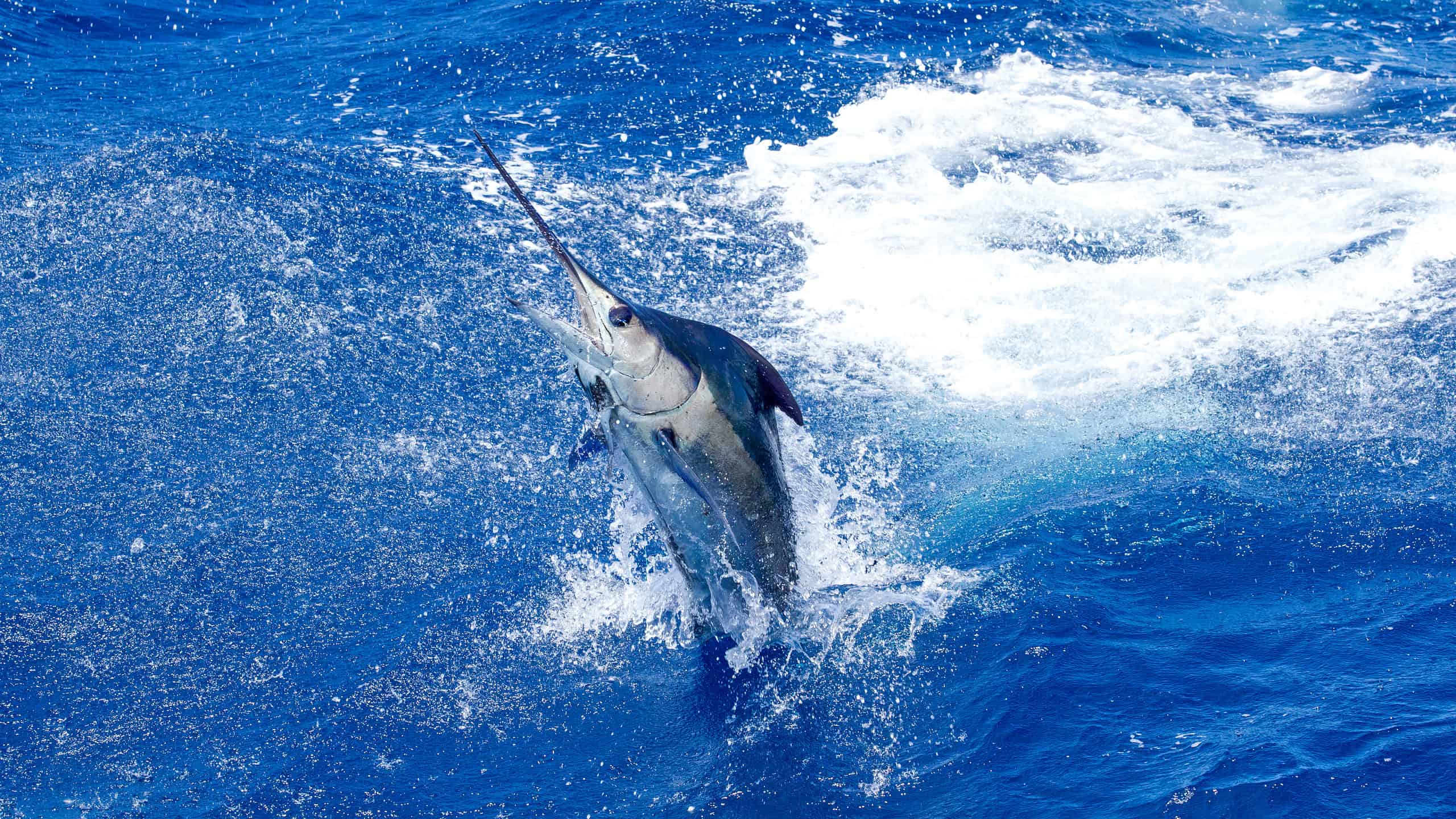
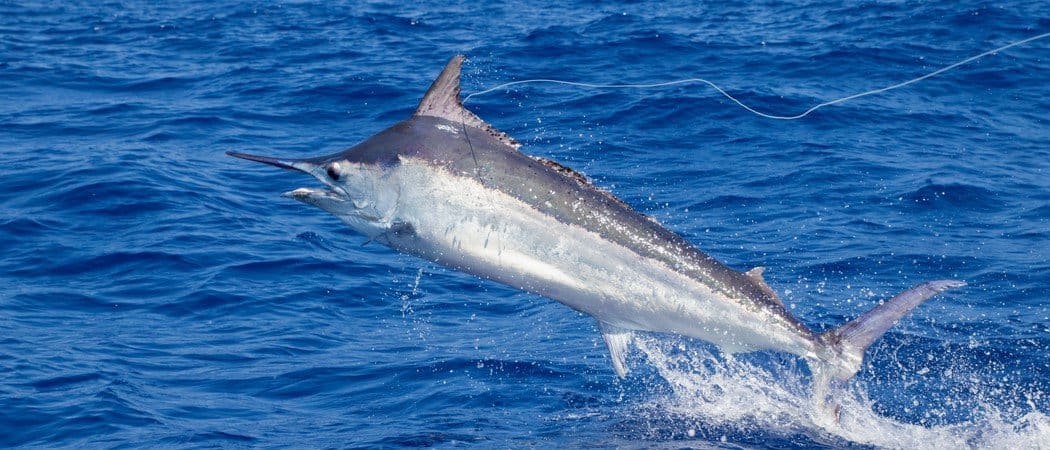
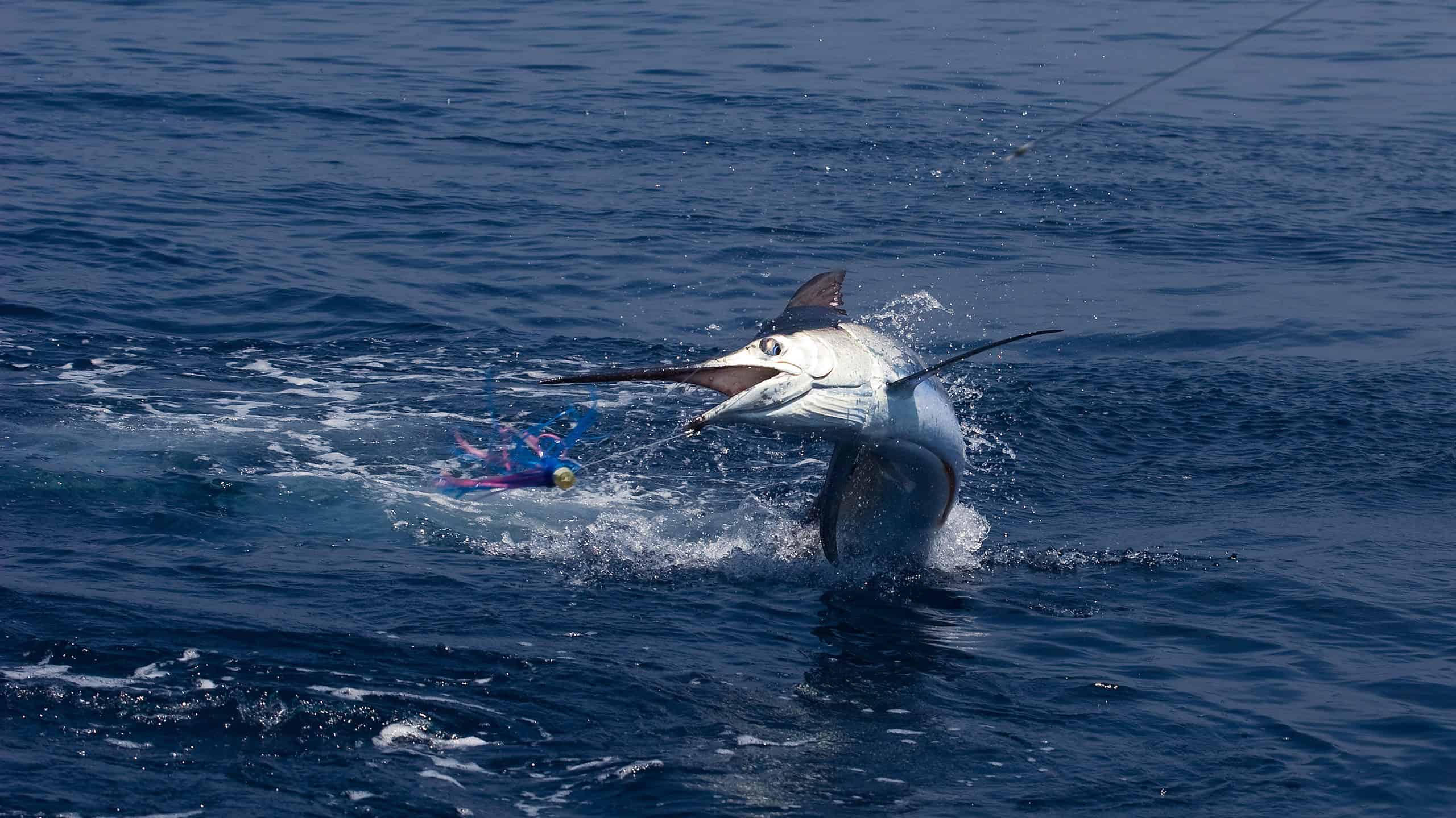
People target a few different kinds of marlins for saltwater sports fishing. Atlantic blue marlins are the largest of the marlins, and they can be extremely difficult to catch. The fish are large and heavy, and they can put up a tremendous fight against the angler trying to reel them in, sometimes lasting for hours at a time. They can leap out of the water, dive deep, and pull hard on the line.
Massive Fish
©kelldallfall/Shutterstock.com
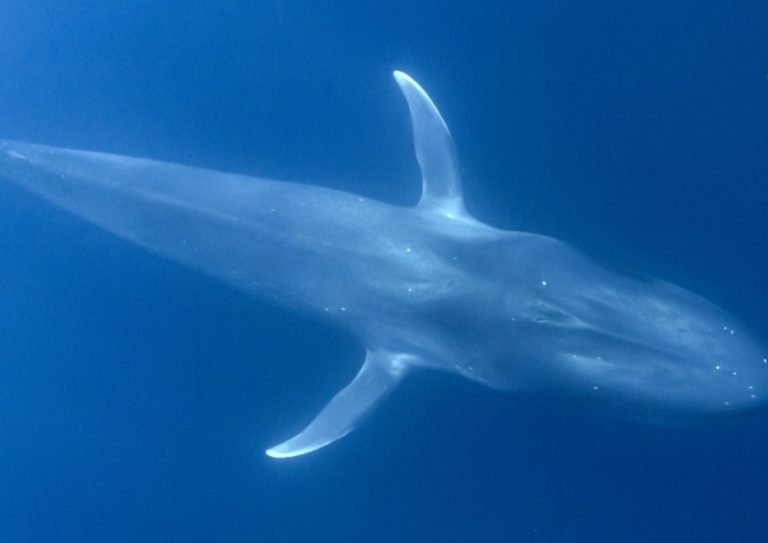
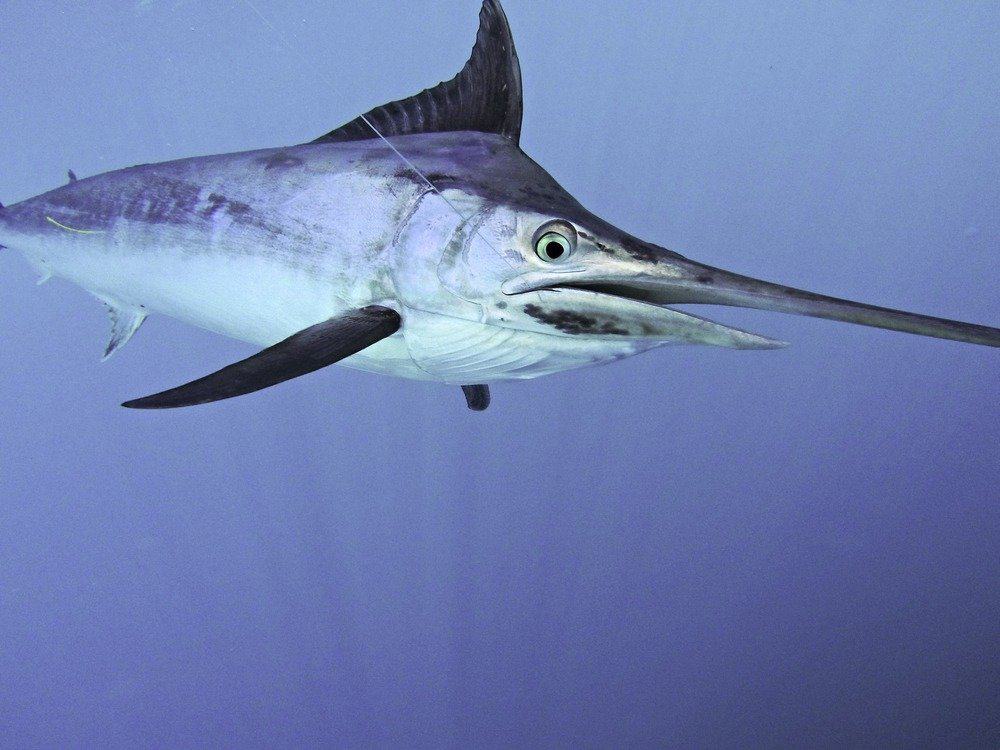
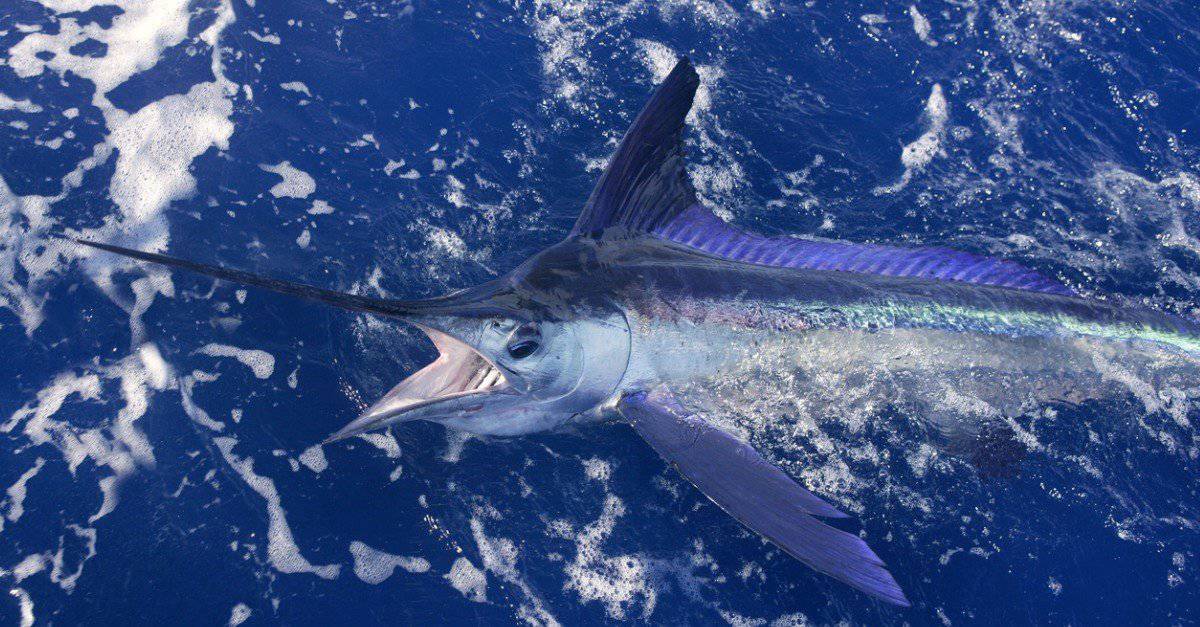
Blue marlins are massive fish. In fact, they’re the largest billfish in the world. The upper portion of their jaw forms their bill, the spear on their head that they use as a weapon and defensive tool. The fish are dark blue on top with 15 cobalt-blue bars running vertically on their bodies. They have a silver color on their stomachs. They have a long dorsal fin on the top that gets shorter as it runs the length of their bodies.
Marlin Average Lengths
©iStock.com/LUNAMARINA
Female blue marlins are larger than males. On average, a male can grow to about 7 feet long and usually weigh about 350 pounds or so. Meanwhile, females grow much longer on average and sometimes exceed lengths of 15 feet including their bills. They can weigh well over 1,000 pounds.
Marlin Diet
©Neophuket/Shutterstock.com
Atlantic blue marlins usually feed on other fish like mackerel and tuna, and they can even consume squid. These fish prefer living in the deeper parts of the ocean out at sea. That puts them in close contact with some dangerous predators, including several types of sharks. Sharks feed on blue marlins when they are juveniles. Blue marlins frequently move around, following warm ocean waters.
Fortunately, North Carolina has the Outer Banks, barrier islands that help anglers get out to deep water where the blue marlins thrive in summer.
What Was the Largest Marlin Ever Caught in North Carolina?
©kelldallfall/Shutterstock.com
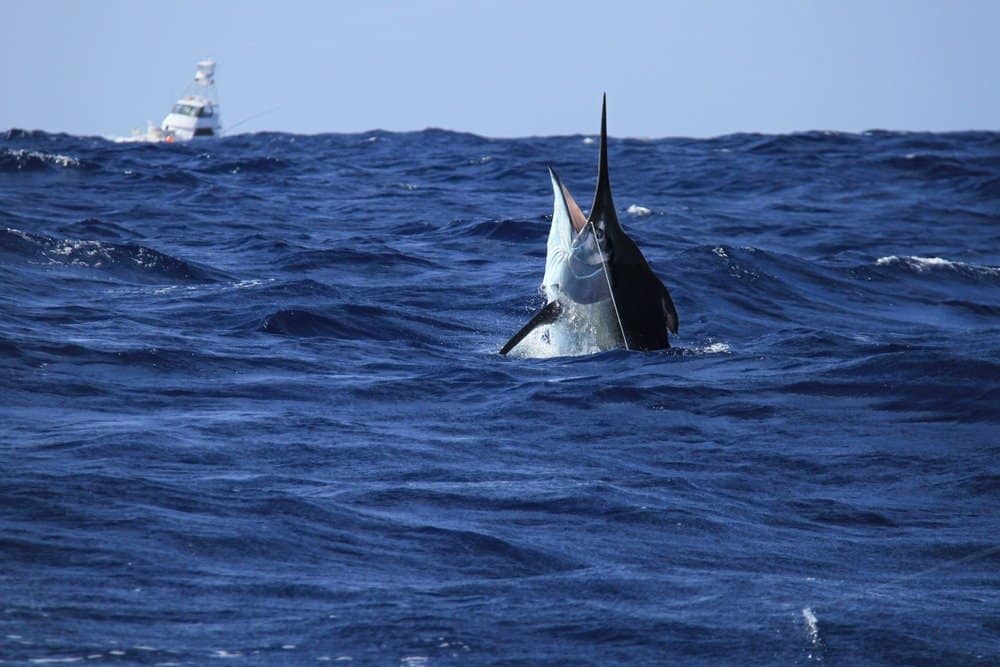
The largest marlin ever caught in North Carolina was a blue marlin that weighed 1,228 pounds 8 ounces by a man named Trey Irvine. The marlin measured a total of 179.5 inches from the tip of its bill to the tip of its tail, and it had a girth of 82 inches. He caught the fish off of Oregon Inlet in 2008.
Final Billfish Tournament

Trey Irvine was originally from Florida. He came to North Carolina so he could participate in the final billfish tournament of the year, the Pirate’s Cove Billfish Tournament. The large fish smashed the former state record for the biggest marlin. The last record fish was 1,142 pounds and was caught in 1974, also off the coast of Oregon Inlet.
Oregon Inlet

©arthurgphotography/Shutterstock.com
Oregon Inlet is an inlet on the Atlantic Ocean between Pea Island and Bodie Island. These are two barrier islands off the eastern coast of North Carolina. The inlet is a popular starting area for saltwater fishing trips, so it’s no surprise that both of the records were set off its coast.
Is North Carolina’s Record the Largest Marlin Ever?
©bekirevren/Shutterstock.com
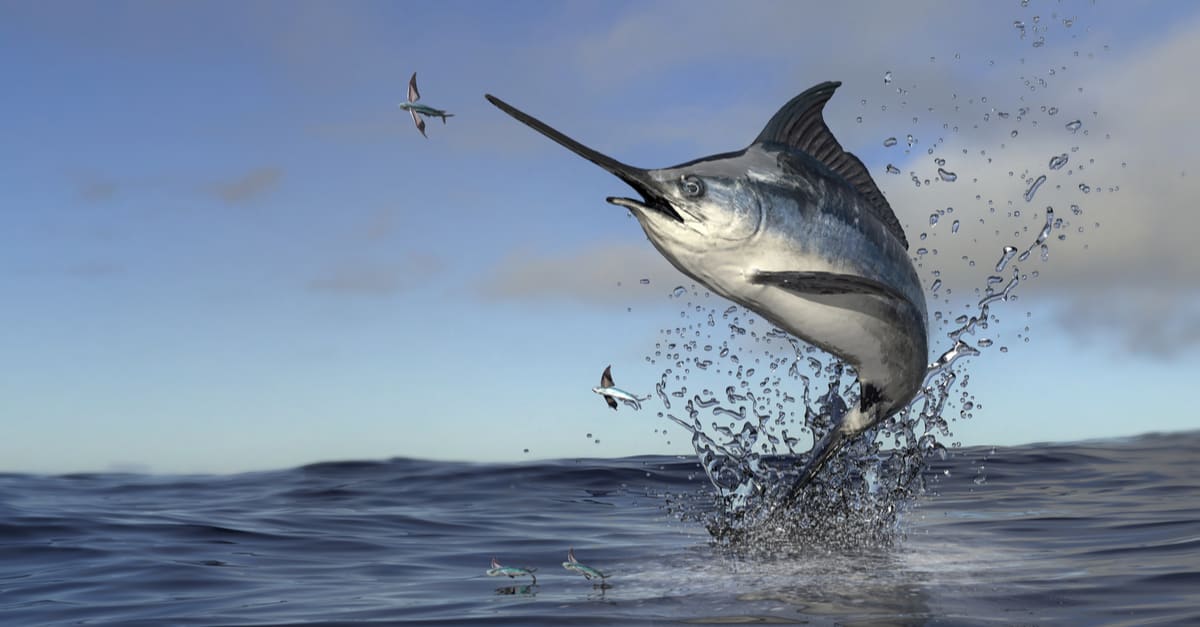
No, the largest marlin ever caught in North Carolina was not the biggest caught in the world. The largest caught following the rules of the International Game Fish Association was a black marlin that weighed 1,560 pounds. This fish was 14 feet 6 inches long and had a girth of 6 feet 9 inches. The fish was caught by Alfred Gladwell, Jr on August 3, 1953.
Epic Struggle
©lunamarina/Shutterstock.com
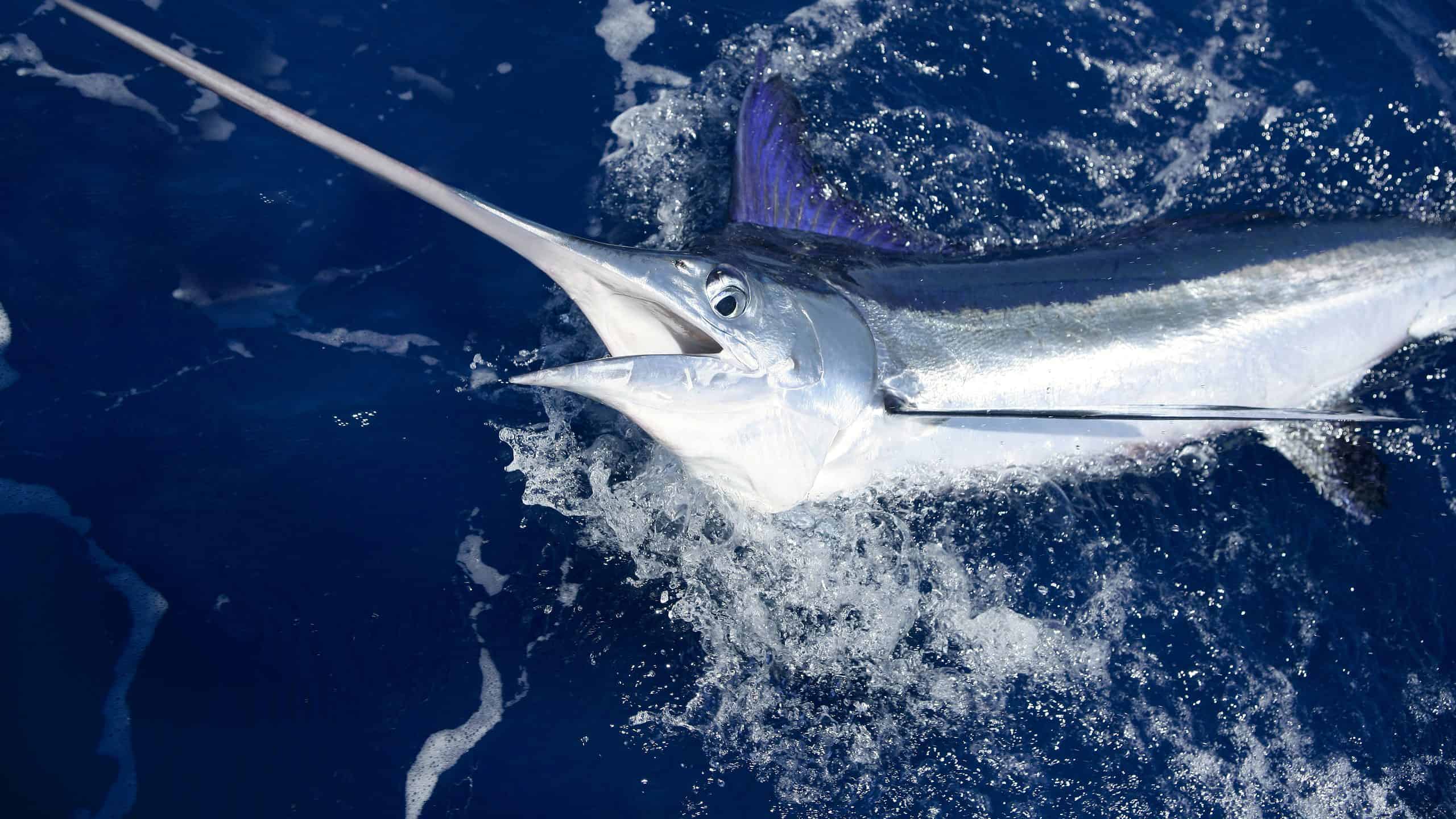
This fish is especially interesting because blue marlins are usually larger! According to his tale of the catch, he used mackerel as bait on a rod and line to catch the fish. He struggled against the fish for almost two hours before managing to pull the large marlin onboard the ship.
What Other Fish Do People Catch Off North Carolina’s Coast?
©DeepAqua / iStock via Getty Images
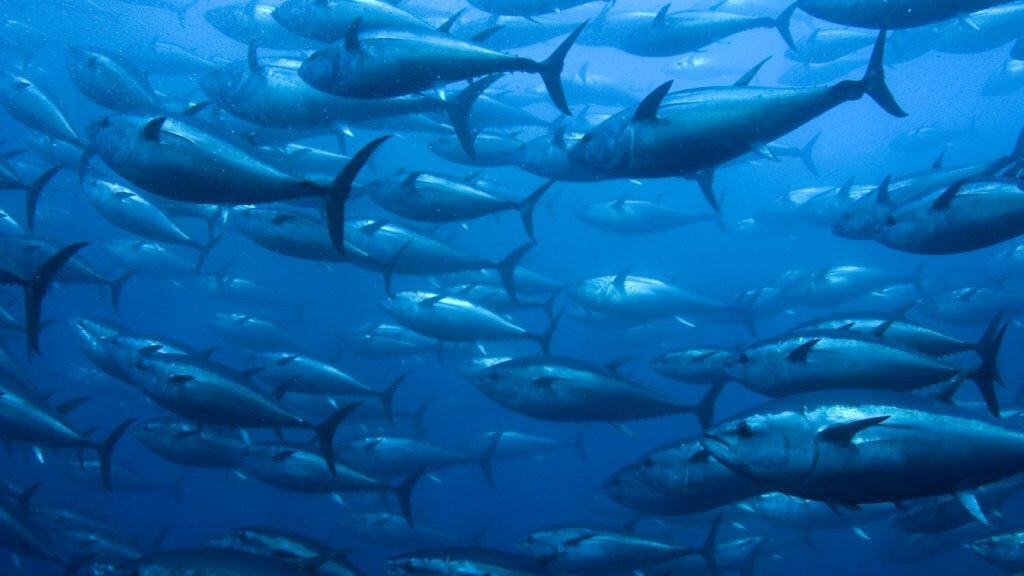
North Carolina has a huge number of fish species that live in the Atlantic Ocean. Residents of the state and people from out of state go to the Outer Banks and beyond to catch saltwater fish. Some of the species that they enjoy catching include:
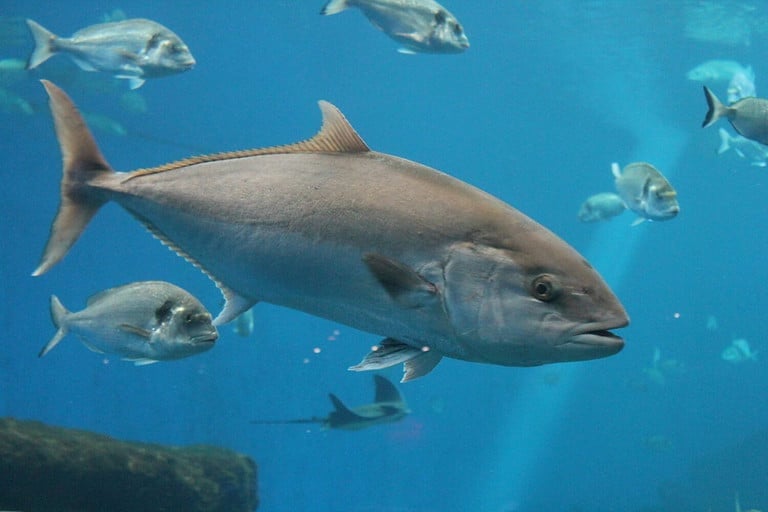
- Bluefin tuna
- Swordfish
- Flounder
- King mackerel
- Black sea bass
- Sailfish
- Grouper
These fish are common targets for anglers seeking fish at sea. The area is well-known for having charter boats that take people out to the deep waters where they have the best chance to catch the fish.
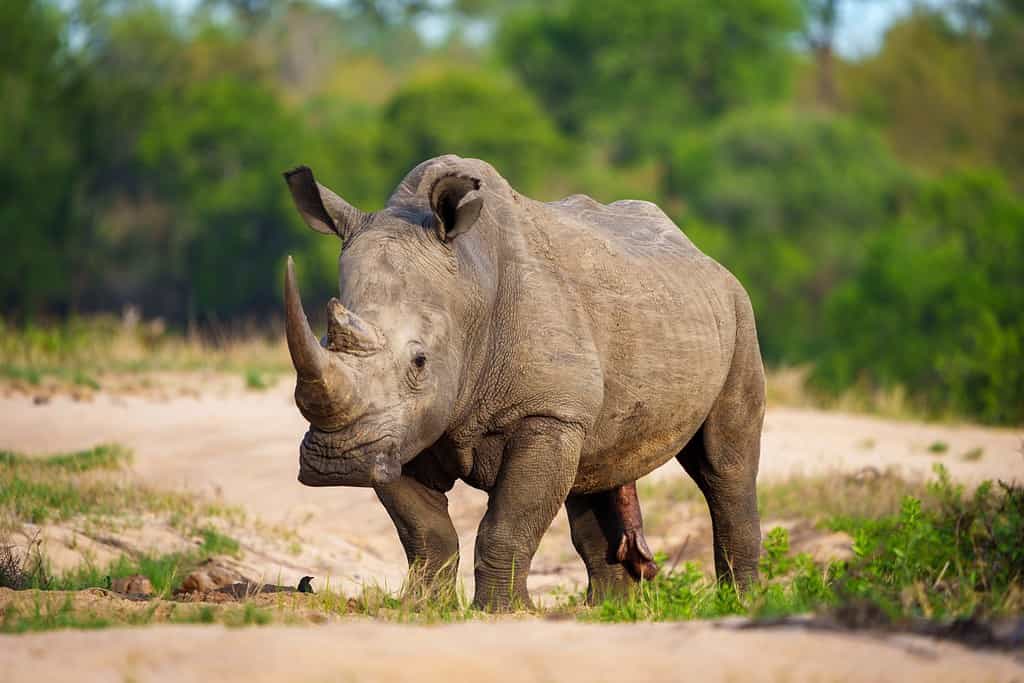
How Does the Marlin Compare in Size to a Rhino?
©Roger de la Harpe/Shutterstock.com
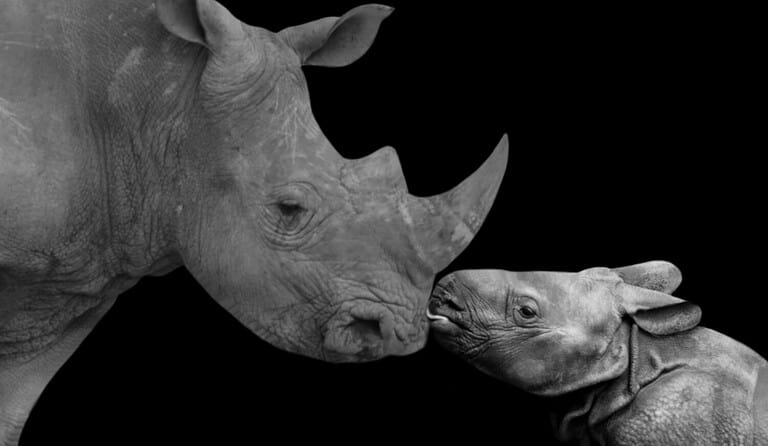
The original comparison in this article’s title said it was about the size of a rhino. Obviously, the largest marlin ever caught in North Carolina was not as heavy as a rhino. However, that does not mean it was not as long as one. Rhinos can measure from 4 to 11 feet long and weigh anywhere from 1,700 to 7,500 pounds or more. Meanwhile, the marlin was just shy of 15 feet long and weighed 1,228 pounds. The length comparison is accurate, but the rhino certainly outweighs it.
The biggest marlin ever caught in North Carolina was still about 150 pounds lighter and 14 inches shorter than the biggest blue marlin ever caught. Still, it was a very sizable fish. The creature’s size demonstrates why fishers consistently journey into the waters off the state’s coast to go fishing.