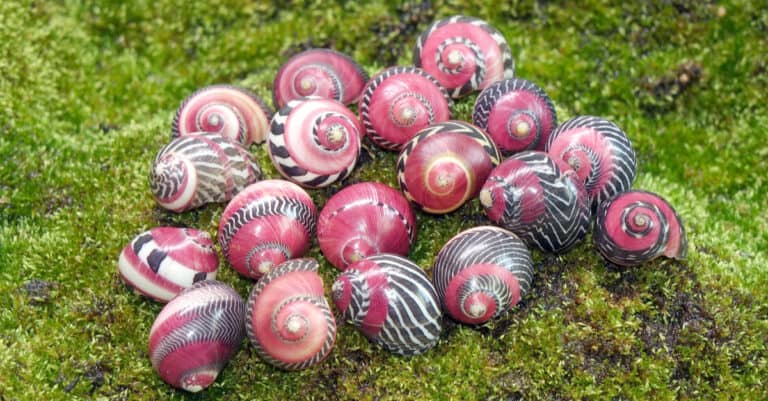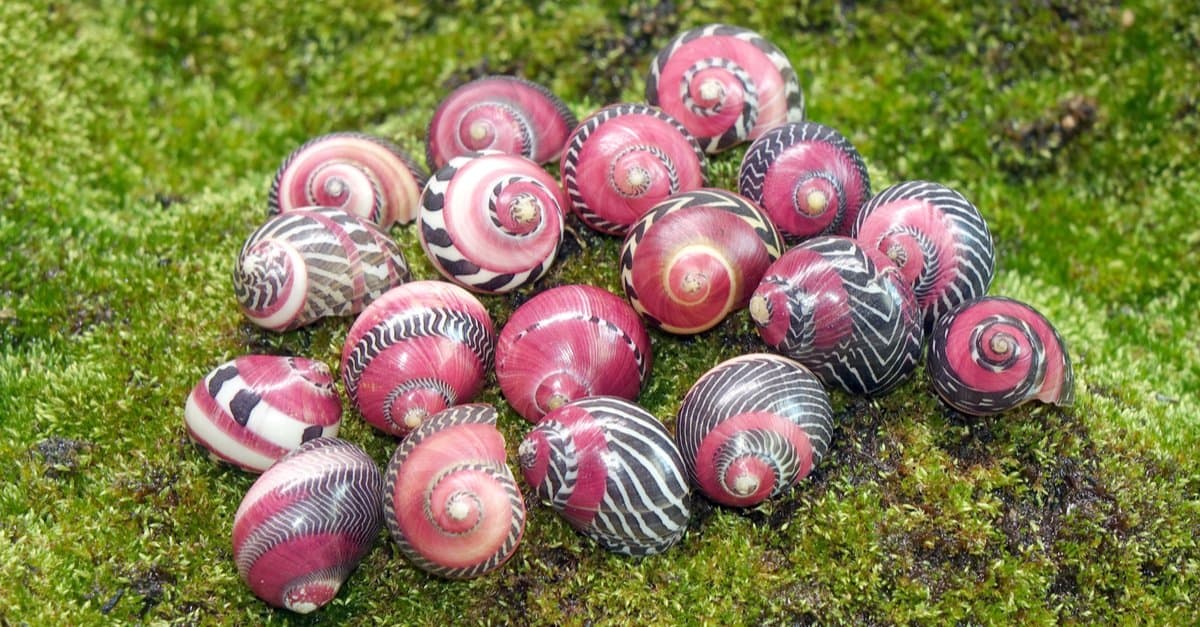

The snail is a soft-bodied, slow-moving mollusk, well-protected from predators and threats in its coiled shell. They build up their shells with a substance called calcium carbonate, which spirals outward into whorls as they grow. There are thousands of different species, separated into three basic categories: land snails, freshwater snails, and sea snails. Clad in their extravagant shells, snails can be creatures of exceptional beauty. Keep reading to learn some fascinating details about some of the most beautiful snail species in the world.
#7: Giant Apple Snail
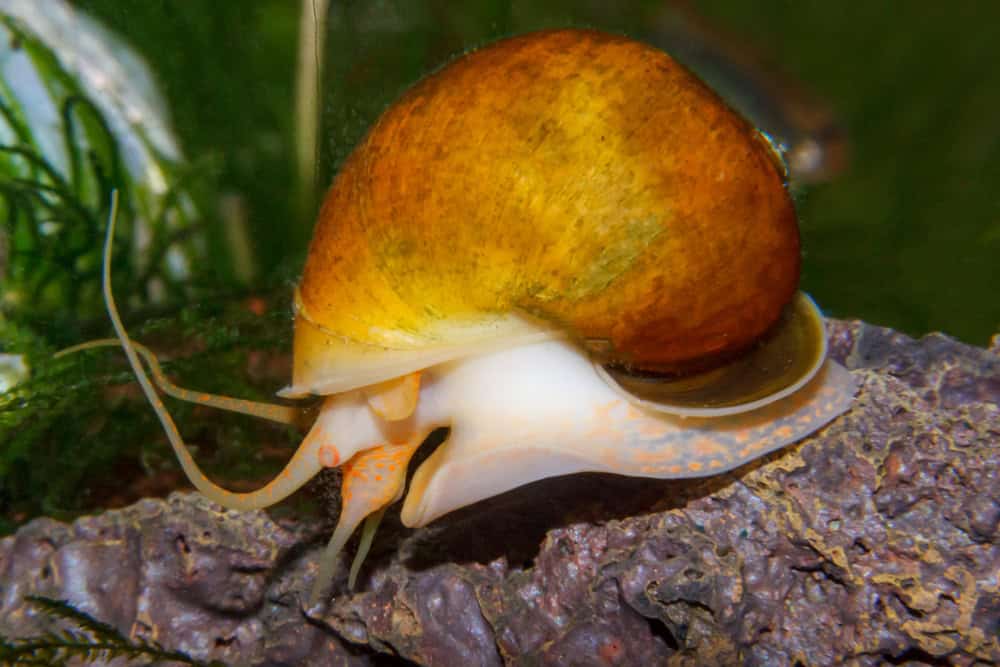
Apple snails breathe through both lungs and gills.
©justin wearne/Shutterstock.com
Apple snails (Pomacea maculata) are part of a family of freshwater gastropods that are native to South America. They have been introduced in the southern United States and parts of Asia, likely due to the aquarium trade. They are particularly popular aquarium pets for their large size and fascinating appearance. Named for their curved, apple-shaped shell, they are typically yellow to yellowish-brown with banding.
These snails can reach a maximum of 6 inches in size. They are also one of the few animals that can consistently breathe through both lungs and gills. Unfortunately, apple snails can negatively impact aquatic ecosystems, and they also carry parasites that can affect human health.
#6: Violet Sea Snails
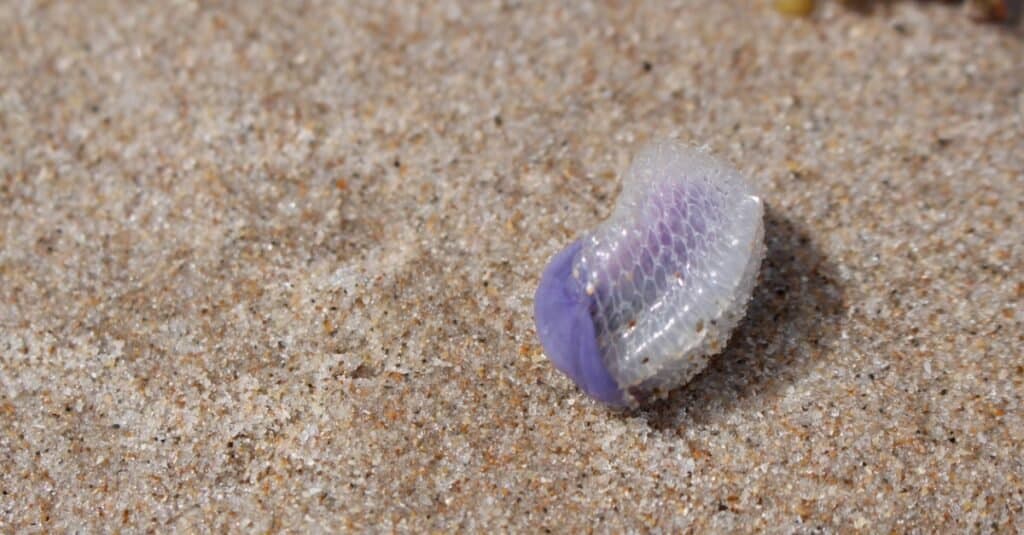
Violet sea snails secrete mucus that traps and hardens the air bubbles around them.
©iStock.com/CatMiche
Clad in a thin, violet-blue shell, the tiny violet sea snail (Janthina janthina) has no eyes and only grows to reach about 1.5 inches long. It spends its entire life tossed about on the surface of the ocean, feeding on feeding primarily on floating colonial cnidarians such as Velella and Portuguese man o’ war. They live almost anywhere with tropical or temperate waters, sometimes washing up on beaches.
Violet sea snails maintain their buoyancy by drifting along on a bubble raft of their own creation. They create bubbles in the water with their foot, then secrete mucus to trap and harden the air bubbles around them. If their bubble raft is ever damaged, the snails will sink to the bottom of the ocean and perish.
#5: Red Nerite Snails
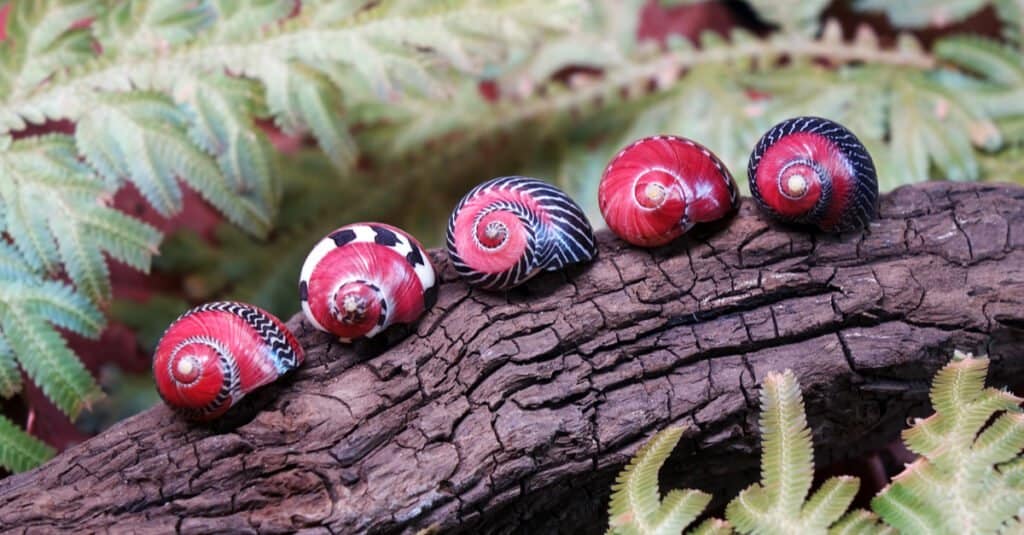
Red nerite snails need saltwater to reproduce.
©Mark Brandon/Shutterstock.com
Also known as red racers, red nerite snails (Vittina waigiensis) thrive in brackish or freshwater regions of Indonesia and the Philippines, including mangrove forests, river mouths, and streams. However, they are frequently seen on land. This species is named for its elaborate shell patterns, which feature alternating red, yellow, white, and black zigzag bands. One of the most appealing qualities is that the patterns are very diverse and can change throughout the snail’s life depending on its environment.
Red nerites typically grow to 1-1.5 inches. They prefer a diet of algae and decaying plant matter, which makes them an excellent tank cleaner. While they do need saltwater to reproduce, red nerites are perfectly fine living in freshwater tanks.
#4: Sea Butterflies
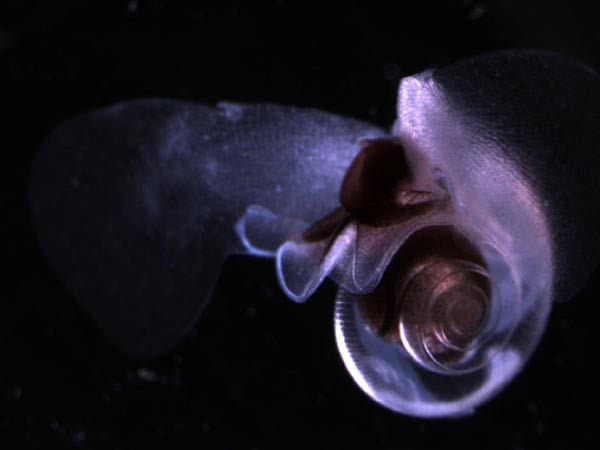
Sea butterflies have wing-like appendages instead of a foot.
These spectacular, glimmering, and sometimes even transparent sea butterflies (Limacina helicina) are found at ocean depths of around a few hundred feet, swept along by the currents. The shells are very fragile, which could, unfortunately, make them vulnerable to ocean acidification caused by climate change. These small marine snails are less than 0.5 inches long.
Sea butterflies are particularly abundant in some Arctic waters, feeding on many different types of plankton. They flutter their wing-like appendages, moving vertically in the water column from day to night. Scientists note that they flap their appendages to move through the water similarly to the way insects fly through the air.
#3: Candy Cane Snails
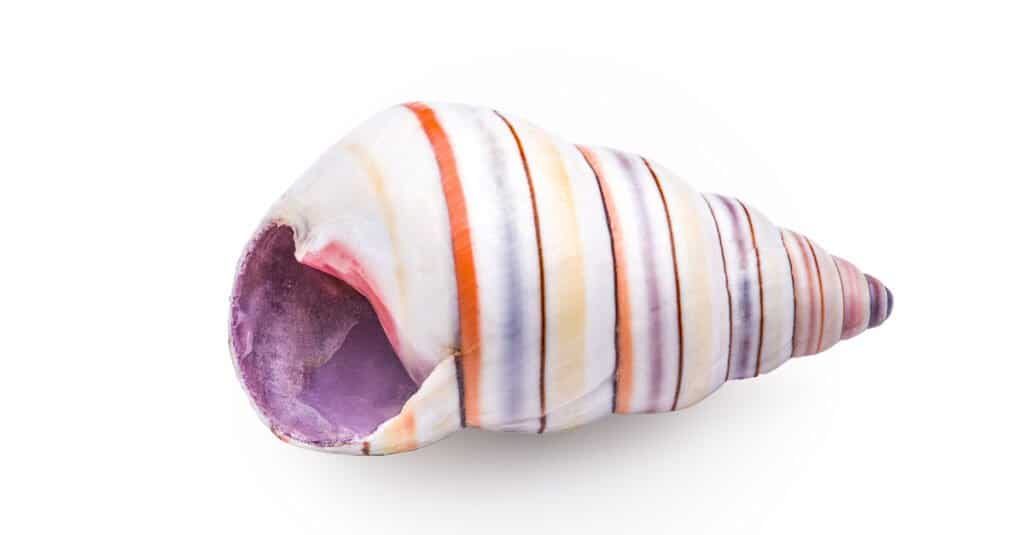
Candy cane snails are native to the island of Hispaniola in the Caribbean.
©Billy Watkins/Shutterstock.com
This astonishing candy-colored species, the candy cane snail (Liguus virgineus), measures up to 2.4 inches long. The shell is white with orange, yellow, red, and purple stripes. The snail is native to the island of Hispaniola in the Caribbean. It spends most of its life living in the trees, feeding on lichen, moss, twigs, and small branches with its numerous rows of sharp teeth.
The candy cane snail occasionally descends to the ground to lay its eggs in the moist soil. Upon hatching, the baby snails climb back up the trees, where they spend their lives. Unfortunately, researchers have found that the snails are overcollected because of their colorful shells.
#2: Cuban Painted Snails
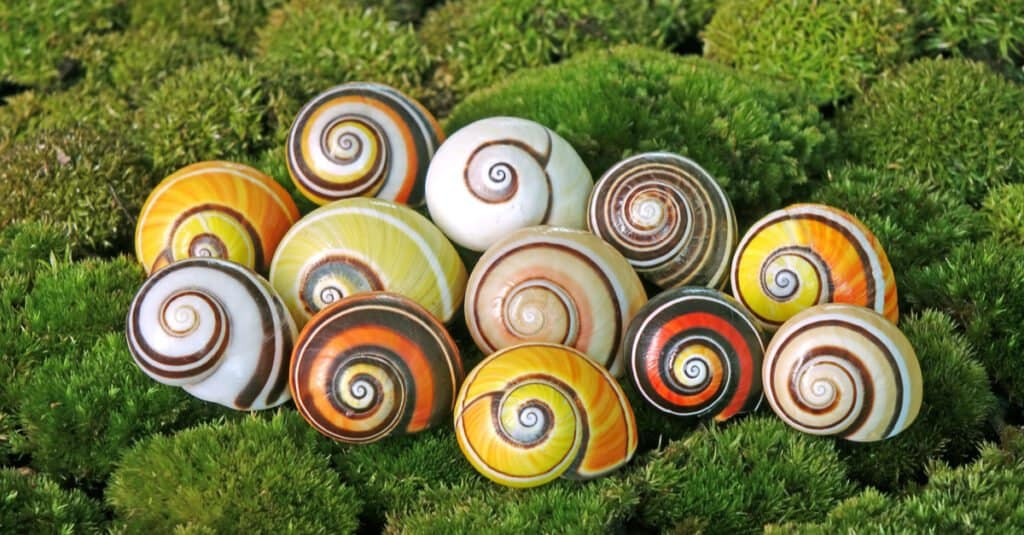
Cuban painted snails only reproduce during the wet season.
©Mark Brandon/Shutterstock.com
The Caribbean island of Cuba is home to some of the most diverse and beautiful snails on the planet. The Cuban painted snails (Polymita picta) grow rounded shells that come in a multitude of different colors, from bright yellow to deep purple. Long stripes trace the whorl of the shell to accentuate the swirling appearance. They typically reach between 0.87 and 1.18 inches.
The snails spend much of their lives in trees, feeding on moss and lichen, which keeps the trees healthy. They only reproduce in the wet season. During the dry season, the snail can seal the shell opening with its mucus so it can remain dormant and undisturbed until the rains come again. Unfortunately, these snails are highly endangered due to habitat loss and poaching. Their beautiful shells make them sought after for use in jewelry and other trinkets.
#1: Jeweled Top Snails
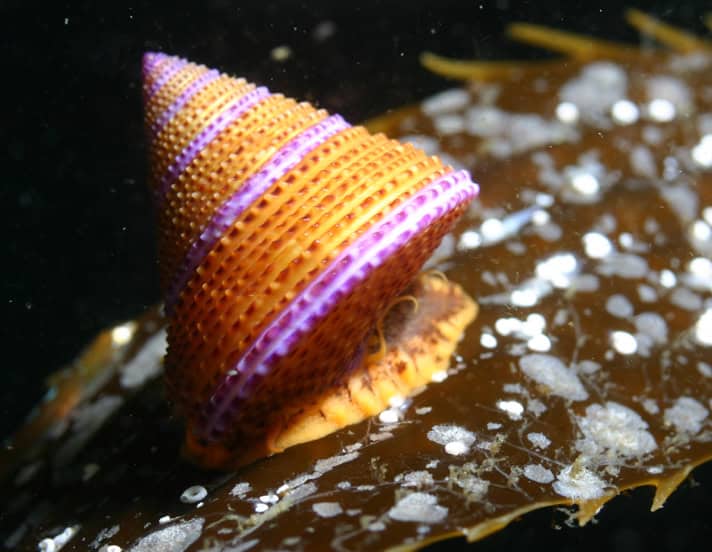
Jeweled top snails can be found off the West Coast of North America.
©Steve Lonhart (SIMoN / MBNMS) / Public Domain – Original / License
Native to the kelp forests of the North American Pacific Coast, the jeweled top snail (Calliostoma annulatum) earns the top spot for its gorgeous conical gold shell, each of the nine whorls traced with violet or magenta stripes. They spend their entire lives suspended from the middle part of the kelp stalk, feeding primarily on algae. These small snails only grow to about 1 inch long.
A closely related species, the channeled top snail, lives above them in the kelp canopy, while blue top snails live near the bottom of the stalk. If the top snail gets knocked off, then it will simply climb back up again. When breeding season approaches, top snails deposit eggs in gelatinous ribbons for another snail to fertilize.