
Quick Take
- One gorgeous insect isn't an ant at all, and its nickname hints at a sting you won't want to test.
- Those enchanting summer-night lights hide a deadly trick that turns romance into a trap.
- One flower in a rainforest isn't what it seems, and its visitors learn that too late.
- One beauty on the list defies expectations about lifespan, waking while snow still lingers.
Because beauty is truly in the eye of the beholder, compiling a list of the most beautiful insects is entirely subjective and open to endless debate. Some might admire the intricacies of a dragonfly’s wings, while others appreciate the sleek, armored elegance of a stag beetle. Since no single standard defines visual appeal in the insect world, we are leaning into the vibrant side of nature by following one simple rule: the more colorful, the better.
Red Velvet Ant
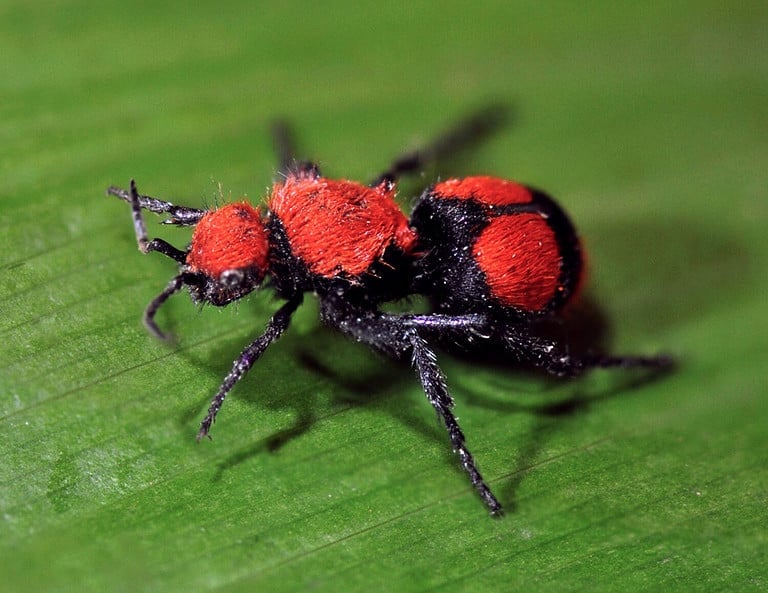
Actually, a wingless wasp, the red velvet ant’s (Dasymutilla occidentalis) defensive sting is actually delivered through a stinger that is up to half the length of its body. This ant is often nicknamed the cow killer due to its sting. On the Schmidt Sting Pain Index, a scale created by American entomologist Dr. Justin O. Schmidt, this insect ranks three out of four, with four being the most painful.

Entomologist Justin Schmidt rated the sting of a red velvet as a three out of a possible four.
©Tarsal Claw/Shutterstock.com
Female red velvet ants are beautiful insects that are covered with colorful setae (hairs) that give them their name. Male red velvet ants have two pairs of dark, translucent wings and look much more like traditional wasps. They lack stingers entirely and cannot harm humans.
Velvet ants are found in the United States.
Firefly
There are over 2,400 known species of fireflies in the family Lampyridae. The common eastern firefly (Photinus pyralis) found in Eastern North America has a rose-colored thorax with a black spot, and its elytra are black and edged with yellow.
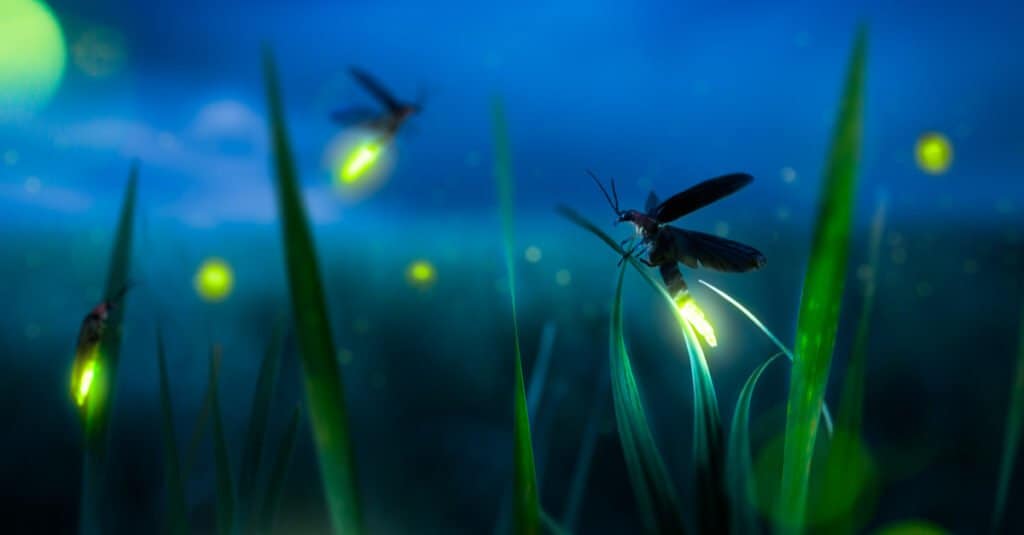
A sight to behold in the spring and summer, fireflies are a welcome and beautiful sight.
©Fer Gregory/Shutterstock.com
What makes fireflies beautiful insects is the light they produce on warm spring and summer evenings. This light can be green, yellow, or even a faint red. It is the result of a chemical reaction and produces no heat. Even firefly larvae glow. As a matter of fact, the larvae of all insects in the Lampyridae family glow even if the adult form does not.
Fireflies are predators, and there’s a genus of fireflies, Photuris, whose females produce light to attract unrelated fireflies. When the male comes close, the Photuris female kills and eats him.
Seven-spotted Ladybug
The seven-spotted ladybug (Coccinella septempunctata) is not only pretty but cute, with their round body and the black polka dots that cover their elytra, which are often a cheerful red. Another thing that makes the seven-spotted ladybug a welcome sight, especially to gardeners, is that they are a voracious predator of pest species, such as aphids, mites, scale insects, and others that infest garden plants.

The vibrant red ladybug is actually classified as a beetle.
©Marek Mierzejewski/Shutterstock.com
Mourning Cloak Butterfly
No list of the prettiest insects would be complete without a butterfly. The mourning cloak butterfly (Nymphalis antiopa), known as the Camberwell beuty in Britain, is found in North America and Eurasia. This beautiful butterfly has velvety dark maroon wings, bordered with a black line with cobalt dots and a golden edge that resembles gold leaf. The underside of the wings are covered with striations of gray.

Mourning Cloak butterflies boast a stunning combination of colors and patterns.
©iStock.com/Anatoliy Berislavskiy
The mourning cloak is one of the longest-lived butterflies, often living as long as one year. Sometimes mourning cloaks emerge from hibernation even before all the snow has melted.
Rosy Maple Moth
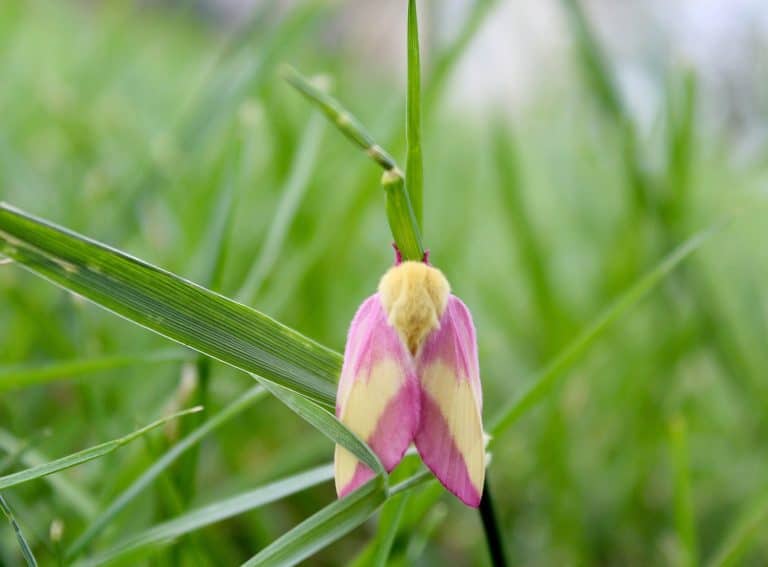
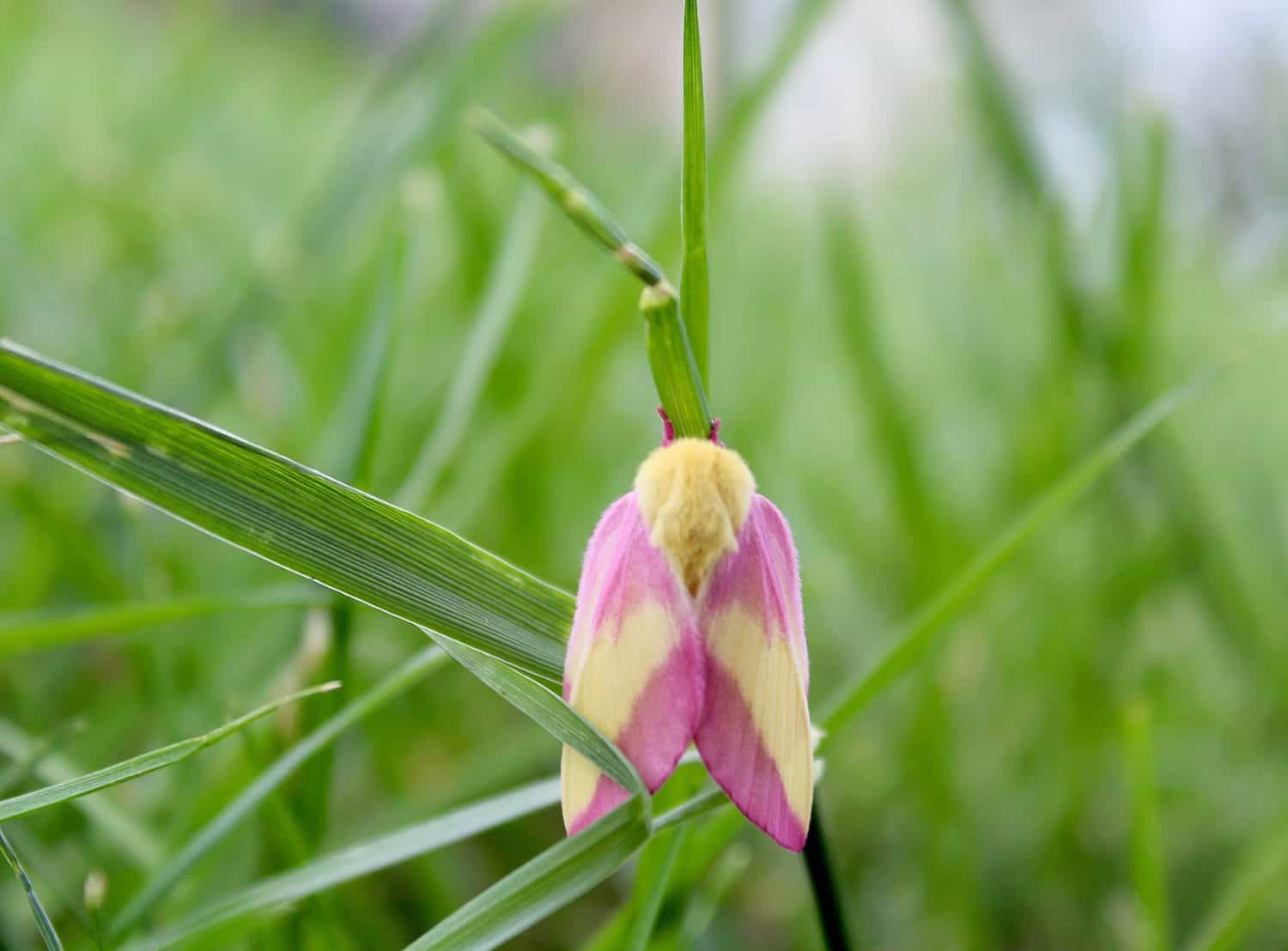
The rosy maple moth (Dryocampa rubicunda) is a silk moth, which is one of the most beautiful moths. It gets its name because its caterpillar mostly feeds on several species of maple trees, sometimes defoliating them in the process. Ironically, adult rosy maple moths do not eat.
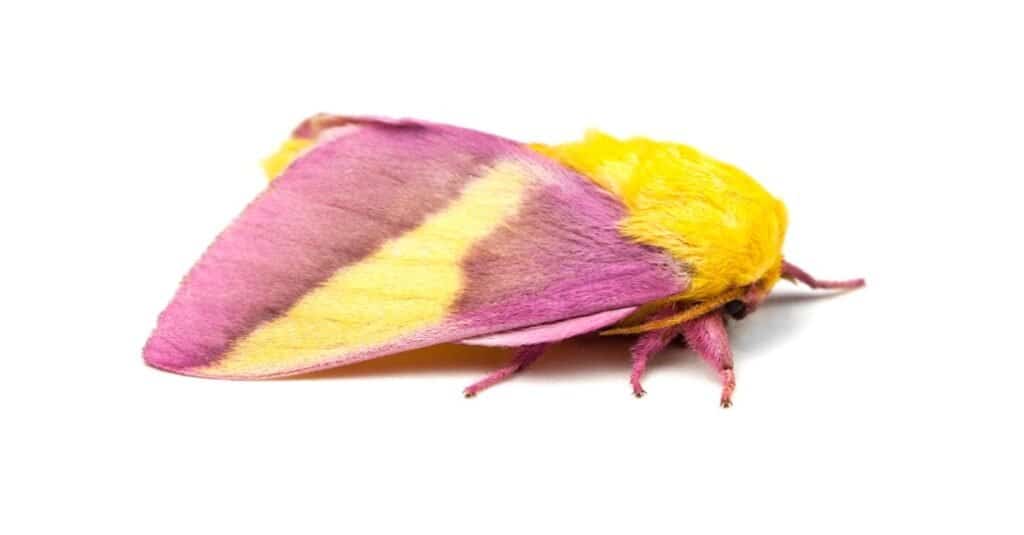
Featuring bright yellow and pink, the rosy maple moth is one of the prettiest moths in the world.
©Melinda Fawver/Shutterstock.com
The tiniest silk moth, the rosy maple moth’s wingspan is 1.25 to 2 inches, with the females being slightly larger than the males. Their wings are pink and yellow, and they have pink or rosy-colored legs and antennae. Their setae-covered bodies are also yellow, although the male’s antennae are fuzzier than the female’s.
Orchid Mantis
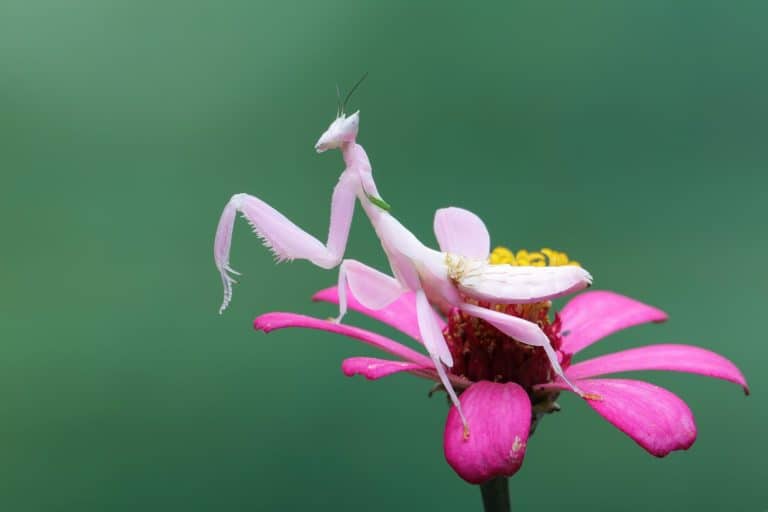
The astonishing orchid mantis (Hymenopus coronatus) is one of a group of mantids that mimic flowers. In this case, rather than copying one particular orchid, the orchid mantis resembles a generic pink-and-white flower, luring pollinating insects in the tropical rainforests of Southeast Asia.
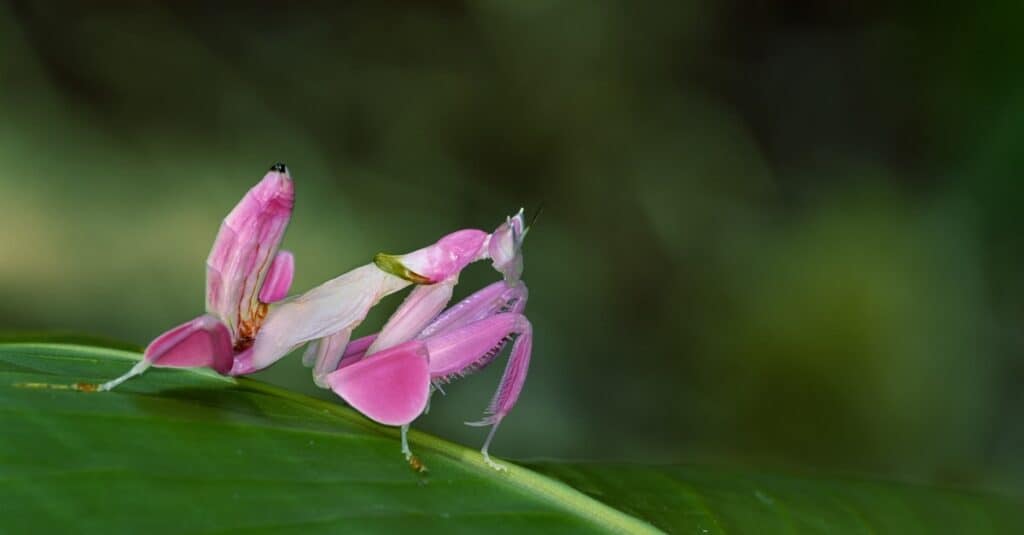
The orchid mantis blends in seamlessly.
©iStock.com/phittavas
It is nearly impossible to see this colorful insect when it rests among the petals of this orchid. Four of its six legs look like the orchid’s petals, which leaves the other two to grab prey, which range from butterflies, moths, and flies to bees and beetles. These beautiful insects will also eat each other. As with many other mantids, females are much larger than males.