
Quick Take
- Wolverine tracks share size overlap with other mustelid species, yet one gait pattern makes misidentification nearly impossible. See the distinctive gait →
- A 40-pound wolverine leaves prints that will genuinely surprise you when you see the measurements. Check the exact measurements →
- Finding a wolverine track is rare, and knowing exactly what to do in that moment could contribute to something much bigger than a cool photo. Follow the documentation steps →
- Tracks aren't the only sign wolverines leave behind. Some clues are more unsettling than footprints. Discover other wolverine signs →
The wolverine (Gulo gulo) is the biggest land-dwelling species of the Mustelidae family, which also includes otters, weasels, badgers, martens, and many more. Experts explain that measuring mustelid tracks is the most reliable way to determine the species, but overlapping sizes of males and females of different species can make identification difficult. Learn how to identify wolverine tracks in the snow and mud, and discover other signs to determine if a wolverine is in the area.
What Is a Wolverine?
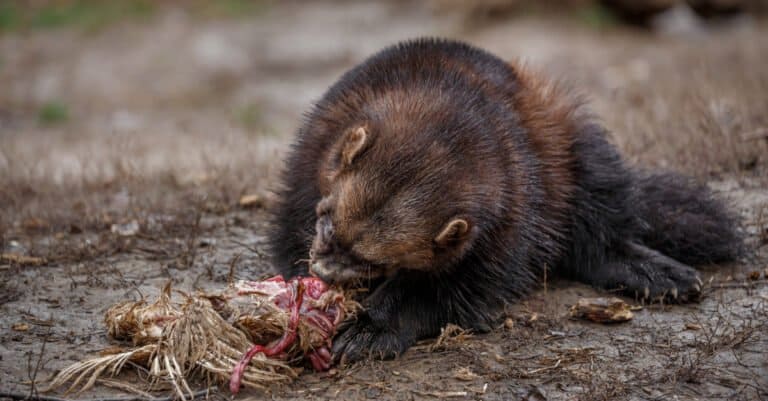
Wolverines are muscular carnivores that lead solitary lives. Like their ferocious cousin, the honey badger, wolverines have a reputation for tenacity and strength, with the ability to take down prey animals larger than themselves. However, they do not attack larger predators except in self-defense. Adult male wolverines typically weigh 24-40 pounds, while females generally weigh 13-26 pounds.
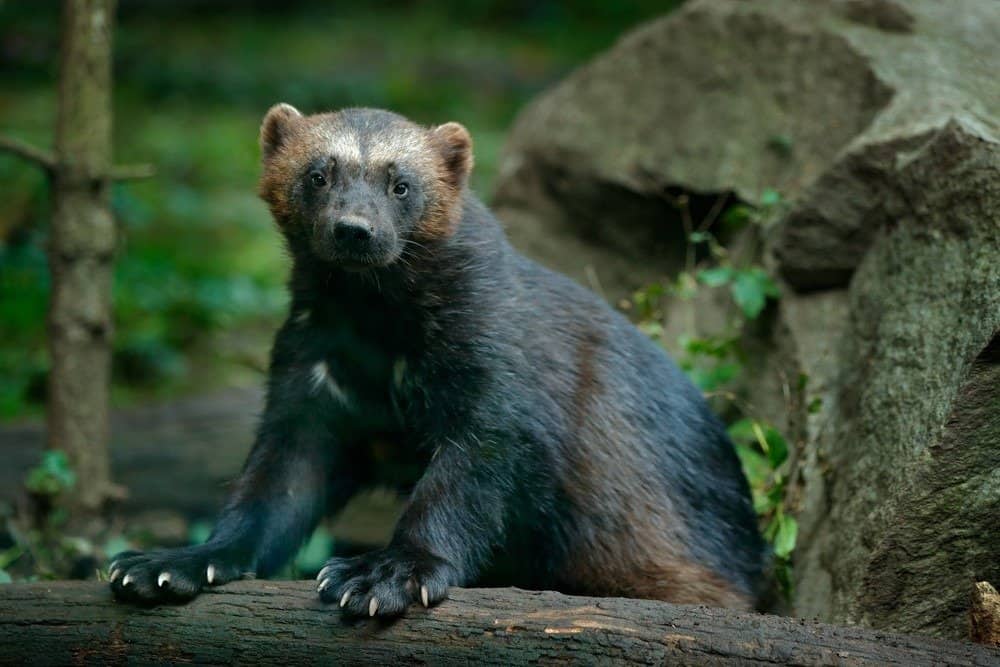
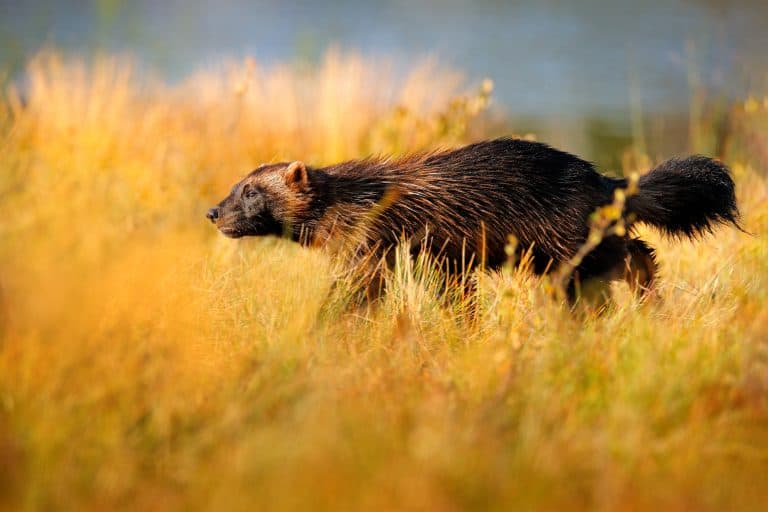
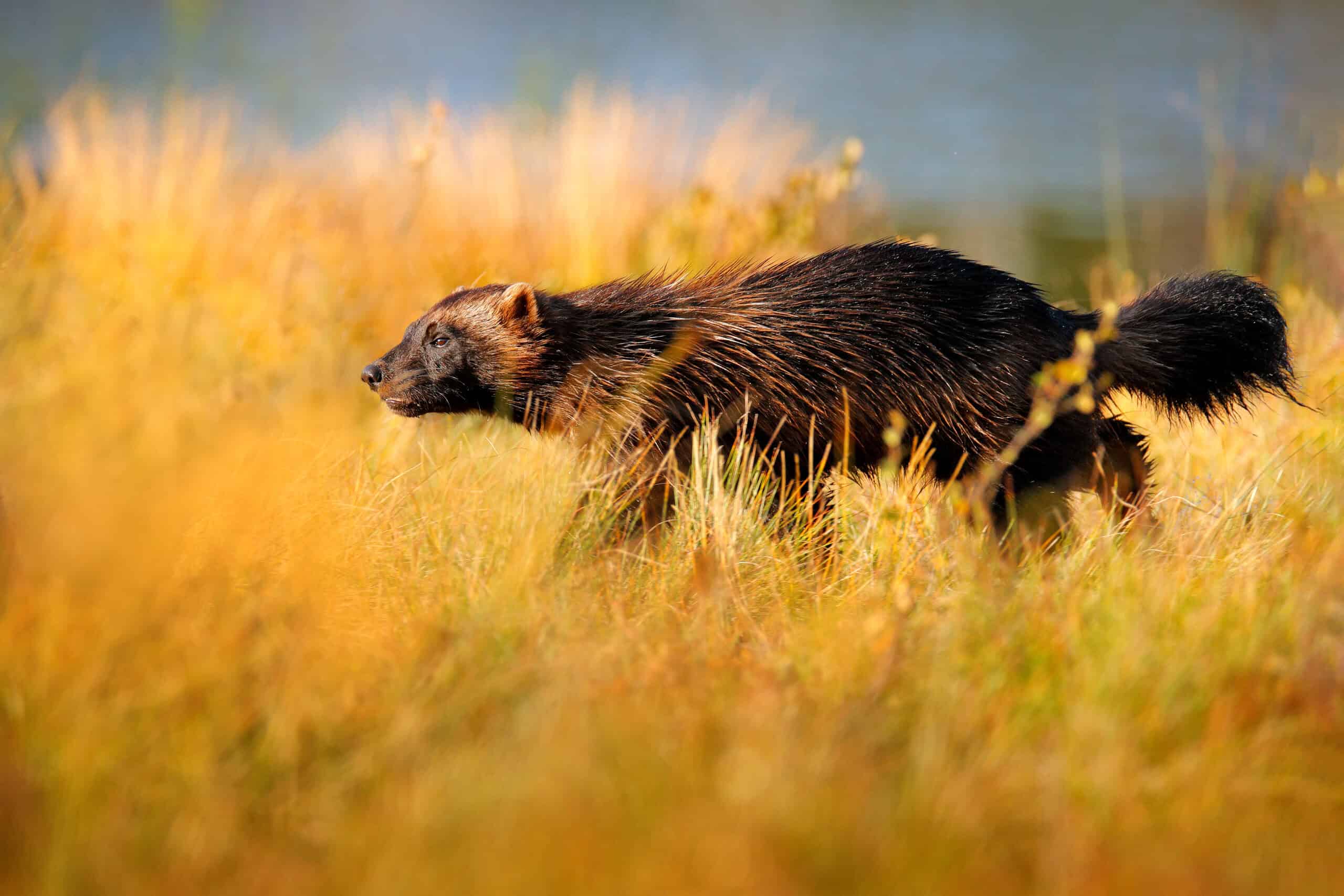
Wolverines have characteristics similar to a bear, a skunk, and a dog.
©Ondrej Prosicky/Shutterstock.com
Wolverines have short, stocky legs, long snouts, rounded ears, and long, brown to black fur with lighter stripes running along the sides of the body to the bushy tail. They have large paws with five toes and curved claws similar to mountaineering crampons. This gives them the traction to easily climb frozen cliffs, mountain peaks, and trees. Their dense, oily, highly water-resistant fur also protects them from the elements. Wolverines prefer colder climates and occur in the Alpine forests, grasslands, tundra, taiga, mountainous regions, and boreal forests of Europe, the Arctic and subarctic, northern areas of North America, and parts of Asia.
Identifying Wolverine Tracks
Wolverine tracks have five toe imprints on the front and hind paws with clear claw prints. Their toes leave clearly visible impressions because they curve on the paw’s pad, forming an almost semi-circular shape. However, the smallest inside toe may not always appear. Their triangular tracks become narrower towards the heel.
Two of the most common gaits are the bound and the lope. The bounding gait shows 2×2 track prints. The left and right front paws are side by side, with one side slightly ahead of the other. The hind paws land in the prints left by the front paws. Wolverines have a loping gallop as well. The 1/2/1 loping gait begins with one front paw, followed by the other front paw landing together with the opposite hind paw, and finally the second hind paw.
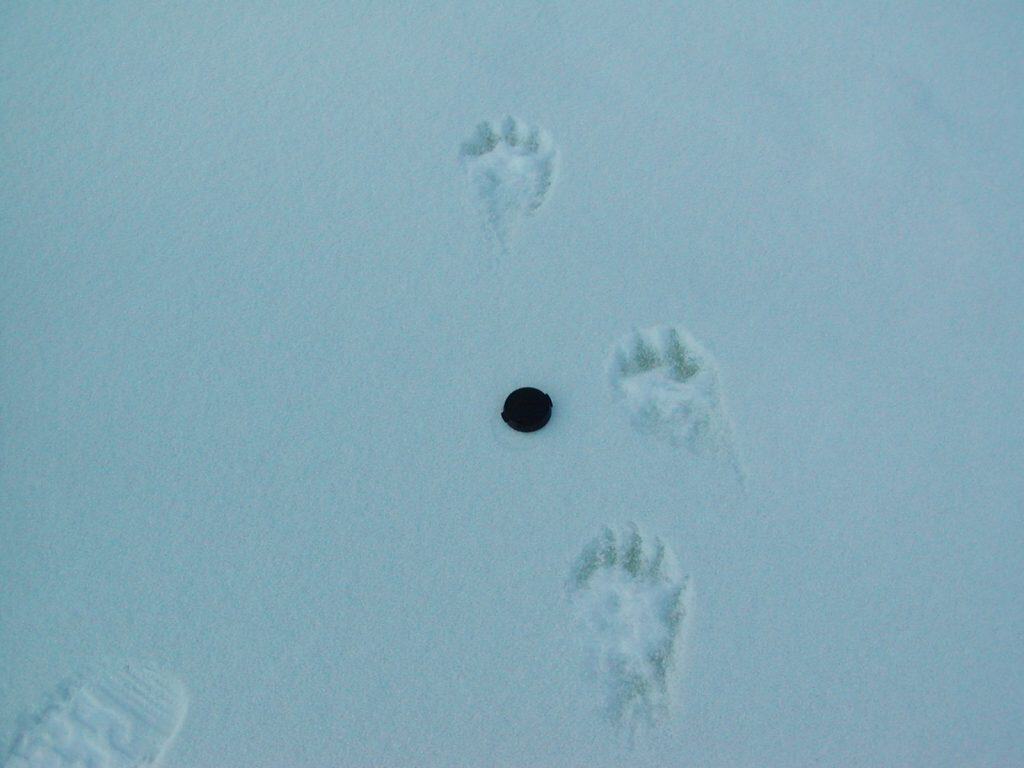
Wolverine tracks are large in relation to their body size. Camera lens cover for scale.
©U.S. National Park Service / Public Domain CC0 1.0 – Original / License
According to the National Park Service, wolverine front prints typically measure approximately 4.3 to 5.7 inches in length and 3.5 to 4.8 inches in width. Their hind prints measure from approximately 3.1 to 5.5 inches in length and 3.4 to 5.5 inches in width. Their stride generally measures between 26.8 and 55 inches. The trail width is approximately 7-10 inches, while the group length is typically between 9.6 and 38.5 inches.
Wolverine Tracks in the Snow
When in deep, loose snow, the wolverine generally uses a bound, so the 2×2 pattern is the most commonly seen in these conditions. The 1/2/1 pattern is most often seen in firmer snow conditions, or when the wolverine is increasing its speed. The Cascades Wolverine Project notes that no other species produces a track pattern like the wolverine’s 1/2/1 pattern, especially not with any regularity.
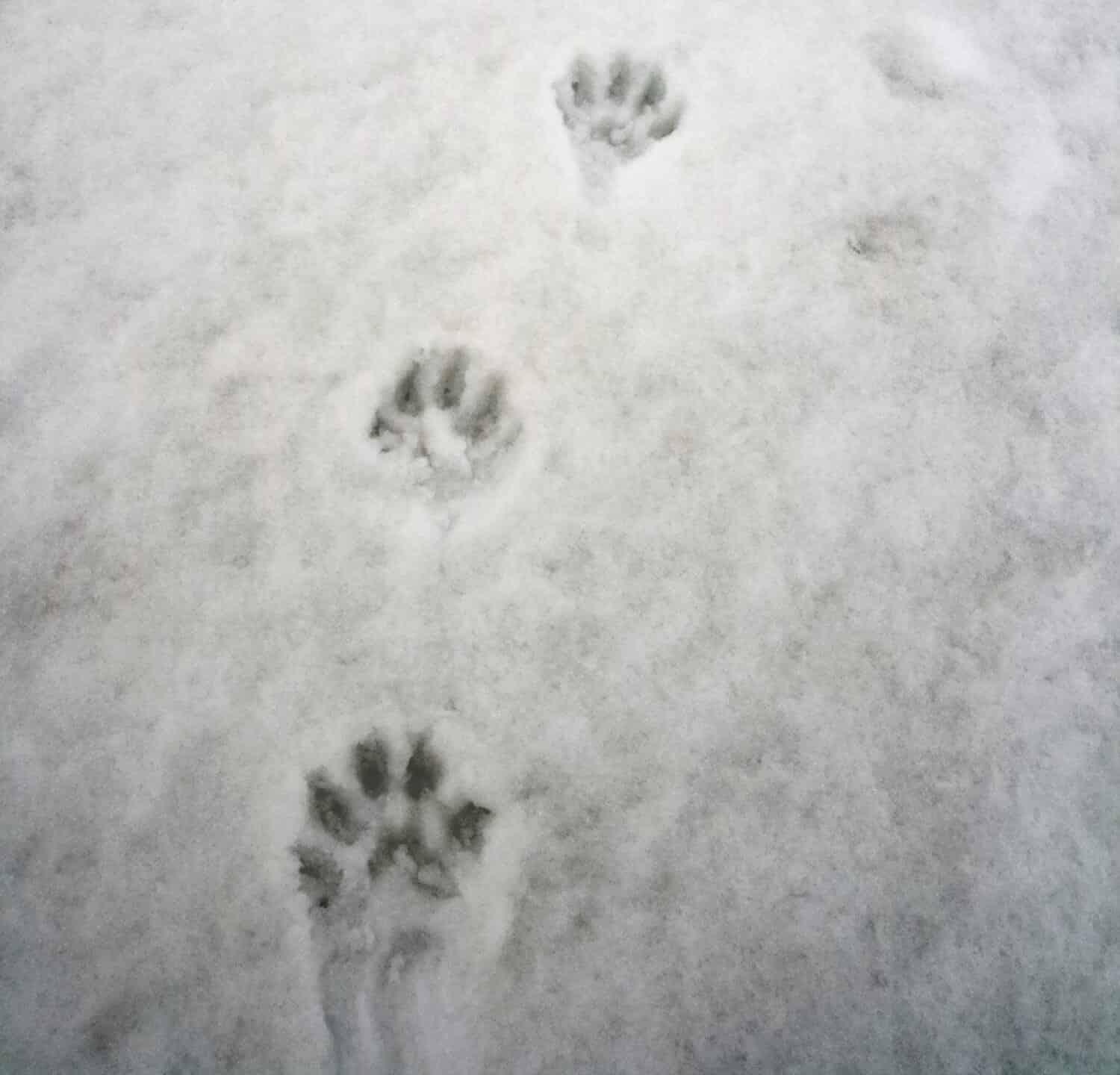
The loping gait is the most common type of movement, but a direct register walk may be seen over shorter distances.
©Okyela/Shutterstock.com
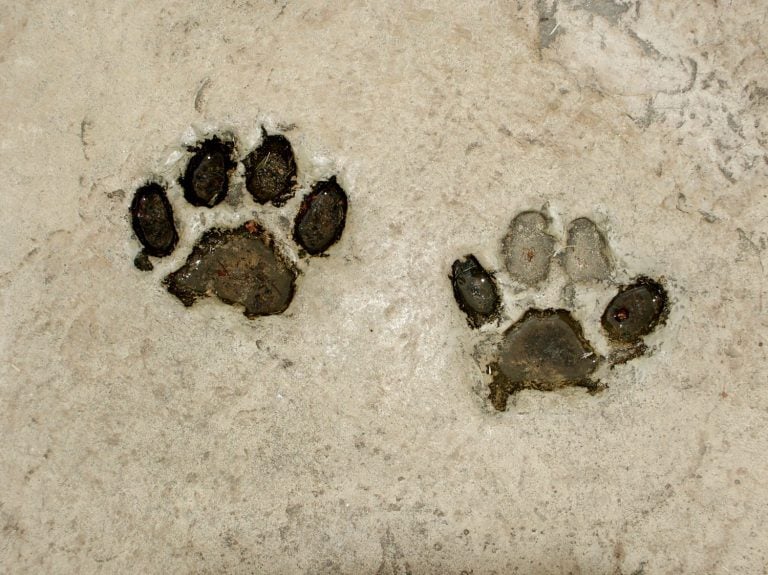
Wolverine Tracks in the Mud
Because wolverines prefer colder climates, it’s rare to see their tracks in the mud. However, when they do walk over mud, their prints are very clear with visible claw imprints. Both fore and hind feet tracks generally show all five toes. Lastly, the triangular shape of the heel is clearly registered.
What to Do When You Find a Wolverine Track
If you happen to come across a wolverine track, the first thing you need to do is note the date and time. Next, find your location on a map; it needs to be as accurate as possible, so try using a GPS point. Then, take pictures of the gait patterns using a scale like a glove, pen, or hand. Once you are done taking photos, measure the tracks and the distance between them. Then, describe the prints. For example, note whether there are droppings or holes in the snow, and record the direction of travel. Lastly, take note of your surroundings. Try to find discarded carcasses. Alternatively, check for any signs of wildlife in the surrounding areas. If you think you have found wolverine tracks in the Washington Cascades Mountains, you can report your findings to the Cascades Carnivore Project at: https://cascadescarnivore.org/.
Other Signs of a Wolverine
Wolverines are elusive and tend to live in remote areas, so the chances of spotting a wolverine, or even other signs, are slim. However, it is possible you may see claw marks, snow caves, scat, or the remains of animal carcasses. Take a deeper look at some other signs that a wolverine may have left behind.
Claw Marks
As wolverines are skilled climbers, their claws can leave marks on the tree trunks, mainly pines. If there is a wolverine in the area, it may also mark its territory by defecating, biting, and urinating on pine and spruce saplings.
Snow Caves
Wolverines typically den in snow caves. Females and offspring generally den from January through May, although this may vary somewhat depending on the region. Den sites are frequently found in rugged terrain with tunnels in snowdrifts, or they may be connected to snow-covered objects, including fallen trees, large rocks, or cliffs.
Scat
Their droppings vary depending on what they’ve eaten. However, their scat is tapered on either end and is typically ropey and full of hair because of the small mammals they eat and carcasses they scavenge. It typically measures 0.5 inches to 1 inch in diameter.
Carcasses
Wolverines leave carcasses at their feeding sites once they have finished eating. If they cannot finish a carcass in one sitting, they mark it with a foul-smelling musk like a skunk. Then they bury it in the snow or under rocks to hide it from other scavengers. They are also strong enough to carry off or drag large animal parts such as caribou heads. They use the snow like a refrigerator and depend on their cached food during the colder months after their offspring are born. Wolverines are opportunistic and feed on nearly everything, but here are a few of the foods they commonly consume:
- Ground squirrels
- Voles
- Mountain goats
- Birds and bird eggs
- Moose
- Sheep
- Reindeer
- Hares
- Rodents
- Carcasses left by other predators
Researchers have observed wolverines hiding their food in captivity and in the wild. Making caches of food is the only way their young can survive, as females give birth in late winter.
Wolverine Conservation Status
While their numbers are declining globally, the wolverine is currently listed as Least Concern on IUCN’s Redlist. However, this assessment dates from 2015 and may not reflect current population trends. Unfortunately, wolverines’ biggest threat is climate change. This is because they depend on the snow to store food and reproduce. However, humans also pose a threat, as hunters target them for their fur, which is desired for its frost-resistant abilities. They have predators too, which include:
- Black bears
- Golden eagles
- Mountain lions
- Brown bears
- Wolves