
Quick Take
- 1,700-pound polar bears have specialized adaptations to navigate their icy Arctic homes.
- Microscopic papillae measuring 1.5 times taller than average help polar bears walk confidently across ice.
- Partially webbed paws help polar bears paddle through frigid water and distribute their weight on ice.
- Sharp, curved claws help polar bears grip confidently to the ice while hunting prey.
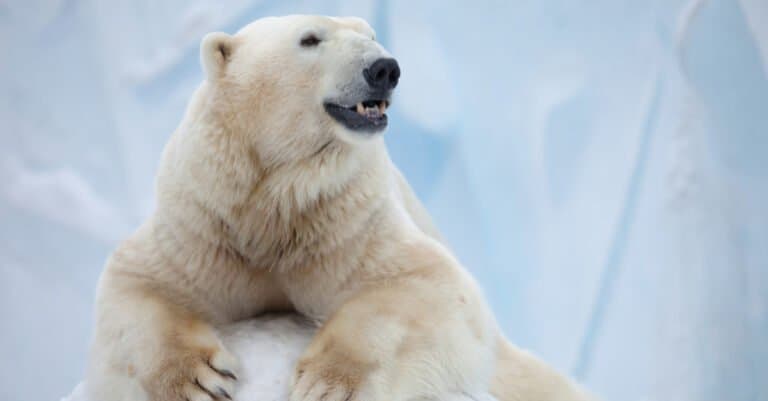
If you thought winter was cold where you live, just imagine how a polar bear must feel! These amazing animals live on coastal ice fields and floating ice in the Arctic Ocean, where they hunt for seals, walruses, and seabirds. Most polar bears don’t hibernate in the winter like other bear species, as they rely on sea ice to help them catch their next meal. The only polar bears who hibernate are pregnant polar bears, who will dig a den in the snow to live and give birth to their cubs before emerging in the spring.
Polar bears (Ursus maritimus) are the largest land predators on the planet, growing up to 11 feet and weighing up to 1,700 pounds. Because of their size, they need some extra help to navigate the cold environment of the Arctic and to swim in the frigid waters. That’s why they have some useful adaptations to help them survive the cold. For example, polar bears have two layers of fur to keep them warm, plus a thick layer of fat that helps keep out the cold when in the water. They also have smaller ears and tails to prevent heat loss through these areas.
Perhaps their most impressive feature is their paws. All the features of a polar bear’s paws are better than high-tech snowshoes, helping them walk on ice, swim in freezing water, catch prey, and survive in the harsh Arctic environment. Learn more about their fascinating feet below!
Feet Friction
If you’ve ever worn socks with rubber padding on the bottom, then you have some idea of what it’s like to walk as a polar bear. These creatures have tiny, rough bumps called papillae on the soles of their feet that help create friction on slippery ice.
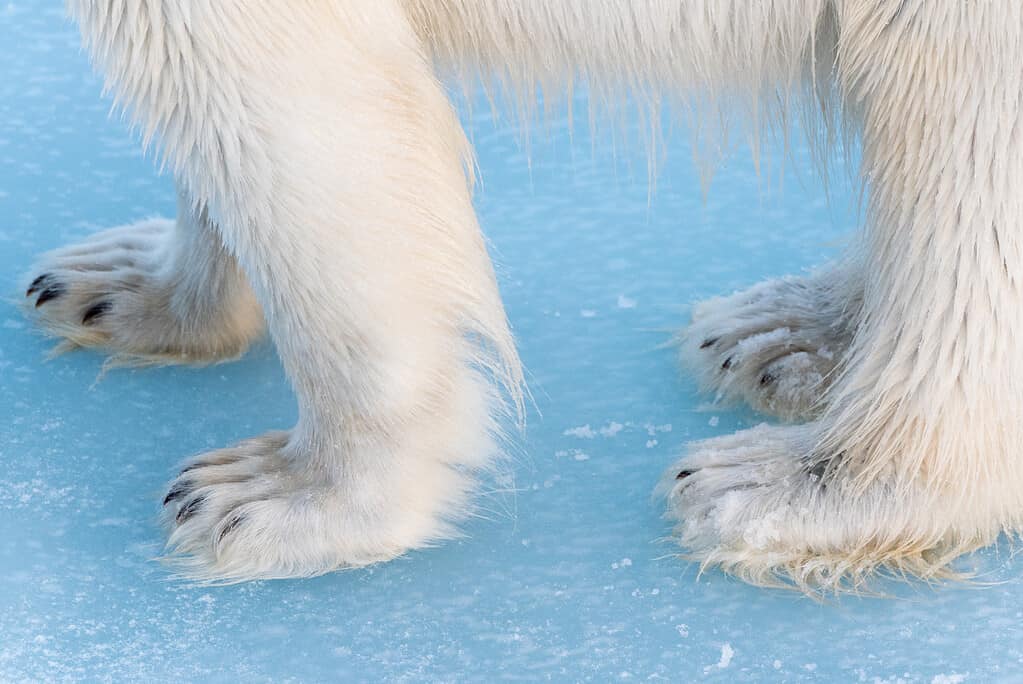
Polar bears have tiny papillae on the bottom of their feet to help them grip the ice.
©james_stone76/Shutterstock.com
A November 2022 study in the Journal of the Royal Society Interface found that these microscopic papillae, which evolved to help polar bears adapt to icy and snowy conditions, are 1.5 times taller and have 1.3 times more true surface area than the papillae on the paw pads of the American black bears and brown bears, even though polar bears have smaller actual paw pad sizes. When recreated in the lab, scientists found that these taller bumps on a polar bear’s paws help them to more effectively grip on snow and ice. A polar bear’s paw pads are also covered in fur, which helps them retain body heat in colder climates (again, similar to wearing grippy socks for humans).
Webbed Paws
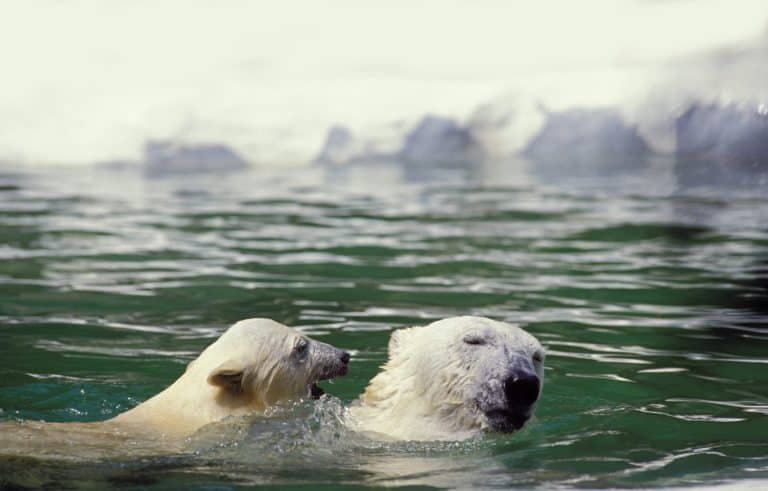
Despite being bears, polar bears are actually considered marine mammals, like seals, sea lions, and whales. This is because they spend plenty of time in the water, helped by their webbed feet that help them swim. They use their front paws for paddling and their back paws for steering, an effective method that allows them to swim up to six miles per hour. The partial webbing in their paws allows them to act like paddles, helping them move through cold, slushy seas quickly.
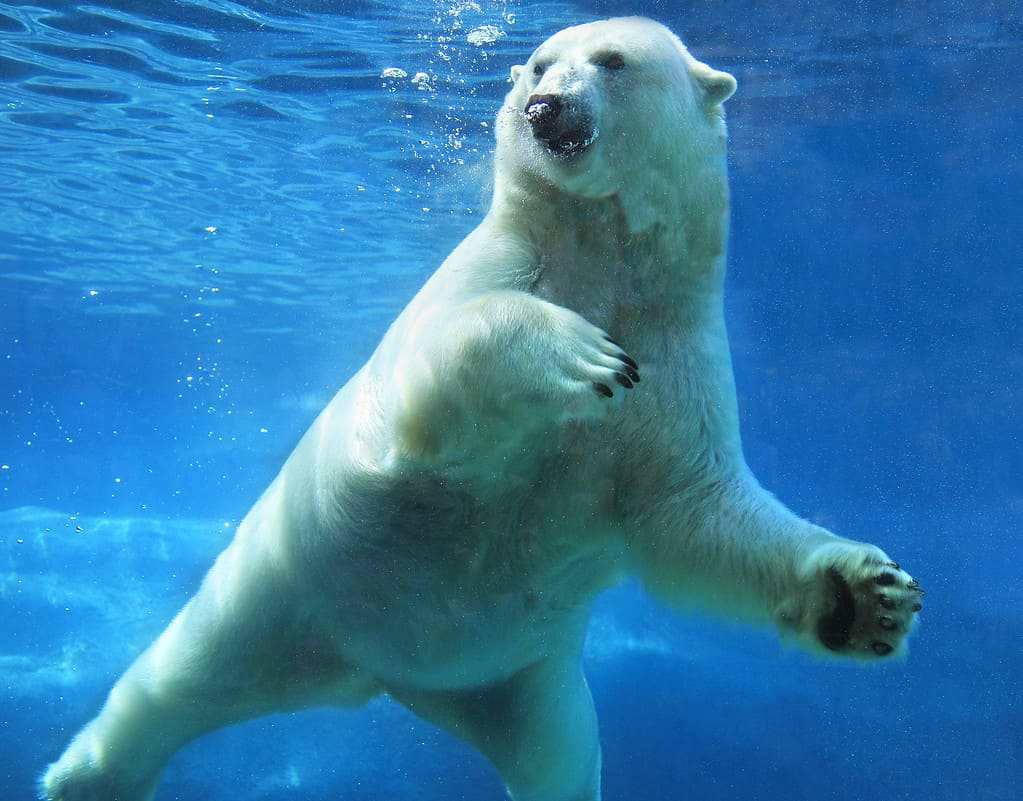
The partial webbing on a polar bear’s paws helps them move through the water.
©Vladone/iStock via Getty Images
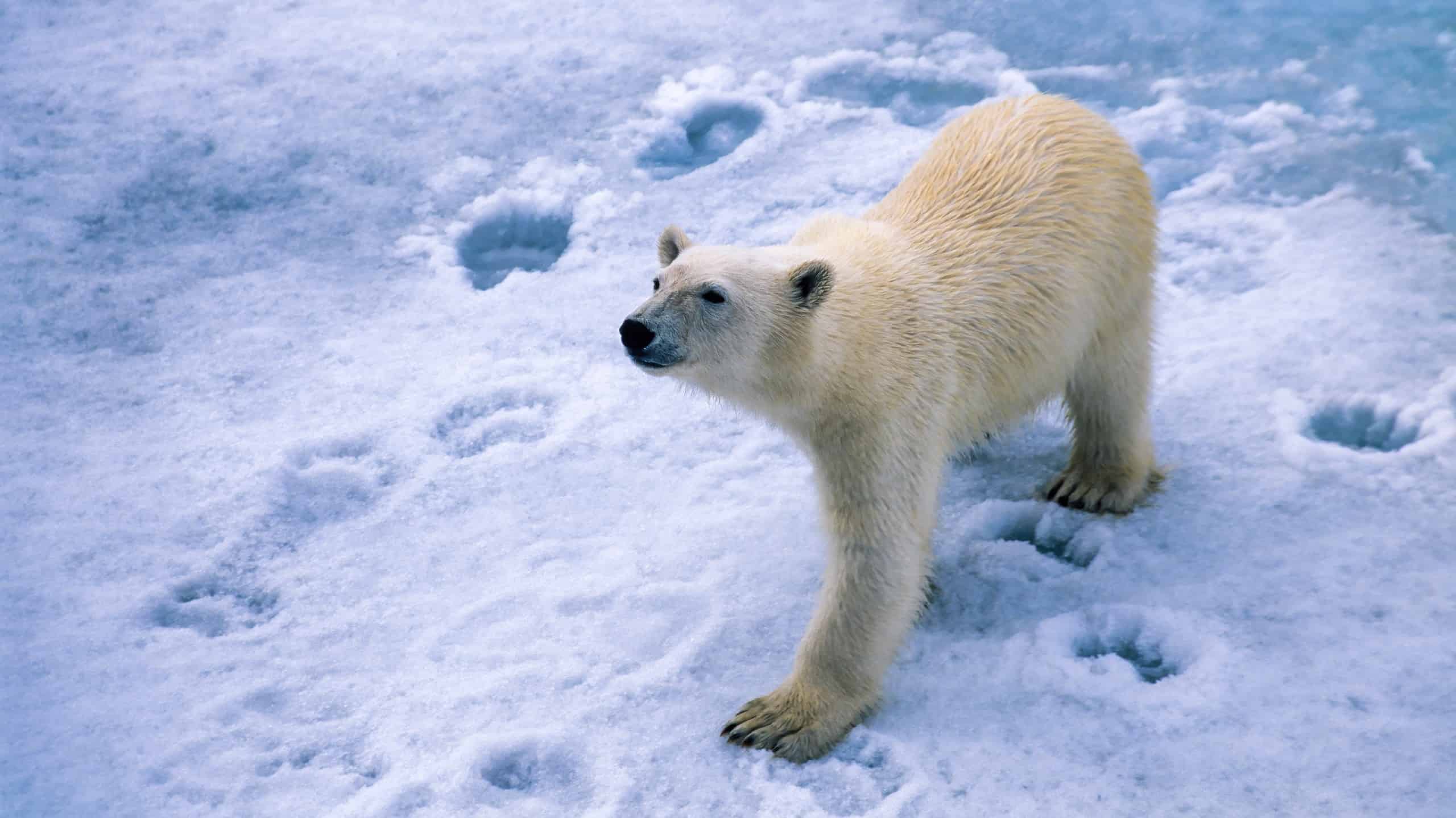
Their wide paws with webbing between their toes also help them out of the water. According to the National Wildlife Federation, this paw design prevents sea ice from breaking when the heavy polar bear is on it by distributing the animal’s weight as it walks. Without this adaptation, polar bears would be too heavy and would break through the ice every time they walked on it.
Sharp, Curved Claws
The polar bear’s paws wouldn’t be complete without some powerful claws, which all bears have. On a polar bear, these curved and sharp claws measure 1.97 inches long each and are useful for catching and holding their prey, as well as gripping the ice when walking. They can confidently move across the ice while hunting with these claws. You wouldn’t want to be prey facing these impressive creatures! It really feels like nature has thought of everything to keep these bears safe in their cold habitats.
Conservation Status
Polar bears are considered Vulnerable on the IUCN Red List, partially due to climate change and the shrinking of their natural habitats. Without sea ice for hunting, traveling, and breeding, polar bears will go extinct. The global polar bear population is currently estimated to be around 26,000 individuals.