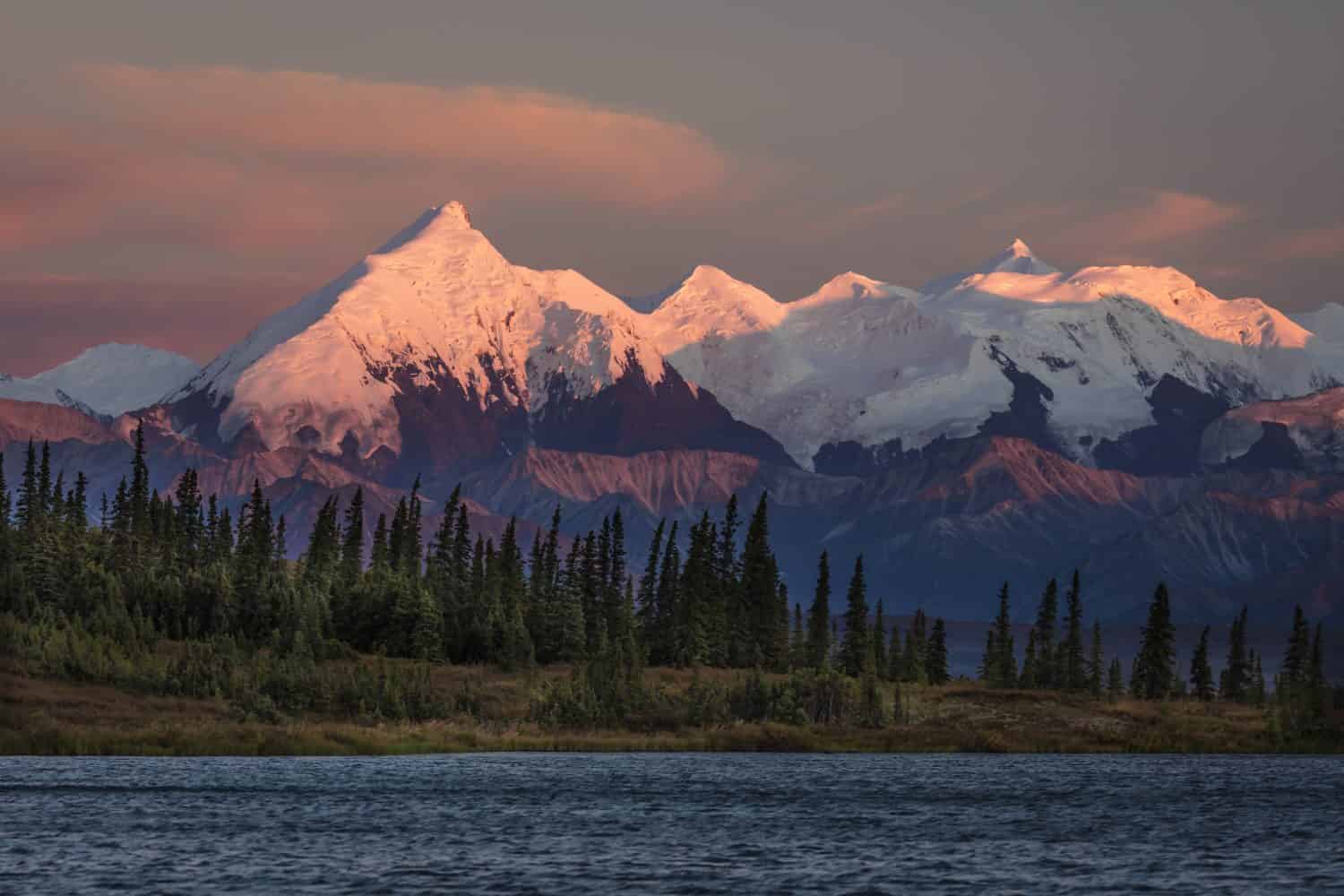

Denali National Park and Preserve, in the heart of Alaska, is one of the most spectacular wildernesses in the United States. It stretches over six million acres of tundra, glaciers, and river valleys beneath towering peaks, including its namesake, the tallest mountain in Alaska. The park welcomes many visitors each summer, when the snow retreats, wildflowers bloom, and animals move through open habitat. Denali supports 39 species of mammals, 169 species of birds, 10 fish species, and just one amphibian. We can’t cover them all, but the following entries highlight some of the park’s most iconic wildlife—what to look for, when, and where.
Arctic Ground Squirrel (Urocitellus parryii)
©Photo Spirit/Shutterstock.com
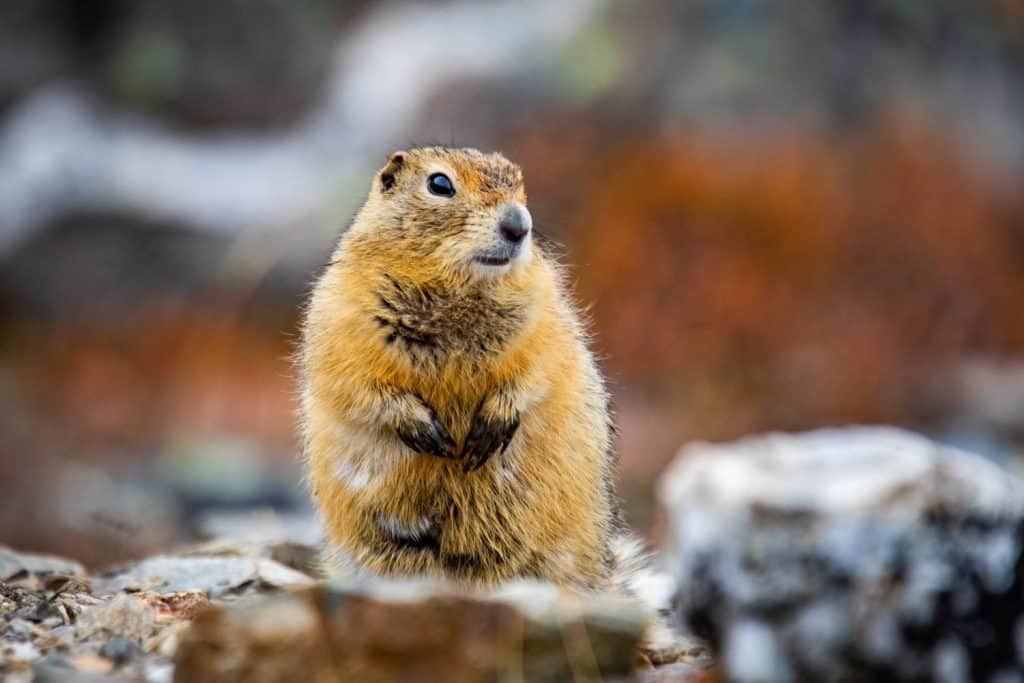
The Arctic ground squirrel is among the most visible small mammals in Denali, often seen sitting upright near burrows along roadsides or trails. They chatter and flick their tails to alert others of danger. These rodents are critical prey for predators like grizzlies, foxes, and eagles. In late summer, they busily gather seeds and plants before entering one of the longest hibernations of any mammal. Visitors often see them darting across gravel paths or sunning on rocks in broad daylight.
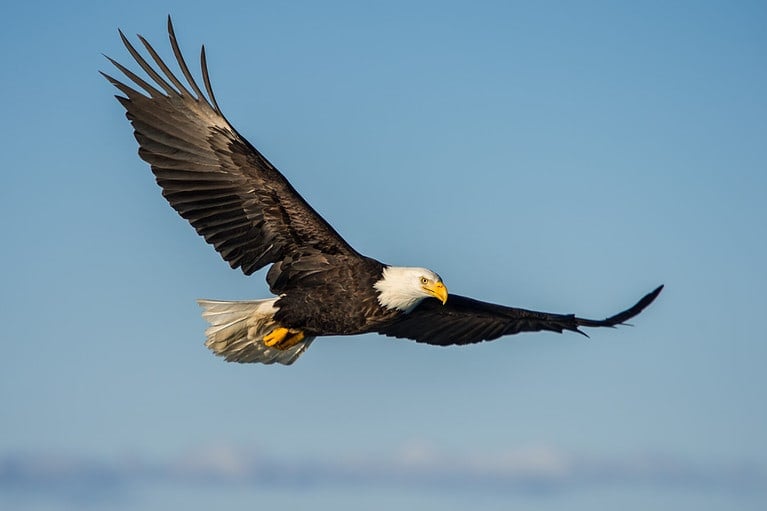
Bald Eagle (Haliaeetus leucocephalus)
©Dennis W Donohue/Shutterstock.com
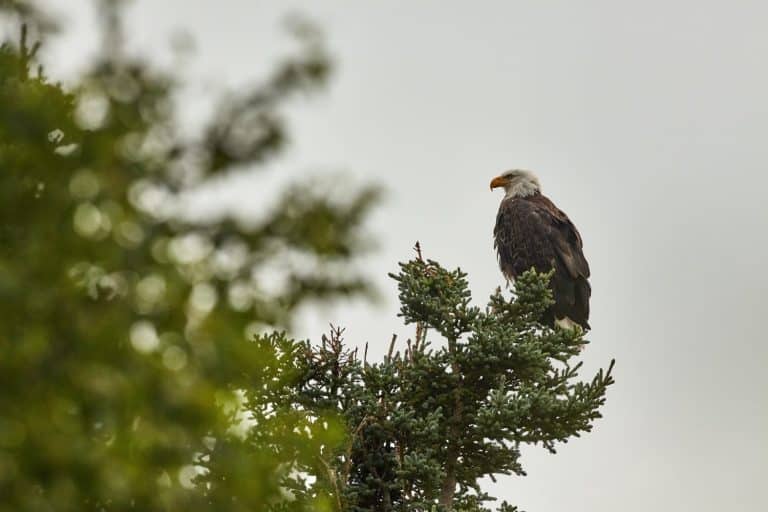
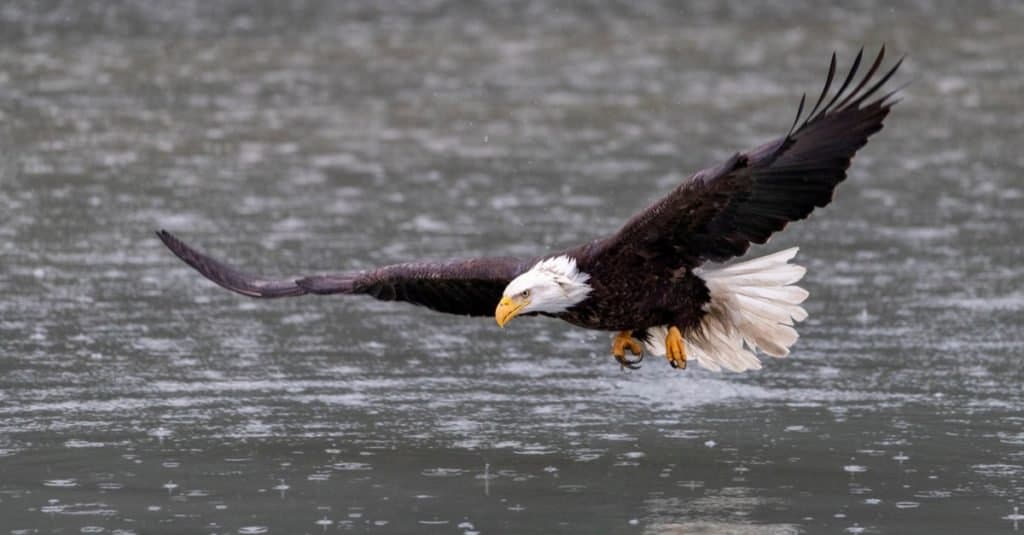
The bald eagle was once an endangered species in the United States, but thanks to conservation laws, it has made a dramatic comeback. Bald eagles circle rivers and wetlands, scanning for fish or carrion. They are less common around Denali than in coastal Alaska, but still notable around spruce and cottonwood stands near water. Calm mornings on waterways provide the best chance to see their low glides or sudden dives.
Bohemian Waxwing (Bombycilla garrulus)
©Mats Lindberg/ via Getty Images
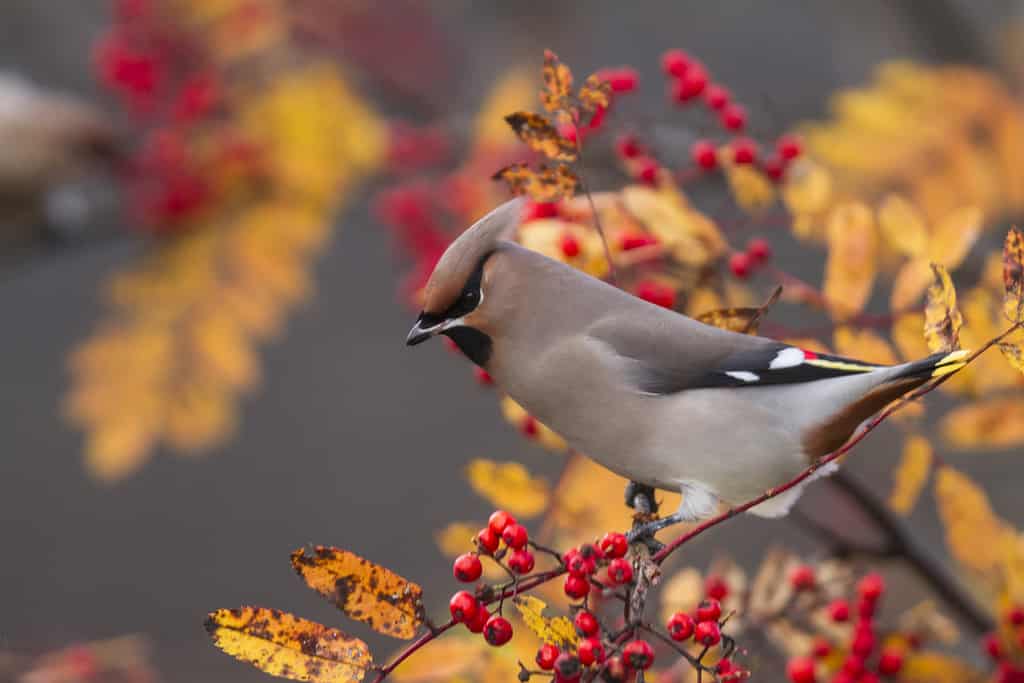
These sleek, social birds appear in flocks, feeding on berries in late summer and fall. Their soft plumage, black masks, and bright red wing tips make them unmistakable. Waxwings are more common near stands of mountain ash and other berry-producing shrubs, often near the park entrance. Their high, trilling calls often reveal their presence even before the flock comes into view.
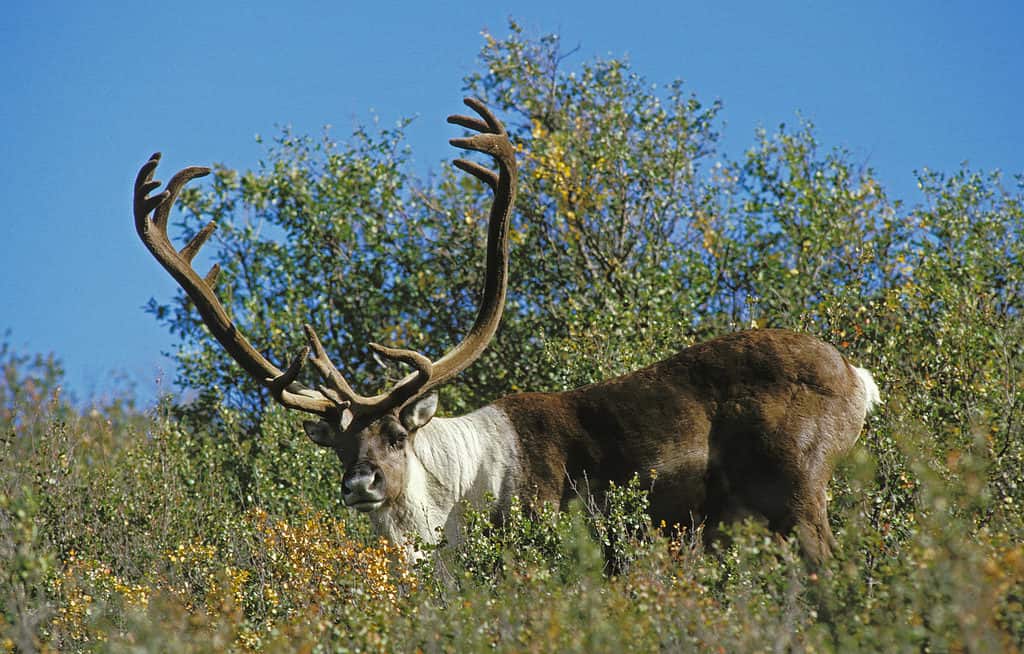
Caribou (Rangifer tarandus)
©iStock.com/slowmotiongli
Many caribou migrate through tundra and gravel riverbeds, feeding on lichens, willows, grasses, and sedges. Denali hosts large herds, with movements shifting by season. In late spring and early summer, they follow river corridors southward before dispersing across alpine tundra. They’re easiest to spot in mid-summer, grazing in open valleys or standing in river flats where insects drive them to seek out areas with more of a breeze.
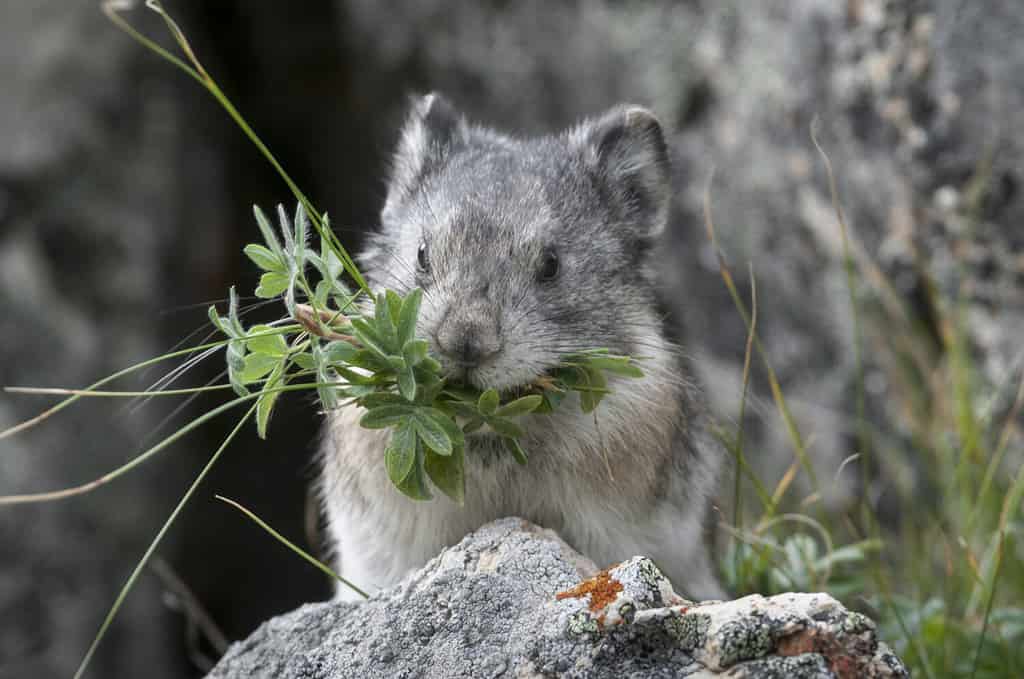
Collared Pika (Ochotona collaris)
©NancyS/Shutterstock.com
In Alaska, collared pikas live among rocky slopes and meadows, collecting “haypiles” of grasses and flowers that they dry and store for winter. They are small, round relatives of rabbits, with no tail and large, rounded ears. Their sharp ‘eeep’ calls echo across alpine boulder fields in summer. Though small and well camouflaged, their constant activity and vocalizations make them easier to hear than to see.
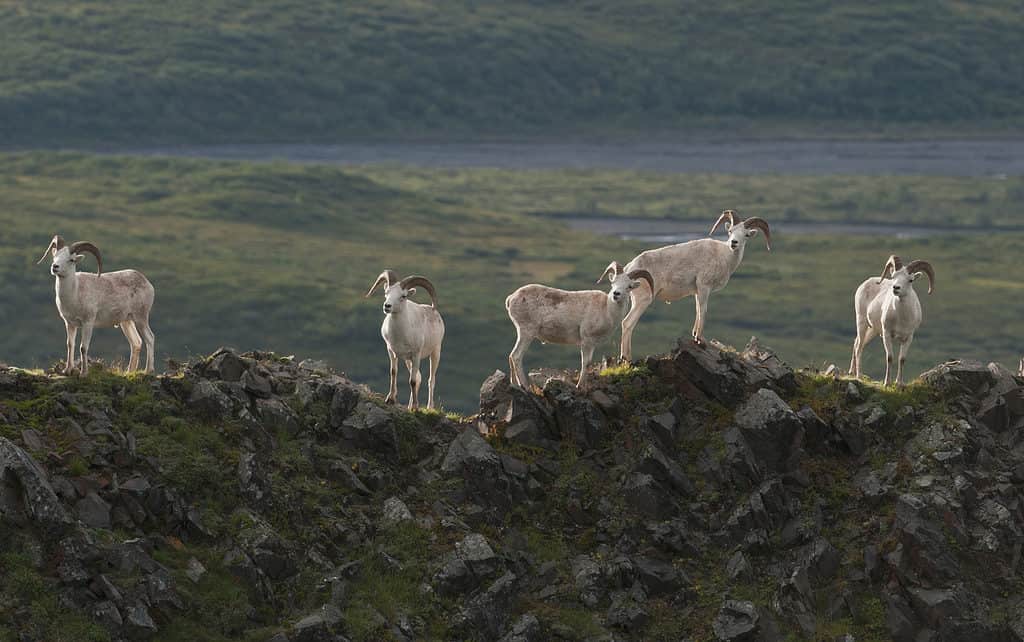
Dall Sheep (Ovis dalli)
©iStock.com/RONSAN4D
In Denali National Park, Dall sheep cling to craggy ridges and alpine slopes. About 2,500 individuals live in the park, often visible as tiny white figures dotting cliffs near Polychrome Pass or Igloo Canyon. Males carry impressive curled horns, while females stay in smaller bands. Early summer is best for sightings, when sheep graze lower alpine plants before heat and insects push them upslope.
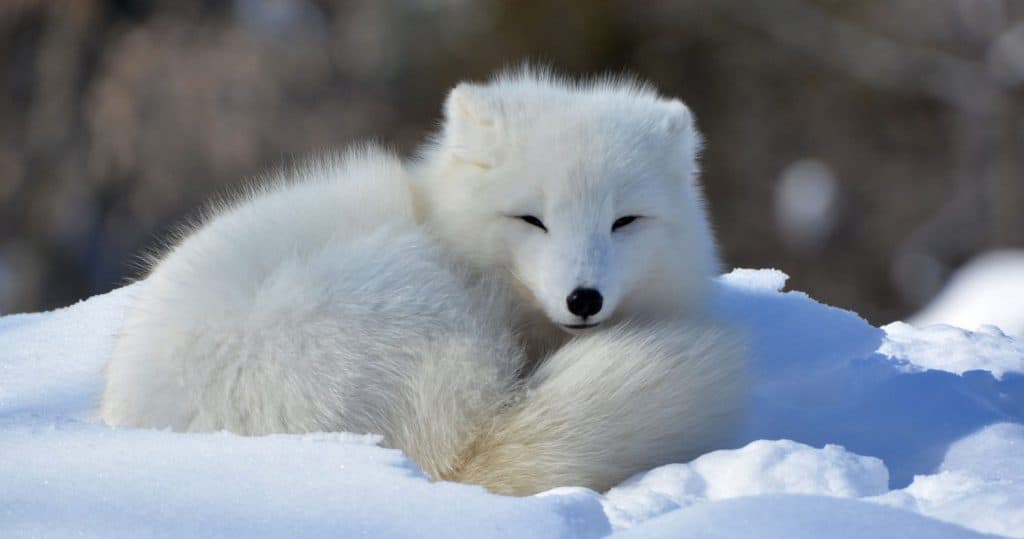
Foxes (Red and Arctic) (Vulpes vulpes and Vulpes lagopus)
©meunierd/Shutterstock.com
Red foxes are widespread, trotting along tundra edges and meadows in search of rodents, ptarmigan, and berries. Their warm coats and bushy tails make them easy to recognize against the green tundra or patches of snow. Arctic foxes are rare but appear in high, windswept country. Sightings are unpredictable, but tracks in sandbars and the sound of their yips often reveal their presence.
Golden Eagle (Aquila chrysaetos)
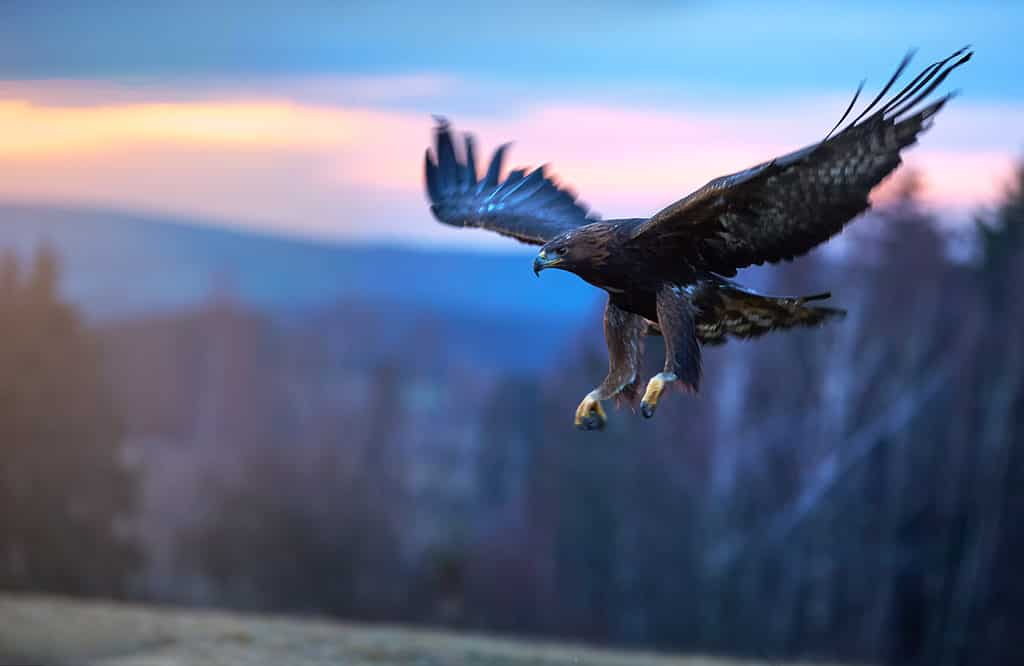
©Martin Mecnarowski/Shutterstock.com
High in the sky, golden eagles soar above ridges and cliffs, riding thermals in wide circles before diving on marmots or hares. They nest on rocky ledges and can be seen throughout summer afternoons when skies are clear. Their sheer size and steady, soaring flight make them one of the easiest raptors to identify, even from a distance.
Gray Jay (Perisoreus canadensis)
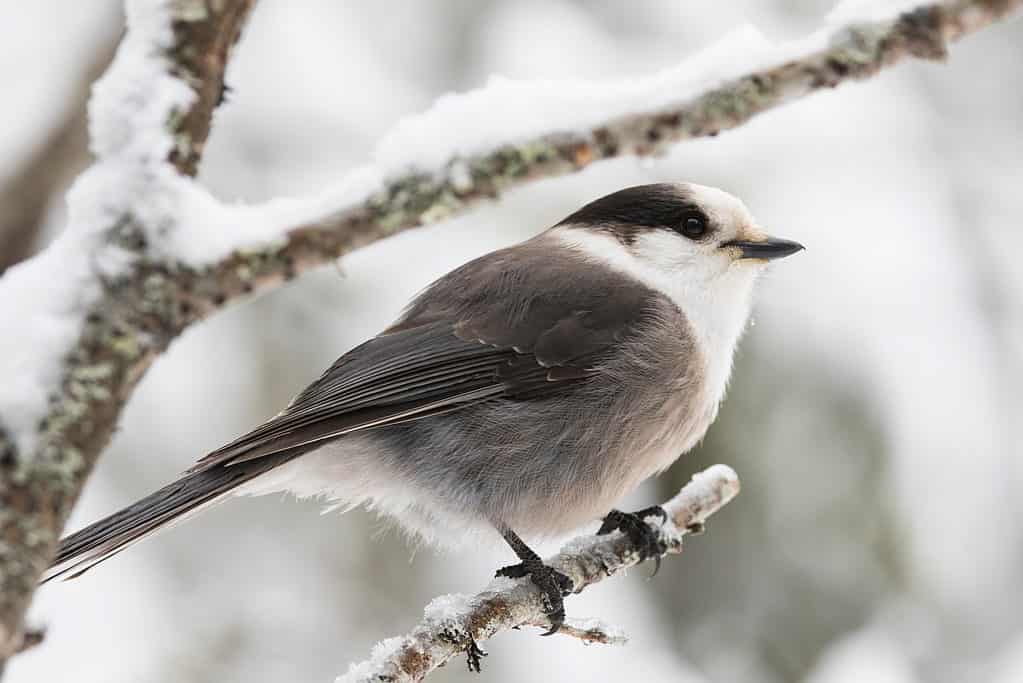
©Mircea Costina/Shutterstock.com
Gray jays, also known as Canada jays, are bold and curious. They often appear around picnic spots, campsites, and cabins, swooping down quietly from spruces. These intelligent birds cache food in bark and moss to survive winter. Their soft calls and inquisitive, hovering behavior make them hard to miss, especially for hikers exploring forested trails.
Grizzly Bear (Ursus arctos horribilis)
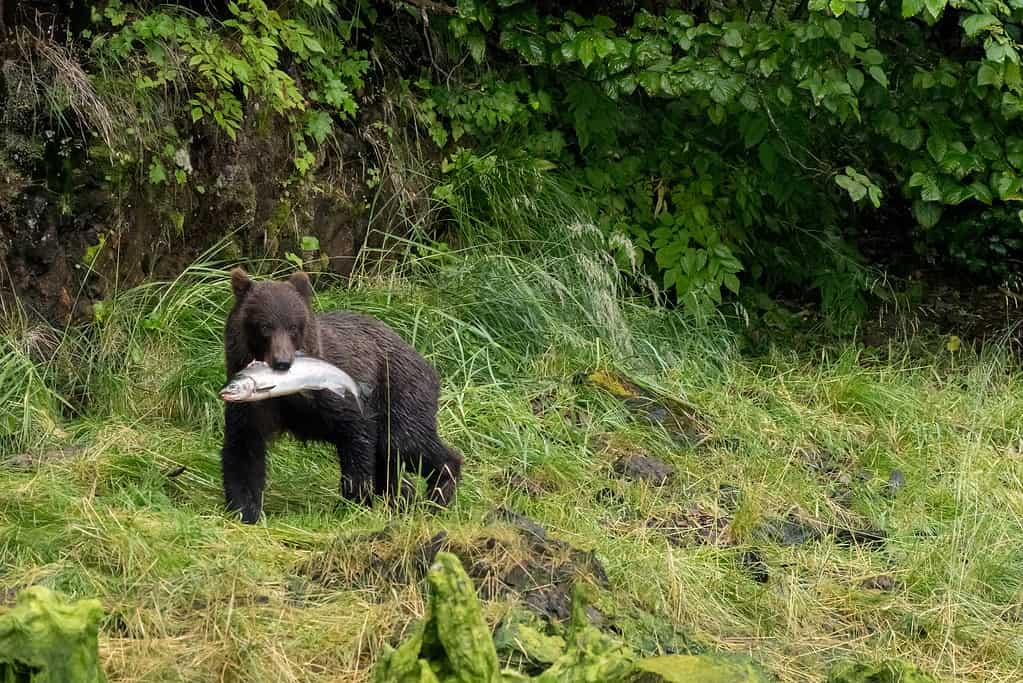
©Kirk Hewlett/ via Getty Images
Denali is home to 200-300 grizzly bears, a subspecies of the brown bear. They forage widely, turning over tundra for roots, scavenging carcasses, or devouring berries in late summer. Mothers with cubs sometimes appear in open valleys, thrilling visitors from buses along Park Road. Though powerful and formidable, most bears keep their distance, and the best evidence of their presence is often claw marks on trees or overturned logs.
Gyrfalcon (Falco rusticolus)
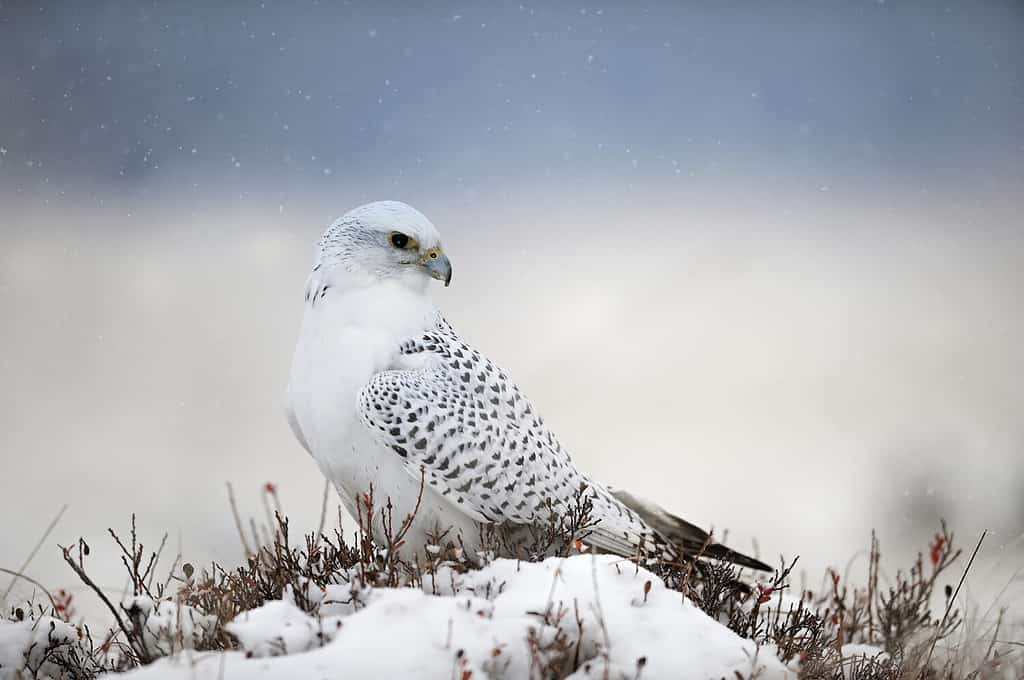
©Michal Pesata/Shutterstock.com
The gyrfalcon, the largest falcon in the world, patrols alpine ridges and open tundra. Their plumage varies from dark gray to nearly white, but all share powerful builds and sharp eyes. They prey mainly on ptarmigan, stooping with astonishing speed. Rare and far-ranging, they are best seen by patient birders scanning high cliffs or tundra ridges in summer.
Lynx (Lynx canadensis)
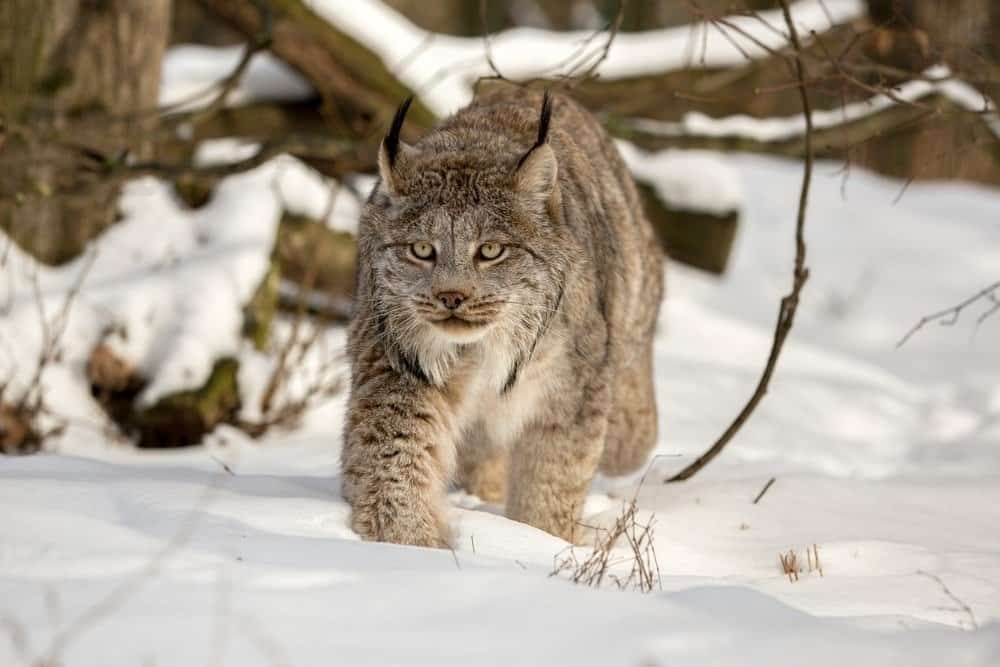
©Felineus/Shutterstock.com
Canada lynx are secretive hunters of willow thickets and spruce forests. Their populations rise and fall with snowshoe hare numbers, leading to boom-and-bust cycles. Long legs, tufted ears, and snowshoe-like paws mark them as specialists of deep snow. They are rarely seen, but tracks across frozen creeks and sudden movements at the forest edge hint at their presence.
Marmot (Hoary Marmot) (Marmota caligata)
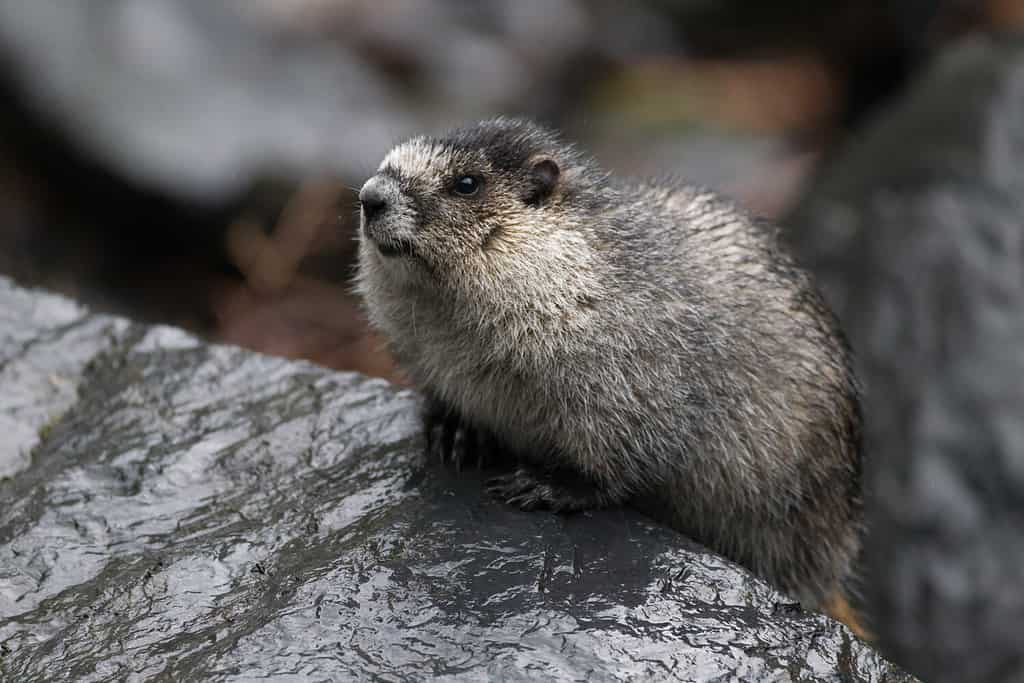
©Alexandre Boudet/Shutterstock.com
Hoary marmots, nicknamed “whistle pigs,” live on rocky slopes where their sharp alarm calls echo across valleys. They bask on boulders in midday sun, retreating into burrows when danger approaches. Their chunky forms and silvery fur make them easier to spot than many small mammals. Hikers in alpine meadows often come across marmot colonies near rock slides in the mountains.
Moose (Alces alces gigas)
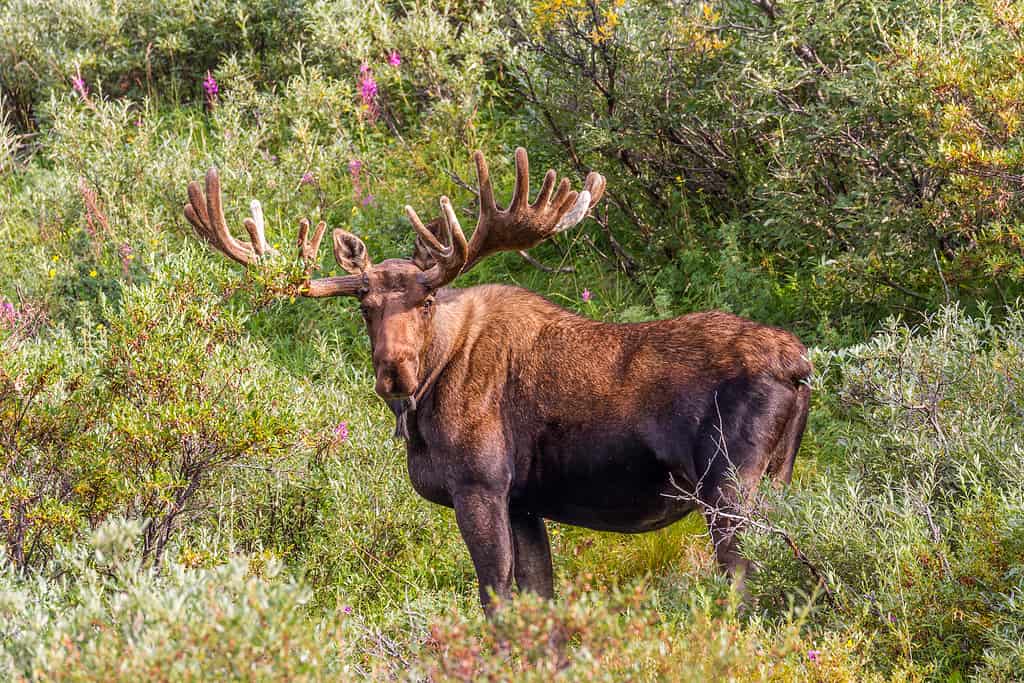
©JacobLoyacano/Shutterstock.com
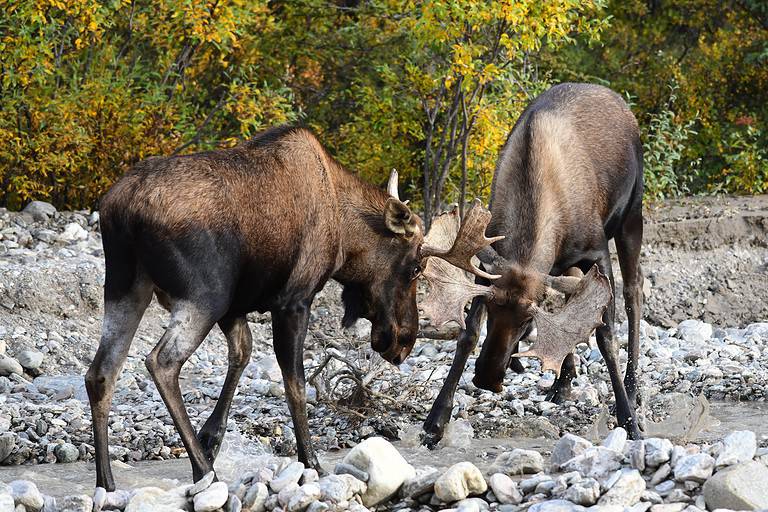
The Alaska subspecies of moose is the largest in the world, with bulls weighing up to 1,500 pounds. They browse on willows and aquatic plants in wetlands and river corridors. Spring brings calves trailing close to mothers, while autumn rut fills valleys with the sound of clashing antlers. Moose are frequently seen near the park entrance and along river flats at dawn or dusk.
Northern Hawk Owl (Surnia ulula)
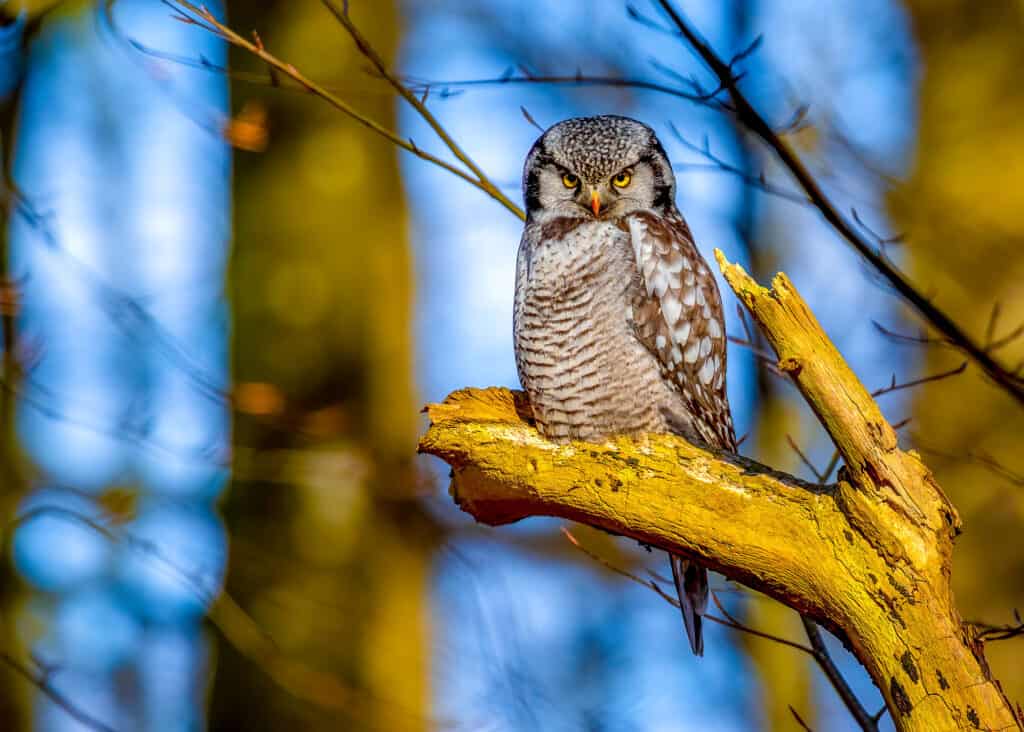
©Svitlana Tkach/Shutterstock.com
Unlike most owls, northern hawk owls hunt by day. They perch on tall spruces or dead snags, scanning for voles and small birds. Rare but striking, they are sometimes seen in late winter or early spring when calling for mates. Their upright stance and long tails give them a hawklike silhouette against the sky.
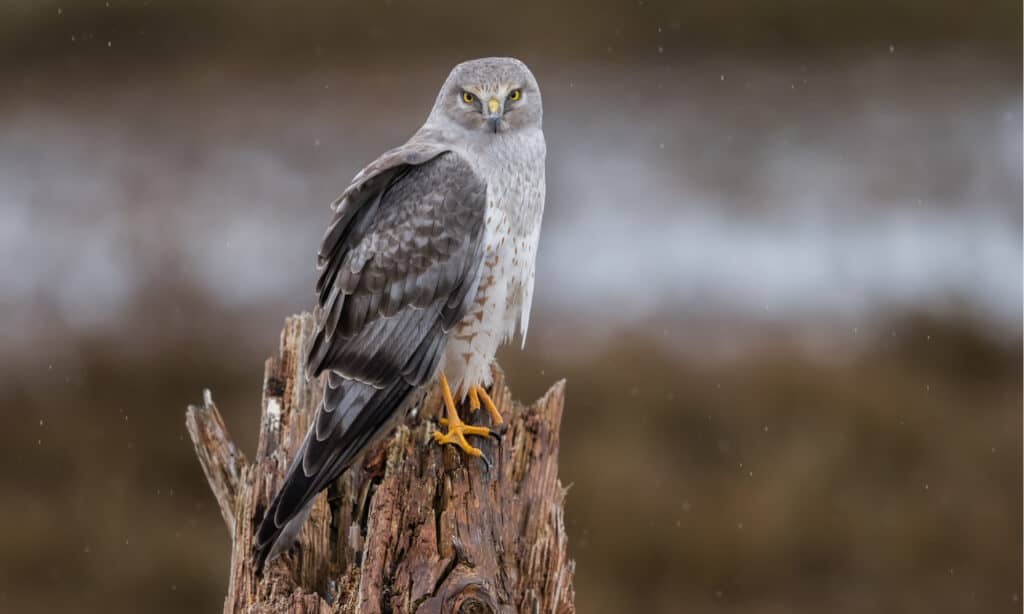
Northern Harrier (Circus hudsonius)
©Harry Collins Photography/Shutterstock.com
Another Denali raptor, northern harriers are long-winged hawks that hunt by gliding low over tundra and meadows. They are recognized by their white rump patches and owl-like facial disks. Males are gray, while females are brown. They are common in open areas, especially in summer, patrolling back and forth just above the ground in search of voles and young birds.
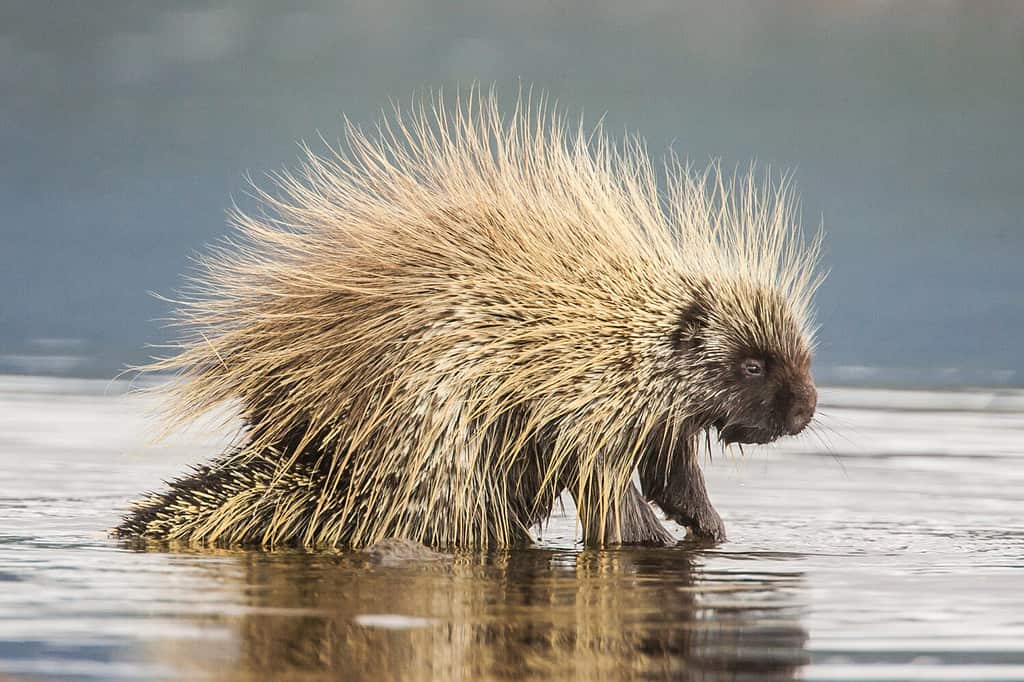
Porcupine (Erethizon dorsatum)
©Jukka Jantunen/Shutterstock.com
North American porcupines are slow, deliberate climbers found in forests and shrubby hillsides. They spend much of the day in trees, chewing bark or needles, and descend at dusk to forage. Their quills make them unmistakable, and while they are common, they are often overlooked until spotted waddling across a trail or silhouetted in a spruce.
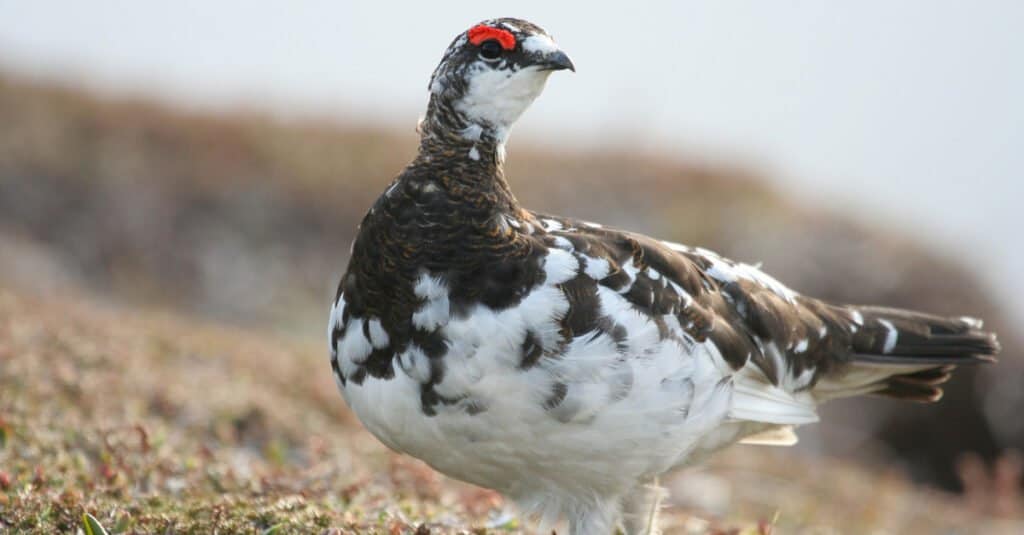
Ptarmigan (Willow, Rock, White-tailed) (Lagopus lagopus, Lagopus muta, Lagopus leucurus)
©Tatiana Ivkovich/Shutterstock.com
All three North American ptarmigan species occur in Denali. Willow ptarmigan are the most common, favoring shrubby tundra near roads and visitor areas. Rock ptarmigan prefer high alpine ridges, while white-tailed ptarmigan stick to even more remote, snowy heights. Their seasonal plumage shifts, from mottled brown in summer to pure white in winter, make them masters of camouflage, yet they remain among the more approachable birds of the tundra.
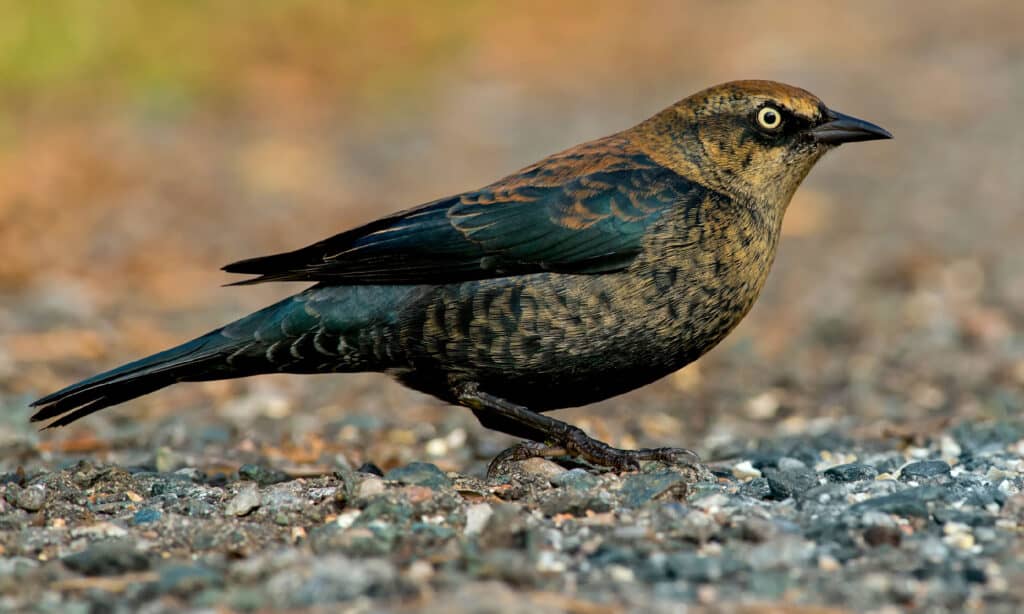
Rusty Blackbird (Euphagus carolinus)
©iStock.com/PaulReevesPhotography
They are a declining species across North America, but Denali still supports small breeding populations of rusty blackbirds in wetlands and bogs. Males appear glossy black in summer, while females show rusty-brown tones. They are known for their gurgling, squeaky calls. Although not abundant, they are most often encountered in spring and early summer around marshy pools near spruce edges.
Snowshoe Hare (Lepus americanus)

©Mircea Costina/Shutterstock.com
In the ecosystem of Alaska, snowshoe hares are keystone prey for many predators. They feed on shrubs and grasses and change coats with the seasons: white in winter and brown in summer. Their populations fluctuate dramatically, causing corresponding rises and falls in lynx, owl, and fox numbers. They are plentiful, though skittish, and often seen darting from willow thickets or leaving tracks in snow.
Snowy Owl (Bubo scandiacus)
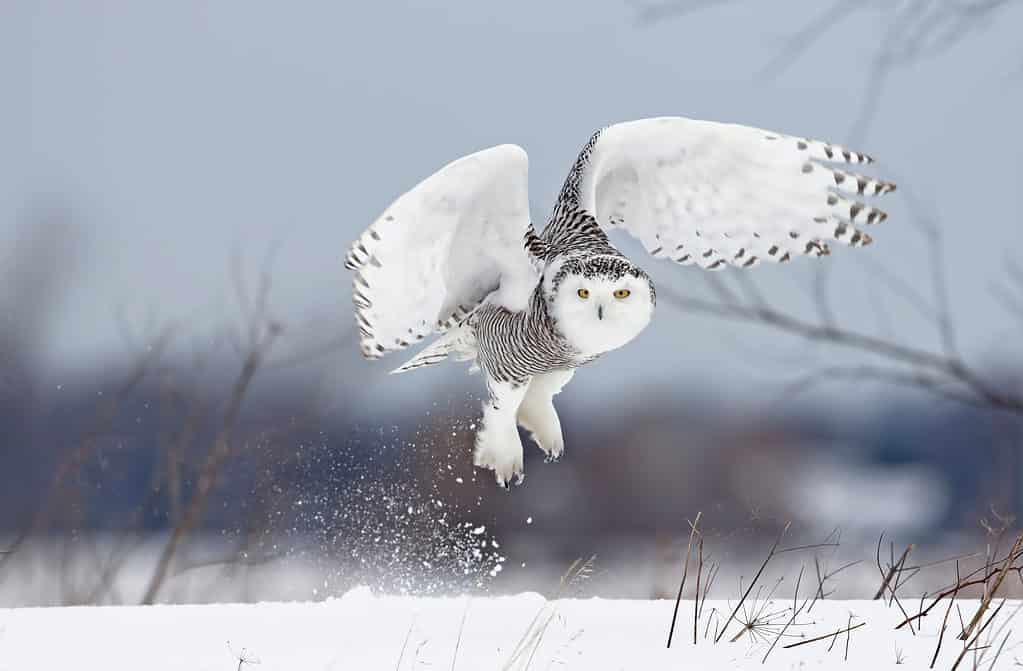
©Jim Cumming/Shutterstock.com
Winter and early spring are the best times to see snowy owls on Denali’s tundra. With their brilliant white plumage, they swoop down on lemmings and hares. They’re not particularly common in the park, so seeing one perched on a branch or hunting prey is an unforgettable experience.
Trumpeter Swan (Cygnus buccinator)
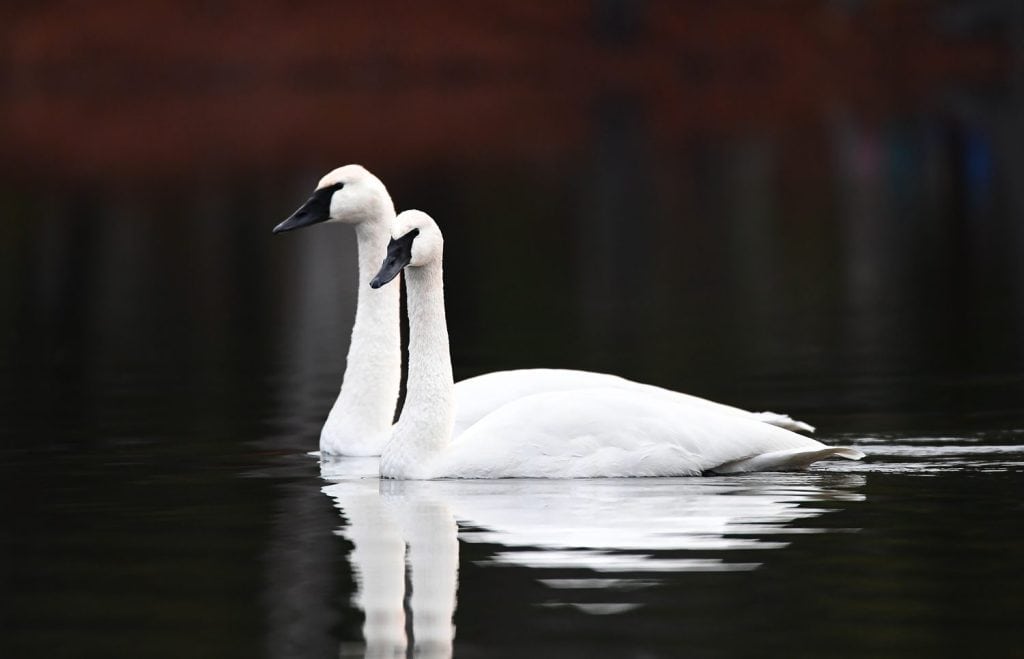
©Miranda Brunette/Shutterstock.com
The trumpeter swan, North America’s largest waterfowl, nests on quiet ponds in the park. With wingspans of over eight feet, their slow wingbeats and deep trumpeting calls are unforgettable. Once nearly exterminated from the continent, they have rebounded in Alaska. They are most reliably seen in spring and early summer, gliding gracefully across shallow lakes with cygnets trailing behind.
Wolf (Canis lupus)
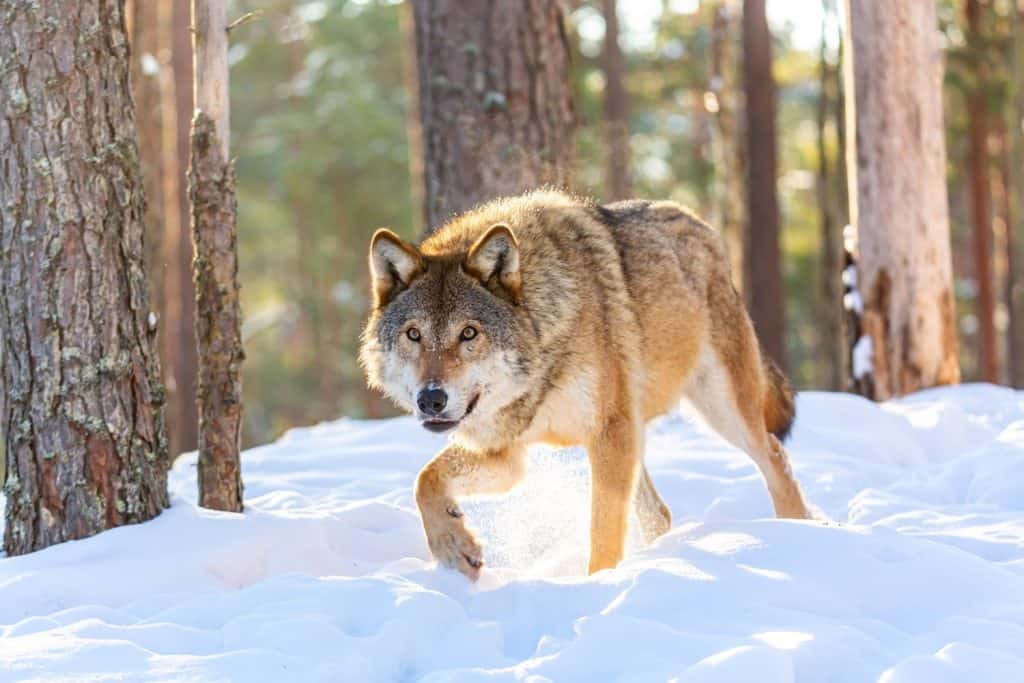
©Nick N A/Shutterstock.com
Wolves are the most elusive of Denali’s large mammals. About 20-30 animals roam the park in loose packs, covering huge territories in search of caribou, moose, and sheep. Sightings are rare, but their tracks along river bars and the haunting sound of their howls at dusk are regular reminders of their presence. Guided bus trips increase chances of encountering them from a safe distance.
Wolverine (Gulo gulo)
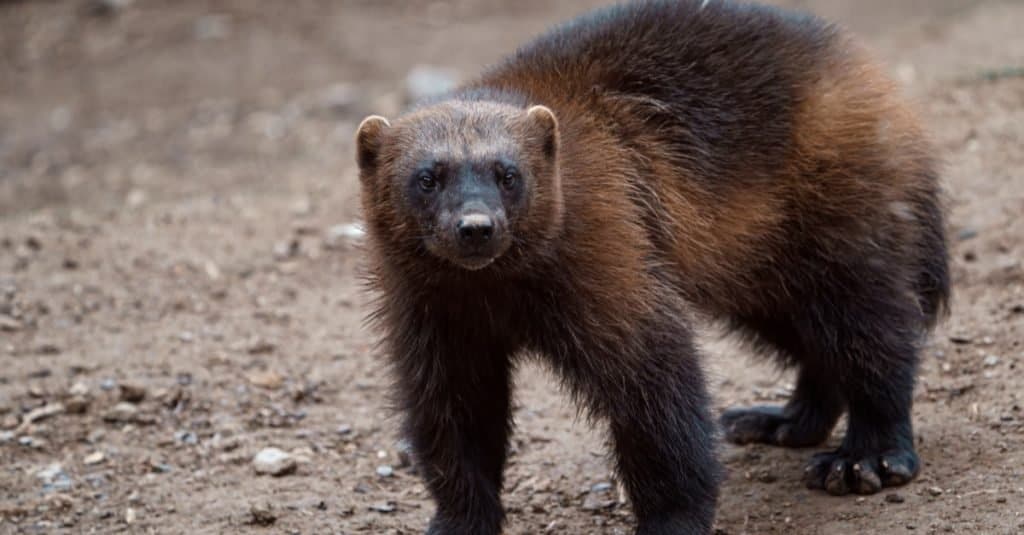
©Lubos Chlubny/Shutterstock.com
Wolverines are rugged loners that travel vast distances through remote tundra and alpine ridges. They scavenge carrion, dig into snow for cached food, and occasionally take live prey like voles, ground squirrels, or birds. Rare and wide-ranging, they are seldom seen by visitors, but their five-toed tracks in snow or sudden appearances on windswept ridges remain prized sightings.
Wood Frog (Lithobates sylvaticus)
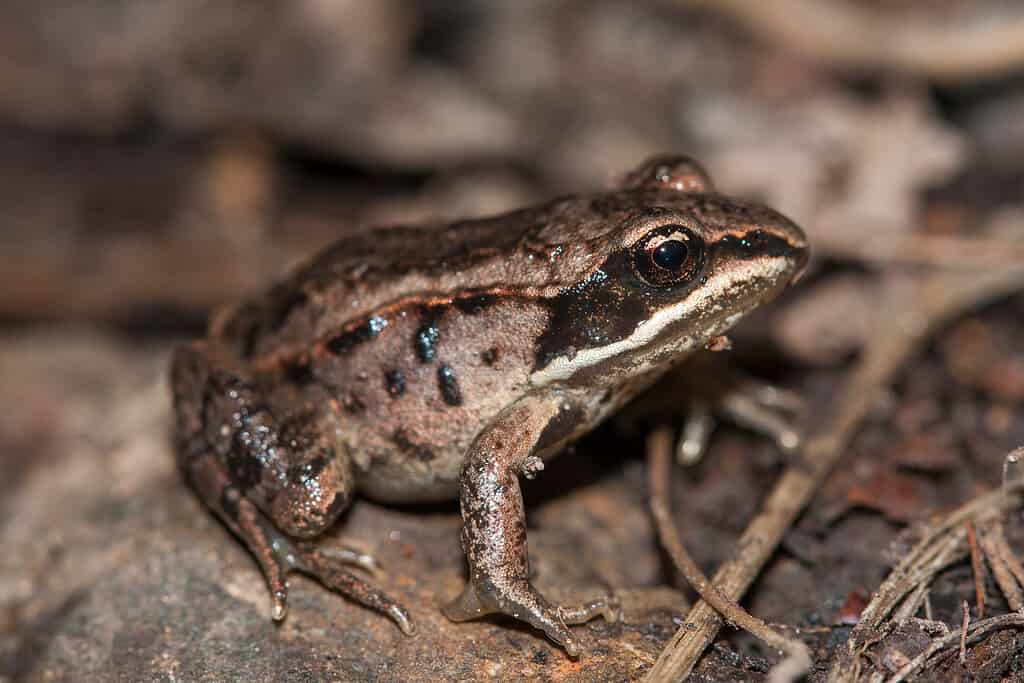
©Viktor Loki/Shutterstock.com
The only amphibian in Denali, wood frogs survive winter by literally freezing solid. In spring, they thaw and begin calling in temporary ponds and bogs, filling evenings with their chorus. They are small and inconspicuous, but their extraordinary life cycle makes them one of Denali’s most fascinating creatures.
Best Times and Places to See Wildlife
If you plan to visit Denali, keep in mind the park has more limited access at certain times of the year. Many hotels near the park are not open during the off-season.
- Mid-May to mid-September: Main season. Visitor centers, buses, and services are open; private cars are allowed to mile 15. Snowmelt opens trails, wildflowers bloom, and migratory birds arrive. June through mid-July provides long daylight and the best viewing for large mammals and birds. Autumn adds the drama of rutting moose and migrating birds.
- Mid-September to October: Services wind down, buses stop, and some limited road access remains (often to mile 30).
- Late October to April: Winter mode. The road closes to vehicles beyond the entrance, but you can still ski, snowshoe, or hike. A small winter visitor center stays open.
No matter when you visit, you’ll spot numerous wildlife species and are guaranteed to see beautiful, unspoiled wilderness vistas you’ll never forget.