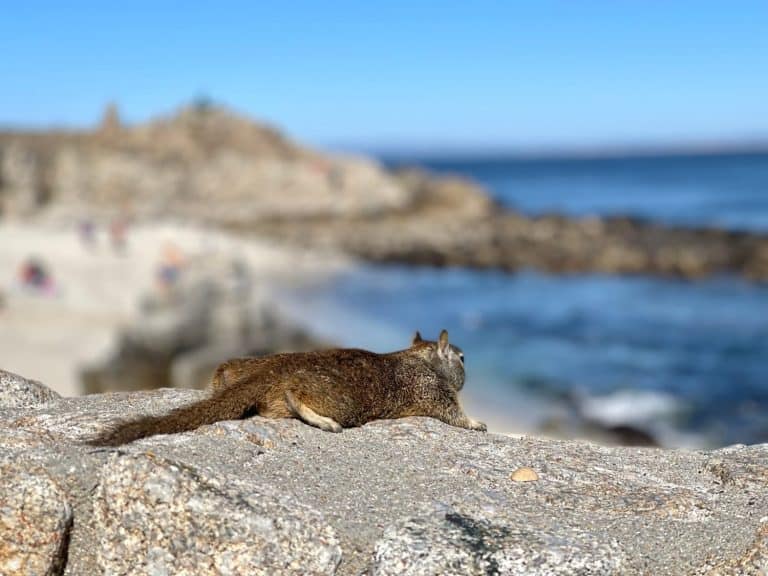
Some animals are so secretive and mysterious that they are rarely ever seen, even by the scientists who study them. Now there is incredible technology to detect such secretive animals, such as camera traps that are triggered by heat and motion, snapping photos of the critter as it walks by. But before such technology existed, scientists had long depended on more primitive methods, like tracks, to determine the presence of such rare or conspicuous animals.
When the conditions are right, such as after rain, in the snow, or in dry sandy environments, animals will leave tracks, no matter how secretive the animal may be.
This article will cover a variety of the kinds of tracks you may spot in the wild all across the world, capturing the diverse shapes and sizes that animals imprint on this planet. Focusing on one specific animal and their track to represent a taxonomic group of species, you’ll understand the unique features of its footprint and the animal that makes it, as well as learn about its relatives that make similar patterns in other areas around the world.
White-Tailed Deer
If you are in North America, one of the most common and easy-to-see tracks is that of the white-tailed deer (Odocoileus virginianus). It’s also one of the easiest to identify.
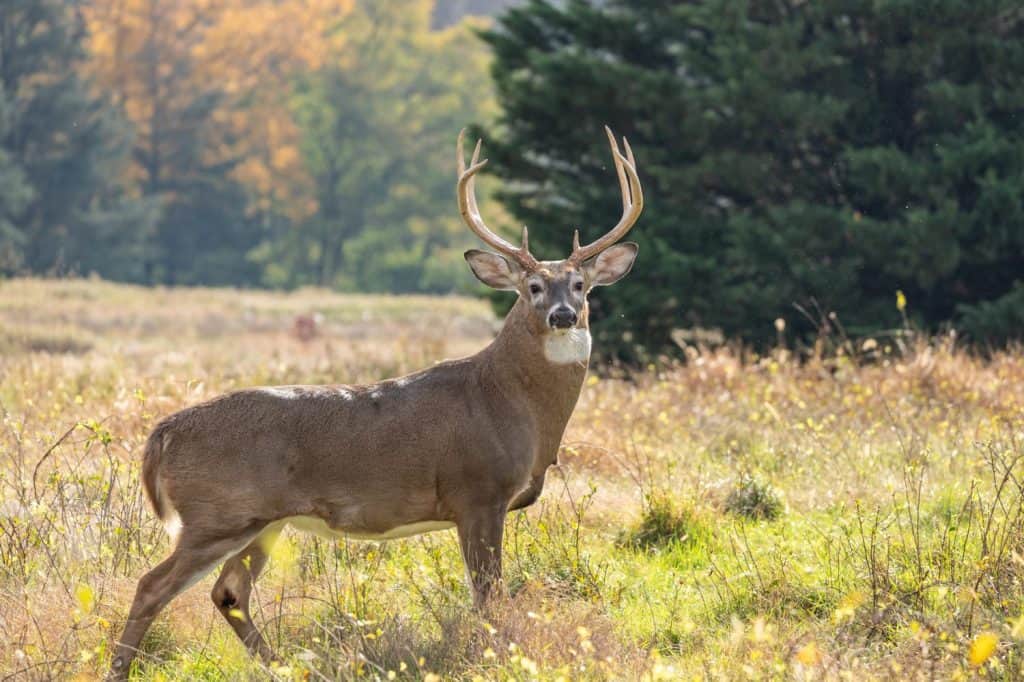
The tracks of white-tailed deer are one of the most common and easy-to-see tracks in North America.
©Amy Lutz/Shutterstock.com
White-tailed deer are members of the even-toed ungulates, a group of mammals of which most have hooves. White-tailed deer are medium-sized deer with brown coats and white underneath, so that when their tail is pointed upward, you can see the bright white fur, which gives them their name. The males develop large antlers that they shed every year in the early spring.
These deer are widespread and range all the way from Canada into northern South America. Having adapted well to human development, you’ll find them abundant in suburban areas as well as rural landscapes.
White-tailed deer tracks consist of two hooves and often make a heart shape. At times, you may also see two smaller circles behind the hooves from the dewclaw, but it is most common to just see the hoof prints.
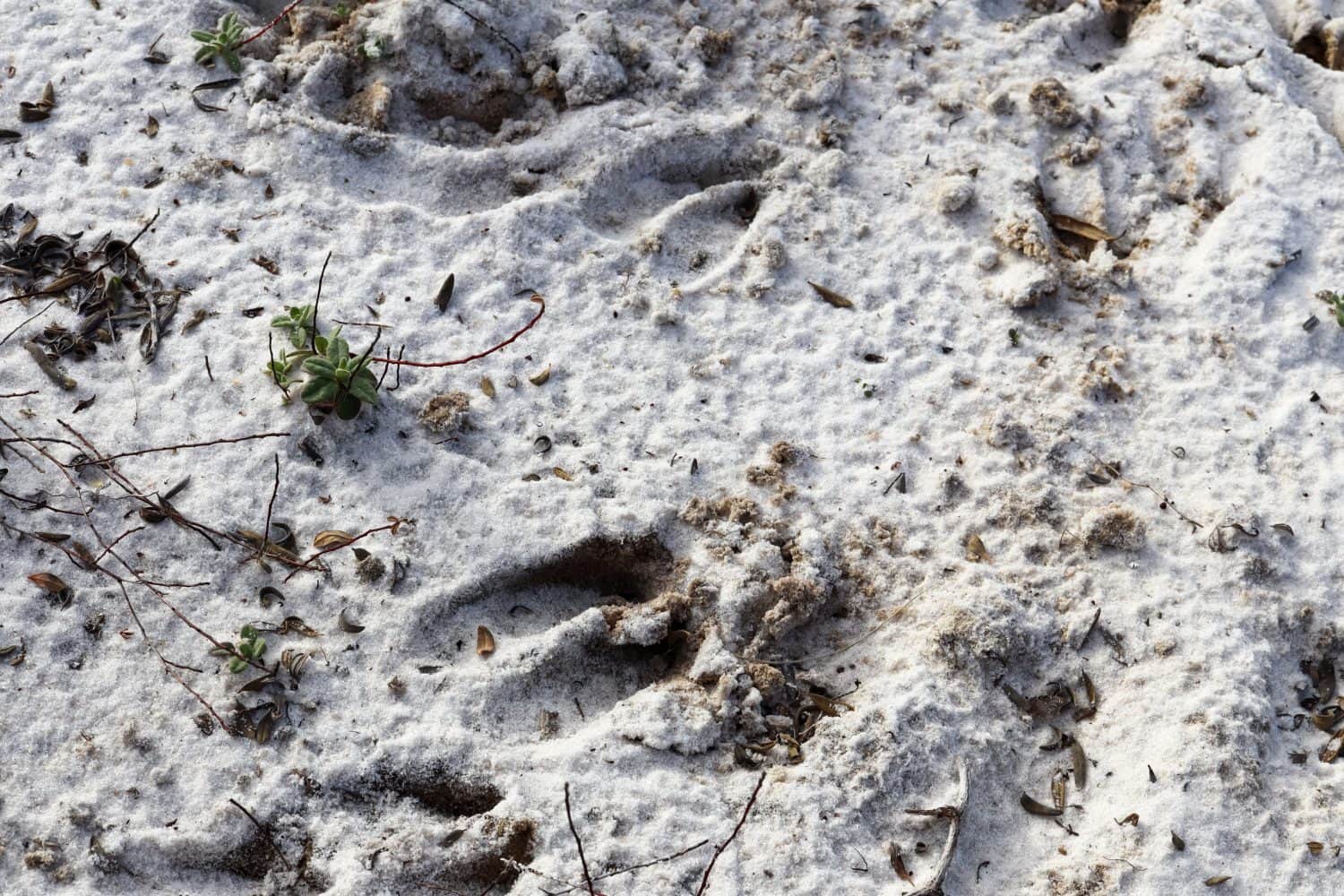
White-tailed deer tracks consist of two hooves and often make a heart shape like the track in the top center of this photo.
©John_P_Anderson/Shutterstock.com
If you are in most parts of the eastern United States, white-tailed deer are the only deer, making it an easy track to identify. However, as you move west and south, you’ll encounter other ungulates like mule deer, moose, elk, bison, Florida key deer, and pronghorn, requiring you to know more distinguishing factors about each of the different species to separate white-tail deer from the others.
White-tailed deer tracks are smaller than moose, elk, and bison, ranging from 6.3-10.1 cm (2.5-4 inches) long, with the front track being larger than the back one.
Worldwide, there are many deer species and other ungulates with tracks similar in shape to white-tailed deer, such as impala, gazelles, and even giraffe in Africa, spotted and sambar deer in Asia, and fallow and roe deer in Europe, to name a few.
Tiger
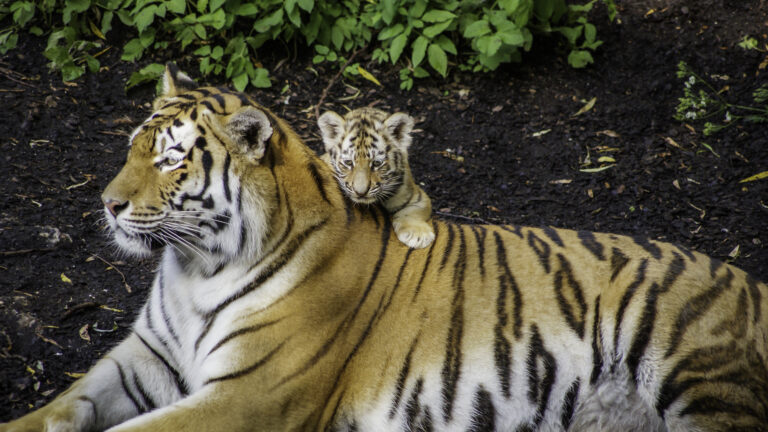
Big cats make big tracks, and the biggest of them all is the tiger. Tigers are the largest members of the cat family, Felidae, and are highly recognizable. With dramatic orange and black stripes and their large size, they are often a flagship species within their range countries.
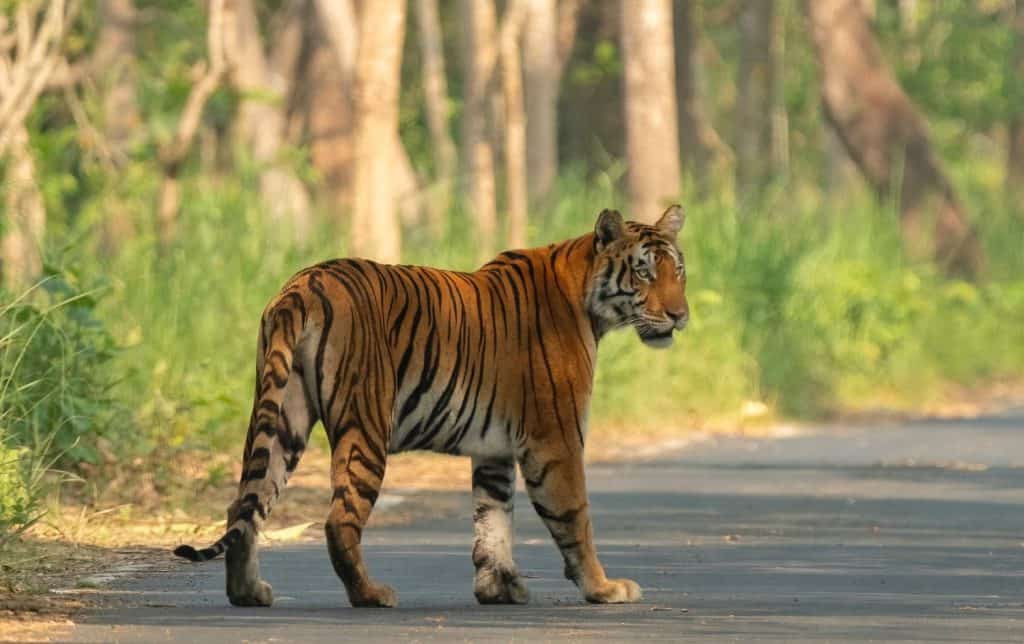
Tigers are the largest of all of the big cats.
©AshishKumarPhotography/Shutterstock.com
The tracks of cat species look similar to those of dogs as they both have paw pads and four toes. What differentiates most cats from dogs is that, in the prints, cats typically lack a visible claw mark because most species retract their claws. In cat tracks, the paw pads also usually appear to be larger, with the toes arranged in a curved fashion in front of the paw pad.
Also called a pugmark, tiger tracks are large and widespread. The paw pad of an Amur tiger, one of the largest subspecies of tigers, can measure between 8.5-14.5 cm (3.3-5.6 inches). Female tracks are more elongated than male ones.
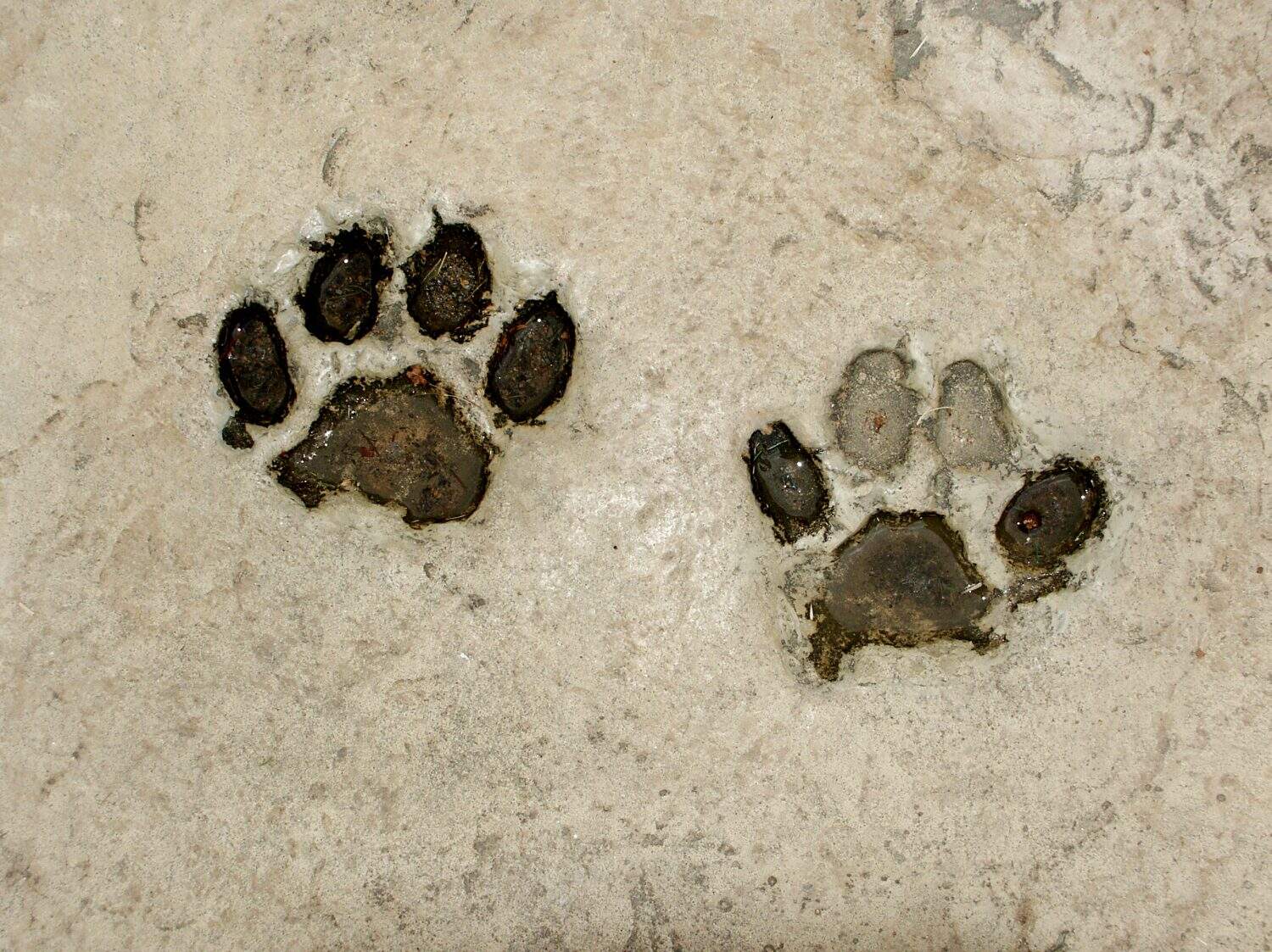
Tiger prints, like most other cat species, lack a visible claw mark because most species retract their claws.
©val lawless/Shutterstock.com
Tigers are an endangered species, and although populations span across Asia, they are now extirpated (locally extinct) across much of their range, with the most stable populations in northeastern China, Korea, Russia, India, and the Himalayan region.
Although tiger tracks will be the largest of the felines across the world, you can find other large cat tracks that look similar. For example, in the Americas, there are mountain lions, jaguars, and bobcats; in Africa, there are lions and leopards, and in Europe, there are smaller lynx species and wildcats. Africa also has cheetahs, but the claws of cheetahs are semi-retractable, and therefore, in their prints, you can make out claw marks.
Grey Wolf
Grey wolves (Canis lupus) are the largest species of the 40+ other members of the Canidae family across the world. Like their name suggests, grey wolves are often grey, but can vary in color from black to white, brown, and shades of red.
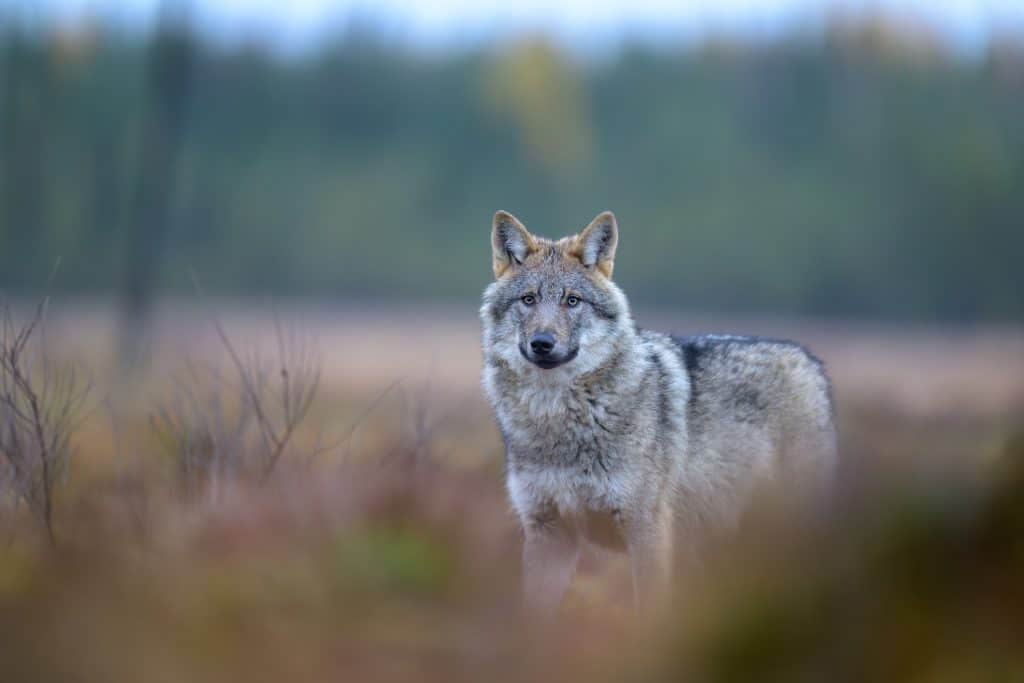
Grey wolves are the largest species of the canid family.
©Bjorn H Stuedal/Shutterstock.com
The tracks of grey wolves and other dogs look similar to cat tracks. Like feline species, the canids have a paw pad and four toes, but unlike cats, canids do not retract their claws. Therefore, in grey wolf tracks, you can easily make out claw marks in the tracks. The paw pad has a single lobe extending forward, and it measures approximately 12.7 cm (5 inches) long and 10.1 cm (4 inches) wide.
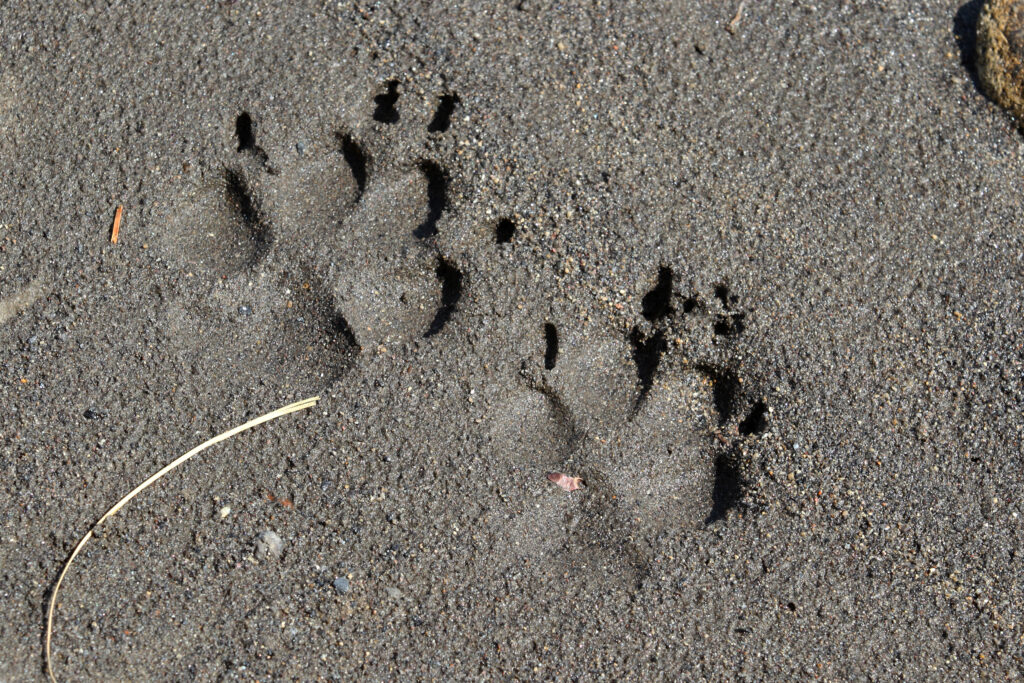
In grey wolf tracks, like other canid tracks, you should be able to make out the claw.
©Dennis W Donohue/Shutterstock.com
Grey wolves are a mostly northern species and range across northern North America, Europe, Asia, but can be as far south as the Middle East and India.
Smaller canid species that have similar, but smaller, prints around the world include coyotes in the Americas, foxes in the Americas, Europe, and Australia (introduced), dingos in Australia, wild dogs in Africa, dholes in Asia, and jackals in Europe, Africa, and Asia, to name a few.
Brown Bears
Brown bears (Ursus arctos), also known as grizzly bears in the United States, are second in size within the bear family, Ursidae, only to polar bears, and overall are one of the largest living carnivores on the planet. They are big, and as their name suggests, almost always brown, although they can range from a very light shade of cream to almost black in color or a reddish cinnamon.
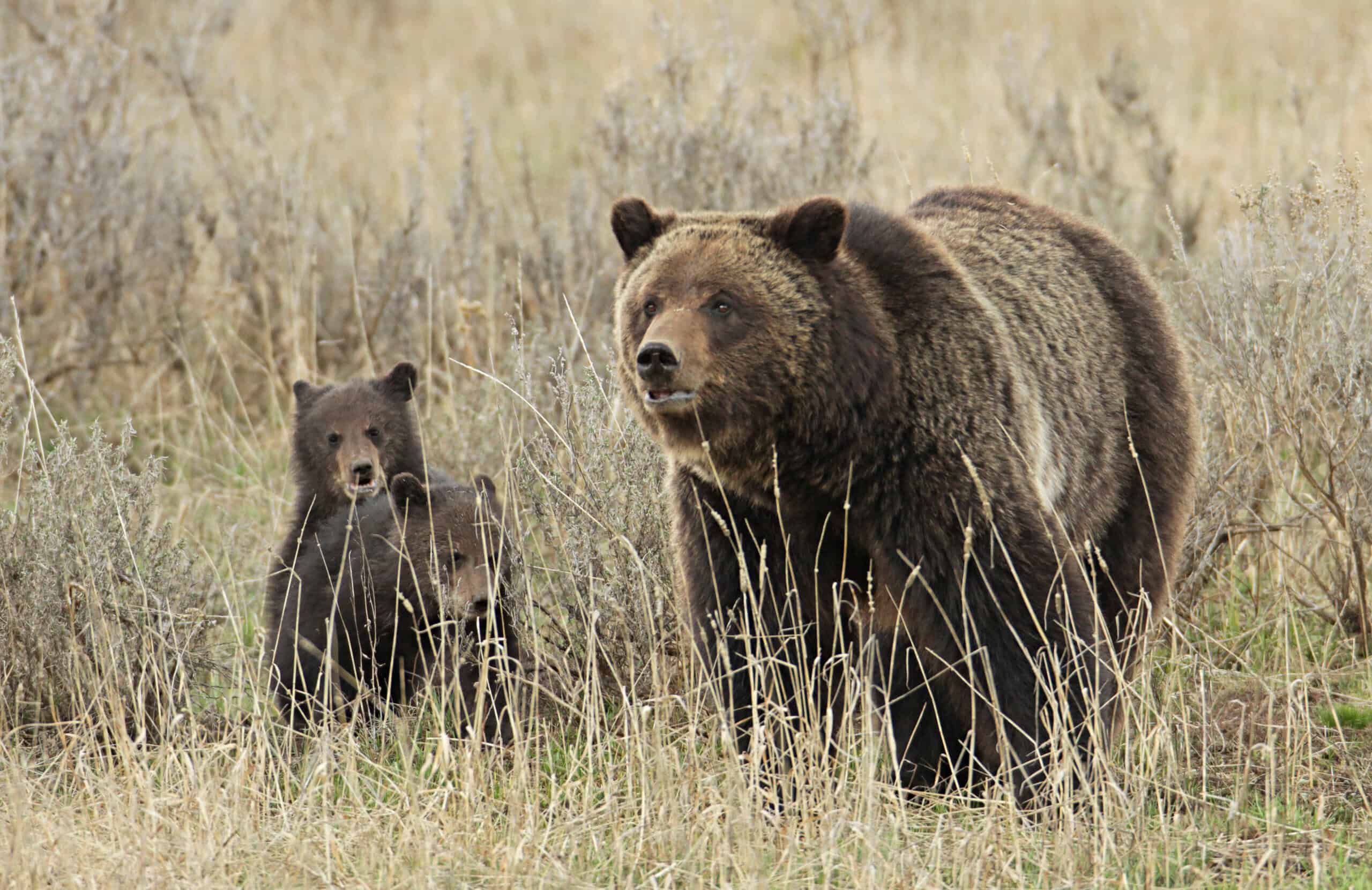
Brown bears are known as grizzly bears in the United States and are the second-largest bear species.
©Jim Peaco, National Park Service
Bear tracks, in general, are similar to canid and felid tracks in that they have paw pads and toes. What differentiates bears from the cats and dogs is that they are usually larger in size (depending on the species), wider, and have five toes instead of four. Bears have long claws, so claw marks should also be easily visible in the tracks.
Brown bears have long claws that differentiate them from the more abundant black bear. Their claws are at least 5 cm (2 inches), but can be 10 cm (4 inches) or longer. The foot pad tends to run more straight across and appear more square in shape than in a black bear’s footprint.
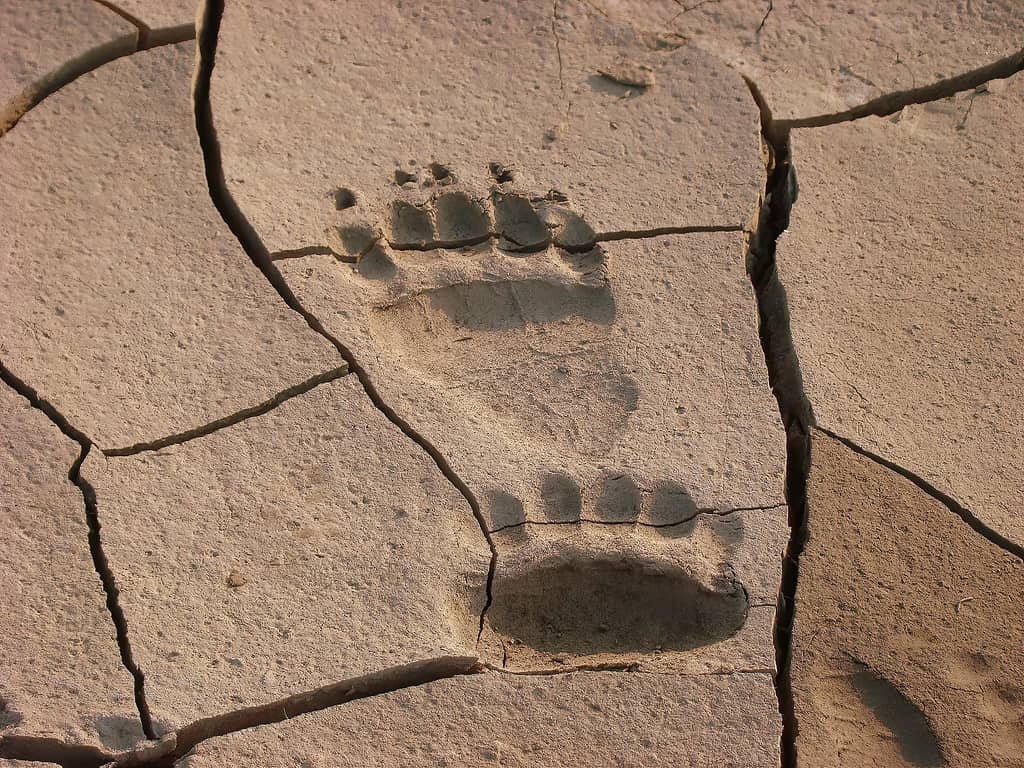
In brown bear tracks, you can make out five toes and a foot pad.
©John charles hansen/Shutterstock.com
Bears are found only in the Americas, Europe, and Asia. Some notable species include the polar bear, the largest species, which ranges across the Arctic regions of North America, Europe, and Asia, the spectacled bear in South America, and the sun bear, the world’s smallest bear, found in southeast Asia.
African Savannah Elephant
Elephants are the largest terrestrial animals on Earth, and African savannah elephants (Loxodonta africana) are the largest of the elephants. Therefore, they are going to make some big tracks!
African savanna elephants are unique mammals. They are members of the order Proboscidea, and their closest relatives outside of the other elephant species are the rodent-looking, but not-a-rodent hyrax and aquatic manatees and dugongs. Savannah elephants, however, don’t look like their closest relatives. They are large grey animals with big ears and distinctive long trunks, weighing up to 6,100 kg (almost 13,500 lbs) and measuring up to 4 m (13.1 ft) at shoulder height.
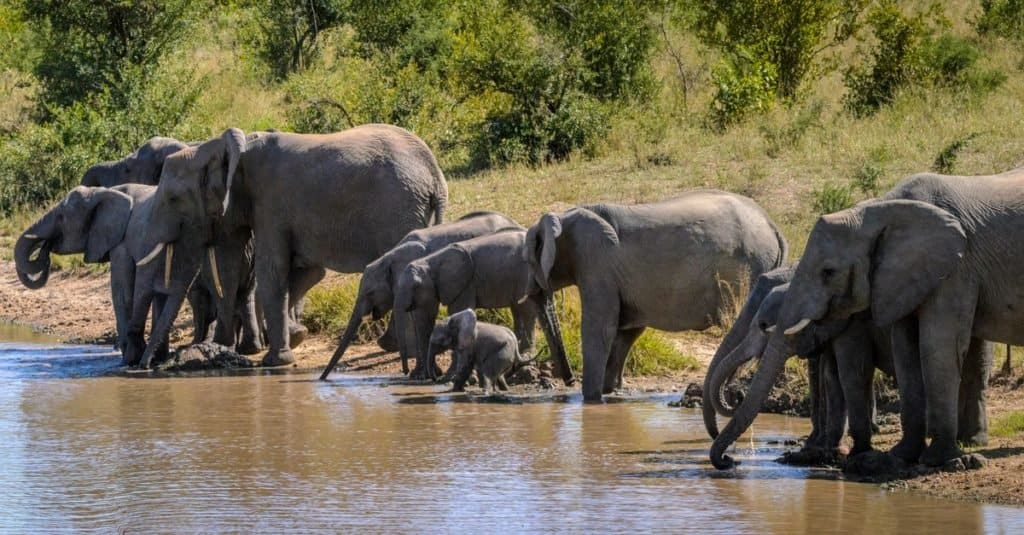
African savanna elephants are the largest land animals.
©Roger de la Harpe/Shutterstock.com
Just like their overall physical appearance, elephant tracks are unique and unlike any other animal, making them easy to identify. First, their tracks are large, measuring 38-48 cm (15-19 inches) in length and width, a size that can be bigger than a dinner plate.
Elephant footprints are round to oval in shape, and they have five internal digits that you cannot make out in the footprint, like a cat or a dog print. These digits can have toenails, though, and African savanna elephants typically have four on their front feet and three on their back.
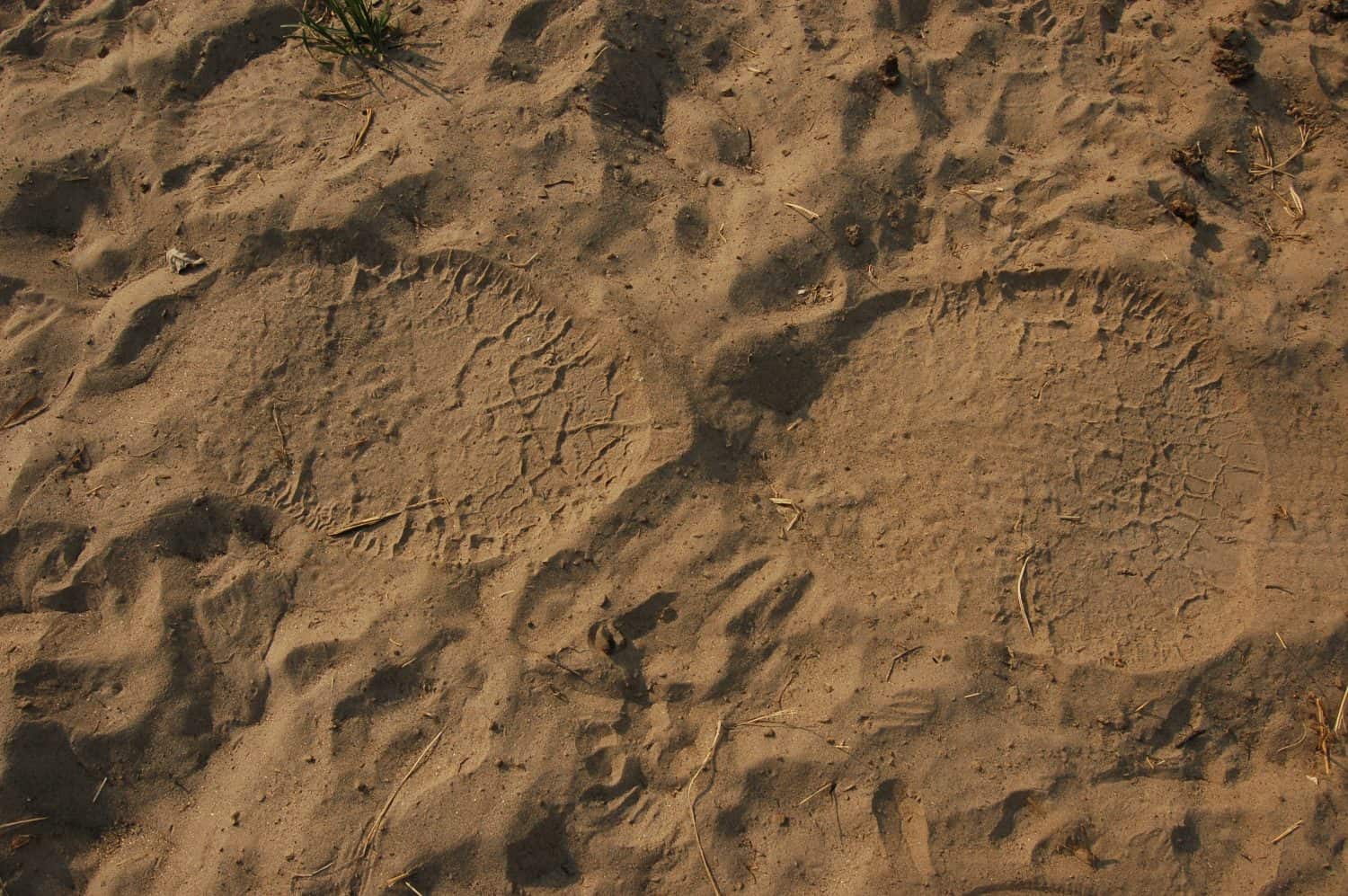
African savannah elephant footprints can be larger than dinner plates in size.
©Jiri Haureljuk/Shutterstock.com
Since elephants are so heavy, it is easy to find tracks where they roam. In fact, a footprint can be up to 30 cm (11.8 inches) deep, and scientists have found that these tracks harbor their own mini ecosystem with over 60 different species of microinvertebrates and even tadpoles.
There are currently three species of elephants. African savanna elephants roam across eastern and southern Africa, while African forest elephants, the smallest species, are in Central and West Africa. Asian elephants span across India and Southeast Asia.
Eastern Cottontails
Like the white-tailed deer, Eastern cottontail (Sylvilagus floridanus) tracks are a common and distinct set of animal tracks that are easy to spot and easy to identify in most parts of their range. They are the most widespread of any of the cottontails, ranging across eastern North America into Central and northern South America. Eastern cottontails are a medium-sized rabbit, most often brown in color with white underneath and a fluffy white tail.
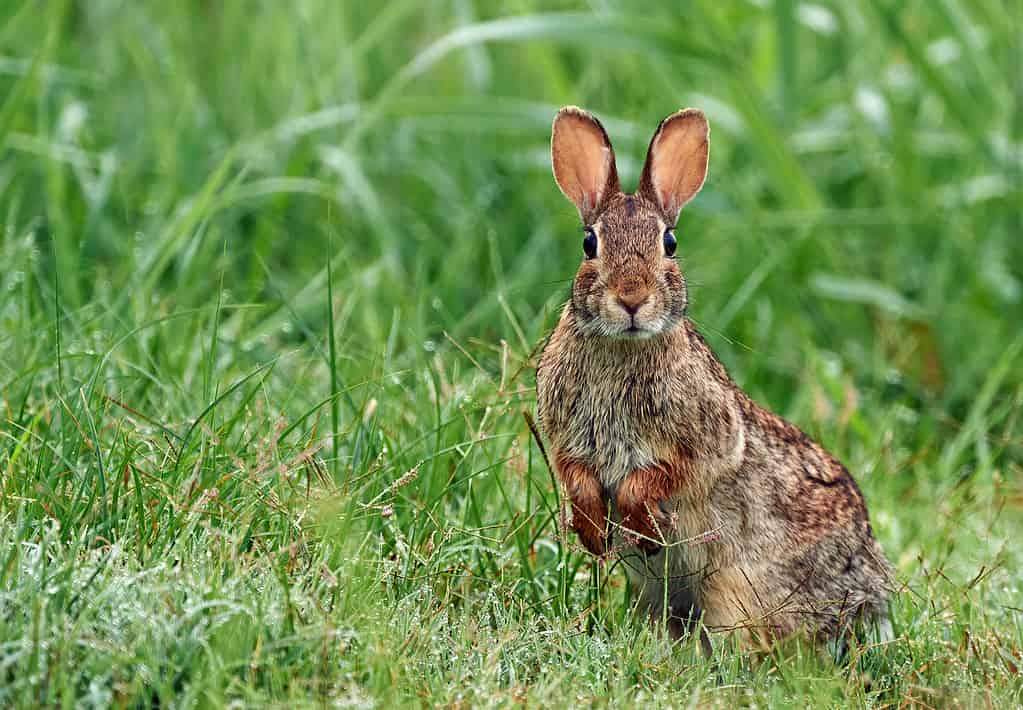
Eastern cottontail rabbits make tracks that are easy to find, especially in the snow during winter months.
©ArCaLu/Shutterstock.com
Rabbits have paw pads and four toes like bears, cats, and dog species, but because rabbits weigh less than members of those species, they are less likely to imprint on soil surfaces unless it is particularly muddy or sandy. After snowfall, though, it is easy to see the tracks of Eastern cottontails, but these tracks often don’t reveal the details of the toes and paw pads, and often look like circles and ovals in the snow. As rabbits hop, they do tend to leave a unique pattern of four prints together, followed by a larger space after it, making a Y shape or a square.
Eastern cottontail tracks are going to be much smaller than the species mentioned above. The front track is approximately 2.5 cm (1 inch) while the back track is close to 9 cm (about 3.5 inches). Rabbits also have a much longer hind print, more similar to an upside-down triangle rather than an oval, circle, or ellipse like the tracks in the previously mentioned groups of mammals.
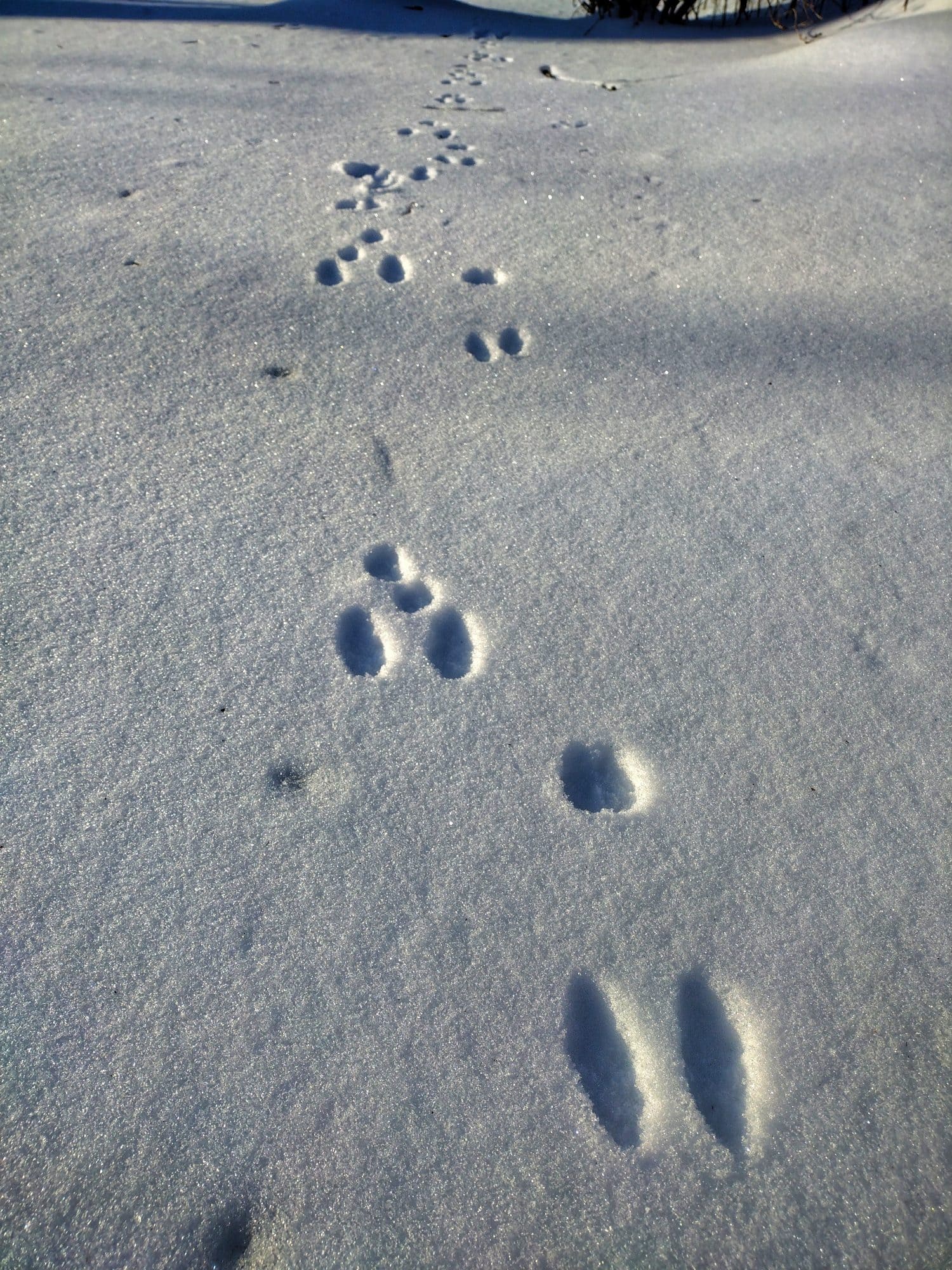
Eastern cottontail tracks often form a “Y” pattern.
©Picture Tim Krueger/Shutterstock.com
Rabbits and their relatives, hares, are found on every continent except for Antarctica. They are not native to Australia, but have been introduced. Both rabbits and hares are smaller animals, but hare prints will be larger than most rabbit species.
Virginia Opossum
Marsupials are mammals where most of their offspring’s development occurs outside their body in pouches or folds of skin instead of inside a placenta within a womb. Virginia opossums ( Didelphis virginiana ) are the only marsupial in the United States and Canada, but farther south into Central and South America, diversity increases.
The Virginia opossum is a short mammal with a grey body, white-ish face, and hairless rat-like tail. They have a prehensile tail that can wrap around tree branches and are found in southern Canada into Central America.
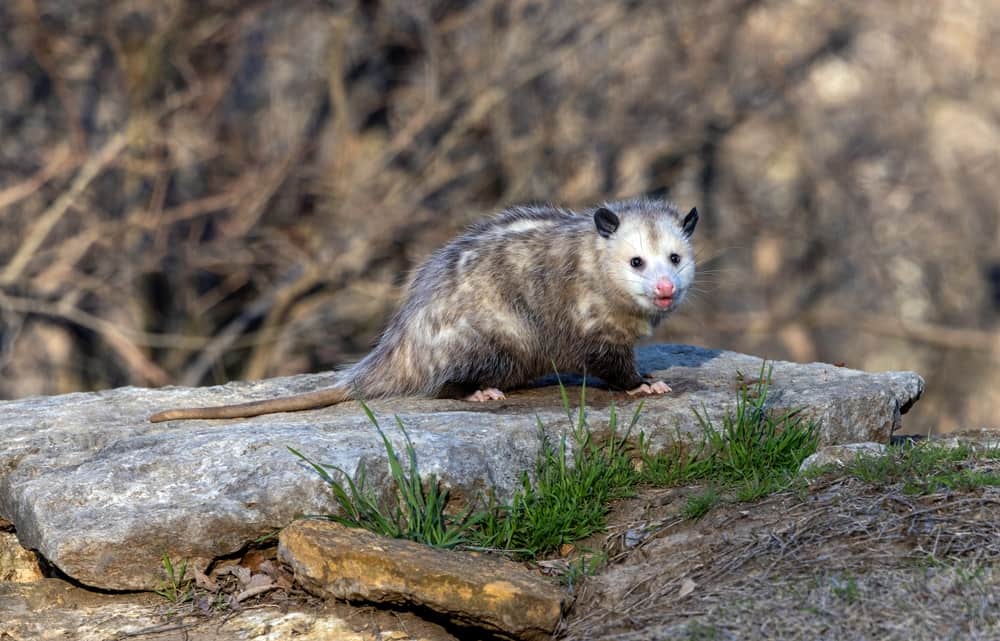
Virginia opossums are the only marsupial in the United States.
©Bert B/Shutterstock.com
Virginia opossums have a unique “hand-like” print shaped with five toes spread far apart from one another. Rather than having a distinct and separate paw pad and toe prints like bears, cats, and dogs, most of the foot is pressed upon the surface.
The front track is more of a star shape, being 5 cm (2 inches) long and with each toe evenly spread apart, while the hind track, also 5 cm (2 inches) long, has a thumb at a right angle, the middle toes are more together, and the fifth toe is farther apart from the others.
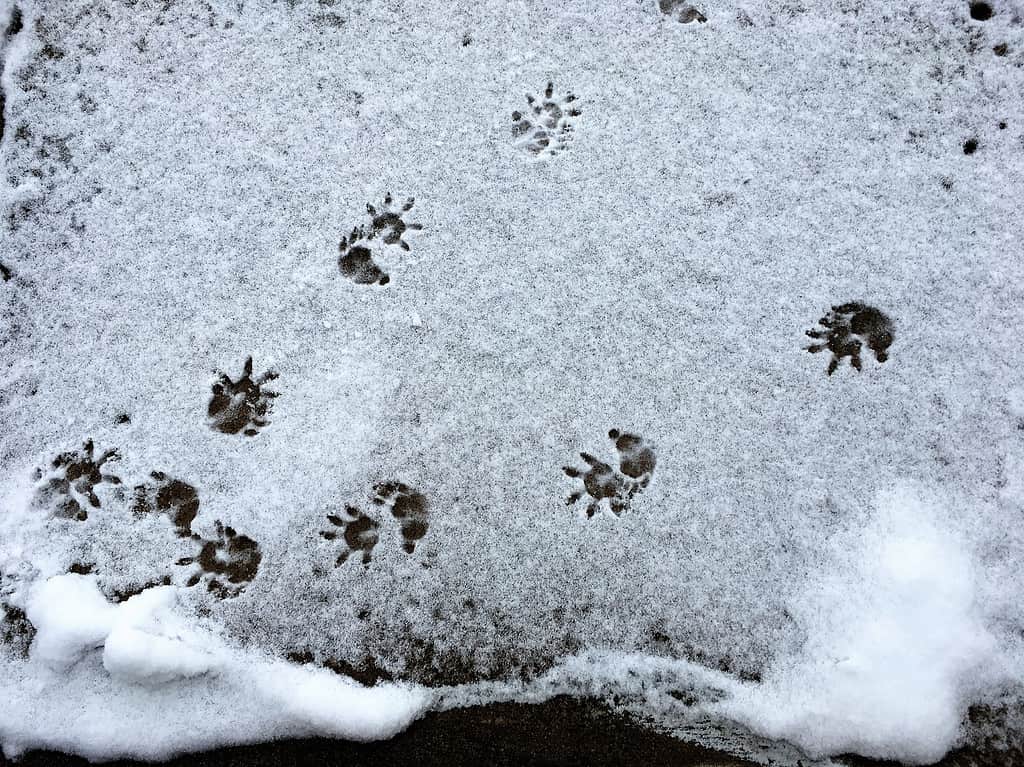
Virginia opossum tracks have a hand-like shape that spreads out like a star.
©jelloyd/Shutterstock.com
While the Virginia opossum is the only opossum in northern North America, farther south, there are many more opossum species, like the common opossum, gray four-eyed opossum, and water opossum, to name a few.
In Australia, New Guinea, and Sulawesi, there are approximately 70 species of another marsupial, possums, which are in a different taxonomic order than the Virginia opossum, called Diprotodontia. Even though both of these groups of mammals are marsupials and have similar-sounding names, they are genetically distinct.
Wild Turkeys
Mammals aren’t the only animals to make tracks. We often think of birds as flying high in the sky, and while most species do, they always land, which means they have the opportunity to create tracks. However, the conditions have to be right, and some birds are more adept at making tracks than others.
Most birds are lighter in weight due to their hollow bones and very small size, making it less likely that they will imprint on substrates and will only leave tracks when environmental conditions make it easy for tracks to be made, such as in wet, muddy areas, on sandy beaches, or after snowfall. Also, even if birds that are frequently flying do land, they might not be landing in a place where tracks can be made, such as branches. Birds are all around us on every continent, but it can be really difficult to spot the tracks of most species.
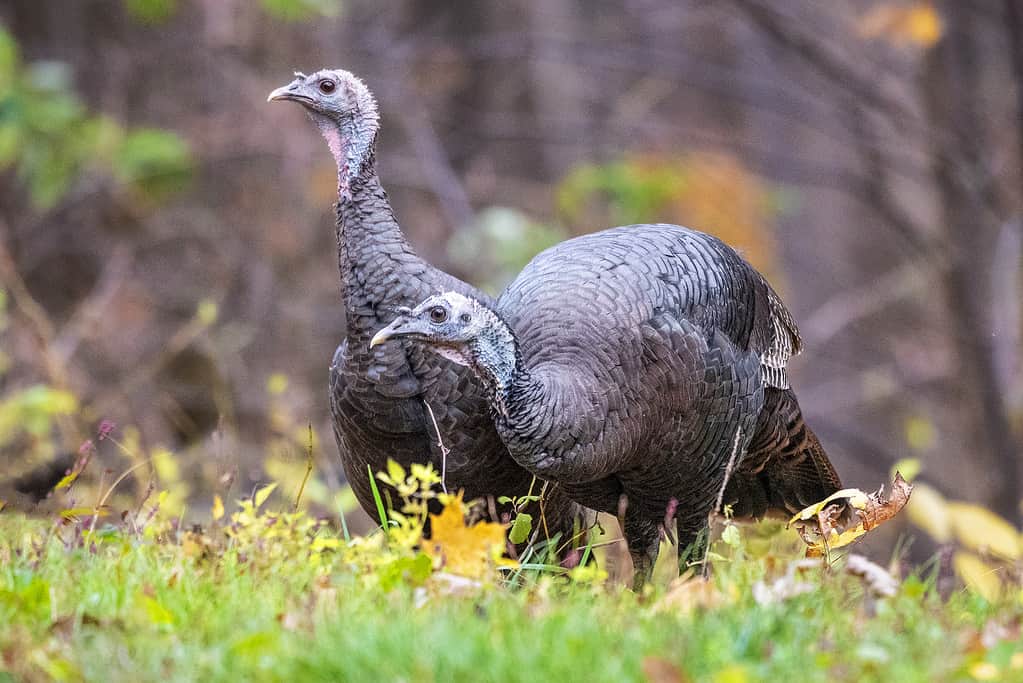
Wild turkeys are a large ground bird with three-toed tracks.
©stuckreed/iStock via Getty Images
Ground birds, on the other hand, spend most of their time on land. These birds that can easily make tracks due to being more terrestrial, but are also often heavier than their flying counterparts. One such bird is the wild turkey (Meleagris gallopavo). Weighing from 3.6-11 kg (7.9-24.2 lbs) and spending most of their lives on the ground, it’s not uncommon to see turkey tracks.
Wild turkeys are native to North and Central America, ranging across the United States into the most southern parts of Canada and into northern Mexico. They are dark brown to black birds with tall legs and bald heads and necks, giving them a vulture-like appearance.
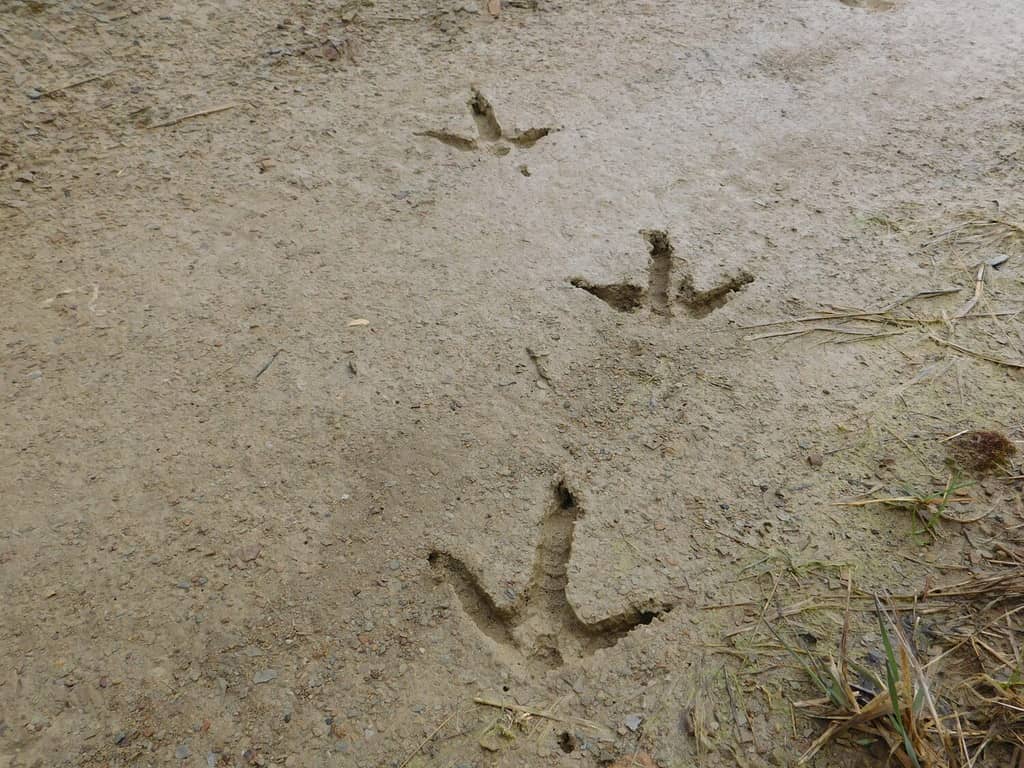
Turkey tracks are distinct with three toes pointed forward, one centered, and the other two splayed to the side.
©K Steve Cope/Shutterstock.com
Turkey tracks are easy to identify and distinct. They consist of three toes pointed forward, with one centered and the other two splayed to the side. There may be a small circle imprinted behind the base of each track. They are approximately 8.9-11.4 cm (3.5-4.5 inches) long and 9.5-10.8 (3.75-4.25) inches wide.
As mentioned earlier, birds are on every continent in the world. There are even penguins in Antarctica. Although there will be a diversity in track shapes and sizes, many species have the three-toe pattern that is observed in turkeys. Water birds like geese and ducks have webbing between their toes, while the back digit of crows and eagles is visible in their prints, but they are still distinct from the mammal prints above.
Sidewinders
Snakes are another non-mammal group of animals that make distinctive prints, but only when the conditions are right again, such as in very muddy or sandy areas, because most species are lighter in weight and therefore don’t have the mass to make tracks in more substantial substrates. Also, given that snakes brumate in the winter, a form of inactivity akin to hibernation, you will not find snake prints in the snow.
The sidewinder (Crotalus cerastes) is a light tan colored kind of rattlesnake endemic to the deserts of the southwestern United States and Mexico that has an interesting pattern it makes in the sand. They get their name from this pattern, which is a result of a side-stepping kind of locomotion where the snake almost skips across the sand, making a series of lines with spaces in between.
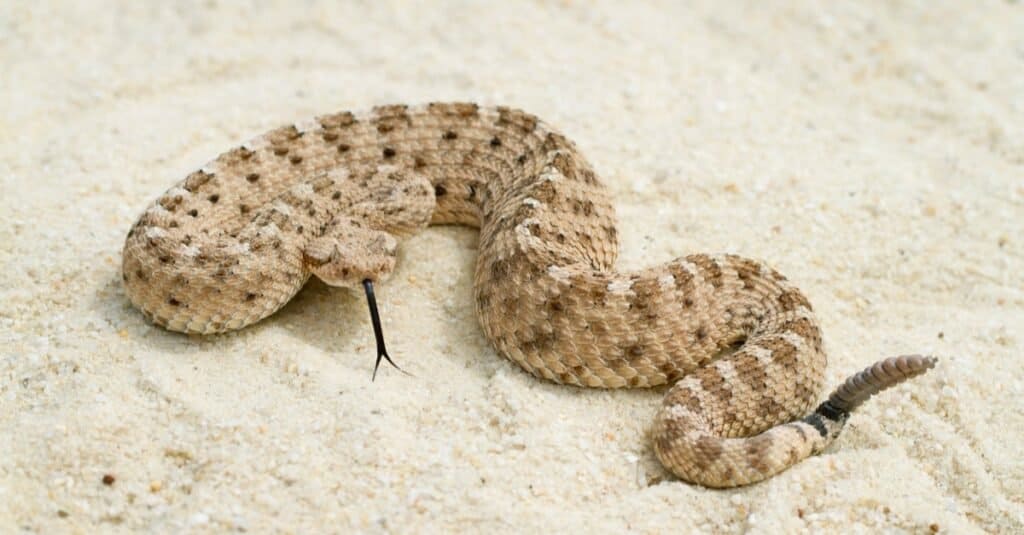
The sidewinder is a kind of rattlesnake native to the southwestern United States.
©Mark_Kostich/Shutterstock.com
Snakes are found on every continent across the world except for Antarctica, where it is too cold for them to survive. Snakes, of course, don’t have paws or toes, so tracks will consist of an imprint of their body on the ground. Despite the simple linear body shape of snakes, they are able to make a variety of patterns with their tracks, including undulating S shapes, waves, and straight lines.
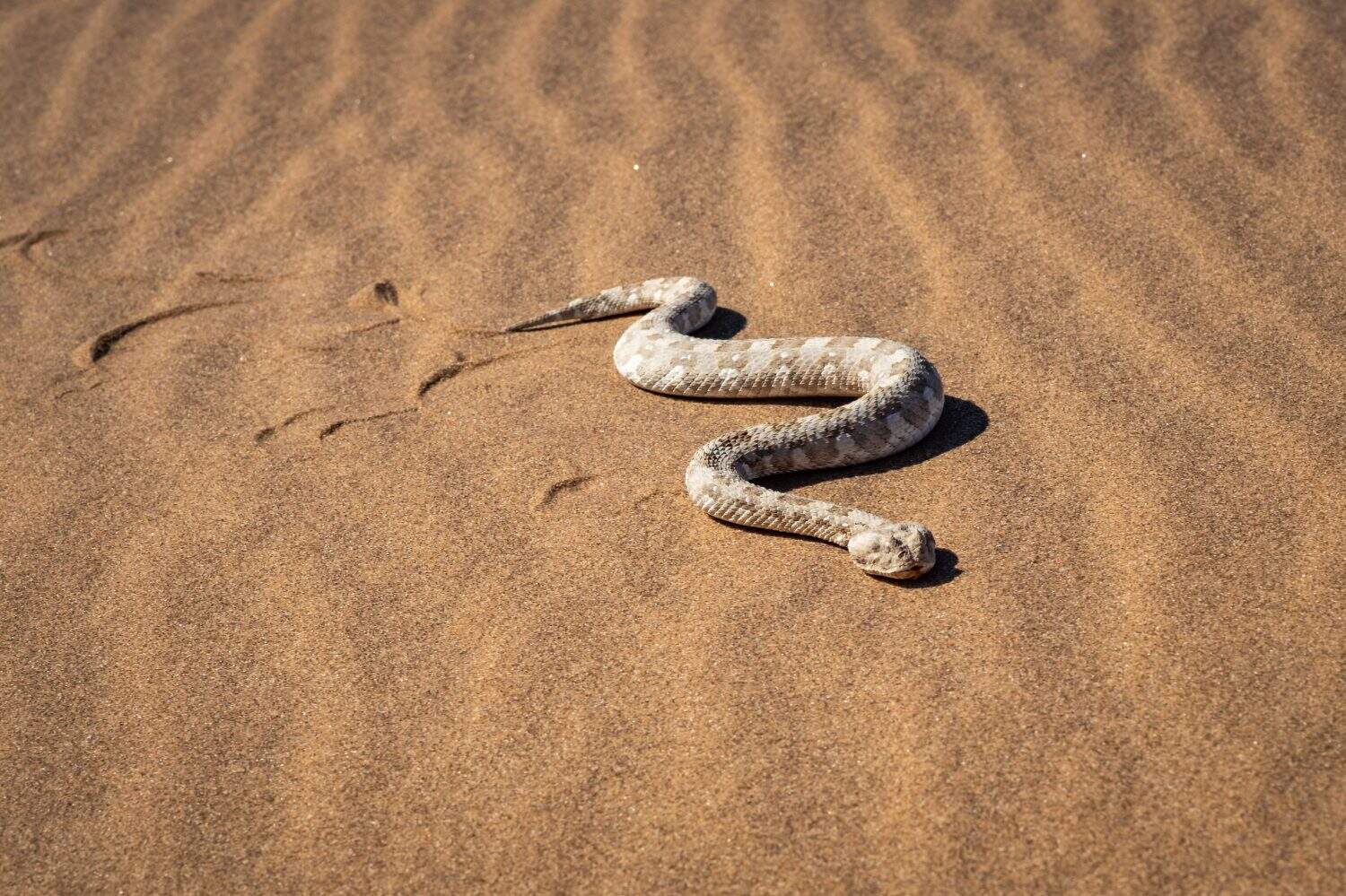
Sidewinders leave a pattern of lines with gaps in between when they move in the sand.
©MSMondadori/Shutterstock.com
Although this article covered a lot of different kinds of tracks from both common and rare animals, there are still many more out there to discuss and discover. In fact, whole taxonomic groups of animals that were not discussed can leave some kind of track. Amphibians like frogs on muddy banks, invertebrates such as crabs at the beach, or insects in desert sands. Even marine animals can leave their imprints, such as seals coming onto land to escape predators or sea turtles laying their eggs in sandy nests. A huge diversity of animals have the ability to make their mark on this planet.