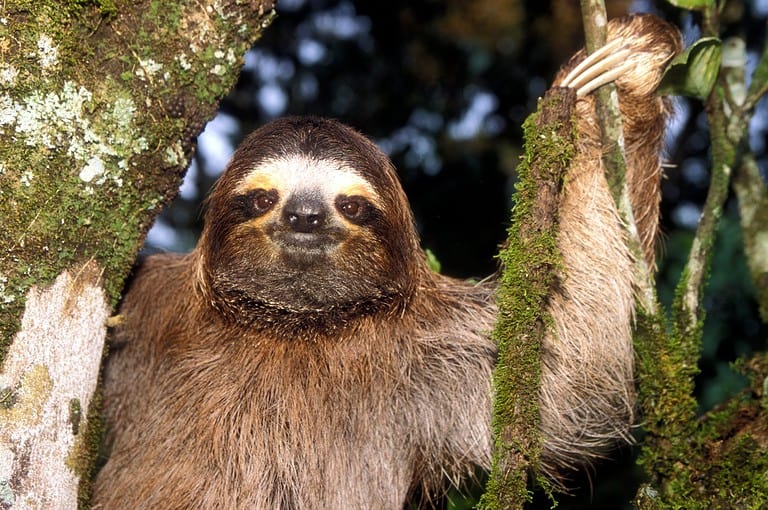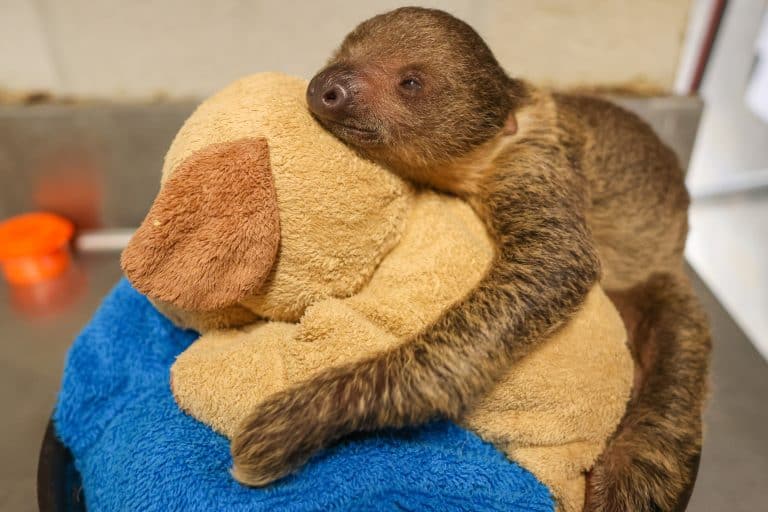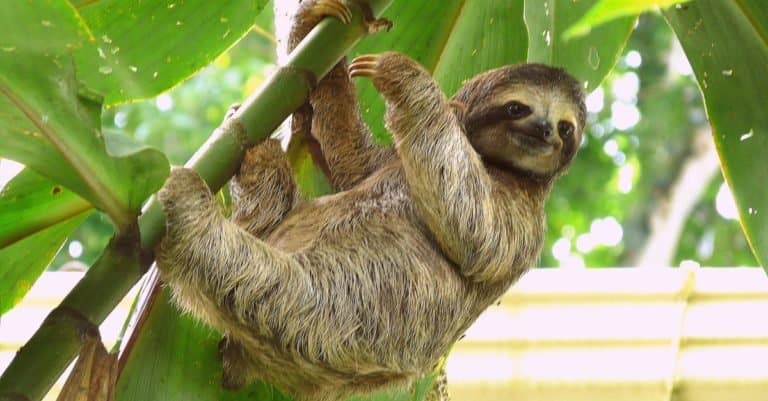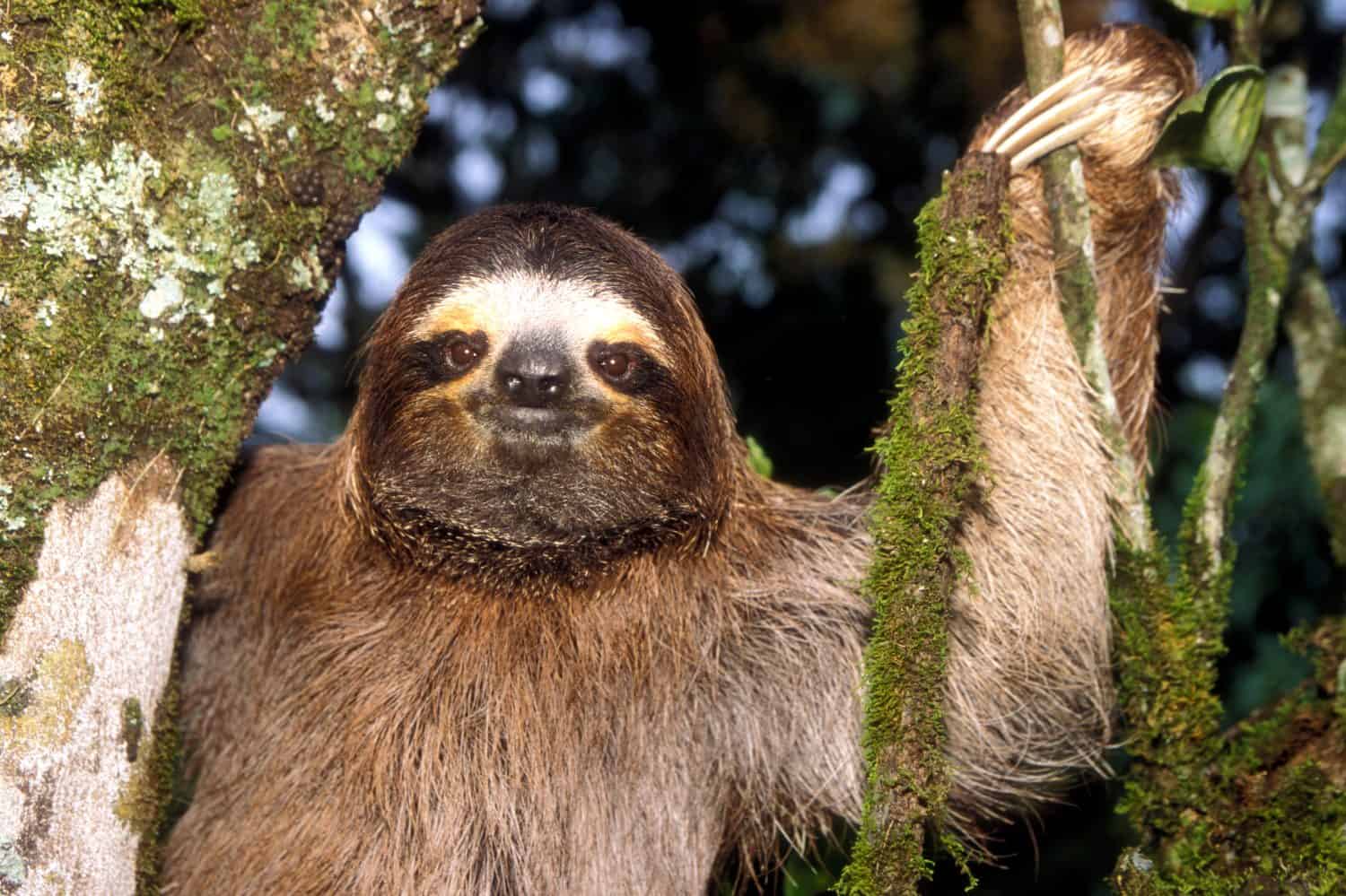

Every October 20, the world slows down (at least in spirit) for International Sloth Day. It’s the perfect excuse to celebrate these tree-dwelling, algae-wearing, slow-motion wonders. While they’ve earned a reputation for their unhurried pace, there’s more going on behind those sleepy smiles than most people realize. Far from lazy, sloths are survivors, thriving in Central and South American rainforests for more than 65 million years.
To get beyond the usual fun facts, we spoke to Cecilia Pamich, Director of Growth & Communication at The Sloth Conservation Foundation in Costa Rica, and Susie Walker, an educator and all-around sloth guru at the Sloth Sanctuary of Costa Rica, the world’s first rescue center devoted entirely to sloths.
Here are seven surprising insights that reveal why sloths are anything but sluggish.
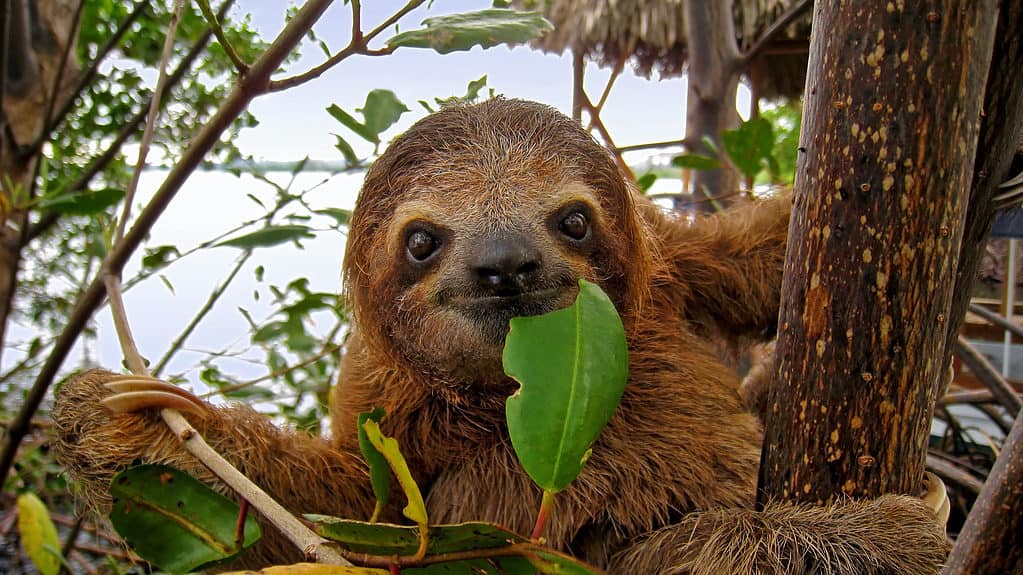
Think sloths are just slow? Think again. Get ready for adoption stories, algae fur, and some surprisingly gassy secrets!
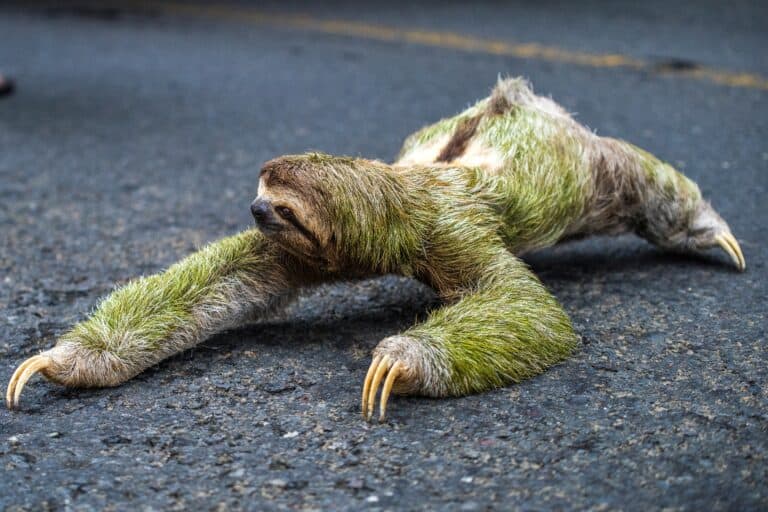
©Damsea/Shutterstock.com
1. Sloths sometimes “adopt.” Even across species!
Adoption is rare in the animal kingdom, but it happens among sloths.
Cecilia shares a case she’ll never forget. “One in particular will be forever in my heart,” she tells us. “A three-fingered female adopted a little two-fingered sloth. Not only is adoption in nature rare, but the adoption of a baby of a different species is incredibly special. We also got the report of a male three-fingered sloth with a baby, which is very unusual as males do not [get] involved in raising baby sloths.”
It’s a powerful reminder that sloths, usually known for their solitary lifestyles, are capable of surprising social bonds.
2. Sloths have a secret language of “meeps” and scents.
Most people assume sloths are silent, but that’s not the case.
“Two-fingered baby sloths, for instance, produce a loud, plaintive ‘meep’ call when separated from their mothers. It’s impossible to ignore once you’ve heard it,” says Cecilia. “Adults are quieter, but they rely heavily on scent communication. Each sloth has a unique chemical signature in their anal secretions, which they leave behind when descending to the ground. This may be part of why they defecate so regularly in the same spot: it doubles as a social bulletin board. Three-fingered female sloths, when in estrus, will emit a high, sharp pitch to let the males in the area know she’s ready to mate!”
Our takeaway? What looks like a weekly bathroom trip may actually be an important act of communication!
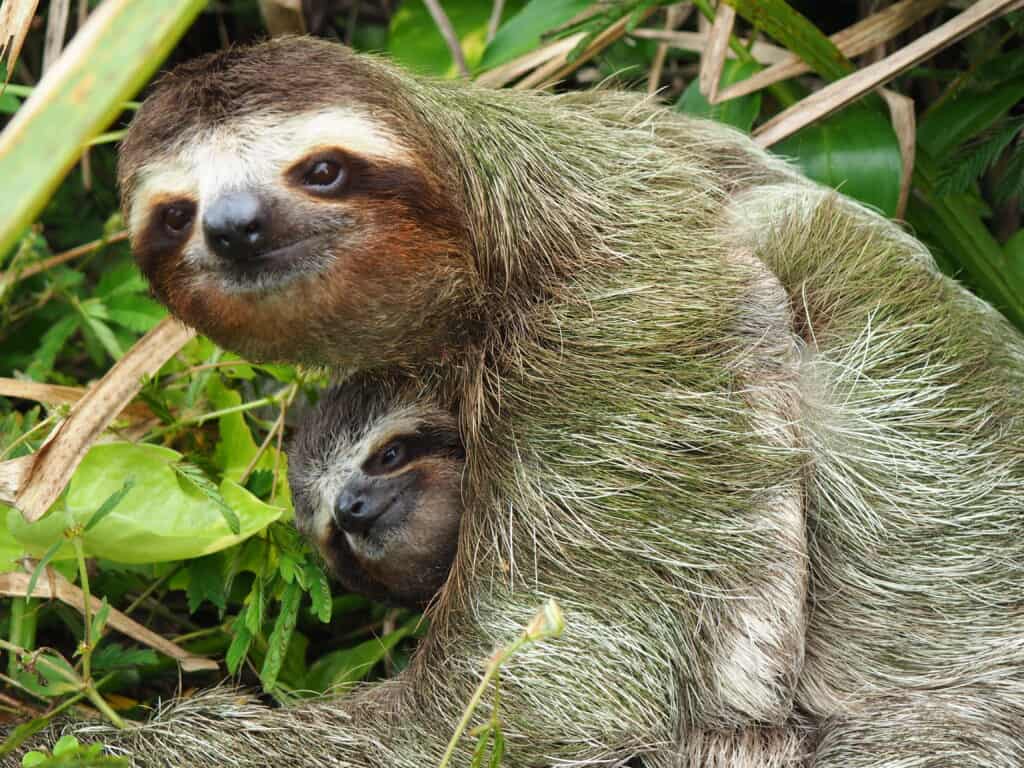
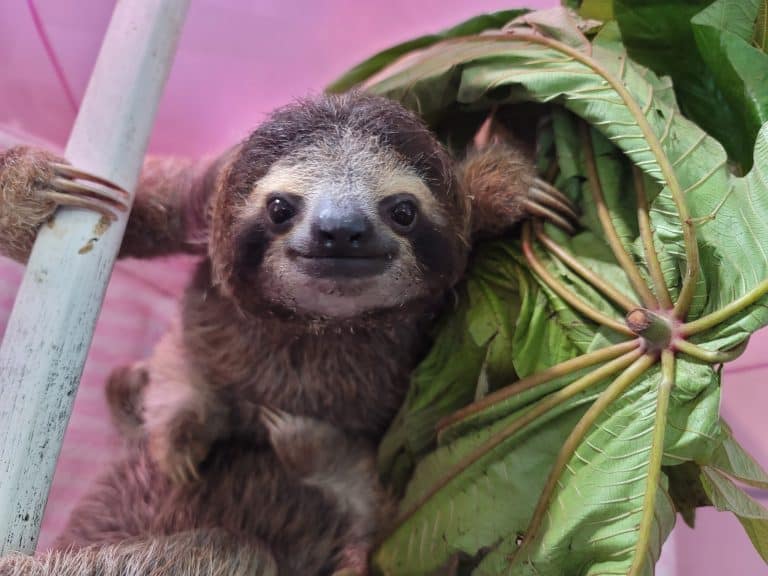
A baby sloth spends up to a year learning everything from mom.
©Kristel Segeren/Shutterstock.com
3. They carry entire ecosystems in their fur.
While sloths may appear shaggy, their fur is a miniature rainforest in its own right.
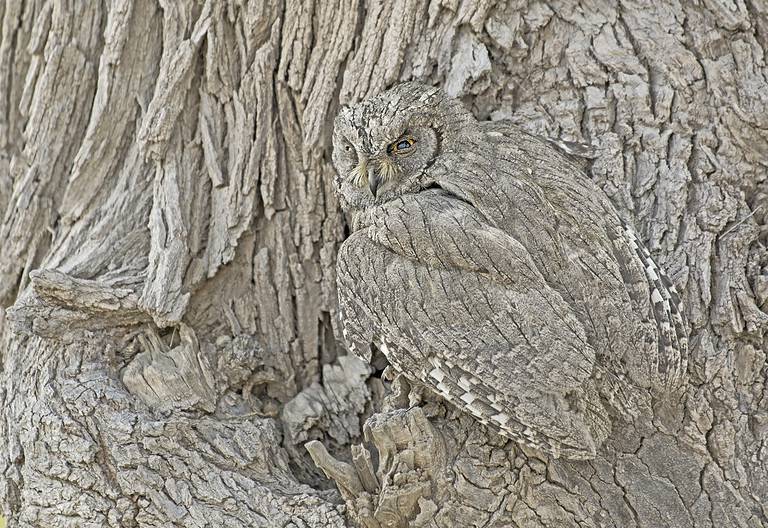
Cecilia tells us, “Sloth hair has microscopic cracks that wick water and allow algae and fungi to grow, giving them a green tint that camouflages them in the canopy. The fur also hosts dozens of unique species of moths that only exist within the sloths’ hair. It’s likely that when the moths die in the hair, it helps the algae and fungi to grow. And if you add the slow, deliberate movements to the camouflage fur, you have a stealthy animal, hard to spot even for jaguars or Harpy Eagles.”
This symbiotic relationship makes their fur not just protection, but a survival strategy millions of years in the making.
Three-fingered female sloths, when in estrus, will emit a high, sharp pitch to let the males in the area know she’s ready to mate!
Cecilia Pamich, Director of Growth & Communication at The Sloth Conservation Foundation in Costa Rica
4. Sloths are digestive marvels … and also fragile.
Both experts agree: digestion is one of the sloth’s defining superpowers.
“It actually takes a month for them to digest their food,” Susie says. “We did a study where we used safe dye to color the food they were eating, and we measured how long it took to come back out. They have a multi-chambered stomach that really takes its time and pulls all the nutrients that can possibly get from this food.”
Cecilia notes how delicate this system can be in a sanctuary setting. “Sloths can take up to a month to fully process a single meal, because their gut bacteria work so slowly on the leaves they eat,” she says. “In rescue centers, you quickly learn how fragile this system is; a sudden dietary change can cause the whole gut to shut down.”
Their slow metabolism keeps them alive on low-energy diets, but it also means any disruption can be dangerous.
5. Their skeletons are built to survive falls, and their necks are freakishly flexible.
In the rainforest, falling can be deadly … unless you’re a sloth. “Their bone structure is so odd,” Susie shares. “A sloth falls from a huge height, and they’re like, ‘Yeah, whatever.’ Their bones are just so resilient!”
This natural shock-absorber system helps sloths survive canopy life, where a slip from 30 feet up is just part of the routine.
But that’s not the only skeletal quirk. Sloths also have extra vertebrae in their necks compared to most mammals, which gives them the ability to turn their heads up to 270 degrees. This extreme flexibility allows them to scan their surroundings without moving their bodies — another subtle adaptation that keeps them hidden from predators.
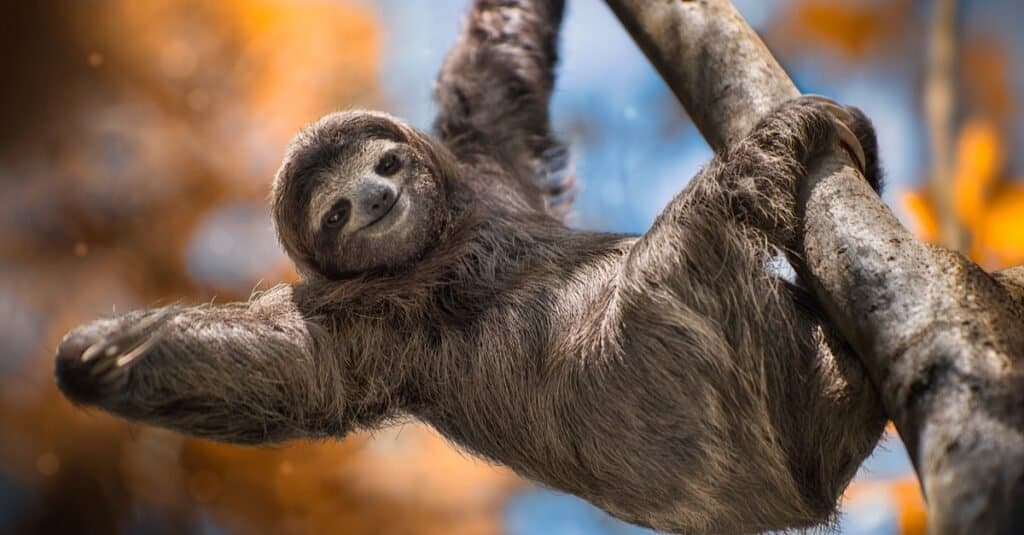
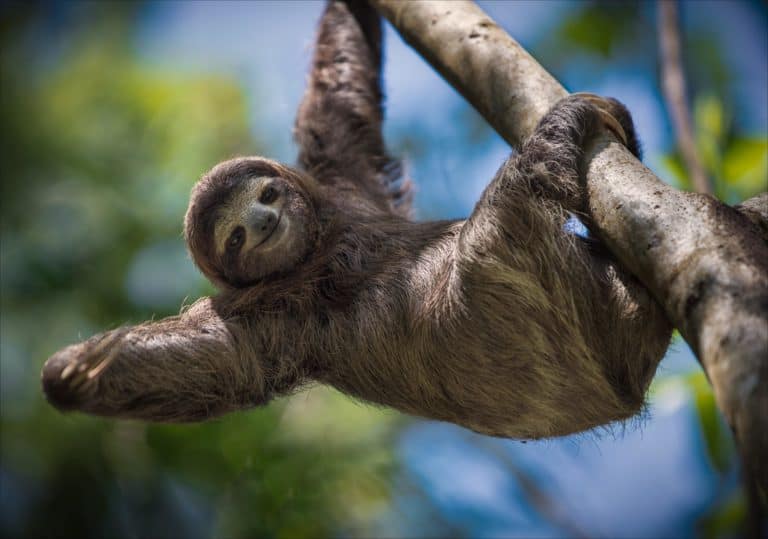
Gravity check? No problem. Sloths can fall from incredible heights and just keep on hanging.
©jdross75/Shutterstock.com
6. Conservation threats go beyond deforestation.
When people think of sloth conservation, they often picture protecting rainforests. But Cecilia points out that modern threats come from human infrastructure, too.
“Many people are shocked to learn how big a threat power lines are. Electrocution is one of the leading causes of injury and death for sloths in human-impacted areas. Habitat fragmentation also forces sloths to the ground, where they face dog attacks and road collisions. Conservation isn’t only about protecting rainforests; it’s also about adapting urban spaces to be safe for wildlife. A great and easy way to do this is to convert gardens and properties into safe corridors by planting trees and installing Sloth Crossing canopy bridges.”
It’s a vivid reminder that sloth survival depends on both wild and human-shaped environments.
7. They’re evolutionary survivors with an unfair reputation.
For centuries, sloths were misunderstood — even ridiculed. Susie explains, “There were naturalists back in the 1700s and early 1800s who would go out and learn about all the animals in these remote areas and then come back and write books. And there were several examples of quotes that are like, ‘This animal is so stupid and slow that we don’t understand why it exists.’”
But the facts tell a different story. “Sloths have been around forever, and they seem to be doing just fine,” she says. “Their main concern at this point is us. They have natural predators, but the fact that they are able to survive in a very tough environment is a testament to their intelligence.”
Cecilia adds some perspective from their fossil records. “A little-known fact is that they are far more diverse in the fossil record than they are today,” she says. “Ancient ground sloths once roamed North and South America and included species the size of elephants, like the Megatherium. Other species dug tunnels! Today’s tree-dwelling sloths are just the last survivors of a much larger, fascinating evolutionary story.”
In other words, sloths are anything but lazy — they’re living testaments to endurance.
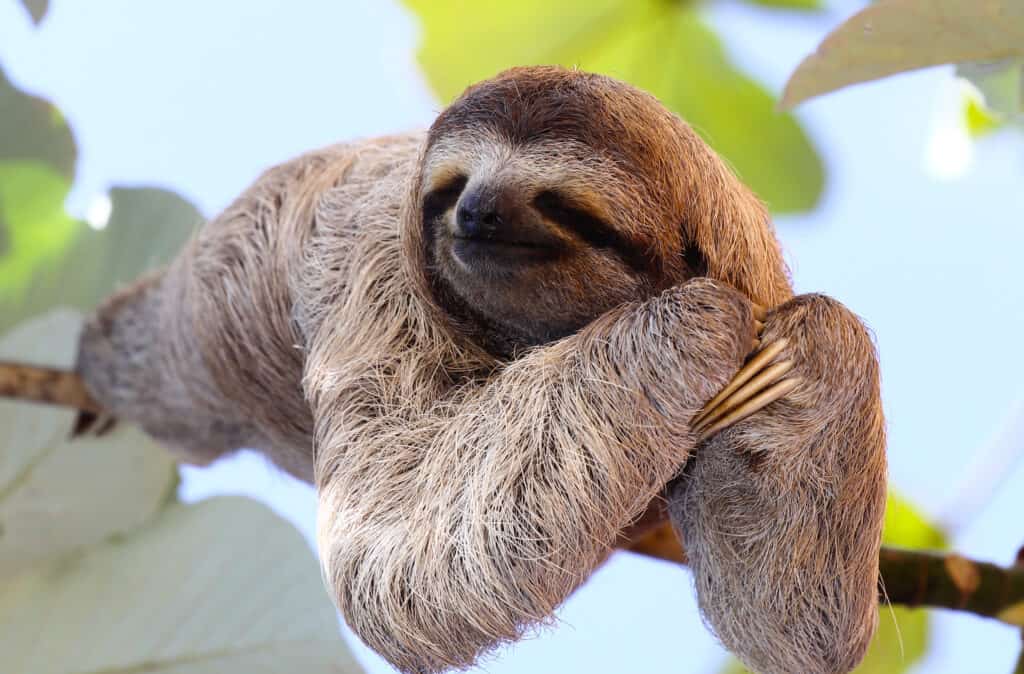
When the view is this good, why rush down?
©Janossy Gergely/Shutterstock.com
Bonus Fact: Sloths fart. And sometimes, it helps them float!
As if their month-long digestion wasn’t unusual enough, sloths also produce more gas than scientists once thought. For years, researchers speculated that their ultra-slow gut might absorb or process gases differently, but recent observations prove otherwise. Sloths do, in fact, fart, releasing methane and other gases. In some cases, this internal “air supply” even gives them buoyancy, helping them float when they find themselves in water.
Talk about science with a sense of humor!