
Quick Take
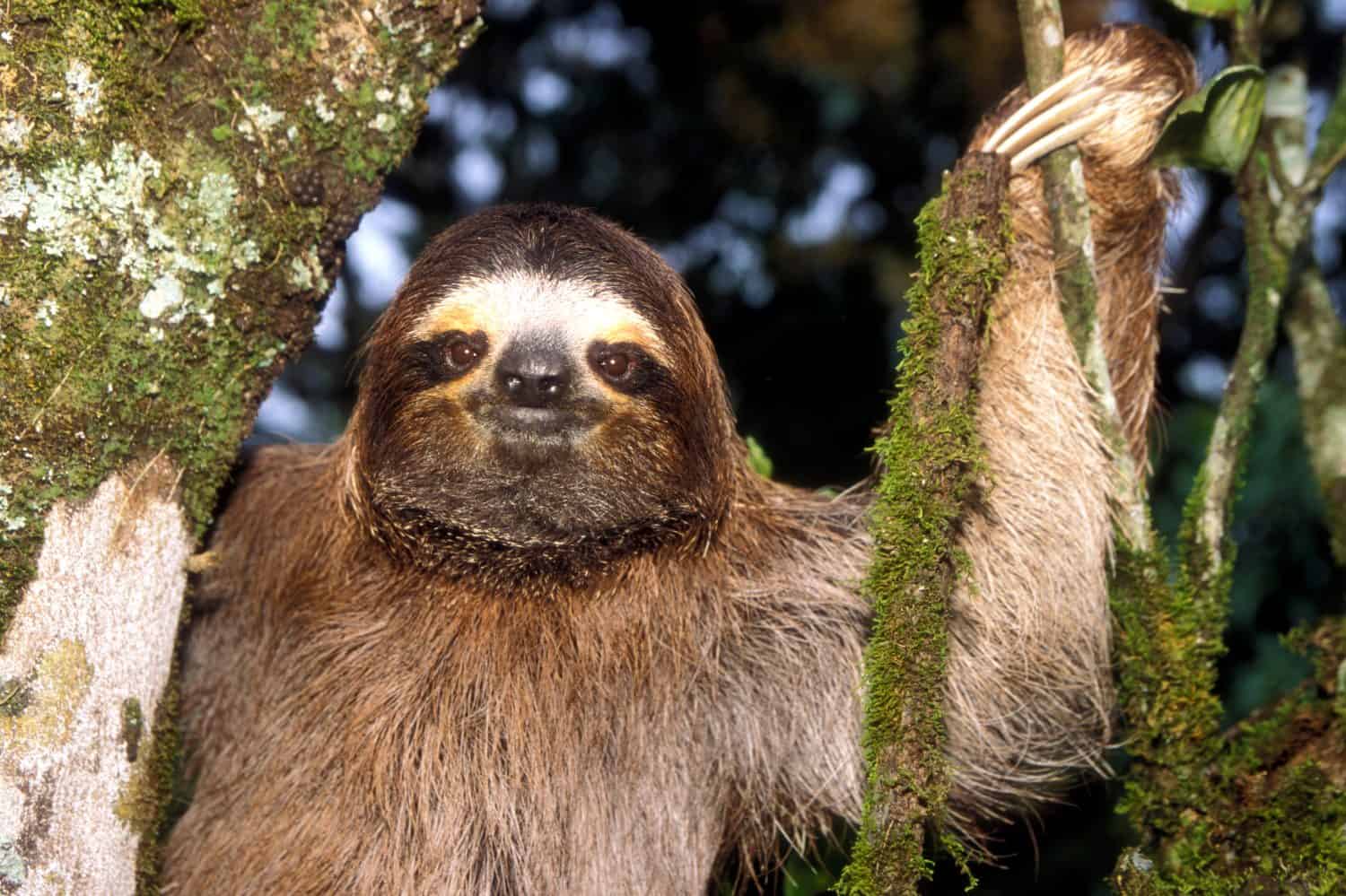
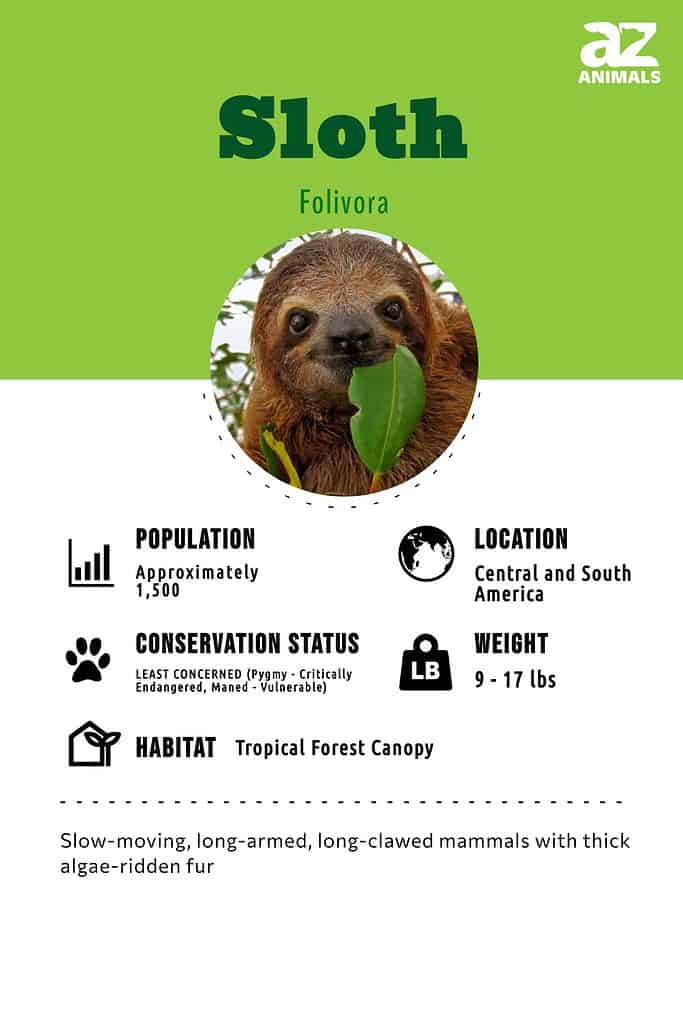
- Sloths are slow-moving, arboreal mammals living in Central and South America.
- The two types of sloths are the two-toed sloth and the three-toed sloth.
- Three-toed sloths are strictly herbivorous, while two-toed sloths are omnivorous.
- Sloths face plenty of natural predators like harpy eagles, who grab them from trees with their sharp talons.
Sloths are the ideal representation of calm: slow-moving, sleepy, and perfectly at ease in the treetops. But life in the wild is never as peaceful as it seems and sloths are part of the ongoing food chain. Despite clever camouflage, sloths are frequently hunted. Their laid-back lifestyle and unhurried movements can make them even more vulnerable to predators. In the dense forests of Central and South America, danger can come from above, below, and even within the trees they call home.
Several animals consistently prey on these gentle climbers, among them the formidable harpy eagle and stealthy wild cats. While sloths have evolved impressive abilities to blend in with their surroundings, it’s not always enough to keep them hidden. Take a closer look at the predators that view sloths, not as icons of relaxation, but as easy tree-dwelling snacks.
Facts About Sloths
Below are a few interesting facts about sloths:
- Sloths move slowly because of their extremely slow metabolic rate.
- Many sloths exit the treetops only once per week in order to defecate.
- Sloths have continuously growing teeth, which is unusual among mammals.
- There are six different species of sloths, with one critically endangered and another vulnerable.
- There are two kinds of sloths: two-toed sloths and three-toed sloths
- All sloths are roughly comparable to a small or medium-sized dog.
- Ancient giant sloths, called Megatherium, were the size of modern elephants!
Where Do Sloths Live?
©Wirestock/iStock via Getty Images
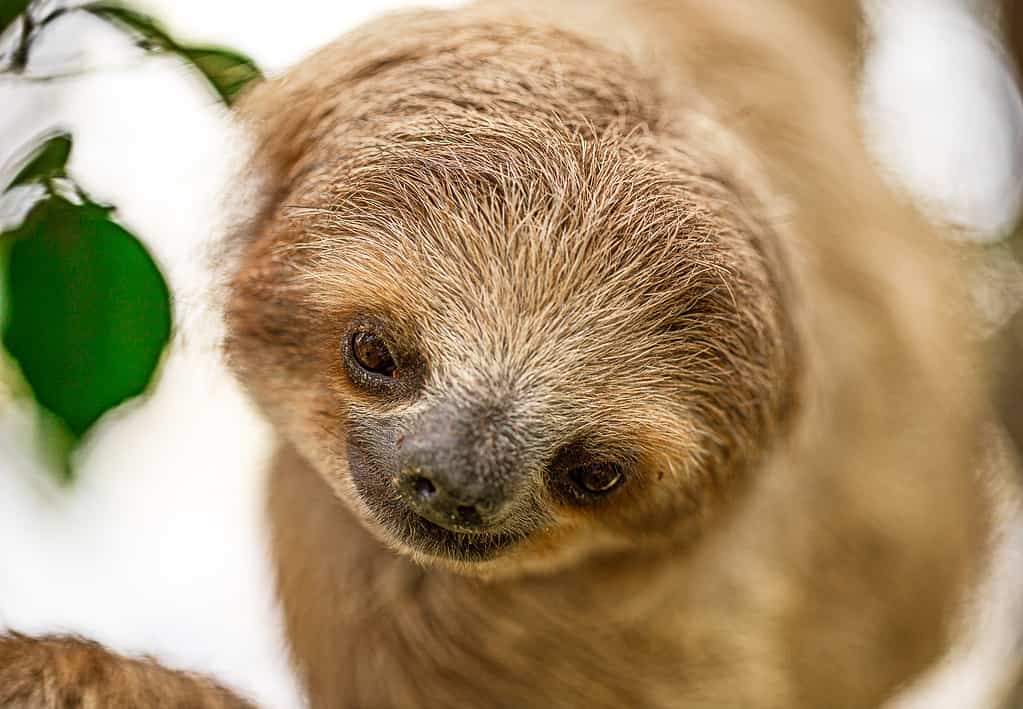
Wild sloth world populations are confined to South America and Central America. These unique animals dwell in lowland rainforests in the countries of Honduras, Ecuador, Brazil, Costa Rica, Colombia, Bolivia, Venezuela, Peru, and Panama. Notably, sloths make up a large proportion of tree-dwelling mammals on Panama’s Barro Colorado Island.
Eastern Brazil’s maned sloths are classified as “vulnerable,” while Panama’s island-inhabiting pygmy sloths are critically endangered.
The Lifespan of a Sloth
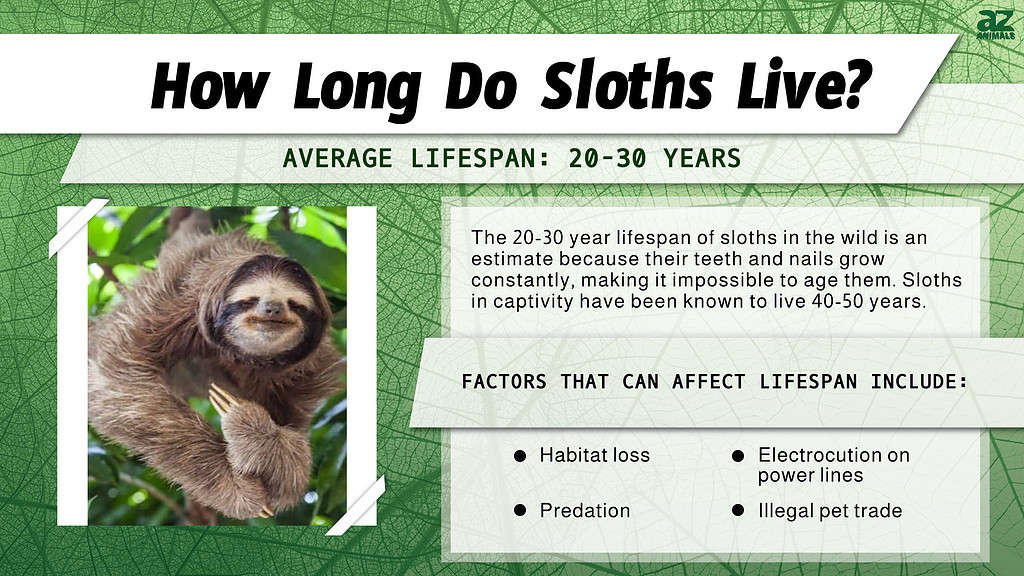
Lifespans in the wild are difficult to determine because sloths are hard to track and study over long periods. Typically, individuals living in the wild have shorter lifespans because of external threats (though some sloths fare worse in captivity due to the need for socialization). Since sloths in captivity have lifespans that range from 40-50 years, it is estimated that sloths in the wild live anywhere from 20-30 years.
Sloth Diet
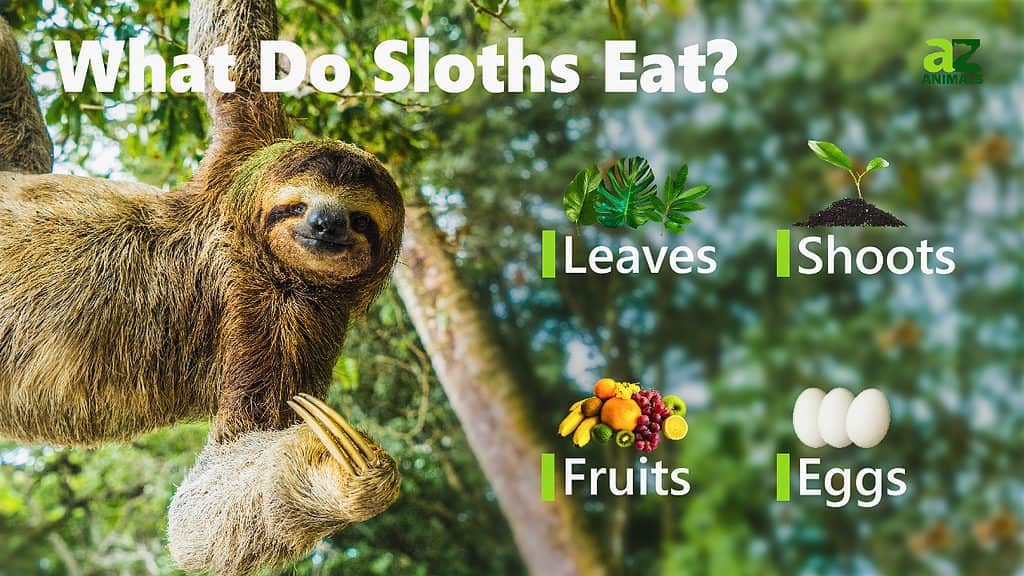
Three-toed sloths are strictly herbivorous, while two-toed sloths are omnivorous, occasionally eating insects, small vertebrates, and eggs in addition to plants.
In terms of plants, sloths consume leaves from the cecropia tree. They have multi-chambered stomachs containing bacteria that break down plant matter. Their food is digested slowly over a period ranging from a week to a month per meal. Because their food is low in nutrients, they don’t receive much energy from the intake, contributing to their slow movements.
Sloth Predators: Harpy Eagles
©MarcusVDT/Shutterstock.com
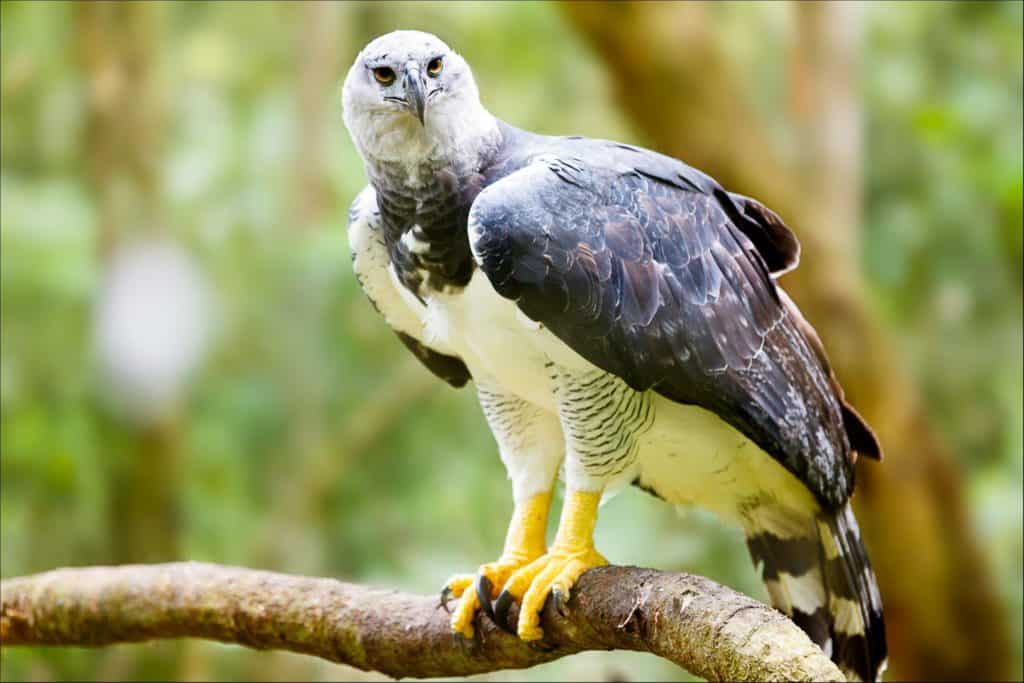
Harpy eagles are some of the world’s biggest and most impressive eagles, with females growing up to twice the size of males. A grizzly’s claws don’t have anything on the harpy eagle’s rear talons, which grow up to four inches long! Though mostly slate gray, they may have additional dark coloration. Their tails are distinctive, decorated with horizontal black bars, while bellies are a light gray or white tone.
On the top of their head lies the species’ iconic long black feathers that rise when the eagle perceives a threat. Formidable black talons contrast with their bright yellow feet. They are carnivores, snatching up a variety of prey, including reptiles, birds, and mammals like sloths. They fly below the forest canopy, boldly grabbing them directly off trees with sharp talons.
Sloth Predators: Ocelots
©Saad315/Shutterstock.com
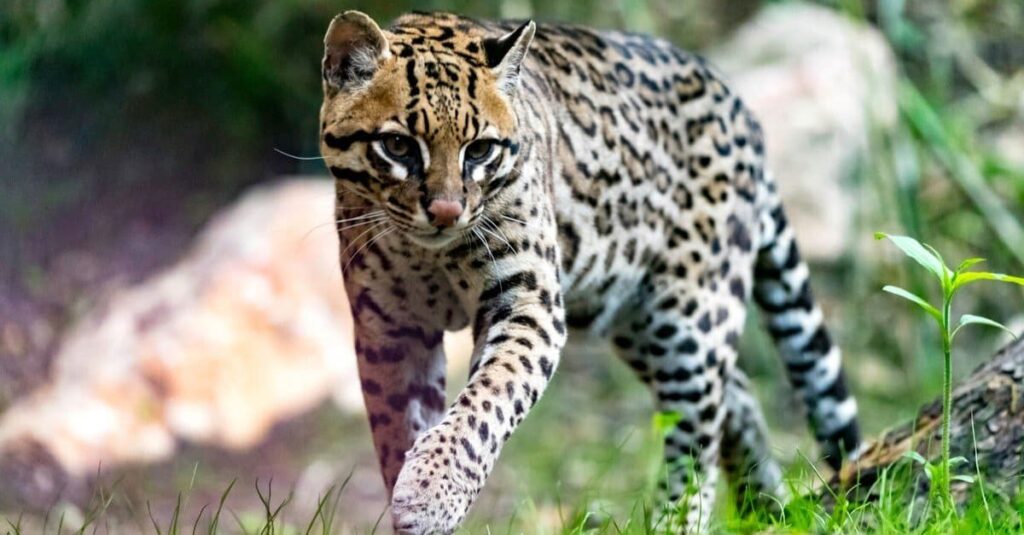
Ocelots are spotted cats (the largest of the bunch) with slick fur. Their coloration varies, but includes yellow, gold, and gray; their spots are solid black as well as the back of their ears (which also feature a large, white spot).
These beautiful cats with banded tails are often mistaken for similar-looking and closely related margays. However, an ocelot is distinguished by its larger size, smaller eyes, shorter tail, and glossier fur.
Most ocelots are concentrated in Central America but range from the southeastern region of the United States to the northern part of Argentina. They inhabit multiple environments, from tropical forests to savannah grasslands. Ocelots are expert hunters that use odor trails to track their prey, which include birds, fish, reptiles, aquatic crustaceans, mollusks, and mammals like sloths.
Other Threats That Sloths Face – Humans
©jdross75/Shutterstock.com
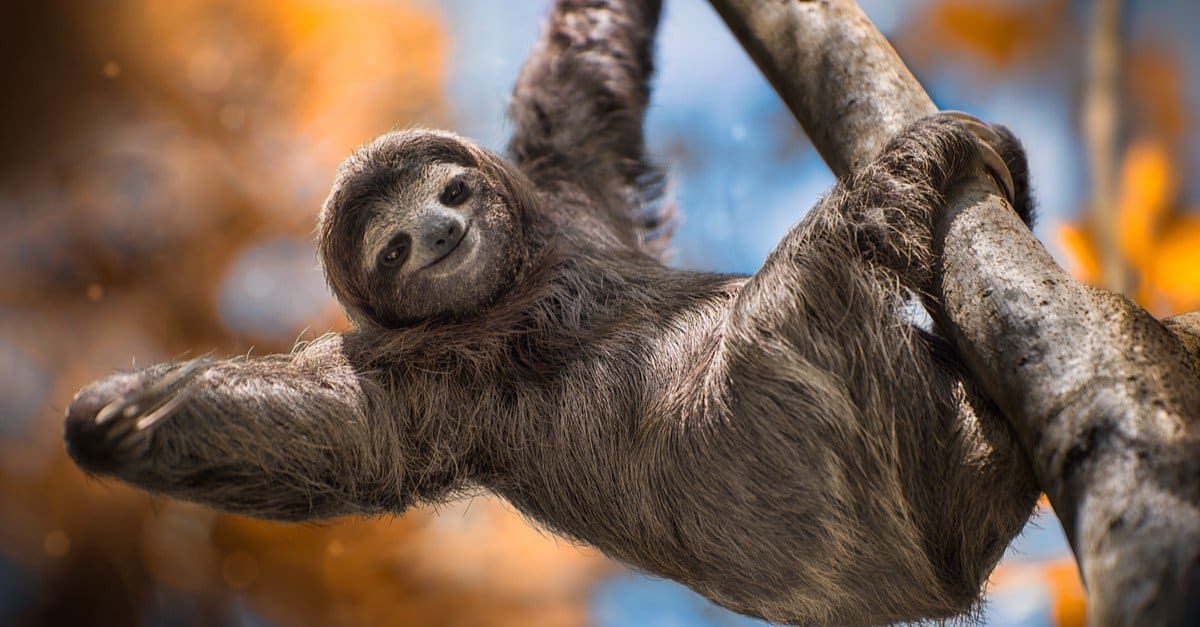
The animals we mentioned are not the only threats that sloths face. While these strange and interesting animals have existed for over 40 million years, their survival as a species is most threatened by humans. Sloths face danger through habitat destruction, power lines, traffic, roadwork, tourism, and the pet trade.