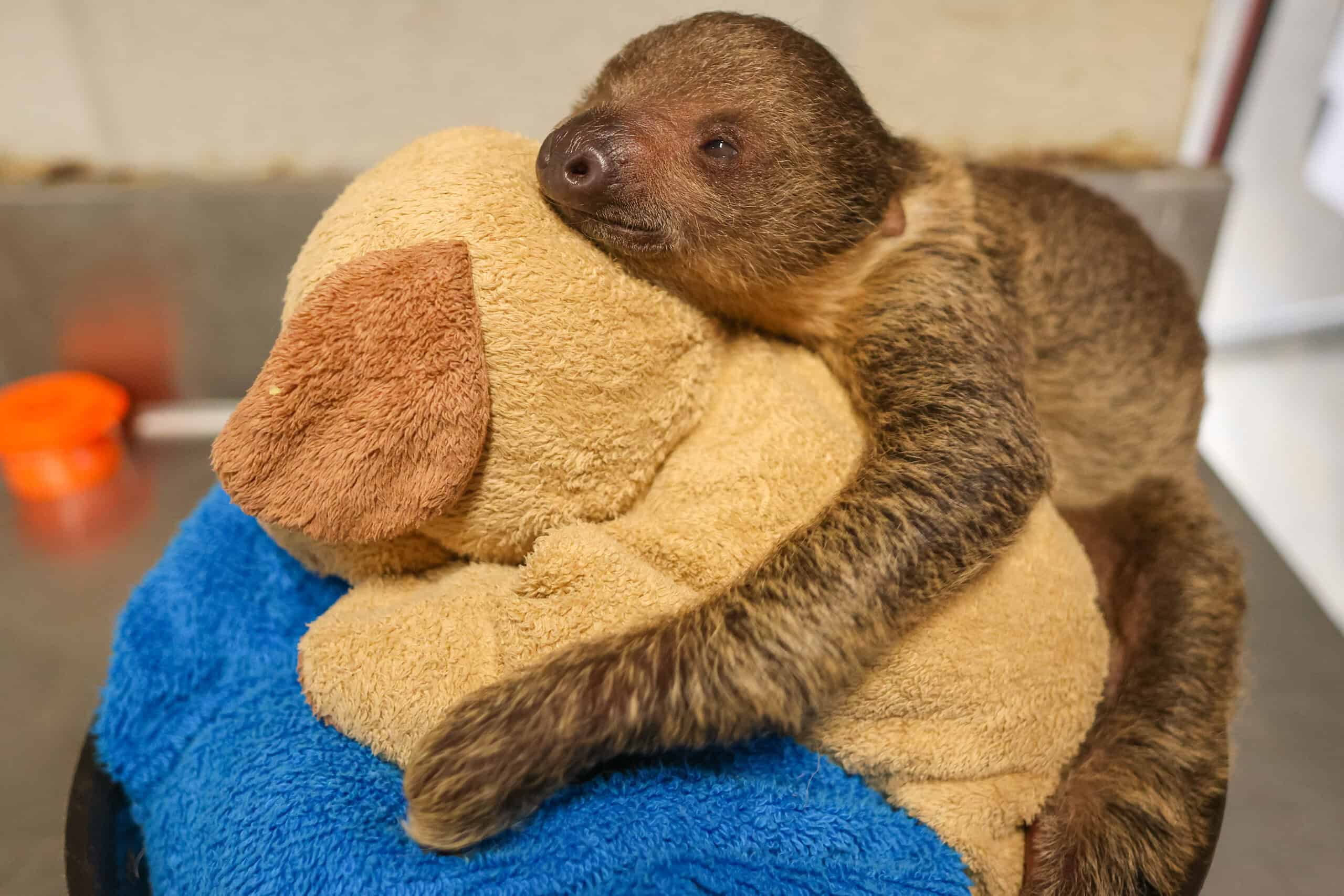

Baby animals are our favorite. Puppies, kittens, chicks, bunnies — the list goes on and on! And if you go to the Roger Williams Park Zoo in Providence, Rhode Island, you can see a brand-new baby sloth! The zoo recently celebrated the birth of a Linne’s two-toed sloth (Choloepus hoffmanni) in its Faces of the Rainforest exhibit, and he is so incredibly cute.
It’s a Boy!
The baby sloth is a boy named Quint, who was born to mom Fiona and dad Riley on Oct. 11, 2025. He currently weighs 694 grams (about 1.5 pounds).
“We are very excited about the arrival of Quint!” Maxine Ferreira, Communications Content Specialist at Roger Williams Park Zoo, tells A-Z Animals. “Quint is a Linne’s two-toed sloth. He is named after Captain Quint from the movie, ‘Jaws,’ and he is Fiona’s fourth baby.”
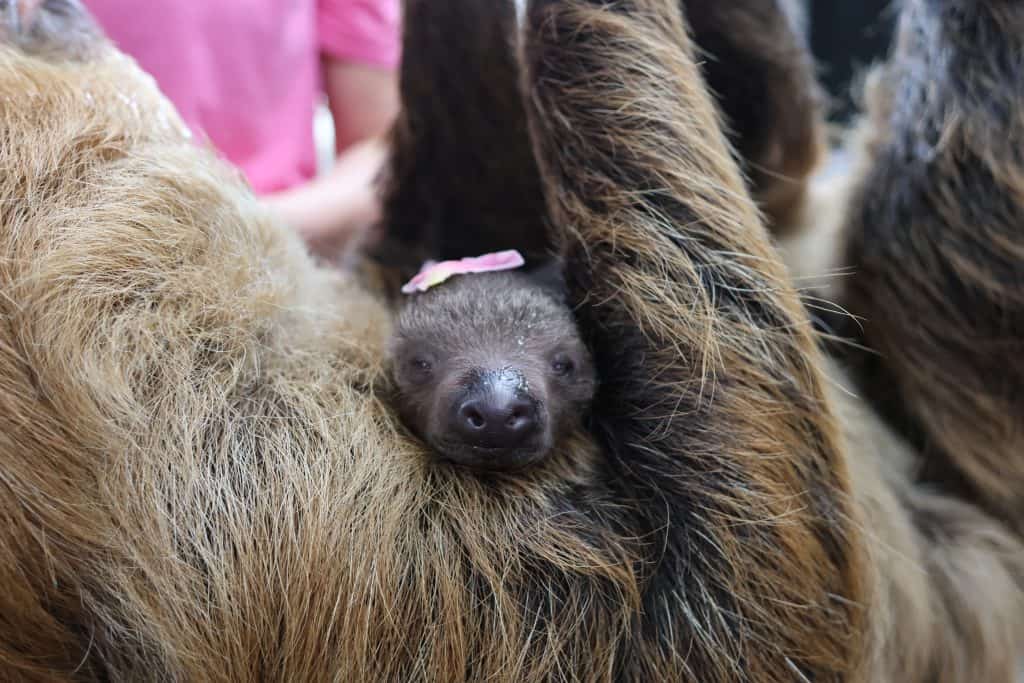
Baby Quint was born on Oct. 11, 2025.
©Roger Williams Park Zoo
Quint is an adorable baby with a big snout and brown eyes. His long, gangly limbs will soon allow him to hang from trees like other sloths. He already closely resembles his mother.
“[Baby sloths] are born with fur, open eyes, a full set of teeth, and claws that are already sharp and ready to grip,” Ferreira explains. Amazing!
Although young sloths look like miniature versions of adults, they remain dependent on their mothers for quite some time.
How Fast Will He Grow?
Quint will remain an adolescent for several years because, like many other things sloths do, they grow up slowly. Female sloths reach sexual maturity in about three years, while males may take up to five years.
“Linne’s two-toed sloths grow slowly,” Ferreira tells us. “A male sloth reaches sexual maturity in about four to five years. Quint will cling to his mom, Fiona, for up to a year before he ventures off on his own.”
[Baby sloths] are born with fur, open eyes, a full set of teeth, and claws that are already sharp and ready to grip.
Maxine Ferreira, Communications Content Specialist at Roger Williams Park Zoo
Still, you don’t have to wait an entire year to see Quint in person if you visit the zoo. Ferreira shares that he will be in a public viewing area soon.
“The public should be able to see him within the next few weeks,” she says.
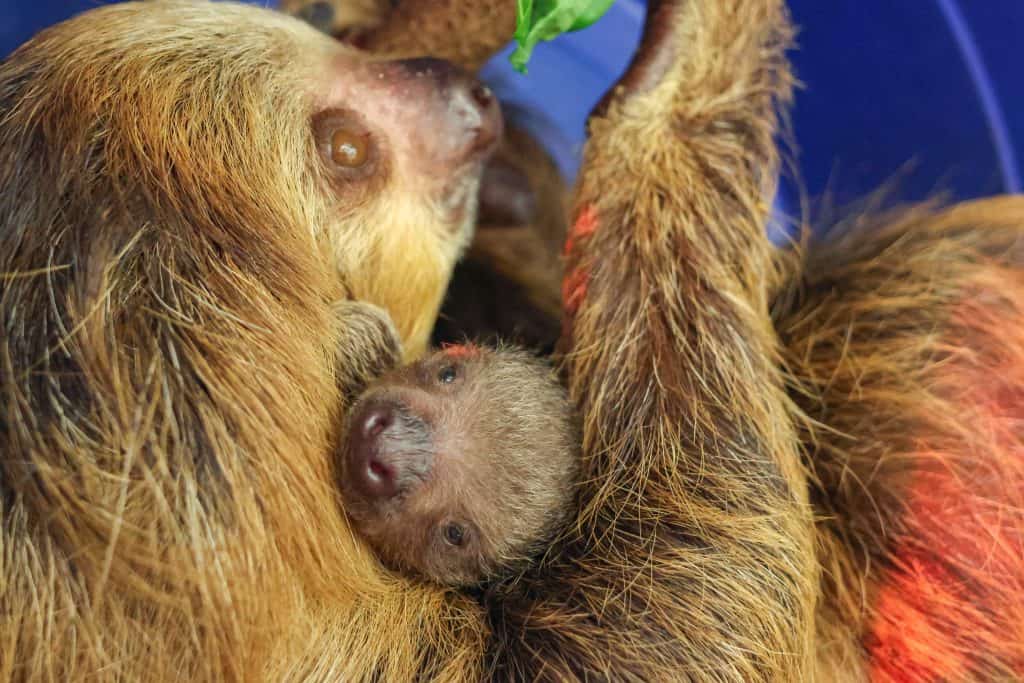
Quint will stay with his mom for a year before he ventures off on his own.
©Roger Williams Park Zoo
You can see these sloths at the zoo’s Faces of the Rainforest exhibit, a 10,000 square foot, two-story building designed to replicate an Amazon rainforest. It features trees and vegetation that are native to these animals, making the habitat feel more like home.
Animals in this exhibit include the Bolivian gray titi monkey, Chilean flamingo, dyeing poison frog, giant anteater, giant otter, golden lion tamarin, green anaconda, hyacinth macaw, keel-billed toucan, yellow-banded poison dart frog, yellow-rumped cacique, and others. If you can’t travel to the rainforest yourself, this exhibit is the next best way to see these animals in a naturalistic setting. Since the exhibit opened, many baby sloths have been born.
“Five sloths have been born at Roger Williams Zoo since our new Faces of the Rainforest building was built [in 2018],” Ferreira tells us. That’s pretty incredible!
All About Linne’s Two-Toed Sloths
For almost all of their lives, Linne’s two-toed sloths hang upside down — even while eating, sleeping, mating, and giving birth, according to Roger Williams Park Zoo. They hang out (literally) on the canopy level of the rainforest, and because of all this hanging, they have incredible strength. In fact, these sloths are three times stronger than the average human. It’s hard for us to imagine, but they were built to do it. Thanks to special tendons in their hands and feet that lock in place, they don’t have to use energy while hanging—an important adaptation, since they have little energy to spare. In fact, they move so slowly in order to conserve energy.
As adults, these sloths will reach between 21 and 29 inches long and weigh between 9 and 19 pounds.
Sloth Conservation at Roger Williams Park Zoo
The birth of baby Quint isn’t just cute — it’s also significant for the conservation of sloths.
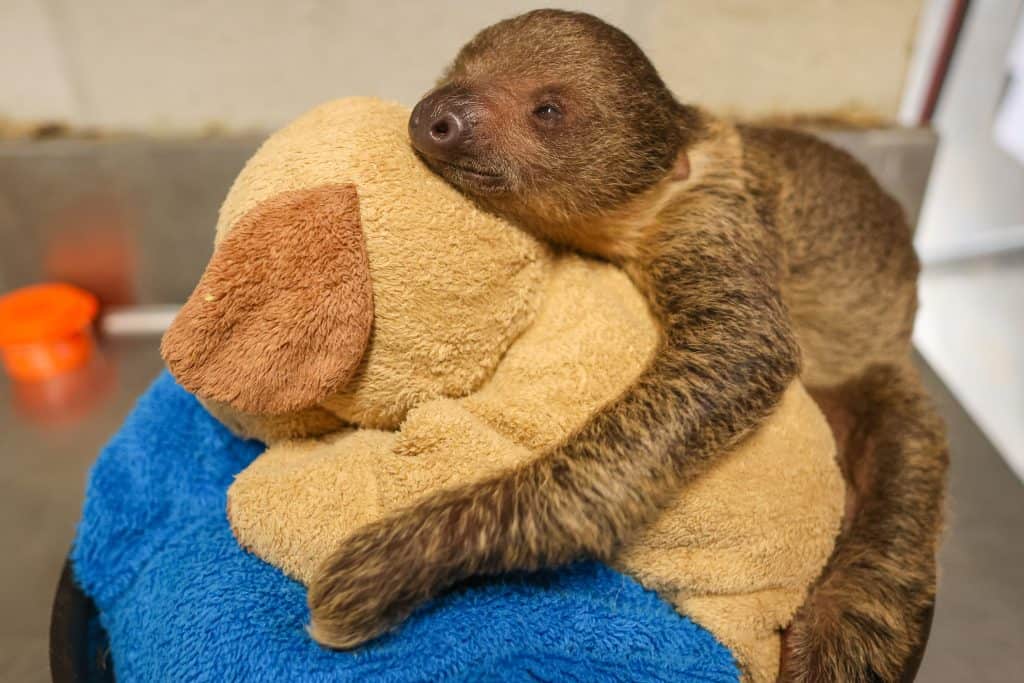
This sweet baby sloth is the fifth sloth born in the Faces of the Rainforest Exhibit.
©Roger Williams Park Zoo
“His birth is significant for our Zoo and the sloth population worldwide, as we are a part of the Linne’s Two-Toed Sloth Species Survival Plan, which focuses on breeding to ensure the survival of a species,” explains Ferreira. “Every healthy baby contributes to the genetic diversity of the populations in human care.”
“This is crucial for global sloth conservation and research, helping us better understand their development and biology to ultimately protect their counterparts in the wild,” she adds.
Although these sloths are listed as Least Concern on the IUCN Red List, their slow reproductive rate—one baby per year after a six-month gestation—means that supporting their population growth is important for their continued survival.