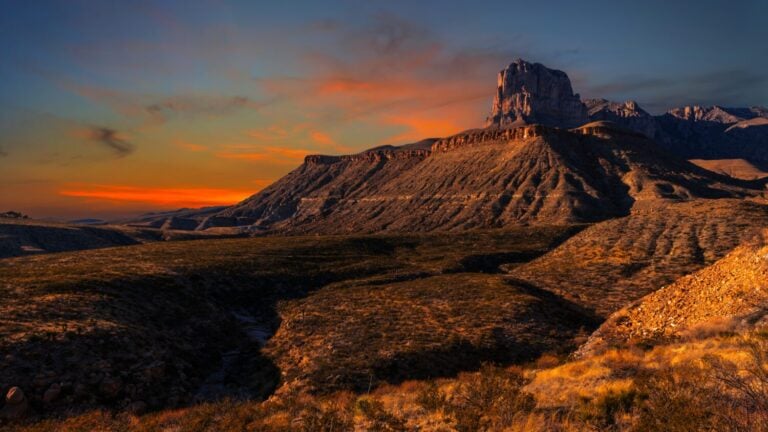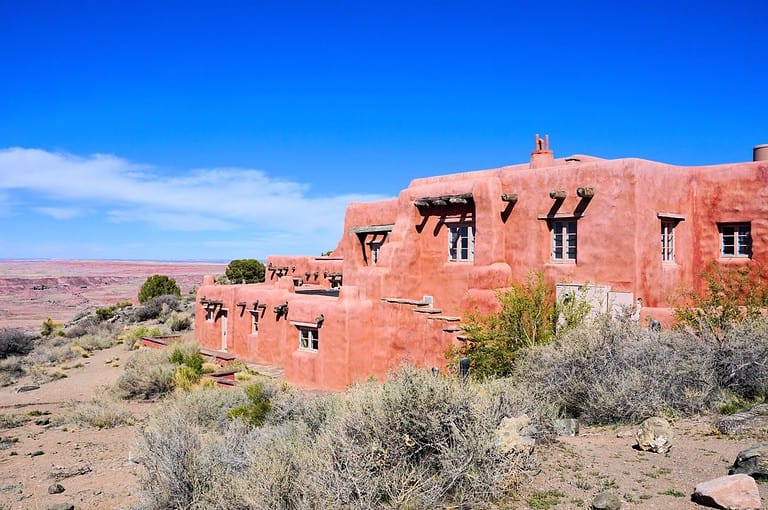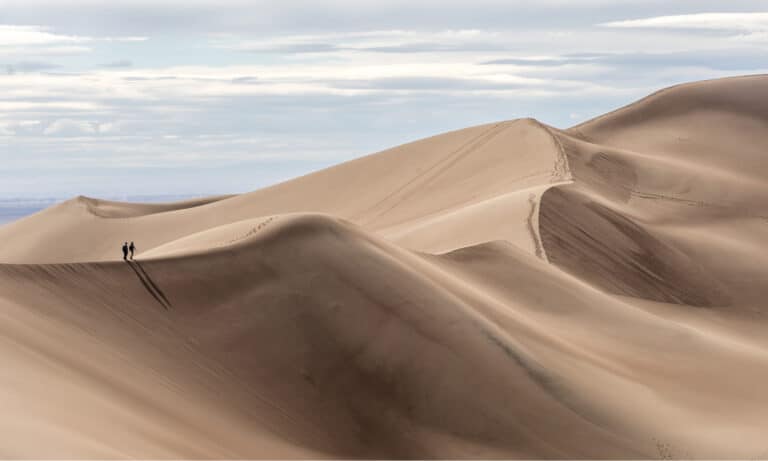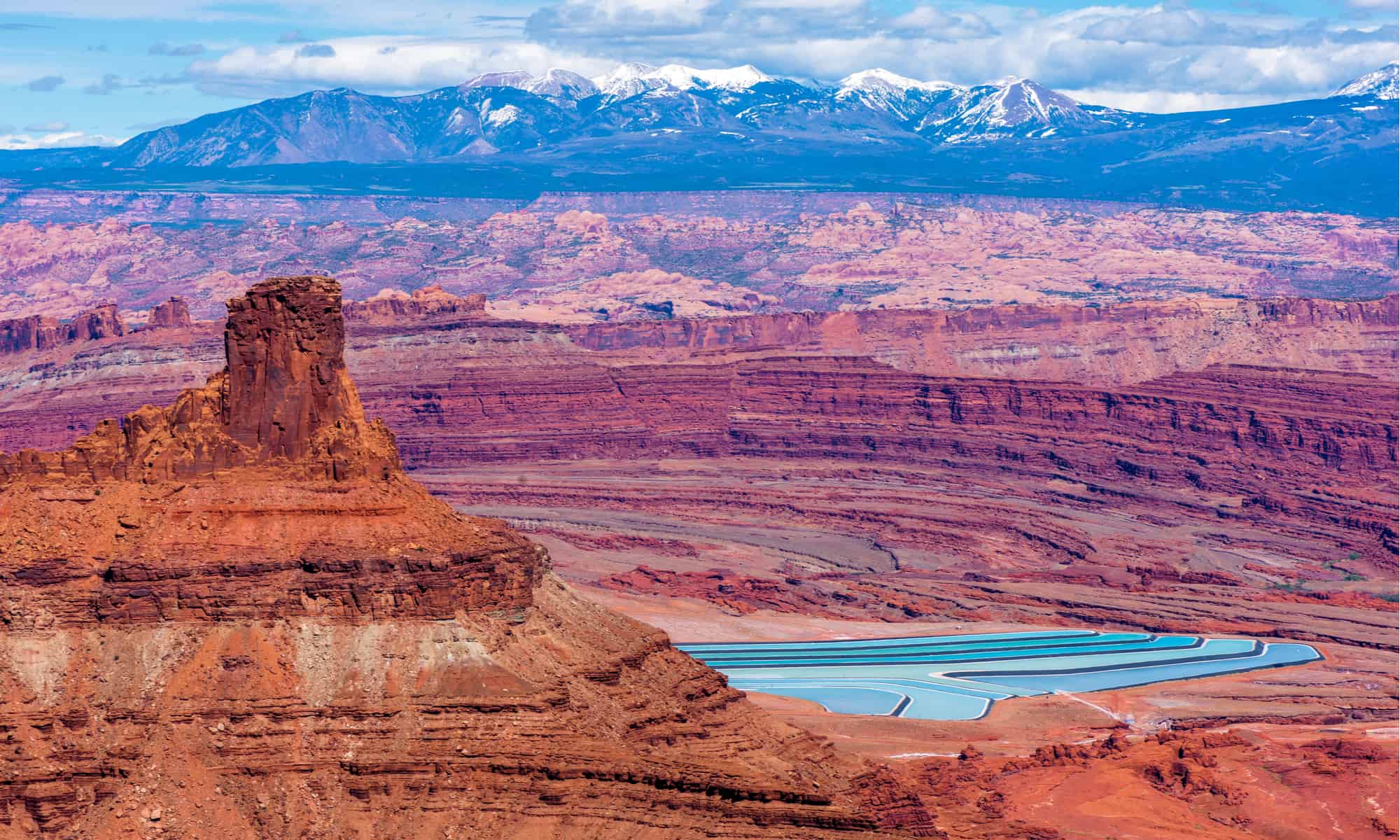

Perched high above the Colorado River, Dead Horse Point State Park in southeastern Utah is a desert that’s anything but barren. The park’s mesas, cliffs, and sage flats may appear desolate baking under the sun, but a closer look reveals a variety of creatures that can endure in heat, drought, and wind. Each species has a story of survival in a dramatic and dangerous landscape of the American Southwest.
Mule Deer (Odocoileus hemionus)
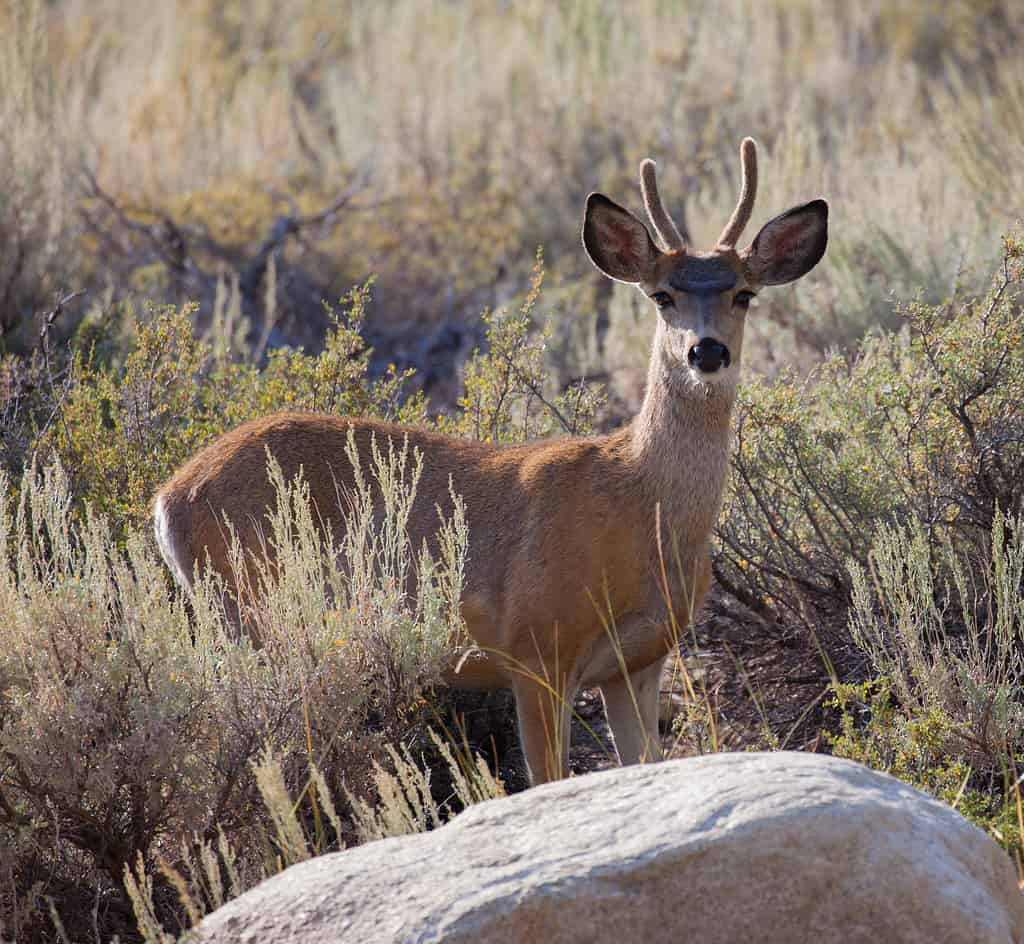
Mule Deer (Odocoileus hemionus)
©epantha/iStock via Getty Images
The most frequently spotted large mammal in the park, the mule deer, moves gracefully across the rimlands during early morning and dusk. Their oversized ears rotate like radar dishes to detect sound, and their dusty gray coats blend perfectly with the brown backdrop of rocks and scrub brush.. Mule deer feed on shrubs and grasses that grow in cracks and washes. In summer, they rest in whatever shade they can find during the day; in winter, they descend to lower elevations to find food and shelter from snow.
Coyote (Canis latrans)
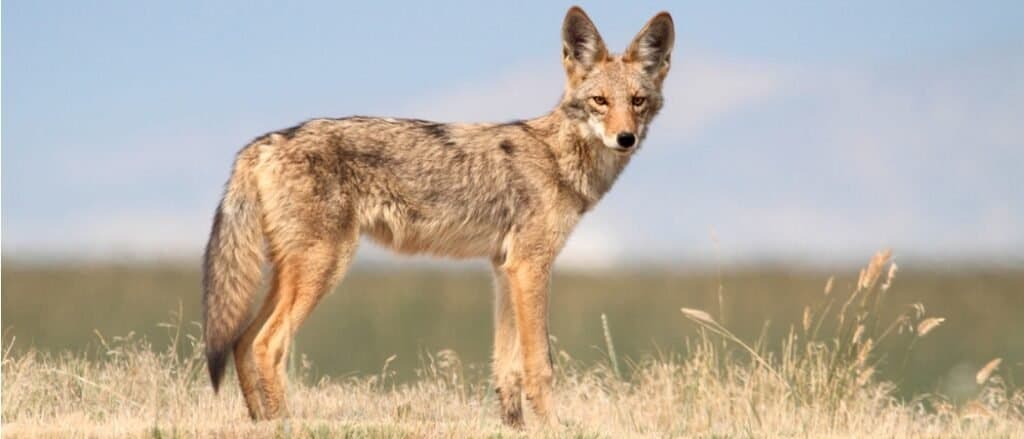
Coyote (Canis latrans)
©iStock.com/SteveByland
Clever, wary, and adaptable, coyotes are the desert’s ultimate survivors. They roam the mesas alone or in loose family groups, hunting rodents, lizards, and rabbits. Occasionally, they scavenge carrion or raid insect burrows for grubs. At night, their eerie, high-pitched yips echo through the canyons, a haunting and iconic sound of the western desert. Their coats are mottled gray, brown, black, and white, helping them stay camouflaged in the arid terrain.
Mountain Lion (Puma concolor)
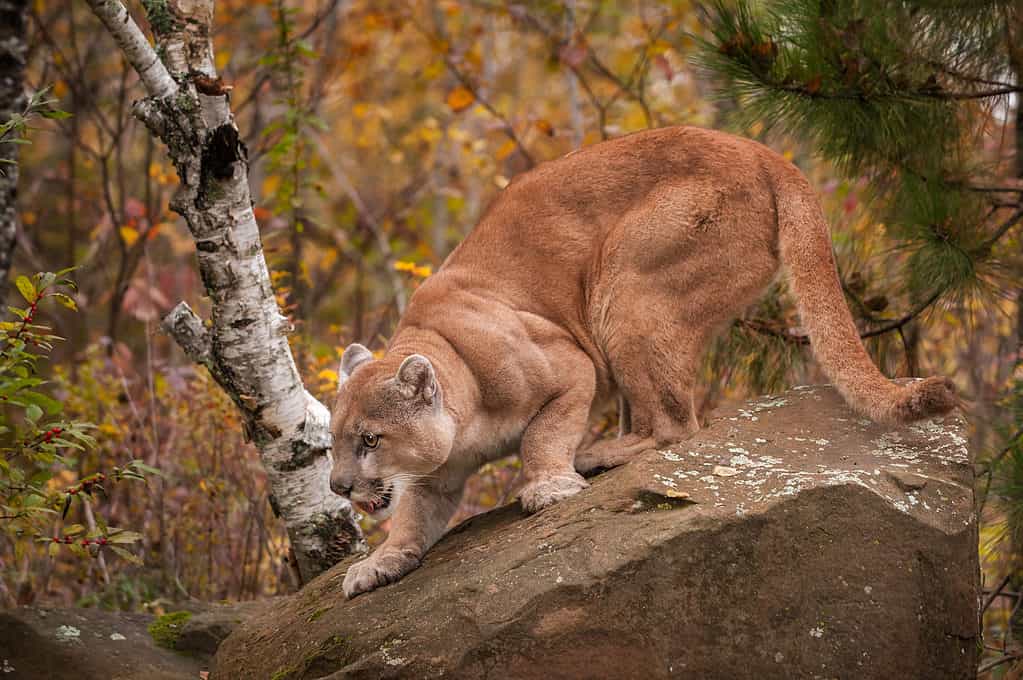
Mountain Lion (Puma concolor)
©Holly Kuchera/Shutterstock.com
These stealthy cats are rarely seen by visitors, but they are without question the park’s apex predator. Their range is enormous, stretching well beyond Dead Horse Point into the surrounding canyonlands. Solitary hunters, they prey upon mule deer, rabbits, and occasionally coyotes. Signs of their presence, such as tracks or scrapes, are more common than actual sightings. Their existence here underscores the park’s wildness and intact food chain.
Bobcat (Lynx rufus)
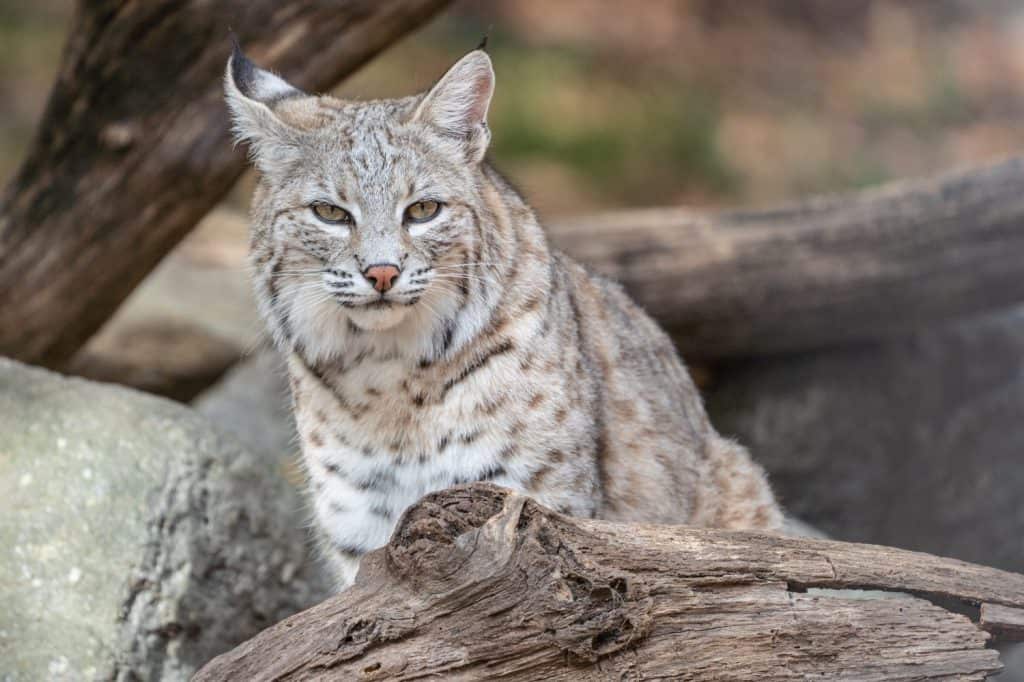
Bobcat (Lynx rufus)
©Amy Lutz/Shutterstock.com
Smaller than a mountain lion but sharing its stealth, the bobcat hunts among the boulders and gullies. It targets small mammals, birds, and reptiles, relying on camouflage and patience rather than speed. With tufted ears and a short “bobbed” tail, this predator often uses juniper thickets and rock overhangs for cover as it hunts with quiet efficiency.
Rock Squirrel (Otospermophilus variegatus)

Rock Squirrel (Otospermophilus variegatus)
©Angel DiBilio/Shutterstock.com
Bold and social, rock squirrels are common around picnic areas and canyon overlooks. Their salt-and-pepper fur and bushy tails make them easy to spot sunning on boulders. They feed on seeds, nuts, cactus fruits, and sometimes insects. In the intense summer heat, they retreat to burrows during midday, emerging when temperatures fall. Though they appear tame, feeding them disrupts their natural behavior, can harm the animal, and may create an annoying pest for visitors.
Hopi Chipmunk (Neotamias rufus)
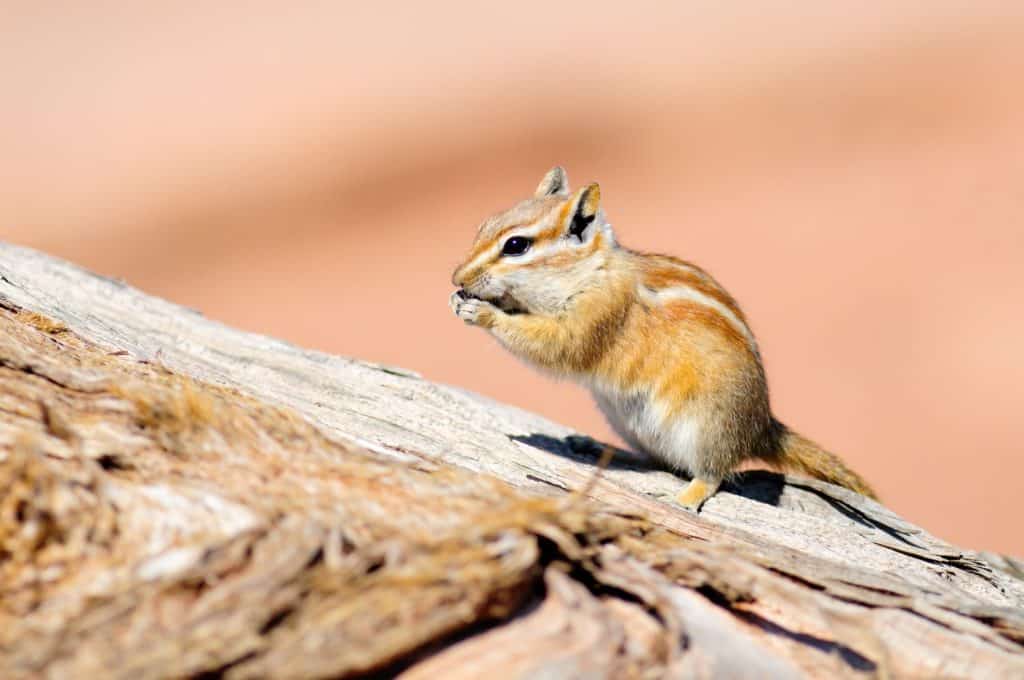
Hopi Chipmunk (Neotamias rufus)
©kojihirano/Shutterstock.com
Tiny, quick, and endearing, the Hopi chipmunk darts through the underbrush and sandstone cracks in search of seeds. Its reddish fur mirrors the color of the surrounding cliffs, and its high-pitched chirps add brief sparks of sound to the still air. These chipmunks are vital seed dispersers, storing food that, when uneaten, may later germinate into new desert plants.
Desert Cottontail (Sylvilagus audubonii)
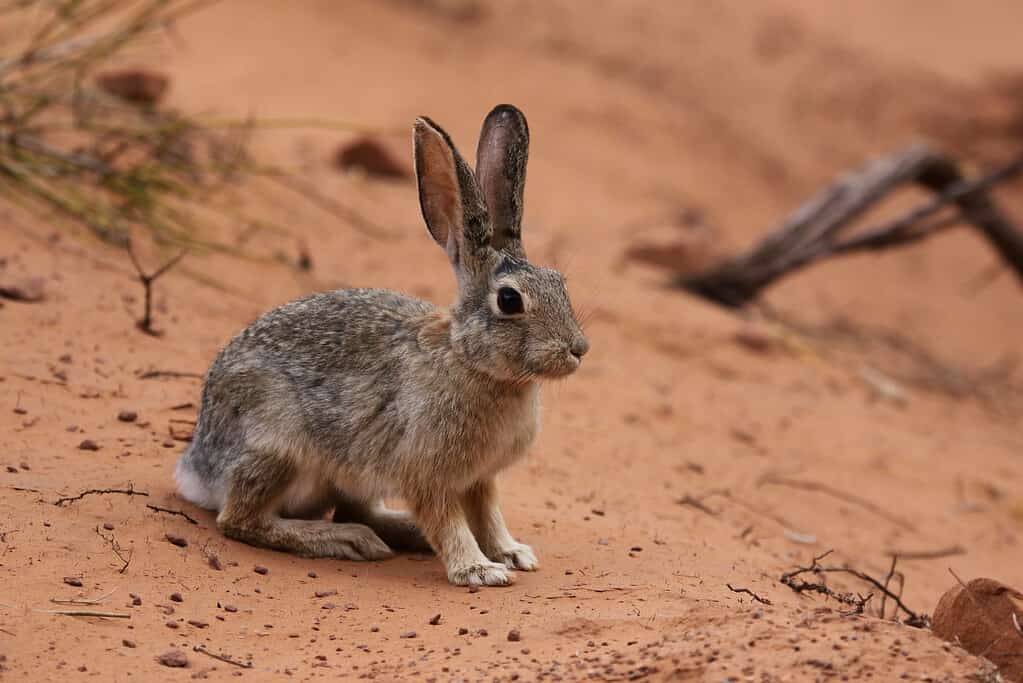
Desert Cottontail (Sylvilagus audubonii)
©Chris Hill/Shutterstock.com
The desert cottontail’s oversized ears act as natural radiators, releasing heat into the air. Often seen hopping along the trail edges, they browse on grasses near dawn and dusk. Their light fur provides camouflage against sand and snow, and their agility helps them evade coyotes and raptors. When threatened, they freeze motionless before bolting in a zigzag sprint to cover.
Golden Eagle (Aquila chrysaetos)
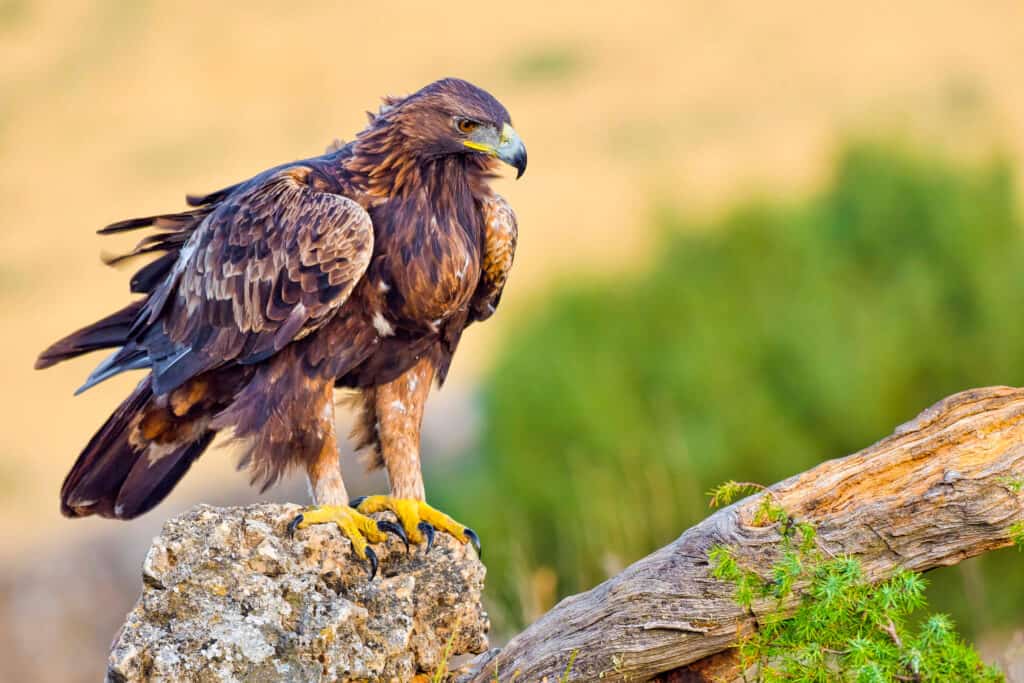
Golden Eagle (Aquila chrysaetos)
©Al Carrera/Shutterstock.com
Among the most majestic creatures of Dead Horse Point, the golden eagle rides the thermal currents rising from the canyon. With a wingspan that can exceed seven feet, it surveys the landscape for rabbits, ground squirrels, or even young deer. Golden eagles nest on remote cliffs, often returning to the same site year after year. Spotting one circling the Colorado River bend at midday is an unforgettable highlight for many visitors.
Red-Tailed Hawk (Buteo jamaicensis)
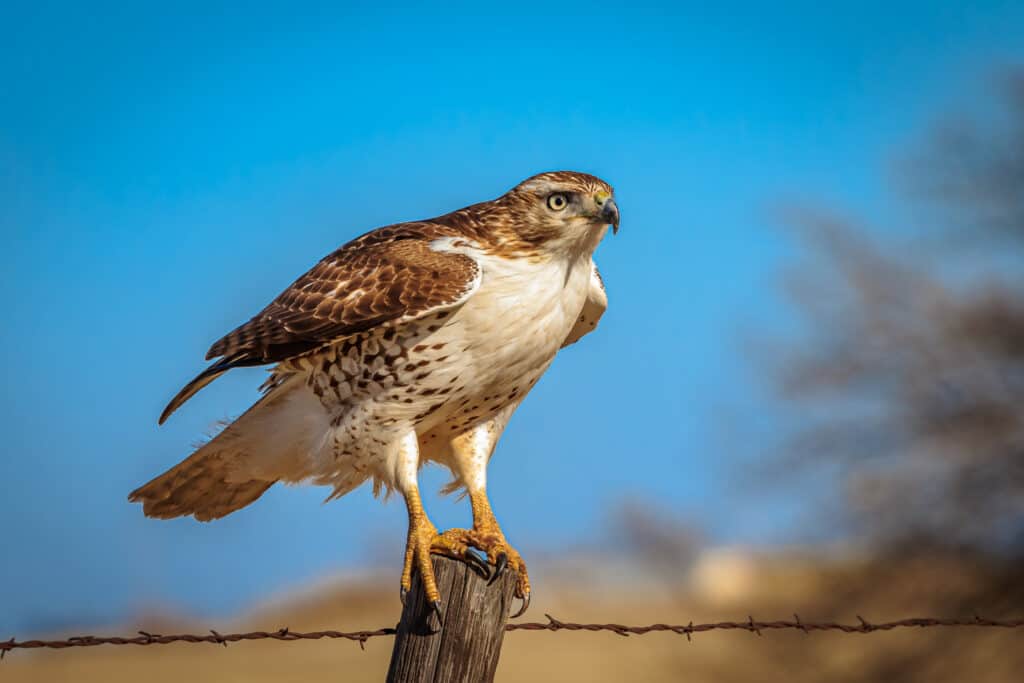
Red-Tailed Hawk (Buteo jamaicensis)
©Richard G Smith/Shutterstock.com
A familiar sentinel of the desert skies, the red-tailed hawk is easily identified by its russet-colored tail and piercing cry. These hawks perch atop junipers or rock spires, scanning for small mammals and reptiles. They play a key ecological role in keeping rodent populations in check. It’s thrilling to see them spiraling gracefully above the mesa rim—as long as you are not on the menu.
Common Raven (Corvus corax)
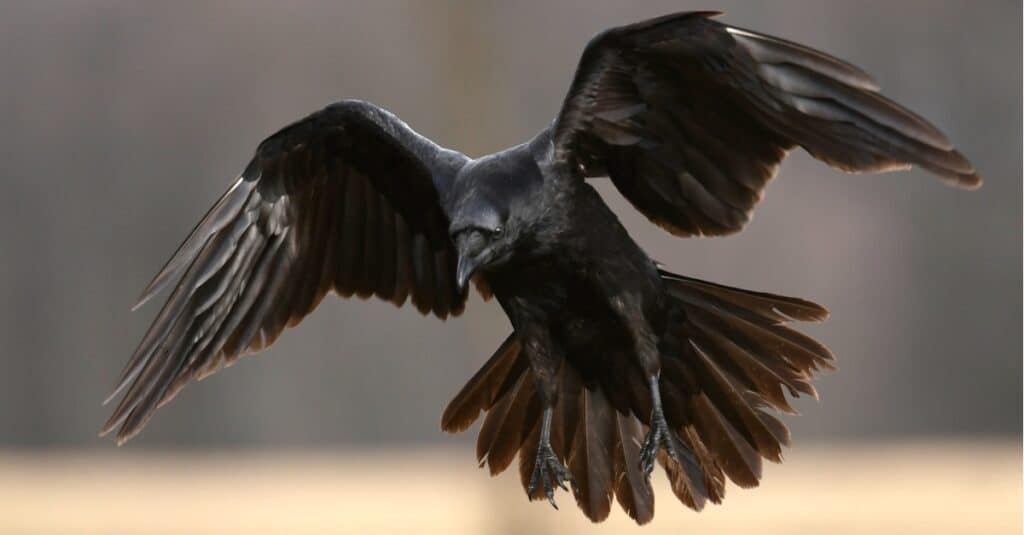
Common Raven (Corvus corax)
©iStock.com/Piotr Krzeslak
Intelligent, mischievous, and social, ravens are the tricksters of the canyonlands. They soar effortlessly on updrafts, call to each other in a wide range of croaks and clicks, and often investigate human activity with bold curiosity. Ravens scavenge carrion, steal food scraps, and even drop nuts onto rocks to crack them open. Ravens have been known to remember and hold grudges against people they don’t like, so be sure to treat them right.
Peregrine Falcon (Falco peregrinus)

Peregrine Falcon (Falco peregrinus)
©Katiekk2/iStock / Getty Images Plus via Getty Images
The peregrine falcon is the park’s aerial missile — the fastest animal on Earth, capable of diving at over 200 miles per hour. Formerly endangered, peregrine falcons have made a strong recovery and now maintain stable populations across Utah. They feed on smaller birds, intercepting them with precision mid-flight. Their presence in Dead Horse Point is a strong indication of the success of conservation efforts.
Canyon Wren (Catherpes mexicanus)
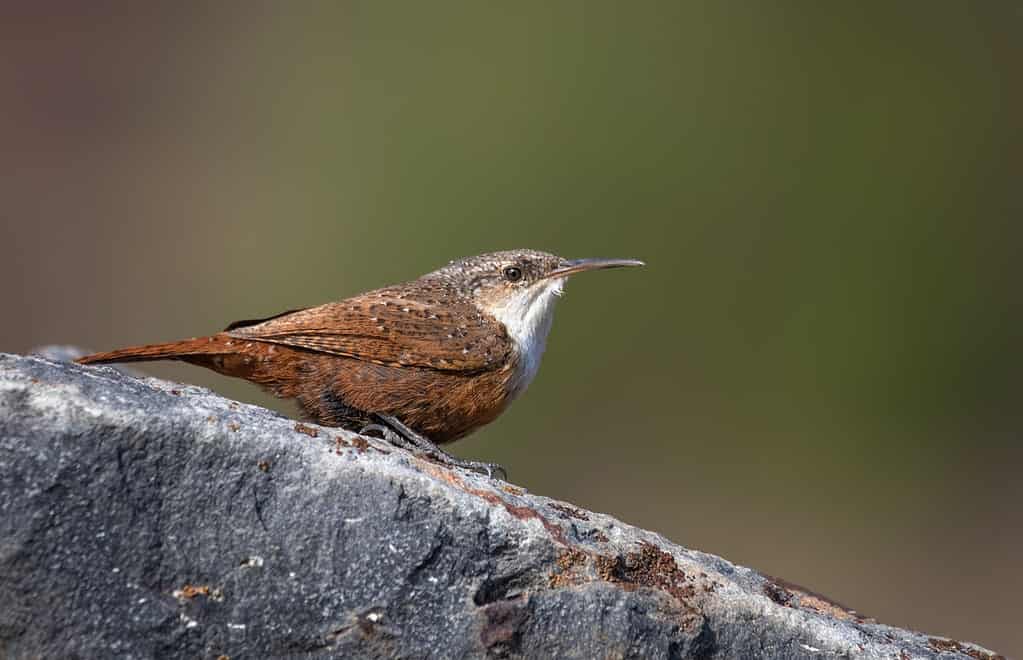
Canyon Wren (Catherpes mexicanus)
©iStock.com/graphicphoto
If you hear a descending, flute-like whistle echoing through the red walls, it’s likely the canyon wren. This small bird with a rusty belly and white throat makes its home in cracks and ledges of the cliffside. Though tiny, it fills the vast canyons with one of the region’s most distinctive songs. Canyon wrens feed on insects and spiders they pick from rock crevices, moving with quick, darting steps.
Collared Lizard (Crotaphytus collaris)
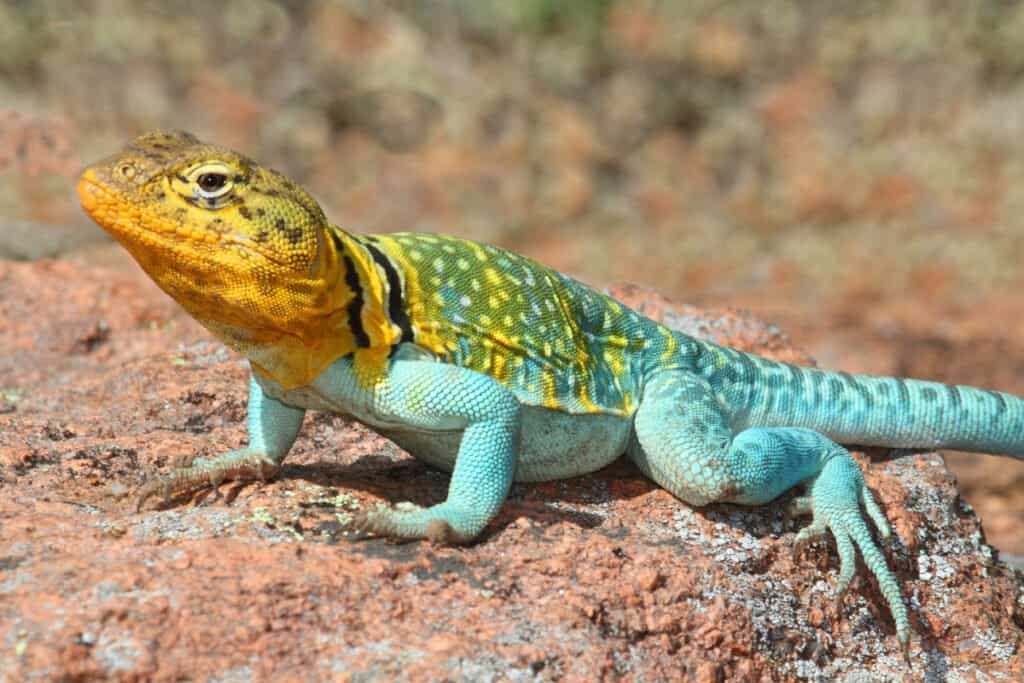
Collared Lizard (Crotaphytus collaris)
©iStock.com/SteveByland
The collared lizard is the desert’s showpiece of color and power. Males glow with turquoise and yellow scales and two dark “collars” around their necks. On sunny days, they perch proudly on warm rocks before dashing off on their hind legs when startled — a flash of prehistoric energy. They prey on insects, smaller lizards, and occasionally young rodents, embodying the speed and boldness of desert life.
Side-Blotched Lizard (Uta stansburiana)
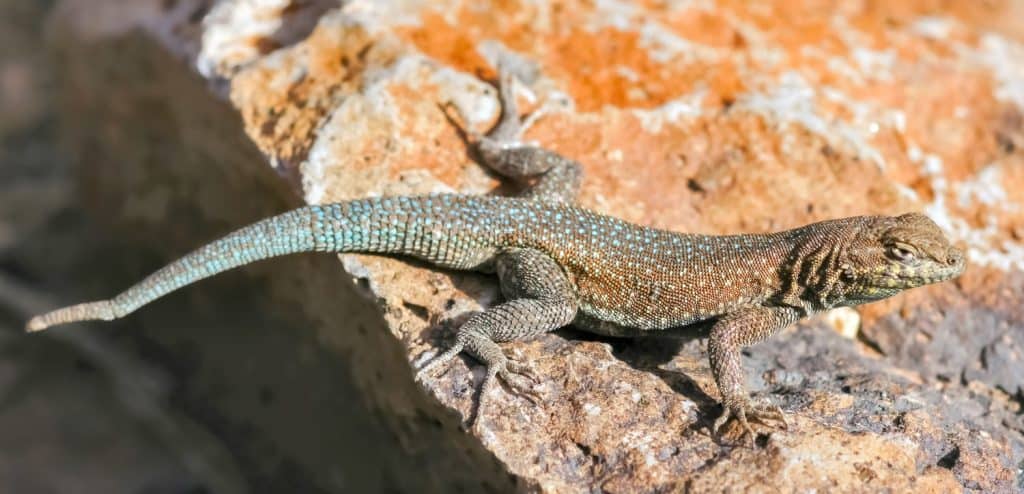
Side-Blotched Lizard (Uta stansburiana)
©yhelfman/Shutterstock.com
Small but abundant, the side-blotched lizard is easy to spot scampering across slickrock. Named for the dark spot behind its front legs, it thrives in the park’s sunniest stretches. It feeds on ants, beetles, and spiders, serving as an essential link in the food web. Males have different color variations on their throats that play a role in competition for mates. This is a reminder that the colors and patterns of animals, beautiful though they may be, also serve a practical function for the survival of their species.
Midget Faded Rattlesnake (Crotalus oreganus concolor)
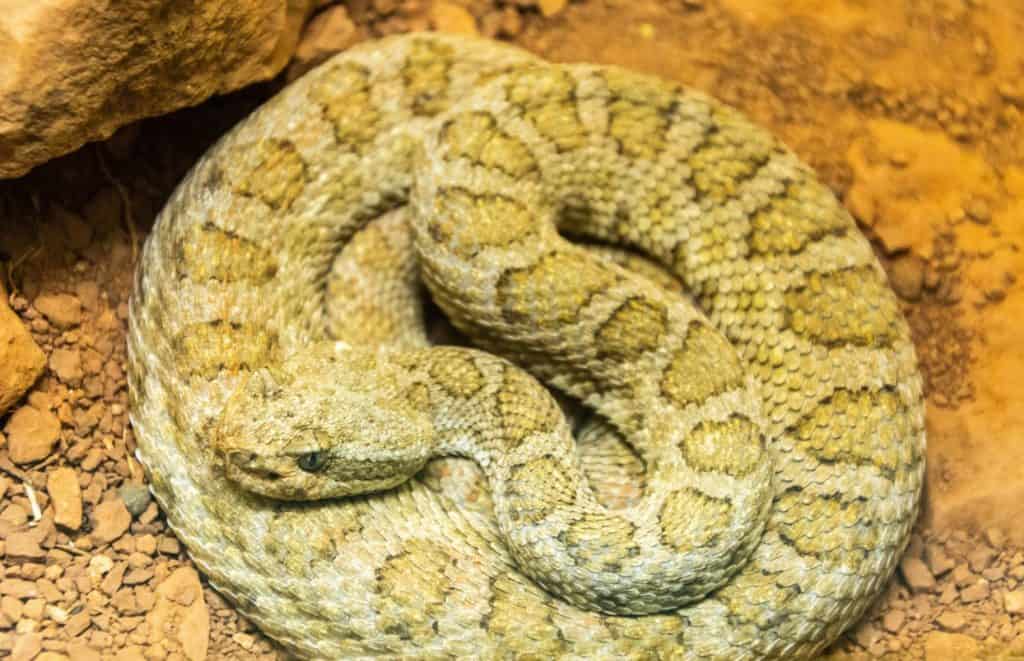
Midget Faded Rattlesnake (Crotalus oreganus concolor)
©Alizada Studios/Shutterstock.com
This small subspecies of the western rattlesnake is one of the park’s few venomous species. The midget faded rattlesnake is reclusive, preferring rocky ledges and shaded crevices. Its subtle patterning looks a lot like sandstone and helps it stay hidden in plain sight. It controls rodent populations and is rarely aggressive unless cornered, but you should still give it a very wide berth.
Gopher Snake (Pituophis catenifer)
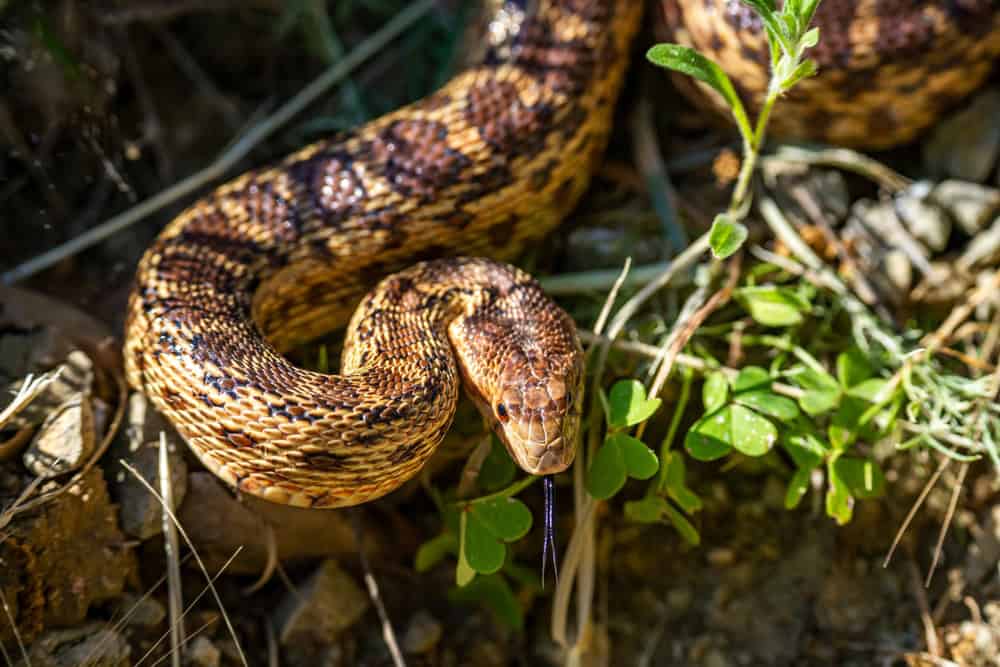
Gopher Snake (Pituophis catenifer)
©Iv-olga/Shutterstock.com
Large and muscular, the gopher snake mimics the behavior of rattlesnakes — flattening its head, hissing loudly, and shaking its tail in dry grass — but it’s harmless. This mimicry deters predators, giving the snake a survival edge. Gopher snakes feed primarily on small mammals and birds, often entering burrows to find prey. They’re among the desert’s most beneficial residents.
Red-Spotted Toad (Anaxyrus punctatus)
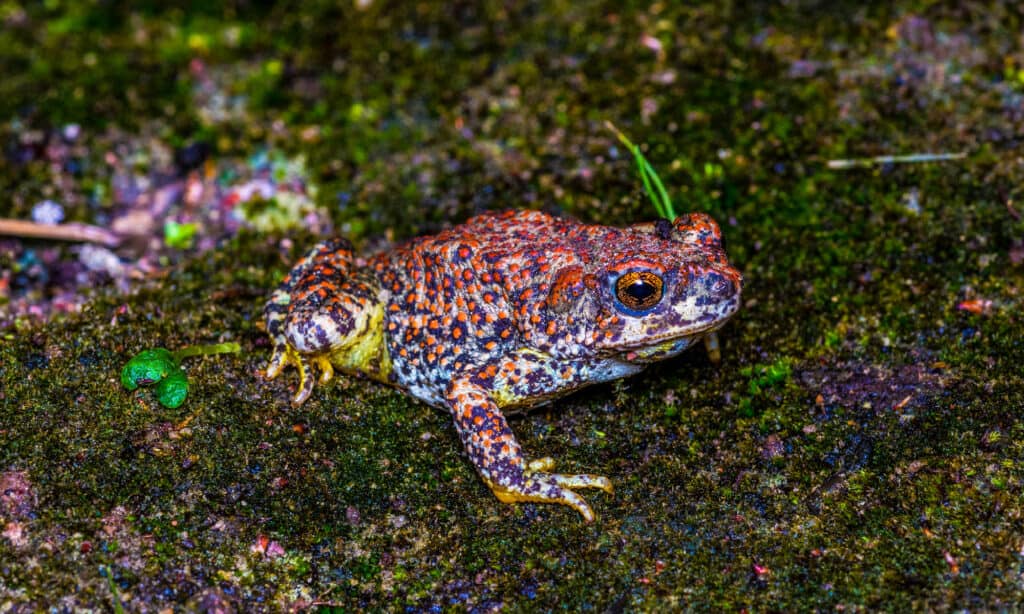
Red-Spotted Toad (Anaxyrus punctatus)
©iStock.com/Timothy Cota
Though amphibians are rare in such dry terrain, the red-spotted toad manages life here through patience and timing. It spends most of the year burrowed underground, emerging only after summer rains to breed in temporary pools. Its reddish warts and small size make it easy to overlook, yet it’s an important part of the desert’s brief wet-season chorus.
Darkling Beetle (Eleodes spp.)
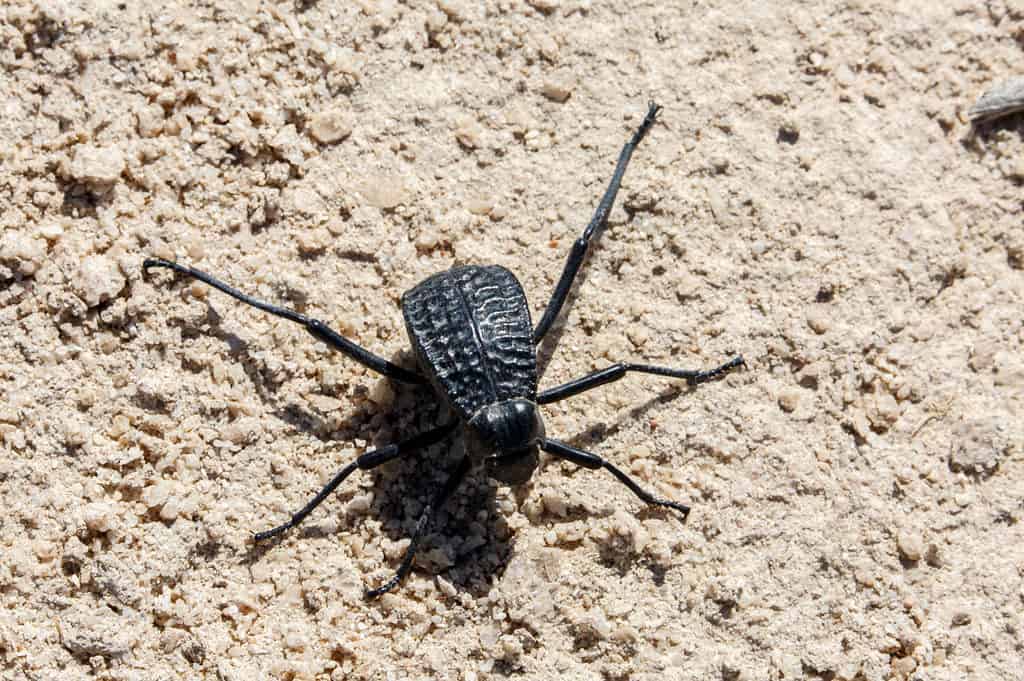
Darkling Beetle (Eleodes spp.)
©Manu M Nair/Shutterstock.com
Sturdy and slow-moving, darkling beetles are the desert’s cleanup crew. They scavenge dead plant matter, breaking it down into soil nutrients. Their black, matte exoskeleton reduces water loss, and when threatened, they raise their hind end and release a pungent odor — a classic desert defense. These beetles are easy to find after dusk, crossing sandy paths in the beam of a flashlight.
Desert Scorpion (Paruroctonus boreus)
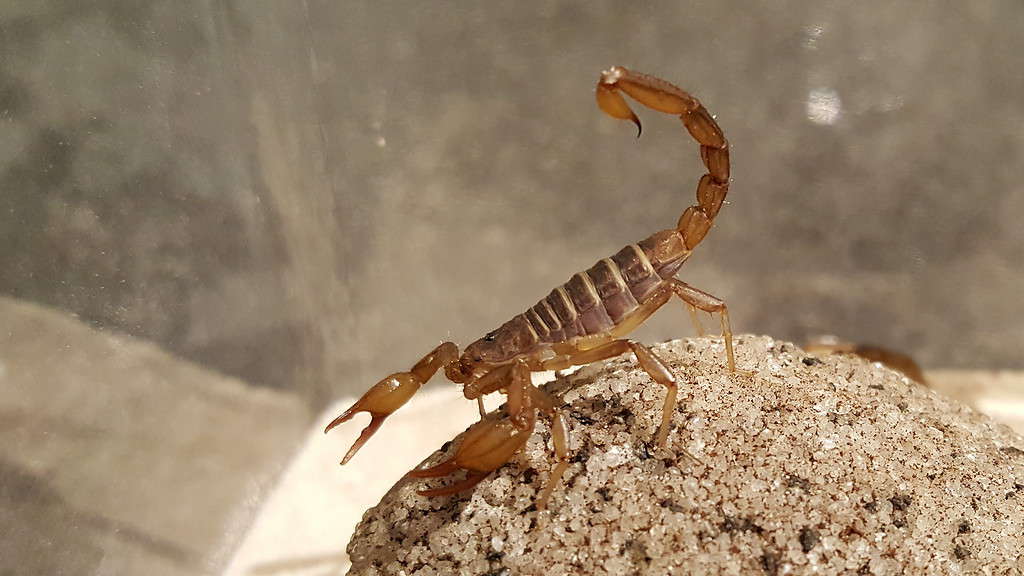
Desert Scorpion (Paruroctonus boreus)
©Xbuzzi, CC BY-SA 4.0 <https://creativecommons.org/licenses/by-sa/4.0>, via Wikimedia Commons – Original / License
The desert scorpion emerges after dark to hunt insects and small spiders using the sensitive hairs on its pincers to detect vibration. They are effective hunters that are vital to insect control. Their stings are venomous and can be as painful as a hornet’s, but they are generally not dangerous, except for people who are allergic.
Western Pipistrelle (Parastrellus hesperus)
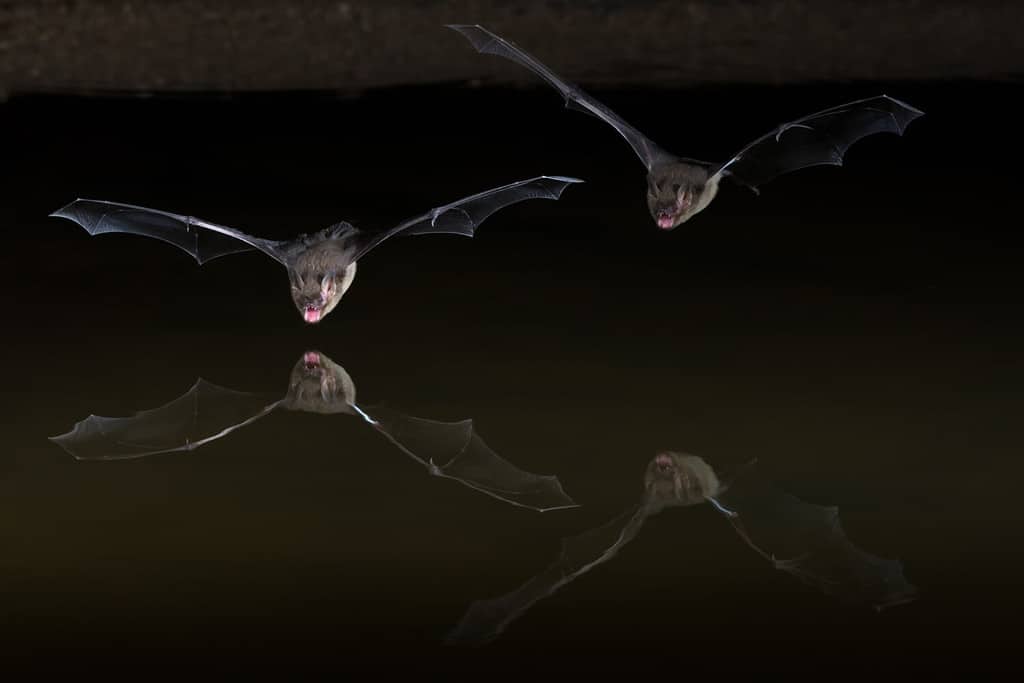
Western Pipistrelle (Parastrellus hesperus)
©Dee Carpenter Originals/Shutterstock.com
Utah’s smallest bat, the western pipistrelle, takes to the skies at dusk, fluttering above trails and canyons. Feeding on flying insects, it navigates with echolocation — silent to human ears but precise as radar. These bats roost in cracks and rock shelters during the day and emerge as the last light fades. Although some people find them creepy, these little mammals are hugely beneficial to the park ecosystem, eating tons of insects every year.
A Desert Full of Life
Under the fading light at Dead Horse Point, the desert comes alive in small, steady ways. Birds settle, insects hum, and distant calls echo through the canyons. Each animal here, from the smallest lizard to the soaring eagle, plays a part in keeping this landscape balanced. The desert is not empty or still — it’s resilient, efficient, and quietly full of life.