
Quick Take
- An animal can be "lost" to science while locals know exactly where it lives. The article explains the twist.
- One odd clue guided where the team aimed their cameras. Can you guess what a shy, burrowing animal leaves behind?
- This creature mixes hedgehog, anteater and mole features, and its biology gets stranger from there.
- The discovery didn't end the story: its legal protection raises an unsettling question.
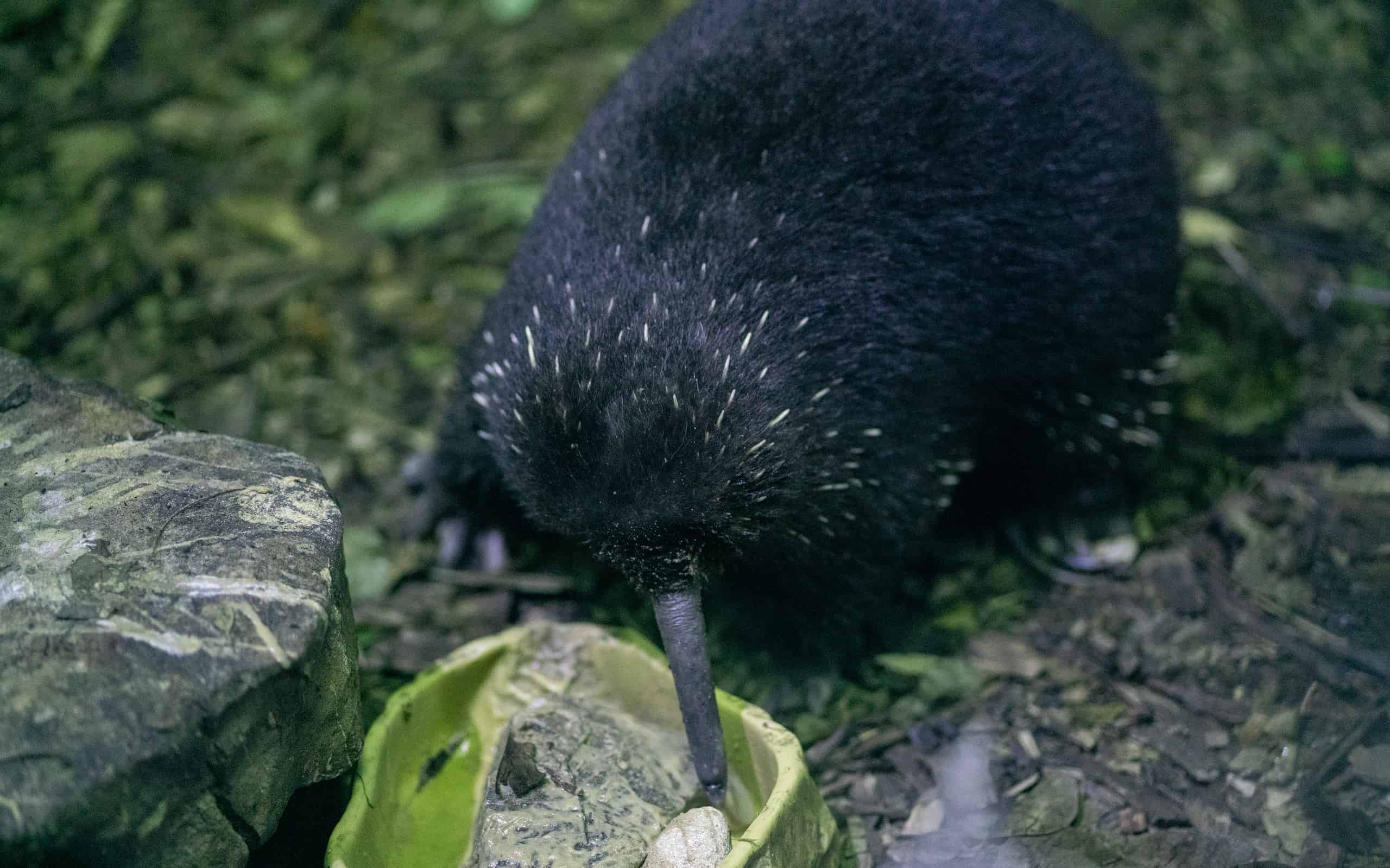
An Oxford-led team working with Indonesian partners set more than 80 trail cameras in the Cyclops Mountains of Indonesia’s Papua Province, the University of Oxford said in its November 2023 announcement. For almost the entire four weeks in the forest, the cameras showed no sign of the animal the team was after. On the last day, the last images on the final memory card held three shots of Attenborough’s long-beaked echidna, an egg-laying mammal science had recorded only once, in 1961.
The expedition ran in June and July of that year, NPR reported. The three shots were the first photographs ever taken of the species, and Oxford released the trail-camera footage. A peer-reviewed paper in npj Biodiversity confirmed the rediscovery in May 2025.
Watch Oxford’s trail-camera footage on YouTube
What is Attenborough’s long-beaked echidna?
Expedition leader James Kempton, an Oxford biologist, told NPR the animal has “the spines of a hedgehog, the snout of an anteater and the feet of a mole”. It is one of five living monotremes, the egg-laying mammals that include the platypus. The group split from other mammals more than 200 million years ago.
Re:wild, a conservation group on the expedition, calls it the smallest of the three long-beaked echidnas.
A female echidna lays one leathery egg about the size of a grape, which hatches in her pouch 10 days later, according to the San Diego Zoo Wildlife Alliance. Echidnas have no teeth. They lap up ants, termites and earthworms with a 6-inch tongue, guided by a rubbery snout that senses electrical signals from an insect’s body.
Why did it take 62 years?
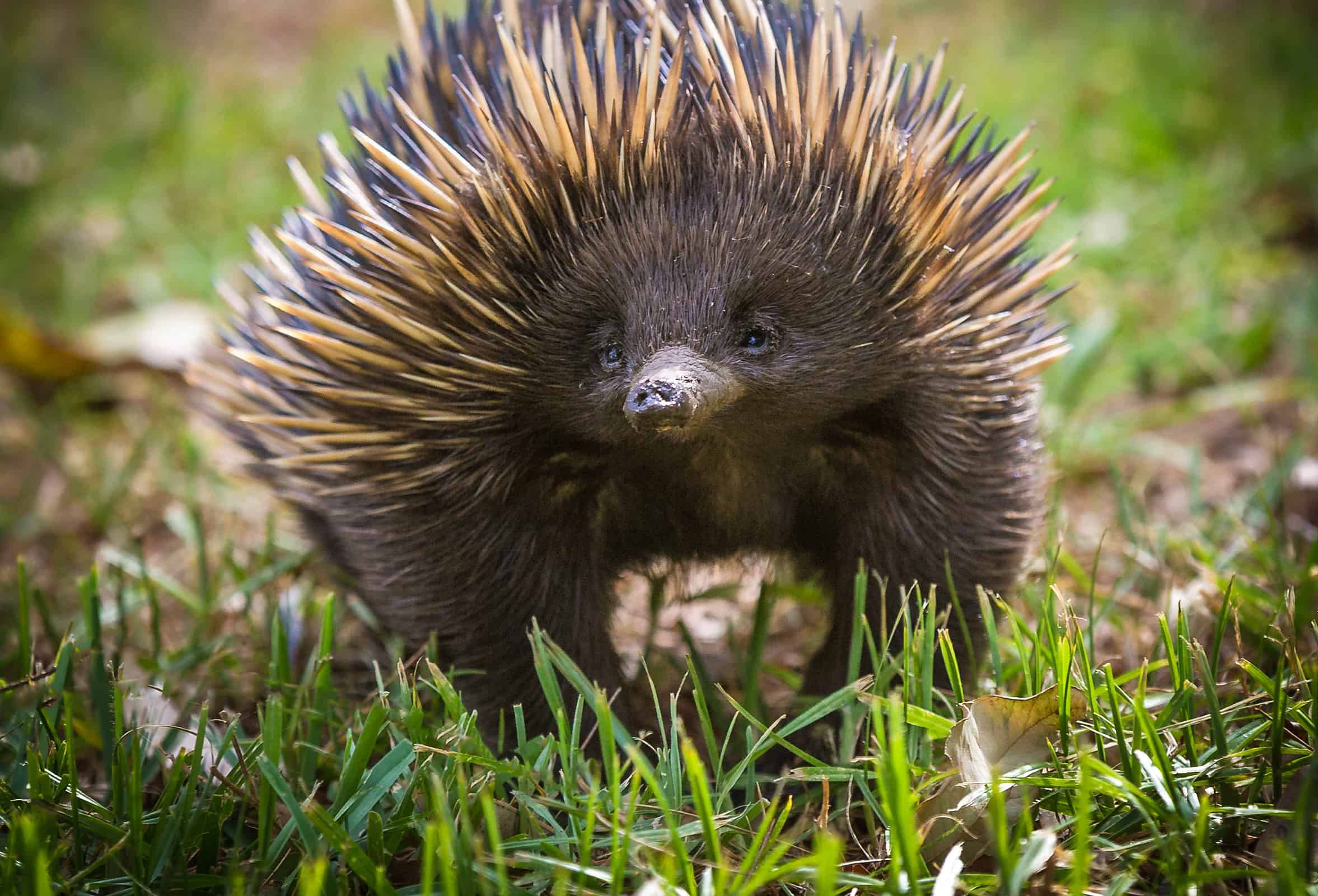
A short-beaked echidna, the smaller-snouted relative that lives in Australia and New Guinea. ©pelooyen/Getty Images
©pelooyen/iStock via Getty Images
Between 1961 and 2023, the only scientific record was a single specimen collected by a Dutch botanist.
Echidnas are nocturnal, live in burrows and tend to be very shy. The Zoological Society of London’s EDGE of Existence program says long-beaked echidnas occur at naturally low densities and spend their days resting in shallow burrows or hollow logs. Even hunters with trained dogs consider this species extremely rare.
Re:wild said the echidna is not known to live anywhere outside the Cyclops Mountains. The range rises from sea level to 6,170 feet, with malarial mosquitoes, venomous snakes and leeches.
How did the team finally find it?
Oxford said the expedition took three and a half years to plan and depended on the trust of Yongsu Sapari, a village on the north coast of the Cyclops Mountains. The 2025 paper says the team relied on local knowledge of echidna behavior and signs to decide where to place cameras. One sign is the “nose poke,” a hole an echidna leaves when it probes the ground for worms.
Over multiple ascents the team climbed more than 36,000 feet in total, more than the height of Everest. Oxford’s account includes an earthquake that forced an evacuation, a case of malaria, and a leech attached to one member’s eye for a day and a half.
“It was the very last images, from the final camera that we collected, on the final day of the last ascent of the expedition,” Kempton told NPR.
He was the last scientist left, looking through images at the base house, when he ran into the living room and told his Papuan colleagues “we found it, we found it,” he told BBC Radio 4’s Today programme. Kristofer Helgen of the Australian Museum Research Institute later confirmed the identification, Oxford said.
Was it ever really lost?
It was lost to science. People living in the Cyclops reported seeing the echidna between 1961 and 2023, the paper’s authors wrote, and a research team found nose pokes there in 2007. In the local Tepera language, the animal is called payangko.
What has happened since?
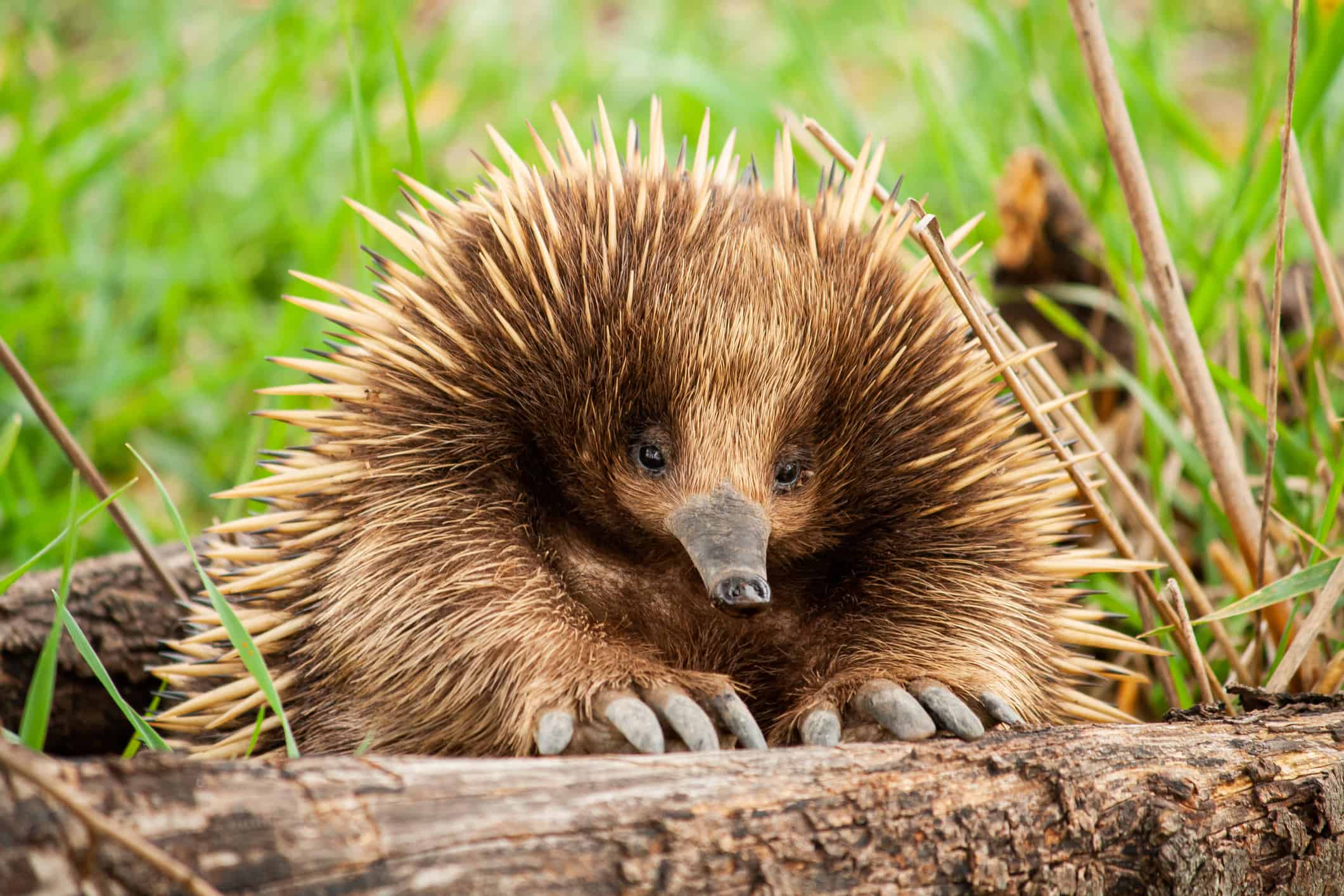
A short-beaked echidna rests on a log. It is the most widespread of the four echidna species. ©Jarrod Calati/Getty Images
©Jarrod Calati/iStock via Getty Images
The paper, led by expedition member Gison Morib, reports 110 echidna photos from 26 independent capture events on six cameras, plus 15 videos, all from the 2023 survey. The cameras stayed active for an average of 163 days.
The animals show five claws on each forefoot, which rules out the western long-beaked echidna and its three or four. The authors could not firmly separate them from the widespread Zaglossus bartoni by images alone, and they call for a full review of long-beaked echidna taxonomy.
Some photos show more than one echidna in what looks like courtship, which suggests the population is breeding. Its size is unknown.
Is it protected?
The species is listed as Critically Endangered on the IUCN Red List. The 2025 paper says the mountains contain a protected area of about 78,000 acres.
NBC News reported in 2023 that the range had seen illegal hunting for years. Kempton said at the time that the echidna was not protected under Indonesian law.