Quick Take
- A stranger with no band and no past sat calmly in Shadow's nest for an hour. Why would a guarding eagle allow it?
- Shadow's loud calls may have been a bluff, and the reason has to do with who outweighs whom.
- Experts lean one way on the visitor's identity, and their second clue is about Shadow himself.
- Shadow didn't wait the way eagles usually do after losing a mate. One date in January could settle who wins the nest.
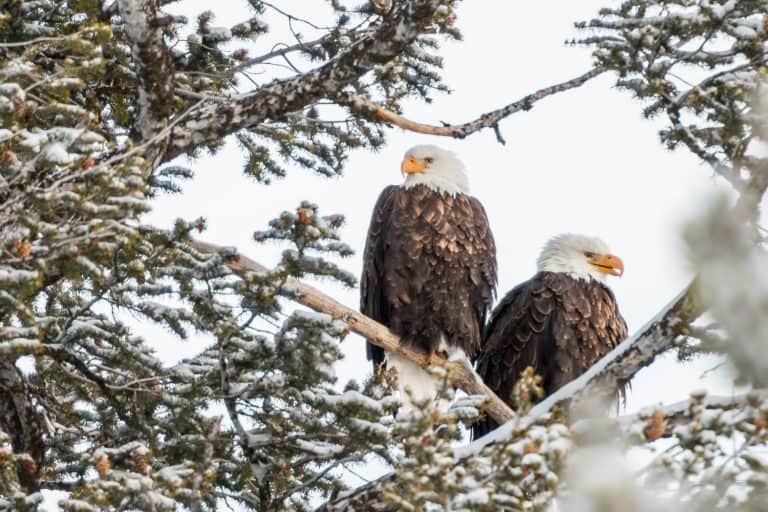
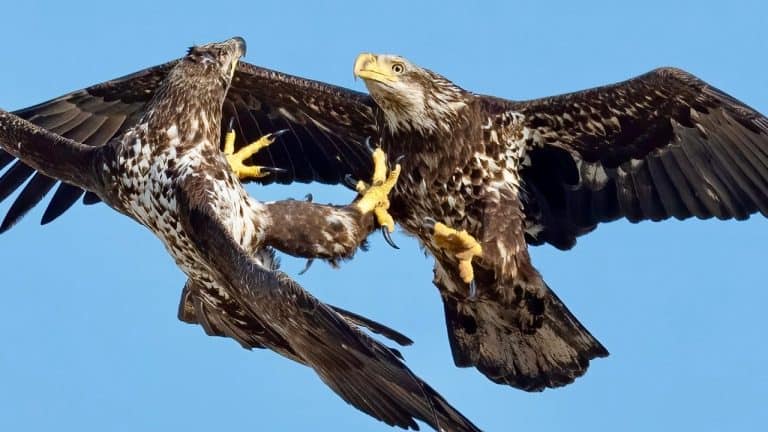
On the morning of Monday, November 16, 2026, an eagle nobody could name sat on a dead tree above Big Bear Valley, California, with a few ravens for company. The people at Friends of Big Bear Valley call that perch the Lookout Snag. The bird on it was a grown adult with no leg band and no known past. By early afternoon it had followed Shadow into the nest bowl, the hollow in the middle of a nest that millions of people watch online.
Shadow answered with his voice. He “sounded off” with a few short calls, pushed some sticks around, and then both birds settled at opposite ends of the nest. They stayed like that for about an hour before the visitor flew off. KTLA in Los Angeles reported the sighting from the nonprofit’s live camera, and by that Thursday it described Shadow as growing increasingly comfortable with the mystery bird. For an eagle guarding his own nest, sitting calmly with a stranger for an hour is definitely considered “comfortable.”
Why Shadow Is Available
For years Shadow shared that nest with Jackie. They were the only bald eagles living in Big Bear Valley all year round, in a nest 145 feet up a Jeffrey pine in the San Bernardino National Forest. That treetop was their home until this past summer. Jackie died in August from complications of a severe strain of bird flu, weeks after she was found grounded near Dana Point Park, underweight and too weak to get back up to the tree.
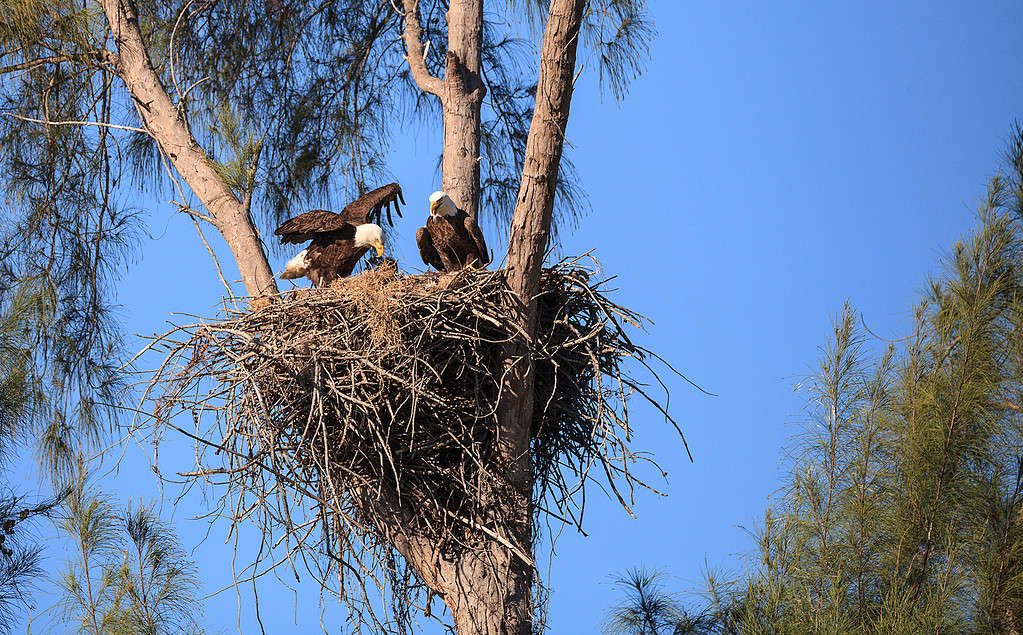
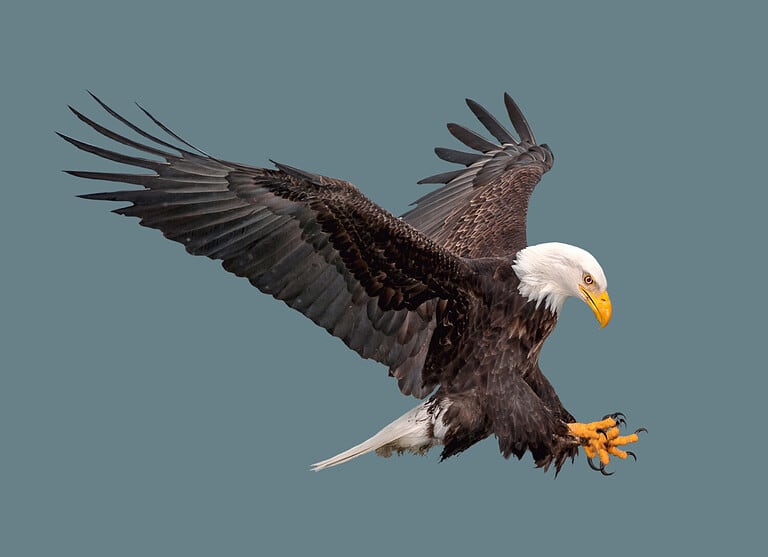
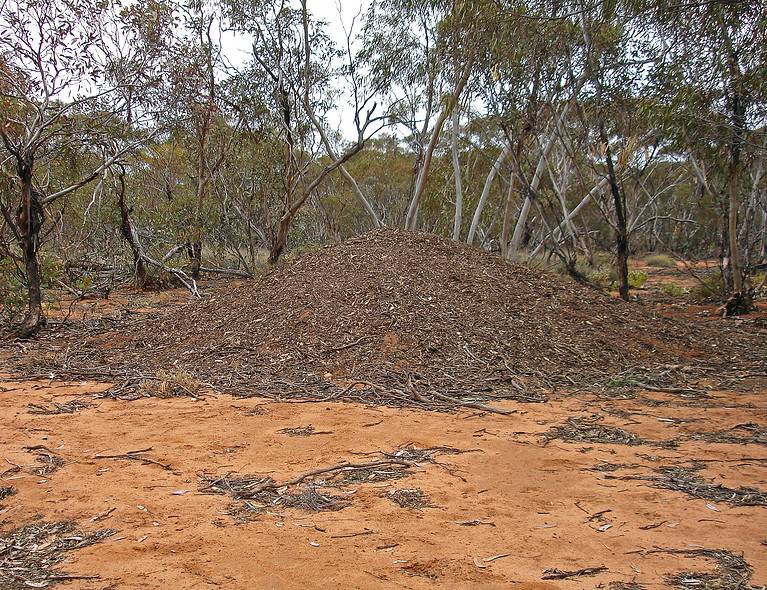
A bald eagle nest can span four to seven feet and grows heavier with every passing year.
©iStock.com/LagunaticPhoto
Bald eagles form strong pair bonds and normally stay with one partner until one of them dies. Shadow kept the tree. Since then he’s been seen on camera with another eagle named Kaydee. The two of them have tidied up the nest, chortled at each other, and chased off intruders. Last week they were seen gently brushing against each other before, in the nonprofit’s words, getting down to business. The “business” turned out to be gathering a few stubborn sticks while Shadow checked over the nest.
What the Visitor Wants
Plenty of grown eagles have no home of their own. Researchers put GPS trackers on 43 adult bald eagles and followed them through 164 breeding seasons. In 38% of those seasons the bird held no territory at all and drifted around instead. A bird without a nest can’t raise young, and a good nest isn’t something you build in a single season. Shadow’s nest has been home to eaglets since 2019. It looks out over Big Bear Lake, and since August it’s been short one owner. An adult female with no place of her own has every reason to keep coming back to see whether that opening is real.
38
%
of breeding seasons in which a GPS-tracked adult bald eagle held no territory at all
Why They Think She’s a Female
The experts’ main clue is her size. Female bald eagles are about 25% bigger than males, roughly 10 to 14 pounds compared with 8 to 11. Apart from that, males and females look alike, and it’s hard to tell them apart unless they’re standing side by side. That’s why the experts say they can’t be sure about this one.
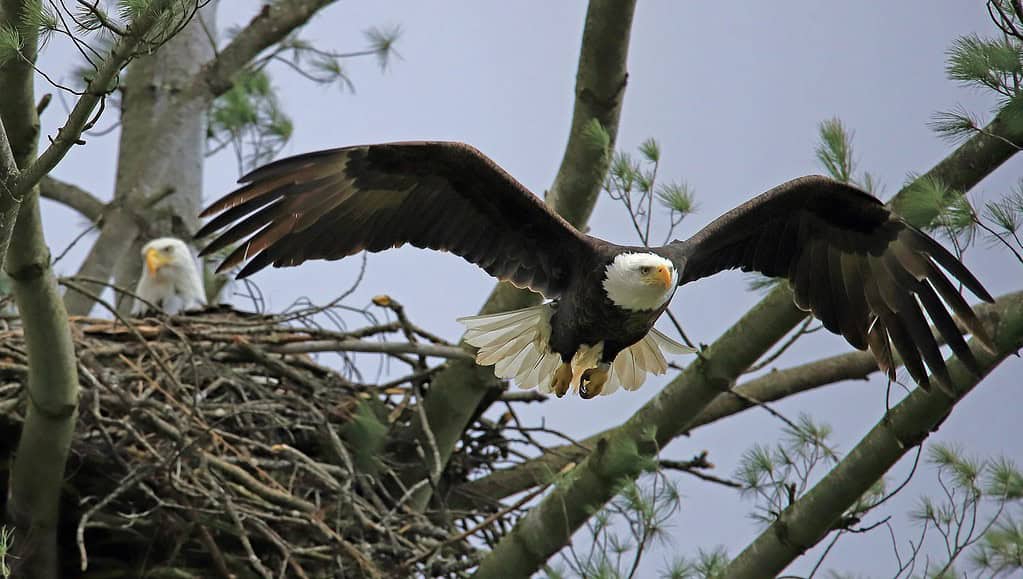
An adult eagle without a territory becomes a floater, unable to breed until a nest opens up.
©Todd Maertz/Shutterstock.com
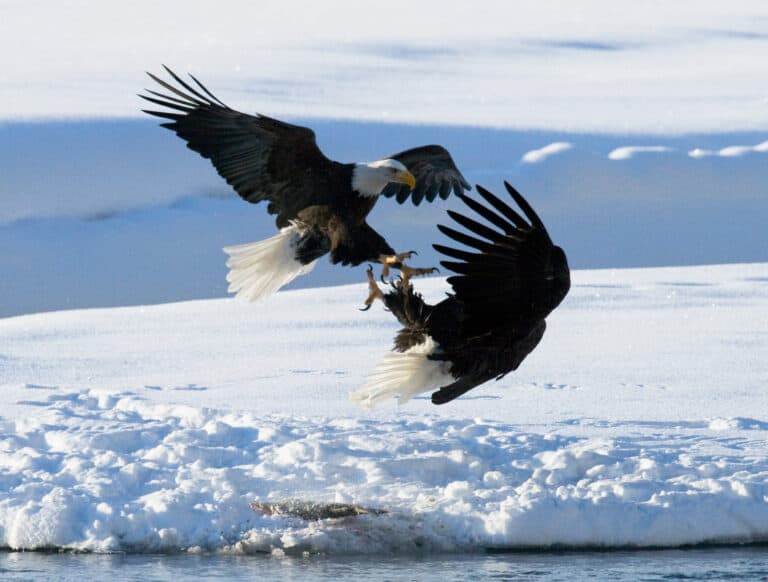
Their second clue is Shadow himself. Wildlife experts told KTLA they lean toward female partly because Shadow may not have put up with a rival male in the nest. A male up there would be a direct challenge for the territory, and eagles can get into dangerous, sometimes deadly, fights over nest sites.
An Hour of Shouting
Shadow kept calling through that hour. The watchers offered a careful guess about why: he may have been trying to make himself seem bigger. Eagles talk to each other in high-pitched chirps, whistles and chattering, and those sounds let a bird stake a claim without touching anyone.
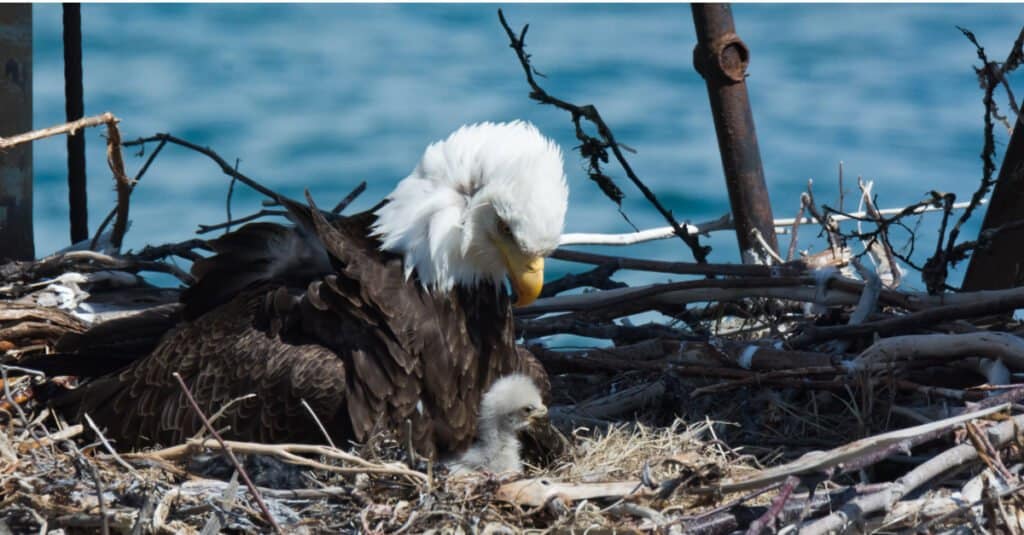
Eagles that lose a mate outside breeding season usually wait until the next one before pairing again.
©Jon C. Beverly/Shutterstock.com
He also had a practical reason to keep things vocal. If the visitor is female, she outweighs Shadow, and that extra size is what gives a female the edge around a nest. Shouting costs him nothing. Wrestling with her could cost him the use of a wing.
Late January Decides It
Mating season is underway in the valley, and Jackie used to lay her eggs here in late January. The weeks before that are when the nest is prepared and a pair’s bond gets built. Eagles that lose a mate outside the breeding season usually wait until the next one to pair up again. Shadow lost Jackie in August, and he hasn’t waited.
The nest he’s guarding is 4 to 7 feet across and gets heavier every year, and right now three adult eagles want it. If eggs show up in that bowl in late January, the camera that’s been pointed at the tree since 2018 will show which bird is sitting on them, and whether it’s the stranger from the Lookout Snag.