
Quick Take
- Decades of conservation work at one of the world's greatest green turtle rookeries is being quietly unraveled, and the reason has nothing to do with fishing or pollution.
- Beachfront lighting doesn't just disorient sea turtle hatchlings. It triggers something far more fatal, and a new wave of legislation is making it harder to fix.
- Sea turtle conservationists admit they're nearly powerless in the open ocean, and this helplessness has nothing to do with a lack of technology.
- Climate change is threatening sea turtles in a way that even protected beaches can't prevent, with the danger occurring inside the nest itself.
Growing up in Florida, David Godfrey loved surfing and spending most of his time in the ocean. It was then that he first became aware of what was happening to marine life on the beaches and in the oceans.
“My passion for conservation is just about the protection of the natural world,” says Godfrey, who started working with the Sea Turtle Conservancy (STC) in 1993, formerly known as the Caribbean Conservation Corporation, as a program director before being named Executive Director in 1997.
“I had the opportunity to make a living, to be employed working on behalf of sea turtles,” says Godfrey. “It could have been pelicans or manatees, or dolphins, or rivers—anything where I could apply my skills and protect the natural world is what I wanted to do. I care just as much about eagles and ospreys and forests and wetlands as I do sea turtles.”
Founded in 1959 by Dr. Archie Carr in an effort to save sea turtles from extinction, the STC has since helped stabilize endangered populations through research, habitat protection, and government policy changes.
In the late 1950s, unregulated commercial harvesting for meat, shells, and oil, along with egg poaching, nearly drove sea turtles to extinction. Today, the threats have multiplied: fishing bycatch, plastic and other marine pollution, unsustainable coastal development and shoreline urbanization, illegal harvesting for meat and the tortoiseshell trade, and boat strikes all threaten sea turtle survival.
According to the STC, the five turtle species most at risk of extinction are the leatherback, green turtle, loggerhead, hawksbill, and Kemp’s Ridley. Currently, there are an estimated one to two million loggerhead turtles globally, including 200,000 to 250,000 nesting females, according to the STC. The exact number of male and juvenile leatherbacks is unknown, but there are an estimated 30,000 to 40,000 females left, making them the most endangered sea turtle species. Hawksbill turtles are also critically endangered, with an estimated population of 57,000 to 83,000 and 20,000 to 23,000 nesting females.
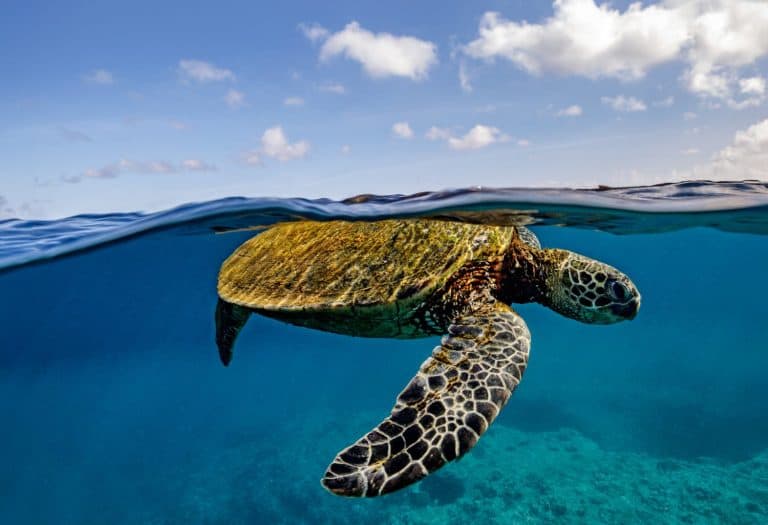
Extensive conservation efforts have helped bring the Kemp’s Ridley turtle back from the brink of extinction to approximately 7,000 to 9,000 females, while there are hundreds of thousands to potentially a few million green turtles worldwide.
The STC also advocates for sea turtles before Congress and provides more hands-on work, such as protecting sea turtle habitats and nesting sites by monitoring and managing several field stations, including the John H. Phipps Biological Field Station in Tortuguero, Costa Rica, and another in Bocas del Toro, Panama.
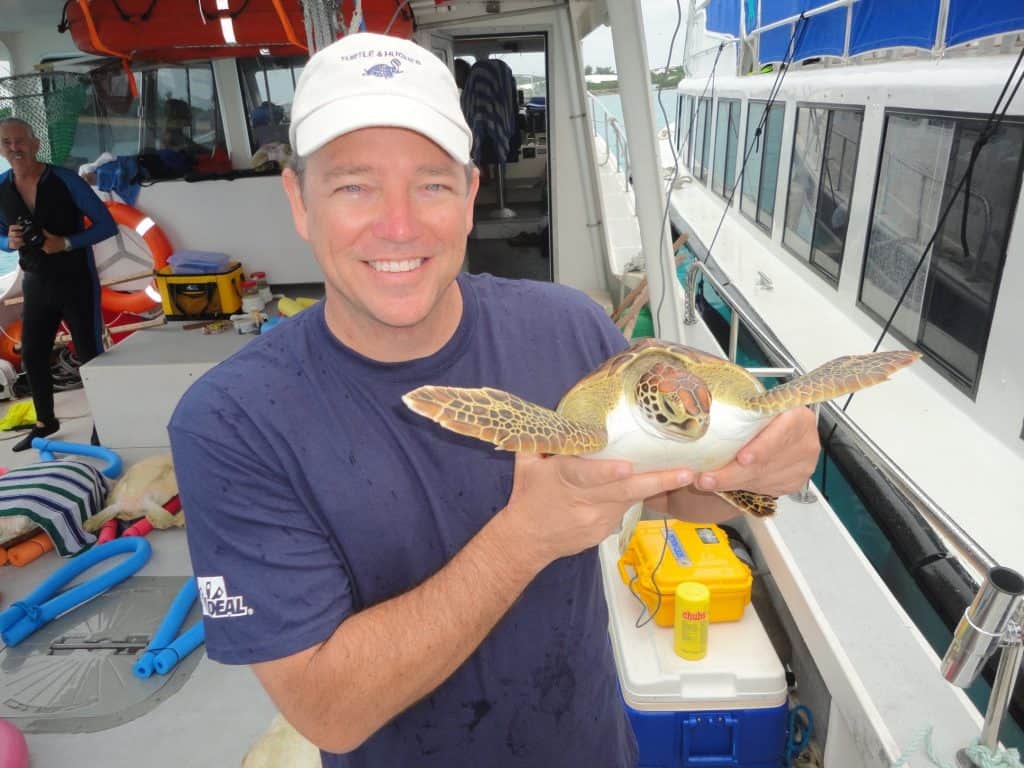
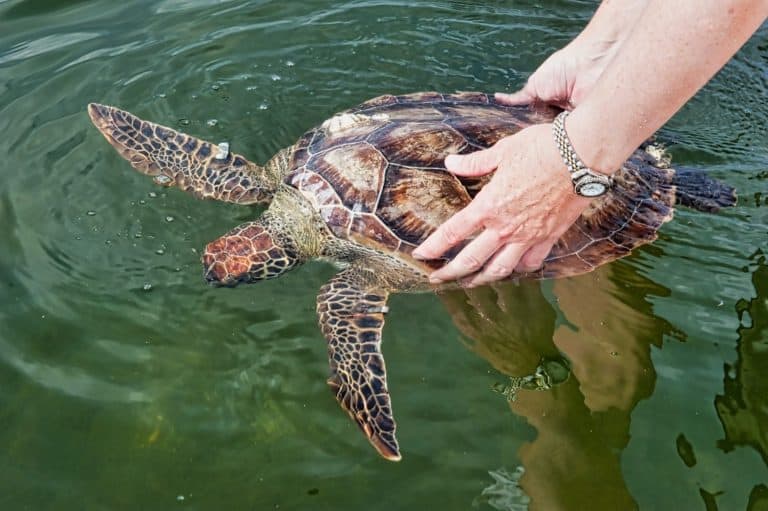
Here, David Godfrey poses with a green turtle in Bermuda. While endangered, the green turtle still numbers in the hundreds of thousands to a few million globally.
Satellite tracking of sea turtles has also helped the STC gain more insight into shifts in the animals’ migratory behavior and how to help them. During the mid-1980s, the organization started using the Argos satellite system, a satellite telemetry platform that maps global sea turtle migration routes in real time.
Depending on the species, sea turtles can live between 50 and 100 years. Godfrey says that many of the turtles the STC has tracked and monitored over the years are doing well and return year after year, appearing healthier each time.
“They’re able to successfully migrate,” says Godfrey. “We’re able to track them for a year or two, and when they stop transmitting, it’s not because they’ve been killed. The transmitters just quit working, but the vast majority of them seem to be doing pretty well, and that’s encouraging.”
In the U.S., the STC continues to work on several issues, including threats to the Endangered Species Act (ESA) of 1973, the primary federal law protecting more than 2,200 endangered and threatened species worldwide, including roughly 1,700 domestic species.
Currently, six of the seven sea turtle species found in U.S. waters are listed under the ESA: Leatherback, Hawksbill, Kemp’s Ridley, Green, Loggerhead, and Olive Ridley. Recent funding cuts by the current administration, along with the approval of oil and gas drilling, mining, logging, and other developments around critical animal habitats, may leave many species in peril.
“There are bills out there that would significantly weaken the main federal law that protects turtles, so we’re keeping a very close eye on that,” says Godfrey, adding that STC continues to lobby members of Congress. “We’re also dealing with some legislation that is making it harder for coastal governments to basically update their regulations regarding beachfront lighting, so, for years, we’ve been working very closely with different county governments to help them improve their lighting ordinance.”
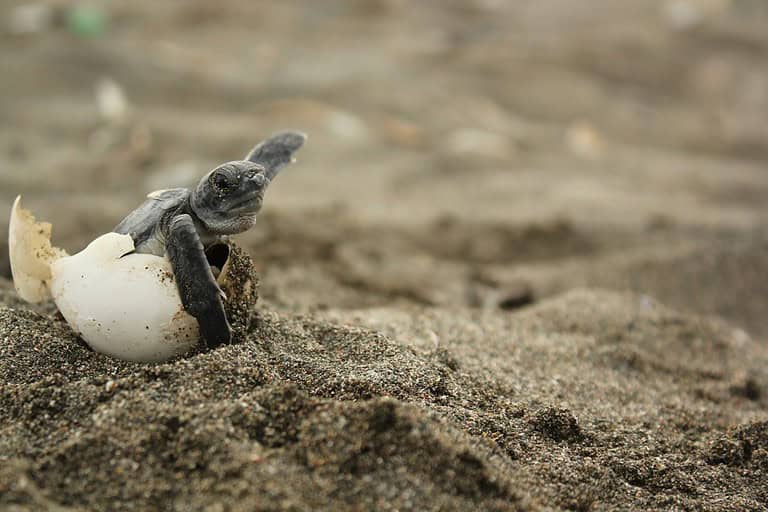
While there are environmental factors impacting sea turtle numbers, most of the threats are human-made, says Godfrey. Artificial lighting along the coastline—from street lamps to hotels, businesses, and other beachfront properties—has a significant impact on sea turtle hatchlings during nesting season. As baby sea turtles hatch, instead of making their way toward the natural light of the ocean, they are drawn to artificial lights, where they are killed by predators or crushed.
Where I worry most is the open ocean, because it’s very difficult to police, and it’s under no single country jurisdiction, so you rely on the goodwill of commercial fishers to comply with international standards.
David Godfrey, Executive Director, Sea Turtle Conservancy
The STC is making progress in helping counties improve and modernize their ordinances. After the hurricanes in Florida in 2024, state legislation was passed restricting local governments from enacting stricter development rules after hurricanes, which has limited their ability to strengthen coastal protections, including lighting.
Still, Godfrey says that the disorientation of sea turtles by artificial light in Florida has improved, but they continue to face as many threats on land as they do in the ocean. The accumulation of plastic is only getting worse, says Godfrey.
“At this point, people are at least aware of the issue,” says Godfrey. “People are trying to do things to limit their plastic use, and there are several efforts around the world to get plastic out of the oceans, so there are positive stories in a lot of places.”
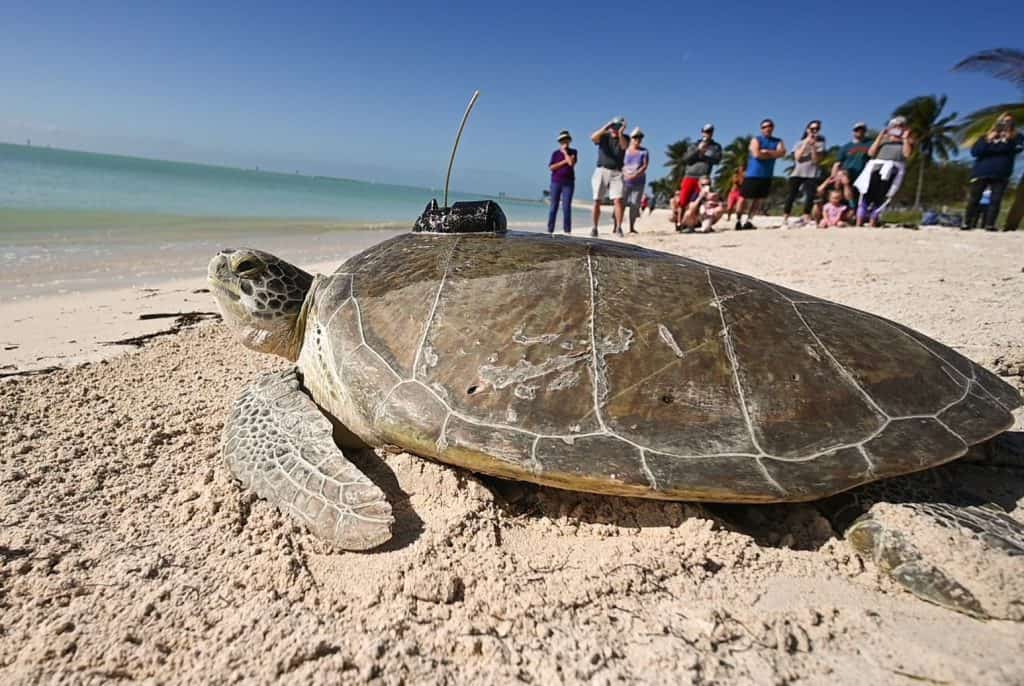
The Sea Turtle Conservancy pioneered the use of the Argos satellite system, a satellite telemetry platform that maps the global migrations of sea turtles in real time, during the mid-1980s.
The use of turtle excluder devices on shrimp trawls can help decrease interactions with sea turtles, but on the high seas, commercial fishing is not as forgiving to marine life.
“Long line fishing and large commercial fleets are operating in areas where they’re accidentally catching and harming turtles,” says Godfrey. “Where I worry most is the open ocean, because it’s very difficult to police, and it’s under no single country jurisdiction, so you rely on the goodwill of commercial fishers to comply with international standards.”
Godfrey is also concerned about the implications of climate change and how it has affected sea turtle nesting habitats.
“Warming temperatures are making it harder for some turtles to incubate successfully on beaches,” he says, “because it’s so hot they cook in the nest.”
Illegal poaching of sea turtles—predominantly the hawksbill for its patterned shell and the green turtle for its meat—is another issue Godfrey is working to combat with the STC. For centuries, green turtles have been harvested for food by the Miskito people, an indigenous nation who live along the Caribbean coasts of Nicaragua and Honduras.
“They’ve lived there for thousands of years, and they’re known as sort of turtle people,” says Godfrey. “They hunt turtles for a living, and it is a subsistence level of turtle eating; it might not be as detrimental on its own, but there is a whole market for turtle meat throughout Nicaragua, and it’s a difficult region of the world to work in.”
Godfrey explains that the history of civil war in Nicaragua among the Sandinistas, Contras, and Miskitos makes the region difficult to navigate and hinders the implementation of universal conservation laws.
“The central government is very reluctant to impose restrictions on what the Miskitos can do, for fear of it literally sparking civil war, so there’s an unbelievable level of harvest of green turtles taking place in Nicaragua that is causing the population that’s in Tortuguero, Costa Rica to decline pretty precipitously,” says Godfrey. “We’re seeing the fruits of 70 years of effort being eaten in Nicaragua, and every year we seem to get lower and lower levels of nesting.”
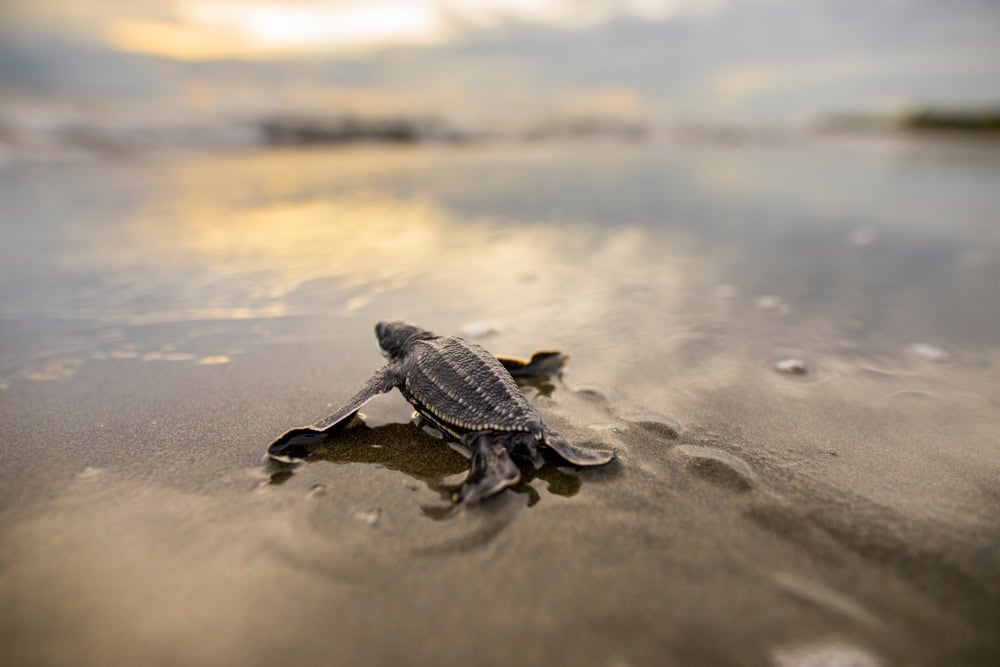
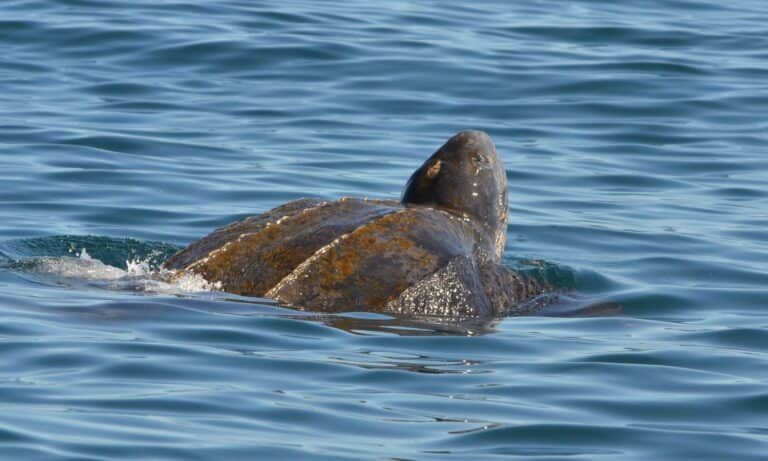
There are an estimated 20,000 to 30,000 nesting leatherback females left globally, though the number of males and juveniles is unknown since they generally do not come ashore.
©Courtesy of the Sea Turtle Conservancy – Original / License
Costa Rica’s Tortuguero remains one of the largest green turtle rookeries in the world, but recent data show a decline in nesting, attributed in part to overconsumption in Nicaragua. “There are places where there may be more green turtle nesting now,” adds Godfrey, “because the Tortuguero population is declining, and it’s almost certainly because of what’s going on in Nicaragua.”
In the U.S., Godfrey says there are some improvements in conservation efforts, particularly throughout Florida. “I think it’s getting better in this part of the world,” he says.
In Florida, Godfrey was also involved in the creation of the Helping Sea Turtles Survive license plate, featuring a loggerhead turtle swimming through blue waters. The specialty license plate directly funds the Florida Fish and Wildlife Conservation Commission’s (FWC) Marine Turtle Protection Program and the Sea Turtle Grants Program.
Earlier, Godfrey also helped establish the Archie Carr National Wildlife Refuge, named after the STC founder and located along a 20-mile stretch of coastline between Melbourne Beach and Wabasso Beach in Florida.
“We played a significant role in convincing Congress and the state of Florida to allocate millions of dollars toward acquiring beachfront property.”
While the STC faces more challenges ahead, Godfrey, who has been with the organization since 1993, says he is proud of what they have accomplished during that time.
“In the years I’ve been involved with the organization, many people who are now leaders in the field and doing important work got their start as research volunteers with us,” shares Godfrey. “So seeing people go on and make an impact, that’s something I’m always proud to see.”