
Quick Take
- The innocent beach tradition almost every family does before leaving could be sentencing dozens of hatchlings to death overnight. See the deadly habits →
- Only a fraction of baby sea turtles ever reach adulthood, and the survival odds get even grimmer before they ever touch the water. Explore the survival threats →
- Beachfront lighting seems harmless, but it triggers a fatal navigation error in hatchlings that leads them somewhere far worse than the ocean. How fake light misleads hatchlings →
- A sea turtle expert has a three-word rule for beachgoers that could dramatically change hatchling survival, yet most people have never heard it. Get the expert's three-word rule →
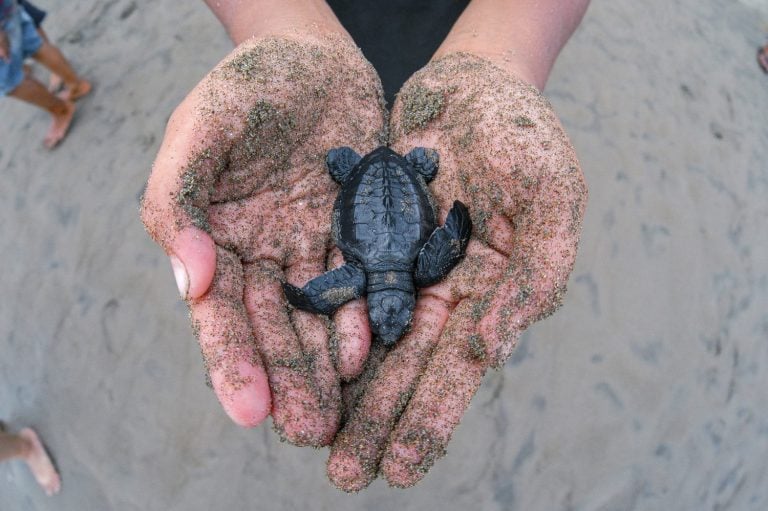
The soothing sound of crashing waves, the salty air, and the warmth of the glistening sun make a day at the beach one of the most relaxing activities. For the hundreds of thousands of baby sea turtles born each year, one person’s beach visit and what they leave behind on the sand can often mean life or death for the hatchlings.
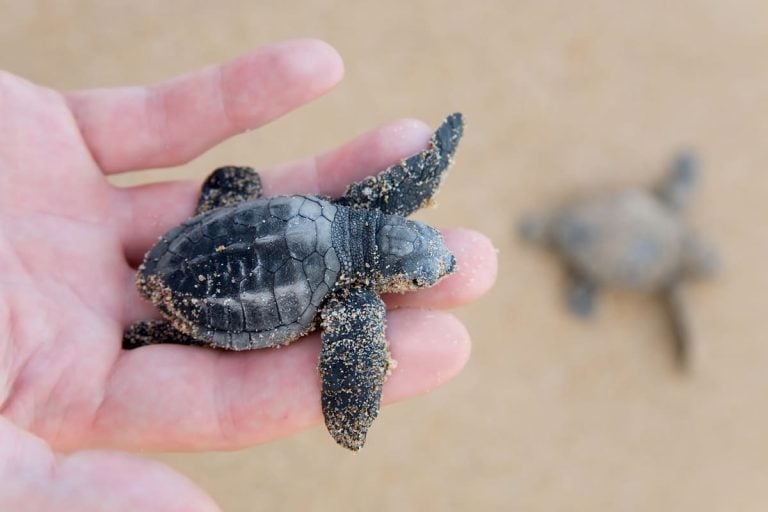
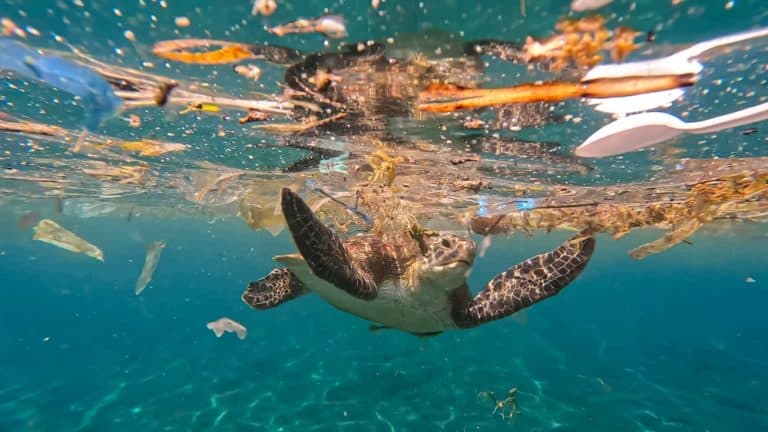
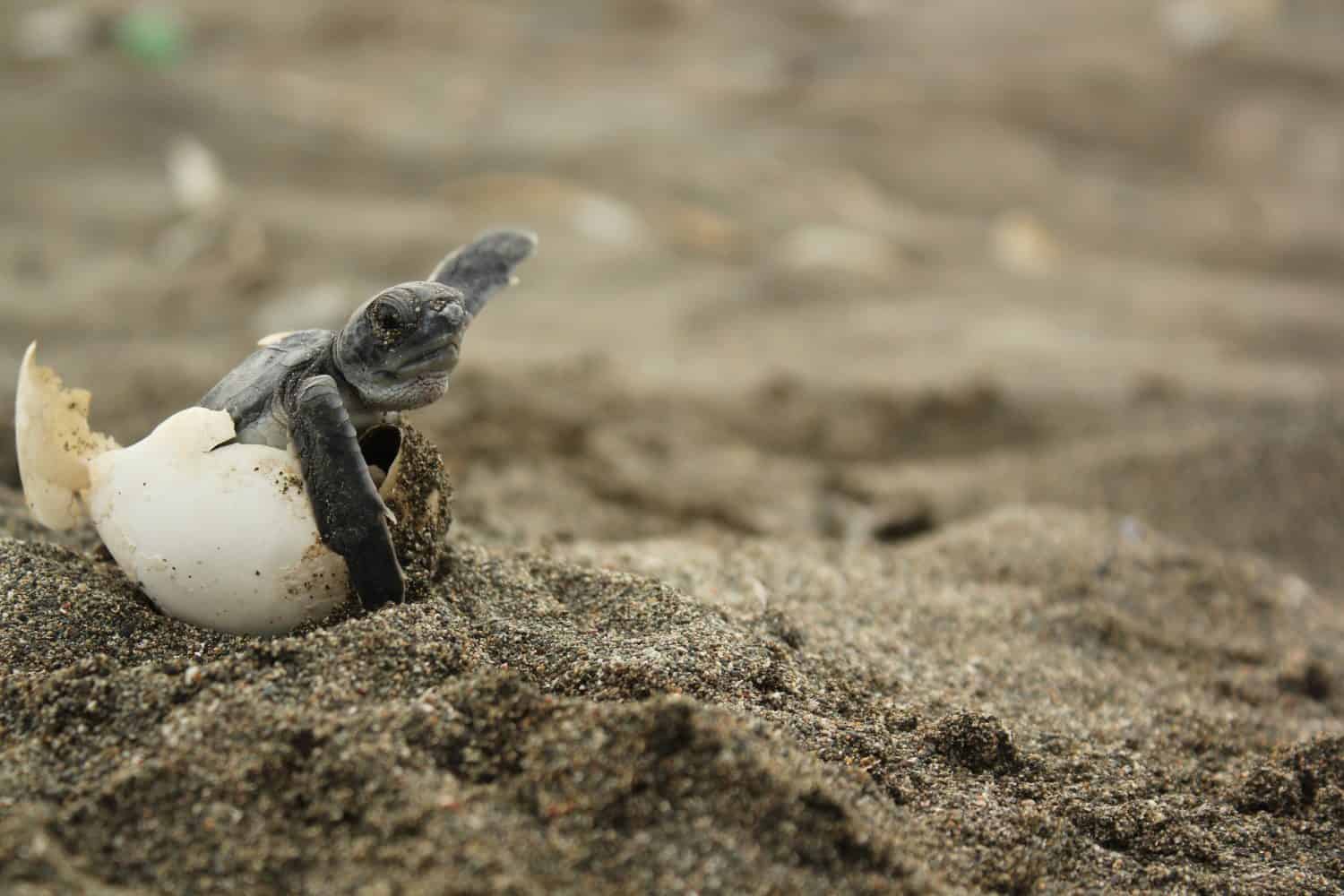
Millions of hatchlings are born on beaches worldwide annually, yet only a fraction survive into adulthood, predominantly due to human negligence. It is estimated that one in 1,000 sea turtle hatchlings survives to adulthood, according to the Sea Turtle Conservancy (STC). Obstacles on the beach at birth, along with dangers in the ocean — such as fishing nets, boat strikes, predators, and plastic debris —dramatically reduce hatchling survival rates within their first year.
Globally, some of the most avoidable impediments to baby sea turtle survival begin on the beaches. Year-round, light pollution, abandoned trash and beach furniture, tents, vehicles, sandcastles, and holes left after beach visits are major culprits that hinder the survival of nesting turtles and hatchlings trying to reach the ocean, preventing them from having a chance at life.
Nesting seasons run from March through October in the Northern Hemisphere and November through June in the Southern Hemisphere, with peak activity in regions including Mexico, the Caribbean, and the Mediterranean (May–November) and Hawaii (mid-April through September, sometimes extending into December).
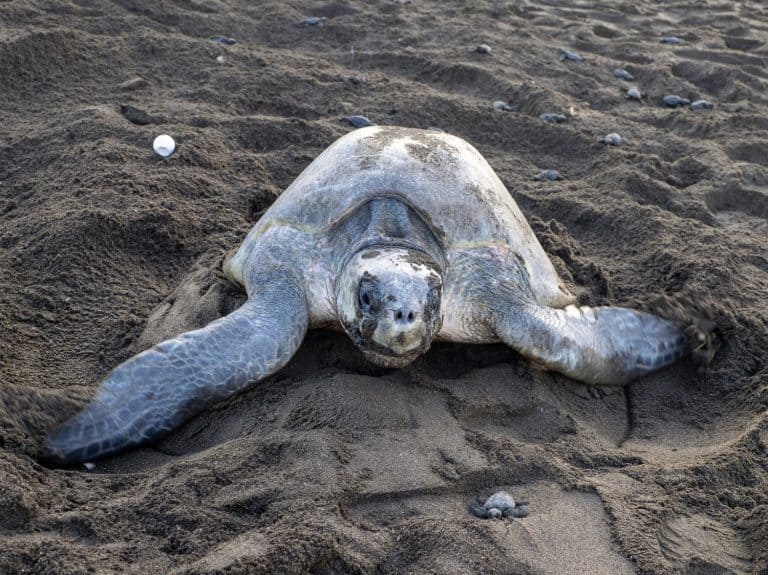
During nesting season, female sea turtles typically lay multiple clutches of eggs at intervals of about two to three weeks, depending on the species and individual. However, avoidable beach hazards and negligent beachgoers have drastically reduced the survival rate of these hatchlings.
Careless Beachgoers
Beachgoers need to be mindful of what they’ve left behind once they leave the beach. Unattended beach furniture, sandcastles that can trap or bury baby turtles or block their path, and holes dug in the sand may seem insignificant, but they can be detrimental to turtles.
“If people walk the beach in the morning, they may see a turtle upside down, dead in a hole, or a whole bunch of hatchlings that fell into a hole and couldn’t get out,” says David Godfrey, executive director of the Sea Turtle Conservancy. “When the sun comes up, they bake in there. It may be a small thing, but it’s also a small thing to say, ‘Hey, before I leave, how about I even out the sand a little bit?'”
He adds, “Cover the hole. What good does it do for you to leave a hole in the sand? Why not cover it, so wildlife isn’t getting stuck, especially in active nesting zones?”
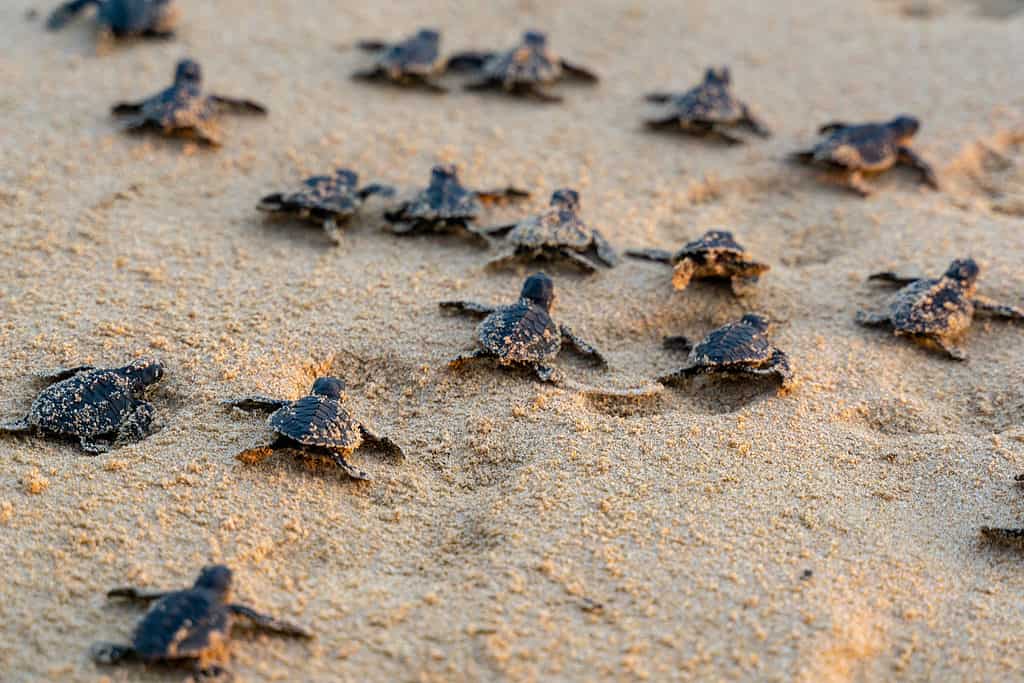
Beachfront lighting at night from hotels and other properties can disorient hatchlings, forcing them to crawl in the direction of the land instead of into the ocean.
©Julian Wiskemann/Shutterstock.com
Driving on beaches during the day can leave deep tire ruts in the sand that trap turtle hatchlings or crush nests, while nighttime drives risk crushing baby turtles making their way to the ocean. Other obstacles to hatchling survival include bonfires on nesting beaches, people walking with flashlights, and large, loud gatherings on the beach.
“You have to think about your behavior on the beach in two ways,” says Godfrey. “The first is, ‘What are you doing at night, in particular, when turtles might be coming ashore to nest, that would be disturbing to them?’ When people are at the beach, we want them to think about their behavior at night, and how it would impact turtles. The other thing is, if you’re at the beach during the day, what are you leaving behind that would be an obstacle, either to a nesting turtle or an emerging hatchling?”
They may see a turtle upside down, dead in a hole, or a whole bunch of hatchlings that fell into a hole and couldn’t get out.
David Godfrey, Executive Director, Sea Turtle Conservancy
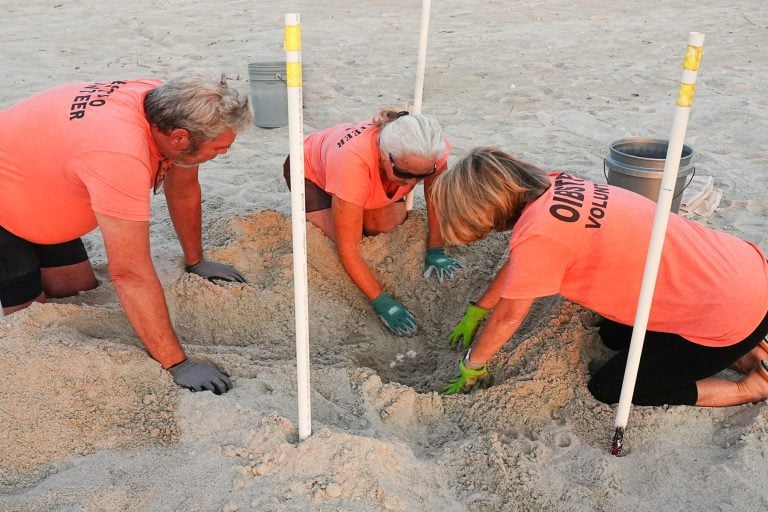
In Florida, where over 90 percent of turtle nesting in the U.S. occurs, there are more opportunities for nest destruction when people leave furniture behind or move large amounts of sand, creating pockets where turtles can get stuck.
“So many people take a bunch of folding chairs down to the beach during the day to hang out, and it’s great — who doesn’t love doing that?” says Godfrey. “But at night, fold them up and bring them back to your house, hotel, or Airbnb. Don’t leave them on the beach. They become a pretty significant obstacle to turtles nesting, and I’ve seen many pictures of adult turtles fully entangled in collapsible chairs.”
Fake Light and Natural Causes
At night, when baby turtles typically hatch, powerful lighting from beachfront properties — including hotels and other businesses — can disorient the animals, causing them to crawl toward land instead of the ocean. Though most hotels and businesses are enforcing stricter lighting restrictions at night, light pollution remains a global issue along the coasts, making baby turtles more susceptible to predators, being stepped on or run over by vehicles, or drowning in swimming pools as they move onto land.
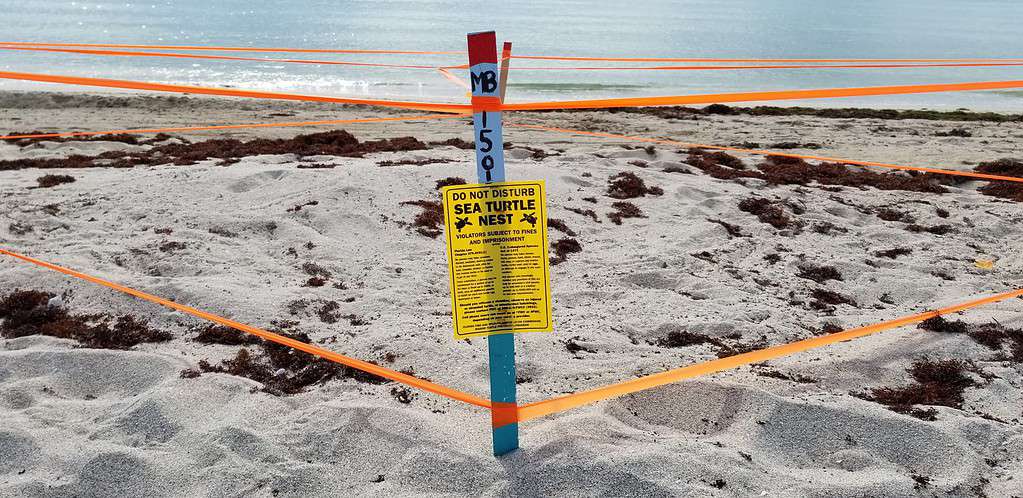
Some beaches have “Leave No Trace” or “Do Not Disturb” ordinances, requiring people to remove items they’ve brought to the beach during the evening.
Coastal armoring and seawalls also impact nesting success by forcing turtles to nest in more vulnerable areas. According to the STC, nearly 25 percent of Florida’s shoreline has seawalls. Debris in the oceans is another risk to hatchlings that made it to the water. According to the STC, 93 percent of deceased loggerhead hatchlings in Northeast Florida alone had swallowed plastic.
In addition to human-caused hazards, environmental factors such as severe erosion from high waves and strong winds can expose eggs and destroy protective dunes — elevated ridges of sand at the back of the beach that shield nests from high tides.
Baby turtles are also prey for natural predators on land and at sea, including birds, crabs, and fish in the ocean, and raccoons, feral hogs, armadillos, and coyotes on land. Loose or unleashed dogs roaming the beach can also dig up numerous sea turtle nests.
“Leave Only Footprints”
The implications of climate change, says Godfrey, are also raising sea levels and affecting turtle nesting habitats. “Warming temperatures are making it harder for some turtles to incubate successfully on beaches,” he says, “because it’s so hot they cook in the nest.”
Though educating people in some parts of the world about the effects of artificial lighting on beachfront turtles and enforcing preventive measures remains a challenge, Florida remains a “bright spot,” Godfrey says, in terms of public awareness.
Some beaches have ‘Leave No Trace’ ordinances, requiring people to remove items they’ve brought to the beach in the evening. Godfrey says this is something people should observe, whether or not there is an ordinance in place.
“There are good modes of communication and relatively good laws in place to protect turtles, and habitat enforcement is pretty good,” says Godfrey. “There are a lot of organizations around the state, from small local beachfront sea turtle organizations raising awareness in their local community to an umbrella organization like Sea Turtle Conservancy and coastal county governments that raise awareness about sea turtles in Florida. Most people in the state, certainly those who live on the coast, understand how they should behave. They dim their lights at night; they don’t disturb turtles or pick up hatchlings. Generally speaking, in Florida, people get it.”
When visiting the beach, the best solution for saving sea turtles from avoidable injuries or death is to “Leave only footprints,” according to the STC. Keep the beach “clean, dark, and flat.”