
Quick Take
- Red crossbills can pick up a flockmate's 'accent,' but there is a hard limit to how far that change goes, and it reveals something surprising about bird identity. See the accent limits →
- These finches breed in the dead of winter, a behavior whose underlying reason exposes just how differently they're wired compared to nearly every other bird. Explore their winter breeding →
- A crossbill chick raised by the 'wrong' parents ends up sounding nothing like its biological family, a finding whose implications go far beyond birdsong. Discover the adoption effect →
- Scientists can't tell the 10 types of red crossbills apart just by listening. So how do they do it? See how scientists identify types →
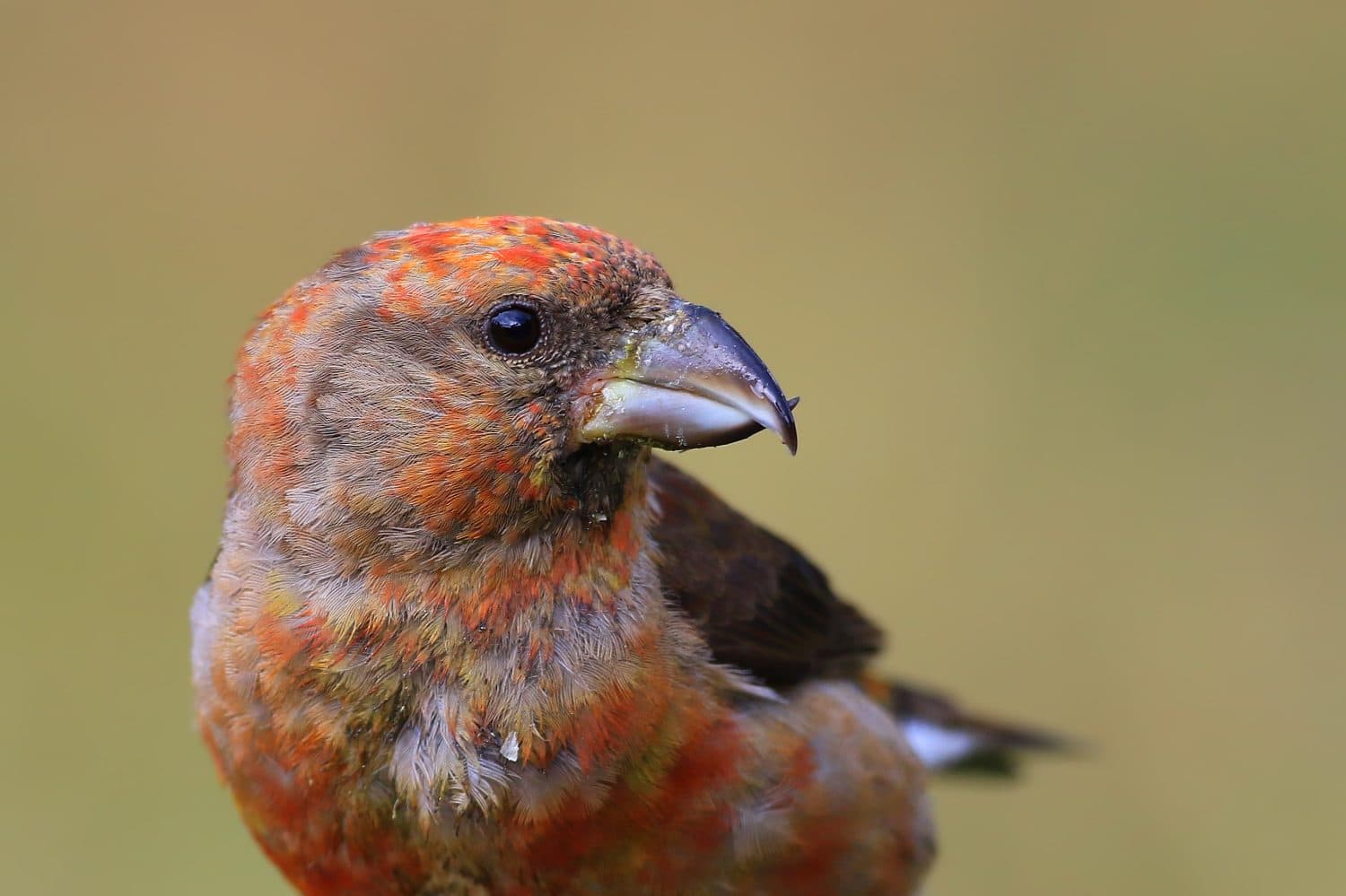
When you spot a red crossbill (Loxia curvirostra), the first thing you may notice is its unusually crossed beak. Red crossbills are finches with specialized beaks that are perfect for extracting seeds from conifer cones. Much like using tweezers, their beaks allow them to grasp and pull tiny seeds from tightly closed cones. However, unusual beaks are not the only amazing adaptation in the red crossbill.
These fascinating finches have distinctive flight call types which may help the birds recognize familiar flockmates. These resourceful finches are even able to adjust their flight calls to better match the birds around them, helping them stay connected with flockmates.

Red crossbills’ beaks are specially adapted to extract seeds from tightly closed conifer cones.
©Henk Bogaard/Shutterstock.com
Red Crossbills Are Built for a Life on the Move
Because red crossbills have such a specialized diet, primarily seeds from conifer cones, they migrate widely to find food. This nomadic lifestyle means that when their food supply changes, the birds must travel to a new feeding area.
Although red crossbills form flocks, they are nomadic, not fixed by territory. Unlike many other birds, they do not breed seasonally. They feed their young the same seeds that they eat. Because they aren’t reliant on insects or seasonal plants, they can breed at any time of year, as long as there are enough pine cones to sustain their numbers—even in the dead of winter.
A “Language” Made of Flight Calls
Bird songs can be long and complex melodies. While birds use songs to attract mates or defend their territory, flight calls are short, simple sounds used to stay in touch with flockmates or help peers find their way when migrating or looking for food.
Scientists recognize 10 flight call types among North American red crossbills. These call types are associated with different ecological groups, with some occurring within the same region. Though it can be nearly impossible to differentiate calls by simply listening, scientists use audiospectrographic analysis (visual representations of sound) to produce a signature of the bird’s voice. Researchers use this to identify the 10 types of red crossbills in the field.
Red Crossbills Showcase Finches’ Vocal Plasticity
Although this varies by species, many birds in the finch family (Fringillidae) are known for vocal learning and exhibit remarkable vocal plasticity. Vocal plasticity is the bird’s ability to adjust its sounds, calls, or songs to adapt to a new environment or social situation. For example, vocal plasticity is well researched in zebra finches. Research has shown they can continue refining their songs into adulthood.
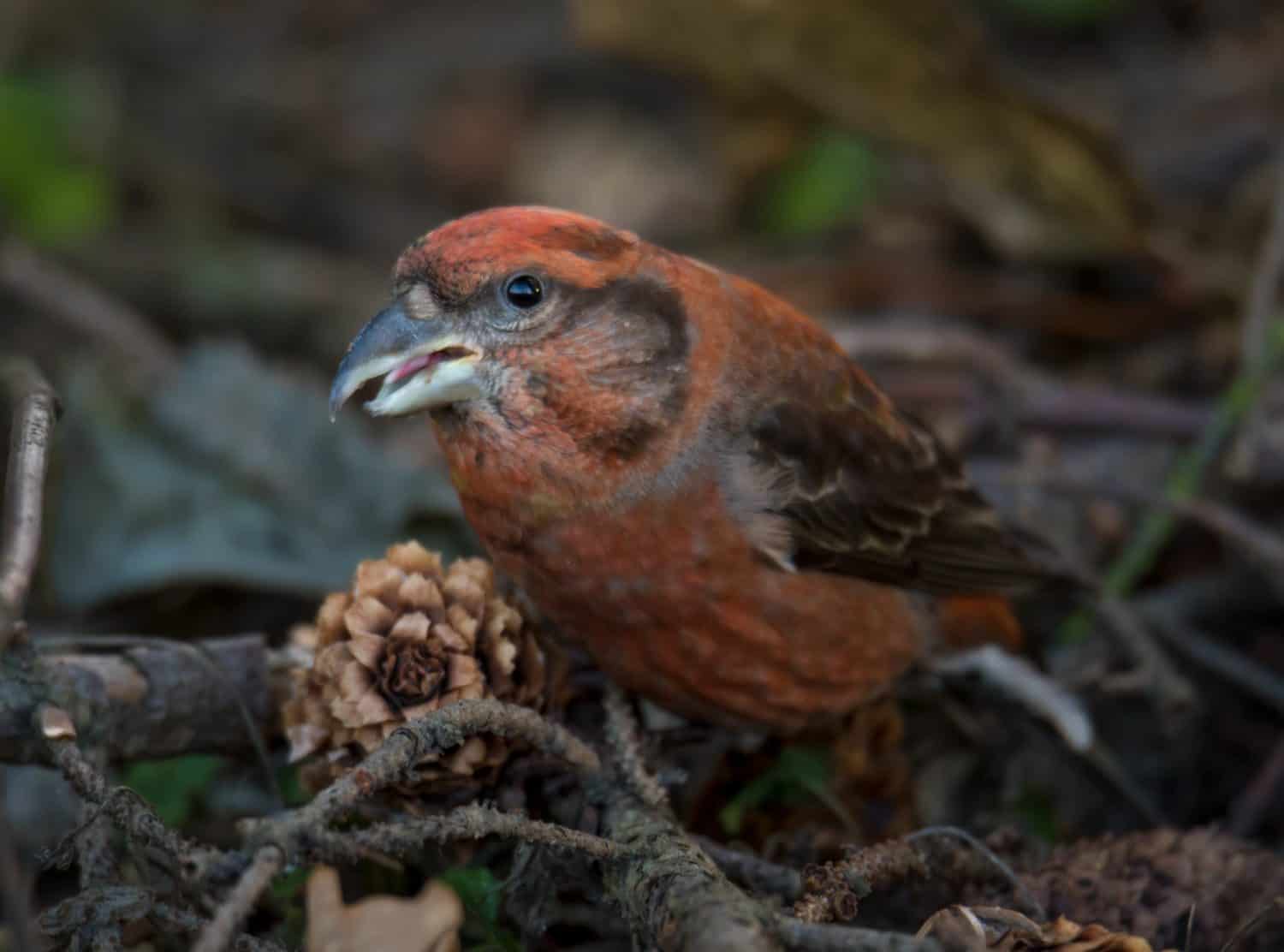
Red crossbills can breed anytime if food is abundant.
©Per Grunditz/Shutterstock.com
In a 2009 study on red crossbills, researchers discovered that red crossbills can fine-tune their flight calls to better match their current flockmates. The red crossbills could not completely change the sound of their calls, but over time, they appeared to adopt the ‘accents’ of other birds in their flock. However, the birds kept the regional flight call type that identifies them within their ecological group.
Why Do Their Calls Matter?
Interestingly, the researchers found that birds with similar calls formed stronger social bonds and had fewer conflicts than birds with different call types. Communication between birds is particularly important for species that forage and migrate together.
Because red crossbills are nomadic birds, traveling and foraging in groups, their survival depends on communicating with their flock. The birds need to find food and avoid predators. Flocking birds benefit from safety in numbers, and shared calls help them recognize familiar companions. Scientists believe that by fine-tuning their calls, the birds help maintain social cohesion within their flocks.
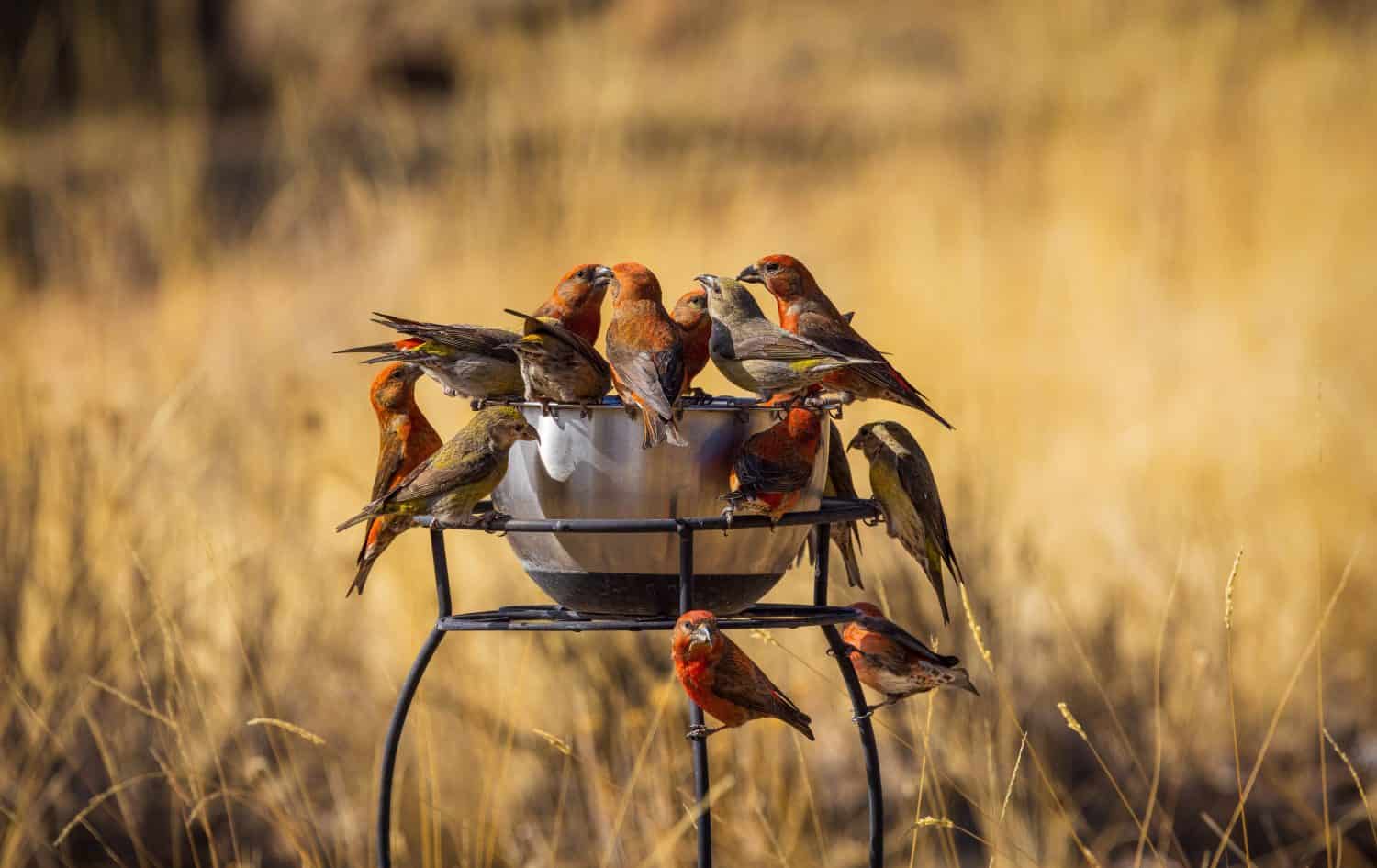
Red crossbills stay in communication with their flockmates through their flight calls.
©John Boland/Shutterstock.com
Although adult red crossbills adjust the fine details of their flight calls, they don’t completely abandon the call type they learned from their parents. Scientists think this balance preserves the vocal characteristics of each ecological group’s flight call while allowing birds to strengthen social bonds with close companions.
Young Crossbills Learn Their Family’s Calls
Scientists can learn a lot about bird communication by studying red crossbill calls. One study found that red crossbill nestlings raised by parents from a different call type did not copy the calls of their biological parents. Instead, they learned the flight calls that matched their adoptive parents. This was true even among birds that had different body shapes or bill sizes.
The young red crossbills demonstrated cultural transmission in their calls, rather than genetic inheritance. Fledglings still rely on their parents for weeks after leaving the nest. By learning the calls of their family, the fledglings have a better chance of staying close to their parents. This gives them a much better chance of surviving until they are old enough to take care of themselves.
Scientists believe that by sharing the same calls, birds are able to flock together, share information about resources, and also choose mates with similar adaptations.
Red crossbills are a unique species of finch, shaping their vocal communication through both early learning and lifelong social interactions. This combination makes them a fascinating subject for scientists studying vocal plasticity in birds.