
Quick Take
- Deploying cats during World War I was a necessary action to counter the threat of millions of rats.
- The International Encyclopedia of the First World War notes that informal acquisition prevented any authoritative tally, making it unclear how many cats actually served.
- While both animals assisted in the war effort, canaries, not cats, were the primary tool for poisonous gas detection.
- Acquiring cats meant they were considered necessary wartime equipment, but they also became mascots and companions to soldiers during a time of need.
A claim has recently surfaced stating that around 500,000 cats were sent to the trenches of WWI. In our archival records of this war, cats absolutely show up across front-line and support areas, and their primary value is clear even today: they were there for rodent control, and perhaps even companionship. However, there currently isn’t a verified wartime tally for just how many cats made their way into the trenches; some sources estimate that as many as 500,000 cats served in various roles during WWI, but there is no official record to confirm this number.
Nor is there evidence to suggest that cats were deployed under a standardized, official program in the way horses or pigeons were. What role did cats serve in this infamous World War, and is there a way to determine the exact number of cats that were involved? Cats are the underappreciated mascots and companions of WWI, and they frequently appear in museum collections and wartime photography. Let’s go back in time and check out some of these wartime cats now.
Cats in the Trenches: Companions and Comrades
It’s no secret that trench warfare created ideal conditions for rats. Between poor food storage and limited sanitation, as well as long periods holding fixed lines, it was easy for rats to infiltrate just about any established trench.
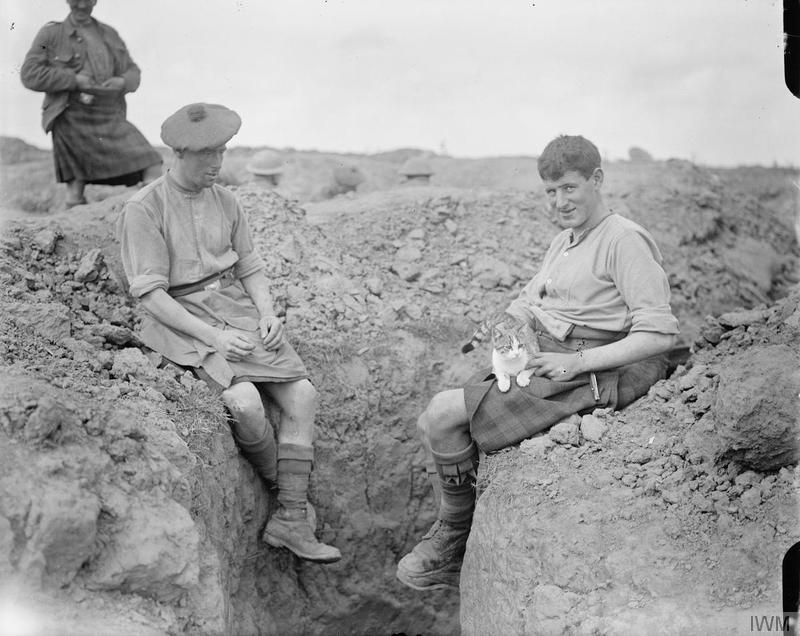
Cats were vital in WWI to catch rats in the trenches, though it’s unclear just how many cats were utilized.
©John Warwick Brooke, Public domain, via Wikimedia Commons – Original / License
The Imperial War Museums’ overview of life in the trenches describes rats as a constant feature of trench systems, attracted to waste and the realities of fighting and burial on nearby grounds, making a ratter vital. Vermin became a constant strain on troops living in crowded, unsanitary conditions, and that’s why cats were acquired and cared for among many trench setups.
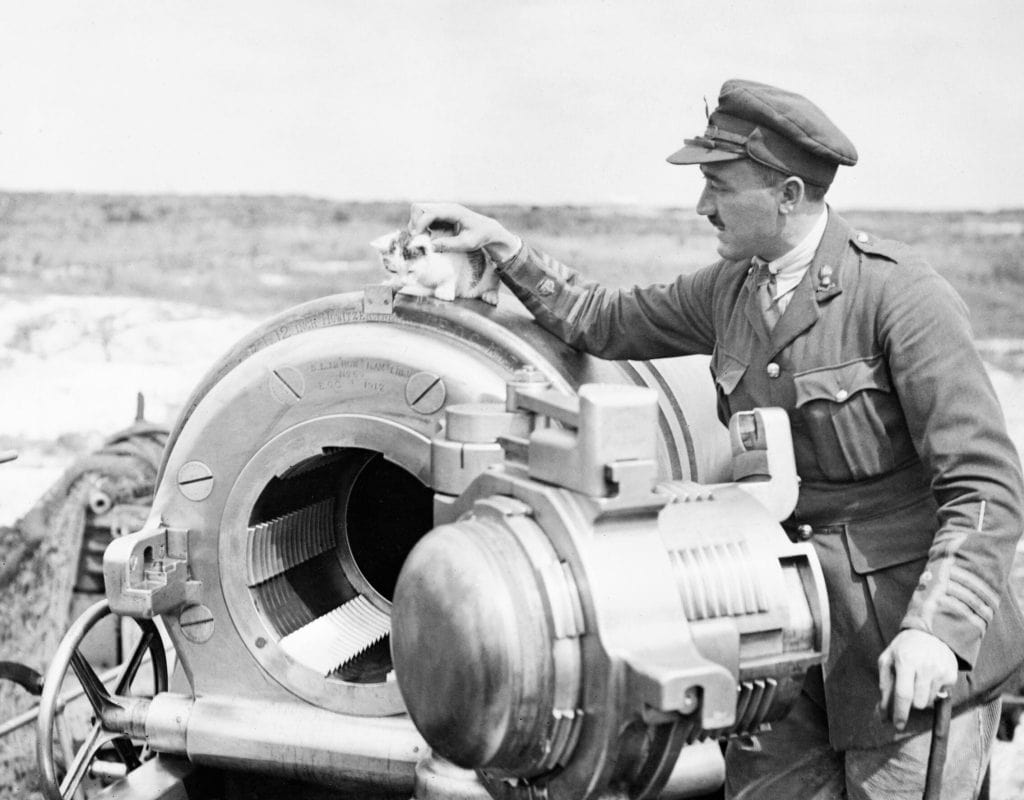
Soldiers found cats during WWI and essentially treated them as equipment… with pets on occasion too, of course.
©John Warwick Brooke, Public domain, via Wikimedia Commons – Original / License
Cats and dogs have hunted vermin for centuries, both in trenches and on ships. But how exactly did soldiers find these unsung heroes, especially during a time of such chaos and danger?
How Soldiers Acquired Cats During WWI
Most WWI cats were acquired informally, as there weren’t exactly pet shelters operating during wartime. They were found near billets, villages, supply areas, railheads, and encampments, then kept as long as someone could feed them and the majority of the unit could tolerate their presence.
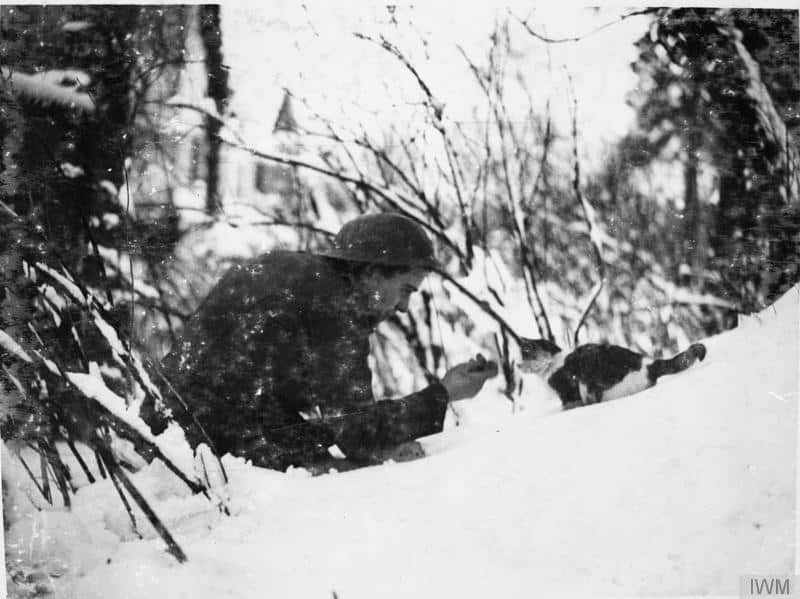
There weren’t exactly adoptable cats available during wartime, so soldiers often found strays and took them in.
©John Warwick Brooke, Public domain, via Wikimedia Commons – Original / License
The International Encyclopedia of the First World War describes cats living in and among trench environments and being trained to catch rats in exchange for food. While there was no guarantee the cats would stay, they were considered to be both working animals and pets at the same time.
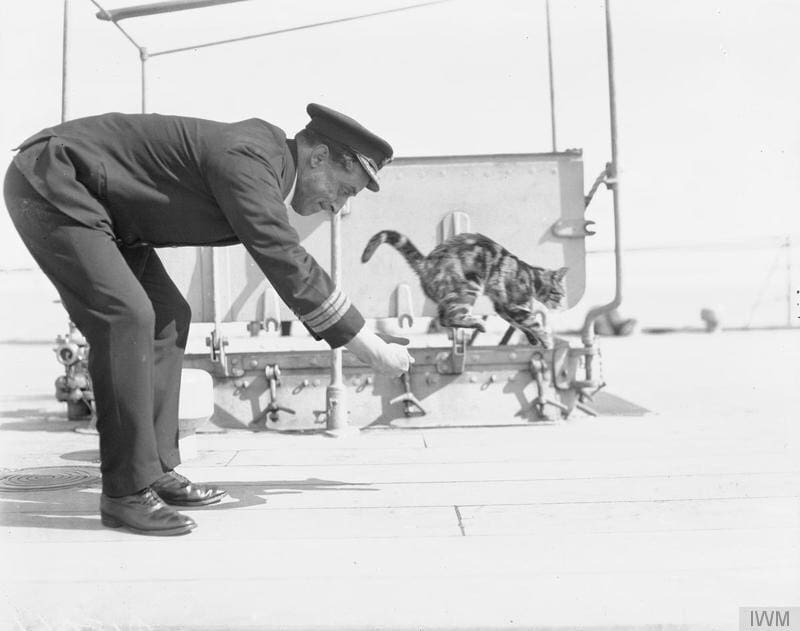
Cats likely received more reliable food in the trenches and on ships compared to those left abandoned in destroyed villages and towns.
©Royal Navy official photographer, Public domain, via Wikimedia Commons – Original / License
The companionship of both cats and dogs during wartime was vital for morale, as soldiers participated in a long-winded war with no real hope of it ending. Even if they were taken from a nearby village, the cats were cared for and likely received more reliable food compared to wherever they came from, given the circumstances of the time.
What Cats Actually Did in WWI
While cats were valuable companions to soldiers in the trenches, rodent control was their fundamental reason for being there. In trench and camp environments, rats consistently damaged food stores and spread disease, increasing the daily stress of living in such confined positions and bunkers. While we don’t know exactly how many cats were utilized during WWI, there were likely millions of oversized rats, based on their breeding capabilities.
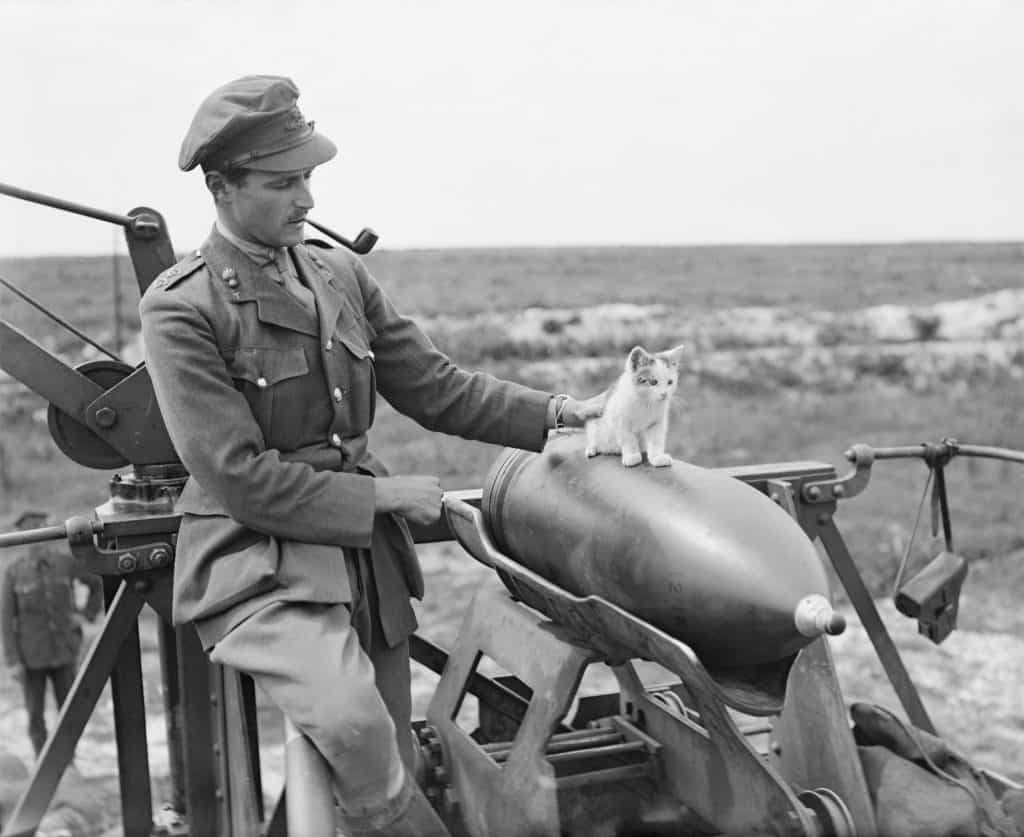
Cats were used in WWI across multiple armies and locations, including ships and in the trenches.
©John Warwick Brooke, Public domain, via Wikimedia Commons – Original / License
Morale and routine were, of course, the other reasons soldiers kept cats, but they were primarily treated as operationally relevant rather than sentimental. Animals adopted by units created small routines for both the cat and the humans through feeding and guarding their trench’s mascot, routines that helped to anchor some semblance of daily life. By the end of the war, cats were listed alongside other non-human participants whose roles ranged from practical labor to psychological support.
The 500,000-Cat Claim: Is It Real?
A recent figure surfacing online states that roughly 500,000 cats served in WWI, but it is difficult to treat this rumor as a verified count across the entirety of the war. The more accurate institutional and scholarly sources tend to document the presence and role of cats, rather than provide a universal, authoritative tally.
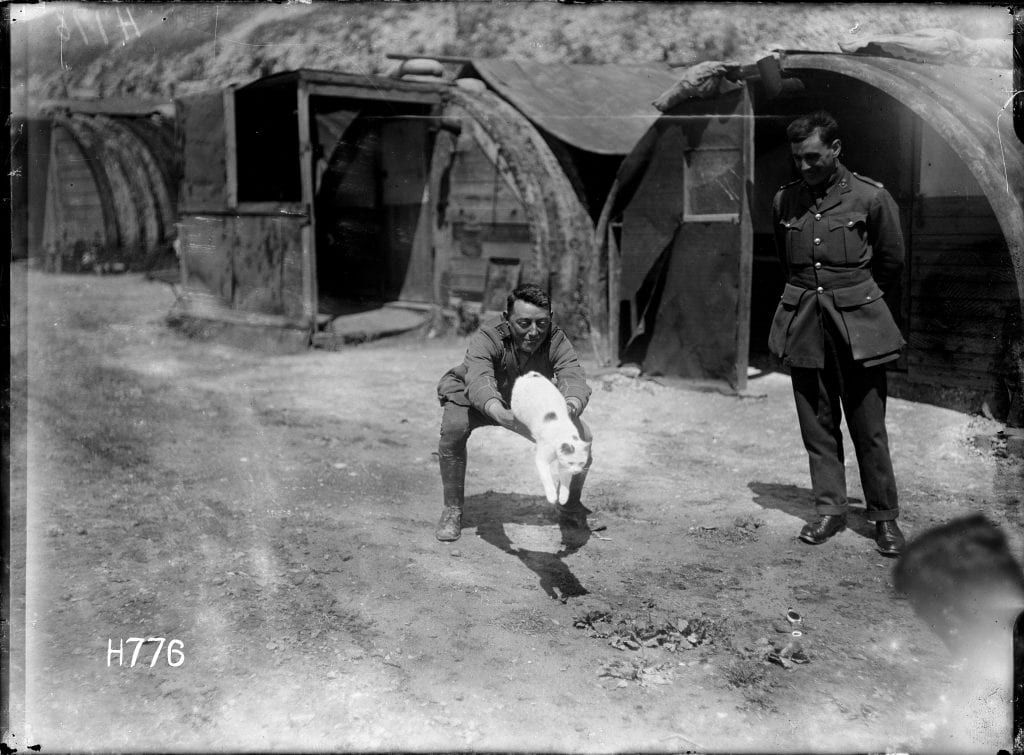
The cats that served in WWI became mascots for their soldiers, helping to boost morale.
©National Library NZ on The Commons, No restrictions, via Wikimedia Commons – Original / License
So, can we ever actually know how many cats served in WWI? The short answer is no, we can’t possibly know, given the scope and length of this war. However, a fair conclusion is that cats were common enough to be repeatedly photographed and remembered, and common enough to be discussed in major museum and reference histories. We may never know just how many cats helped soldiers, both on ships and in trenches, but it’s clear they were integral across all sides and years of the war.
Gas Detection Claims: Were Cats Involved?
Another WWI claim has surfaced recently, one that states cats served as gas detectors. However, the animal from WWI tied to this life-saving detection is, without a doubt, the canary. Imperial War Museum sources note that canaries were consistently used to detect poisonous gas, while cats and dogs were trained or kept to hunt rats in trenches.
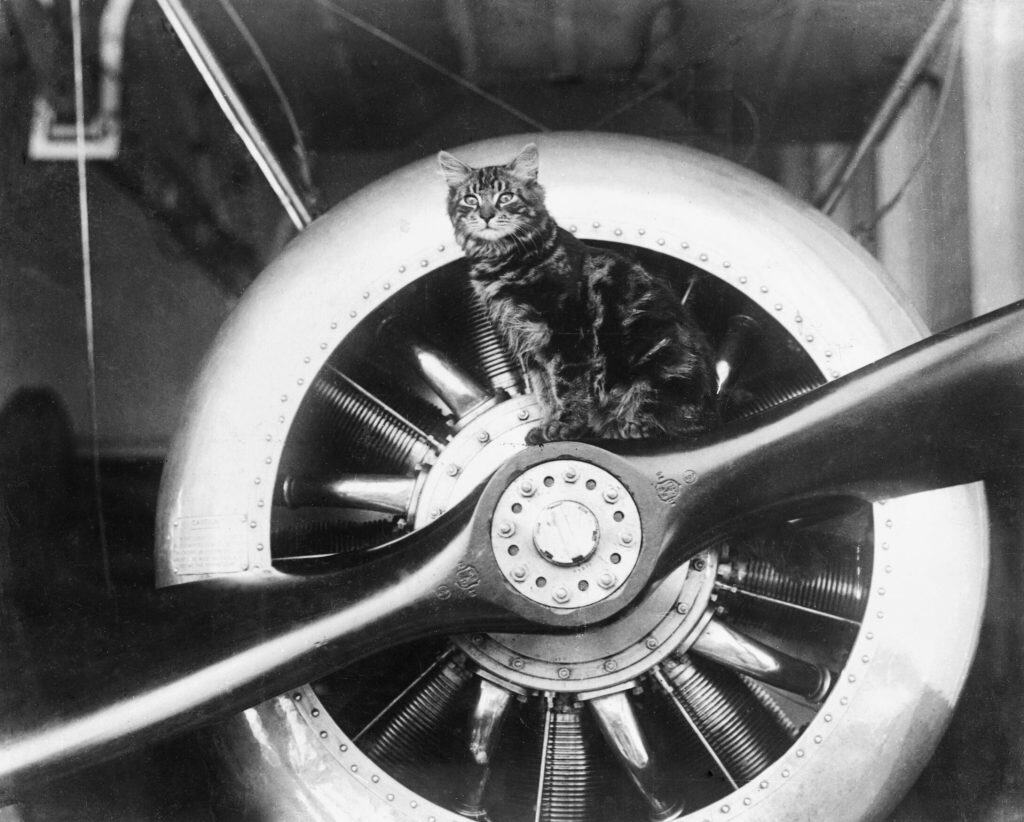
While cats weren’t used for gas detection during the war, they made excellent rat catchers.
©not stated, Public domain, via Wikimedia Commons – Original / License
However, while individual soldiers may have reported cats reacting to irritants or unusual smells, cats are generally documented as ratters and mascots, not as part of a standardized warning system. Canaries were the standard, and they were effective at gas detection.
Cats Aboard Ships and in Depots During WWI
Cats were not just confined to soldiers living in the trenches. Rodents were a long-standing problem aboard ships and around stored supplies as well, and wartime pressures made that problem even worse. However, having dogs and cats on ships was not a new or innovative technique at the time, so their integration was easier and more commonplace than in the trenches.
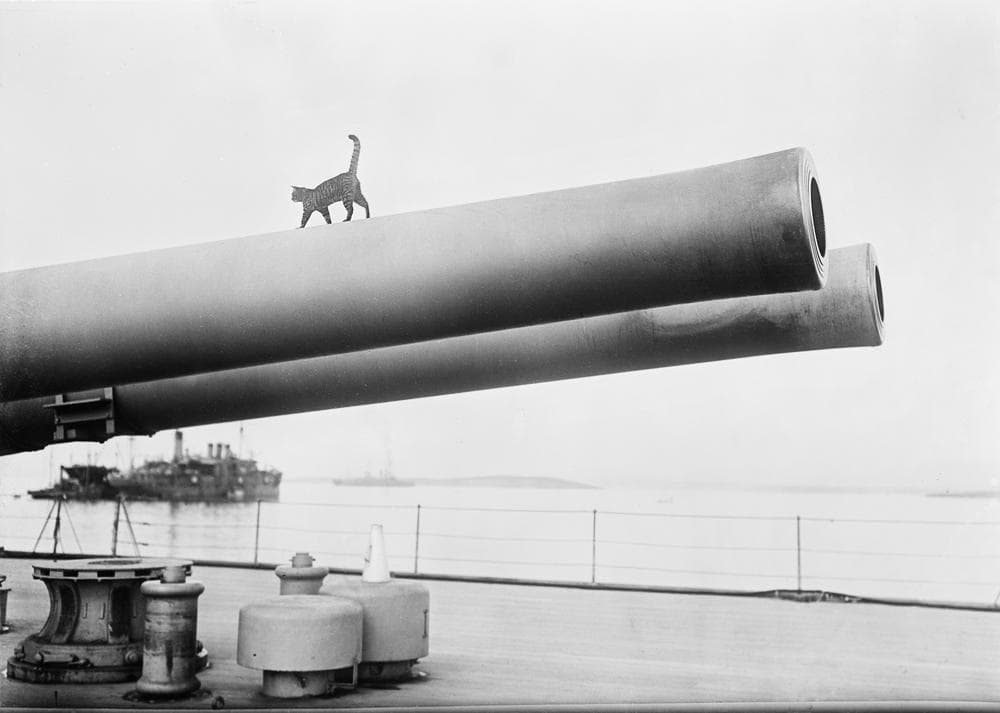
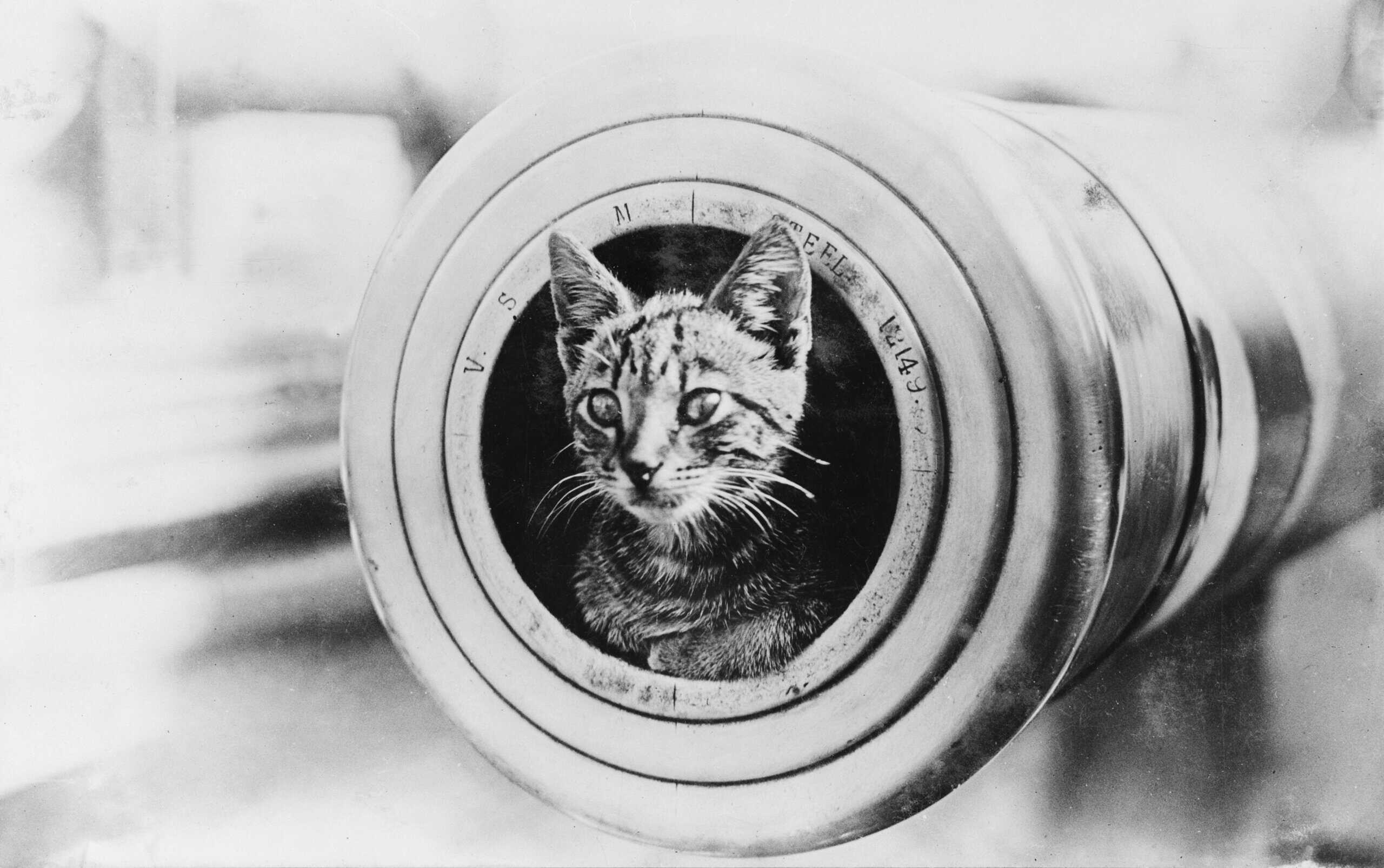
There were cats in the trenches and on Navy ships, all of which were used for rat catching.
©Australian War Memorial collection, No restrictions, via Wikimedia Commons – Original / License
The Library of Congress describes cats used to catch mice and reduce rodent interference with shipboard operations, with cats considered as one of the most practical measures soldiers could take against rats. Whether on land or at sea, cats were part of wider wartime logistics wherever food stores, tight quarters, lack of cleanliness, and, naturally, rodents overlapped.
Serving a Key Role
While we don’t know how many ultimately served, cats did indeed play a real role in World War I because they addressed a problem that was too difficult to solve at the time. Rodents in the spaces where troops lived, ate, stored supplies, and tried to rest had to be eliminated, but troops didn’t have the time or the energy to stop them.
Using informal adoptions, the routine use of cats began for pest control early during the war efforts. The cats also served as unit mascots, a unique role that contributed to morale and daily stability in prolonged, miserable operations. Accounts of WWI cite cats as yet another method, and an often improvised one, of keeping rations intact and making harsh conditions marginally more manageable.
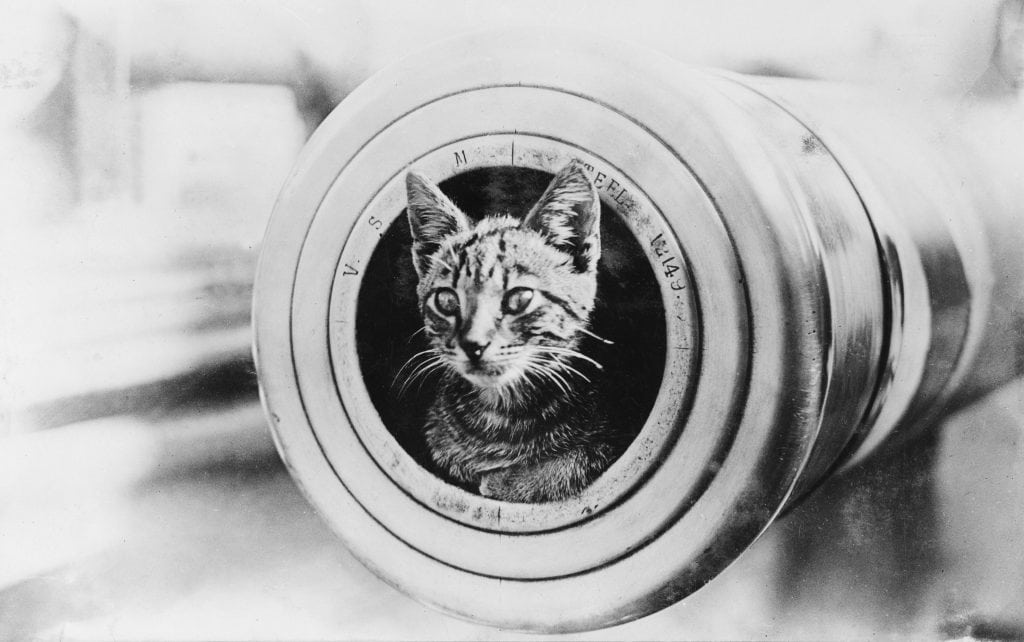
Rats were such an issue in WWI that cats ultimately served a key role in this war.
©photographer not identified., Public domain, via Wikimedia Commons – Original / License
So, here’s to the cats who served in World War I; their morale-boosting capabilities and rodent-catching expertise were vital in a challenging time.