
Quick Take
- Early Aero-Dogs endured altitudes of thousands of feet while flying with their pilot-owners.
- Paradogs leapt from planes during World War II and were trained to perform specific duties in combat.
- A stray terrier mix was sent into space during a Soviet test to determine whether living beings could survive space travel.
Pilots weren’t the only ones strapped into planes, nor were they the only ones parachuting from open plane doors. Since the early 20th century, dogs have been brought on anything from leisurely flights to war missions. World War II saw the rise of “paradogs,” the pups trained to take leaps of faith with their handlers. By the time the war was over, these dogs would also go down in history as some of the most courageous fighters the world had ever seen.
Alternatively, world-renowned events such as the Great Transcontinental Air Race would have their own four-legged mascot. Flying would become a familiar activity for these dogs, who got into planes as easily as they jumped into cars. Copilot dogs would eventually pave the way for dogs to enter space. Here’s a look at the famed furbabies who took to the air like some dogs take to water.
Trixie, the Famous Flying Copilot Dog
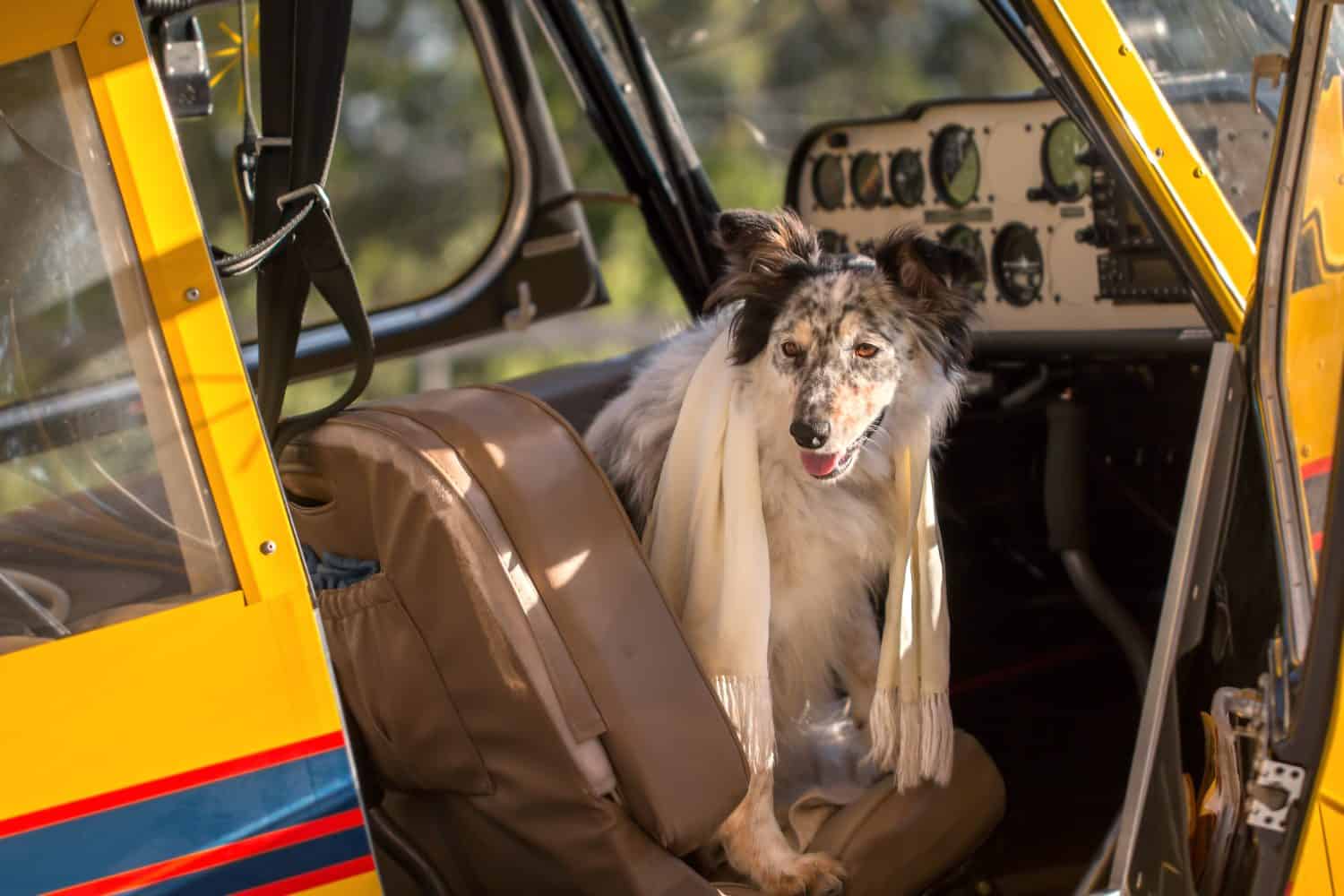
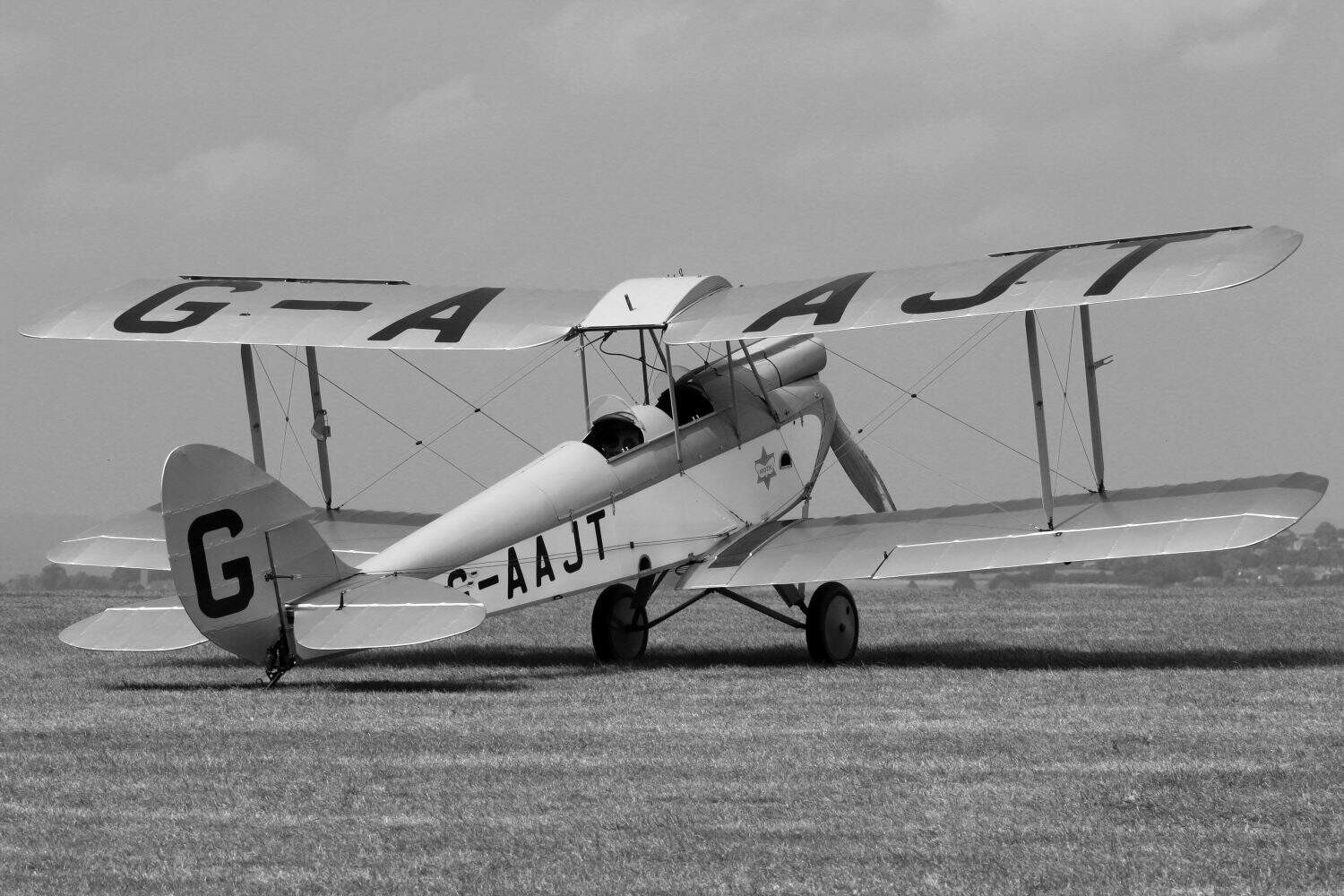
For centuries, dogs have been man’s best friend. This is the same logic that pilots took to the air when they strapped their furry friends into the copilot seat. One dog that was known for her air prowess was Trixie, a German shepherd owned by Belvin “The Flying Parson” Maynard. Trixie was known for taking the rear copilot seat on many trips in his DH-4 Liberty plane. Maynard’s mechanic, Sergeant William Cline, also took a seat on cross-country trips.
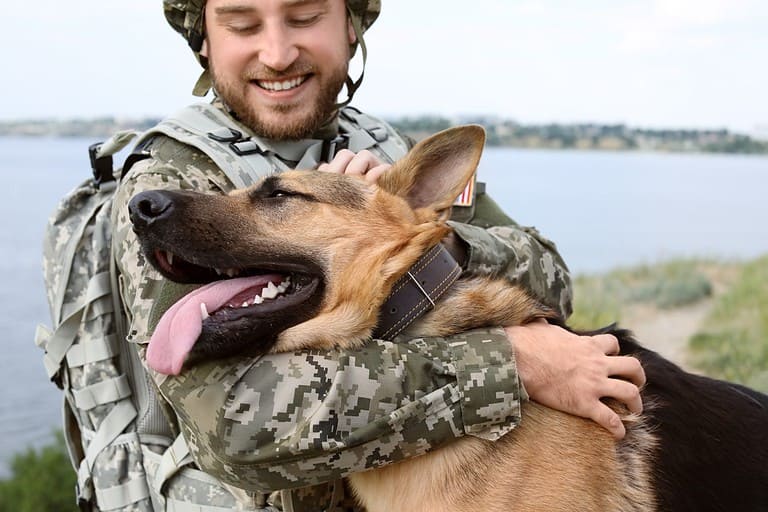
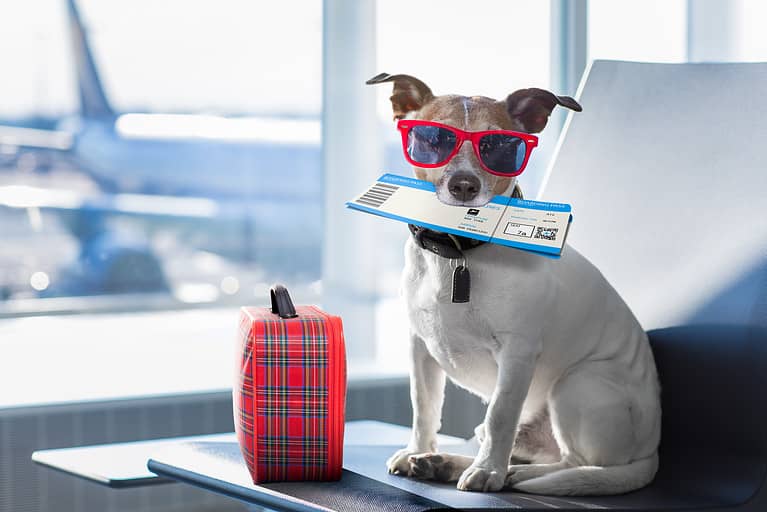
Trixie showed no fear in the face of flying.
©Brian T Richards/Shutterstock.com
Maynard became famous in 1919 for winning the Great Transcontinental Air Race. At this time, air travel was still new and unfamiliar, making winning the race an incredible achievement. It took tremendous skill on the part of Maynard, as the pilot, and his mechanic, to keep the DH-4 Liberty running for such a long distance. However, Maynard wasn’t the only one who was famous for his race win.
Before one of his takeoff points, his dog, Trixie, broke free from where she was waiting with Maynard’s family. She ran up to the plane, where she was lifted into the cockpit. It’s there that she remained, soon becoming a mascot for air travel and for the Great Transcontinental Air Race. Many onlookers gathered just to see Trixie, the famous flying pup.
How Dogs Became Paratroopers in WWII
Dogs being thrown out of planes with parachutes tied to their backs sounds like nothing more than an urban legend. It’s difficult to imagine our pets today making such a jump, but in 1944, many were trained to do so. Along with training to sniff out mines, guard prisoners, and keep watch, some breeds were also trained in high-altitude parachuting.
With help from their neighbors to the north in Canada, the U.S. Army trained several dogs to jump with supplies. These dogs, mostly huskies and German shepherds, carried packs that held water and K-rations. Their training began on the ground, where their handlers took them on 75-mile hikes to hone their skills. As the dogs learned to navigate rugged terrain, sniff out trails, and survive the elements, they were also unknowingly preparing for air travel.
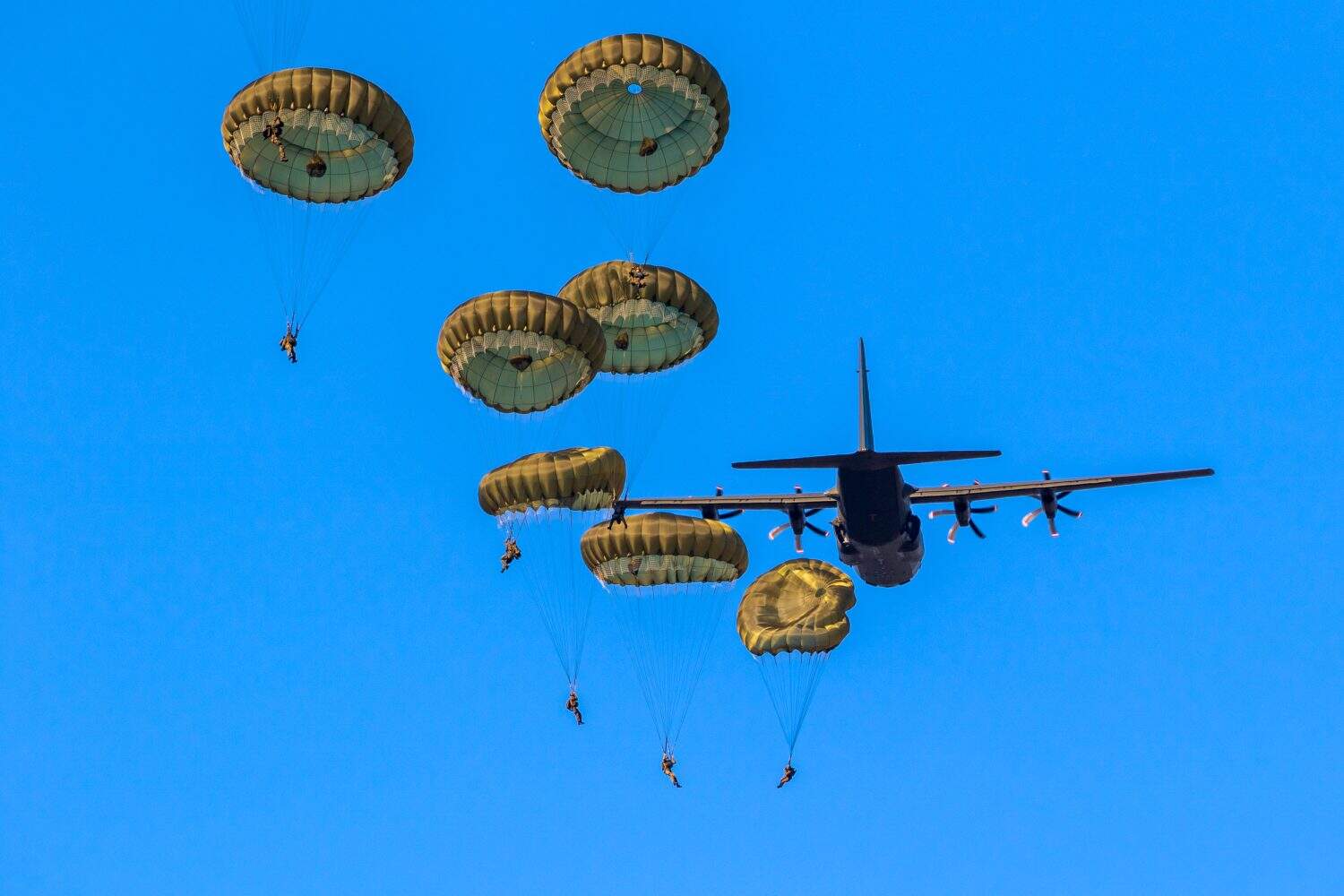
When a paradog reached the ground, they were trained to help wounded soldiers.
©VanderWolf Images/Shutterstock.com
As the dogs learned to carry these packs long distances, they were outfitted with the same packs for air transport. They also learned to tolerate aircraft noise, and treats were often used as rewards. Parachutes were customized to hug the dogs’ bodies and deployed on a static line as soon as they left the platform. However, jumping out of planes is not a natural instinct for humans or animals. To address this, some dogs were gently encouraged out of the aircraft.
Meet the Paradogs of World War II
Although these dogs certainly earned their wings, the U.S. Army never took them to war. They served in other roles, but never saw action on the battlefield. This training proved that the U.S. was committed to the safety of its pilots and the men on the ground. Even though the dogs were not sent overseas, they represented the threat of additional air support for those on the ground. And while America chose not to deploy its canine troops, the British Army didn’t hesitate to deploy its own.
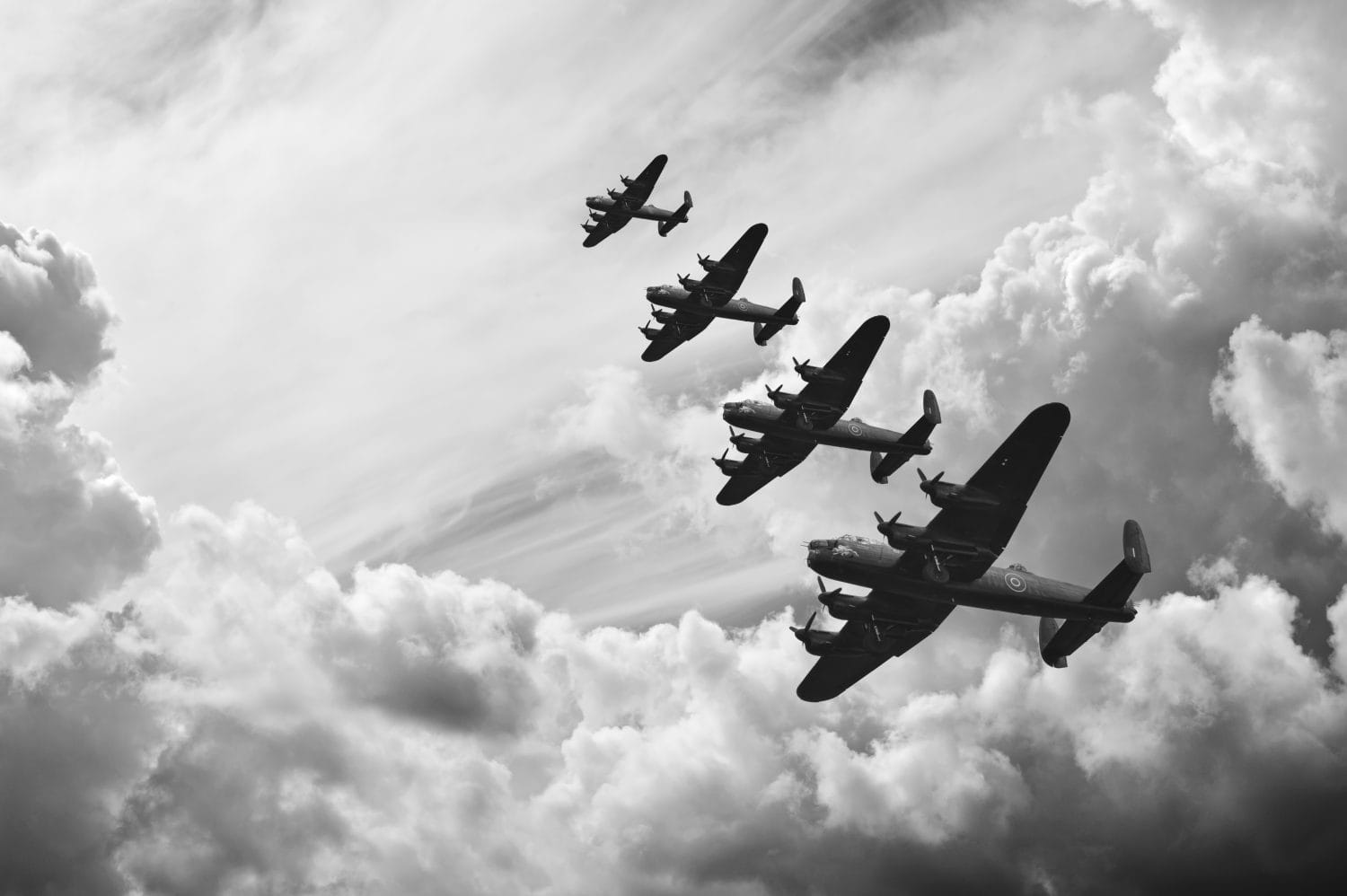
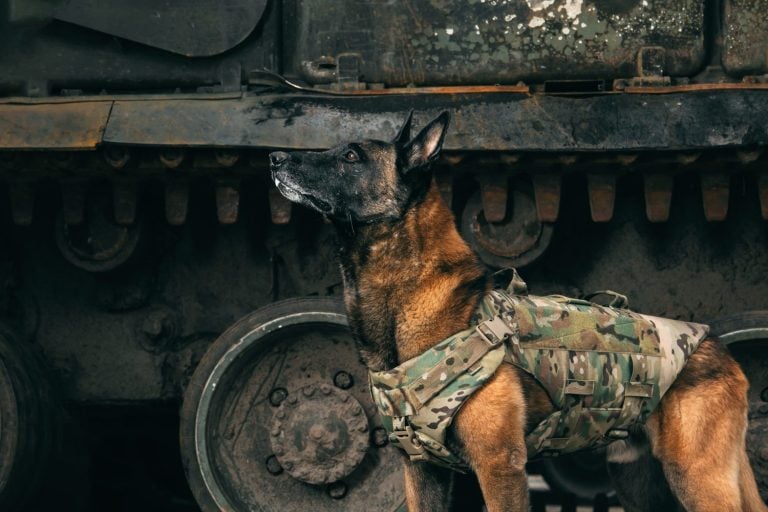
Many dogs were trained to become accustomed to aircraft noise.
©Matt Gibson/Shutterstock.com
Whereas the U.S. felt Europe was too populated and the Pacific islands too small for a landing, the British Army felt differently. So much so that many of them also made the infamous jump into Normandy on D-Day. These dogs went through intensive training and were taught to sniff out gunpowder and explosives on the ground, as well as to aid wounded soldiers. They were conditioned not only to tolerate aircraft noise but also to tolerate gunfire and explosions. Essentially, they were soldiers on four legs.
The British Army valued its paradogs so much that it sent a government request to London residents. It asked that families who could not afford to feed their pets donate them to the army, where they’d be cared for throughout their missions. Because of wartime rationing, this was an attractive offer for many families who owned pets. Over the course of the war, many of these dogs would make the jump with thousands of human paratroopers. Sadly, some wouldn’t make it through the war. However, one would go on to be awarded the greatest honor a paradog can have.
Ranee and Monty
Occupied Europe was a hostile place for soldiers and was not kind to the dogs who followed them. Despite this, Corporal Ken Bailey trained three dogs to land within occupied territory. On June 6th, 1944, the 13th Battalion, led by Corporal Bailey, parachuted onto the beach in Normandy. While many know the tragic fate of those who landed there, fewer know about the dogs who jumped with them.
Ranee and Monty were two of three who made the trip, but sadly, never made it back. Despite their training, both succumbed to injuries received after they parachuted. Ranee was separated from her army unit and could not be found among the chaos. Monty made the landing but was injured in D-Day combat and could not be saved. Two trained German shepherds took their place, but the brave paradogs have never been forgotten.
Brian “Bing”
The Fetch family of Loughborough gave their dog, Brian, to the war effort. Soon after he entered training, his name was changed to Bing. Of the three dogs to make the fated landing at Normandy, Bing was the only one to survive. He originally landed in a tree, but was rescued and brought to safety with no significant injuries. Later, Bing was once again assigned to jump into enemy territory during Operation Varsity.
He was handled personally by Jack Walton, a skilled sniper in WWII. They were two of 16,000 soldiers who fought during one of the largest single-location airborne operations of WWII. Their success and Bing’s skill throughout the mission earned them tremendous accolades at the end of the war. Bing was awarded the Dickin Medal, which is considered the animal equivalent of the Victoria Cross. He was also given back to the Fetch family, where he was “Brian” once again until he died ten years later.
The Sad Story of Laika the Space Dog
In addition to soaring through the skies, some dogs have even made it past Earth’s atmosphere. Laika’s story earned her the distinction of being the first dog launched into orbit, but it ended tragically. In 1957, the Soviet Union, in a space race with the rest of the world, aimed to study how space travel affects living things. Laika, a stray terrier mix, was chosen for the role of the first pup in space.
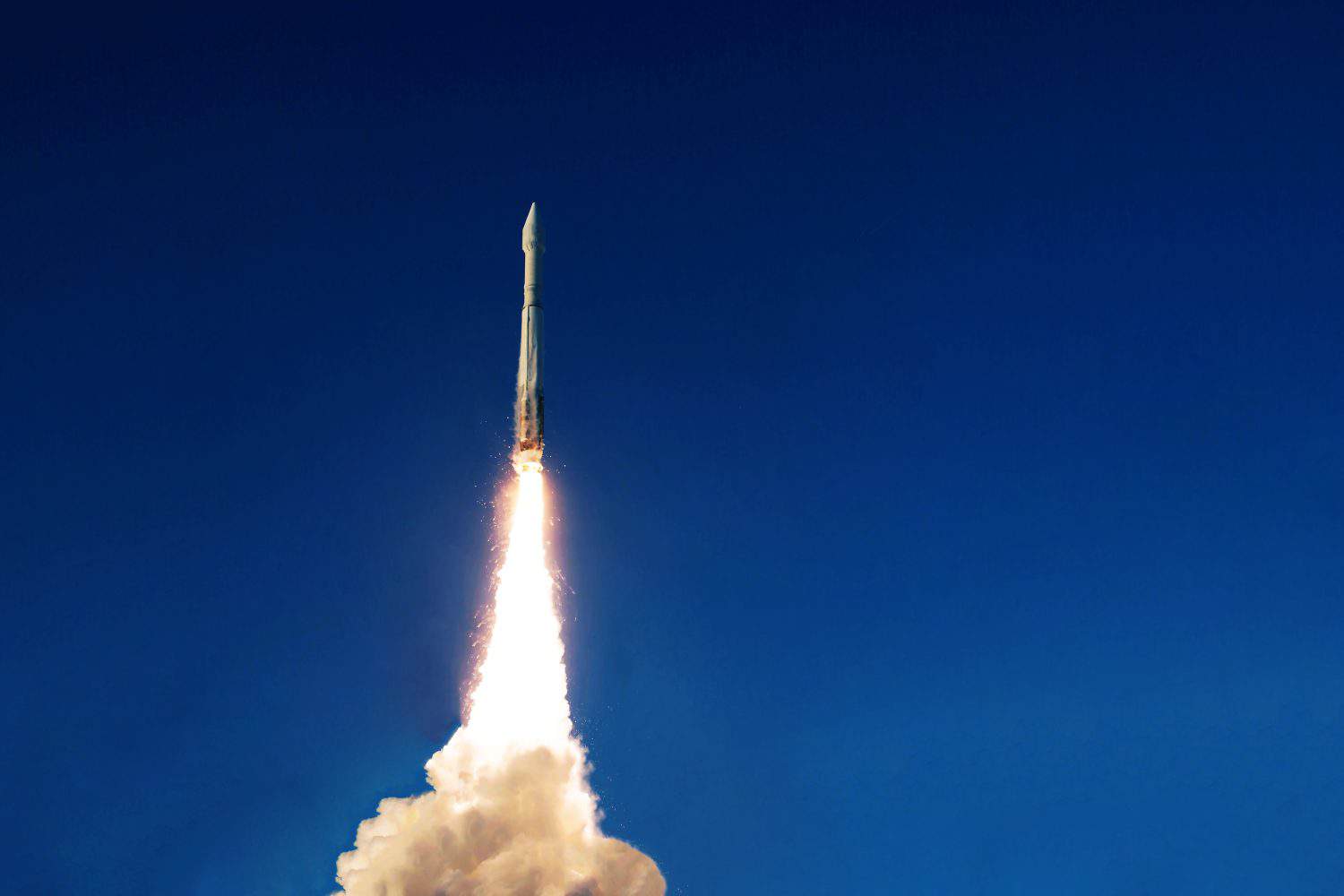
Sadly, Laika became a test subject in the early days of human space exploration.
©Artsiom P/Shutterstock.com
Laika was found on the street in Moscow and eventually gained the nickname “Muttnik” in the U.S. The name was a nod to the famed Sputnik mission. Sadly, Laika’s fate was already decided before she was strapped into her rocket ship. There was no re-entry mechanism, so it was well known that Laika would never come back down to Earth. She died between 5 and 7 hours into the flight due to overheating. While the mission was deemed cruel by some, it provided proof that humans could potentially survive in space.