
Of the ancient countries in the world, many have a myth or story that explains how the country — or the world — came into existence. Stories differ from continent to continent but a few similarities exist. There’s usually a dichotomy between chaos and order, a primordial being (or a few), and at least one element that’s essential to the culture itself.
Keep reading to discover the Japanese creation myth of how the world and the country of Japan came to exist.
The Japanese Creation Myth
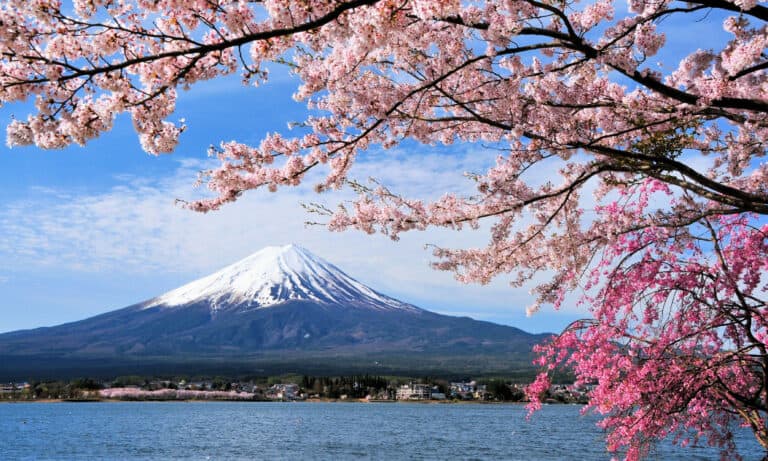
Japan’s creation myth differs based on the source material.
©Felix Lipov/Shutterstock.com
Held within Japan’s oldest two historical records, the Kojiki and the Nihon Shoki, the differing myths of creation remain an important part of Shinto cosmology. While many versions exist from thousands of years of oral tradition, we’ve compiled the most accepted and published to present as the general story of creation in the ancient Shinto religion.
In the beginning, there was nothing but silent chaos. As the chaos began to move around, it created two distinct spaces with the lighter chaos particles rising and the heavier particles sinking. This higher plane became “heaven” and the place below it — the swirling, muddy water — was called earth.
After the separation of the heavens and earth, five deities known as kotoamatsukami appeared. In Japanese, the word kami describes a god; though a better translation may be “spirit” or “phenomenon.” They were genderless and without a partner. Before long, the kotoamatsukami went into hiding.
Then, the kamiyo-nanayo (or, Seven Generations of Gods) came into being. The 12 kamiyo-nanayo arrived in pairs as both brother and sister and husband and wife (as many myths throughout the world have done before). The last-created kamiyo-nanayo were Izanami and Izanagi.
Different Versions
This is where myths differ. Some believe the older kami tasked Izanami and Izanagi with the creation of a country while other beliefs hold that the pair were simply curious about what was under the muddy water below the heavens. In either case, Izanagi churned the earth with a spear and pulled up mud that became the country of Japan.
When the pair stepped on the island they’d built, they decided to get married and have children. As no one had married or attempted to have children before in the universe, the couple struggled at first. Izanami initiated the first ritual to begin reproduction, but Izanagi pointed out how awkward it was for the woman to begin rather than the man. This ritual yielded a deformed child that the couple abandoned. When Izanagi initiated the ritual the second time, Izamani became pregnant and gave birth to their first of many, many children.
Widely considered to be the parents to hundreds of kami, Izanami and Izanagi single-handedly created the nation of Japan from nothing and a veritable pantheon of kami from their love.
What This Myth Means
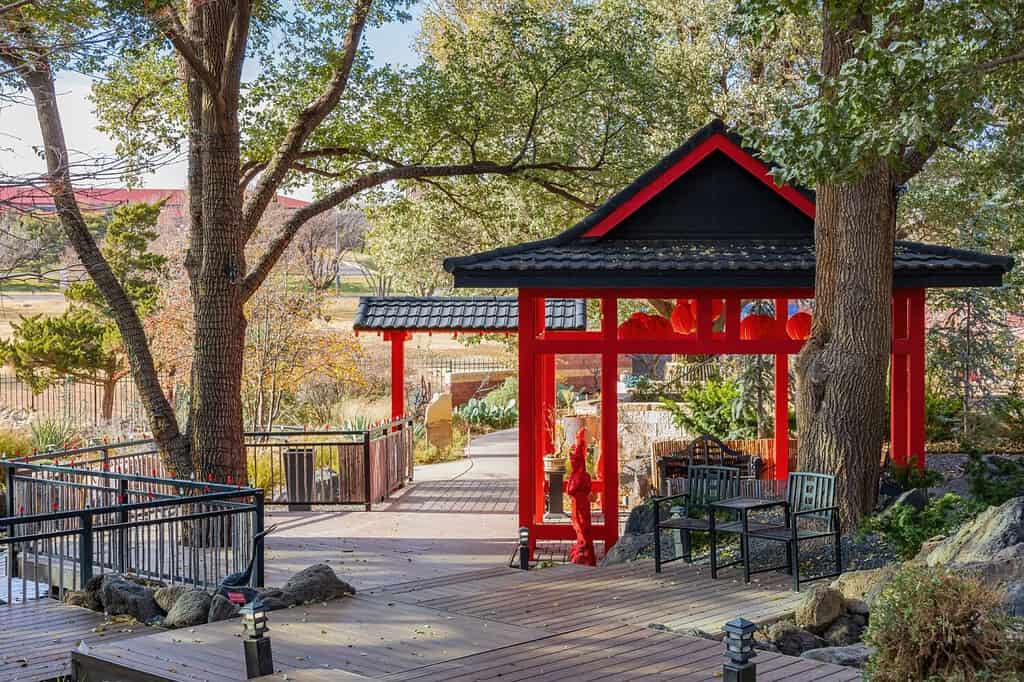
Shrines in Japan provide believers with a link to the divine.
©Kit Leong/Shutterstock.com
This creation myth, like all creation myths, provided ancient Japanese people with answers and entertainment. It’s only human to wonder about existence and the world, and this shared story provided answers to how life came to be. Oral tradition also remained a form of entertainment shared between friends and families for generations. Furthermore, the creation myth established the link between gods and nature, citing that nearly every living thing had a spirit or kami for it — and as such, people should respect the nature they encounter.
Interestingly, this creation myth mirrors a variety of others in the aspect of social order. It asserts that human error — specifically, women humans — creates the death, disease, and pain in the world. Because Izanami initiated intercourse first, the child begotten of that union was grotesque. But when Izanagi initiated their union, the resulting children were kami. It set the precedent for the rest of the myths of male dominance and female subservience.
How the Myth Influences Japanese Culture

Pop culture in Japan takes inspiration from the thousands-of-years-old creation myth.
©ESB Professional/Shutterstock.com
According to the Canadian Studies Center, Japanese people don’t believe in this creation myth anymore. However, its themes and meanings still resonate with the culture today.
Creation myths and Japanese folklore use both the Shinto philosophy and the Buddhist religion to create stories. These stories serve as a bridge of understanding between the people and the natural world. Shintoism and Buddhism remain pivotal in Japanese culture — especially traditional architecture. When visiting Japan, you’ll see hundreds of Shinto shrines throughout the cities and countryside. These temples and shrines serve as homes to the kami and include a protected center or chamber that no one can visit. As such, the sacred shrines provide modern-day immersion into Shinto mythology and lore.
The oldest collection of Japanese myths, legends, and oral traditions, the Kojiki, actually formed the rule of some shoguns in history. The Kojiki includes the creation myth, as mentioned above, and information about the “official” Imperial line for the country. The rulers of the Yamato polity used the Kojiki to justify their right to rule the land as stories of creation, gods, and lineage tied the family to heavenly deities. To this day, the Japanese imperial family maintains the oldest, unbroken royal line in the world. There’s sufficient historical evidence to tie back the first of the line to the sixth century, though myths place the 660 BCE Emperor Jimmu as the beginning of the line.
Pop Culture
Outside of government, Japanese mythology, kami, and yokai provide ample inspiration with which entertainment companies create anime, manga, and video games.
Some anime and manga spotlight Japanese mythical characters like Izinami and Izigami’s first daughter, Amaterasu, as characters in their own works. These stories also employ significant themes like good and evil or the balance between light and dark that the creation myth perpetuates.
Inuyasha, Fate/stay Night, and Record of Ragnarok are three of a plethora of anime that draw on specific Japanese myths. Inuyasha focuses on the magic and myth of different creations in Japanese folklore, Fate/stay Night incorporates characters from myths and legends into a complex narrative of heroic battles to save the world, and Record of Ragnarok pits the strongest heroes throughout history and myth (including many Japanese humans) against gods to preserve humanity.
In the anime and manga Mushishi, the titular character Ginko is a “mushi master” (or, mushi-shi) and travels through Edo/Meiji-period Japan attempting to end the suffering and pain of those he encounters. It relies heavily on Shinto mythology for its characters.
What Is the Earliest Historical Record of Japan?
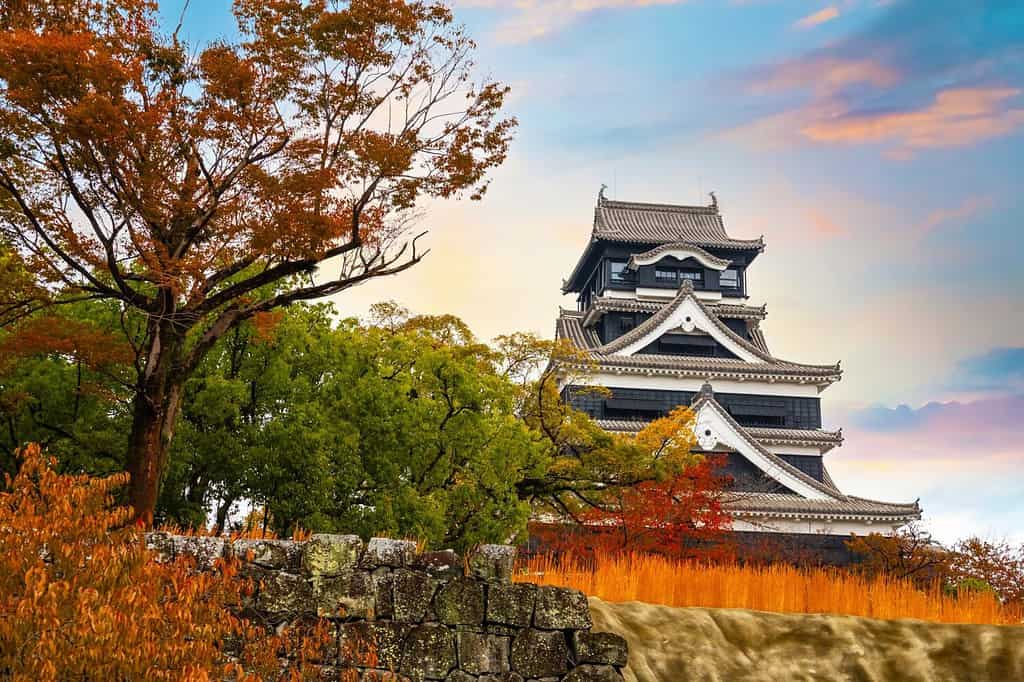
The written history of Japan spans millennia — back to 35,000 BCE.
©cowardlion/Shutterstock.com
Historians have unearthed evidence of human inhabitation in Japan as far back as 35,000 BCE during the Paleolithic area. These humans, mostly hunters from northeast Asia, left behind weapons made of ground stone to identify themselves. Experts believe land bridges that enabled wooly mammoths and humans to cross from East Asia to Japan became submerged at the beginning of the Jomon period (between 11,000 and 300 BCE). At this point, the world’s fourth ice age ended and sea levels rose.
During this period, Japanese people created stunning pottery. The earliest of the artifacts (which date as far back as 12,000 BCE) had rounded and pointed bottoms so the user could set them in a fire or the ground. By the late Jomon period, pottery shifted to stone jars for special events like religious ceremonies and/or infant burials.
Heaven, Earth, and Kami of the World
Japan’s creation myth focuses on the role of gods in nature. Across the archipelago, Japanese people highly revere their environment and take special care to maintain it. This long-held belief may come from the myth of Izanami, Izagani, and their many kami children that came to be from tears, body parts, and heightened emotions. The myth set the social order precedent of a woman’s position under her husband and continues to influence Japanese culture today.