
Quick Take
- Masaya became the first roloway monkey to undergo a groundbreaking surgery to remove a mass from her foot.
- Thanks to the surgery, Masaya was able to keep her foot, put weight on it, and just months later, give birth to her baby, Lagertha.
- The only alternative to the surgery was amputation for Masaya.
- Roloway monkeys are among the most critically endangered primates in the world.
Surgeries on primates have become more common in recent years. With a better understanding of how anesthesia affects them, veterinarians can now perform procedures that allow primates to feel no pain and recover successfully, enabling them to live more comfortably afterward.
But what happens when a primate needs a surgery that has never been attempted before? In such cases, the risks and benefits must be carefully weighed before making a decision. This was the situation faced by a critically endangered monkey, whose foot was saved by a surgery that had never been tried before. Even more incredible, the roloway monkey gave birth just months after the surgery was completed, with no complications noted.
Roloway Monkey’s Groundbreaking Surgery Allowed for a Successful Pregnancy
March brought happy news to Chester Zoo when a critically endangered roloway monkey was born to one of the zoo’s inhabitants. The tiny monkey, named Lagertha after the Viking queen, and her mother, Masaya, were both healthy in the days following the birth. This proved to be something of a miracle, given that just months earlier, it was unclear if Masaya would be able to live a normal life again.
In the summer of 2025, all known treatments had been exhausted for Masaya’s foot. Unable to determine the cause of the golf ball-sized mass, veterinarians considered whether amputation would be the best option for Masaya. The problem with this approach was the uncertainty of whether Masaya would be able to adapt and live a normal life without a foot.
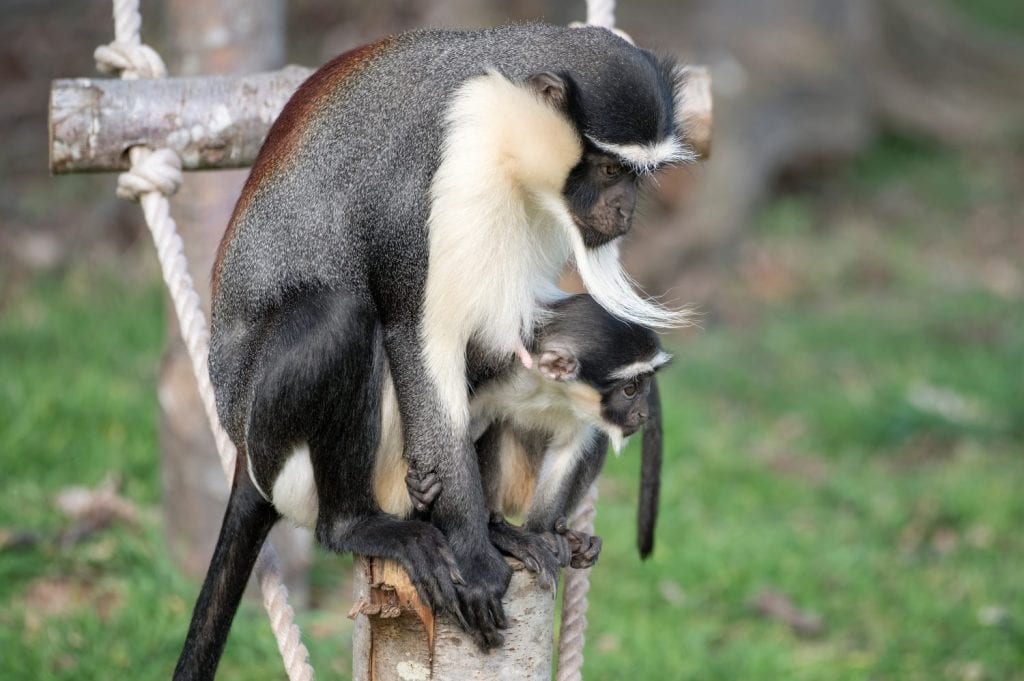
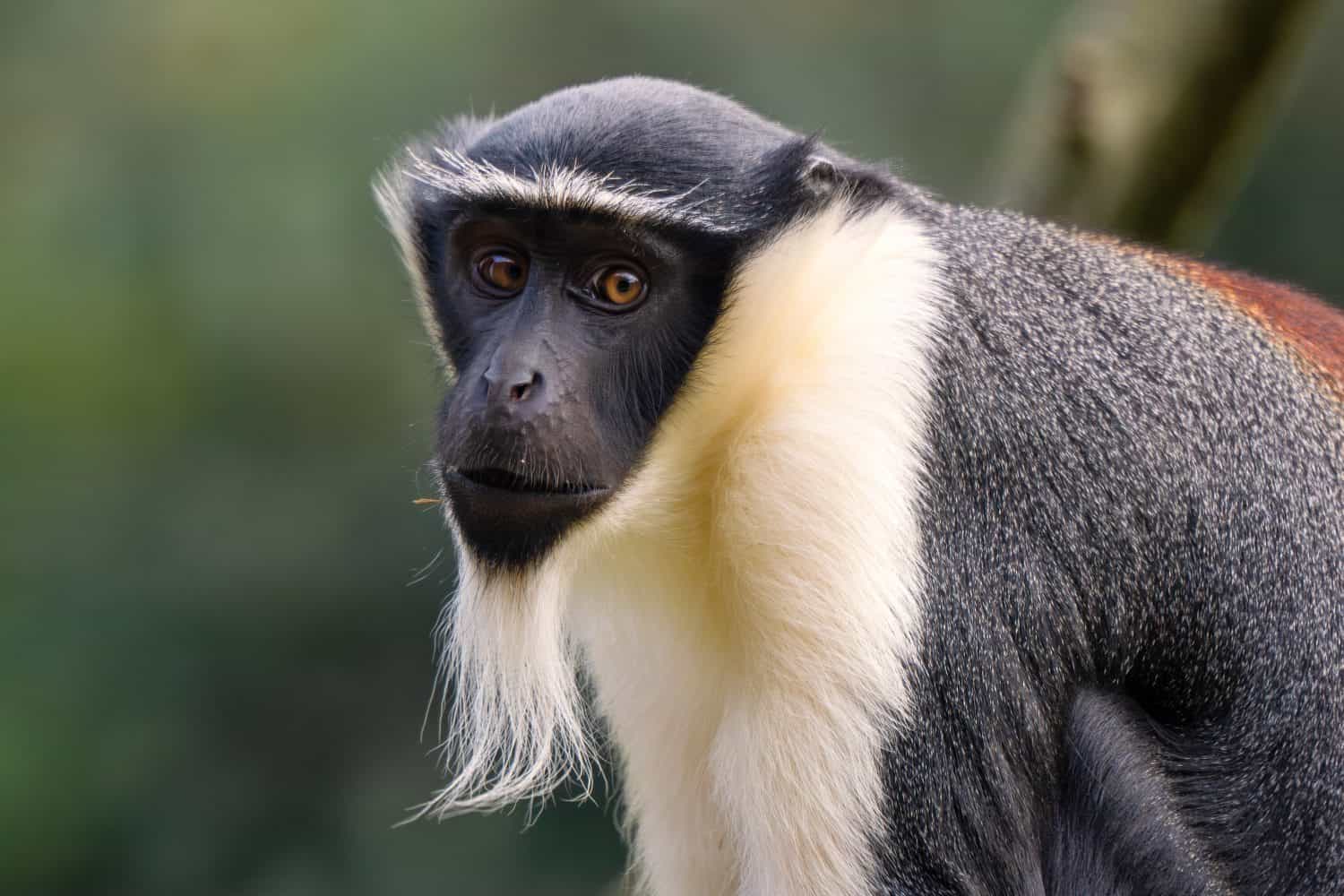
The surgery performed on Masaya, a similar roloway monkey to the one shown here, was instrumental in allowing her to carry her pregnancy to term.
©Ian Fox/Shutterstock.com
There was one remaining option before resorting to amputation: a surgery that had never been performed on a roloway monkey. Given that the species is critically endangered, according to the IUCN, performing the surgery was a risk.
Fortunately, the veterinary staff successfully removed the mass. While one toe had to be amputated, Masaya made a full recovery. Thanks to the successful recovery, Masaya’s foot allowed for normal weight-bearing activities. There were no complications during her recovery, even with the weight gain from pregnancy, and Masaya helped increase the roloway monkey population by giving birth to Lagertha.
Why Did Masaya Need Surgery?
Masaya arrived with her family at the Chester Zoo in 2024. As she, her partner Grizu, and their sons, Anum and Ilo, became more comfortable in their new surroundings, it was clear that Masaya had a foot problem.
Veterinary staff performed ultrasounds, x-rays, and biopsies of the mass on Masaya’s foot. They could not determine the exact cause of the mass, though most believed it was due to an old injury. This situation persisted until the summer of 2025, when the swelling worsened significantly.
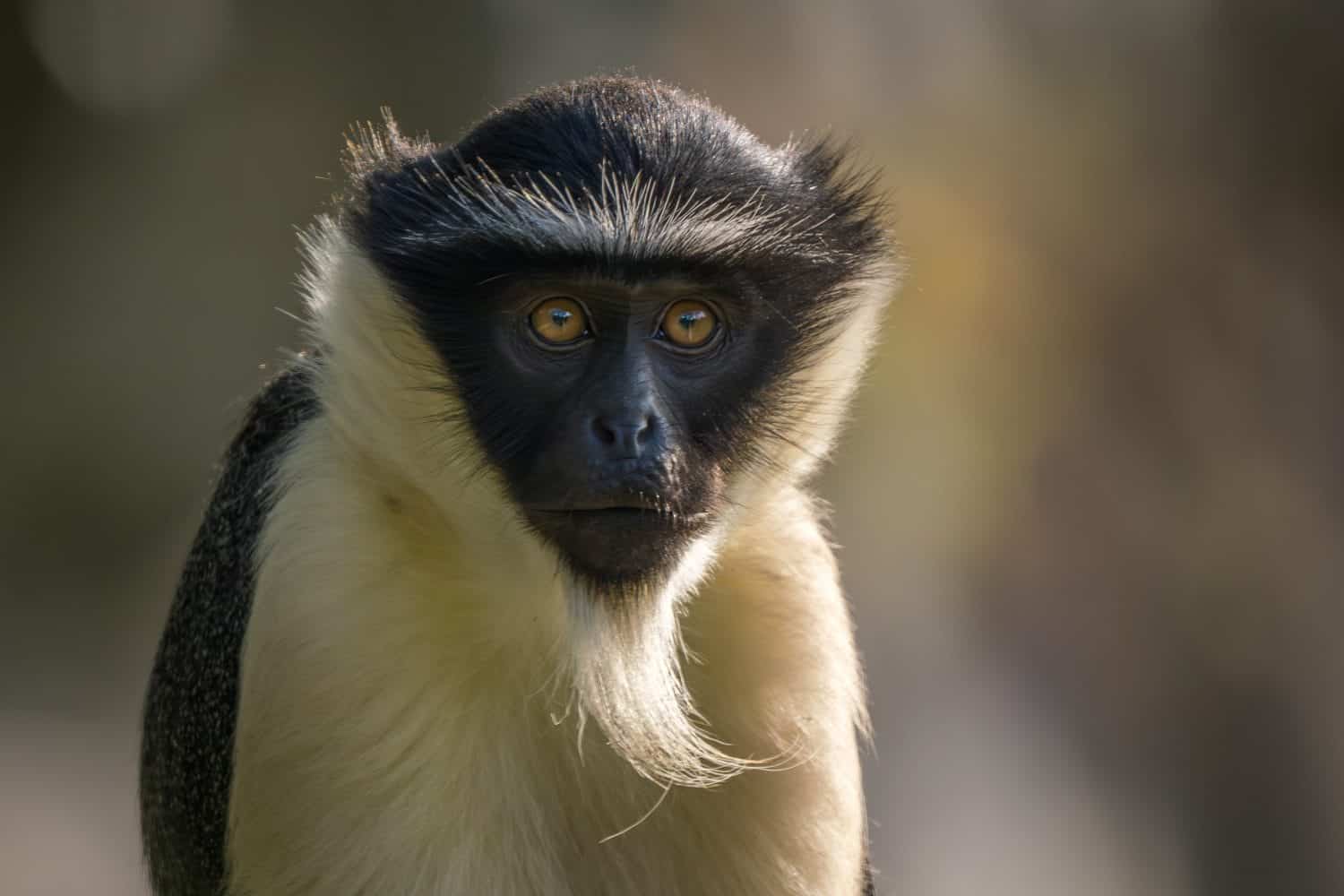
Without the groundbreaking surgery, Masaya, similar to the roloway monkey pictured here, would have had to have her foot amputated.
©David Havel/Shutterstock.com
After a CT scan at the University of Liverpool, veterinarians determined that the only remaining option was to remove the mass from Masaya’s foot. According to Rachel Burrow, a veterinarian at the University of Liverpool, if the surgery was unsuccessful, amputation would be required.
“This was the last chance to save Masaya’s foot before amputation,” Burrow said in a news release. “Working with primates is completely different from my usual patients, who are typically cats and dogs, and it was a real privilege to care for such a rare animal.”
Burrow, who is also a lecturer at the University, went on to say, “It’s great to see the surgery was a success – she’s comfortable, active and using the limb well.”
Had the surgery not been a success, amputation would have been the last option for Masaya. If Masaya’s foot had to be amputated, her future would have been uncertain.
Zoe Edwards, a primate keeper at Chester Zoo, noted there were many unknowns about the surgery performed on Masaya. However, the surgery needed to be attempted. If her foot had been amputated, Masaya might never have been able to live a normal life again.
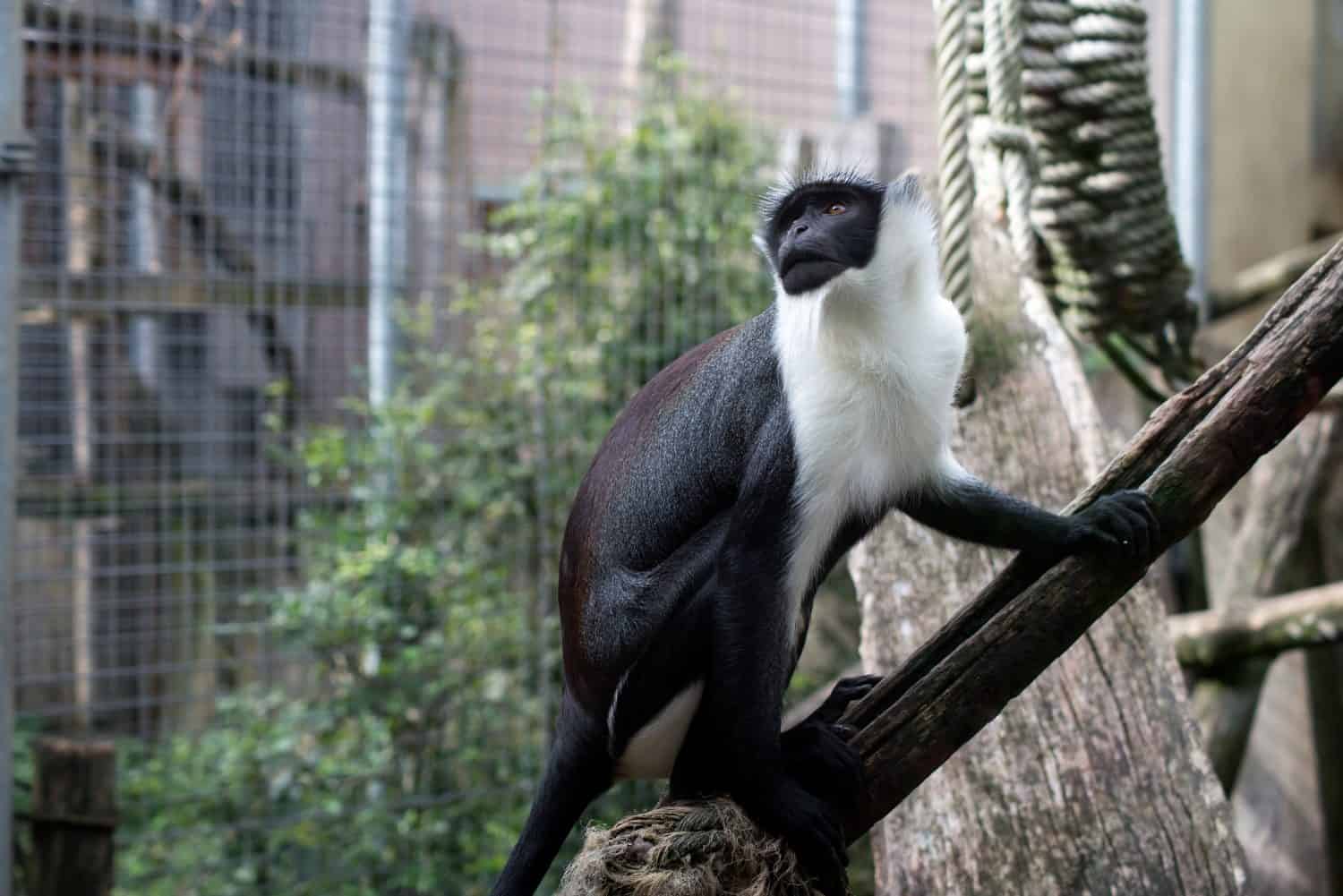
Masaya, like the roloway monkey pictured here, may not have been able to lead a normal life after a foot amputation. This included bearing the weight gain that came with pregnancy or holding her offspring.
©NeydtStock/Shutterstock.com
“The fact [that] Masaya’s foot has healed so well is a huge relief,” Edwards said in the news release. “If she’d had an amputation, we’d have been left with real questions about whether she could hold her offspring or continue with her normal behaviors.”
Thanks to the successful surgery, Masaya’s pregnancy did not cause any physical problems, and both mother and daughter were healthy after the birth.
What Caused Roloway Monkeys to Become Endangered?
Roloway monkeys are native to West Africa. They thrive only in mature forest habitats, being arboreal, or tree-dwelling, animals. Unfortunately, this means that as forests have disappeared over the last century, the monkeys have as well.
The majority of roloway monkeys are found in Ghana and Côte d’Ivoire. In Ghana alone, more than 80% of the forests have been decimated since the early 1900s due to logging, urbanization, and agricultural land use. This led to a steep decline in the roloway monkey population.
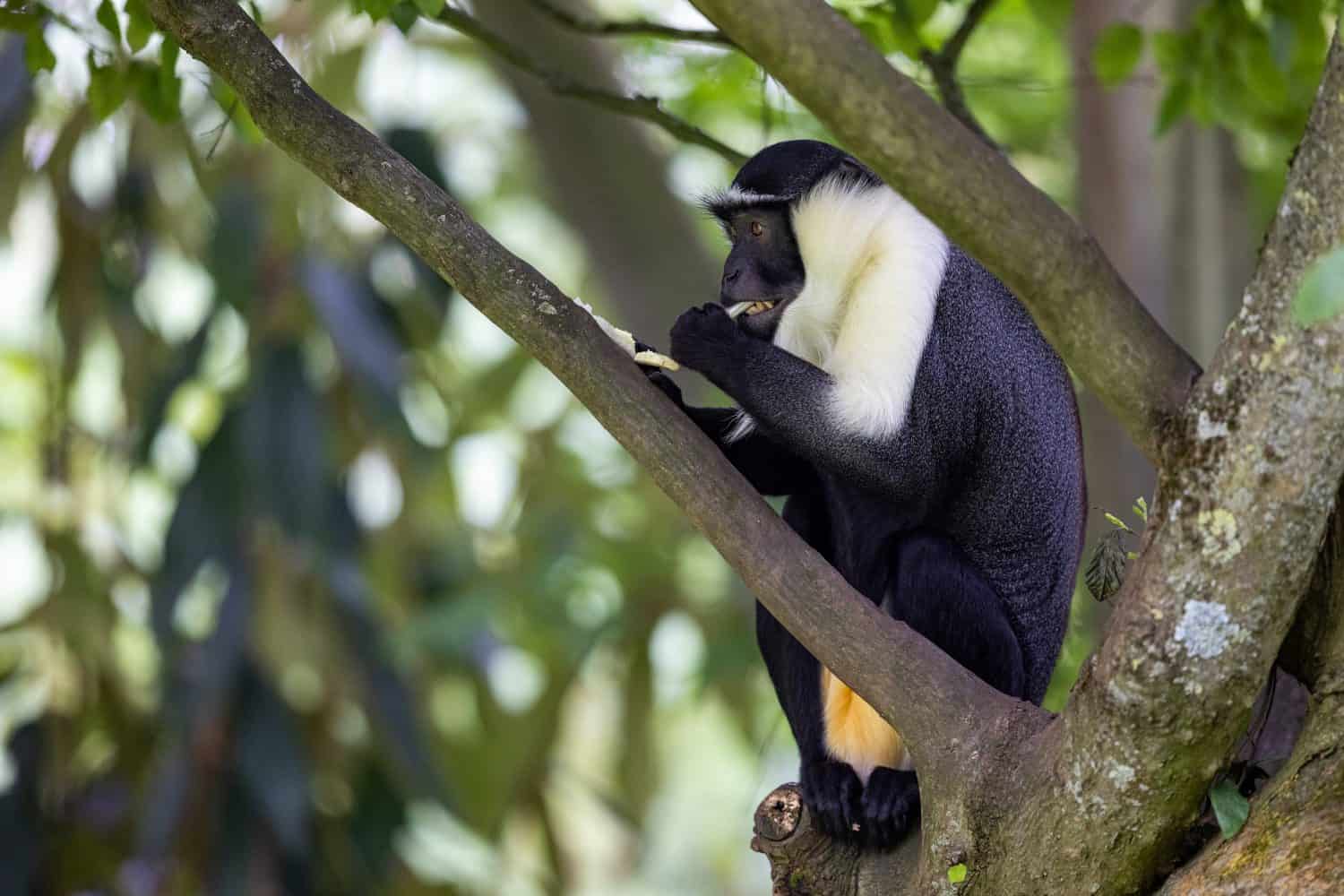
As their forest habitats are destroyed and they are hunted for bushmeat, the roloway monkey population has decreased by 90% in some regions.
©AB Photographie/Shutterstock.com
It was not deforestation alone that caused the roloway monkeys to become critically endangered. The monkeys have also been targeted for bushmeat. With 800 tons of bushmeat coming through Ghana’s markets, there is no telling what percentage of that comprises roloway monkeys. However, the percentage today is significantly smaller than it once was. This is because some estimate that only 200 roloway monkeys remain in the wild, while others suggest the figure could be as high as 2,000. These monkeys are still poached for their meat, given the high price the monkeys fetch on the black market.
Roloway Monkeys Received Unexpected Reprieve from Poaching
While the black market pays high prices for roloway monkeys, their low population numbers have given them a temporary reprieve. With how leery the monkeys are of humans, they have become notoriously difficult to track. Consequently, poachers do not seek out roloway monkeys alone. It has become too uneconomical to do so.
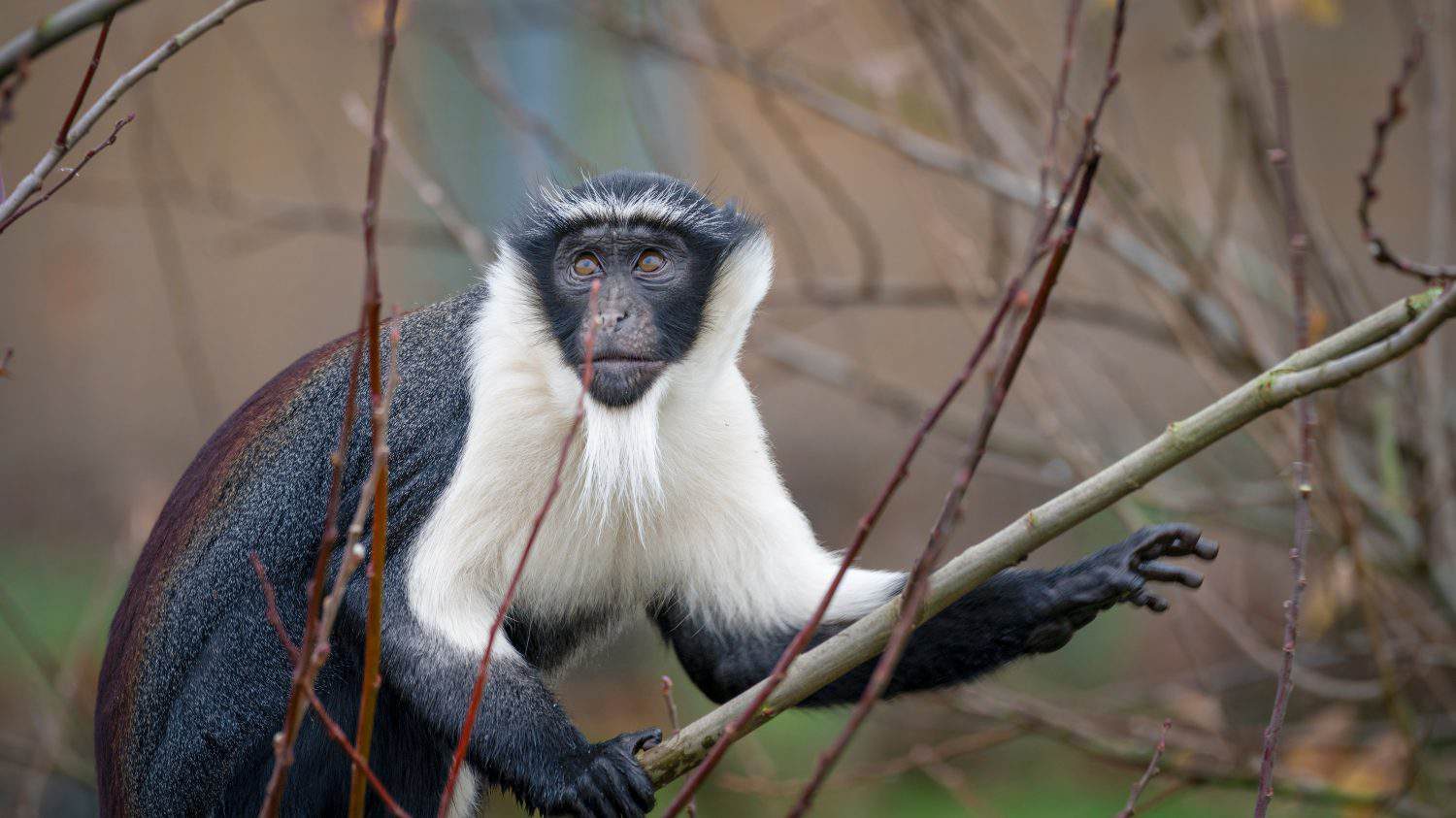
The small population of roloway monkeys in the wild has led poachers not to specifically target the species, as it is not economical to do so.
©Ian Fox/Shutterstock.com
Will poachers still target roloway monkeys if given the opportunity? Absolutely. However, without being the target, this has afforded a brief reprieve from the incredible population decline experienced over the past several decades. Over the last 20 to 30 years, 90% of the roloway monkey population in Ghana has been lost. While the roloway monkey population is still in decline, that decline has slightly slowed, no longer being the primary target of poachers.
Can Roloway Monkeys Be Saved from Extinction?
Whether the roloway monkey can be saved from extinction is a difficult question to answer. With captive breeding programs in place, there is a short-term fix to keeping the population from going extinct. But without efforts to protect the natural habitats where roloway monkeys live, their long-term chances of survival are slim.
Currently, the best chance that roloway monkeys have of staving off extinction lies in captive breeding programs. As of 2024, there were 36 roloway monkeys located in 13 zoos across Europe. Not all of these locations have captive breeding programs. There are three main captive breeding programs for roloway monkeys. Two are in Europe, and one is in the United States. They include:
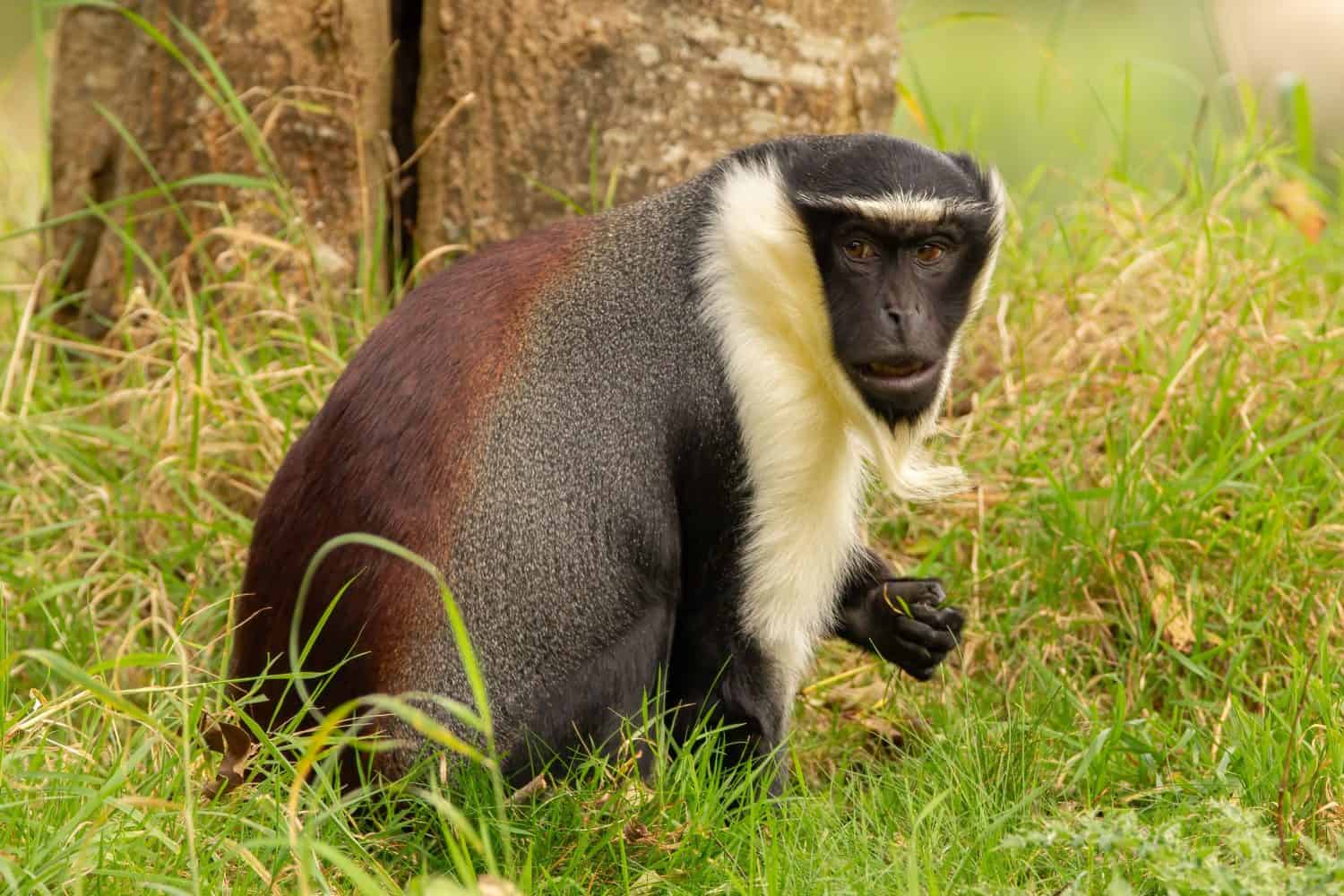
In 2024, there were only 36 roloway monkeys in captivity in Europe.
©Tomas Herink/Shutterstock.com
Relying on captive breeding programs to prevent extinction is not ideal. However, this may be the last chance for the roloway monkeys. If these programs are successful and the population increases significantly, it may become possible to release individuals into the wild.
Releasing the roloway monkeys into the wild cannot be done without significant planning. This would require adequate habitats for the monkeys to flourish, along with assurances that the forests would not be cleared and the monkeys would not be targeted by poachers. Neither of these conditions can be guaranteed at this time.
The future of the roloway monkey is unclear. However, stories like Masaya’s offer a glimmer of hope for the species. Sometimes, that bit of hope is all that is needed to call for significant change and turn the tide for conservation.