
Quick Take
- Animals use long-distance calls shaped by physics, environment, and body size to communicate across miles.
- Land mammals adapt calls mainly to habitat and noise, while aquatic mammals rely more on body size.
- Low-frequency sounds travel farther, helping species like whales and elephants stay connected.
- Human noise and habitat changes are shrinking communication ranges, affecting survival and behavior.
From deep growls rolling over savannas to haunting whale songs drifting through the ocean, many species rely on sound to stay in touch across miles. New research suggests these calls are not just louder versions of everyday noises but finely tuned signals shaped by distance, environment, and body size in ways scientists are only now beginning to understand. By comparing mammals on land and in water, biologists are uncovering hidden rules for how long-range communication evolves—and realizing that whales may be playing by a different rulebook altogether.
What Makes a Call Travel Far
Sending a message across distance is a physics problem as much as a biology one. When an animal calls, sound waves spread out and weaken, a process known as attenuation, and they also get distorted or blocked by obstacles in the environment. Air absorbs higher-pitched sounds quickly, while lower frequencies travel farther but carry less fine detail, forcing animals to choose between range and clarity. The new mammal study pulled together data on 103 species and showed that calls used for long-distance communication tend to be lower in pitch, longer in duration, and timed for moments when background noise is low, such as at night or at dawn.
On land, these calls must contend with wind, temperature changes, and cluttered habitats filled with trees, rocks, or grass. Although dense forests may seem like poor environments for sound transmission, the research found that mammals in closed habitats like rainforests have calls that, relative to their body size, carry farther than those of animals in open habitats such as grasslands. This suggests that natural selection has pushed forest-dwelling species to develop especially efficient signals that can weave through vegetation without fading too fast. Those signals might use narrow frequency bands that slip between echoes, or tonal notes that bounce less chaotically off leaves and trunks.
Why Distance Matters for Survival
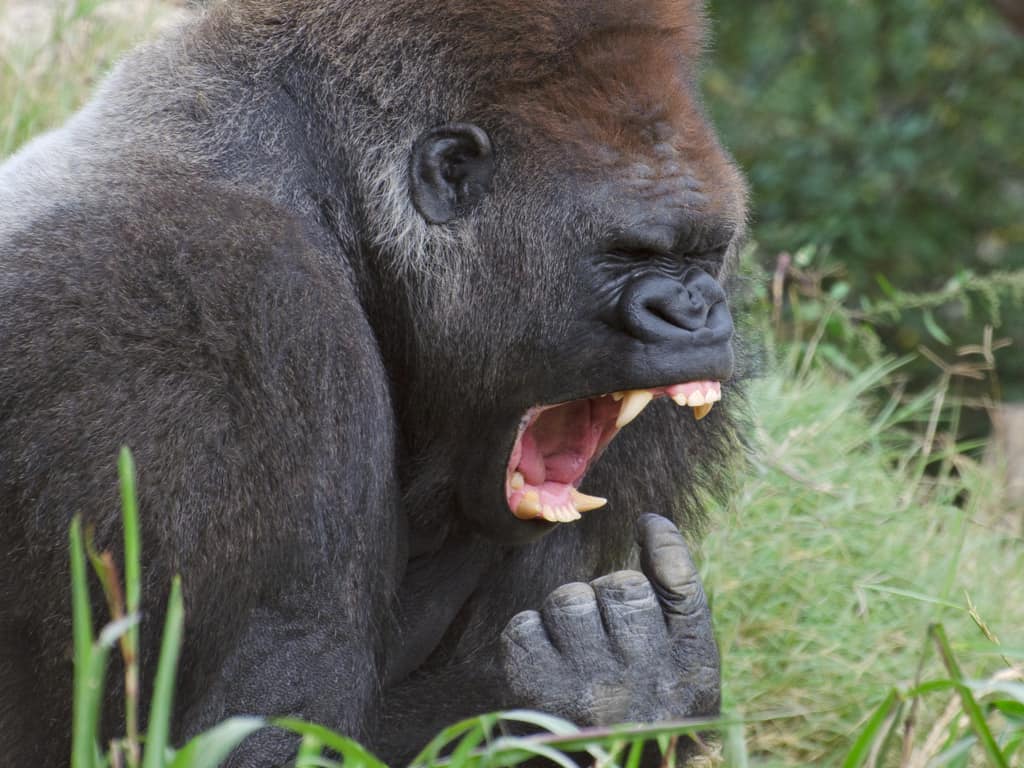
Primates use vocalizations to coordinate with one another, among other reasons.
©BDMPhoto/Shutterstock.com
Animals rarely call just to make noise. Long-distance calls allow them to solve life-or-death problems, from finding mates to avoiding predators. Territorial species use far-carrying roars or howls to warn rivals away from their home ranges, saving energy and risk by settling many disputes at a distance. Social mammals such as elephants and some primates use calls to coordinate movement, reunite with separated group members, or alert others to danger.
The farther a signal can travel, the larger the “communication space” an individual can control. For a male advertising his strength, that could mean reaching more potential mates; for a scattered herd, it could mean staying connected as they spread out to feed. The new study found that territorial calls typically travel farther than other call types, and that highly social species tend to have especially extended communication ranges. This pattern hints that natural selection does not treat all messages equally. Signals that protect space or maintain social bonds may be under stronger pressure to reach long distances than simple contact calls, shaping their pitch, volume, and timing over evolutionary time.
Land Mammals: When Habitat Sets the Rules
For land mammals, the environment turned out to be the main driver of how far calls travel. The researchers discovered that things like habitat type and typical background noise levels explained much of the variation in communication distance, even more than body size. In closed environments such as rainforests, animals have evolved calls that reach relatively farther than those of similarly sized mammals in open environments. This result surprised scientists, who had expected open plains to favor longer-range calls because there are fewer obstacles to block sound.
One reason may be that closed habitats pose such a strong challenge that only finely tuned acoustic strategies allow calls to work at all. Forest mammals may use specific frequencies that scatter less in dense foliage or adopt repeated, rhythmically spaced notes that stand out from echoes and insect noise. In grasslands, however, wind and temperature layers can bend or disrupt sound, and loud environmental noises such as insect choruses or human activity can further reduce the range of calls. Due to these pressures, two species of similar size might evolve very different call designs depending on whether they live under a leafy canopy or in an open plain.
Aquatic Mammals: When Body Size Takes Over

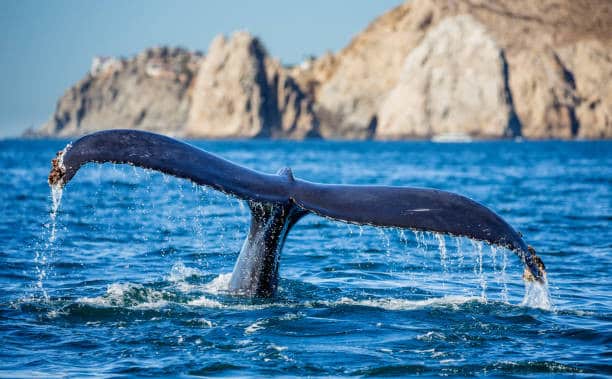
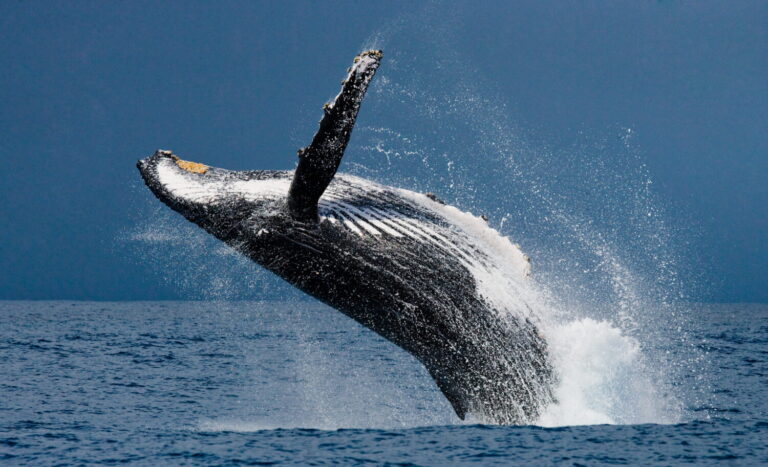
Underwater, the size of the animal is a major determinant of how far sound travels.
©Samantha Haebich/Shutterstock.com
Underwater, sound behaves differently, and so do the rules that shape long-distance calls. Water is denser than air and carries sound far more efficiently, especially at low frequencies. In the new study, environmental factors like habitat type played a smaller role for aquatic mammals; instead, body size was the dominant predictor of how far their calls could travel. Larger whales tended to produce deeper, more powerful sounds that propagated across vast distances, while smaller species had more limited communication ranges.
This size effect makes sense from a physics perspective. Big animals can support larger sound-producing structures—such as long vocal folds or massive vibrating cavities—that naturally generate low-frequency waves. Those low notes move through seawater with minimal loss, allowing giants like Balaenoptera musculus to be detectable over hundreds of miles under ideal conditions. In contrast, smaller dolphins and porpoises often rely on higher-pitched clicks and whistles, which are excellent for short-range communication and echolocation but fade more quickly with distance. Thus, in aquatic environments, evolution appears to use body size as the main knob for adjusting communication range.
Blue Whales: Masters of Ocean Distance
Among all known animals, blue whales are the current champions of long-distance sound. Under quiet ocean conditions, their infrasonic calls—near or below the lower limits of human hearing—can be detected from hundreds of miles away. These booming notes allow individuals to keep track of each other across enormous stretches of ocean, potentially helping them locate mates or coordinate migrations between feeding and breeding grounds. Because blue whales are also the largest animals ever known, weighing well over 300,000 pounds and stretching close to 100 feet, they sit at the extreme end of the size–distance relationship uncovered in the new study.
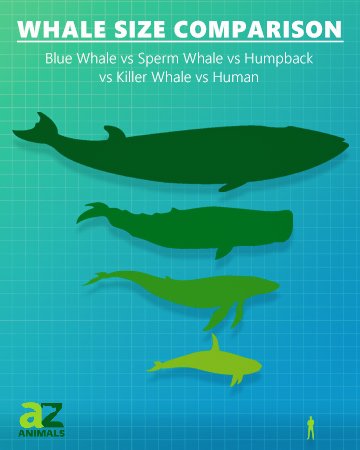
However, their impressive range is not guaranteed. Ocean noise from ships, sonar, and industrial activity can “mask” whale calls, similar to how loud traffic makes it hard to hear someone across a street. In heavily used shipping lanes, researchers have documented that endangered North Atlantic right whales in the Stellwagen Bank National Marine Sanctuary have lost an estimated 63-67% of their communication space due to increased ship noise. This means that a call which once carried clear meaning across hundreds of miles may now only reach a fraction of that distance before being drowned out by human-made noise.
Elephants: Low Notes on Land
On land, elephants are among the best-known long-distance callers. These massive herbivores use powerful trumpets and deep rumbles, some of which fall into the infrasonic range, to stay in contact with family members spread over many square miles. Their calls can pass through thick vegetation and travel several miles, especially during cooler parts of the day when air conditions favor sound transmission. Because elephants are social and often need to coordinate movements between scattered herds, natural selection has likely favored signals that maintain reliable long-distance contact.
The new research supports this idea by showing that social species tend to have calls that reach farther than those of solitary mammals, even after accounting for body size. Elephants also demonstrate how habitat matters: individuals living in forested regions often produce slightly different call structures than those in more open savannas, possibly adjusting to local acoustic conditions. These differences fit the broader pattern in which land mammals adapt their signals more to environmental challenges than to simple physical limits, unlike their aquatic counterparts.
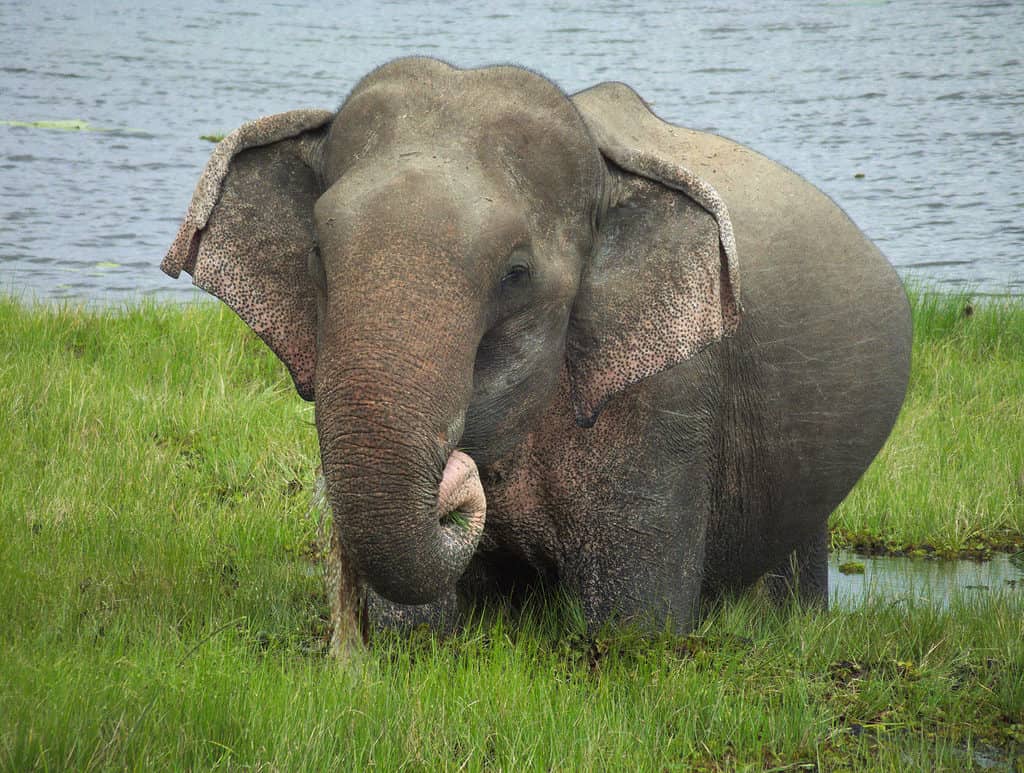
Some elephant vocalizations are undetectable by human hearing.
©iStock.com/Lekamalage
Lions: Roars Across the Savanna
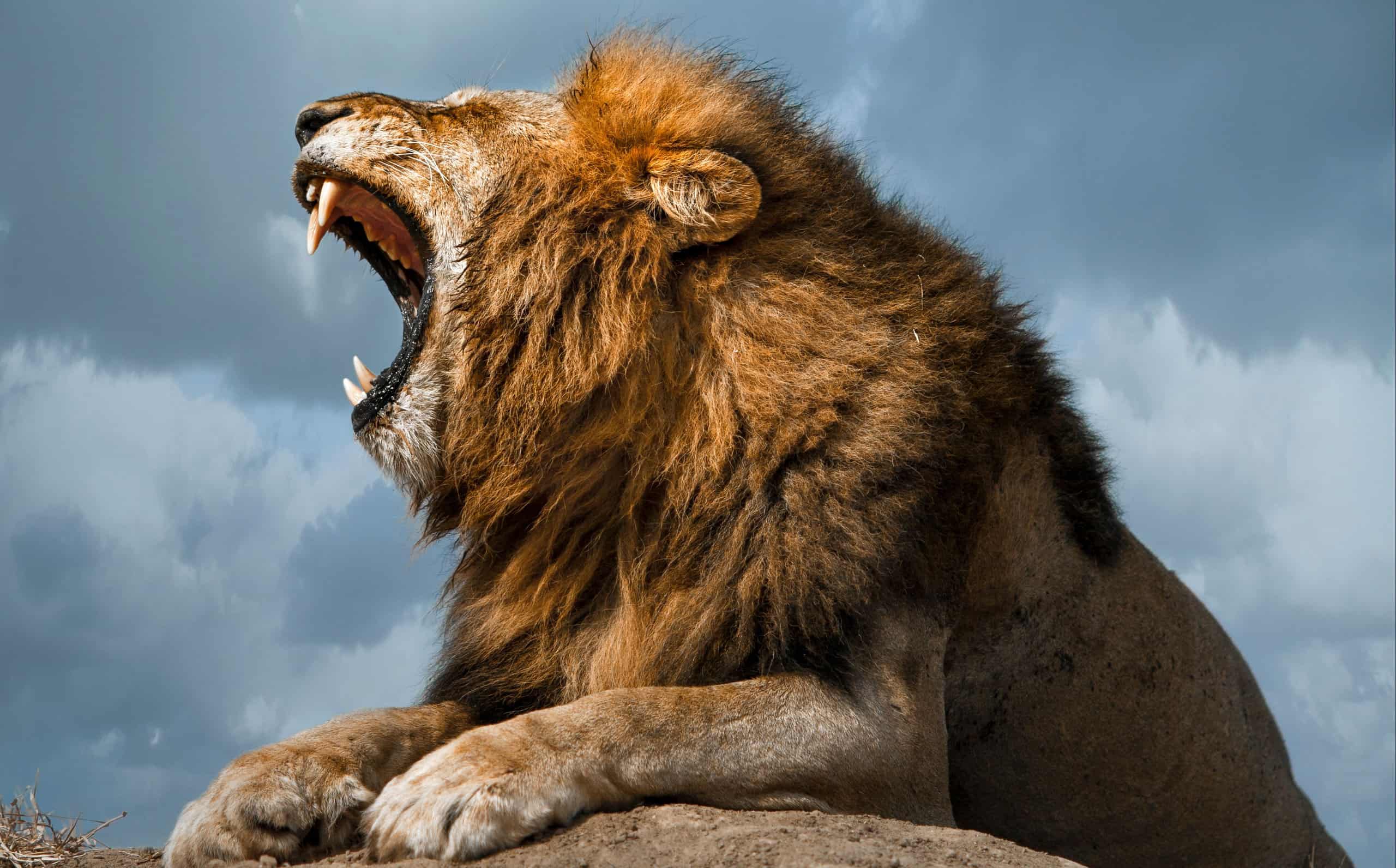
Lions offer another striking example of long-distance land calls shaped by environment and social life. A lion’s roar can be heard up to several miles away on calm nights, advertising territory boundaries and signaling strength to rivals and pride members. These roars are deep, loud, and produced in sequences that make them hard to confuse with other sounds on the African plains. Because lions defend territories and live in social groups called prides, roars play a critical role in avoiding dangerous fights and keeping the group coordinated.
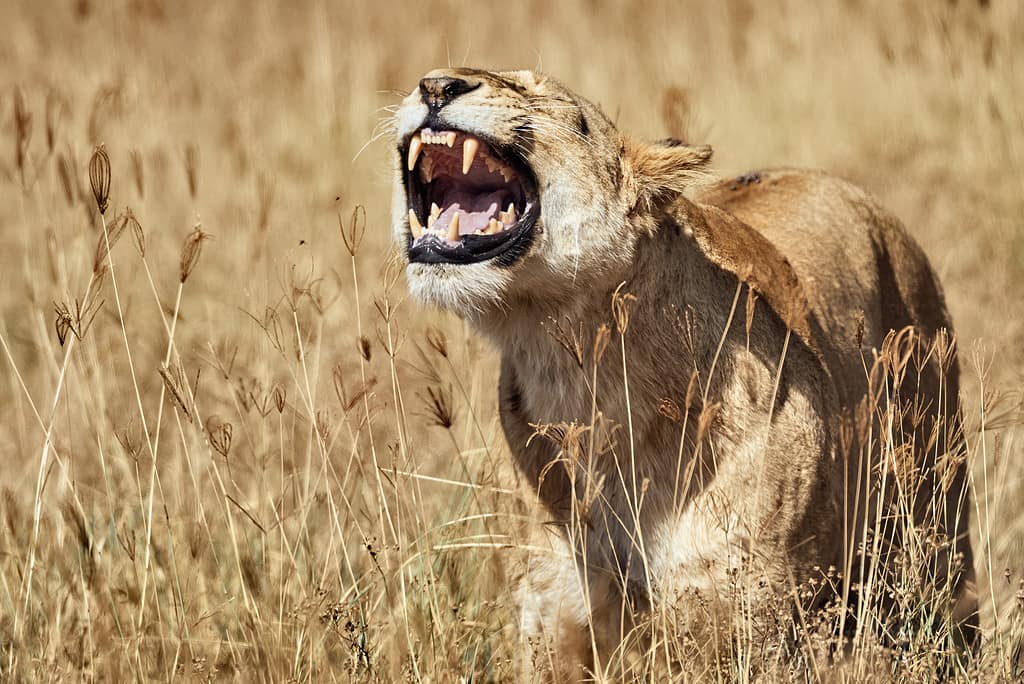
Lions often roar at cooler times of day when sound carries further.
©LuCaAr/iStock via Getty Images
In the new study, territorial calls like lion roars emerged as some of the longest-reaching signals among land mammals. The open habitats where many lions live allow sound to travel relatively freely, but wind and temperature layers can still bend or dampen roars over distance. As a result, lions often roar at night or in the early morning, when the air is more stable and background insect noise is lower, maximizing the effective range of their calls. This timing shows how animals can tweak behavior, not just anatomy, to squeeze the most distance out of each sound.
When Human Noise Rewrites the Rules
As humans reshape both land and sea, the hidden rules of animal calls are coming under new pressure. On land, converting forests into open fields or urban areas can suddenly change how far a call travels. The study’s authors warn that land mammals adapted to closed habitats might find their signals traveling farther than intended if their forest homes are cut down, potentially exposing them to new predators or making it easier for enemies to locate them. In noisy human landscapes, the added roar of engines, machinery, and crowds can also shrink the practical communication space available to wildlife.
In the ocean, the challenge is even greater. Commercial shipping, oil and gas exploration, and naval sonar all add powerful low-frequency sounds to waters where whales rely on similar frequencies for communication. Researchers in the Stellwagen Bank National Marine Sanctuary off the U.S. East Coast found that ship noise has cut the communication space of North Atlantic right whales drastically in recent decades, making it much harder for them to stay in touch. Because body size and low-frequency calls are so central to whale communication, any extra noise in that range can be especially disruptive.

Long-distance cargo shipping, fishing operations, cruises, military activities, and undersea drilling and mining operations make the oceans an increasingly noisy place.
©Sven Hansche/Shutterstock.com
Rethinking How Long-Distance Calls Evolve
For many years, scientists assumed that the physical environment—such as whether an animal lived in open grassland or dense forest—was the main factor shaping long-distance calls for all species. The new analysis of 103 mammal species overturns that simple picture. On land, environmental pressures such as habitat structure and typical noise levels do indeed dominate. However, underwater, body size and the physics of sound in water become the primary factors, causing whales and other aquatic mammals to follow a different evolutionary path.
This distinction is important because it changes how researchers should interpret animal sounds and predict their future. Conservation plans that focus solely on protecting quiet habitats for marine mammals might overlook the additional risks posed by changes in body size, such as those caused by food shortages or historical whaling. Meanwhile, for land mammals, preserving or restoring habitat structure could be just as important as limiting noise, since converting a forest into farmland may alter the reach and safety of calls even if the area remains relatively quiet. Understanding these separate rulebooks helps scientists design protection strategies that match the way each group actually uses sound.
Echoes Across Two Worlds
Taken together, this research shows that distance is not just a backdrop for animal communication—it is one of its main architects. On land, forests, grasslands, and human noise sculpt how far calls can reach, while in the ocean, sheer body size and the physics of water give giants like blue whales an unmatched acoustic range. As human activities continue to change habitats and add noise, understanding these hidden rules will be essential for keeping the planet’s many voices from being lost in the growing roar.