
Quick Take
- This spectacular video shows over a hundred thousand King Penguins gathered on St. Andrews Bay in the sub-Antarctic island of South Georgia.
- The birds are here to breed, but do not build nests.
- They have to call out to find their mate and their chick, creating an overwhelming sound!
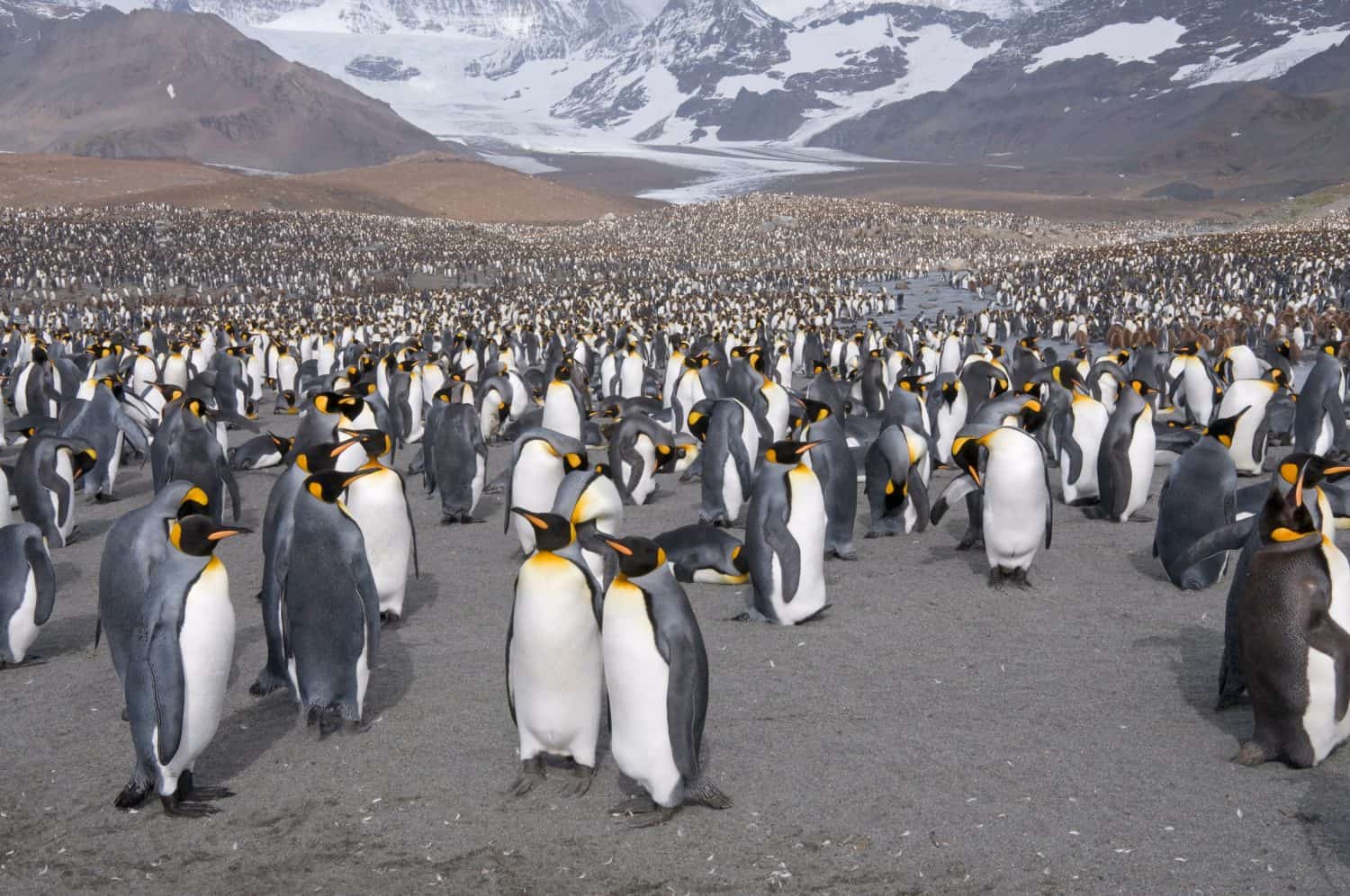
The penguins in this hauntingly beautiful video by wildlife artist and filmmaker Robert E Fuller appear almost sculpted from the very landscape they inhabit. The footage pans across St Andrews Bay in the sub-Antarctic island of South Georgia, where fine, grey sand and the glacial outwash plain behind are ringed by towering, snow-capped peaks. At first glance, the shore appears bleak and even barren. But if you look closer—and, more importantly, turn up the volume—it becomes clear that this spectacular bay is teeming with life. King penguins are here in force!
Why Are the Penguins at St. Andrews Bay?
St. Andrews Bay indents the northern coastline of South Georgia just south of Mount Skittle. It is the chosen location for a huge breeding colony of King penguins. This is likely the largest King penguin breeding colony in the world and contains at least 100,000 birds, making it quite a spectacle.
King penguins (Aptenodytes patagonicus) spend much of their time at sea, but their land-based homes are the sparsely vegetated areas of islands in the southern oceans and sub-Antarctic. The penguins creating this magnificent scene in St. Andrews Bay belong to the subspecies Aptenodytes patagonicus found on South Georgia and other sub-Antarctic islands in the South Atlantic.
The penguins are here to breed because a flat shoreline like this is perfect for them. But as you can hear from the deafening cacophony of calls, this is anything but a subtle process. It’s better described as organized chaos.
The Chaos of King Penguin Breeding
King penguins have a biennial pattern to their breeding cycle. Most breeding pairs breed every other year, though some may breed annually if conditions allow. However, parents will not begin a breeding cycle until their chick has successfully fledged. This makes them late for the next breeding season and therefore reduces their chances of success. If a breeding season fails, they will breed early in the following season. As a result, pairs are in various stages of a success-fail-success-fail pattern (with some variations), meaning that some birds are foraging, while others are in colonies mating, molting, or roosting. It’s a unique kind of penguin chaos.

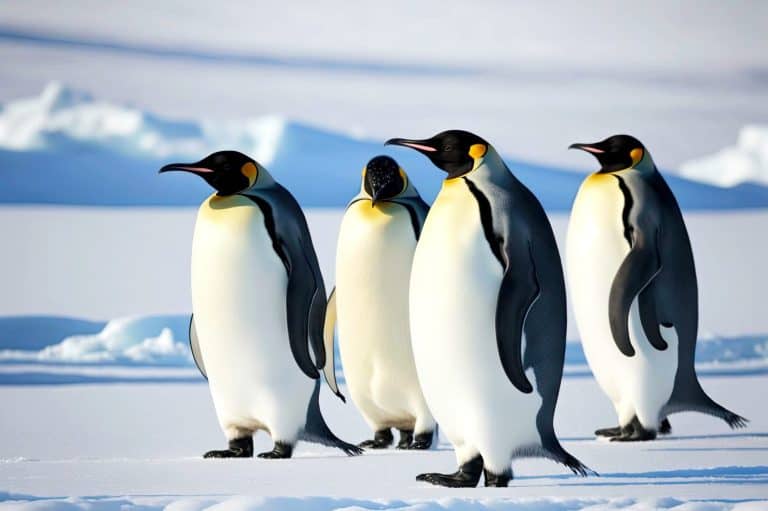
King penguins take turns to incubate their egg, but have no nests.
©Gerald Corsi/ via Getty Images
Their breeding commences with a molt, and once this is over, courtship can begin. The female lays a single egg, which is transferred to the male penguin’s feet for incubation. The female leaves to feed and replenish her fat stores, after which the pair takes turns incubating the egg. King penguins forage in the water for food and will travel up to 300 miles to find it. They feed on cephalopods, small fish, and squid, and can dive underwater for up to 10 minutes while hunting.
Birds Without a Nest
They have no nest, and both birds use a pouch of belly skin to keep the egg warm. This continues when the chick hatches until it is robust enough to survive alone. As the chick gets older, both parents may leave it to forage for food and bring it back for the chick. During their first winter, the chicks predominantly survive on their stored fat.
With no nest as a focal point and unable to use topographical cues or visually identify their partner, these penguins rely on sound to locate their family. Hence, the riot of noise you hear in this clip.
The Science Behind Penguin Calls
Adding to the general breeding chaos are the various vocalizations. While the noise may seem overwhelming to us, it’s important to remember that penguin partners face an immense challenge in finding each other. Imagine landing on that beach and trying to find your partner and your offspring among thousands of other birds. What’s more, waiting chicks must identify their parents’ calls amid all the background noise!
Penguins have what scientists call a ‘two-voice system’, which they produce using their syrinx. This is a two-part organ located where the two bronchi—the tubes that lead to the lungs—join. Each part of the syrinx produces sound independently, as each has its own set of muscles.
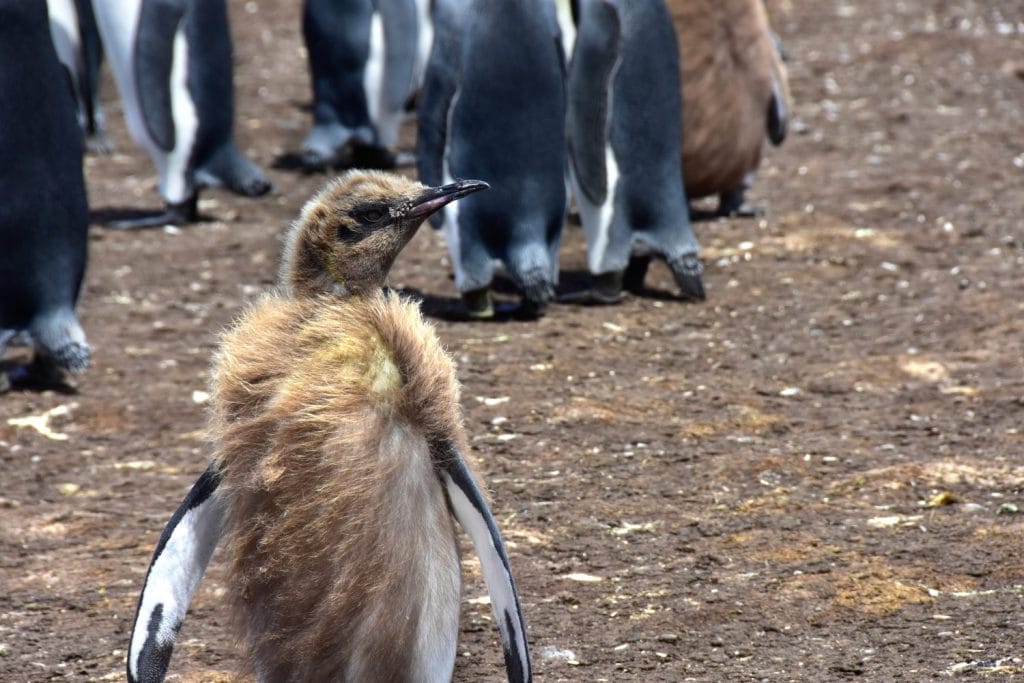
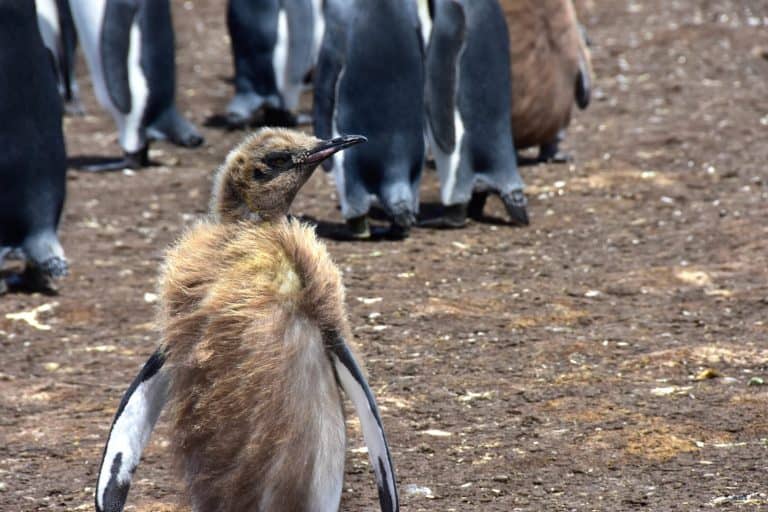
Young king penguins must be able to recognize their parent’s call.
©Bonnie Fink/Shutterstock.com
A Unique Call
Each penguin’s call is unique and consists of three to seven syllables of varying volumes across two frequencies. It’s a bit like a vocal barcode, where the pauses are as important as the sounds in making each call distinctive. Researchers believe that chicks recognize their parents’ calls by the lower of the two frequencies, as it carries farther. Chicks learn their parents’ call during the first five weeks of life. The two voices combine to create a beat, making the call more resistant to sound degradation. It is also believed that penguins use their unique calls to locate their mates. It may sound like mayhem to us, but the penguins know exactly what they’re doing!