Quick Take
- Habitat loss in Australia: 57,000+ (140,850 acres) hectares of threatened species habitat were approved for destruction in 2025, the highest level in 15 years.
- Mining drove nearly 70% of the approved land clearing, with Western Australia the hardest-hit region.
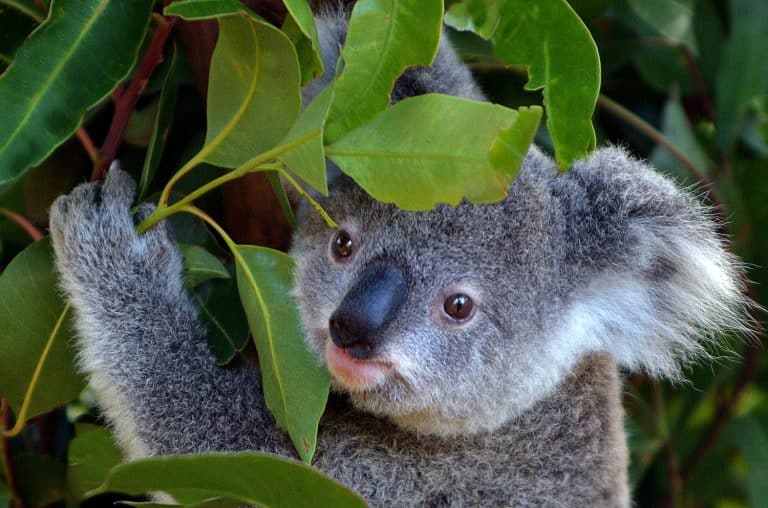
- Iconic and endangered species like koalas, northern quolls, night parrots, and Pilbara olive pythons are most affected.
- Conservationists fear new environmental laws don’t go far enough to stop long-term wildlife loss.
The Australian Conservation Foundation (AFC) conducted an analysis revealing that the federal government approved more than 57,000 hectares (140,850 acres) of threatened species habitat to be destroyed in 2025. According to the report, it’s the highest amount of land clearing in Australia in a 12-month period in the past 15 years. The top ten animals affected by habitat loss include vulnerable and endangered species such as koalas, northern quolls, and Pilbara olive pythons.
Key Species Affected by Government-Approved Land Clearing
According to the report, the top five threatened species facing the most habitat destruction live in the Pilbara region of Western Australia. “Once these species are gone, they’re gone forever,” said Adam Bandt, the CEO of ACF, in a press statement. “As the government finalises the new rules to protect bush and forests and sets up the national EPA, nature needs real protections enforced by a watchdog with real bite.”
1. Northern Quoll

©Jess Latimer/Shutterstock.com
The northern quoll (Dasyurus hallucatus) tops the list with the largest amount of habitat approved to be destroyed at 7,643 hectares (18,886 acres). Northern quolls are small nocturnal marsupials with reddish-brown fur and white spots on their backs. These small carnivores play an important role in the ecosystem by helping to control insect populations. In addition to habitat loss, northern quolls are preyed on by feral cats and can be poisoned by cane toads.
2. Night Parrot
Night parrots (Pezoporus occidentalis) are critically endangered. These unique, ground-dwelling birds are one of only two nocturnal parrot species in the world. The first sighting of a night parrot occurred in 1845. The species was believed to be extinct by 1912, with no confirmed sightings until it was rediscovered in 1979. The elusive nature of these birds makes it hard to know an exact number, but scientists estimate there are anywhere from 40 to 500 night parrots remaining.
3. Ghost Bat
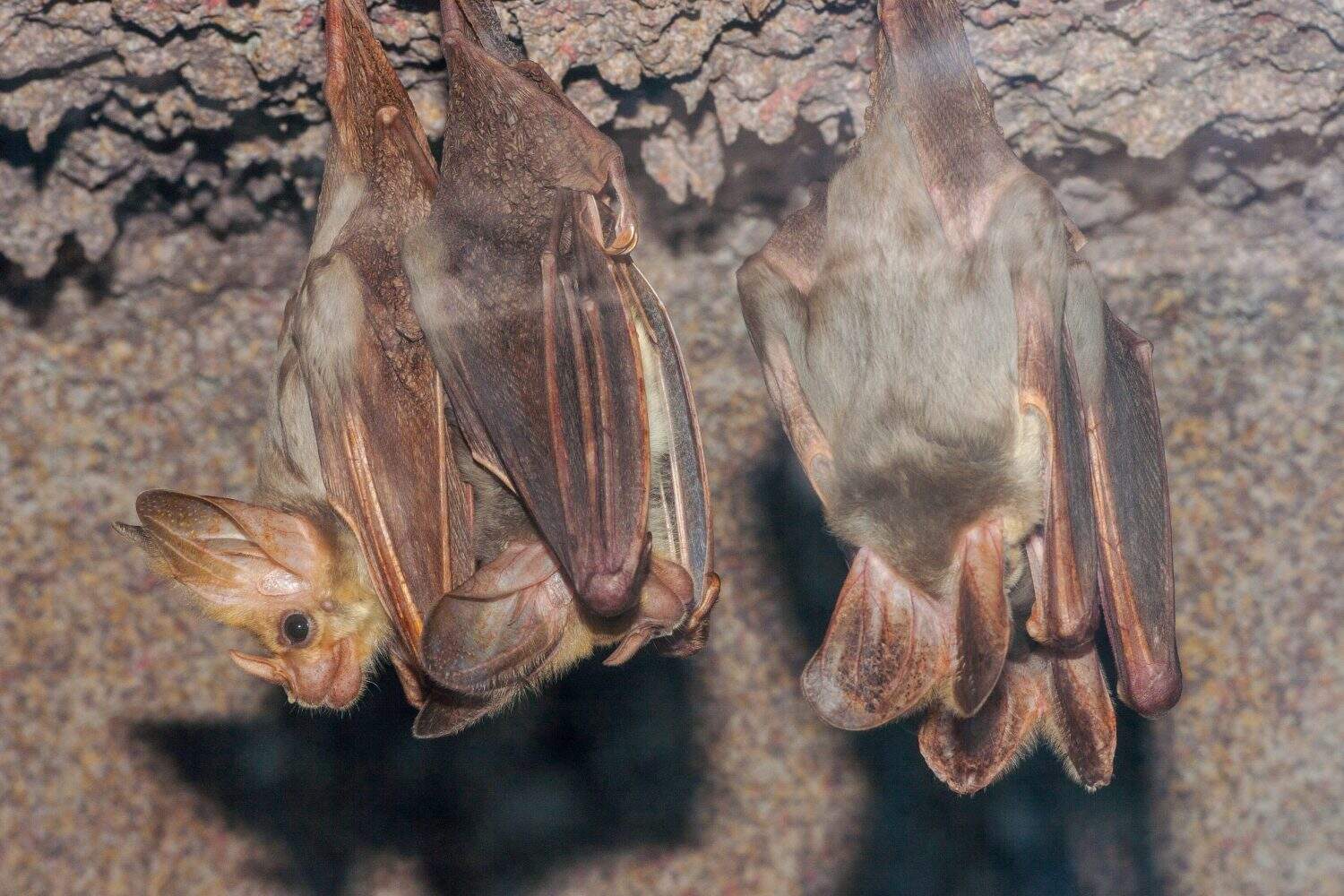
Australia’s ghost bat is in danger of losing its roosting sites due to the mining industry.
©Ken Griffiths/Shutterstock.com
Australia’s only carnivorous bat is the ghost bat (Macroderma gigas). These large bats have a wingspan of nearly two feet and prey on insects, reptiles, small mammals, and birds. Ghost bats are considered a vulnerable species because many of their roosting sites have been destroyed by the mining industry.
4. Pilbara Leaf-Nosed Bat
The Pilbara leaf-nosed bat (Rhinonicteris aurantia) lives only in the Pilbara region of Western Australia. Classified as vulnerable, it’s a geographically isolated population of orange leaf-nosed bats. Pilbara leaf-nosed bats are fast-flying, agile, nocturnal animals that feed primarily on insects. Threats to the Pilbara leaf-nosed bat include loss of roosting sites due to mining and predation by feral cats.
5. Pilbara Olive Python
The Pilbara olive python (Liasis olivaceus barroni) is a massive snake, with some reaching up to 13 feet in length. They are non-venomous, but kill their prey using constriction. Pilbara olive pythons eat a diet of small mammals, reptiles, and birds. As apex predators, Pilbara olive pythons help regulate populations of herbivores and invasive species in their ecosystem. Classified as vulnerable, threats to the olive python include habitat loss, climate change, and road mortality. Pilbara olive pythons are not a threat to humans and generally prefer to remain hidden.
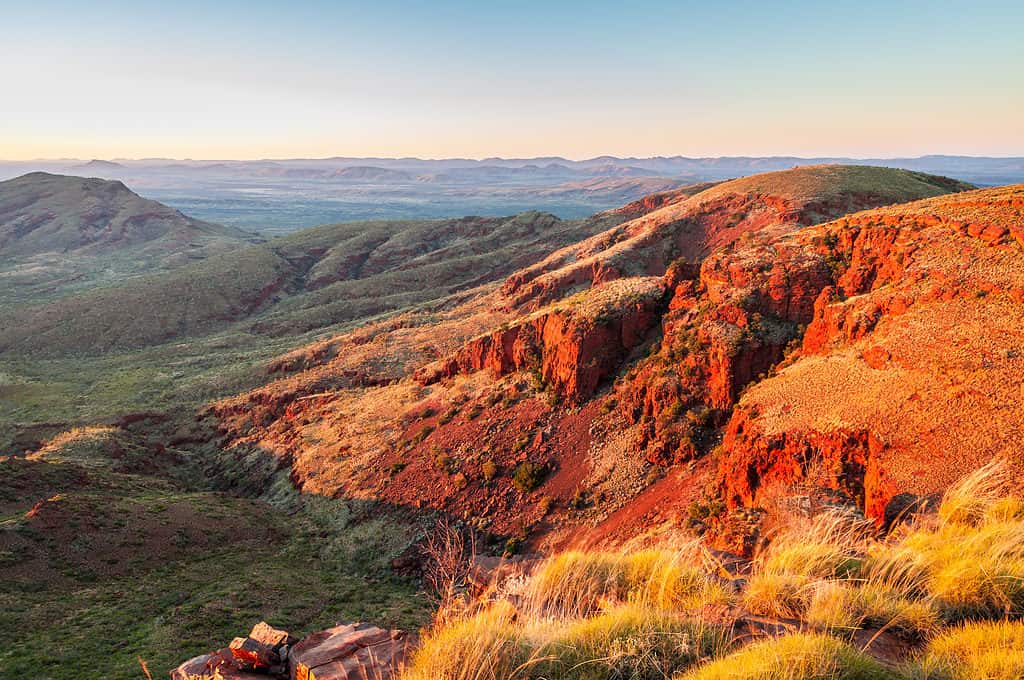
Mt. Meharry in Karijini National Park, located in the Pilbara region of Western Australia, is stunning at sunset.
©iStock.com/Rhys_Palazzolo
The Majority of Habitat Destruction Is Due to the Mining Industry
According to the ACF report, the mining industry is responsible for 68.5% of the area that was approved for clearing. Next on the list are renewable energy generation and supply, agriculture and forestry, and commercial and residential developments. Western Australia is the most affected region, accounting for 60% of the approved habitat destruction.
However, the report states, “the amount of government-sanctioned bulldozing is eclipsed by the vast swathes of habitat for threatened species that are bulldozed without approval or even an assessment.”
New Conservation Laws Were Passed in November
According to a media release, the Australian government has introduced bills to reform federal environmental laws. Changes include increased protection for native forests and stricter rules on land clearing.
“After overseeing a shocking million hectares of destruction of forest and bushland in Queensland alone since they took office, the Albanese government has now rightly removed deforestation loopholes and brought logging and high-risk land clearing within federal oversight,” Sam Szoke-Burke, Biodiversity Policy and Campaign Manager for the Wilderness Society, said in the release.
Conservationists Say There Is Still More Work to Be Done
Although conservationists have applauded the new environmental laws, some have criticized them for lacking limits on carbon emissions. Also, some environmental groups believe the laws fail to protect nature long-term. Some worry that the laws could give more power to the states, potentially leading to weaker environmental protections.