
Quick Take
- Survival at 10,000 feet deep requires the yeti crab to endure toxic hydrogen sulfide levels.
- Lacking a fused carapace forces the yeti crab into a different biological classification than true crabs.
- Counter-intuitively, the dense bristles on the yeti crab are used to create a mobile farm.
- Constant arm waving near hydrothermal vents is a critical behavior to prevent immediate starvation.
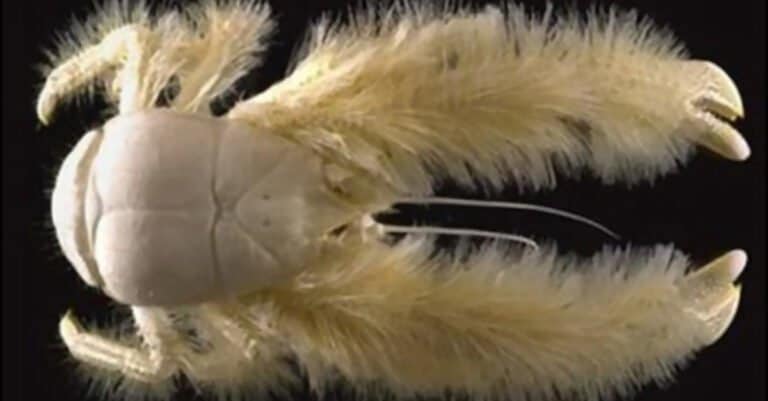
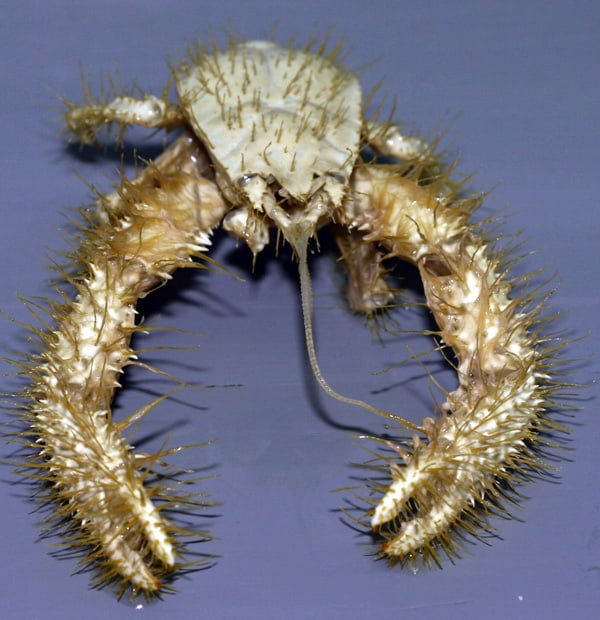
There are thousands of crab species, each with its own unique features. While we think of crabs as beach creatures, there are many species that thrive in the deep sea. One example is the yeti crab, which gets its name from its yeti-like appearance. This Instagram post by @ocean.destinations shows a close-up picture of this crab and discusses its habitat and appearance. If you’re curious to learn more, keep reading below.
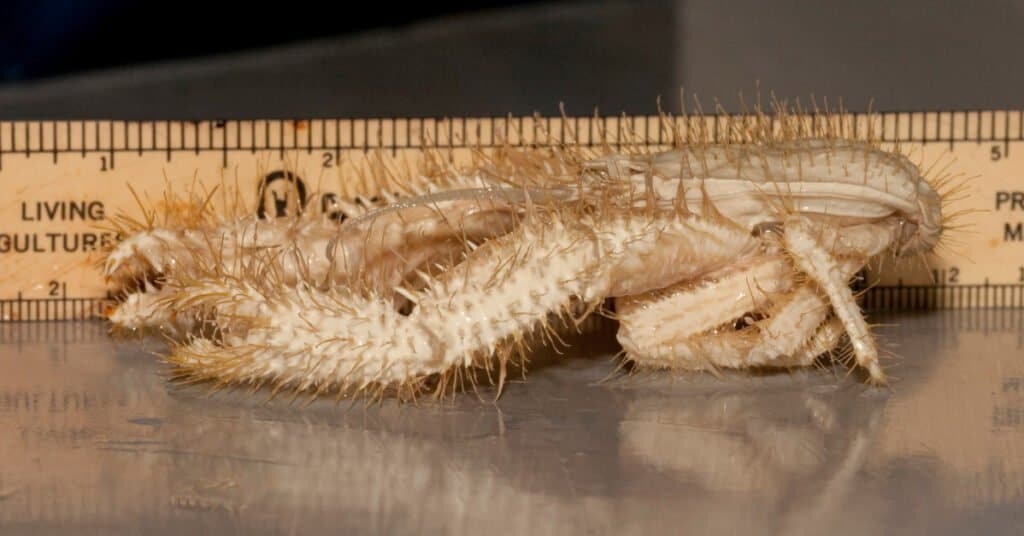
Yeti crabs live deep underwater, making it rare to get pictures of them.
©Oregon State University / CC BY-SA 2.0, Flickr – Original / License
What Is the Yeti Crab?
The yeti crab was first described relatively recently, having been discovered in 2005. The crab is a deep-sea crustacean that is actually more closely related to squat lobsters and hermit crabs than true crabs. True crabs are considered “true” because they have a fully fused carapace, or upper shell. Yeti crabs remained undescribed for so long due to their deep-sea habitats.
They inhabit hydrothermal vents in the Pacific Ocean and the Southern Ocean near Antarctica. These vents are typically found at depths of about 7,000 to 10,000 feet, making them difficult to access. The fact that these crabs can live here is remarkable. Hydrothermal vents are dark, high-pressure environments that are full of toxic chemicals like hydrogen sulfide. This harsh environment makes access to food difficult, which is part of the reason why they have fur all over their bodies.
What Is the Fur on Their Bodies?
Yeti crabs get their name from the “fur” on their bodies. This ‘fur’ is actually made up of setae, which are dense bristles. While it may appear to be a fuzzy, warm coating for the deep sea, its primary purpose is to provide a surface for bacteria to grow. Due to the lack of food in these chasms, yeti crabs feed on bacteria that grow on their setae. The bacteria thrive on their setae thanks to the chemicals released from the vents. As a result, the yeti crab is able to farm its own food on its body—a trait that is rare in nature.
To make this farming more efficient, the crabs wave their arms near the vents to help the bacteria grow faster. It is not uncommon to see groups of yeti crabs surrounding these vents, as moving away from the vents increases the risk of starvation. These crabs are important to biologists because they show how life can thrive even without sunlight. The yeti crab’s remarkable adaptations remind us how little we know about the deep ocean and how much more there is to discover.