Quick Take
- The European starling successfully commands a $1 billion annual tax on American agricultural productivity.
- Relying on a single line in Henry IV, Part 1, triggered a permanent biological crisis.
- Modern genetic analysis proves that a massive population originated from only 16 pairs of New York birds.
- The American Acclimatization Society initiated the 1890s release to ensure cultural comfort for European immigrants.
When William Shakespeare wrote Henry IV, Part 1 in the 1500s, little could he have imagined that, 400 years later, it would be blamed for crop damage, disease, and the death of native birds in the U.S. The animal linking the famous bard’s play and costly losses to America’s agriculture industry is the humble starling. This unassuming bird with a plain plumage has had an extraordinary impact on the U.S. Here’s how it happened!
Starlings, Schieffelin, and Shakespeare
Starlings (Sturnus vulgaris) are a native species of Europe, southwest Asia, and northern Africa. People tried repeatedly to introduce them into the U.S. from the mid to late 19th century. After a few failed introductions in Oregon and New York, one was finally successful.
In the 1890s, a German immigrant named Eugene Schieffelin was living in New York. He was a member of the American Acclimatization Society, which aimed to introduce plants and birds from the Old World of Europe into America. The idea was that this would make the new nation feel more comfortable and familiar. A popular story claims that Shakespeare was a justification for the introduction of starlings and other non-native birds.
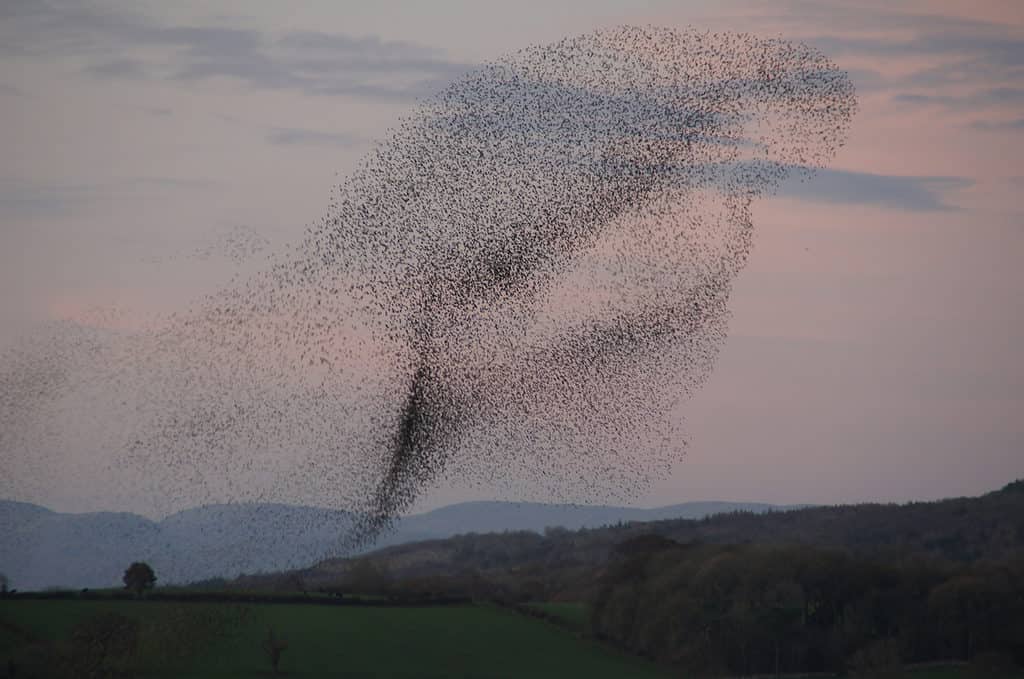
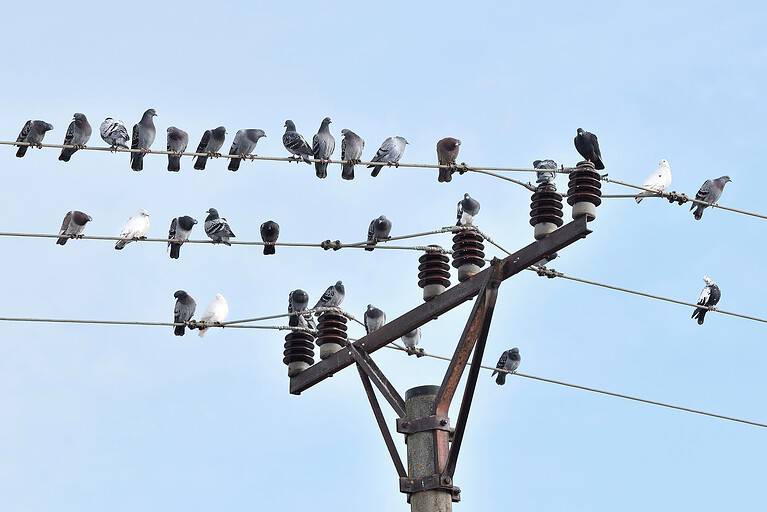
Starlings gather in huge numbers.
©iStock.com/philipsmith1000
Shakespeare often uses birds in his plays for dramatic effect. You will find more than 60 bird species in his plays, including choughs, wrens, cormorants, owls, nightingales, and larks. Starlings, however, are only mentioned once in Henry IV, Part I. The line is, “Nay, I’ll have a starling shall be taught to speak nothing but Mortimer, and give it to him to keep his anger still in motion.”
Sixteen pairs of starlings survived the initial release in New York and began to breed. By 1942, they had reached the West Coast, and now they populated the whole of North America. Genetic analysis has shown that the vast majority of starlings living in the US today are descended from the original New York-introduced birds. What a legacy!
Disease and Financial Loss Caused to Agriculture
Fruit crops (including apples and strawberries) are targeted by starlings, who either eat them entirely or damage their quality by pecking them, making them vulnerable to diseases and pests. The financial losses are significant. A 2012 survey of bird damage estimated that the losses to five fruit crops (blueberries, wine grapes, apples, sweet cherries, and tart cherries) amounted to $189 million. Starlings were named among the leading causes.
The livestock picture is equally concerning. During late fall and early winter, starlings gather at concentrated animal feeding operations. The open feeder systems suit them best and allow them to take a lot of grain! It’s been calculated that 1,000 starlings can eat 1.5 tons of cattle feed in 60 days, representing a loss of $200 to $400. Considering that up to 250,000 starlings can use a single feedlot, the total losses can be enormous.
Disease transmission is also a concern. Epidemiologists have found that starlings can excrete pathogens in their poop and carry them on their feet and beaks. For example, they can carry Salmonella spp., Campylobacter jejuni, Flavivirus spp., which causes West Nile Virus, and Avulavirus spp., which causes Newcastle’s disease. The birds don’t show any signs of illness, but they contaminate feed and water troughs, allowing pathogens to be transmitted to livestock when they eat or drink.
Do Starlings Damage Structures?
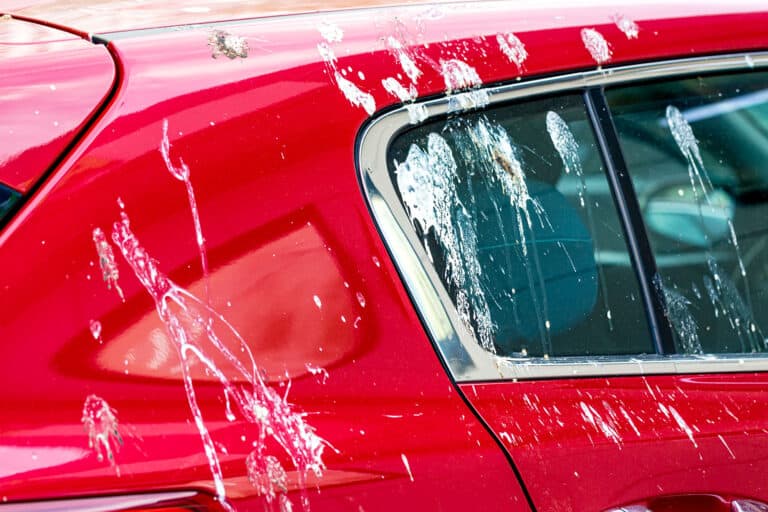
Starlings gather in groups of tens of thousands of birds or more. That creates a lot of poop, which lands on sidewalks, monuments, and entryways. It’s unsightly, unsanitary, and can even cause corrosion. In areas where 35,000 birds roost in a city center, businesses may incur up to $260,000 in clean-up and maintenance costs over a couple of years. Their nests can also clog vents. Many town and city residents find the presence of starlings to be noisy, smelly, and unsightly. Once a roost is established, the birds may remain there for several weeks.
Risks to Public Health and Safety
Several of the pathogens carried and transmitted by starlings can make humans ill. A small proportion of starlings (between 1 and 3 percent) shed Salmonella in their poop, but even this can add up to a problem when there are so many birds in one place. They also likely carry pathogenic E.coli.
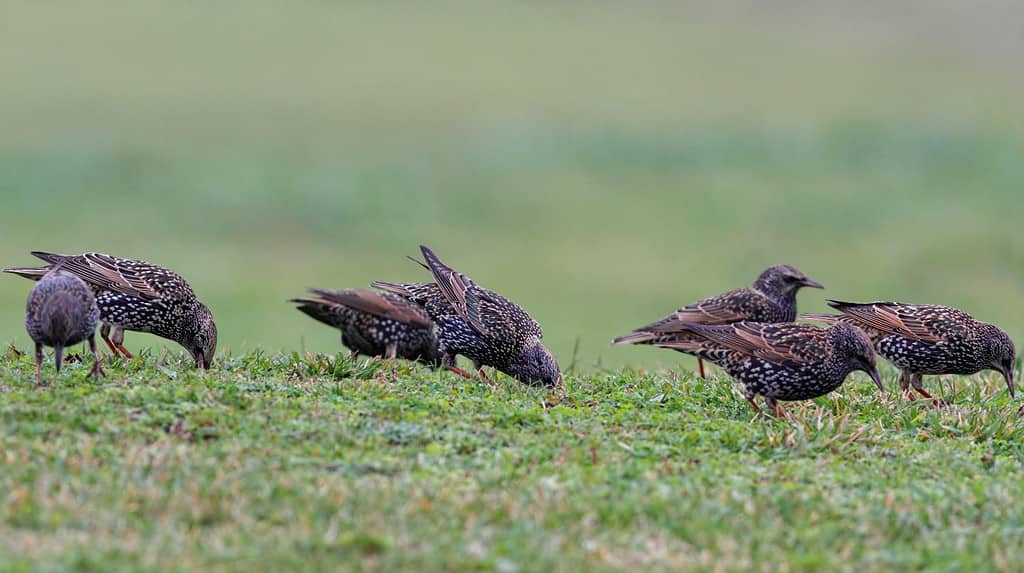
Starlings can spread disease.
©Zacarias da Mata/Shutterstock.com
Histoplasmosis is a non-communicable respiratory disease caused by inhaling spores of a soil fungus called Histoplasma capsulatum, which can be fatal. Although it is mainly associated with exposure to contaminated soil, the fungus has also been found inside industrial buildings where starlings roost, such as stairwells, window ledges, and beams. Therefore, in theory, starlings can spread it on their feet and beaks.
When starlings roost around airports, they can create a hazard to airplanes. A tragic example occurred in 1960 when an aircraft engine ingested a flock of starlings, causing a crash that killed 62 people. Modern aircraft have safety features that make them less vulnerable to bird strikes. Nevertheless, starlings were identified in 3,203 bird strikes to military and civilian aircraft in the U.S. between 1990 and 2013, which cost $7 million.
Starling Economics
Roost sizes in agricultural landscapes can exceed 1 million birds. However, despite these huge numbers, not all studies have found that starlings significantly damage livestock production. A two-year study conducted by Western Kentucky University could not find a relationship between exposure to starling poop and adverse outcomes in livestock. The costs of cleaning up city centers and public health impacts are unknown.
Nevertheless, the total agricultural damage they cause is estimated currently at $1 billion per year. What’s more, the USDA assesses that they are likely the most economically harmful bird species in the United States. We also know that starlings compete with native bird species for cavity nesting sites, potentially impacting birds such as eastern bluebirds (Sialia sialis) and purple martins (Progne subis). Overall, Shakespeare’s influence has had far-reaching consequences!