
Quick Take
- In a murmuration, starlings reach up to 40 mph and still dodge one another, making the flock look like a single moving organism.
- The murmuration likely serves as a defensive mechanism at dusk, confusing predators and boosting threat detection through collective vigilance.
- There is no single ‘controller’ of the murmuration; any bird can pivot the entire flock’s direction.
- Read on to discover how the ripple travels 3× faster when each bird watches several neighbors, not just the one beside it.
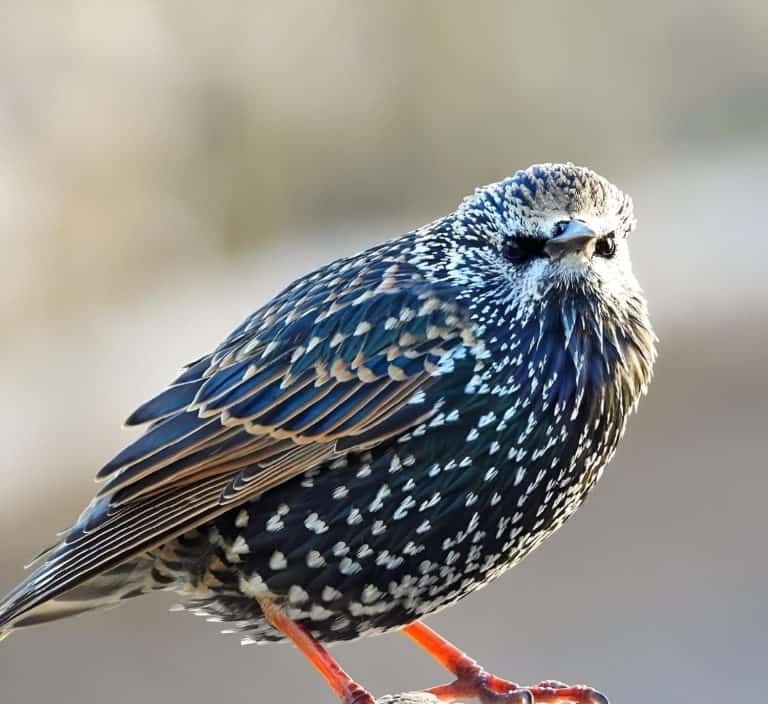
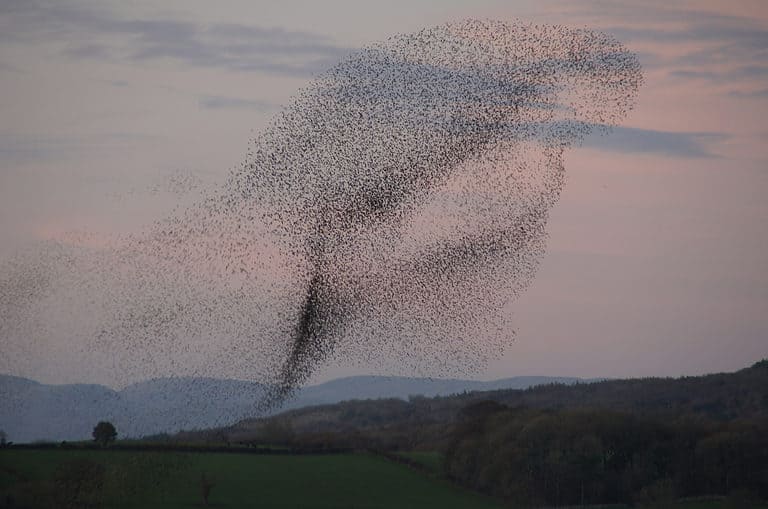
A murmuration is the collective noun for a group of starlings, but the birds in this incredible YouTube clip are doing a lot more than simply gathering together. Flying over the stunning Lough Ennell in County Westmeath, Ireland, these birds were captured in an iconic photograph that appeared on the front cover of The Irish Times. There is no denying the exquisite beauty of their movements, but nature is not doing this for our benefit. So, why are these birds behaving in this manner, and how do they execute the precise movements necessary to accomplish this?
Murmuration Mechanics
Starlings can reach speeds of up to 40 mph within a murmuration, yet no birds bump into each other! The space between them can be less than their body length. Their reaction times are so fast that their synchronized turns make them look like they are moving as one.
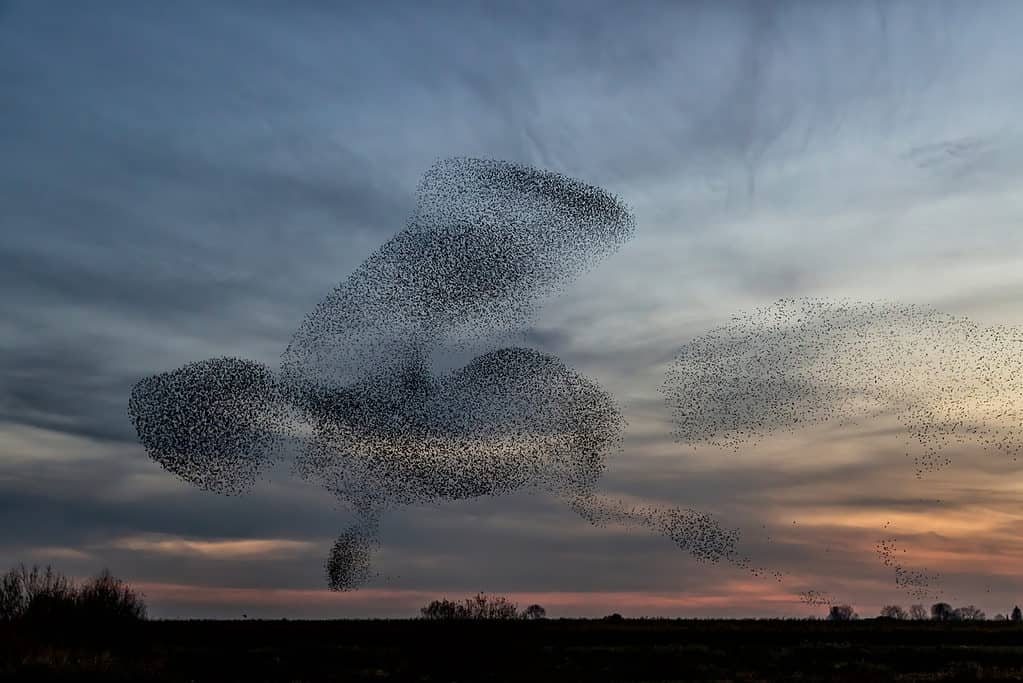
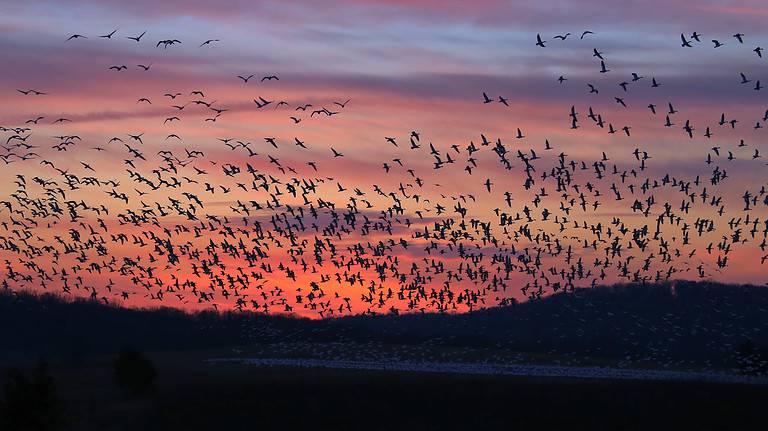
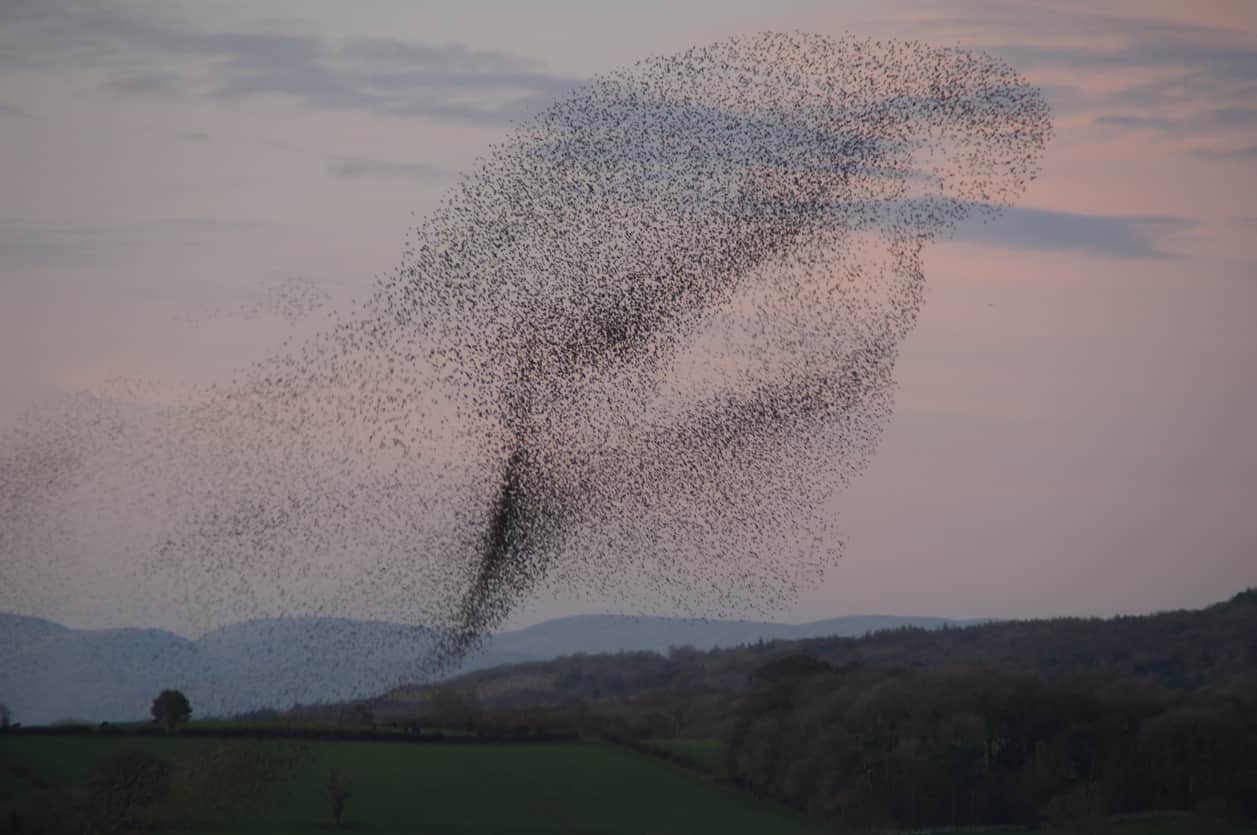
Tens of thousands of starlings come together, forming large, cloud-like shapes in the sky.
©iStock.com/Henk Bogaard
In fact, a murmuration turn ripples through the flock like a crowd wave around sports fans in a stadium. Each bird does not rely solely on its immediate neighbor; instead, it watches several birds around it. This means that the ripple can travel three times faster than if each bird were only watching its immediate neighbor. Scientists have not found any evidence that there is a ‘controller’ of the murmuration as such. Yet, a single bird can cause the direction of the entire flock to shift.
Why Do Starlings Form Murmurations?
Murmurations are likely a defensive mechanism. They are most often seen at dusk, just before the birds roost for the night. By gathering in large numbers, the starlings confuse potential predators (birds of prey) and make it harder for an individual bird to get picked off. Also, with that many eyes on the lookout, they are much more likely to spot a potential threat! Gathering like this also provides an opportunity for information to be shared.
Do Other Birds Form Murmurations?
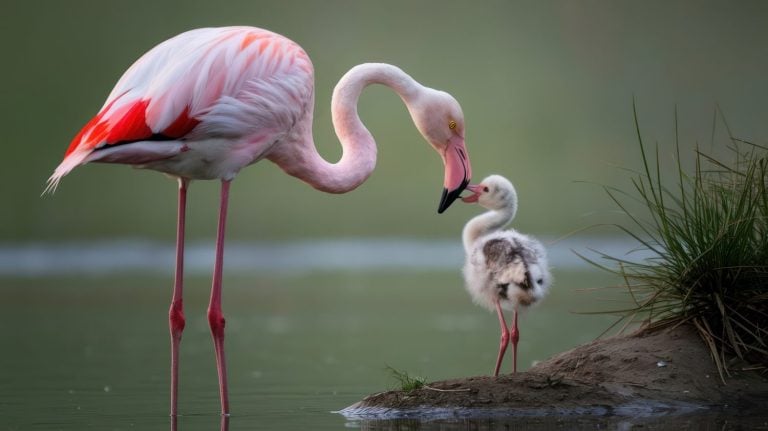
No other bird species does it quite like starlings do, but plenty of other birds flock together at certain times of the year. For example, flamingos use flocking together for breeding, feeding, and courtship. During the breeding season, ducks, geese, and swans gather in large groups before migrating.