
Quick Take
- Only three bat species drink blood, and none are currently in the U.S.
- Bats pollinate 500+ plant species, disperse seeds, and reduce crop pests, saving billions annually.
- Bats are also hosts for parasites, creating a habitat for other creatures.
Every summer growing up, my brother and I would spend weeks in West Virginia with my grandmother. I learned how to identify edible plants from poisonous ones, studied salamanders in the lake, and frequently spent time in the pen with my favorite goats. Still, I was afraid of the bats that roosted in the barn. As an avid reader and movie-watcher, I had seen Dracula and Vampire Bats, and was so frightened of the idea that bats would swoop down to suck my blood that not even my beloved Stellaluna book could convince me otherwise. The older I got, and the more I learned, the more I realized the myths and misconceptions we have about bats are just not true. The fear and superstition surrounding bats, from vampire legends to concerns about rabies, do not take into account how unique and fascinating these animals are.
More than that, bats play a critical role in ecosystems across the world. Recently, I spoke with four experts associated with the North American Society for Bat Research (NASBR) — Shane Seheult, the NASBR’s Student Representative and a PhD candidate studying sound localization at the McMaster Bat Lab; Renee Lile, the other NASBR Student Representative and PhD candidate within the University of Wyoming; Dennis Krusac, a wildlife biologist who spent 43 years as an endangered species specialist for the U.S. Forest Service, and the NASBR Chair of Policy and Public Relations Committee; and Dr. Nathan Muchhala, the principal investigator at the University of Missouri – St. Louis’ Muchhala Lab, who first described the tube-lipped nectar bat (Anoura fistulata) in 2005 — to understand the impact bats have on our environmental health.
What Are Bats?
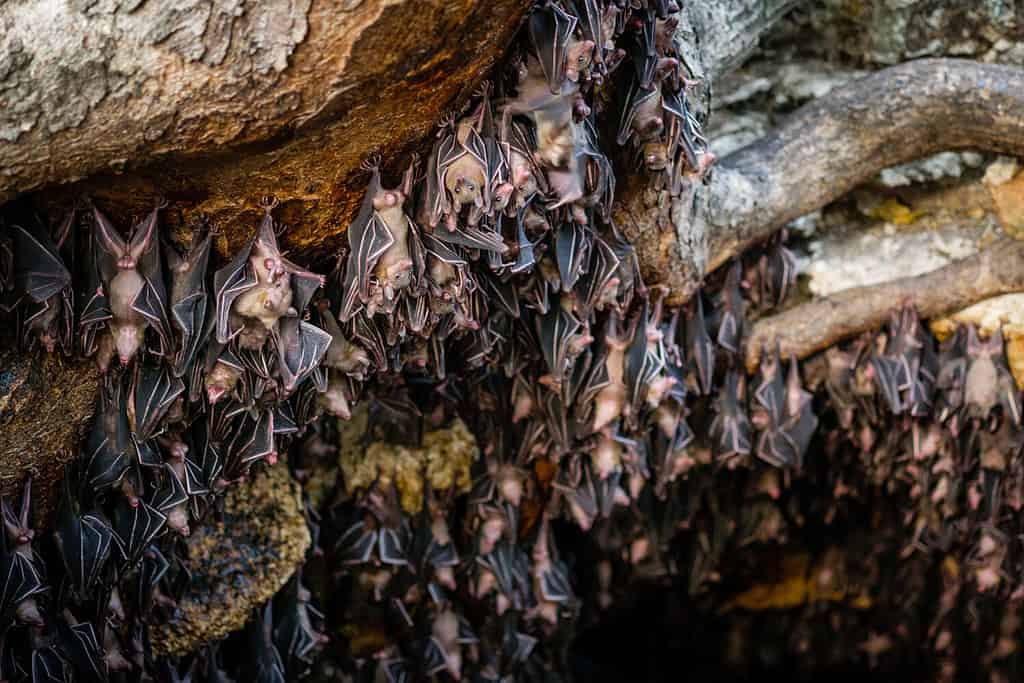
Bats have unique tendons in their feet that lock them into place when hanging upside down, so they don’t need to expend energy gripping.
©MilletStudio/Shutterstock.com
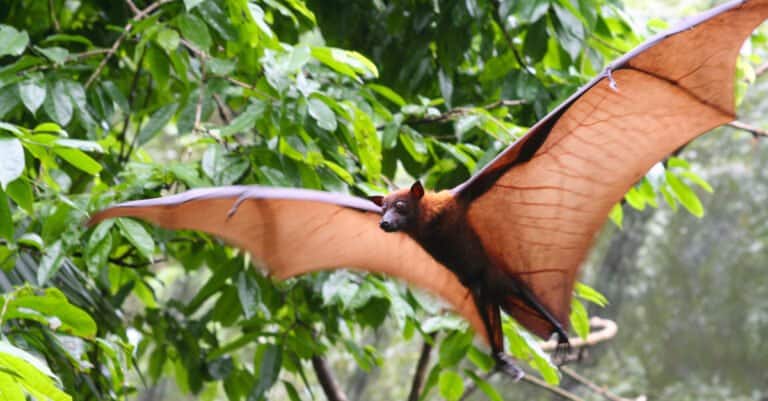
Before we dive into how bats support our ecosystems, let’s discuss what bats are. Bats are the only mammals capable of achieving true powered flight and belong to the order Chiroptera. Chiroptera derives from ancient Greek and roughly translates to “hand-wing.”
You might be surprised by how many species of bats exist. “There are 1,500 species of bats,” says Lile. “In South Dakota, we have 12 different species. In Wyoming, we now have 20 different species after Dr. Bernard and Ellen Whittle identified the canyon bat (Parastrellus hesperus) and the cave myotis (Myotis velifer) through a mix of in-hand surveys and DNA metabarcoding analyses of guano under bridges in the state in 2023/2024. For context, in the same areas, there are only 2 species of deer.”
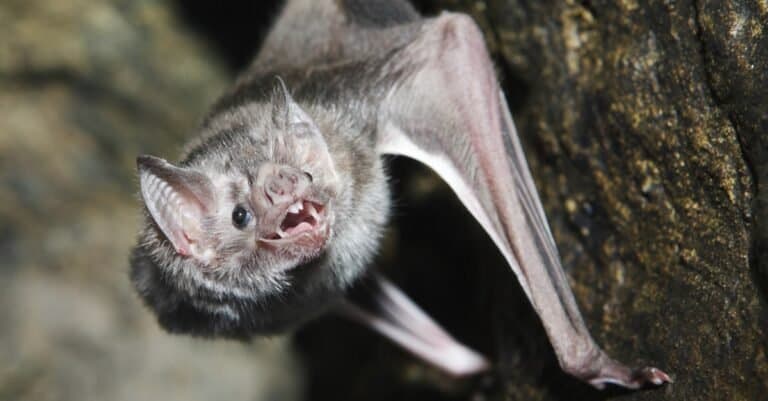
Although there are 1,500 species of bats, Lile points out that only three — the common vampire bat, hairy-legged vampire bat, and white-winged vampire bat — actually drink blood. However, she says, “These vampire bats prefer to drink the blood of livestock or chickens, not humans.”
“None of these three species is currently in the U.S.,” Krusac adds.
Addressing this myth is essential, especially since people who fear bats or who mistakenly believe bats will hurt them might kill bat populations. “In South America, they call all bats vampiros (vampires) and have heard that bats will drink blood, so there’s a bad stigma because of that. Then farmers have to deal with their livestock getting bitten and passing diseases, so they feel killing bats would help. Scientists are trying to explain that’s just one of many species, and it’s not useful to go into caves and kill the bats,” says Muchhala.
If Not Blood, What Do Bats Eat?
The majority of bats are insectivores, meaning their diet consists of insects. “Around 40 of the 47 bat species in the U.S. are insectivorous,” says Krusac.
Different species may forage or capture insects in different ways, or have specialized insectivorous diets, with some preferring beetles, moths, or flies. Says Seheult, “Some insectivorous bat species can eat their body weight in insects each night.”
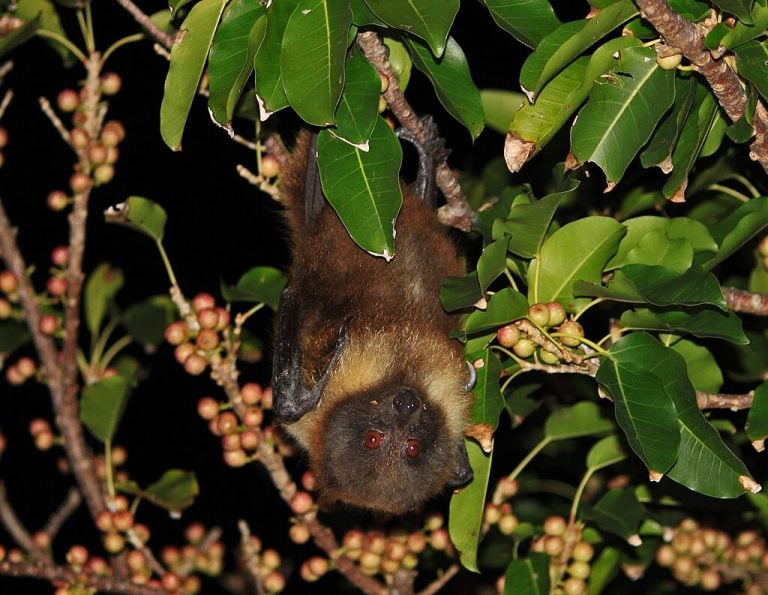
But there are also plant-feeding bats, fruit bats who consume fruit and nectar, and even fish-eating bats who use echolocation to detect surface ripples that help with hunting minnows. Seheult states, “There are even some bats, like the spectral bat, that eat other bats!” Muchhala explains that the diversity of bats expands in more tropical areas closer to the equator.
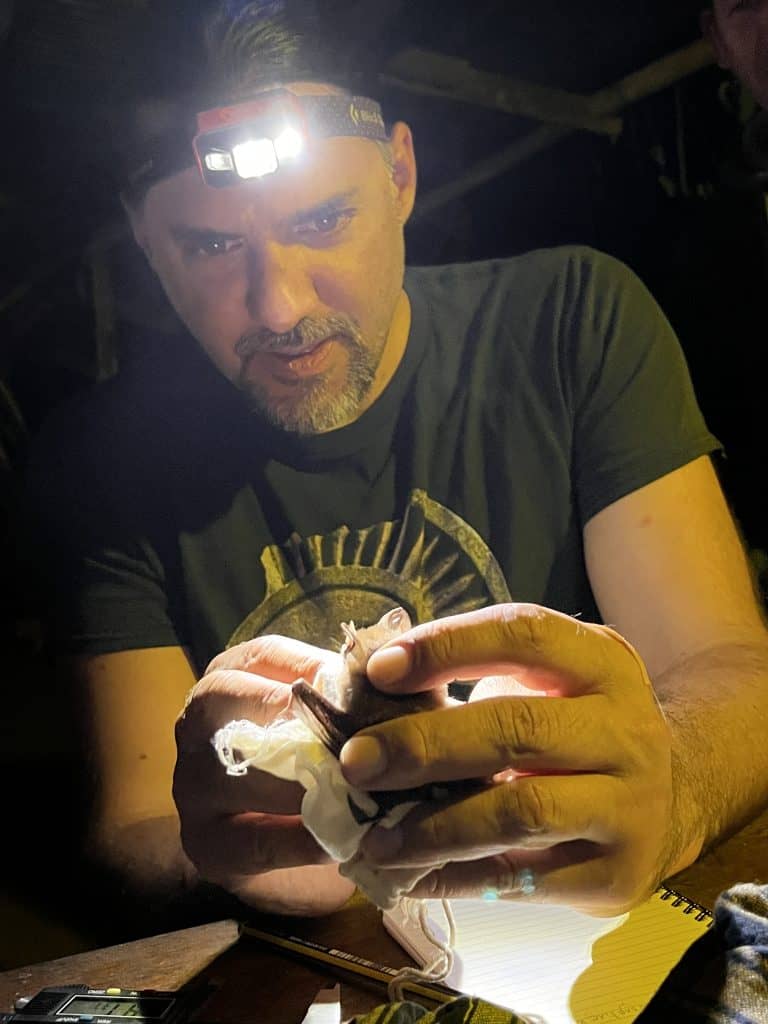
Nathan Muchhala interacts with a bat during fieldwork in Ecuador.
©Raj Prasai, The Muchhala Lab
All About Echolocation
Another myth about bats, which perpetuates fear, is that they’ll fly and get caught in your hair. Lile references an old wives’ tale in the Midwest, but notes, “The flight may seem erratic to us, but they’re not going to fly into your hair.”
The “erratic” flight may stem from bats’ use of echolocation, or using high-frequency sound to navigate and orient to their surroundings in the dark. Seheult, whose research interests include binaural (the use of two ears) processes and how bats use both ears in tandem for sound localization, brings out Pink 106 — one of the big brown bat research subjects from the captive colony he works with — during our call. Pink 106 opens its mouth at the camera lens. With a smile, Seheult says, “Right now, he’s echolocating. He’s trying to figure out what the heck this thing in front of him is.”
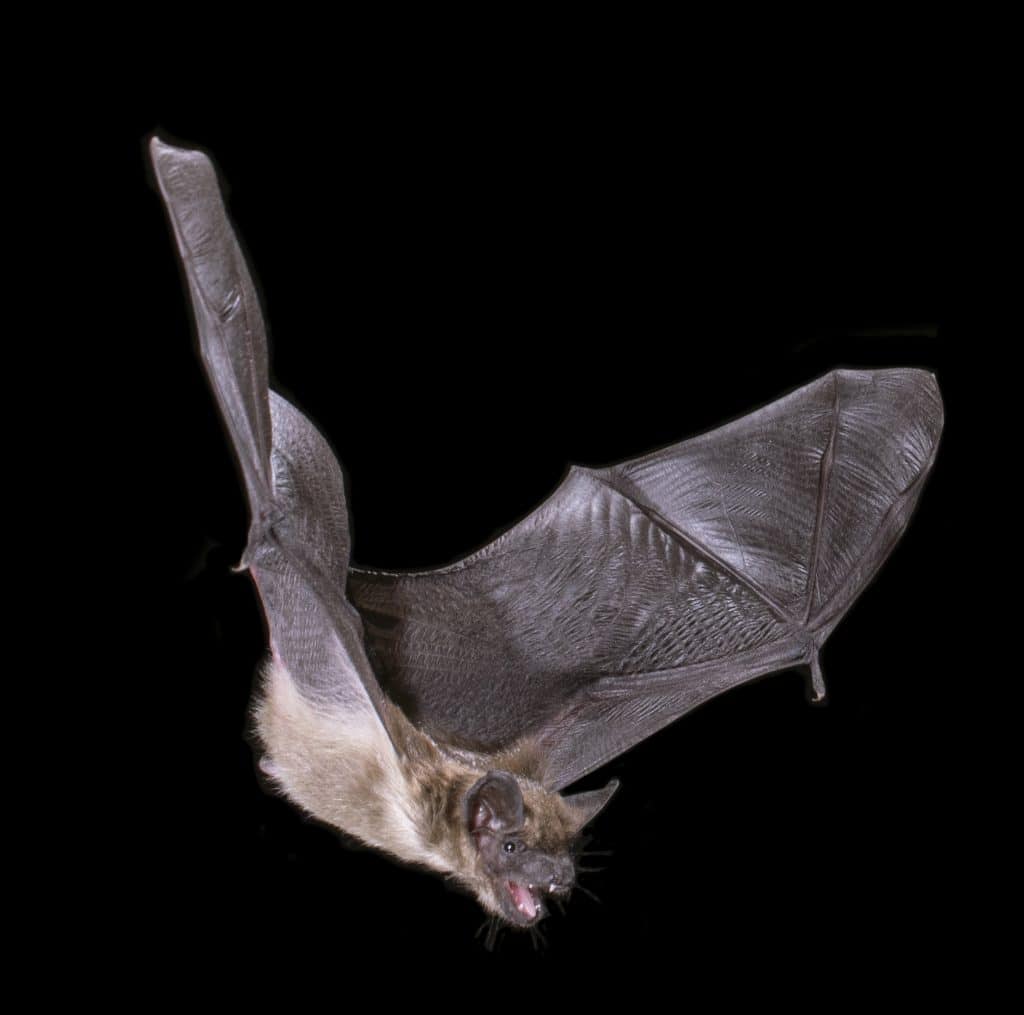
Pink 106 was born in the lab that Seheult works in two summers ago.
©Brock and Sherri Fenton
To Seheult, this type of exposure is important in reducing the stigma around bats. He notes, “When we can show people the bats and give them that exposure, they see that they’re cute. They’re not as scary as people think.”
Why Fear Around Bats Persists
Humans’ fear of bats is rooted in biological, cultural, and religious beliefs. From an evolutionary standpoint, our ancestors were taught to stay away from anything that could cause them to get hurt or die. Creatures that could potentially pass along illnesses like rabies would be something our ancestors would want to avoid, passing down that fear and avoidance. But the number of people in the U.S. who die from bat-borne rabies is negligible. “You have a higher probability of being struck by lightning than getting bitten by a rabid bat,” says Krusac.
Bats are referred to as “unclean” in the Bible book of Leviticus. “But they are absolutely clean animals. They are always grooming, probably more than your dog or cat,” Krusac shares.
Still, cultural references and iconography have long depicted bats as violent and demonic creatures. Satan was often said to have featherless wings like a bat, and people would argue that bats were up at night because they were associated with dark, ungodly spirits. An article from The Island Conservation notes that African folk beliefs link bats with witchcraft and death, for example. Together, these factors have compounded into an overarching fear and suspicion of bats. But by raising awareness of the benefits of having bats around, we can shift towards a more positive perspective.
How Bats Improve Their Habitats
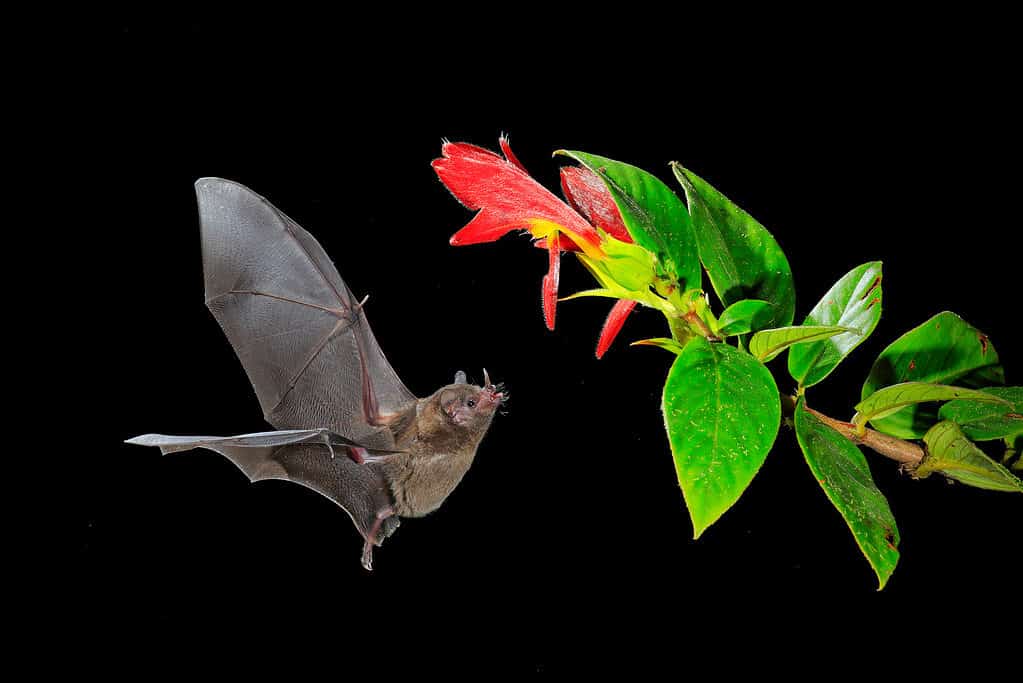
Over 500 plants worldwide rely on bats for pollination.
©iStock.com/Ondrej Prosicky
The environmental and economic contributions of bats are genuinely extraordinary. But most people don’t know just how much bats do, from balancing the insect population to regenerating forests. If we want to maintain a healthy planet, bats are an important part of the plan.
Pollination and Seed Dispersal
Bats are incredible pollinators. An estimated 500 or more plant species worldwide are pollinated by bats. Bats are especially impactful in tropical forests.
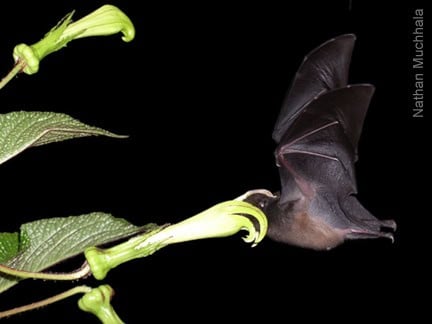
The tube-lipped nectar bat has a tongue that stretches 150% the size of its body length.
©Nathan Muchhala, The Muchhala Lab
“Here, bats pollinate 5-10% of plant species. The plants are usually very specialized. The blossoms have to be open at night and have the right traits to attract the bats, so these plants are very dependent on this one type of pollinator,” Muchhala, who has been studying pollinator interactions with nectar-feeding bats in the tropics for 25 years, explains. “Bees and flies are not going to be as good at spreading this pollen around.”
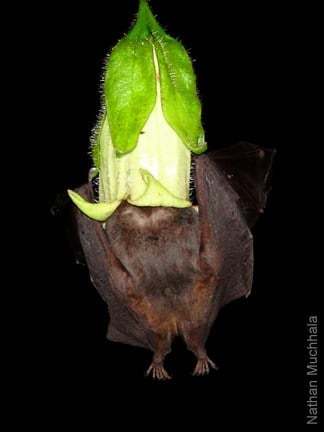
The tailed tailless bat (Anoura caudifer) visits a Trianaea sp. (Solanaceae) at night.
©Nathan Muchhala, The Muchhala Lab
Beyond pollination, bats support seed dispersal. Muchhala adds, “The tropics also have a lot of fruit-eating bats, which can account for 80% of seed dispersal throughout these forests. Bats swallow seeds while eating fruit, then defecate in flight, dispersing seeds from numerous species. The bats have also been shown to disperse seeds farther than expected, which is helpful for plants and seeds because you don’t want them to all be right under the mother plant.”
Bats such as the Mexican long-tongued bat, flying fox, and Jamaican fruit bat are known to play a role in pollinating and dispersing seeds for:
- Agave
- Dragonfruit
- Durian
- Mangoes
- Guava
- Cacao
- Bananas
- Cashews
Krusac notes, “In some of the tropical islands, the bats are endemic to those islands. If bat populations fall, we’re also going to see the loss of endemic plant species pollinated by those bats, which is why conservation initiatives are so important.”
Pest Control
Bats are some of nature’s best pest control specialists. According to a 2020 study published in Agriculture, Ecosystems & Environment, eastern red bats and big brown bats in the U.S. corn belt consumed high volumes of agricultural pests such as:
- Corn rootworms
- Seed corn beetles
- Armyworms
- Wireworms
- Cloverworms
- Plant bugs
This is in addition to beetles and moths. In a way, Krusac says, “Bats can be considered a natural form of pesticide. The more bats you lose, the more pesticides you’d have to put out, which harm our agricultural lands and natural environment.”
Several studies have evaluated the economic impact of bats on farming and agriculture. A 2015 paper from Josiah Mayne and Justin Boyles found that insectivorous bats reduce the amount of agricultural pests, as well as larvae. “The study also found that when bats are not allowed to forage, you have an increased rate of crop destruction: a lot more physical damage on the corn from insects, as well as more fungal growth,” Lile says. The authors estimated that bats save $1 billion annually for corn crops alone.
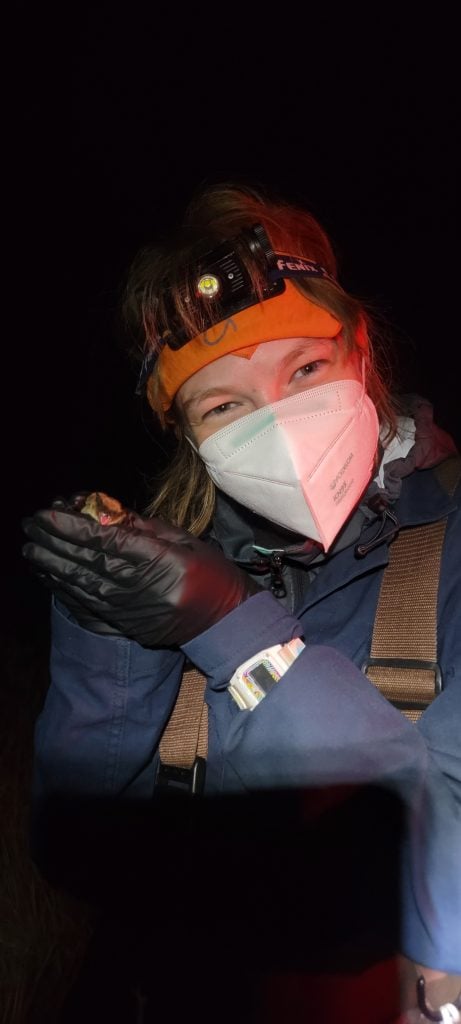
Renee Lile, holding a little brown bat (Myotis lucifugus) captured during her summer field season in the southern Black Hills, SD. All bats were handled under state and federal permits.
©Renee Lile
Bat-related pest control, then, is economically beneficial for farmers. Krusac also points to a 2011 article published in Science from Boyles, Cryan, McCracken, and Kunz, which estimates that the economic value of bats in the agricultural industry is $22.9 billion annually. However, the authors note that the values could range anywhere between $3.57 billion $53 billion each year.
You have a higher probability of being struck by lightning than getting bitten by a rabid bat.
Dennis Krusac, wildlife biologist and endangered species specialist
Additional Economic Benefits
From March through the end of fall each year, tourists flock to Austin, Texas. They line up nightly on the Congress Avenue Bridge to watch more than one million Mexican free-tailed bats take to the sky. “Finding a hotel room near the bridge, during bat season, can be difficult,” Krusac says. “People make a living just by catering to tourists.”
Krusac also recalls the two bat houses at the University of Florida, where people would show up every night to watch the 200,000 campus bats. “People came even in light rain. On the night with the fewest people, there were 71 people. The largest crowd was 414 people. So people are paying good money to see these bats and supporting their communities in the process,” he shares.

The Brazilian free-tailed bat, the Southeastern Myotis, and the evening bat are the three most common species living in the UF Bat Houses.
©Dennis Krusac
According to Muchhala, this is why ecotourism could be helpful for bat conservation efforts. “I think ecotourism goes a long way in educating people about bats, but also in sustaining local economies. People who live in these areas could be increasingly incentivized to protect bat populations,” he says.
Bats Can Also Be Habitats
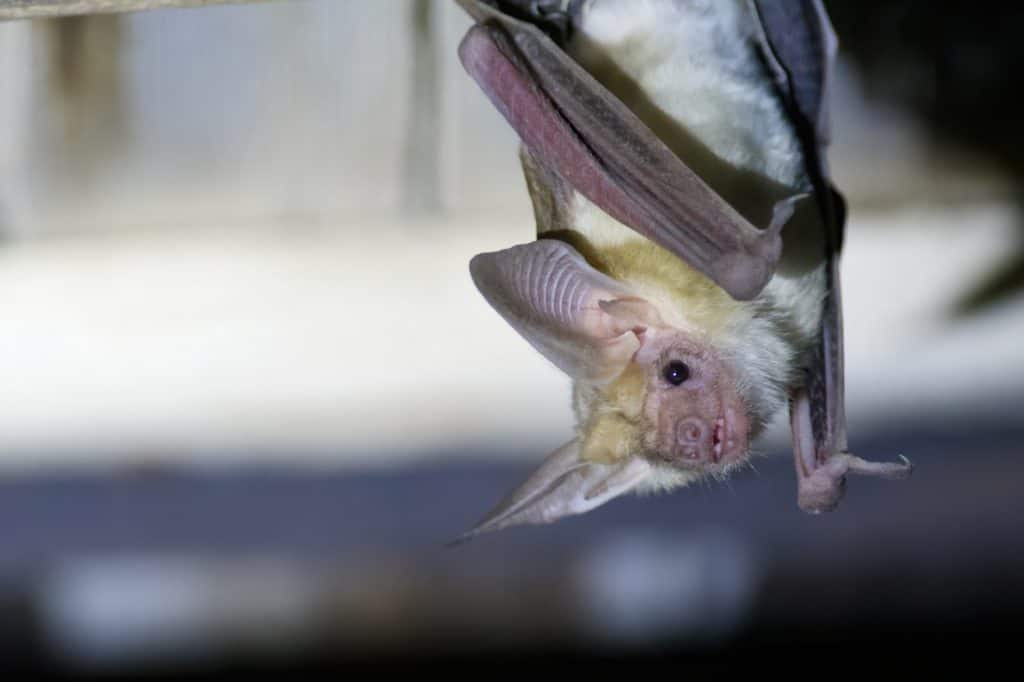
Bat flies, fleas, and mites are some of the most common ectoparasites found on bats.
©Amanda Guercio/Shutterstock.com
It’s clear that bats balance and help control ecological health. But while bats improve biodiversity in their habitats, they also serve as habitats themselves. “We have a lot of biodiversity living on our bats,” Lile explains. “When you look at the invertebrate diversity that relies on bats, you find an incredible amount of ectoparasites. Of the 12 species in South Dakota, we were able to find 8-9 different species of ectoparasites.”
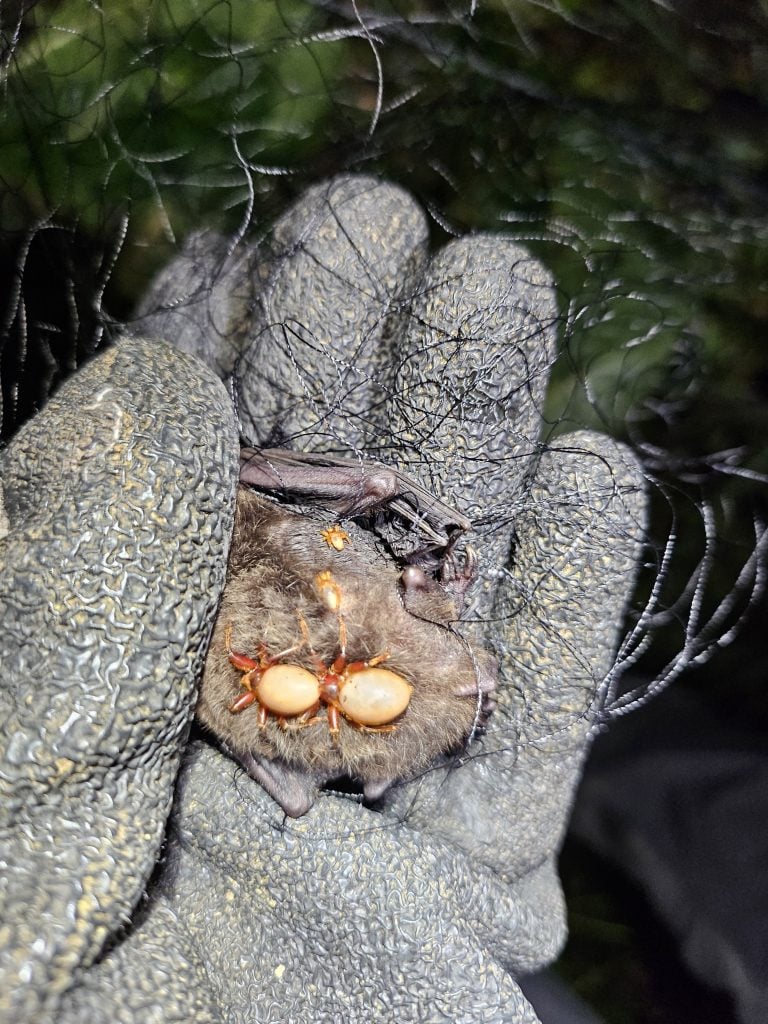
These parasites were found on bats by Nathan Muchhala and members of the Muchhala Lab during fieldwork in Ecuador.
©Nathan Muchhala
Lile notes that many people fail to consider the role that these parasites play in the food chain. She shares, “Recent studies show that if you account for these invertebrate parasites, it changes how we think of predators, prey, and primary producers. The biomass of ecto- and endoparasites — such as nematodes, ticks, lice, and mites — may actually represent the highest trophic level, which is an interesting inversion of the typical food chain.”
Types of Bat Parasites
Saving bats is necessary for saving endo- and ectoparasites such as big orange ear mites — “larval stages of chiggers look exactly like orange jelly beans,” Lile says — and bat flies.
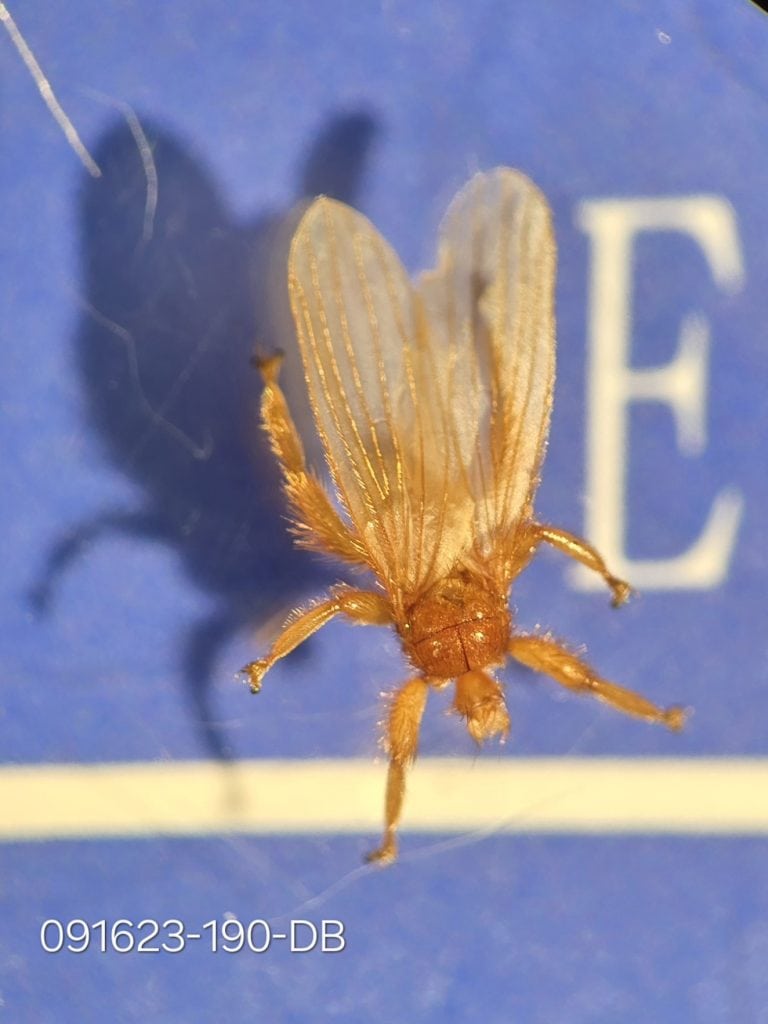
T.corynorhini: A bat fly (Trichobius corynorhini) collected from a Townsend’s big-eared bat (Corynorhinus townsendii) in the Black Hills of South Dakota. The fly is only ~0.15 inches long. In the Black Hills, this species of ectoparasite is only found on the Townsend’s big-eared bat.
©Renee Lile
The bat flies, Muchhala tells me, are very specialized. He explains, “Some lose their wings because they’re evolving in different ways. Others are good at swimming quickly through the fur. If you look up the tree of life for bats and parasites, they match exactly. Now we have to save our bats to save our flies.”
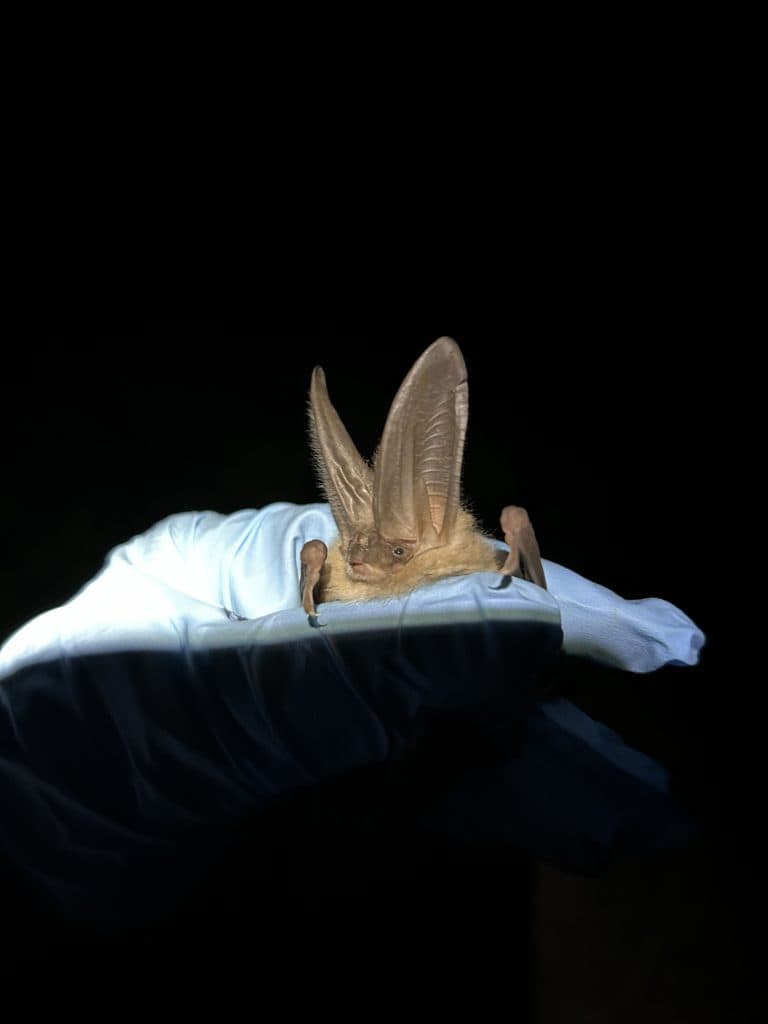
C. Townsendii: A Townsend’s big-eared bat (Corynorhinus townsendii) captured during R. Lile’s field research in the southern Black Hills, SD.
©Ashley Hammer
Better understanding these parasites, as well as why some bats are more parasitized than others, can also give us future insights into bat health and conservation statuses.
How Can We Protect Our Bat Populations?
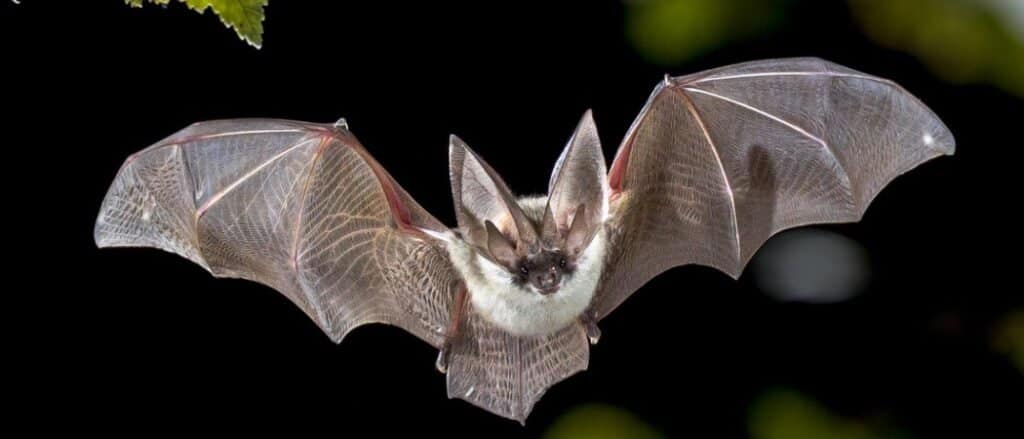
An estimated 53% of North American bat species need conservation action to avoid severe population declines over the next 15 years.
©Rudmer Zwerver/Shutterstock.com
Despite providing significant ecosystem services, bats face numerous threats worldwide. Fifteen bat species are currently listed as federally endangered, threatened, or under review as candidates or petitions under the Endangered Species Act. However, to advance conservation efforts, we need to take a clearer look at what problems are facing today’s bats.
White-Nose Syndrome
White-nose syndrome is a fungal disease caused by a cold-loving fungus called Pseudogymnoascus destructans. Lile explains, “This is a naturally occurring fungus in caves and subterranean ecosystems outside of North America. Bats in Europe coexist with Pseudogymnoascus destructans. But when it was introduced to North American bats in the early 2000s — the first was found in New York — our bats had not been exposed to this fungus, which has caused trouble.”
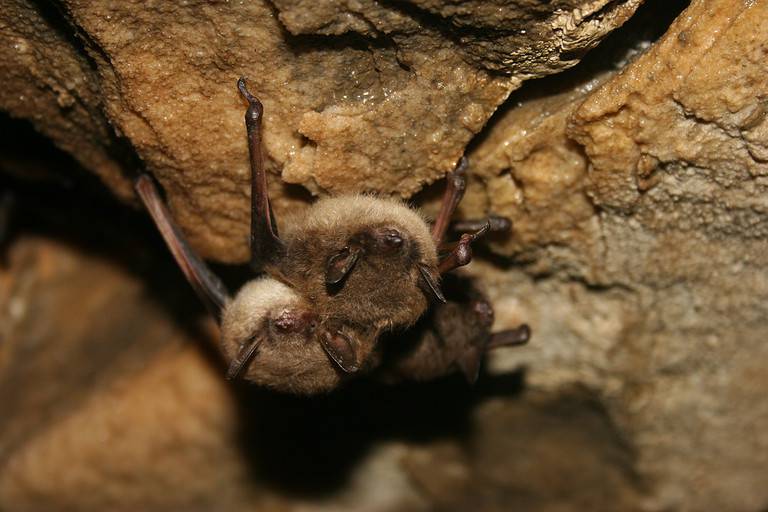
Pseudogymnoascus destructans invades the skin of hibernating bats, which already have a suppressed immune system. “When hibernating, a bat’s body temperature is the same as the cave, which facilitates fungal growth on the skin. It disrupts their thermoregulatory system,” Lile explains. “Because of the fungal infection, bats arouse from hibernation too early, when it is still winter instead of spring. When they look for food or water, there is none. The bats exhaust the fat reserves they built up, leading them to starve.”
Altogether, white-nose syndrome has caused over six million bats to die. Lile notes in caves with Pseudogymnoascus destrucans, white-nose syndrome has caused regional declines in little brown bats, tri-colored bats, and northern long-eared bats. Scientists are working to develop potential solutions to white-nose syndrome, including an experimental vaccine in field trials. Developed through the U.S. Geological Survey and National Wildlife Health Center, the oral vaccine is so revolutionary because it targets fungus.
Habitat Destruction and Human Intervention
As human populations grow, deforestation and habitat destruction are happening at alarming rates. The destruction of our land and forests leaves bats without their natural habitats, leading to species loss. Muchhala notes, “Throughout the new world, there is very little dry forest left — just 2% of dry tropical forests that shed leaves — and cloud forests are also being destroyed fairly quickly. While some bats do okay in disturbed habitats, this is causing the loss of more specialized bats.”
He also points to mineral extraction and its impact on the landscape. Although some areas are working on habitat restoration, not every country prioritizes that over economic gain. Ecotourism could be one step in the right direction to help countries maintain their livelihood while protecting bats, but more needs to be done to develop scalable solutions for countries worldwide.
In the meantime, land and forest management can help bolster bat populations. “A lot of species are roosting under the bark of dead trees. They need solar radiation to warm up the roost,” Krusac says.
Lile and Muchhala add that ultraviolet lights placed near hibernation and roost sites could also be beneficial by attracting insects. “Concentrating insects near hibernacula during fall swarming and spring emergence is a good way to help bats, especially those susceptible to white-nose syndrome,” Muchhala shares. “This way, they don’t have to fly as far to find food, and can gain weight faster in the fall, and replenish weight in the spring.”
Climate Change
It’s no secret that climate change is fundamentally altering our world. Shifting temperatures and precipitation patterns may change the way bats hunt, but they definitely change prey availability. As Krusac explains, “The insect apocalypse is happening. Climate change is affecting the phenology of when these insects are available in the landscapes. Insects are developing based on ambient temperatures. Caterpillars are turning into moths before the birds are ready, so we’re seeing population declines in birds. But the loss of insects also heavily affects insectivorous bat species.”
As Seheult points out, “If bats are dying off by the hundreds of thousands, we’re going to see more insects.” Pesticides used to combat insects have been shown to exacerbate climate change through greenhouse gas emissions, creating a devastating cycle.
Wind and solar energy have been touted as helpful tools in the fight against climate change. Yet wind turbines present their own problems for bats. Anywhere from tens of thousands to hundreds of thousands of bats are killed by turbines each year. But Krusac notes that we are starting to work towards smart curtailment technologies, such as bat detectors integrated into the turbines. “As they’re picking up the echolocation calls, the turbines can change blade positions to kill fewer bats. When the bats fly past, the turbines go back to full production. That’ll be a game-changer,” he shares.
Now It’s Your Turn to Save Bats
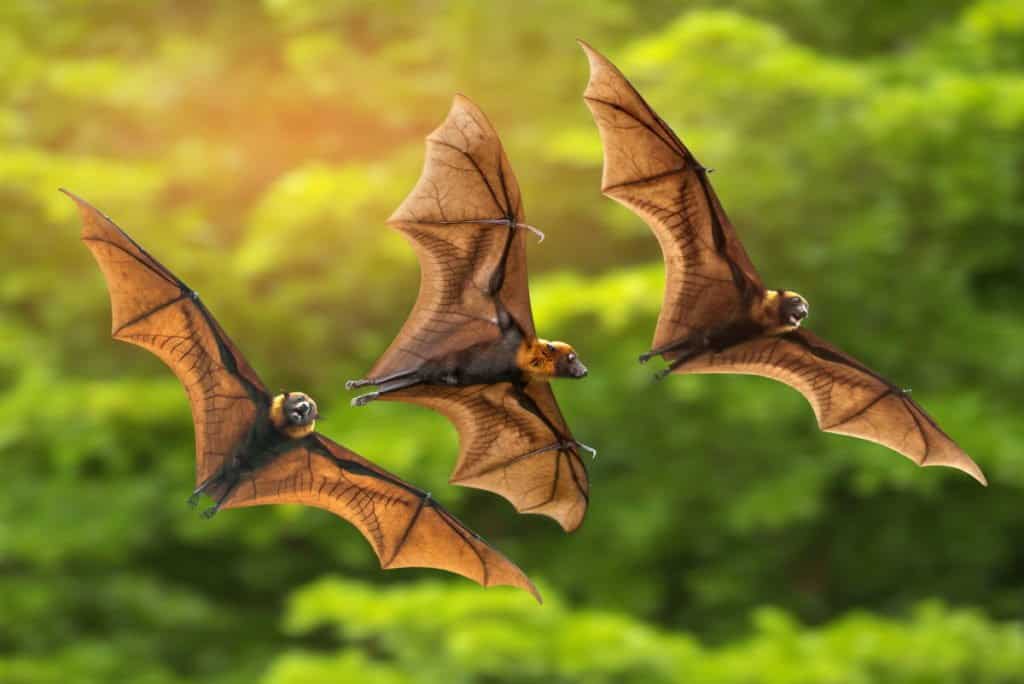
By taking even small actions at home, you can help save bats and uplift environmental health.
©Independent birds/Shutterstock.com
Now that you know how much bats do for our world, and how terrible it would be to lose them, it’s time to take action. Sometimes being at home feels unsettling, like there’s no way to make a concrete difference. But you can contribute to positive change for bat populations:
- Write to your local and state-level policy-makers asking what they are doing to protect bats. Advocate for initiatives that support improved monitoring and surveying technologies, as well as tools to reduce mortality rates.
- Plant night-blooming gardens with native plants, and install a bat house, to give bats somewhere to roost and feed.
- Donate to organizations like the North American Society for Bat Research, Bat Conservation International, the Conservation Fund, and the Bat World Sanctuary to advance research and advocacy measures.
- Limit the use of pesticides in your yard or garden. Also consider leaving dead leaves and trees to provide roosting space for bats.
- Review and comment on projects occurring on public lands that may affect bats.
As Lile asks, “Aren’t we lucky to live alongside these diverse animals?” The answer is yes. But we need to fight for their protection. Hopefully, if you were afraid of bats before, you now know why combating the stigma is an important part of environmental stewardship.