
Quick Take
- Greece hosts about 400–500 Mediterranean monk seals, more than half of the species’ world population, making local conservation critical.
- Tourism disturbs beaches and sea caves, forcing mothers to keep pups in caves and leaving pups vulnerable when mothers hunt.
- Approximately 20% of Mediterranean monk seal waters are protected in Greece, but this excludes certain pupping sea caves, which are still at risk from curious tourists.
In Greek mythology, monk seals were highly revered as sacred animals. The god Poseidon protected them, and many believed they were divine. This belief has waned over the years as more people visit Greece for its scenery and resorts, rather than its ancient lore. While monk seals may no longer be viewed as god-like companions, they are still very much part of Greece’s marine ecosystem. Sadly, no Poseidon protects them from their biggest threat: tourism.
As Greece’s shores are inundated season after season, monk seals lose their natural habitat. Forced into sea caves, they hide from prying eyes. However, this has a cost, and Greece is desperately seeking to reverse it. While no-entry zones, stricter fishing laws, and wildlife cameras are a start, they don’t address the root of the problem. As more people flock to Greece’s sunny shores, monk seals deal with the consequences.
Human activity is one of the most significant drivers of species decline. If it’s not development or consumerism, it’s tourism that encroaches on a species’ habitat. This gradual displacement is forcing monk seals from their homes, and the effects are devastating their population. According to the Hellenic Society for the Protection of the Monk Seal (MOm), Greece’s monk seal population is about 500 individuals as of December 2025. This number represents roughly half of the world’s monk seal population. There are fewer than 1,000 individuals worldwide, making Greece’s native population essential for the species’ survival.
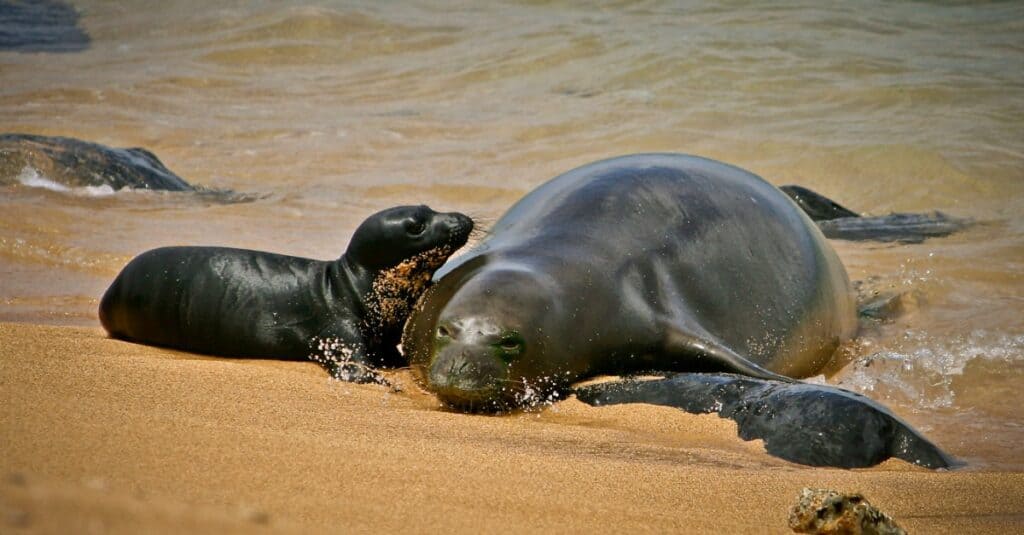
Hawaii has its own species of monk seal that prefers remote, quiet islands.
©iStock.com/JudyLaNier
Currently, the Mediterranean monk seal is listed as Vulnerable by the IUCN Red List. As one of the rarest and most endangered marine mammals in the world, its future hangs in the balance. Locals also report that monk seal populations have declined sharply in recent years. Whereas these seals were abundant in places like the Kimolos–Polyaigos Islands, Northern Sporades, the Cyclades, and the Ionian Islands, they’re now sparse. Sightings are sporadic, and monk seals often shy away from humans. Recent reports indicate that the Mediterranean monk seal population in Greece has been increasing in recent years, thanks to conservation efforts. However, tourism is still leaving its mark on their marine habitat.
As the beaches fill with vacationing tourists, they become places for monk seals to avoid. The commotion, noise, and proximity to humans and other animals signal to the seals that they should stay away. While they often use deep-sea caves for pupping (giving birth to their young), these caves also become somewhat of a prison. When beaches are no longer safe, monk seals keep their pups in the caves for extended periods. For the first few weeks, mothers leave to hunt for food while the pups are left on their own. This time leaves them vulnerable, and tourists have already spooked them from their once-safe hiding spots.
If a female monk seal cannot find her pups, the pups are abandoned. Even minor disturbances can stress pups, causing them to flee the cave. This means the pups are left alone to try to hunt, survive, and evade predators in the open sea. Without their mother’s protection, their survival rate drastically decreases. In the long term, this leads to a decline in the overall population. For a place like Greece, home to the world’s largest Mediterranean monk seal population, this could be devastating. As tourists continue to seek out the now-elusive monk seal, these once-sacred animals remain under threat.
Human activity threatens monk seals beyond just tourism. Overfishing and accidental entanglement also hurt Greece’s natural populations. Monk seals feed on bottom-dwelling marine life, including octopuses, crabs, eels, sea cucumbers, lobsters, and reef fish. The problem is that many of these aquatic animals are also fished by locals. Even if a fisherman does not intend to catch a lobster or an eel, if one is accidentally caught, it often dies before being returned to the water. This depletes the food source for monk seals, which depend on these animals to survive.
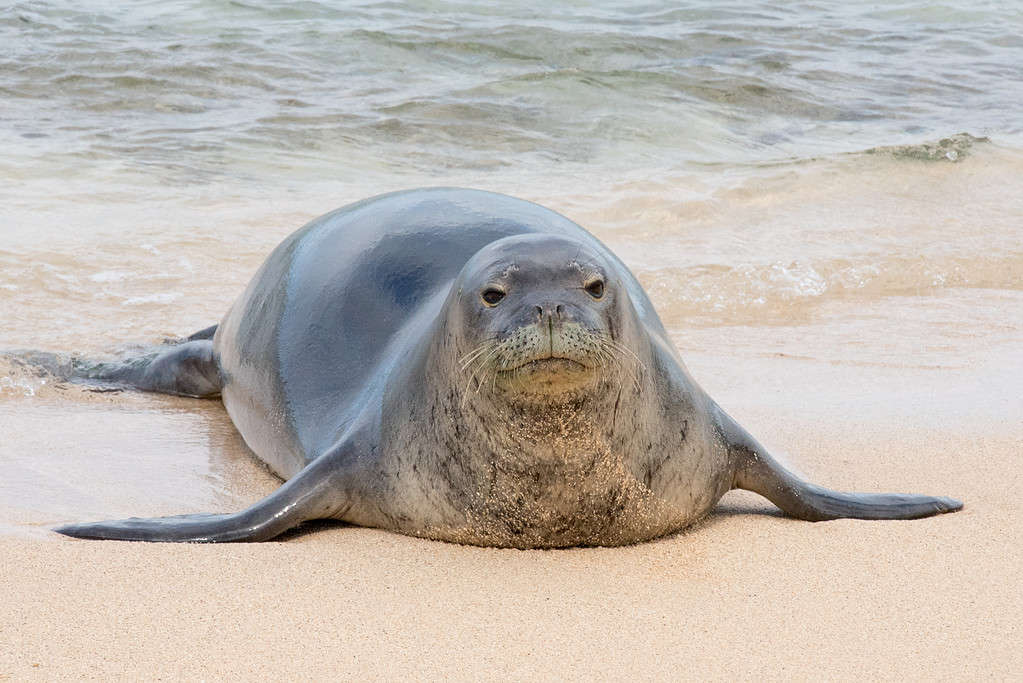
Monk seals use beaches to rest and for pupping, and are often scared off when there are too many tourists in their habitat.
©Lorraine Logan/Shutterstock.com
Monk seals are also opportunistic hunters, which adds another layer of difficulty. If monk seals spot prey caught in a net or trap, they may attempt to retrieve it. This is a dangerous move for a monk seal, as they risk becoming entangled. Once this happens, there is no guarantee that a fishing crew will find the monk seal. While Greece prohibits the intentional killing of Mediterranean monk seals under the EU Habitats Directive and has national strategies to protect them, enforcement of these regulations can be inconsistent. Unfortunately, enforcement of these regulations can be inconsistent, leaving the seals vulnerable to threats from commercial fishing.
Seal Greece is an initiative co-led by the Monk Seal Alliance and the Natural Environment and Climate Change Agency (NECCA). Both are dedicated to protecting Mediterranean monk seals by eliminating the threats they face. Through their actions, they educate, raise awareness, and advocate for stronger enforcement in monk seal habitats. As of 2025, Greece has protected 20% of the territorial waters that monk seals inhabit. However, it’s not nearly enough. Seal Greece is actively working to inform stakeholders and encourage further protection in the Natura 2000 network.
The initiative also works tirelessly to inform tourists about the risks their presence poses to wildlife. This is done through campaigns and educational platforms available to visitors. Tourists are taught how to observe monk seals from a distance, how to avoid disturbing their pupping grounds, and what to do if they encounter a monk seal during their travels. Knowledge is power, and Seal Greece hopes that an educated tourist will also help conserve Greece’s beloved monk seals.
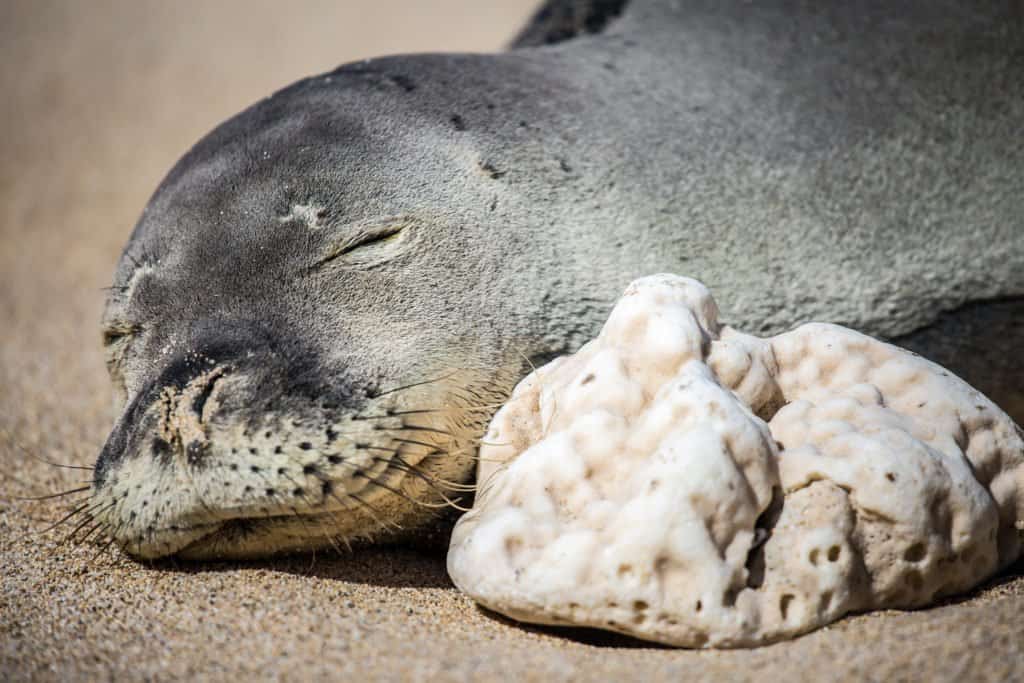
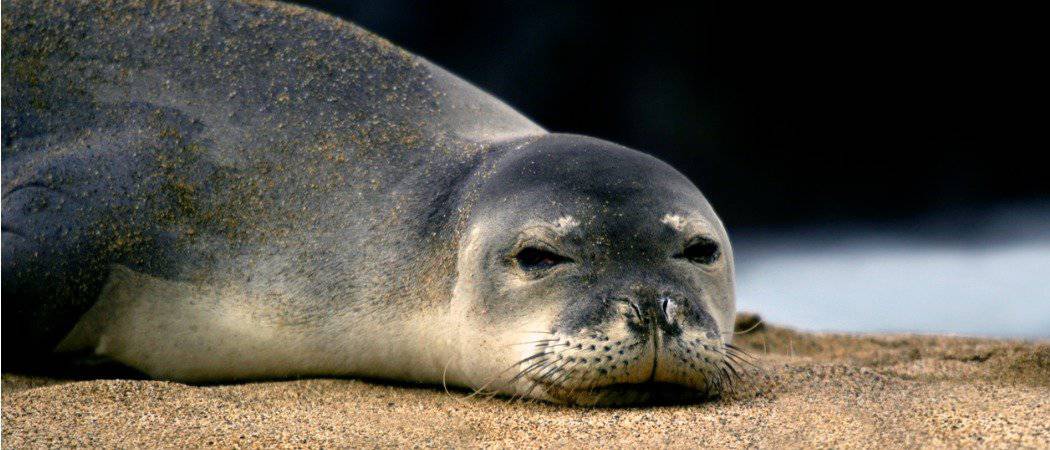
If tourists spot a monk seal during their visit, it’s best to maintain a proper distance and leave it alone.
©Evan Austen/Shutterstock.com
Currently, only two species of monk seal exist: the Mediterranean monk seal and the Hawaiian monk seal. Sadly, the Caribbean monk seal was declared extinct in 2008. The former rest on beaches and use them for pupping, so it’s essential that tourists know what to do if they encounter one. As with any wild animal, it’s best to keep a healthy distance from monk seals. This means staying 50 to 150 feet away from the animal at all times. Keeping your distance prevents the monk seal from getting spooked and gives them a wide berth if they want to escape.
Staying away from sea caves, especially during pupping season, is also crucial. Minor disturbances can cause pups to leave the cave, separating them from their mother. If this happens, mothers often abandon their pups. Tourists should also avoid swimming too close to monk seals or trying to feed them. Sea caves are the last refuge for this species, so it’s crucial to maintain a healthy distance and leave them undisturbed.