
Quick Take
- Its adorable face is part of the problem. The Andean cat's appearance masks a conservation crisis most people never see coming. See the hidden crisis →
- One male Andean cat needs more space than you'd ever guess, and that appetite for territory is quietly driving the species toward collapse. Explore its territorial needs →
- Camera traps took three years to catch this cat on film, but scientists are asking whether even that win actually matters. Question the camera trap wins →
- The rarest wild cat in the Americas has been hiding in plain sight across four countries, and almost no one knew it was vanishing. Discover how rare it is →
It took three years of trail camera monitoring in the high Andes to get the shot: an Andean cat and her kitten, filmed in the wild. The footage was released late last year by Big Cat Rescue, working with the Pampas Working Group and Quechua Women for Conservation. It shows one of the rarest wild cats on Earth, a species so seldom seen that researchers describe it as ghostlike.
A Cat Built for the Roof of the Andes
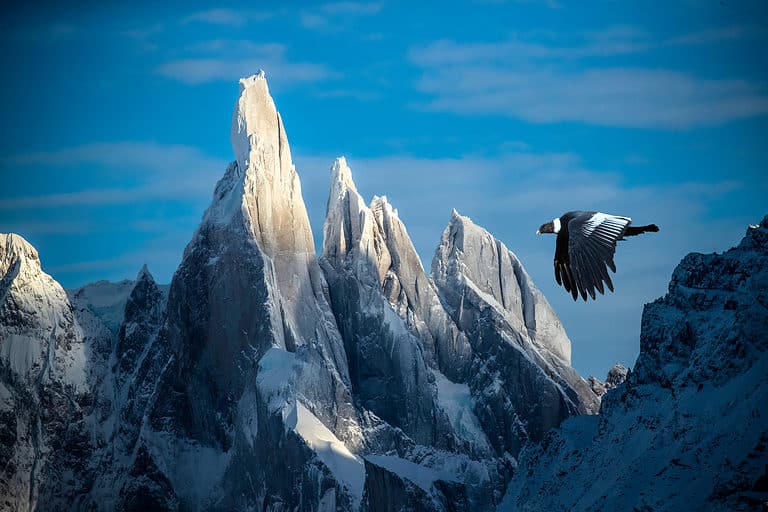
The Andean cat lives in Peru, Bolivia, Chile and Argentina. Most of its known range sits between about 3,800 and 5,180 meters, among cold, rocky slopes with little cover, according to the IUCN Cat Specialist Group. More recent surveys have also found populations far lower, down to about 650 meters in the Patagonian steppe of Argentina.
It is about the size of a large house cat, with dense gray fur that helps it survive freezing nights. Its long, banded tail helps with balance on steep rock. It is active mainly at night and around dusk, which is part of why so few people ever see one.
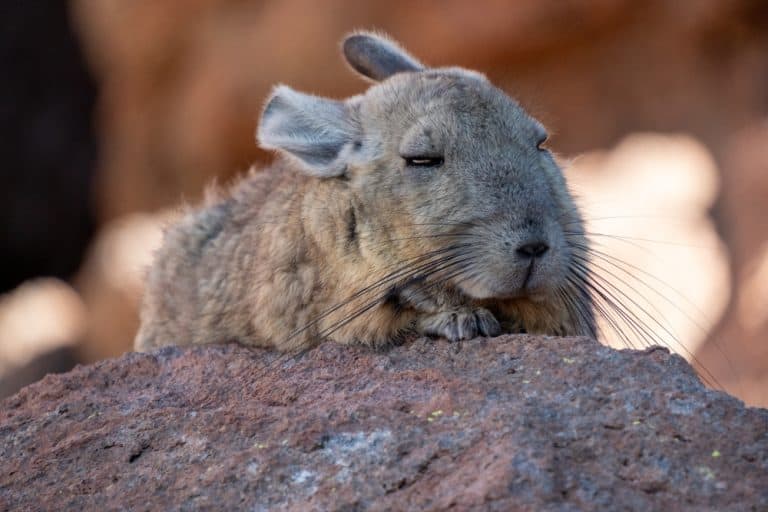
It also needs a lot of space. Tracked cats in Argentina used home ranges of about 19 to 61 square kilometers, and a female followed in Bolivia used about 65. A single cat can cover an area the size of several thousand soccer fields. Much of its diet comes from mountain viscachas, rabbit-sized rodents that live in scattered rocky colonies, so the cat has to move between patches of prey.
Why It Is the Most Threatened Cat in the Americas
The IUCN lists the Andean cat as Endangered. The best current estimate is about 2,177 adults out of a total population of roughly 4,354, spread thinly across four countries. Bolivia classes it as Critically Endangered, Chile and Peru as Endangered, and Argentina as Vulnerable.
The threats overlap:
- mining and other projects that break up its habitat;
- hunting, both for traditional ceremonies and in retaliation for supposed attacks on livestock;
- falling numbers of viscachas and other prey;
- attacks by domestic dogs, and deaths on roads;
- climate change, which is shifting conditions in the high Andes.
Since 1999, the Andean Cat Alliance, a network of researchers and groups in all four countries, has worked on research, threat reduction and community programs. Local partners such as the Quechua women’s group behind last year’s footage are central to that work, because they live where the cat lives.
What Camera Traps Can and Cannot Tell Us
The cameras keep finding the cat. In January 2026, Wildlife Conservation Society Argentina recorded an Andean cat in the La Payunia protected area in Mendoza Province. It was the third year in a row the species had turned up on WCS cameras in the region. María José Bolgeri of WCS Argentina called every such record “great news” because it confirms the cat is still there.
There is a limit, though. A string of sightings shows the cat is present, but it does not show whether the local population is growing or shrinking. Answering that takes years of systematic monitoring across many sites, which is slow and expensive in terrain this remote.
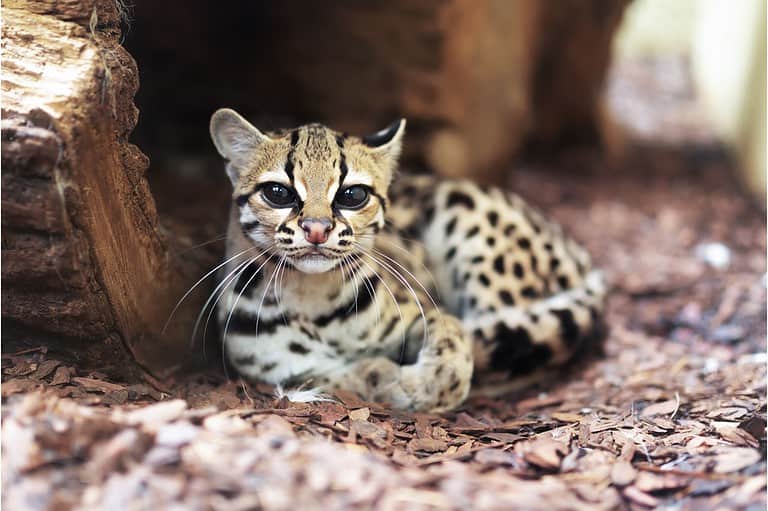
The high Andes may also still hold surprises. In September, scientists described a new small wild cat from Bolivia’s cloud forests, Leopardus tilcayo. It belongs to the same genus as the Andean cat and is the first new living cat species formally named in more than a century. The team relied on DNA, museum specimens and camera trap images.
For a species with only a few thousand adults left, each clip of a mother and kitten matters as evidence. Protecting the cat will still depend on what happens to the slopes, the viscacha colonies and the communities around them. For more cats that are rarely seen in the wild, see the most elusive wild cats on Earth.