
Quick Take
- Kiki didn't just watch the human baby. She did something that made the whole zoo stop and stare. See what Kiki did →
- Was Kiki really introducing her son, or is that just what humans want to believe? The answer is more nuanced than either option. Read the expert take →
- A Louisville Zoo orangutan has a habit with human visitors that has gone viral multiple times, and it targets something very specific. Meet Amber the orangutan →
- These two apes live completely different lives, yet share one striking trait that puts them closer to us than most people realize. Discover their shared traits →
A mother holds her 5-week-old baby near the glass at a zoo, and the gorilla on the other side immediately seems interested. She moves closer, studies the tiny human, and presses her hand toward the glass.
Then the moment gets even better. The gorilla moves away, collects her own young son, and brings him back toward the window. What follows looks almost like two mothers introducing their babies to one another.
Watch the Gorilla Bring Over Her Own Baby
The Gorilla Is Kiki, a Mother of Five
The first scene was recorded at Franklin Park Zoo in Boston in May 2021. Emmelina Austin was visiting with her husband Michael and their 5-week-old son, Canyon, when they stopped at the western lowland gorilla exhibit.
Kiki, a female gorilla who was raising an infant of her own, became focused on Canyon. She watched him closely, approached the viewing window, and placed her hand against the glass near the baby’s hand. The interaction reportedly lasted several minutes.
Then Kiki Brings Over Baby Pablo
The most memorable part comes when Kiki moves away and returns with her own young gorilla. His name is Pablo, and he was about 7 months old when the video was recorded.
Kiki had given birth to Pablo at Franklin Park Zoo on Oct. 14, 2020. He was her fifth offspring and her first son. Eventually, Kiki and Pablo both settle near the glass while Emmelina holds Canyon on the other side, creating the remarkable scene captured in the video.
Was Kiki Really Showing Off Her Baby?
It certainly looks that way to human eyes, but animal behavior deserves a little caution before we assign it a human motive. We cannot know whether Kiki was thinking, “You showed me yours, so I’ll show you mine.”
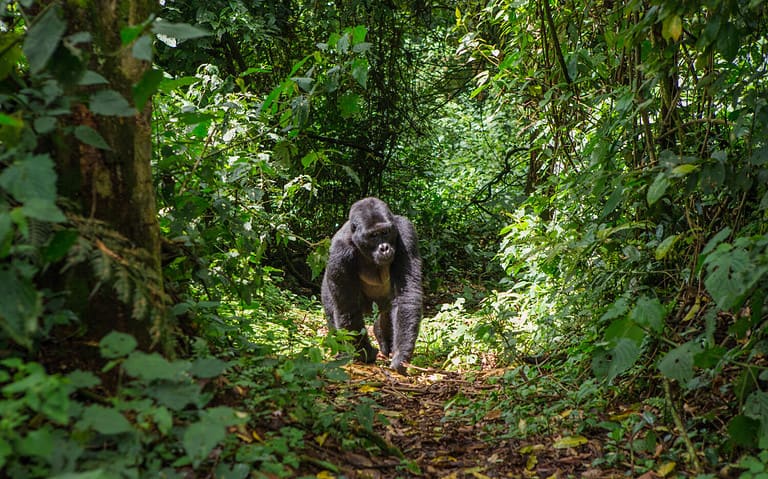
What we can see is sustained attention toward the human infant, repeated movement toward the viewing window, and Kiki bringing Pablo into the same area. Gorillas are highly social great apes, and western lowland gorillas normally live in close family groups that include adults and their young. Mothers spend years caring for their offspring, so infants are a major part of their social world.
Gorilla Mothers Spend Years Raising Their Young
Western lowland gorillas usually give birth to a single infant after a pregnancy lasting roughly eight to nine months. Young gorillas remain highly dependent on their mothers and are typically not fully weaned until they are around 3 to 4 years old.
That long childhood gives young gorillas plenty of time to learn by watching their mother and other members of the troop. At Franklin Park Zoo, Kiki lives within a family group, and Pablo has grown up surrounded by other gorillas as well.
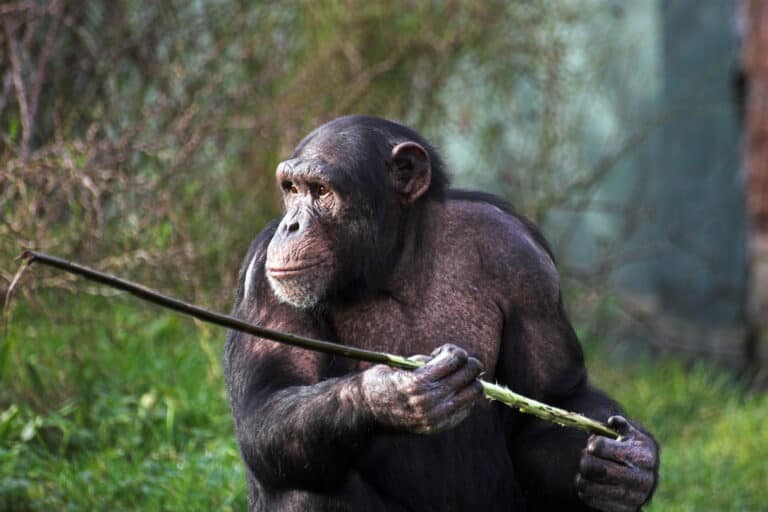
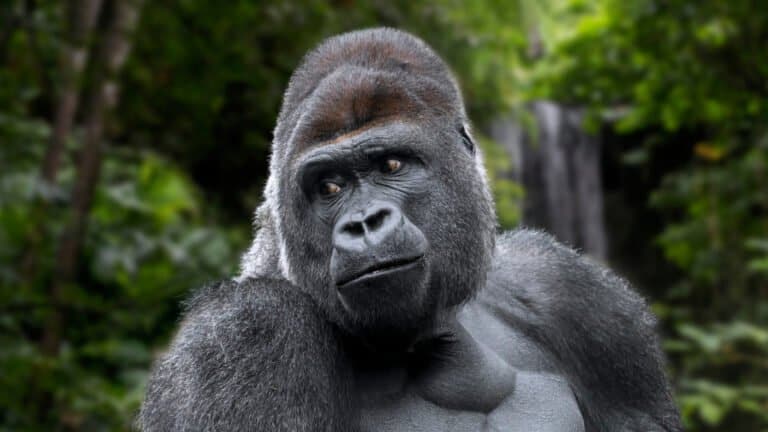
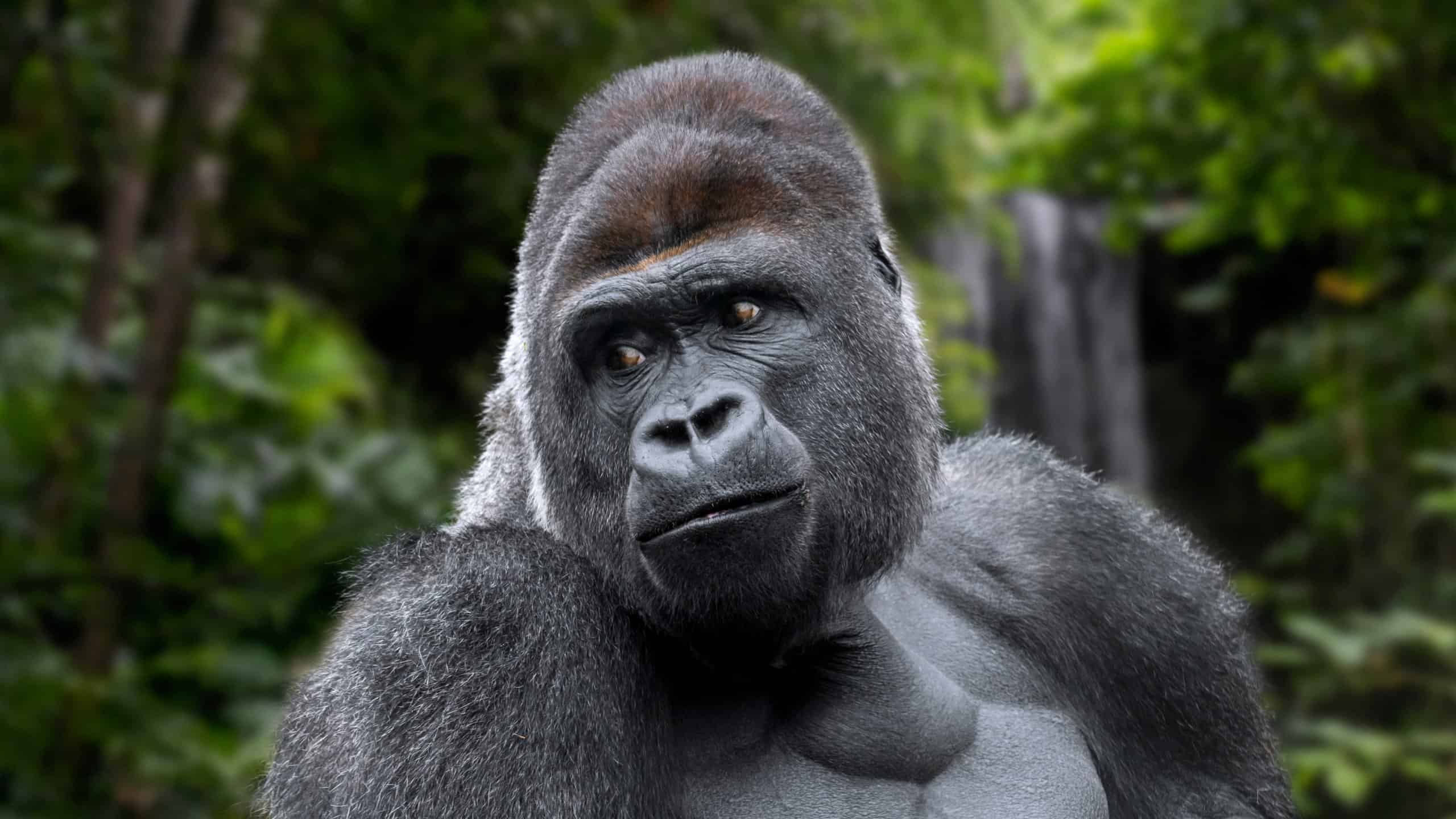
Great apes are highly intelligent animals capable of complex social behavior and intense visual curiosity.
©arul_nkh/Shutterstock.com
The Orangutan in the Video Loves Watching Zoo Visitors
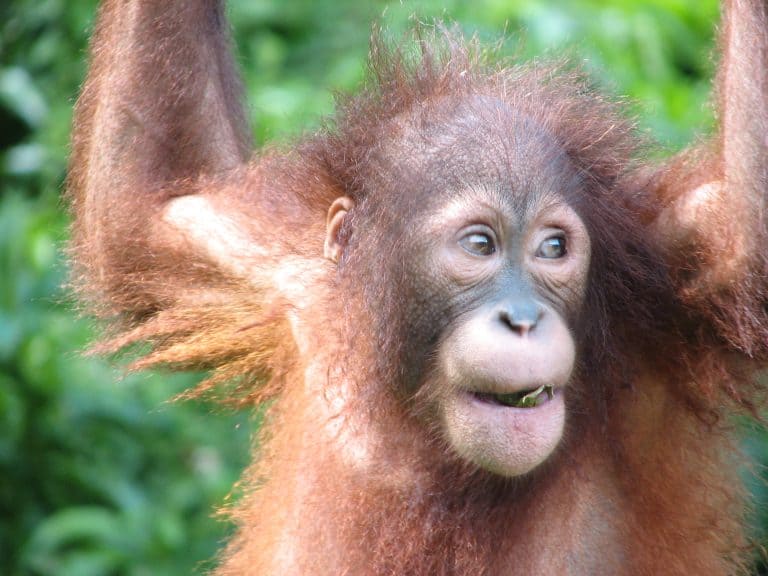
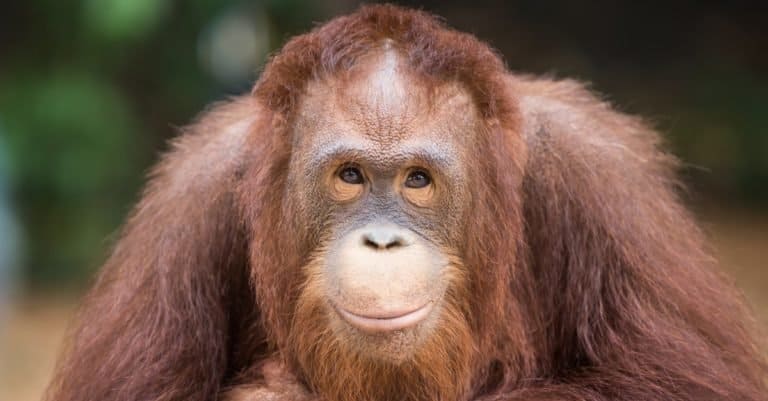
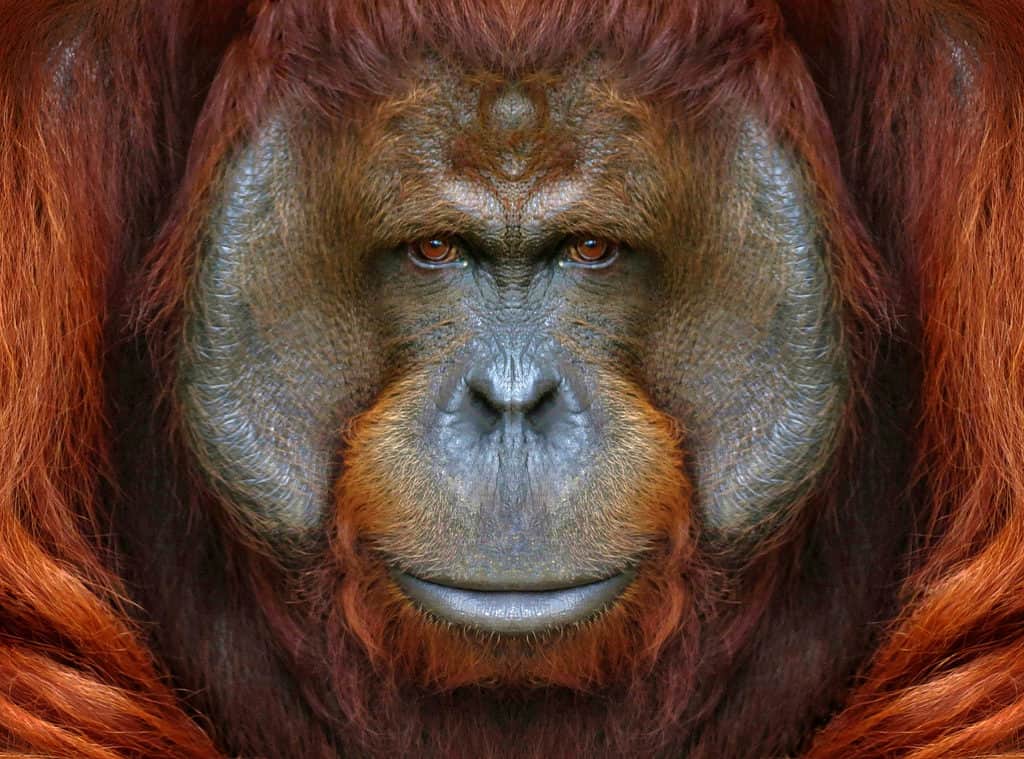
The video later switches to another great ape with a well-documented interest in human visitors. Amber, an orangutan at the Louisville Zoo in Kentucky, has become known for approaching the glass and gesturing toward things that catch her attention.
The Louisville Zoo says Amber may tap on the glass to get someone’s attention and has been known to point toward colorful fingernails, jewelry, purses, and backpacks. In viral videos recorded at the zoo, she appears particularly interested in human infants and gestures for adults to bring them closer so she can get a better look.
One Baby Even Got a Kiss Through the Glass
In one widely shared 2023 encounter, Amber noticed a 3-month-old baby named Jordan and repeatedly tried to get a closer look. When his family brought him toward the viewing window, Amber stared at him and appeared to press her lips against the glass twice.
Another family reported a similar interaction when Amber became interested in their newborn. That makes her behavior in the compilation less mysterious. Amber seems to be an unusually curious orangutan who regularly pays attention to the people visiting her habitat.
Gorillas and Orangutans Are Both Great Apes
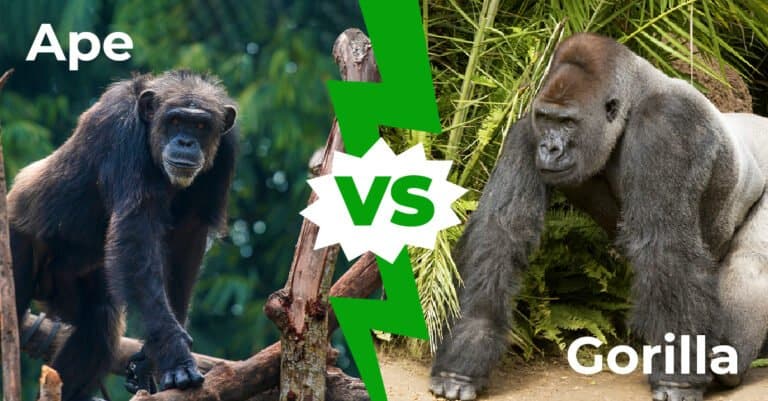
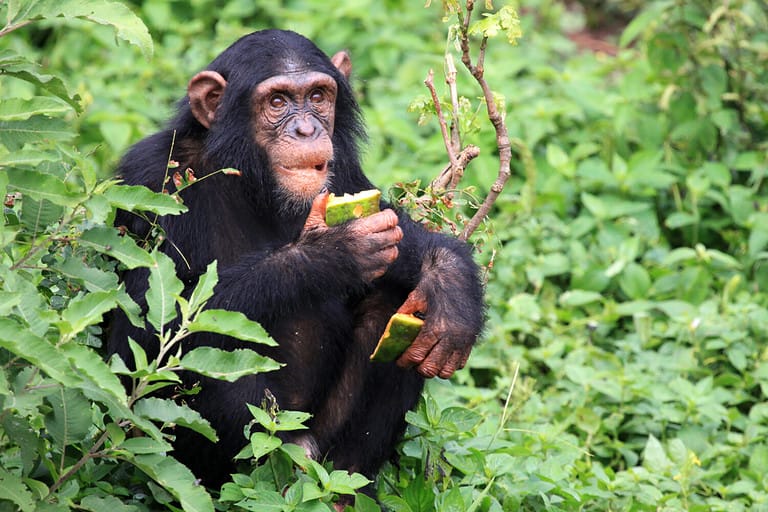
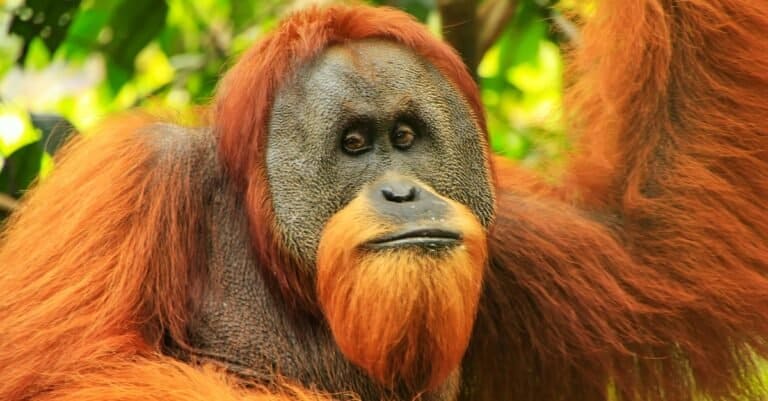
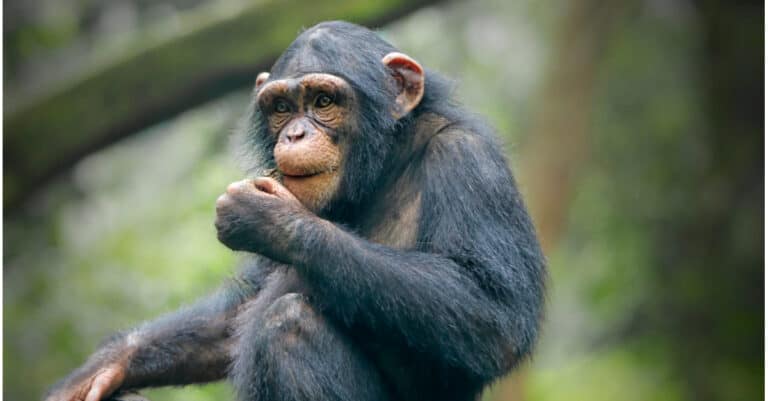
Despite their very different appearances and lifestyles, gorillas and orangutans are both members of the great ape family, along with chimpanzees, bonobos, and humans.
Gorillas are primarily ground-dwelling and highly social, usually living in family groups. Orangutans spend much more of their lives in trees and are generally less social, especially as adults. Both, however, are highly intelligent and capable of learning, problem-solving, remembering individuals and situations, and manipulating objects in surprisingly sophisticated ways.
These Great Apes Also Need Our Attention in the Wild
Kiki is a western lowland gorilla, a subspecies listed as critically endangered. Wild populations face threats that include habitat loss, poaching, disease, and the commercial bushmeat trade.
Orangutans are also under severe pressure in the wild, where deforestation and habitat fragmentation have removed enormous areas of rainforest. Zoos participating in accredited conservation programs support coordinated breeding, research, education, and field conservation efforts for both groups of great apes.
Enjoy the Moment, but Let the Animals Set the Rules
Close encounters like these are memorable precisely because the animals choose to approach. Visitors should never bang on viewing glass, shout at the animals, imitate aggressive gestures, or try to force an interaction.
The best approach is the simplest one: stay calm, follow the zoo’s rules, and let the animal decide whether it wants to come closer. Sometimes, as Kiki and Amber demonstrate, simply being interesting enough to look at can lead to a pretty unforgettable moment.