
Quick Take
- This rabbit lookalike outlives an actual rabbit by a shocking margin, and the reason has nothing to do with its diet. See its surprising lifespan →
- Its secret survival weapon in one of South America's harshest environments isn't what you'd expect from such a small, fluffy creature. Explore its harsh habitat survival →
- When a predator closes in, this rodent has an escape move that defies its soft, docile appearance. Discover its predator escape tactics →
There’s a creature moving around the mountains of South America that looks suspiciously like a rabbit but is actually a type of chinchilla! Meet the southern viscacha, a fluffy rodent resident of the rugged mountains.
What Does the Southern Viscacha Look Like?
©Oliclimb/Shutterstock.com
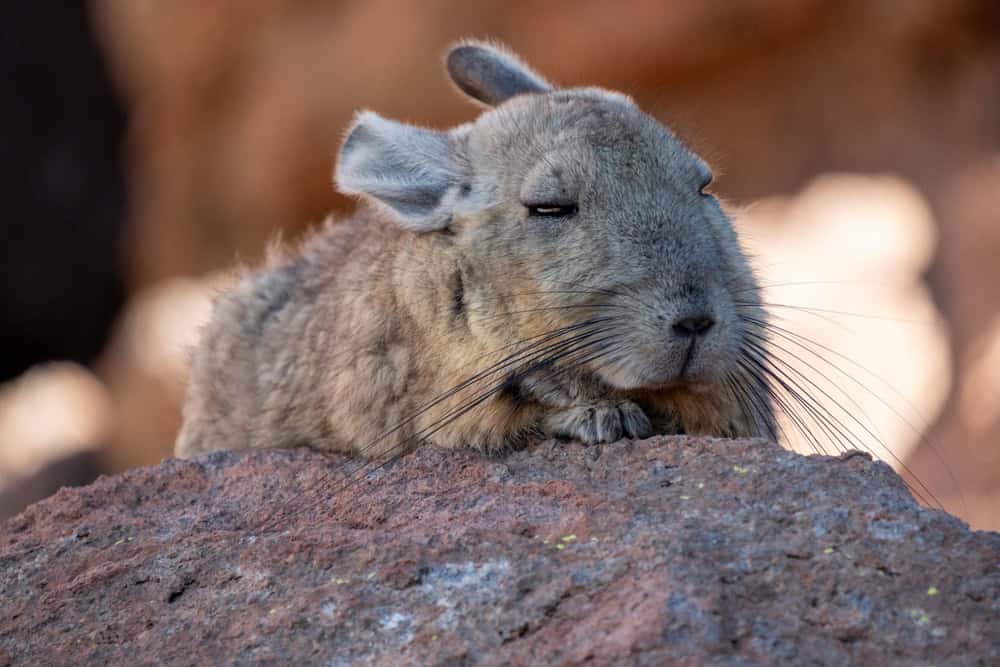
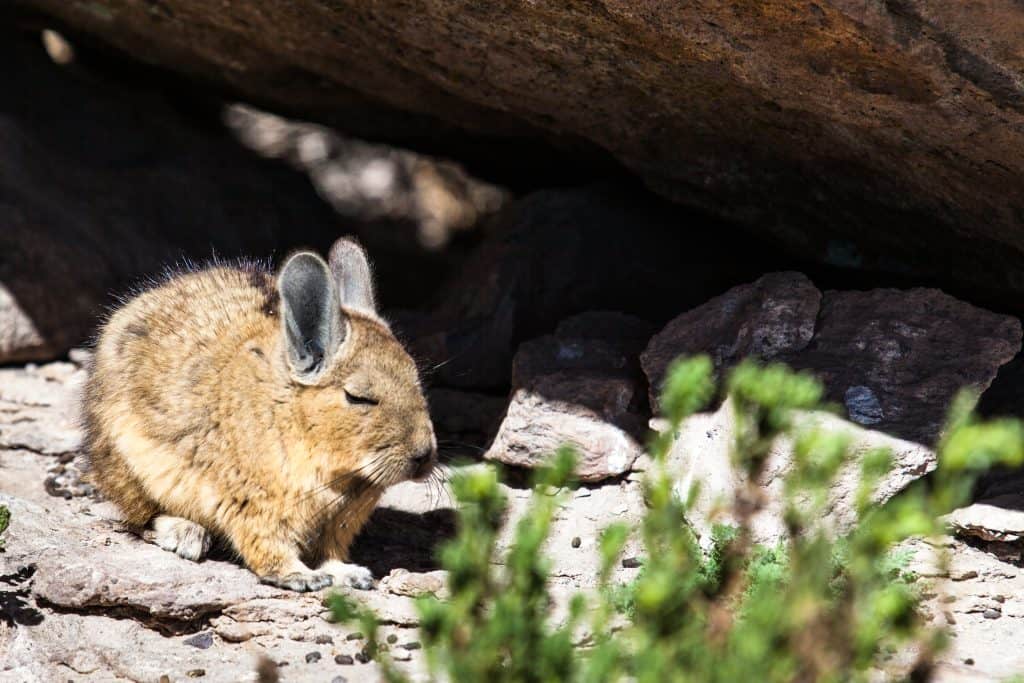
Imagine a rabbit that looks slightly intoxicated, and you’ll get an idea of the mountain viscacha (Lagidium viscacia). These animals are known for their sleepy-looking expressions. They weigh up to around 6 pounds and feature soft body fur. Unlike rabbits, their tails are long. To protect them from the cold, they grow a thick, scruffy-looking pelage. While most of their coat is a pale yellow/grey color, the tip of their tail is black. Their long, narrow ears stick straight up and are edged with a fringe of white fur. Each of their feet has just four digits.
Southern Viscacha Diet and Lifestyle
These chinchillas are found in the extreme southern portion of Peru, Western and Central Bolivia, Northern and Central Chile, and in Western Argentina. They like to live in rugged, rocky habitats in the mountains with sparse vegetation where they blend into their surroundings. They have a longer lifespan than a rabbit – up to 19 years in captivity, but likely shorter in the wild.
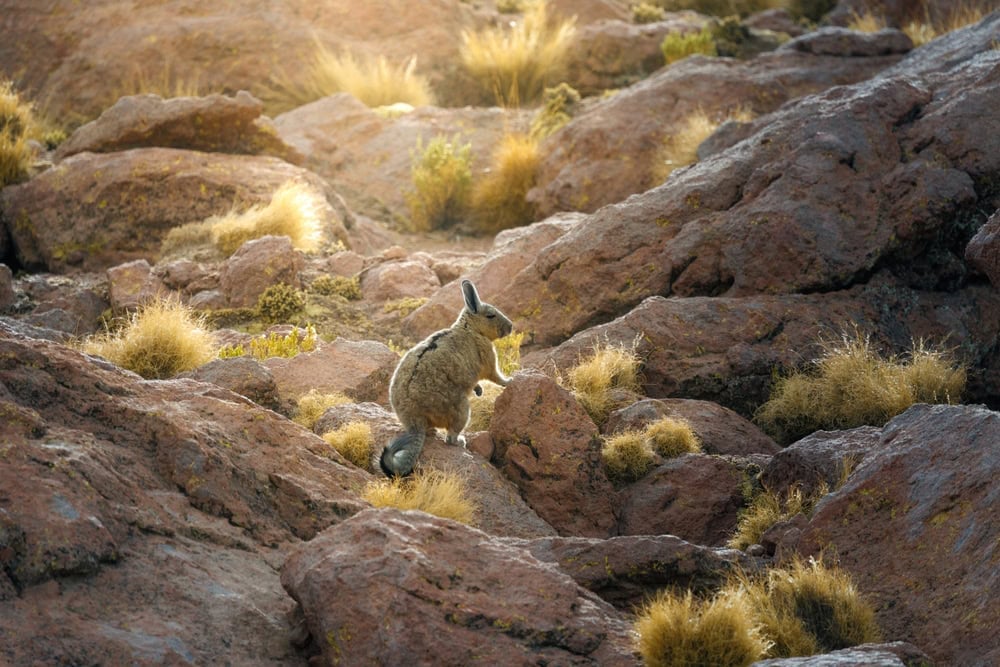
Mountain viscachas are perfectly adapted for their mountain habitats.
©Arthur_Oliveira/Shutterstock.com
As they are diurnal, they are awake during the day. However, they are most active around dawn and dusk. During the day, you’ll spot them on rocky perches, grooming and sunning themselves. Navigating rugged terrain is easy for them.
As herbivores, mountain viscachas only eat vegetation but will happily gobble up just about any plant they come across. Since they tend to live in areas with sparse vegetation, this adaptation keeps them well fed in environments where fussier creatures would starve. Most of their diet is made up of grasses, mosses, and lichens. Thanks to their chisel-like incisors, they can access a variety of vegetation in their arid, high-altitude habitat.
Do Southern Viscachas Live in Groups?
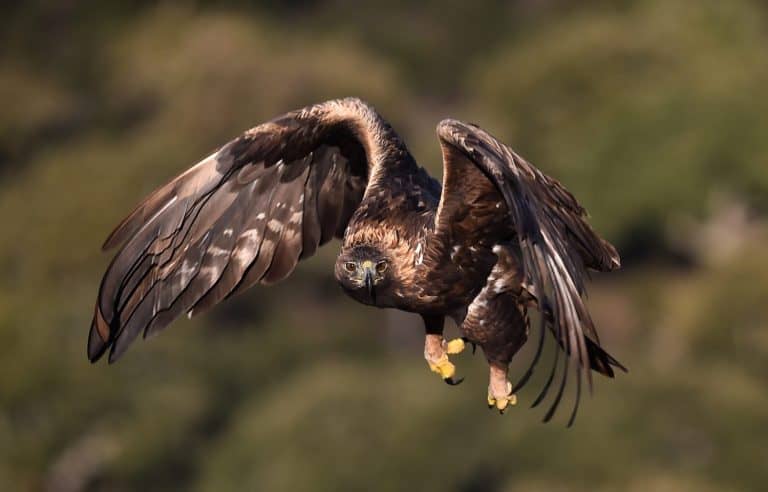
Viscachas are social rodents that live in colonies of between 4 and 75 individuals. They communicate using a combination of whistles, barks, and trills, and are territorial. Their predators include foxes, birds of prey, and cats. To escape danger, they can leap several feet in the air!
Southern viscachas engage in a polygynous mating system where dominant males mate with multiple partners. Females have estrus cycles of around 57 days. Their gestation period is around 120-140 days, and single births are the norm. The young are cared for in burrow systems to provide greater protection. Unfortunately, juvenile mortality is high thanks to the local predators.