
Quick Take
- The population of sage grouse in Jackson Hole, Wyoming, is dwindling partly due to plane strikes.
- Conservationists are trying to move a lekking site (breeding site) from the airport to a safer location.
- To help persuade the birds to move, they are deploying robotic birds that ‘dance’ like a male bird performing his mating ritual.
Ideally, looking for a mate should be a positive experience. But when you are a sage grouse, it can be hazardous—especially if you choose to do it near a busy airport. This is why conservationists are trying to lure amorous grouse away from the planes, and their latest recruit is a robotic bird!
How Do Sage Grouse Behave When Breeding?
Sage grouse are the largest North American grouse and, as their name suggests, are always found around sagebrush. For most of the year, they are fairly sedentary, keeping a low profile and feeding on sagebrush leaves and other plants.
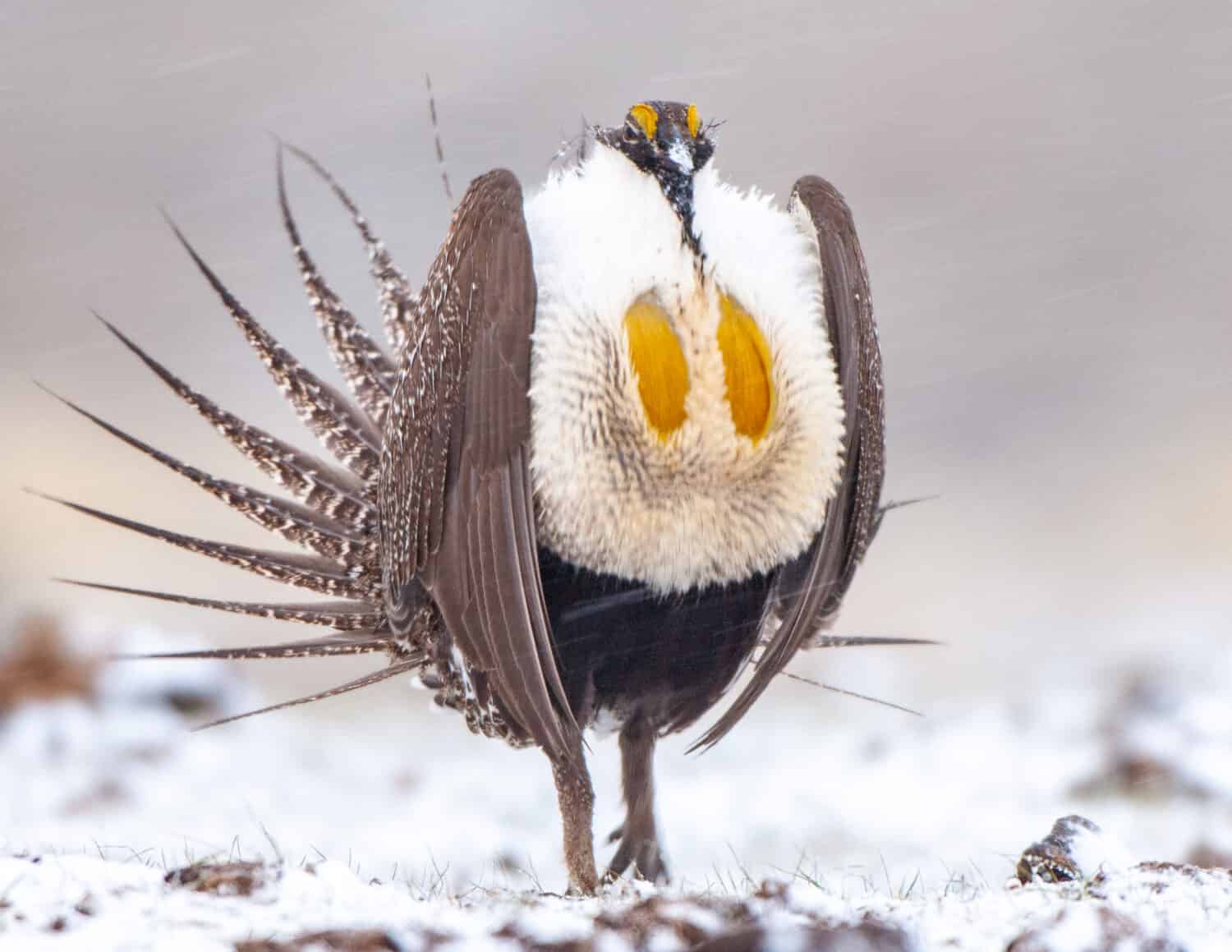
In the early spring, however, sexually mature males gather at lekking sites. These are sites where the males display to the females, hoping to be chosen as a mate. You will find males at the lekking sites from March to May, and they are most active at dawn and dusk. The females are present for just two or three days, and once they have mated, they leave.
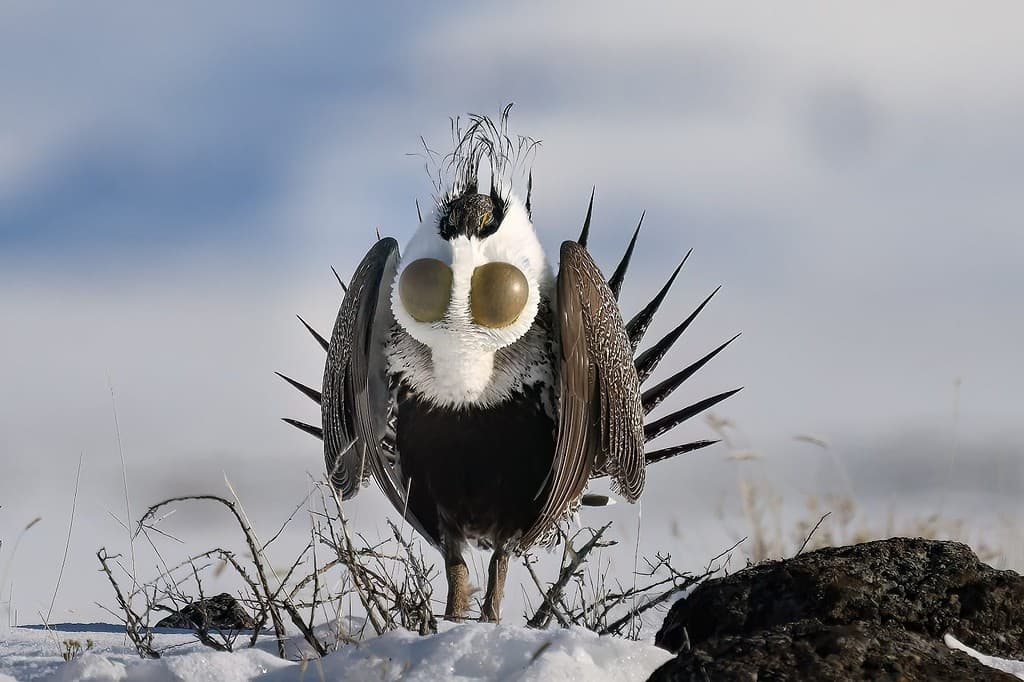
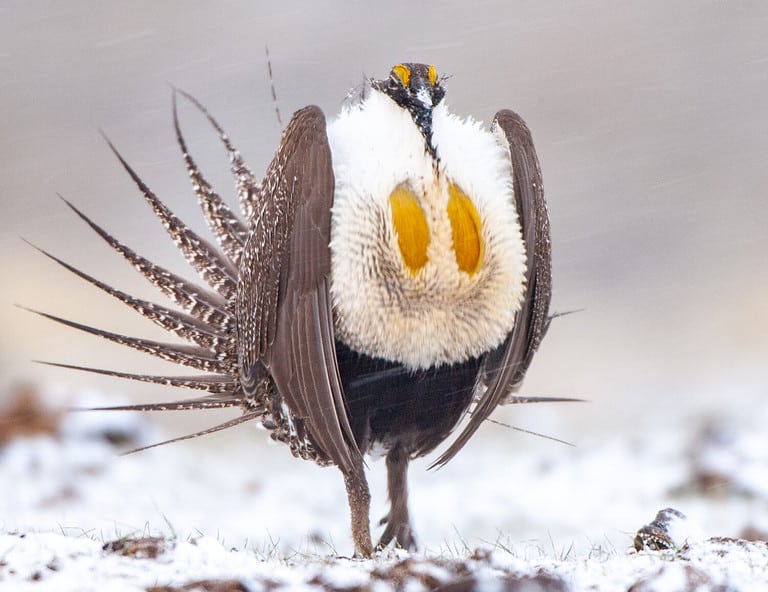
Sage grouse have an impressive mating ritual.
©Breezy Bird Photography/Shutterstock.com
The sage grouse lekking displays are quite a sight! Males strut around, fan their tails, and display the olive-green gular sacs concealed under their feathers. At the same time, the males flap their wings to make a “brushing” sound and release air from their esophageal sacs to make a ‘plop’ noise. A grouse breeding lek has been established at Jackson Hole since at least 1945. But with air traffic increasing, this is no longer safe.
Dangerous Dating at Jackson Hole
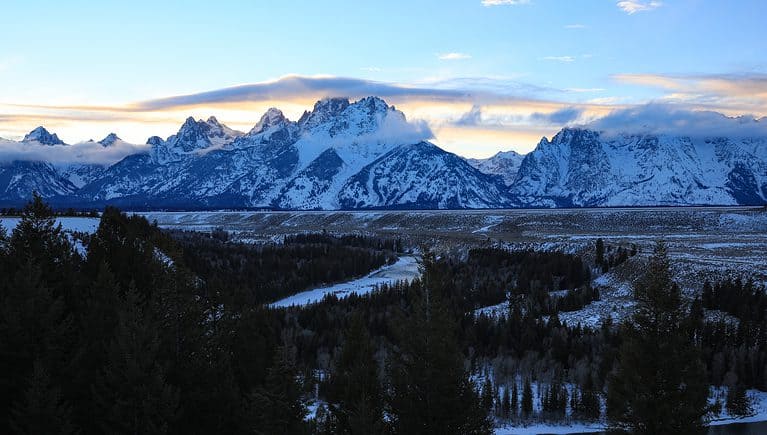
Jackson Hole Airport is the busiest airport in Wyoming, handling tens of thousands of flights annually. It is also located within Grand Teton National Park, and Jackson Hole is home to about 88 male sage grouse. However, recent reports indicate that the population has dwindled to just three males. The relationship between birds and planes is rarely a happy one, and the airport is not the ideal location for a lekking site, yet there is one close to the airport.
Conservationists were faced with the problem of moving the site away from the airport for the safety of both the birds and the public. A strike from a plane would clearly kill a grouse, but there is also a danger to public safety and to the integrity of the aircraft. A soft-bodied bird struck at speed can destroy windshields, clog air intakes, damage brake lines, and cause dents. This can result in injuries to both passengers and crew. According to Grand Teton National Park, between 1990 and 2013, 32 greater sage-grouse were killed by aircraft near Jackson Hole Airport.
Creating a New Lek
Park staff, along with community partners, have restored a 100-acre field just south of the runway. It is called the McBride site and is between the airport and the National Elk Refuge. This is where many of the birds hang out when they are not breeding.
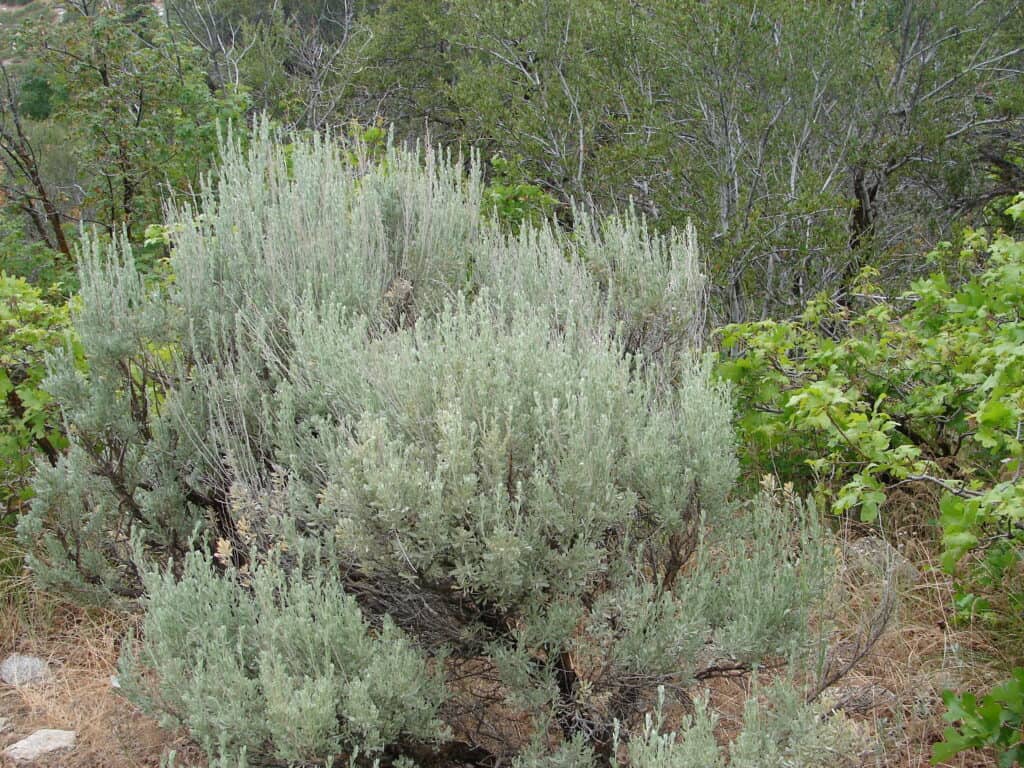
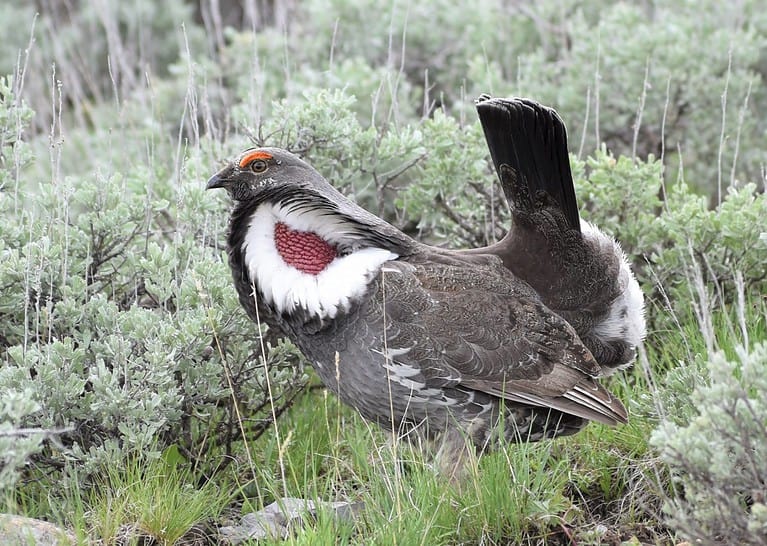
Leking sites are created in clearings in sagebrush.
©Kathryn Roach/Shutterstock.com
Experts transformed the area over eight years, replacing the existing smooth brome grass with sage that the birds would find much more attractive. Biologists were consulted to select plants that support brood-rearing by providing a mix of cover and forage. The plants also needed to maintain some visually open ground so that the site would be attractive as a lek. After all, there is no point in strutting your stuff if the females can’t see you! The next challenge, however, was to attract the birds away from the airport and to the new lekking site.
Deploying the Robo Birds
Park staff worked in collaboration with Teton Raptor Center, Jackson Hole High School RoboBroncs, Wyoming Game and Fish Department, and Jackson Hole Airport to come up with experimental ways to persuade the birds to move. The plan was for the birds to perform their courtship displays, nest, and rear their young at the new site.
At first, the team tried out handmade papier-mâché decoys made in partnership with a local artist and art students. The new lek was monitored by trail cameras. Sadly, within a couple of weeks, the replicas were destroyed by rain and wild animals. So, a high-tech solution was proposed. Enter the robotic birds! (As seen here in this video).
This time, park staff worked with Teton Raptor Center and the Jackson Hole High School RoboBroncs robotics team, along with other partners. The robotic decoys that you can see in the Instagram post above were created and deployed in late March, ready for the sage grouse mating season.
The RoboBroncs robotic grouse are positioned on stakes in the ground and powered by car batteries charged with solar panels. The materials used in their construction include foam from HelloFresh meal kits, T.J. Maxx blankets, and real feathers. These are attached to a custom plastic bird-shaped shell and a 3D-printed head.
How Do the Robo-Grouse Behave?
The robotic birds are pre-programmed to dance at dawn – every morning between 5 am and 9 am as described in the Jackson Hole News and Guide. Dancing involves the robotic bird rotating on its stake and moving its head and wings up and down. At the same time, recorded bird calls are played from speakers camouflaged as rocks.
The robo-birds are not alone. They are joined by two stationary males and one stationary hen. This is not a quick fix, and it will be several years before the success of the strategy can be judged. Anything that helps the shrinking population of these unique birds, however, is to be welcomed.