
Quick Take
- Wyoming has recorded over 470 species of resident and migratory birds.
- The 2,200,000 acres of Yellowstone support around 150 nesting species, and nearly 300 species have been recorded in the park.
- Popular spots also include Grand Teton National Park and Devils Tower National Monument.
Wyoming may be the least densely populated state in the U.S., but the Cowboy State ranks among the top ten in land area. It has a wide variety of ecosystems that are filled with wildlife. According to the Wyoming Game and Fish Department, the state has recorded over 470 species of resident and migratory birds that breed, winter, or visit this crucial stopover split between the Central Flyway and Pacific Flyway at the Continental Divide. If you are a birder planning a trip to the state, don’t miss the best places for bird watching in Wyoming.
Yellowstone National Park
Yellowstone National Park is located in the northwest corner of Wyoming. The park encompasses approximately 2.2 million acres of lodgepole pine forests, alpine and montane meadows, sagebrush steppe and grasslands, open valleys, wetlands and riparian woodlands, hydrothermal areas, and many other specialized ecosystems. Records from Yellowstone document nearly 300 bird species that have been spotted in the park, with around 150 nesting species, including songbirds, raptors, waterfowl, shorebirds, and more. Download and print the Yellowstone bird checklist from the National Park Service website for a complete list of birds found in the park and the best times of the year to view them.
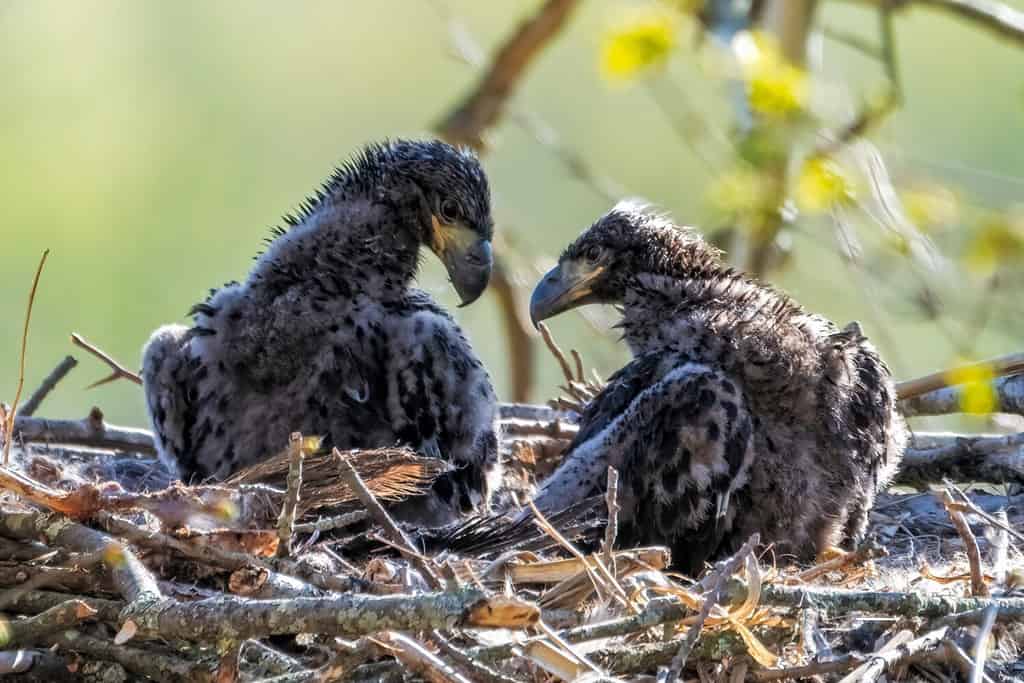
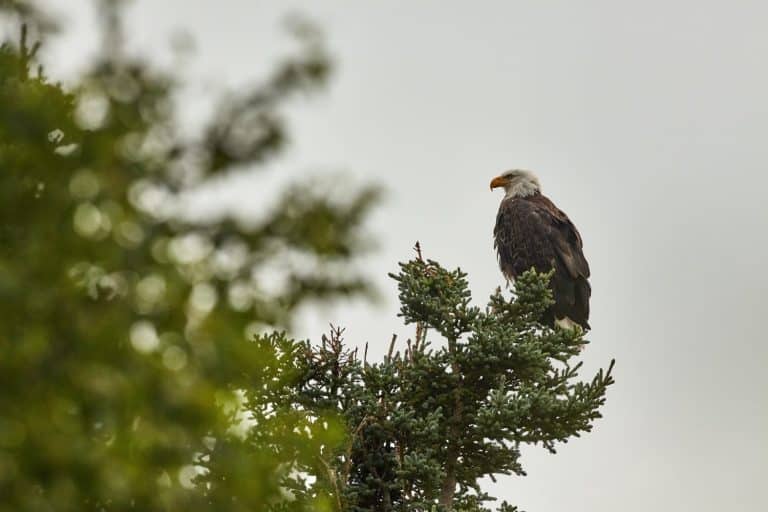
Bald eagles are year-round residents that breed at Yellowstone National Park.
©wendy blanchard/Shutterstock.com
Common birds you may see at Yellowstone National Park include:
- Western tanager
- Townsend’s solitaire
- Yellow warbler
- Hairy woodpecker
- Northern flicker
- Great horned owl
- Osprey
- Clark’s nutcracker
- Canada goose
- Barrow’s goldeneye
Grand Teton National Park
Just 10 miles south of Yellowstone National Park lies Grand Teton National Park. The mountain range characterizes the area, but there are also alpine meadows, glaciers, lodgepole pine and aspen forests, sagebrush flats, wetlands, rivers, lakes, and other geological features that support over 300 bird species. There are several birding hotspots within the nearly 310,000-acre park, including Grand View Point, Willow Flats, Oxbow Bend, and the Antelope Flats area, among others. Visitors may see raptors, songbirds, waterfowl, and other aquatic birds. The best times for birding at Grand Teton are spring and summer. Download their Bird Finding Guide to locate prime birding spots inside the park.
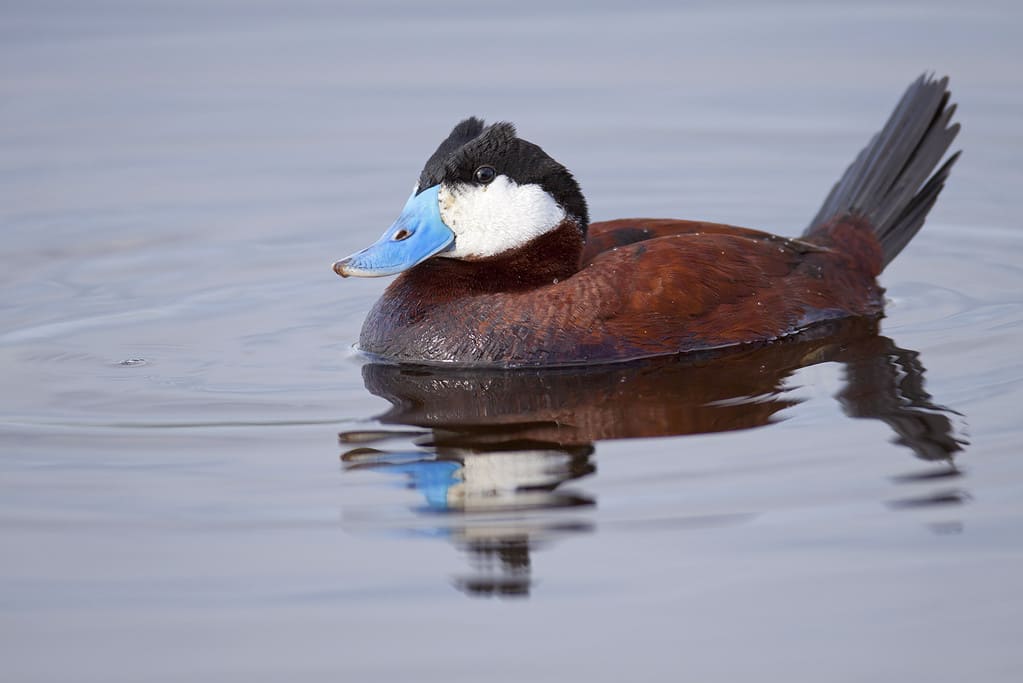
Ruddy ducks can be seen in the Christian Pond area at Grand Teton National Park.
©Ken Hoehn/iStock via Getty Images
Common birds at the Grand Teton National Park include:
- Trumpeter swans
- Song sparrow
- White-crowned sparrow
- Ruddy duck
- Cinnamon teal
- Green-winged teal
- Calliope hummingbird
- Black-backed woodpecker
- Mountain bluebird
- Bald eagle
- Western meadowlark
Seedskadee National Wildlife Refuge
The 27,230-acre Seedskadee National Wildlife Refuge is located in the sagebrush steppe of southwestern Wyoming. The refuge lies along more than 30 miles of the Green River, providing crucial water for resident and migrant birds in the high desert. Officials note that the best time and place to see birds on the refuge is during migration, along the river where there are shrubs or cottonwoods. Spring migration typically runs from February through June, with peak numbers usually in May. Fall migration generally runs from August through November, peaking in September and October. The entire refuge is open for walking, hiking, and birding.
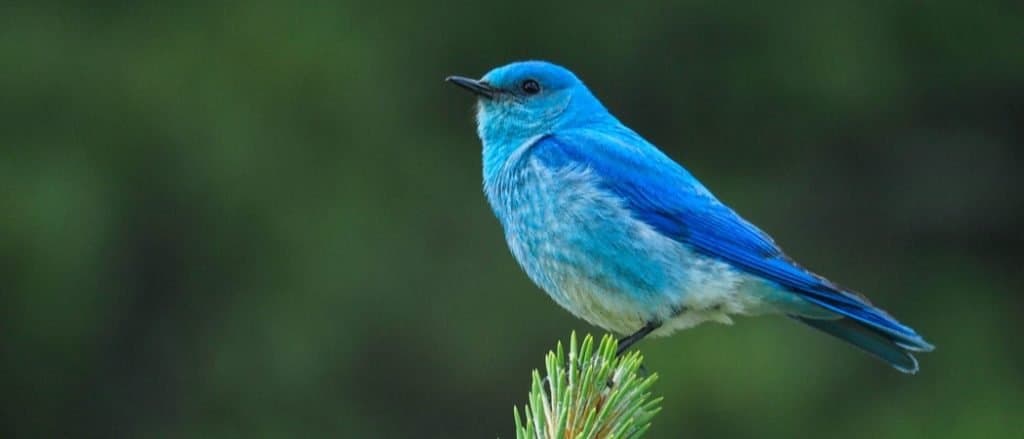
Birders can see large flocks of mountain bluebirds in the spring at Seedskadee National Wildlife Refuge.
©MTKhaled mahmud/Shutterstock.com
Common birds at the Seedskadee National Wildlife Refuge include:
- Sage thrasher
- Mountain bluebird
- Canada goose
- Cinnamon teal
- Common goldeneye
- Trumpeter swan
- Sagebrush sparrow
- Marsh wren
- Yellow-headed blackbird
- Greater sage-grouse
Devils Tower National Monument
Located in the Bear Lodge Mountains, Devils Tower National Monument is found in the Black Hills of northeastern Wyoming. Devils Tower is a pillar-like igneous rock formation with vertical, hexagonal columns that rises 867 feet above the surrounding forest. It is also a great place for birding. The park has recorded more than 160 species of birds. One of the best places in the park to see birds is along the Belle Fourche River or the ponderosa pine forest beside Devils Tower. Prairie falcons also nest on the rock columns of Devils Tower. There are five hiking trails at the monument, and optimal viewing is during the spring and fall migration, specifically from April through May and September through October.
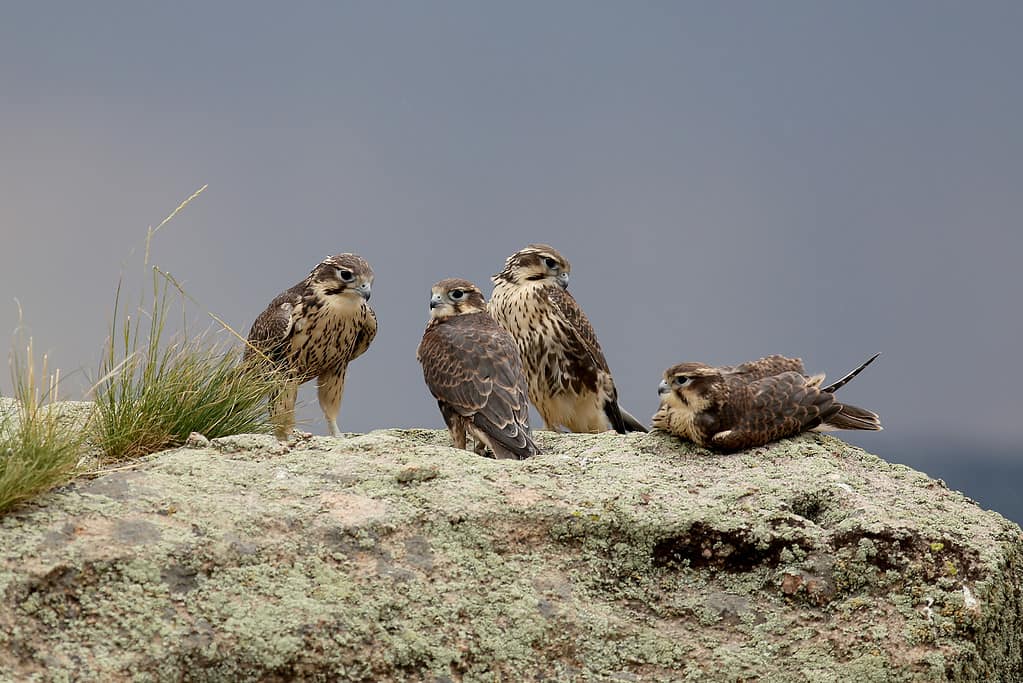
From early spring through summer, prairie falcons nest on the rock columns of Devils Tower.
©dbdurden/iStock via Getty Images
Common birds seen at Devils Tower National Monument include:
- Canada goose
- Bald eagle
- Red-tailed hawk
- Peregrine falcon
- Eastern screech owl
- Northern saw-whet owl
- Common poorwill
- Red-headed woodpecker
- Say’s Phoebe
- American goldfinch
Hutton National Wildlife Refuge
The 1,968-acre Hutton National Wildlife Refuge is approximately 10 miles southwest of Laramie. The refuge includes many lakes and wetlands in a dry grassland ecosystem surrounded by mountains, making it an essential stop for waterfowl and shorebirds during fall and spring migrations. There are also many breeding birds that use the wetlands, including gadwall, cinnamon teal, double-crested cormorants, and many others. There are trails, roads, and parking areas, but there is no on-site visitor center, as the refuge is part of a larger conservation complex managed from Colorado.

Black-crowned night herons use the Hutton National Wildlife Refuge during fall and spring migrations.
©Nycticorax nycticorax/Shutterstock.com
Common birds seen at the Hutton National Wildlife Refuge include:
- Canvasback
- Redhead
- Ferruginous hawk
- Golden eagle
- Black-crowned night heron
- White-faced ibis
- Forster’s tern
- Pied-billed grebe
- Northern harrier
- Eared grebe
Wyoming Hereford Ranch
The Wyoming Hereford Ranch is a private ranch on the east side of Cheyenne. Ranch owners welcome birders to their property at any time of the year. Audubon Wyoming has designated the ranch as an Important Bird Area, and the site is a favorite with local birders. Cottonwoods along Crow Creek attract many migrants, and two reservoirs on the property are magnets for nesting ducks, shorebirds, and wading birds. The ranch has an impressive species list of more than 270 birds. The most popular time for bird-watching visits is from fall through spring.
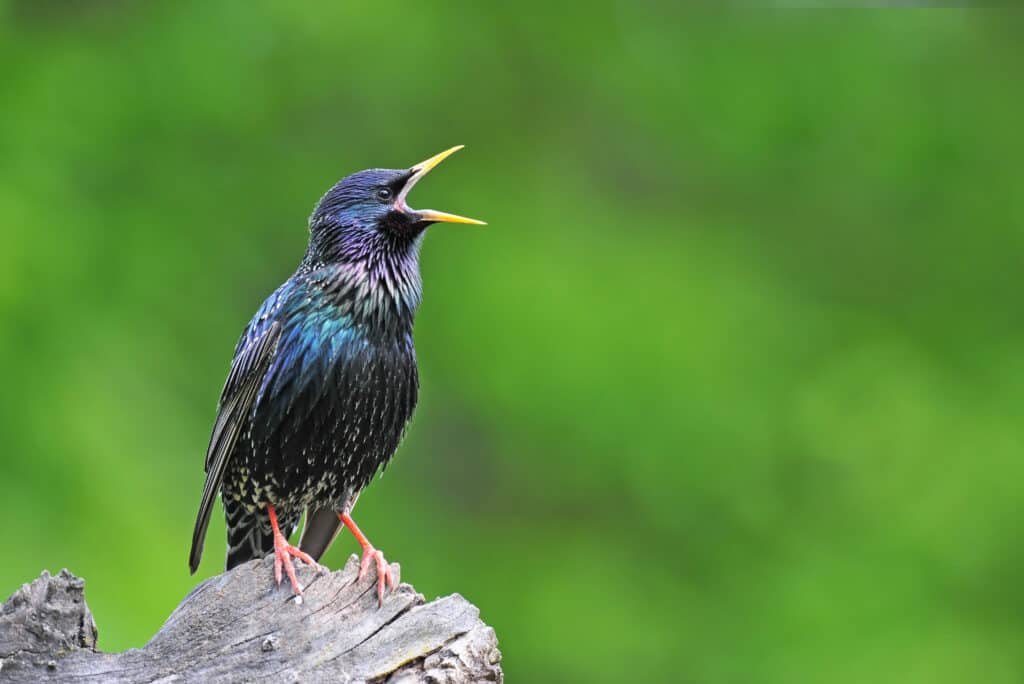
European starlings are among the most commonly recorded birds at the Wyoming Hereford Ranch.
©Soru Epotok/Shutterstock.com
Common birds seen at the Wyoming Hereford Ranch include:
- European starling
- Canada goose
- Sandhill crane
- Red-winged blackbird
- Cliff swallow
- Horned lark
- Common grackle
- Barn swallow
- Chipping sparrow
- California gull
The destinations on our list are some of Wyoming’s best bird-watching spots, but other popular locations include Edness Kimball Wilkins State Park, Keyhole State Park, Laramie River Greenbelt Trail, Lions Park, Saratoga Lake, and Storer Wetlands. There are also many excellent places for birding at other state parks throughout Wyoming.