
Quick Take
- A visually calm elephant at a tourist camp may actually be the biggest red flag of all, and understanding why that matters could change how you book. Spot the red flags →
- Elephant tourism in Africa and Asia evolved under completely different conditions, and that history changes what 'ethical' actually means in each place. See Africa vs. Asia explained →
- Even sanctuaries with the best intentions can cause serious harm to elephants, and the reason is less obvious than you'd expect. Understand the hidden harm →
- There's a specific checklist that separates genuinely ethical operations from ones that just use the right language, and most tourists never think to ask about it. Get the full checklist →
- Your tourism dollars can either fund elephant conservation or drive wild calf capture. Which outcome they support comes down to one question you're probably not asking. See where your money goes →
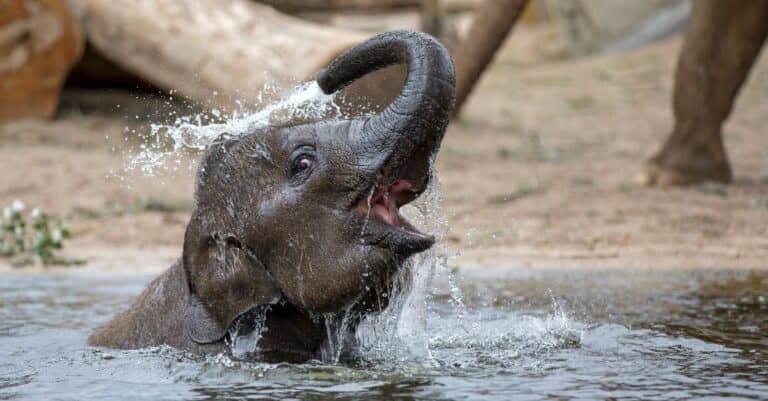
In the past, people enjoyed watching elephants perform tricks in circuses. Today, such entertainment has largely fallen out of favor. Well-run zoos try to mimic the elephants’ natural habitat, but this is difficult to do with a species that’s accustomed to roaming vast grasslands. Some sanctuaries in the U.S. and abroad provide places where people can observe elephants moving, feeding, resting, and interacting naturally with their environment and herd. An ethical elephant experience does not focus solely on human entertainment; it leaves you with the sense that your visit supported their well-being. This article shares a handful of features to look for when searching for an ethical elephant tourism experience.
Thoughts From an Experienced Tour Operator
Alex Andreichuk is CEO of Altezza Travel, a leading wildlife and mountain climbing tour operator in Tanzania and one of the few B-Corp certified travel operators in the country. Alex’s expertise in wildlife tourism comes from years of building an ethical tour operation and promoting sustainable wildlife encounters.

Alex clued us in on some general differences between the sourcing of animals for elephant experiences in Africa and Asia that tourists should be aware of:
“Elephant tourism evolved very differently across Africa and Asia. In Southeast Asia, elephants were initially used for logging, and since the practice was banned, the animals were transferred into the tourism industry. Countries like Tanzania built tourism around wild populations, where elephants remain completely free. Personally, to me the difference between captivity and animal freedom is what defines ethical elephant tourism.”
Of course, this is not to say that all wild elephant experiences in Africa are handled in a respectful and ethical way, nor that all in Asia are not. It is just a reflection on some broad tendencies. Environment plays into it as well. In Africa, elephants range across broad savannas where they can be observed with binoculars from a distance. Asia tends to be heavily forested, and elephants live in a more concealed environment, which inspires smaller guided tours or viewing animals in captivity.
Why Captive Elephant Experiences Are So Problematic
There are certainly situations where it is best for animals to remain in captivity, such as when they are sick or injured and cannot be reintroduced to the wild safely. And captivity can in some situations mean being in a rather large sanctuary, with boundaries for the animals’ protection.
However, Alex comments, “Even if the captive elephants are managed with the best intentions, they’re still extremely limited in their ability to practice what they were built for. In nature, they travel dozens of kilometers and live in complex societies that make collective and individual decisions. In captivity, none of that is possible. Once the choices of their freedom are removed, what remains is a stressed, physically and psychologically weak animal.”
Worst Case Scenarios
Some situations are more extreme than uninformed tourists realize. Not every tourist elephant represents an animal nobly rescued from the logging industry, for example. “On the surface,” Alex warns, “close-contact elephant encounters look like friendly interactions. But viewing on the surface a calm animal is not considering the damage that’s done through brutal capturing practices and months of brutal training to tame their natural behavior and ensure that they no longer have the spirit to resist. What’s even worse is that these interactions drive the demand for future capture of wild calves.”
“The red flags are relatively easy to identify once you’ve considered what a visually calm and compliant elephant actually means,” he continues. “Any tricks, rides, or posing for selfies are signals that the experience relies on control instead of welfare. If you see visible wounds and repetitive swaying, it’s your immediate sign to leave and report the establishment to the national park authorities or wildlife NGOs. Through years of working with wildlife conservation initiatives, we’ve observed that healthy elephants rarely seek out human contact, so even just the constant forced human interaction is a red flag. Tourists should really be asking themselves whether their close-contact encounter with an elephant is worth it.”
Close-contact elephant encounters look like friendly interactions. But viewing on the surface a calm animal is not considering the damage that’s done through brutal capturing practices and months of brutal training to tame their natural behavior and ensure that they no longer have the spirit to resist.
Alex Andreichuk, CEO of Altezza Travel, a leading wildlife and mountain climbing tour operator in Tanzania
What Ethical Safaris Look Like in Africa
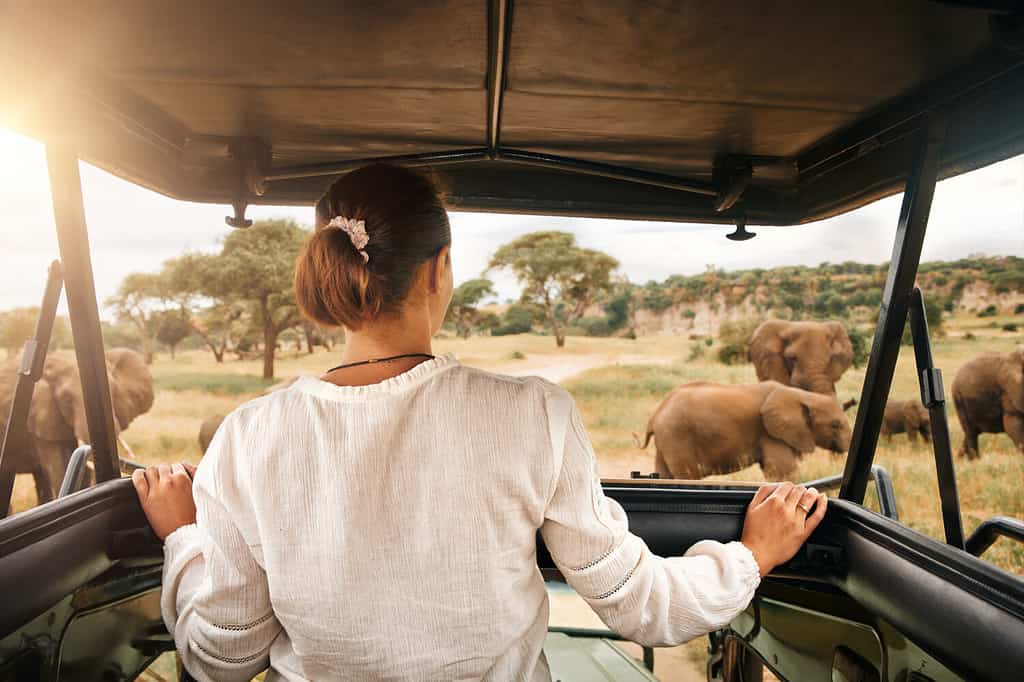
An ethical elephant tour experience is about observation, not direct interaction with the animals.
©soft_light/Shutterstock.com
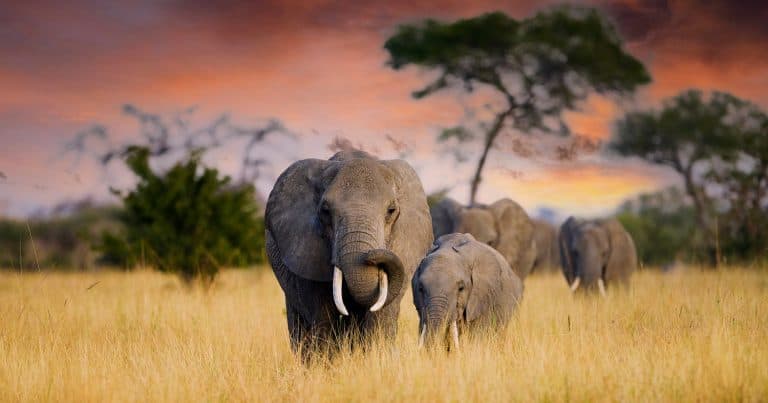
In Africa, ethical elephant tourism usually takes place in the wild rather than in managed facilities. Visitors observe African elephants on guided safaris within protected reserves. Visitors remain inside vehicles while trained guides follow established routes that minimize disruption. The goal is to observe natural behavior without influencing it, whether elephants are feeding, traveling, or interacting with their herd. Responsible guides keep a respectful distance and avoid any action that would alter the animals’ movement or behavior.
How Ethical Tourism Supports Conservation
When managed responsibly, elephant tourism can play a direct role in conservation. Visitor fees help fund habitat protection, veterinary care, anti-poaching patrols, and research. Sanctuaries rely on this support to provide food, medical treatment, and safe living conditions for elephants that cannot return to the wild. In many regions, tourism also supports local communities through jobs in guiding, hospitality, and conservation work. When people benefit economically from protecting elephants, there is less incentive to harm them or convert their habitat to other uses.
How to Spot an Ethical Experience
Not every place that uses the word sanctuary follows ethical practices, so it is important to look beyond labels and focus on what actually happens. A responsible operation will make it clear that elephant welfare comes first and that visitor interaction is limited or nonexistent. You can usually recognize a well-run experience by a few consistent signs:
- No riding, bathing, or direct contact with elephants
- No performances, tricks, or forced interactions
- Small groups and quiet viewing conditions
- Large habitats that allow natural movement
- Clear conservation goals and transparency about elephant care
Red flags tend to point in the opposite direction:
- Close-contact experiences promoted as harmless or fun
- Elephants performing, posing, or interacting on command
- Crowded tours with constant visitor turnover
- Little information about how elephants are trained or managed
A Different Kind of Experience
Ethical elephant tourism replaces excitement with respect. Instead of close encounters, visitors gain the chance to watch elephants behave naturally, without pressure or control. That shift may feel subtle at first, but it changes the entire experience. Rather than asking what the elephant can do for you, ethical tourism asks whether your presence harms or supports its well-being, and that question is what separates responsible tourism from exploitation.