
Quick Take
- The Manx Loaghtan sheep is a rare, multi-horned sheep from the Isle of Man.
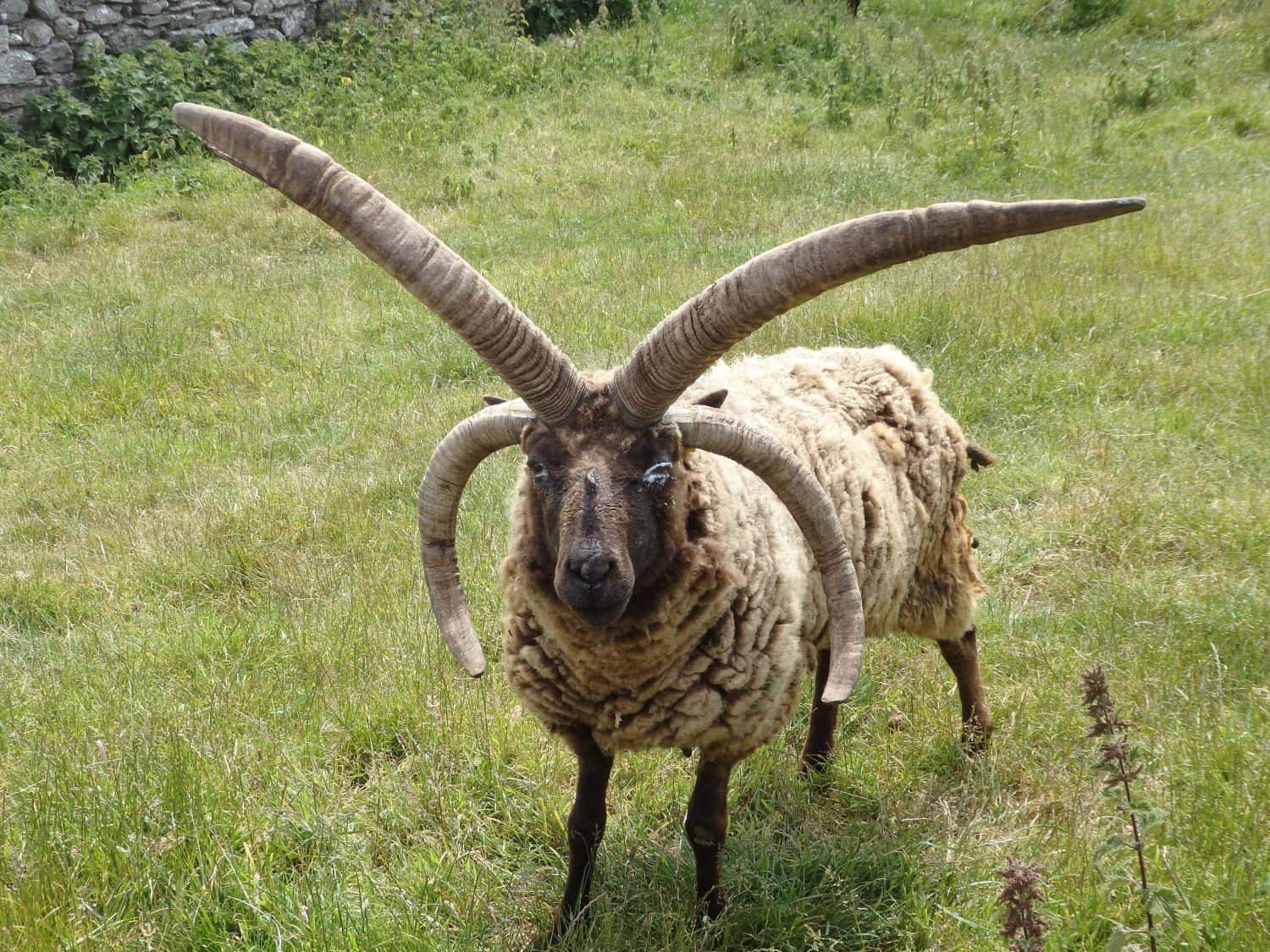
- Most rams grow four horns (and occasionally six) due to a mutation in the HOXD1 gene that allows horn buds to split during development.
- The breed nearly went extinct in the 1950s, when fewer than 50 sheep remained.
- Manx Loagthans are valued for conservation grazing, lean meat, and brown wool.
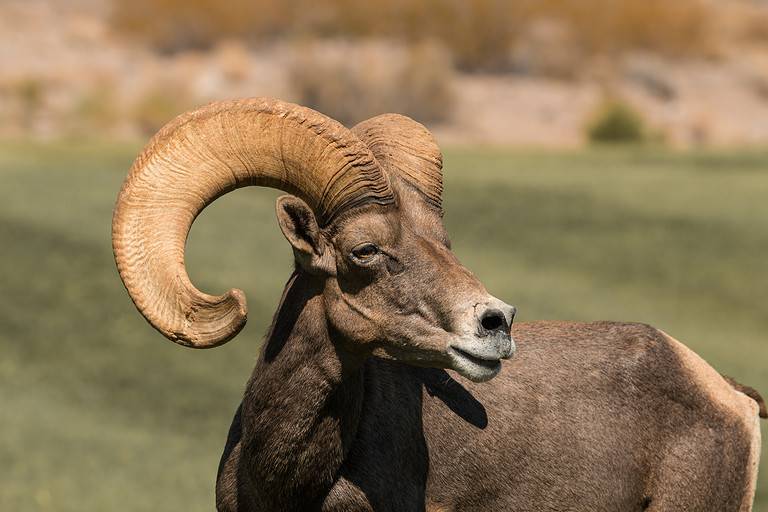
Spotting a Manx Loaghtan on the mist-shrouded cliffs of the Isle of Man feels like observing a story from ancient mythology unfolding. Unlike the uniform white sheep we see today, these prehistoric, fantasy-like creatures sport a deep, earthy wool and a striking crown of four (and sometimes even six) dark, curving horns.
As a “primitive” breed, these striking sheep belong to a rare lineage of northern short-tailed sheep that once roamed across Europe, carrying a genetic blueprint that has remained largely unchanged since the Bronze Age. For centuries, these hardy survivors of Viking voyages remained a local secret. Today, the Manx Loaghtan has moved from the island hills into the world of high-tech science. Geneticists in Switzerland and France have finally mapped the DNA behind the sheep’s most famous trait: its spectacular multiple horns.
The Legendary Sheep of the Isle of Man
The Manx Loaghtan sheep is a living link to the Isle of Man’s Gaelic roots. Its name comes from the words lugh (mouse) and dhoan (brown), which describe its signature “moorit” fleece. This mouse-brown wool was once a status symbol for 17th-century nobility. However, the breed nearly went extinct during the Industrial Revolution as the market shifted toward plain white wool.
The term “moorit” is used in northern sheep breeds to describe a brown color, though its exact origin is uncertain. The sheep’s unique palette spans a rich spectrum of color, shifting from deep, dark cinnamon to soft, creamy fawn. This natural camouflage hides the animals within the island’s rugged landscape. The wool also reacts to the changing seasons. During the summer, the sun often bleaches the tips into a weathered “mouse-brown” gradient, which is where the sheep gets its name.
Unlike many modern breeds that struggle with wool-blindness, the Manx Loaghtan keeps its face and legs clear of excess fleece. This feature helps preserve the sheep’s natural agility, as the lack of heavy leg wool prevents them from being weighed down by heavy, waterlogged fibers. This crucial adaptation protects them from becoming trapped in the boggy, rugged terrain of their island home.
Designed by Nature, Not Industry
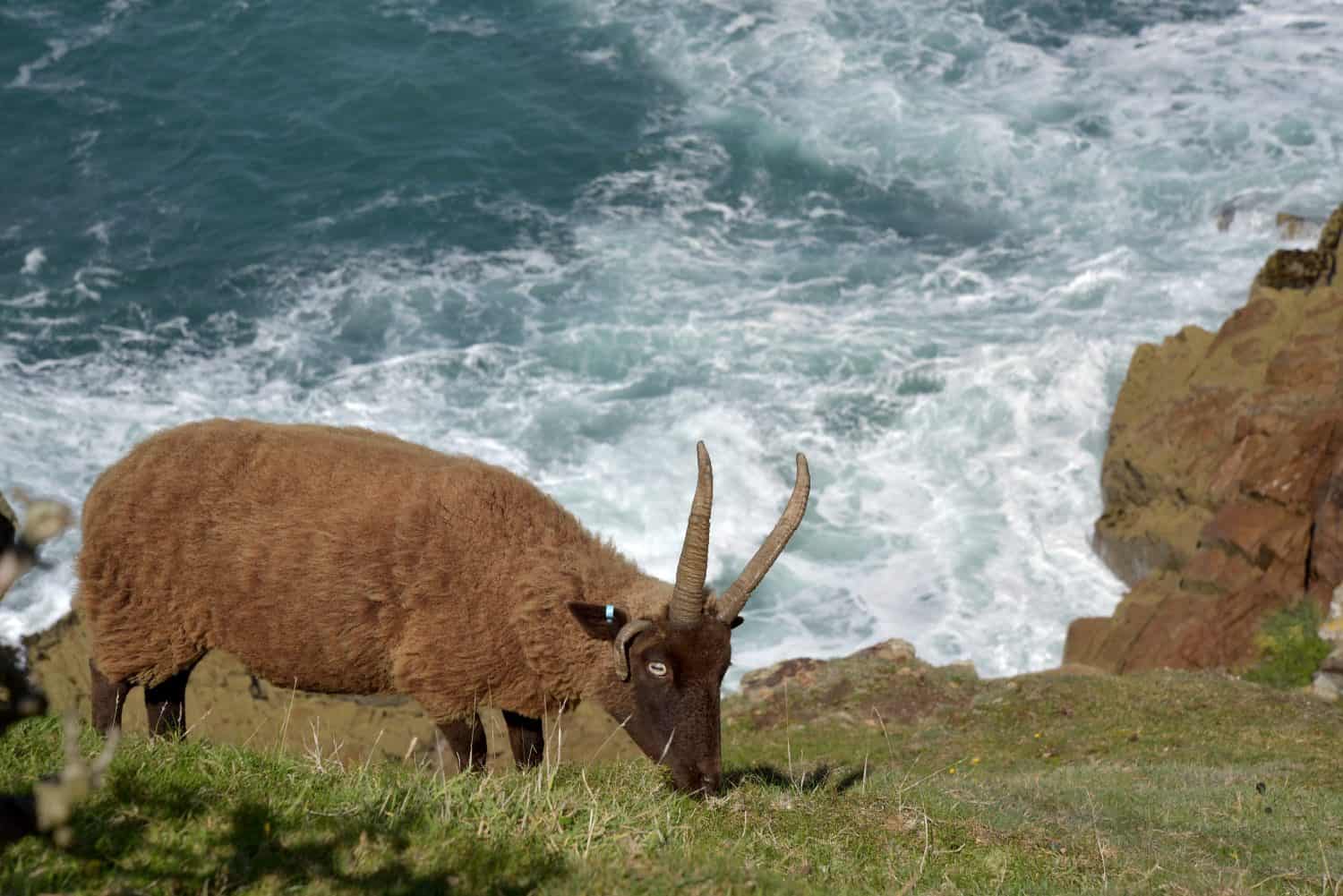
The Manx Loaghtan is a tough sheep that evolved along the cliffs of the Isle of Man.
©DavidYoung/Shutterstock.com
Unlike heavy modern sheep bred only for meat, the Manx Loaghtan is a mountain athlete. Its compact frame — with ewes weighing around 88 pounds and rams 120 pounds — allows it to nimbly navigate crumbly cliffs that would be too dangerous for a 220-pound commercial sheep. It is also born with a short, fluke-shaped tail that does not require docking, making it a hardier, more animal-friendly breed.
Every part of the Loaghtan is essentially a built-in survival kit for surviving the damp, challenging environment near the Irish Sea. Its wide-set eyes provide a nearly 360-degree view to spot predators, while its rock-hard hooves are naturally resistant to the foot infections that plague most livestock in wet weather. To stay dry, its wool is packed with lanolin, creating a waterproof shield that makes rain bead off its back like water off a duck.
The Genetics of the Four-Horned Crown
For centuries, four-horned sheep were seen as mythical oddities. It wasn’t until 2021 that researchers in France and Switzerland finally cracked their genetic code. The secret lies in a gene called HOXD1. This is often referred to as an “architect gene” — one of a group of 39 genes that decide where limbs, organs, and skull boundaries should go in a developing embryo.
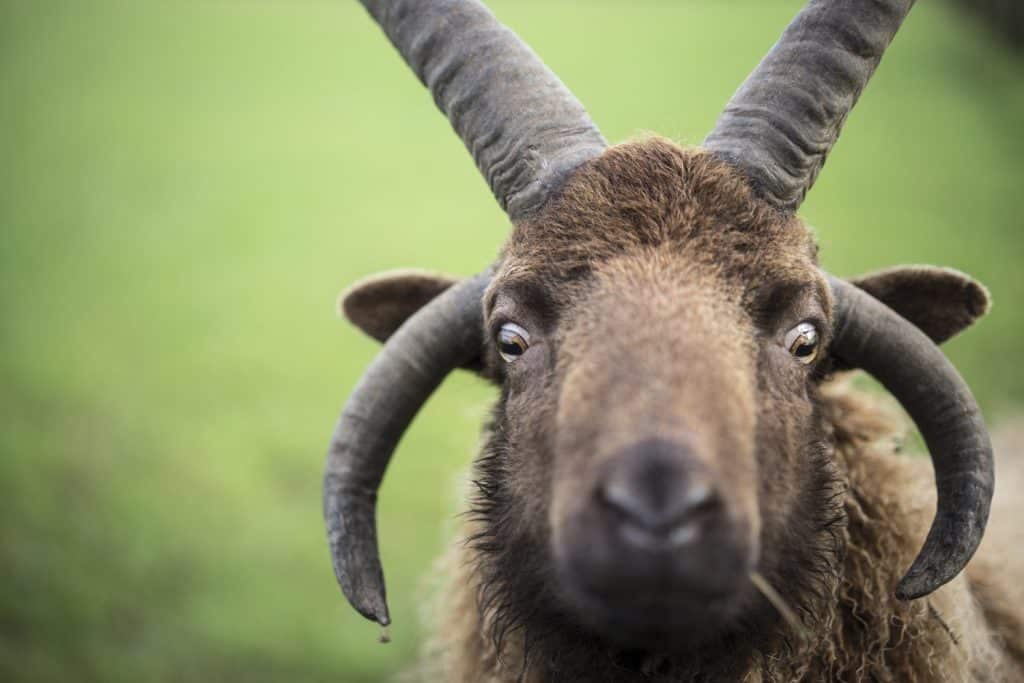
The Manx Loaghtan sheep nearly went extinct by the 1950s.
©robbinsbox/Shutterstock.com
In a standard sheep, the HOXD1 gene marks a small, precise spot for horn growth. However, in the Manx Loaghtan, a mutation lowers the protein that this gene produces, allowing the horn-growing zone on the skull to expand. Without those boundaries, the original horn buds split apart during development, allowing each piece to grow into its own independent horn.
While lambs are not born with full horns, the blueprint is set in the womb. The four distinct “buds” can often be felt under a newborn’s skin. As the lamb reaches puberty, these buds pull calcium from its diet to build its iconic curving headgear.
Forged by Vikings, Saved by a Farmer
The ancestors of the Manx Loaghtan likely arrived on the Isle of Man with Bronze Age settlers, long before the island’s written history began. For millennia, the harsh, salty climate of the Irish Sea shaped these animals into a “short-tailed” breed. This hardy group of primitive sheep thrives in conditions where modern breeds cannot survive. Viking settlers may have brought their own livestock from Scandinavia, which could have influenced the development of the native Manx Loaghtan breed.
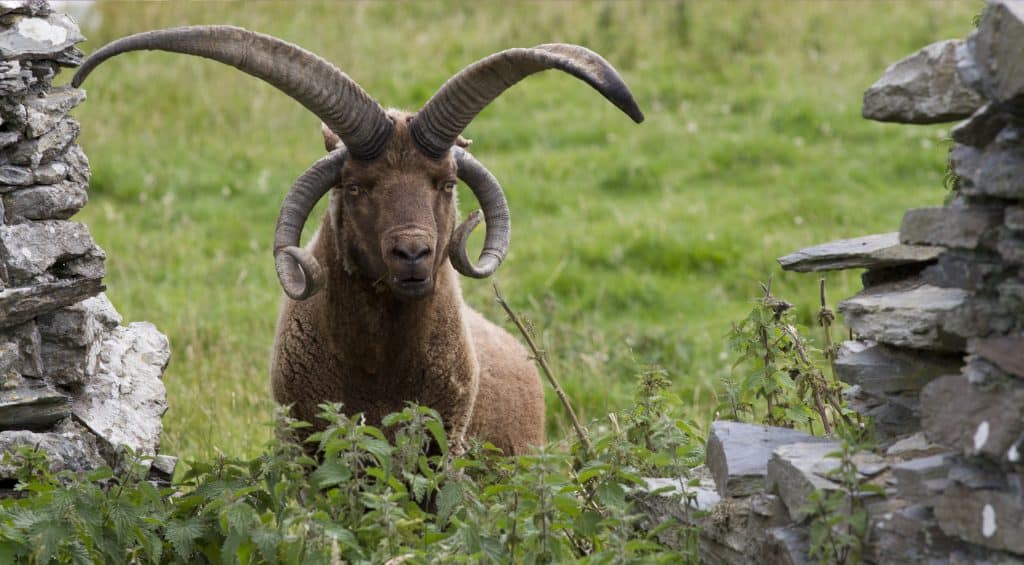
Rams can grow up to six horns, though most have four.
©Travelling Britain/ CC BY-SA 4.0 / Wikimedia Commons – Original / License
However, the Industrial Revolution nearly ended this ancient line. Factories demanded uniform white wool for easy dyeing, making the Loaghtan’s brownish fleece a commercial liability. By the 1950s, the population plummeted to fewer than 50 sheep. The Manx Loaghtan was saved only by the stubbornness of a local farmer, Robert Quirk, who kept the last purebred flock on his farm. Today, the Rare Breeds Survival Trust recognizes the Manx Loaghtan as a conservation success story. The breed now helps restore wildflower habitats across the Isle of Man and Jersey, proving that ancient resilience still has a vital place in the 21st century.
Proof That Preservation Pays Off
The Manx Loaghtan is a high-performance breed with a unique personality to match its spectacular horns. These sheep are more like deer than livestock and are known for clearing stone walls with ease. Unlike standard sheep that simply mow grass, Loaghtans are natural “landscapers” that seek out herbs and wildflowers. Their independent spirit makes the ewes incredibly self-sufficient; they often raise lambs for over a decade with almost no human help.
In addition to their natural independence, Manx Loaghtan sheep play an important ecological role. Their unique grazing habits allow them to target coarse grasses, scrub, and invasive plants rather than stripping the entire pasture. This helps preserve the diversity of coastal grasslands. Conservationists frequently deploy these sheep for specialized grazing projects because their selective appetite promotes wildflower growth and keeps aggressive bracken from smothering fragile environments. Their relatively lightweight bodies also prevent the soil compaction often caused by heavier commercial breeds, helping to protect delicate cliffside ecosystems from erosion.
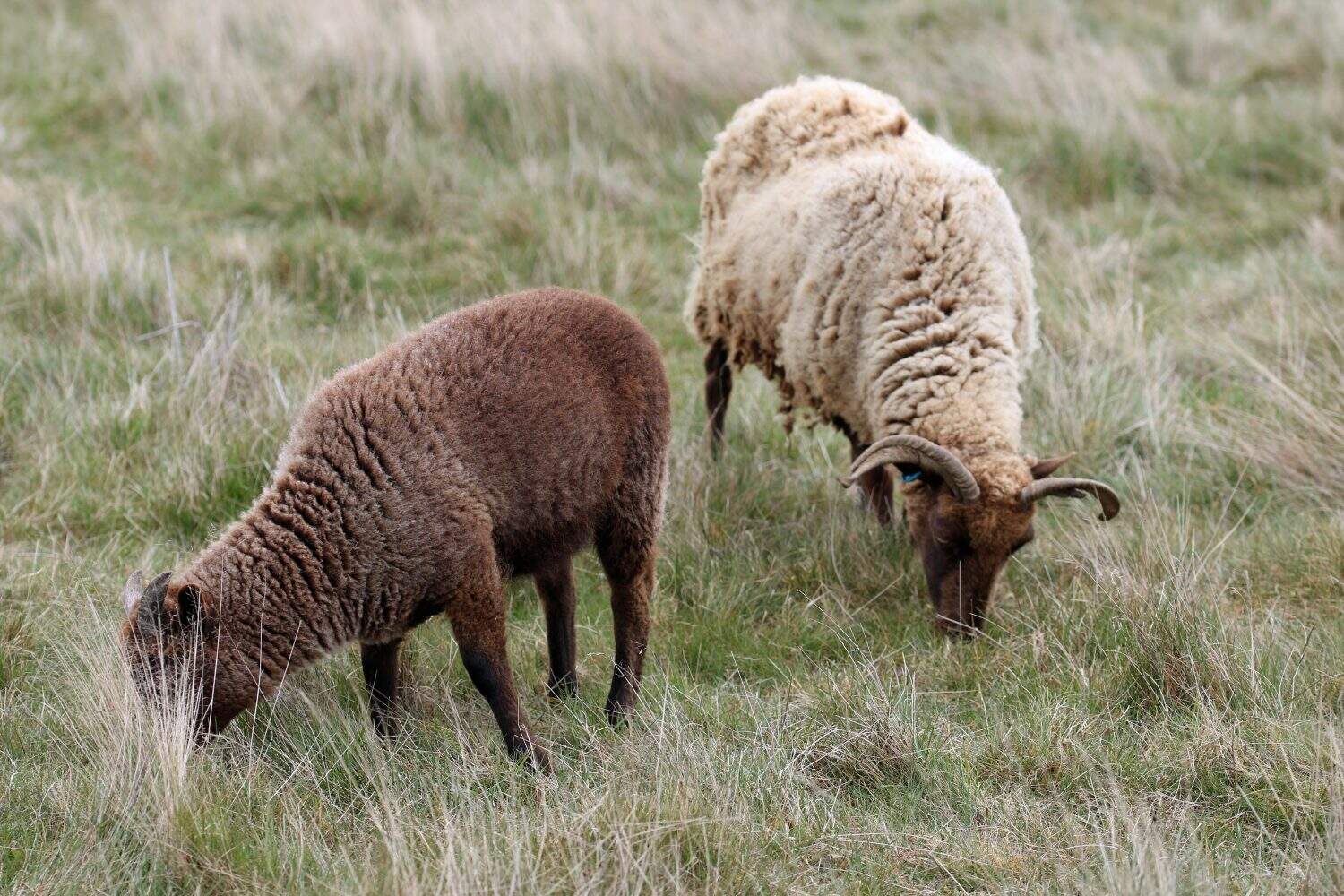
Manx Loaghtan lambs are often dark brown and lighten as they mature.
©JohnatAPW/Shutterstock.com
This wild lifestyle also creates a world-class culinary experience. Because they grow slowly on a diet of wild flora, their meat is lean, sweet, and has a gamey flavor. It is also lower in cholesterol than commercial lamb. Its quality is so distinct that, in 2008, it was granted Protected Designation of Origin status, putting it in the same elite bracket as Champagne or Parma ham.
Manx Loaghtan wool is known as “weaver’s gold.” The sheep’s mouse-brown fleece was a status symbol as far back as 1650, when the Earl of Derby wore a suit of it to show his wealth. Artisans prize the wool’s rich lanolin and natural spring, valuing its durability and beautiful range of earthy colors.