
Nature has a way of surprising us. Some of its wildest wonders come not from familiar species, but from hybrids—unusual creatures born when two different animals mate, either in the wild or with human intervention. We’ve all heard of mules and a lot of people know about ligers, but there are even stranger pairings out there. And thanks to genetic engineering, the possibilities for unusual animal mixtures are now stretching far beyond what the natural world ever intended.
All About Hybridization
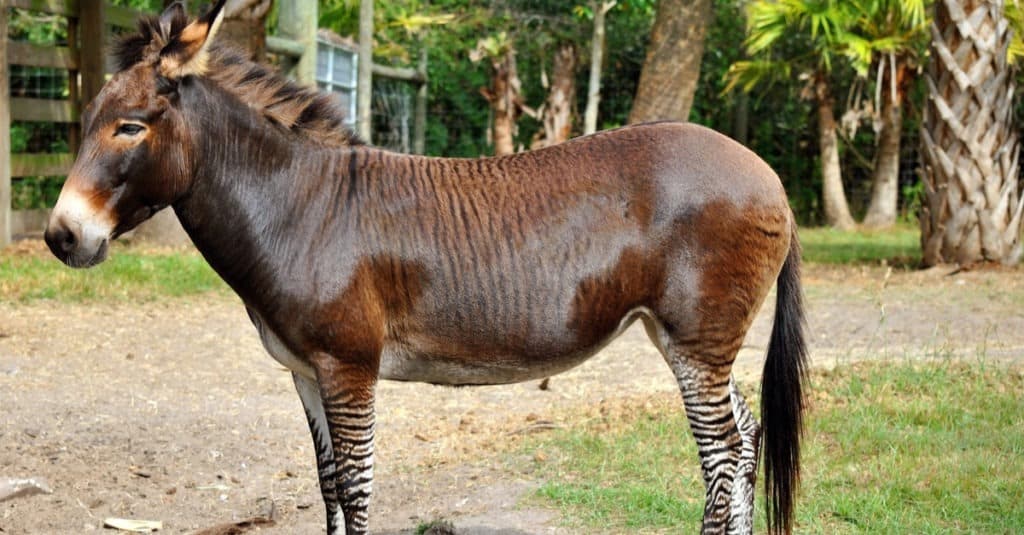
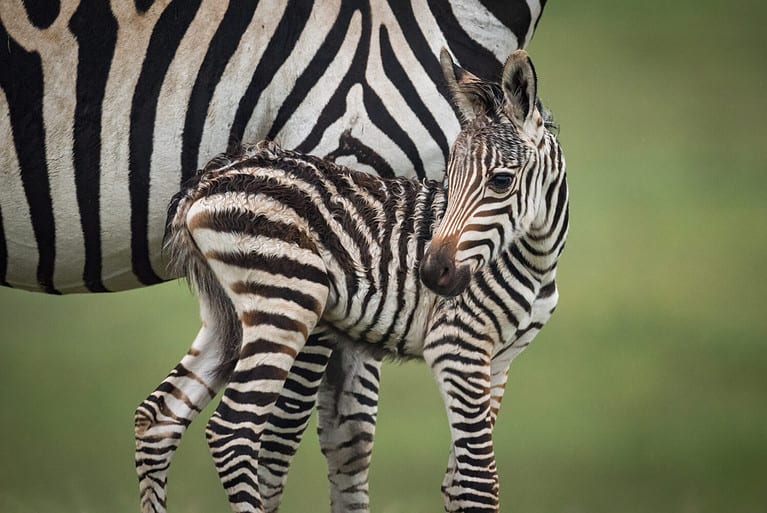
This hybrid is a zebroid; a term for any zebra hybrid with another equine (horse, donkey, or pony, for example).
©iStock.com/PeterEtchells
A hybrid is an animal or plant that comes from parents of different species, breeds, or varieties. For example, a mule is a hybrid of a horse and a donkey. Most animal hybrids are only viable if the parents are of closely related species. Hybrids have a mix of traits from both parents. Many fish, bird, and plant hybrids can reproduce, but mammal hybrids are frequently sterile. To get another mule, for example, you have to breed a horse and a donkey again.
People make hybrids to combine useful or interesting traits from different animals or plants, like strength, hardiness, appearance, improved production of fruit, milk, or meat, or disease resistance. Hybrids can be useful in farming and in scientific research to improve our understanding of genetics. And, of course, there is simply the curiosity factor. Can we do it? Should we do it?
Zonkey
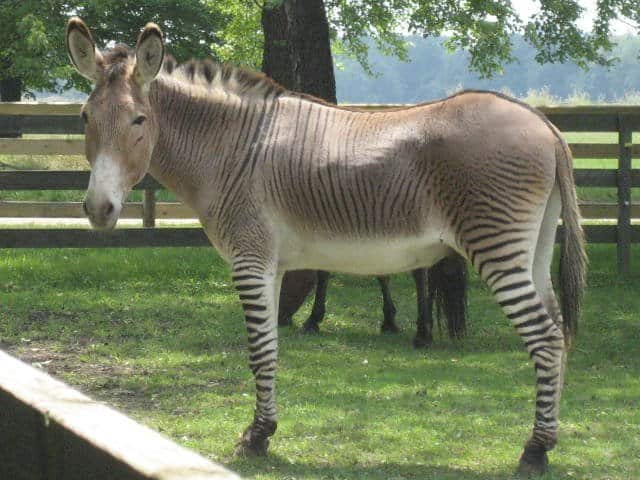
Zonkeys generally have stripes, but on some animals, they are more pronounced.
©Ruth Boraggina / Creative Commons – Original
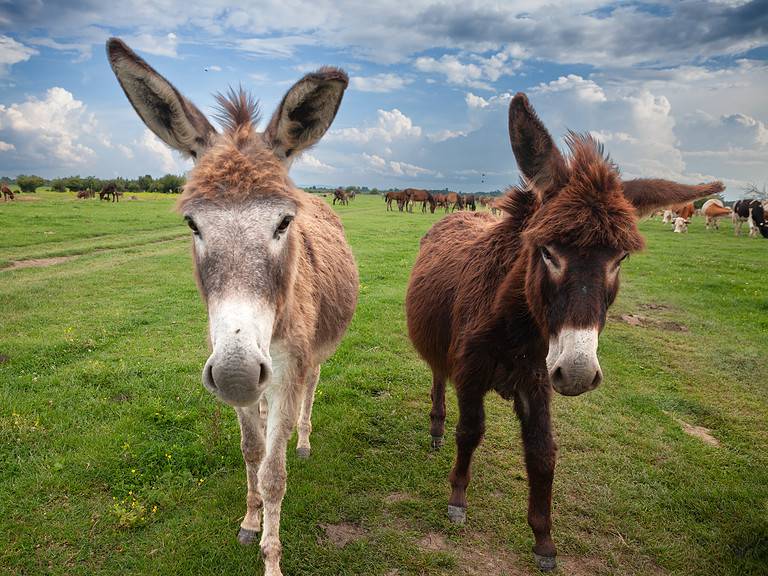
There are a lot of successful mixtures of zebras with horses, donkeys, or ponies. As a broad category, these are called zebroids. A zonkey is specifically a zebra-donkey hybrid. Their coats are a patchwork of zebra stripes overlaying a donkey’s solid body, often producing striped legs or faint banding on a tan or gray torso. Zonkeys are almost always sterile, the result of mismatched chromosomes, and are usually born in captivity.
However, in southern Africa, feral donkeys have occasionally bred with wild zebras, producing natural zonkeys. Their appeal isn’t new: during colonial times, people experimented with breeding zebras with donkeys and horses to see if they could create a strong, disease-resistant working animal suited to Africa’s climate. These efforts never produced a replacement for horses or donkeys, but the hybrids remain a curiosity in animal parks today.
Liger
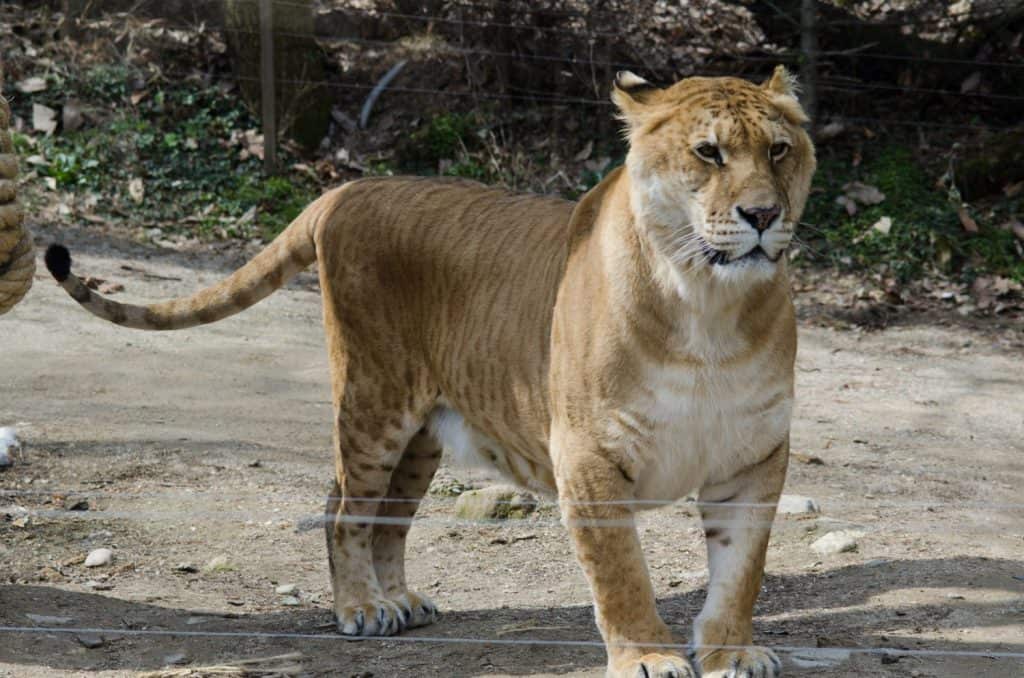
Ligers grow extremely large, often larger than either of their parent species.
©WuTang.Photographer/Shutterstock.com
A liger is the hybrid offspring of a male lion (Panthera leo) and a female tiger (Panthera tigris). Ligers are known for their impressive size—often growing larger than their parent species and becoming the largest big cats. They typically have the light brown color of a lion with faint stripes from their mother’s side of the family. Some male ligers have sparse manes, and others have none at all. Ligers only occur in captivity because lions and tigers do not share the same habitats or social structures in the wild. Their personalities can be unpredictable, blending the social nature of lions with some solitary instincts of tigers. Male ligers are steril,e but some females have reproduced.
Tigon
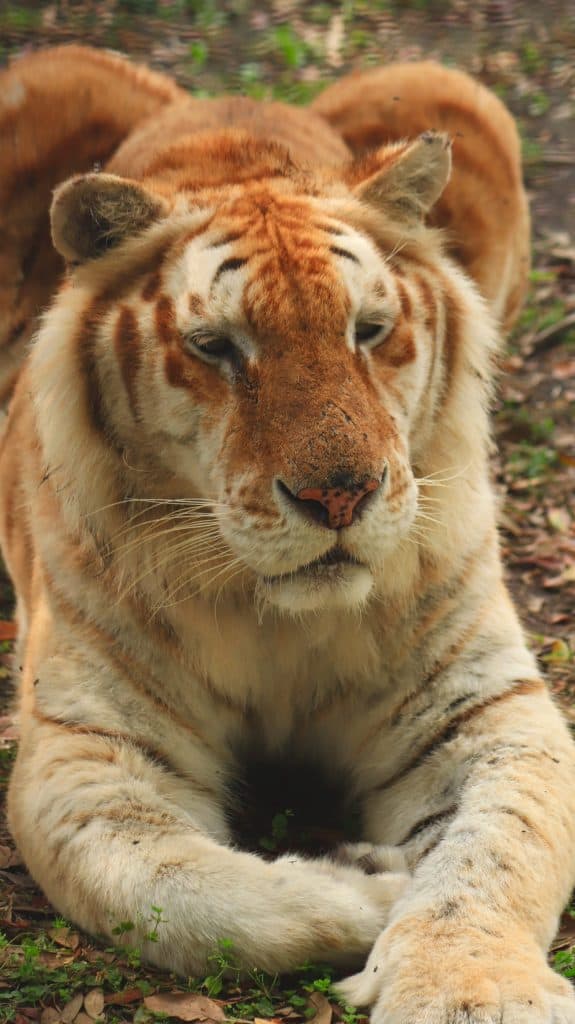
Tiger genes produce more visible characteristics in a tigon than in a liger.
©double2A/Shutterstock.com
A tigon results from the mating of a male tiger and a female lion. Tigons tend to be smaller than ligers and often smaller than either parent. Their appearance includes a combination of lion-like qualities mixed with distinct tiger stripes. If they grow a mane at all, it is smaller than that of a lion or a liger. Their temperament also shows a blend of both species’ traits. Like ligers, tigons are almost exclusively born in zoos and wildlife parks because wild lions and tigers do not meet naturally, and most tigons are also sterile.
Beefalo
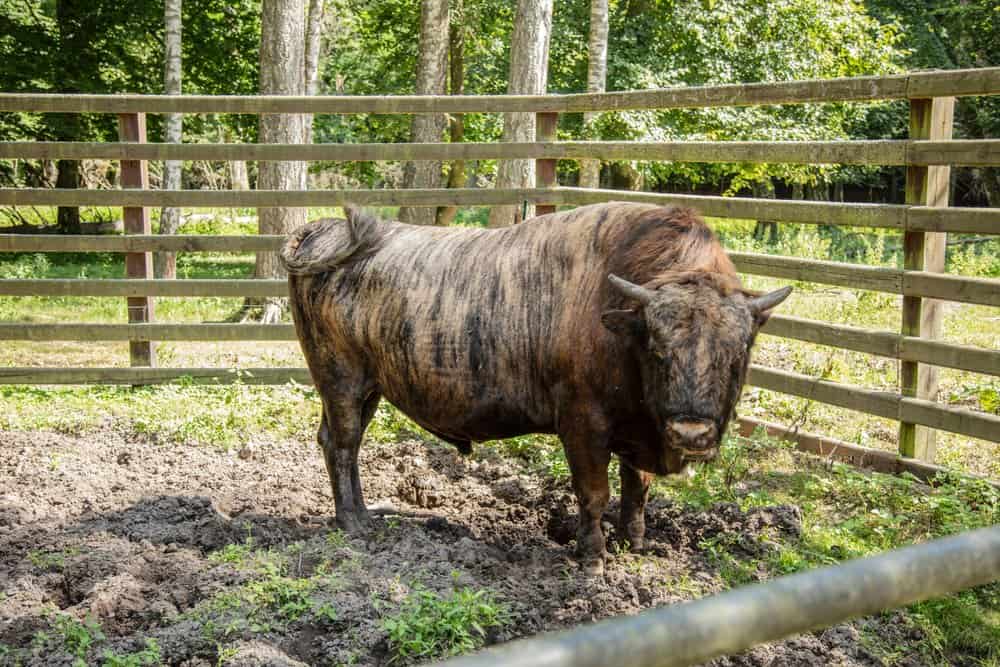
Hybridizing domestic cattle with American bison can produce healthier meat than beef.
©Maslowski Marcin/Shutterstock.com
Beefalo — crosses between domestic cattle and American bison — were created with a purpose: better beef. They combine the hardiness and grazing efficiency of bison with the docility of cattle. Unlike many hybrids, beefalo are fertile, making them practical for agriculture. Their meat is lower in cholesterol and fat than conventional beef, and the animals tolerate harsh weather and rangeland grazing better than cattle alone. Not all ranchers embrace them, though. Some worry about the genetic dilution of wild bison, while others see them as a forward-looking solution to healthier, more sustainable livestock.
Coywolf
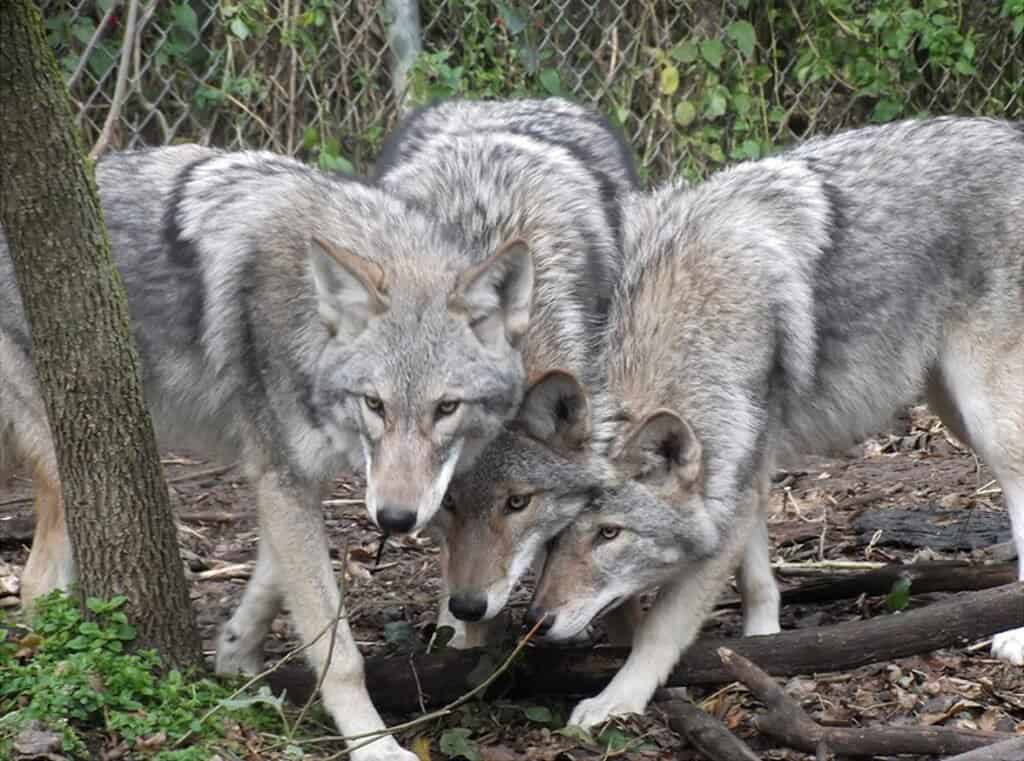
Coywolves are numerically significant predators in Vermont and some other parts of New England.
©L. David Mech, Bruce W. Christensen, Cheryl S. Asa , Margaret Callahan, Julie K. Young / Creative Commons – Original / License
In North America, coyotes (Canis latrans) and wolves (Canis lupus) have interbred to produce the coywolf. These hybrids combine the wolf’s size and pack instincts with the coyote’s adaptability and urban survival skills. Coywolves are fertile and have formed stable populations across the northeastern U.S. and Canada — unlike many hybrids, they’re not just one-off oddities but an evolving lineage. Coydogs, crosses between coyotes and domestic dogs, are rarer and often involve large breeds like huskies or German shepherds. Unlike coywolves, they don’t establish long-term populations. However, studies have identified domestic dog DNA in coywolves, meaning many of them are twice-hybridized.
Mule and Hinny
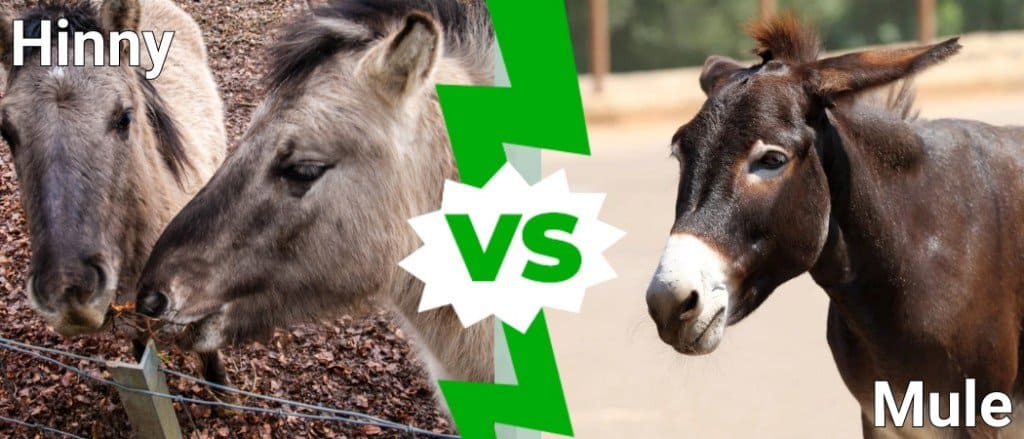
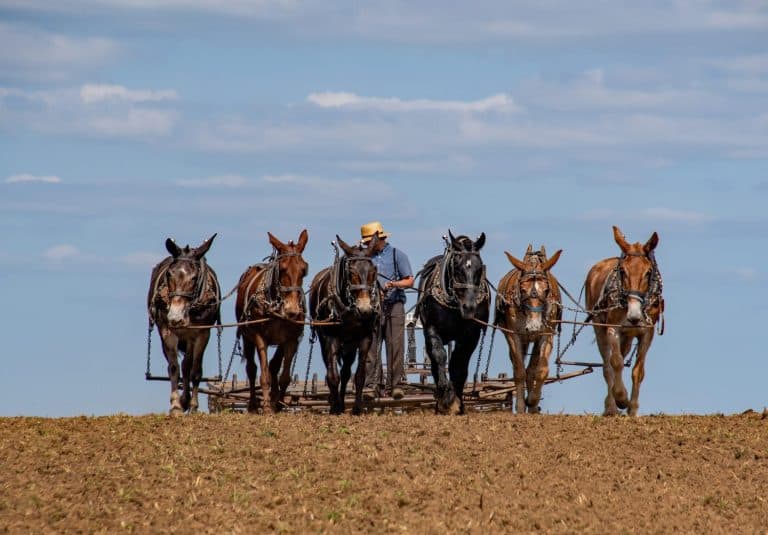
The mule (the offspring of a male donkey and female horse) may be the most famous hybrid of all, often called the “backbone of civilization.” Mules combine a donkey’s toughness and endurance with a horse’s size and strength, making them ideal for transport, plowing, and mountain travel. Hinnies — the reverse pairing — are much rarer. Both hybrids are sterile because horses and donkeys have different chromosome counts. Still, farmers have bred countless numbers of them throughout history because of their usefulness.
Geep or Shoat
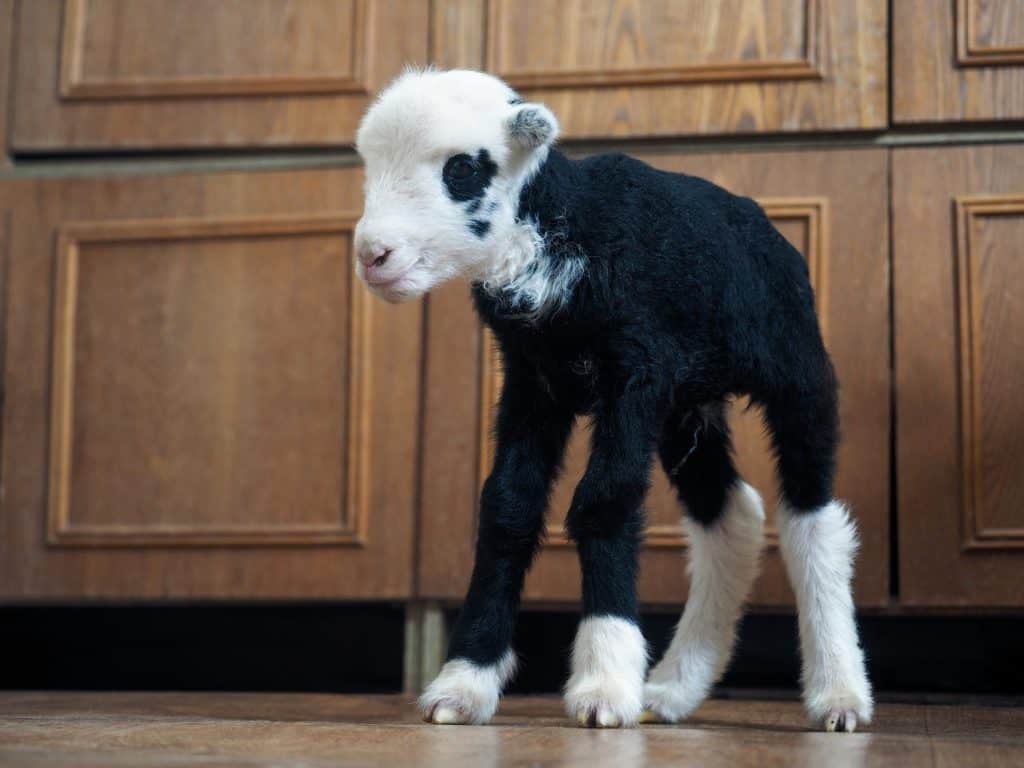
Hybrids of goats and sheep may have happened naturally earlier in history without being recognized as such.
©Irina Kozorog/Shutterstock.com
A goat–sheep hybrid, often nicknamed a “geep” (or less commonly a “shoat”), is one of the rarest barnyard oddities. Born from a goat (Capra aegagrus hircus) and a sheep (Ovis aries), geeps rarely survive long due to mismatched chromosomes. Those that do often display a strange blend of traits: a sheep’s woolly fleece covering a goat’s lean frame, or a goat’s face and horns paired with a sheep-like body. Most are sterile and fragile, appearing only in captivity or from accidental farm pairings. While goats and sheep have grazed side by side since ancient times, viable hybrids are a modern rarity that spark fascination whenever they appear.
Savannah Cat
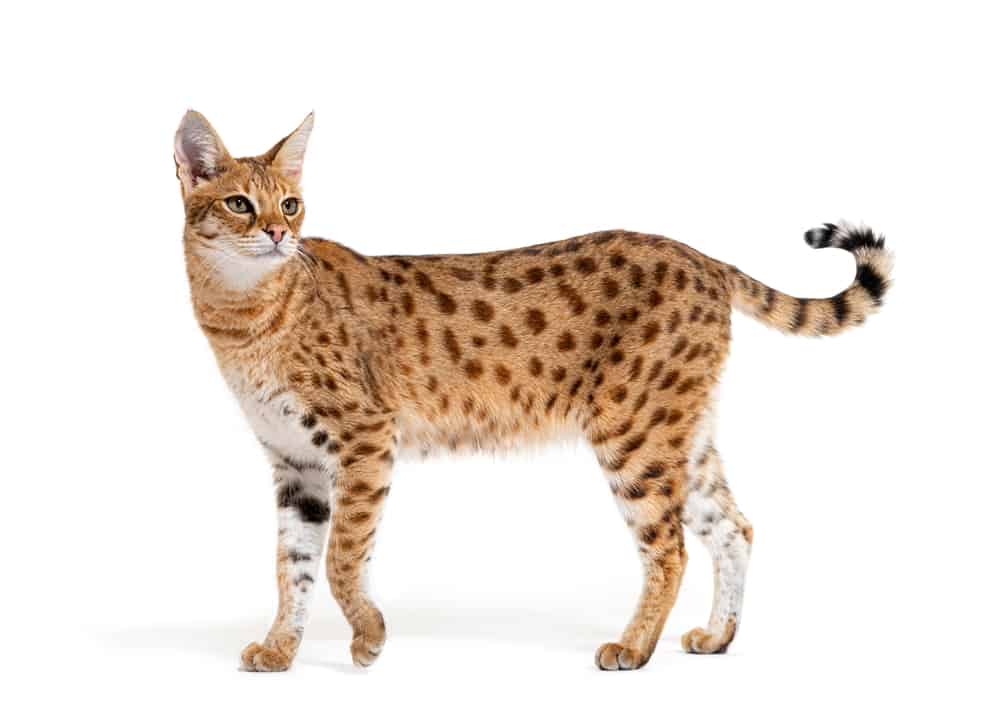
Even if you’re not a cat person, this elegant hybrid might tempt you to change your mind.
©Eric Isselee/Shutterstock.com
The Savannah cat, a cross between a domestic cat and an African serval (Leptailurus serval), is a striking mix of wild and tame. With their long legs, spotted coats, and tall ears, they look exotic but live as pets. Savannahs are active, intelligent, and highly social, bonding closely with their families. They were bred as designer pets for their unique appearance. However, their high energy and need for stimulation mean they aren’t for every household.
Leopon
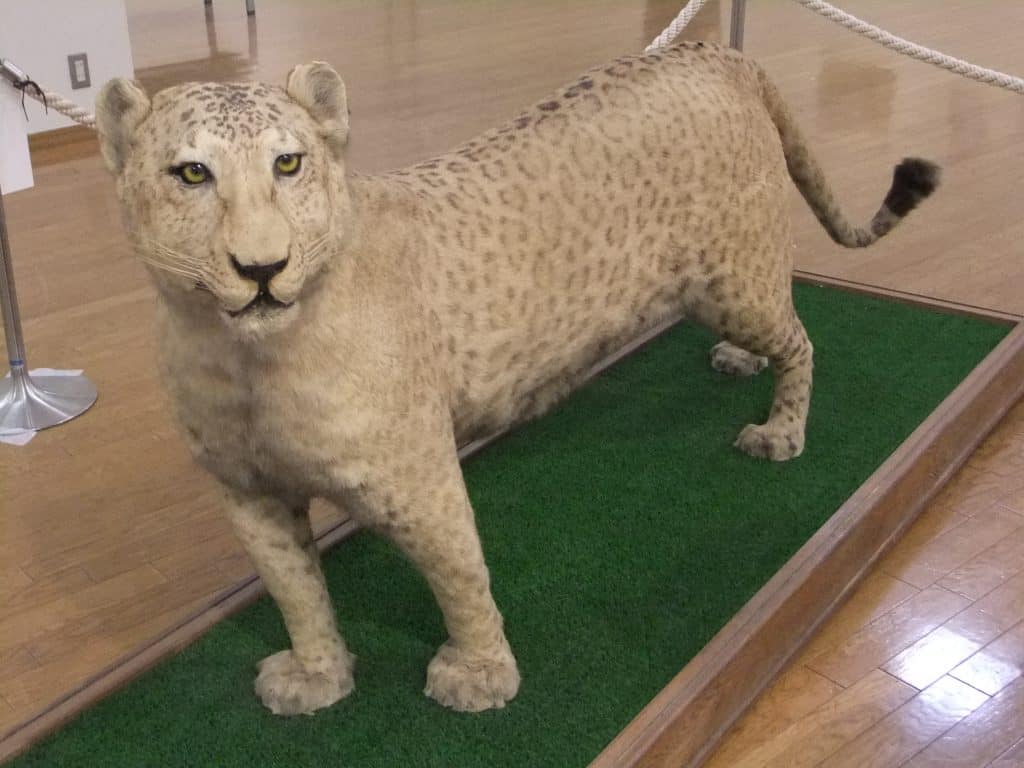
It’s rare to see a leopon and hard even to find a picture of one. This is a taxidermied specimen in a museum.
Leopons (male leopard × female lion) are another rare big-cat hybrid. They carry a lion’s body shape but are cloaked in leopard spots, creating an almost mythical appearance. These hybrids occur only in captivity, as lions and leopards rarely overlap in the wild and don’t share social habits. Leopons are sterile.
Dzo
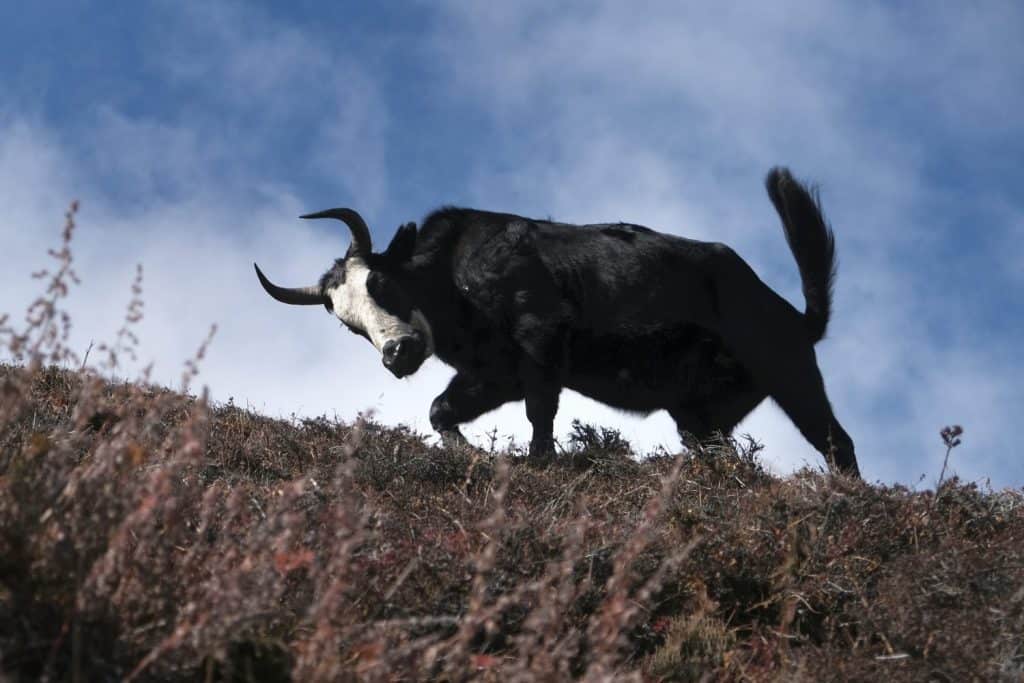
The dzo has become a significant part of the agricultural economy of Tibet and Mongolia.
©iwciagr/Shutterstock.com
High in Tibet and Mongolia, farmers prize dzo, hybrids of yaks (Bos grunniens) and domestic cattle. Dzo are stronger and more resilient than either parent, thriving at high altitudes while still being manageable for farm work. Unlike many hybrids, some dzo are fertile, which increases their value to livestock breeders and herders. For local farmers, dzo aren’t curiosities but vital work animals in a harsh and unforgiving environment.
Grolar Bear
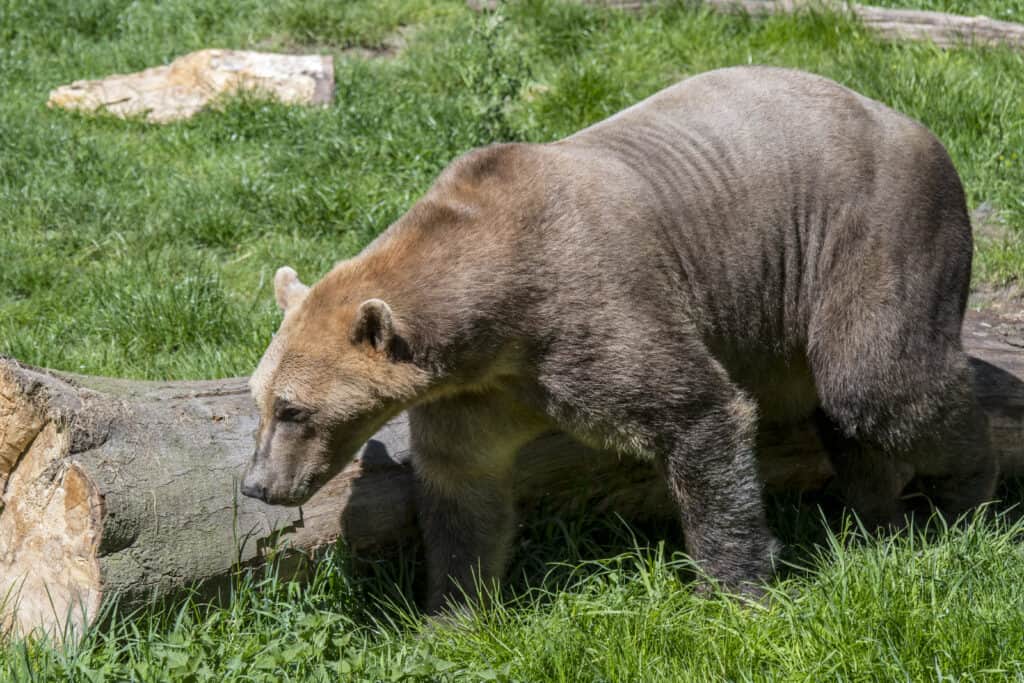
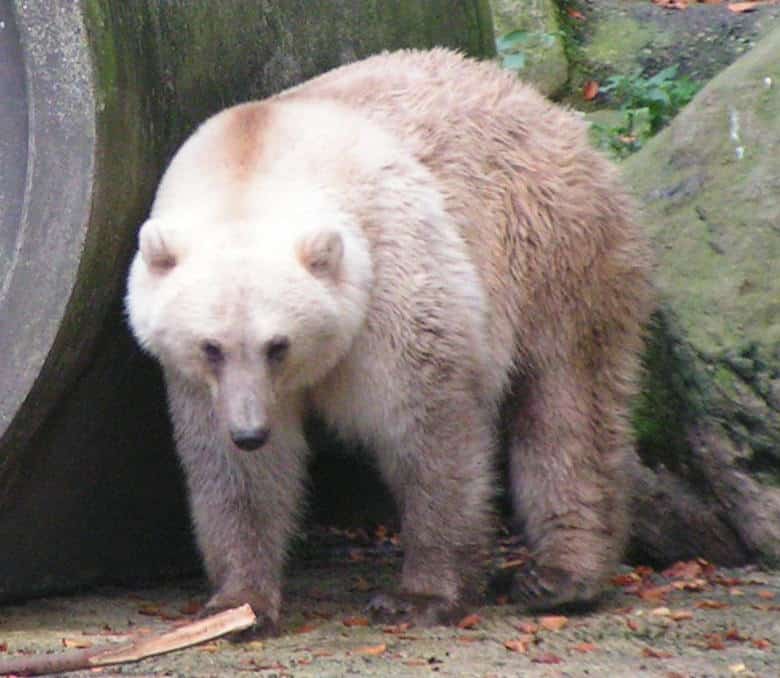
Grolar bears or pizzly bears each have their own unique appearance. This one has retained the shape of a polar bear with the coloration of a grizzly.
©iStock.com/Philippe Clement
As climate change alters habitats, polar bears (Ursus maritimus) and grizzlies (Ursus arctos horribilis) are meeting more often — and sometimes mating. Their offspring, known as grolar bears (or pizzlies), inherit a blend of features: cream-colored coats, long claws, and body sizes midway between the two species. Grolar bears are a naturally occurring hybrid, and there are unconfirmed reports that they are fertile. It’s not clear whether we’ll be seeing more of these as a stable population or if they will continue to be one-off oddities.
Wolphin

This is a 9-month-old wolphin female at Sea Life Park, Hawaii.
In 1985, Hawaii’s Sea Life Park introduced the world to the wolphin — the offspring of a bottlenose dolphin and a false killer whale (Pseudorca crassidens, a species of dolphin). A handful have been born in captivity, and to scientists’ surprise, some have lived long lives and even reproduced. That makes wolphins one of the rarest cases where a hybrid didn’t hit the usual genetic dead end.
Bonus: The “Fish Tomato”
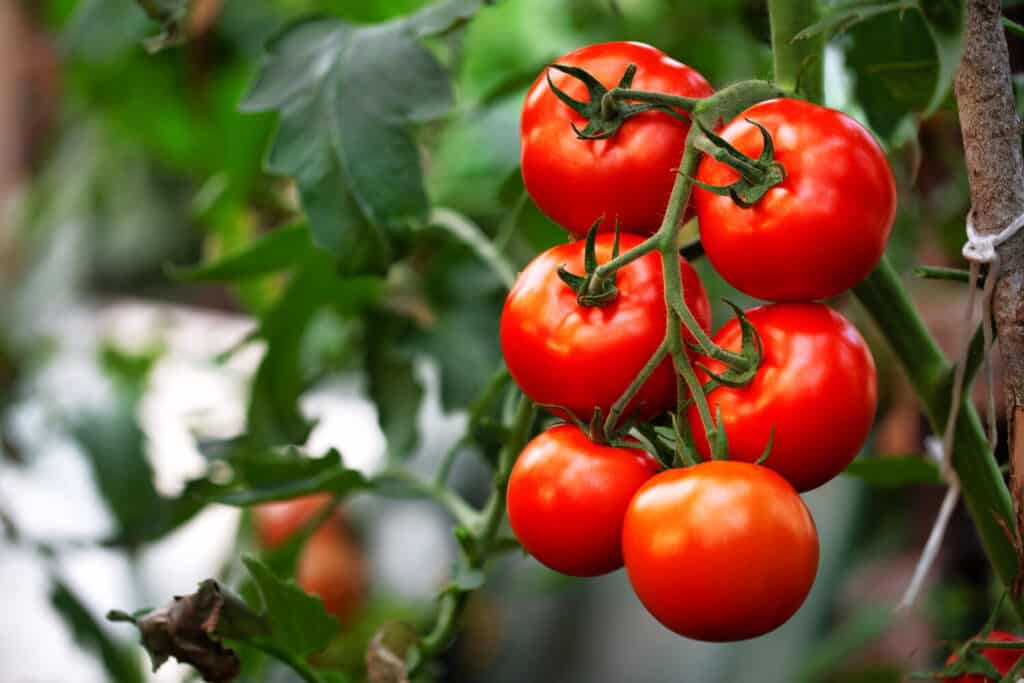
Tomatoes are heat-loving plants that don’t do well in cold temperatures. Geneticists successfully spliced salmon genes into tomatoes to make them more frost-resistant.
©eugenegurkov/Shutterstock.com
Genetically modified organisms aren’t exactly “hybrids” in the traditional sense, but they do push nature’s boundaries by blending genetic characteristics of more than one organism. In the early 1990s, scientists at DNA Plant Technology spliced a gene from Atlantic salmon (Salmo salar) into tomato plants. The idea was that the protein produced by the salmon gene would help tomatoes resist freezing. It worked, but public opinion was polarized. Some saw it as a breakthrough for agriculture, while others were uneasy about eating a plant with animal genes.
A GMO Pet You Can Own
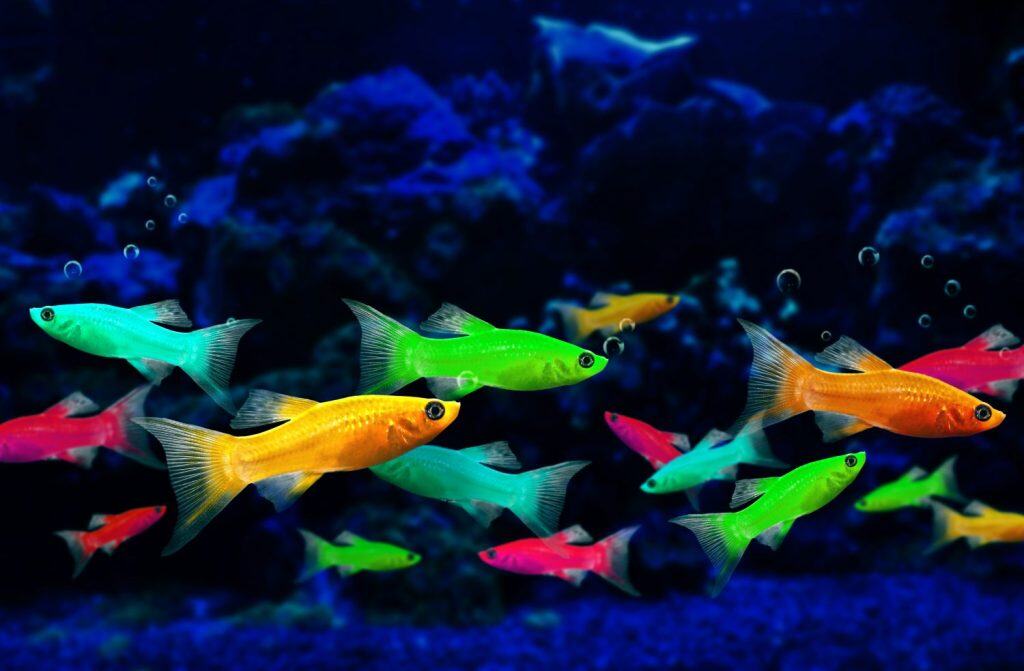
Fluorescent GloFish are the first GMO pets available for purchase by the general public.
©funstarts33/Shutterstock.com
Even though you can’t buy a salmon mixed with a tomato, something you can have is a Glofish, which is a zebrafish, tetra, or other species that glows in fluorescent colors thanks to genetic splicing with jellyfish or sea anemone DNA. You can easily find these in pet stores now, in several species.
Hybrid (and GMO) animals capture our imagination because they blur the lines we assume are fixed. Some exist naturally, others only because of human curiosity or necessity, but all tell a story about adaptation and discovery. As science pushes those boundaries further, the challenge isn’t just to marvel at what’s possible — it’s to handle these crossings with respect for the creatures and ecosystems we’re reshaping.