
Quick Take
- The Symbol: Designated in 1961, the Bighorn Sheep represents Colorado’s rugged identity and its commitment to wildlife conservation.
- The Comeback: Once pushed to the brink of extinction by disease and hunting, the species was saved through one of the state’s most successful relocation and management programs.
- The Habitat: These “High Country” icons are masters of the vertical world, relying on steep cliffs and alpine basins to evade predators like mountain lions.
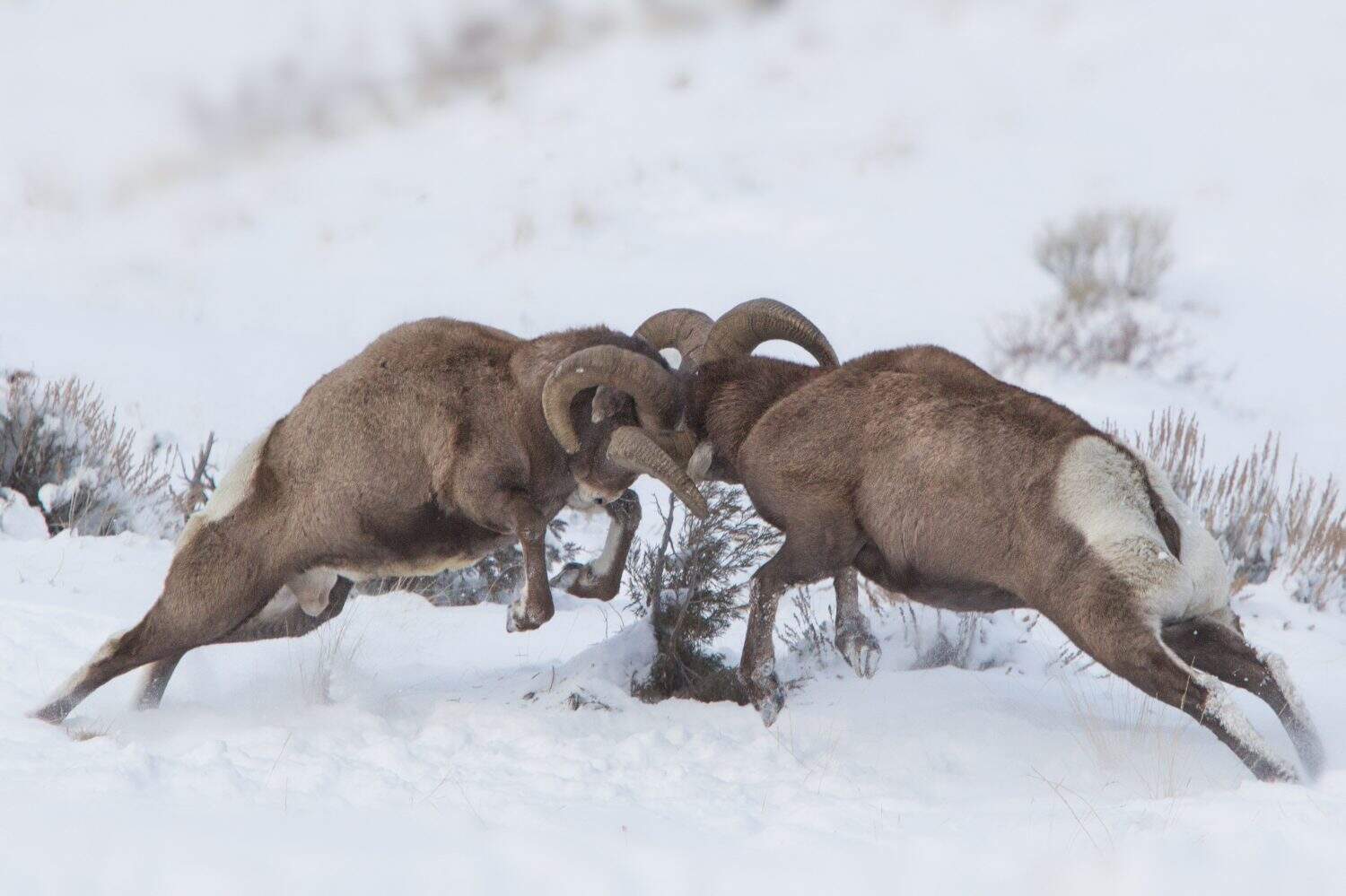
- Key Behavior: Known for dramatic head-butting rituals, rams use reinforced skulls to settle dominance without sustaining serious injury.
Like most states, Colorado has chosen a state animal meant to reflect its culture, landscape, and sense of identity. In 1961, that choice was the Rocky Mountain bighorn sheep, an animal closely tied to the cliffs, high basins, and open slopes that shape much of the state. The selection grew out of Colorado’s long relationship with its mountains, its growing commitment to conservation, and the hard lessons learned from seeing native wildlife pushed to the brink. This is the story of how the bighorn sheep came to be chosen and why it remains an appropriate symbol for a state that, even today, is defined by vast open spaces and rugged landscapes.
What’s the Point of a State Animal?
States have state animals to give people an easy, concrete symbol for what makes their place distinct. An animal can represent local landscapes, native wildlife, or long-standing relationships between people and the environment in a way flags or mottos often cannot. Because animals are familiar and visual, they work well as shared reference points for identity and pride.
State animals also serve an educational purpose. Schools use them to teach students about local ecosystems, history, and conservation. Learning why a particular species was chosen often leads into discussions about habitat, human impact, and how wildlife has shaped a region’s past. In many cases, the designation helps turn abstract ideas about nature into something tangible and memorable.

State animals often serve as teaching focuses in elementary and primary schools.
©Artem Zakharov/iStock via Getty Images
There is often a conservation angle as well. Many state animals were selected during periods when wildlife protection was becoming a public concern. Naming a species as a state symbol can draw attention to its survival, encourage stewardship, and reinforce the idea that protecting native wildlife is part of a state’s responsibility.
Finally, state animals function as cultural shorthand. They appear in tourism materials, public art, and government messaging. Over time, the animal becomes woven into how residents and outsiders understand the state and what it values.
How the Rocky Mountain Bighorn Sheep Became Colorado’s State Animal
The Rocky Mountain bighorn sheep became Colorado’s state animal in 1961 through an act of the General Assembly. Lawmakers and wildlife professionals supported choosing a native species closely associated with cliffs, alpine basins, and open slopes that define much of Colorado’s geography. The animal’s visibility along mountain corridors also made it a familiar presence for residents and visitors, reinforcing its connection to daily life in the state.
By the mid-20th century, Colorado was shaping an identity rooted in outdoor recreation and conservation. Ski areas were expanding, national parks were gaining national attention, and wildlife protection had become a public priority. Selecting a wild mountain species reinforced those values. The bighorn sheep also carried a clear conservation message. Its rebound followed decades of regulated hunting, habitat protection, and scientific management. Naming it the state animal acknowledged that success while underscoring an ongoing responsibility to protect the species as human activity continued to expand into mountain environments.
The Rocky Mountain Bighorn Sheep
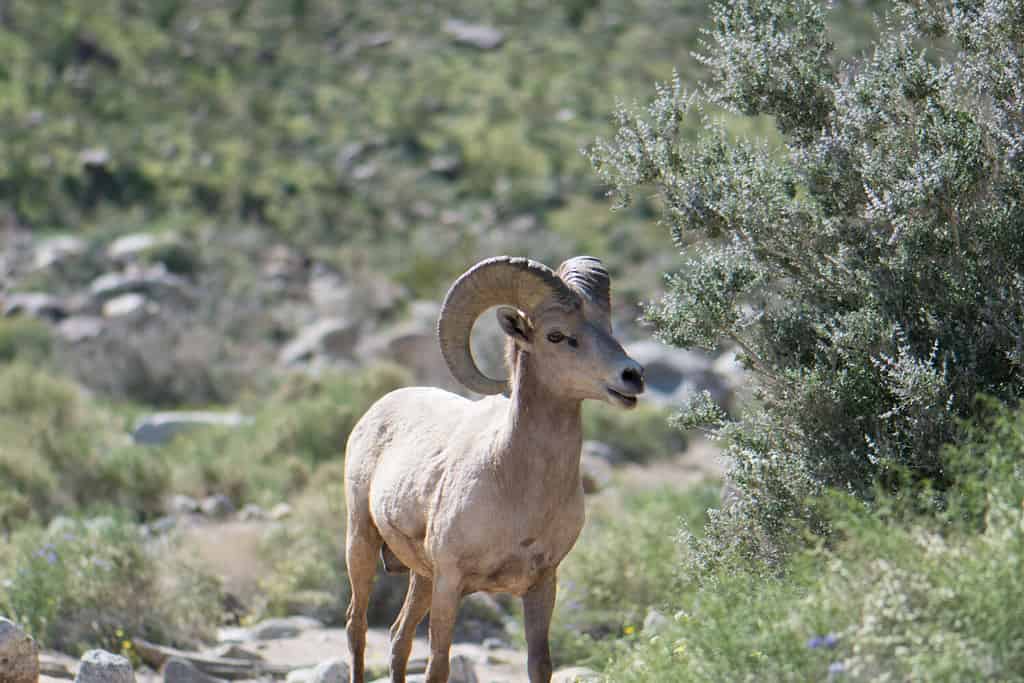
The Rocky Mountain bighorn sheep is a large, muscular animal adapted for life on steep rock faces and high elevations. Adult rams often weigh between 160 and 300 pounds, while ewes are smaller and lighter. Rams are known for their massive, curling horns, which can exceed 40 inches along the curve and weigh more than 25 pounds. Ewes have shorter, slimmer horns that curve slightly backward. Horns grow throughout the animal’s life and can be used to estimate age based on growth rings.
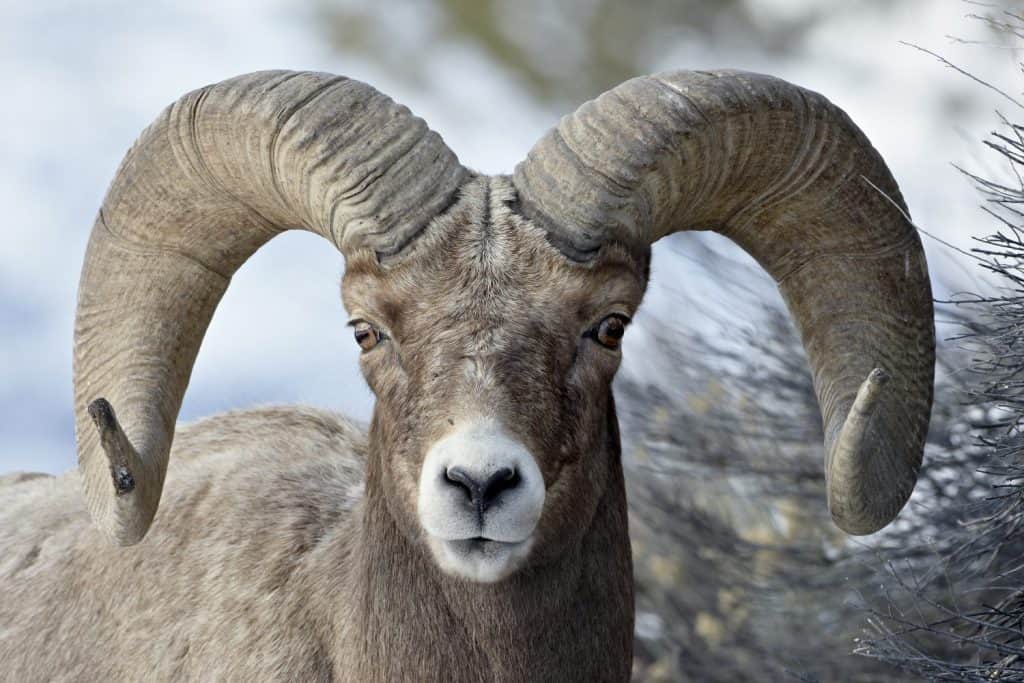
Bighorn rams are defined by their huge curling horns.
©Robert Harding Video/Shutterstock.com
Bighorns have specialized hooves with a hard outer rim and a softer center that grips uneven rock, allowing them to move confidently across cliffs and narrow ledges. Their vision is also well adapted to open terrain, giving them a wide field of view to detect predators at a distance. Their coats range from tan to brown, blending with dry grasses and rocky slopes. In summer, they occupy alpine basins and ridgelines above treeline. During winter, herds move to lower, sun-exposed slopes where snow is thinner and forage remains accessible.
Why do Bighorns Head-Butt Each Other?
Bighorn rams ram each other mainly to compete for breeding rights, not out of aggression for its own sake. The behavior peaks during the breeding season, called the rut, in late fall. At that time, rams need to establish which males are dominant, because higher-ranking rams get first access to receptive ewes.
The dramatic horn clashes are a way to settle that hierarchy. Rams face off, back away from each other, then charge and collide head-on. Those impacts can be loud enough to echo across valleys, but they are usually brief and controlled. The goal is not to injure an opponent, but to demonstrate strength, size, and stamina. In many cases, one ram concedes after only a few clashes once dominance is clear.
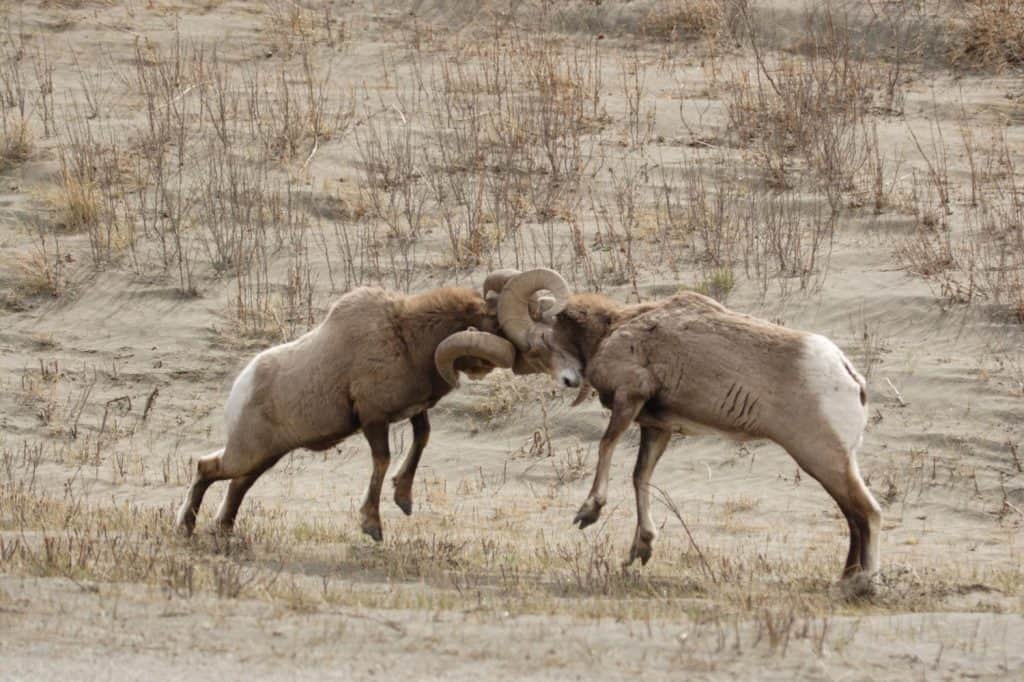
Males ram each other to compete for breeding rights. Their anatomy cushions the blows so that they don’t usually hurt one another seriously.
©AL PARKER PHOTOGRAPHY/Shutterstock.com
Their bodies are built for this. Bighorn skulls are thick and reinforced, their neck muscles are powerful, and the curved horns help absorb and spread the force of impact. This reduces the risk of serious injury, which would be costly in a harsh environment where survival depends on mobility.
Ramming also serves a broader purpose. By resolving dominance through ritualized combat, bighorns limit constant fighting and maintain social order within the herd. It is a noisy, dramatic process, but it is an efficient way to decide who breeds without turning every encounter into a dangerous struggle.
Life in the High Country
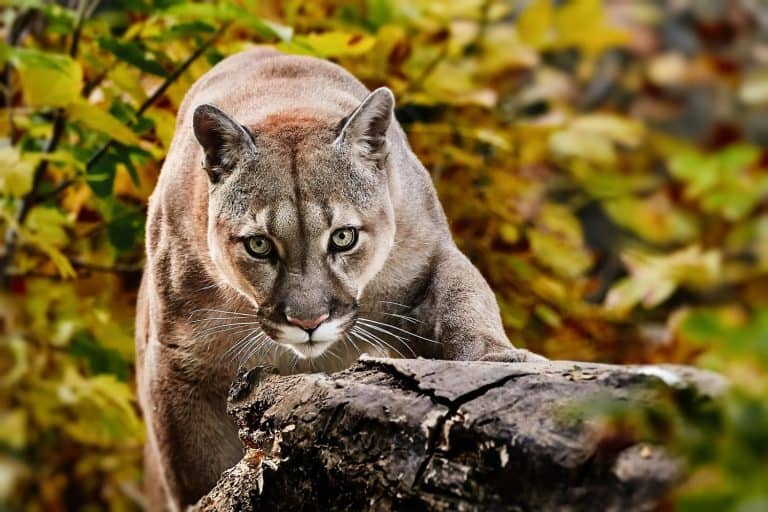
Bighorn sheep follow seasonal movement patterns shaped by weather, food availability, and reproduction. These seasonal ranges are often reused year after year and are critical to survival. Access to escape terrain is especially important, as steep slopes reduce the risk of predation from mountain lions and other predators.
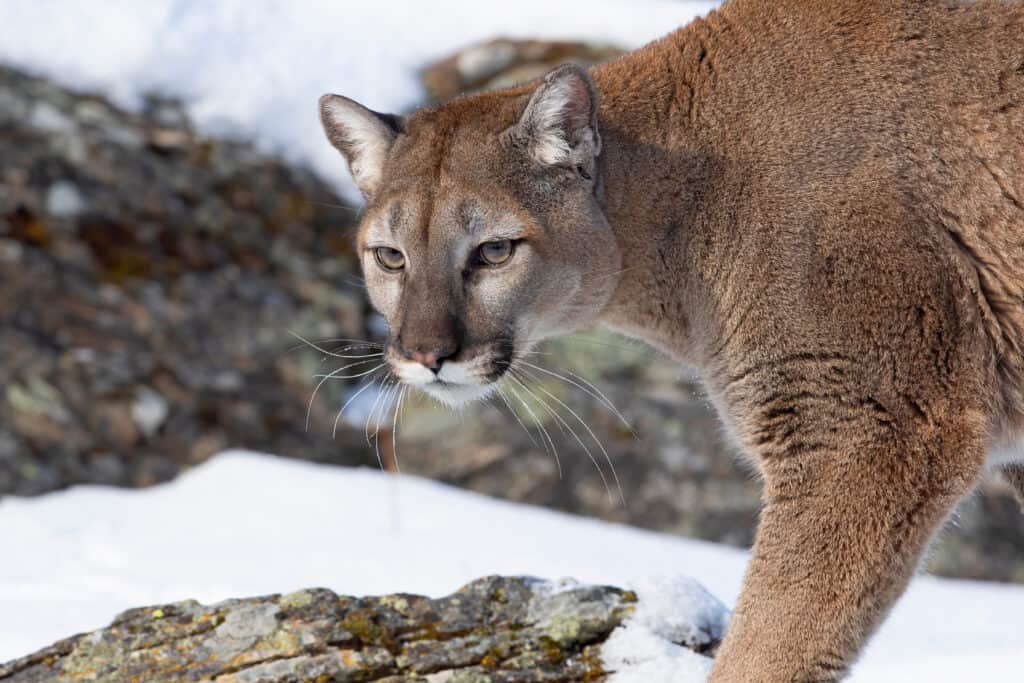
Mountain lions are one of the main predators that hunt bighorn sheep.
©Jim Cumming/Shutterstock.com
Ewes and lambs typically form groups that provide shared vigilance, while rams live in separate bands for most of the year. Lambs are usually born in late spring, timed to coincide with improved forage and milder conditions. Within hours of birth, lambs are able to stand and follow their mothers across rocky ground, an ability that is essential in exposed environments.
Decline and Recovery
Before European settlement, bighorn sheep occupied much of Colorado’s mountainous terrain. Indigenous peoples hunted them for meat and used their horns and hides for tools and ceremonial purposes. Hunting pressure was generally localized and balanced by natural movement across large landscapes.
Native American tribes used the meat, horns, and hides of bighorn sheep to live in the challenging environment of the High Country.
©Jilll Richardson/Shutterstock.com
That balance shifted in the 1800s as mining, market hunting, and livestock grazing expanded into mountain regions. Unregulated harvest and habitat pressure reduced populations, but disease proved the most damaging factor. Contact with domestic sheep introduced respiratory illnesses that bighorns had little resistance to, leading to rapid declines. By the early 1900s, bighorns had vanished from large areas of the state, surviving mainly in isolated, rugged terrain.
Recognizing the risk of losing the species, Colorado adopted early wildlife management practices. Hunting seasons were restricted or closed, enforcement improved, and biologists began studying herd health and habitat needs. Starting in the 1940s, bighorns were trapped from healthy herds and relocated to suitable but unoccupied areas. Over time, more than one hundred relocation efforts helped rebuild populations across western and central Colorado. By the early 21st century, the state supported roughly 7,000 bighorn sheep, though ongoing monitoring remains essential.
A Living Indicator of Colorado’s Landscape
Today, the Rocky Mountain bighorn sheep serves as more than a symbol. Its health reflects the condition of high-elevation ecosystems. Disease remains the greatest threat, especially pneumonia linked to contact with domestic sheep and goats. Habitat fragmentation from roads, development, and recreation can also limit movement between seasonal ranges and isolate herds.
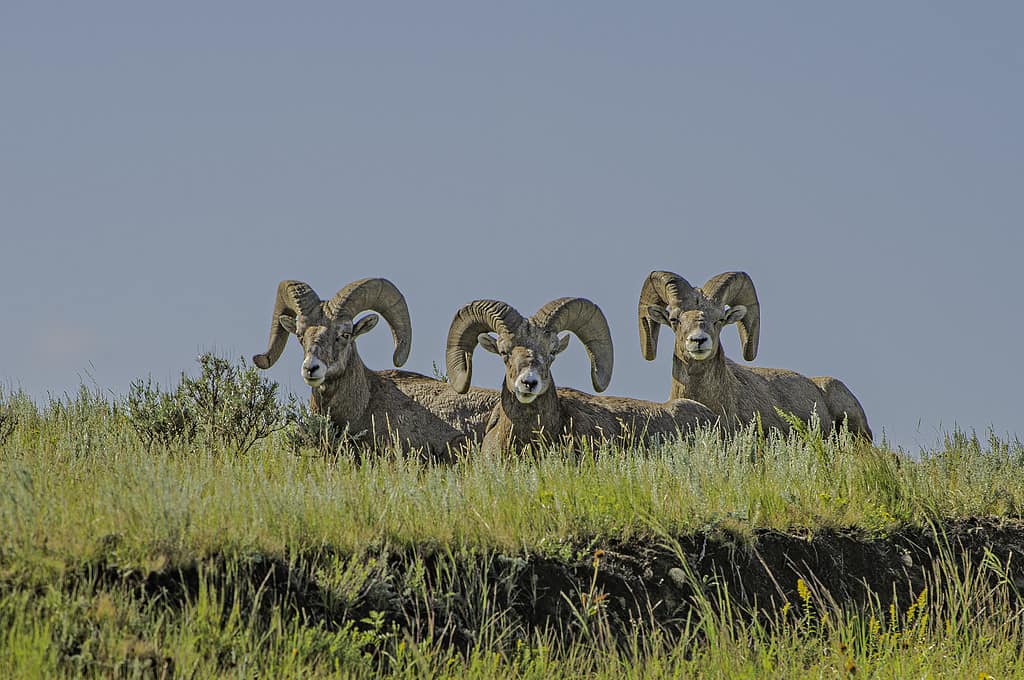
Regulated hunting is a part of the state’s management plan to conserve healthy, sustainable bighorn populations.
©Gerald Corsi/iStock via Getty Images
Wildlife managers use surveys, tracking collars, and habitat protection measures to monitor herds and reduce risk. Regulated hunting continues to play a role in population management and conservation funding. In some areas, temporary closures or traffic controls protect sheep during sensitive periods such as lambing.
A Fitting High Country Symbol
More than sixty years after its designation, the Rocky Mountain bighorn sheep still represents Colorado’s identity. This animal connects Indigenous use, frontier exploitation, scientific recovery, and modern conservation. The sheep’s continued presence on mountain slopes reflects both the challenges and the responsibilities that come with living in a state defined by its high country.